

Reviewed · KIMONO AND CULTURAL DRESS
Japanese miniature kimono made with origami in Osaka
Tiny folds, a real Osaka keepsake. This 90-minute origami class turns a single sheet of patterned paper into a miniature kimono, a clever souvenir that feels more personal than a shop-bought trinket. I like the patient, repeatable instruction and the chance to choose from 20 traditional designs. My main caution is that the folds can be tricky at first, so anyone expecting a quick, effortless craft may need to slow down.
The location near Abeno Station also works well for a day of sightseeing. You can pair the class with Abeno Harukas, Tsutenkaku Tower, or Tennoji Zoo. The activity is private to your group, which I consider a real plus, though the price of $65.32 per person is easier to justify if you value personal teaching and want to make more than one kimono.
In This Review
- Key points at a glance
- Meeting at Abeno Station Exit 7
- The practice fold makes the class approachable
- Choosing the patterned paper
- What makes the miniature kimono special
- A private class with a personal pace
- Why the $65.32 price can make sense
- Pairing the class with Abeno and Tennoji
- Who will enjoy this most
- Taking the lesson home with you
- Booking, cancellation, and practical details
- Should you book the origami kimono class?
- FAQ
- Where does the origami kimono experience begin?
- How long does the activity last?
- What is included in the price?
- Are travel expenses included?
- Is the activity private?
- Can children and beginners participate?
- What do I take home after the class?
Key points at a glance
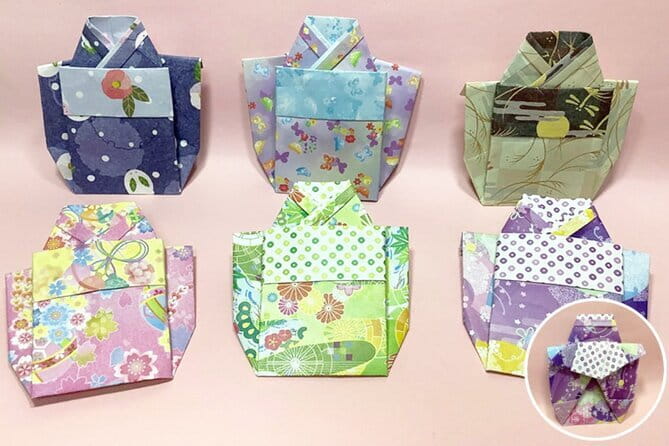
- A miniature kimono with a useful twist: The finished paper kimono includes pockets and can hold a small pick, coin, or handwritten message.
- A gentle first lesson: You begin with a practice sheet before moving on to the final patterned paper.
- Twenty traditional designs: If time allows, you can choose your favorite from a selection of 20 original works.
- Patient, clear instruction: The teaching style is suited to beginners, children, and anyone whose first folds do not go to plan.
- A souvenir that keeps teaching: You receive a QR code for a video and a folding diagram, so you can repeat the craft at home.
- A convenient Tennoji-area base: Meet at Abeno Station Exit 7, close to several major Osaka sights.
Meeting at Abeno Station Exit 7
Your meeting point is at the bottom of the stairs at Abeno Station Exit 7, on the Osaka Metro Tanimachi Line. The stated address is in Abeno Ward, Osaka, postal code 545-0052.
This detail matters because the class is not described as taking place directly inside the station. You meet the instructor first, then go together to the classroom. I would allow a little extra time to find Exit 7, especially if you are carrying shopping bags or arriving during a busy sightseeing day.
The building itself contains various shops, so this is not a remote craft studio hidden away from the city. That gives you an easy way to combine the activity with a wider afternoon in southern Osaka. The area around Abeno and Tennoji includes Abeno Harukas, Tsutenkaku Tower, and Tennoji Zoo, giving you plenty to do before or after the folding session.
The activity information says pickup is offered, but the clear meeting instruction is the station exit. Check the exact arrangements after booking so you know where to wait.
More Kimono Experiences in Osaka
- Osaka: Sumo Show & Experience w/ Optional Kimono & Hot Pot
★ 4.5 · 609 reviews - Learning Zen of Japanese Calligraphy in kimono near Osaka Castle
★ 4.5 · 53 reviews - Samurai dress-up and shows, plus Tea Ceremony & Calligraphy
★ 5.0 · 27 reviews
The practice fold makes the class approachable
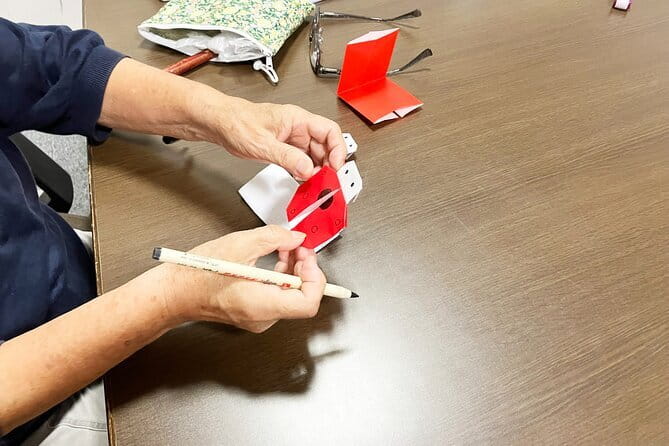
Once you reach the classroom, you choose a table and select an origami sheet. The first task is not the final kimono. Instead, the instructor guides you through a practice fold so you can get used to the paper, the sequence, and the basic shape.
That is a smart way to teach this craft. Origami can look simple when someone else’s fingers make each crease, but the order matters. A misplaced fold early on can affect the collar, sleeves, or back of the kimono later. Practicing first gives you room to make mistakes without spoiling the patterned sheet you may want to keep.
The teaching is designed for beginners and small children, although younger children may need help with precise folds. The instructor’s patience is one of the strongest parts of the activity. Several comments describe the instructions as kind, clear, and easy to follow, even for people who struggled at first.
Dr. Hiroko is named in the responses, and her teaching style comes across as warm and encouraging. You can ask questions when you get stuck, and the class is not built around racing through a fixed demonstration. That personal help is important here. The finished piece looks delicate, but reaching it takes more attention than folding a basic paper crane.
Choosing the patterned paper
After the practice round, you move to the real kimono. The patterned paper gives the finished piece its character, so this is more than a technical step. Your choice affects the color and mood of the miniature garment.
If your schedule allows, you can select a favorite from 20 traditional works. That option adds a personal touch, especially if you are making several pieces for family or friends. It also means you are not limited to one standard sample chosen by the instructor.
The class description calls the kimono design the instructor’s original work. That gives the activity a local, handmade quality. You are not simply copying a generic paper garment from a mass-produced craft kit. You are learning a particular design developed for this class.
The activity seems especially suitable for people who enjoy small details. You will need to line up creases, handle the paper carefully, and follow the sequence. If you prefer a fast activity with little concentration, this may feel slow. If you like making something with your hands, the careful pace is part of the appeal.
What makes the miniature kimono special
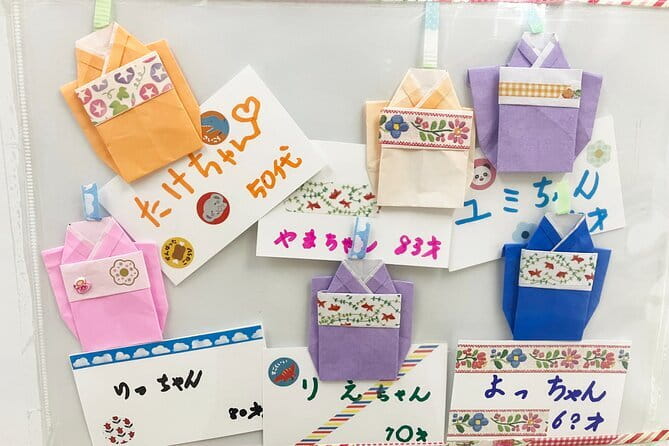
This is not just a flat paper decoration. The design includes small functional features, including pockets. You can place a pick, coin, or otegami, meaning a handwritten letter or note, inside the kimono when giving it to someone.
That detail broadens the appeal. You can treat your finished piece as a small display item, but you can also turn it into a thoughtful gift. A coin gives it a simple symbolic touch. A note makes it more personal. A pick can add a small decorative or traditional accent.
The back of the miniature kimono is also part of its charm. One comment points out the back figure and the belt, details that can be easy to miss when you first focus on the front. I would take a moment at the end to look at the whole piece, not just the collar and sleeves.
Because the kimono is small, it is easy to pack. You avoid the luggage space and cost of carrying a full-size souvenir. The result still connects to Japanese clothing and paper craft, but in a form you made yourself.
A completely different kind of day out:
- Osaka Go Karting Tour with Funny Costume
★ 5.0 · 2,658 reviews - Osaka Castle: Museum and Tower Entry Ticket
★ 4.5 · 2,380 reviews - Osaka: Shinsekai Food Tour with 13-15 Dishes at 5 Eateries
★ 4.8 · 2,204 reviews - Osaka Food Tour: 13 Dishes at 5 Local Eateries
★ 5.0 · 2,149 reviews
A private class with a personal pace
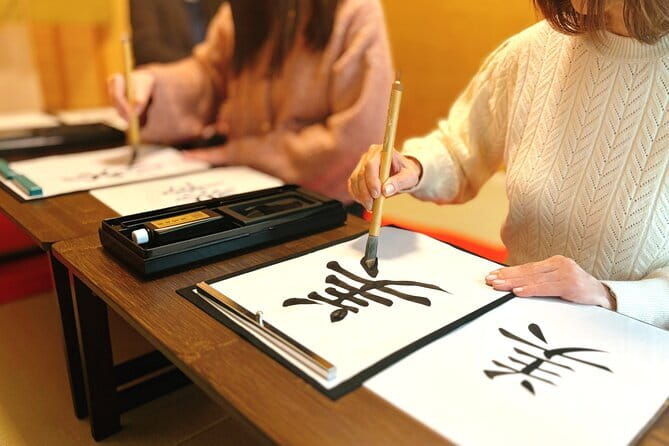
This is a private activity, meaning only your group participates. That can make a noticeable difference in a craft lesson. You are not trying to see over a large table or waiting for an instructor to move from group to group.
A private setting also helps if your group includes people with different skill levels. One person may move quickly while another needs the same fold explained again. The class structure allows questions, and the teaching style is described as patient rather than hurried.
The listed duration is about one hour and 30 minutes. That is enough time for a practice fold, the finished kimono, paper selection, and questions, but you should not assume unlimited crafting time. Some comments describe making several miniature kimonos and spending close to two hours, while the official duration is approximately 90 minutes. If you want multiple pieces, ask how much time is available on your date.
That difference is worth noting. One kimono fits comfortably within the advertised schedule. Multiple pieces may be possible when the timetable permits, but they should be treated as an extra opportunity rather than a guarantee.
Why the $65.32 price can make sense

At $65.32 per person, this is not the cheapest origami lesson you could find. The value comes from the private format, the original kimono design, guided practice, materials, and the chance to leave with a finished souvenir.
Tools and materials are included, so you do not need to bring paper or craft equipment. Traveling expenses are not included, and the price does not cover your journey to Abeno Station or nearby attractions.
I think the cost makes the most sense in three situations. First, you want an activity that works in poor weather and does not require a full day. Second, you prefer a guided cultural craft to simply buying a souvenir. Third, you are traveling with a small private group and value one-on-one help.
The value is weaker if you only want a cheap paper craft or if you are comfortable learning from a free video. The advantage here is the correction and encouragement you get while your hands are actually folding the paper. That is often the difference between a neat finished kimono and a crumpled near-miss.
Group discounts are offered, which may help families or larger parties. Since the activity is private, ask about the discount and group size when you book.
Pairing the class with Abeno and Tennoji

The location makes this easy to add to a sightseeing plan. Abeno Harukas, Osaka’s tallest building, is nearby. Tsutenkaku Tower and Tennoji Zoo are also listed as close attractions.
You could schedule the class between sightseeing stops, but remember that the craft requires concentration. I would avoid arriving after a frantic dash across the district. Give yourself enough time to reach the station exit, meet the instructor, and settle in.
The class can also provide a quieter break from Osaka’s larger attractions. After towers, shopping, and city streets, sitting at a table with a sheet of paper gives you a change of pace. It is a small activity, but it asks you to pay attention to one thing at a time.
If you are planning a full day around Tennoji, confirm the class time before buying attraction tickets. The activity has a fixed start, and the meeting point is specific.
Who will enjoy this most

I would recommend the class to:
- First-time origami students who want patient guidance
- Families with children who can manage careful paper folding
- Couples or friends looking for a shared souvenir
- Visitors who prefer making a gift instead of buying one
- Craft fans interested in an original Japanese kimono design
- People with a free 90-minute window near Abeno and Tennoji
It also suits someone who has tried origami before but wants to return to it. The instructor’s step-by-step method can help if you have forgotten the basics or tend to lose track of folds.
You may want to skip it if you dislike detailed handwork, have very little patience for repeating a step, or need an activity with a guaranteed fast finish. The paper is small, and some of the folds are difficult at first. That is manageable, but it is not completely effortless.
Taking the lesson home with you
The class includes a QR code for a video and a folding diagram. This is one of the best practical additions because your experience does not end when you leave Osaka.
The video can help you recreate the kimono later, while the diagram gives you a paper reference. You could use the instructions to make gifts, practice with different paper, or show the technique to someone at home.
The materials used in class are included, but the information does not state that extra paper is supplied for home use. If you want to continue folding after the trip, you may need to find your own origami paper.
That is not a problem for most people. The important point is that you leave with a method, not just a finished object. Your first kimono becomes a model for future attempts.
Booking, cancellation, and practical details
Confirmation is sent within 48 hours of booking, subject to availability. The activity accepts mobile tickets, and service animals are allowed. It is near public transportation, and most people can participate.
You can cancel for a full refund up to 24 hours before the local start time. Cancellations and changes made within 24 hours are not accepted and are not refunded, so keep your Osaka schedule fairly firm once you are inside that window.
The activity is available with free cancellation before the deadline, which is useful when arranging a busy city itinerary. Still, I would not wait until the last minute. The average booking lead time is 155 days, suggesting that popular dates may fill well ahead of a trip.
Should you book the origami kimono class?
Book it if you want a small, personal Japanese souvenir and enjoy learning by doing. The patient teaching, private format, original kimono pattern, and home instructions give the $65.32 price a reasonable basis.
I would especially choose it for a family, couple, or small group with an afternoon near Abeno Station. It is also a good rainy-day plan and a welcome pause from Osaka’s bigger sights.
Skip it if you want a bargain craft session or dislike careful folding. The kimono takes concentration, and the advertised 90 minutes may leave limited time for several pieces. For everyone else, this is a focused, friendly activity that turns ordinary paper into something surprisingly memorable.
FAQ
Where does the origami kimono experience begin?
It begins at the bottom of the stairs at Abeno Station Exit 7 in Osaka, near the Osaka Metro Tanimachi Line.
How long does the activity last?
The approximate duration is one hour and 30 minutes.
What is included in the price?
The tools and materials needed for the activity are included.
Are travel expenses included?
No. Traveling expenses are not included in the activity price.
Is the activity private?
Yes. Only your group participates in this private activity.
Can children and beginners participate?
Yes. Beginners and small children can enjoy the activity together, and most people can participate.
What do I take home after the class?
You take home the miniature origami kimono, along with a QR code for a video and a folding diagram.
Just added in Osaka
- Osaka: 2-Hour Nightlife District Walking & Local Food Culture★ 5.0 · 199 reviews
- Osaka Japanese Cooking And Matcha Class near Osaka Castle★ 5.0 · 22 reviews
- Osaka Dotonbori Daytime Food Tour★ 5.0 · 24 reviews
- Osaka Dotonbori Wonder Cruise★ 4.0 · 28 reviews
- Osaka Food Walking Tour with Market Visit★ 4.5 · 14 reviews
- Cooking Ramen&Gyoza/KatsuCurry/Bento/Okonomiyaki+Store Tour@Osaka★ 5.0 · 138 reviews
- Osaka Private Pop Culture Tour: Historic Tenma to Dotonbori★ 4.5 · 13 reviews
- Half day Osaka Bay Area Cycling with E-Assist Bicycle Tour★ 5.0 · 15 reviews
Kimono and Cultural Dress, compared.

Kyoto Geisha Walking Tour: Gion District & Hidden Gems
Read our review →
Gion Magical Night Walking Tour with Geisha Trivia
Read our review →
Gion Geisha District Walking Tour – Stories of Geisha
Read our review →
Best of Kyoto: Gion, Geisha, Pagodas & Cobblestones
Read our review →

Kyoto Gion Geisha District Walking Tour – The Stories of Geisha
Read our review →
Kyoto Gion: 2-Hour Geisha Culture & History Walking Tour
Read our review →
Browse the lists this tour appears in