Reviewed · TEA CEREMONIES
Samurai dress-up and shows, plus Tea Ceremony & Calligraphy
Put on armor, then make some culture. This three-hour indoor experience near Dotonbori gives you a playful but well-rounded introduction to Japan, with samurai armor, sword performances, and live traditional music in one stop. You also get quieter activities, including a Tea Ceremony and Japanese Calligraphy.
I like the mix of action and calm. You can pose and take part in sword-fighting activities, then slow down with tea and brushwork. The staff also earn strong praise for being friendly, attentive, and willing to help with individual requests.
The main drawback is the price: $123.87 per person is a serious spend for three hours, especially since kimono rental costs an extra ¥19,800. Still, the indoor setting, central location, and wide range of activities may make it worthwhile if you want several Japanese cultural experiences without crossing Osaka.
In This Review
- Key points to know before you book
- Why this Osaka experience works so well
- Starting at Shinsaibashi ARTY Inn
- Wearing samurai armor and joining the shows
- Live traditional music adds more than atmosphere
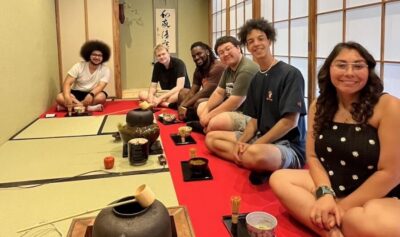
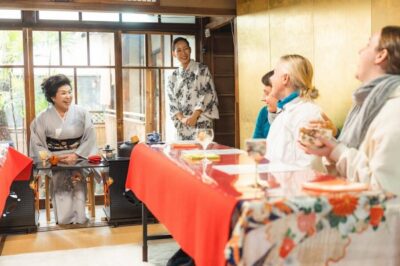
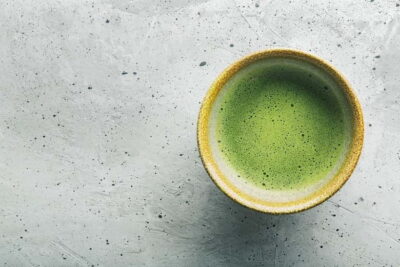
- Tea Ceremony brings a quieter change of pace
- Calligraphy gives you something to make
- A possible kimono upgrade, and its steep price
- What the staff do best
- Is $123.87 good value?
- Who should book this experience?
- Should you book it?
- FAQ
- Where does the experience take place?
- How far is the venue from Dotonbori?
- How long does the experience last?
- What is included in the price?
- Is samurai armor included?
- Is kimono wearing included?
- Is the experience indoors?
- Can I reach the venue by public transportation?
- Will I receive a mobile ticket?
- Can I cancel for a full refund?
Key points to know before you book
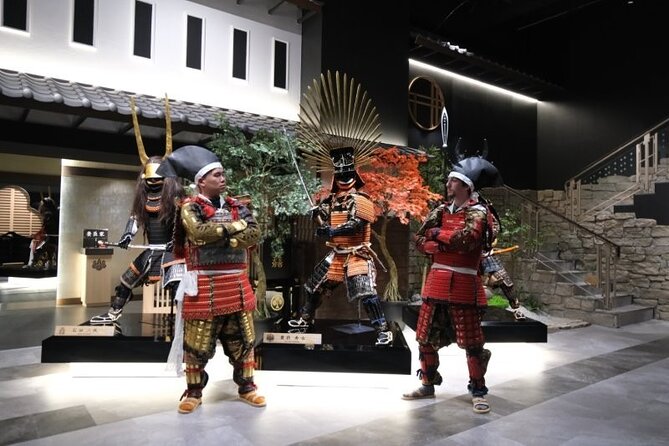
- Armor is part of the action: You do not simply look at samurai clothing. You can wear armor while joining the shows and sword activities.
- Several traditions share one visit: Tea, calligraphy, music, samurai performance, and armor dress-up are all offered under one roof.
- The location saves time: Shinsaibashi ARTY Inn is about a five-minute walk from Dotonbori and within a ten-minute walk of Namba or Shinsaibashi stations.
- The experience works in any season: Every activity takes place indoors, useful during Osaka’s heat, rain, or winter chill.
- The staff are a major strength: Personal service and help with activities receive repeated praise, including special attention from Roi and Maya.
- Kimono is an extra-cost choice: The listed additional charge is ¥19,800 per person, so check your total before booking.
Why this Osaka experience works so well
Osaka is famous for food, nightlife, and easygoing street energy. It is also a good place to add a cultural activity that does not require a full day away from the city center.
This experience gathers several Japanese traditions in one venue. In roughly three hours, you can try samurai dress-up, watch or join sword performances, hear live traditional music, practice calligraphy, and take part in a Tea Ceremony.
I like this format because it avoids a common problem with cultural activities: spending a lot of time on only one brief demonstration. Here, the experience keeps changing pace. The samurai section is lively and theatrical, while tea and calligraphy offer a more careful look at Japanese customs.
You should also know that this is a participatory attraction, not a quiet museum visit. You are encouraged to take part, try unfamiliar activities, and accept a little good-natured silliness while wearing armor. That makes it a strong pick for couples, families, first-time visitors, and anyone who wants photographs tied to an actual activity rather than a simple costume rental.
More Castles and Historic Sites in Osaka
- Osaka Castle Ticket
★ 4.7 · 12,450 reviews - Osaka Castle: Museum and Tower Entry Ticket
★ 4.5 · 2,380 reviews - Ultimate Osaka Walking Tour: Castle, Dotonbori & Hidden Gems
★ 5.0 · 862 reviews
Starting at Shinsaibashi ARTY Inn
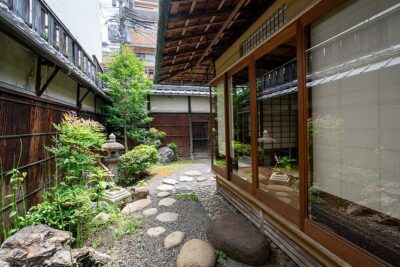
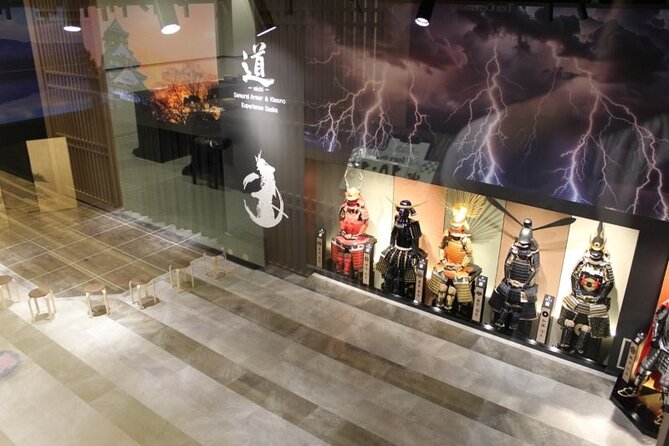
The meeting point is Shinsaibashi ARTY Inn in Osaka. Its central setting is one of the experience’s practical advantages. You are about five minutes on foot from Dotonbori, so you can fit this visit around a meal, shopping, or an evening walk along the canal.
The venue is also within a ten-minute walk of a station in either the Namba or Shinsaibashi area. That makes it easier to reach by public transportation than an attraction on the city edge. If you are arriving from a cruise terminal, a short taxi ride is another option, based on the available visit details.
On arrival, staff explain how the visit works. You may be able to choose which activity to begin with, rather than simply following a rigid sequence. That matters because your group may have different priorities. One person may want the armor first, while another may prefer tea or calligraphy.
The venue provides a locker, which is useful when you are carrying shopping bags or day-trip luggage. Complimentary hot and cold water, tea, coffee, and Wi-Fi are also listed among the included facilities.
The experience uses a mobile ticket, so keep the booking confirmation ready on your phone. Confirmation is provided when you book.
Wearing samurai armor and joining the shows
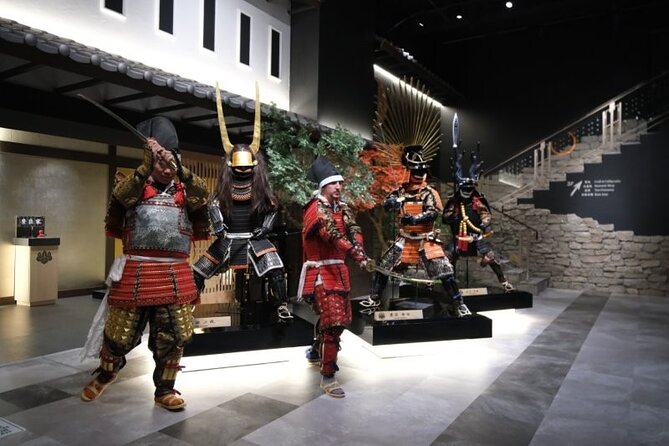
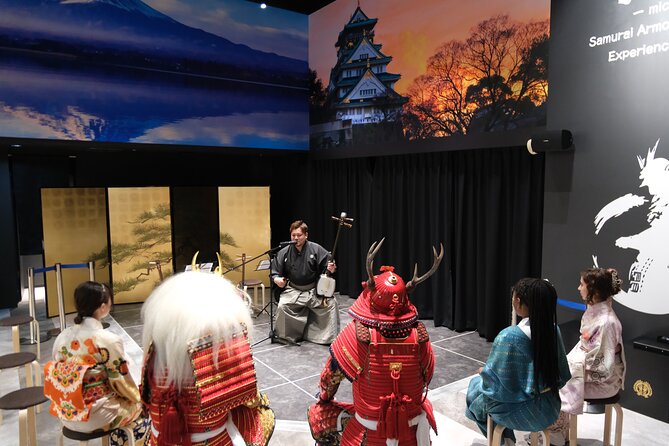
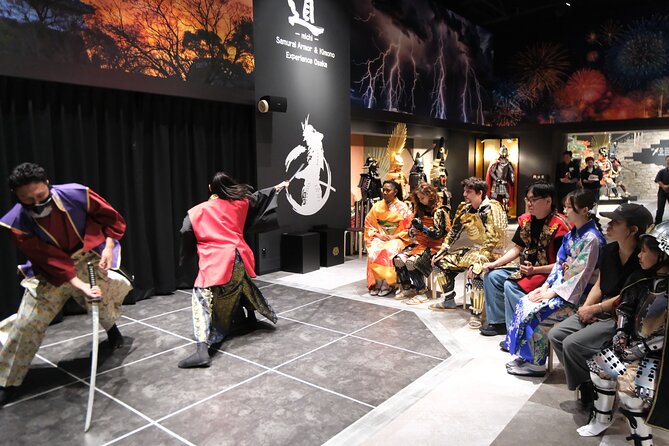
The samurai portion is the most obvious crowd-pleaser. You get to step into samurai armor and take part in shows built around sword performance and traditional music.
The important distinction is that the armor is not only for looking at or wearing for a quick photograph. The activity includes participation in the show, and the available details describe sword-fighting practice and dynamic performances. The result is more playful than a formal historical demonstration, but that is part of its appeal.
I would approach this section as theater with cultural flavor, rather than as a lesson in martial arts. You are not booking combat training. You are booking a guided, interactive performance in which the costume helps you feel part of the scene.
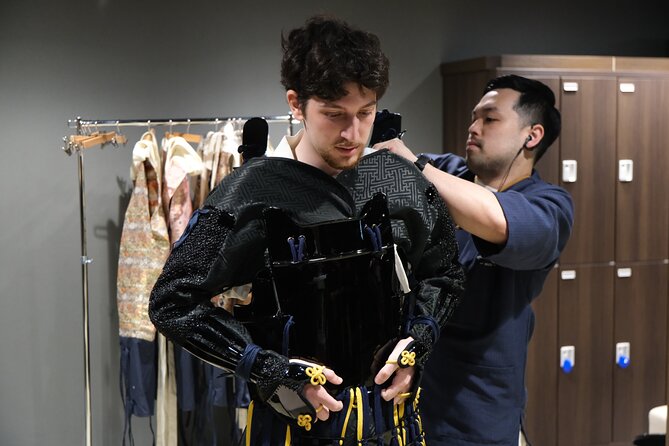
The armor itself is a major part of the fun. Several people specifically praise how impressive the suits look and how professional the staff are when helping with them. If you have never worn samurai armor, the fitting and presentation may become the most memorable part of the visit.
The staff’s manner matters here. Armor can feel awkward, and sword activities can seem intimidating if instructions are rushed. The available feedback repeatedly highlights courteous, caring, and attentive service. That suggests the experience is designed to make first-time participants comfortable.
If you want a calm, historically exact presentation, this may feel too theatrical. If you want to take part, laugh, pose, and enjoy a samurai-themed show without leaving central Osaka, this section delivers the strongest reason to book.
Live traditional music adds more than atmosphere
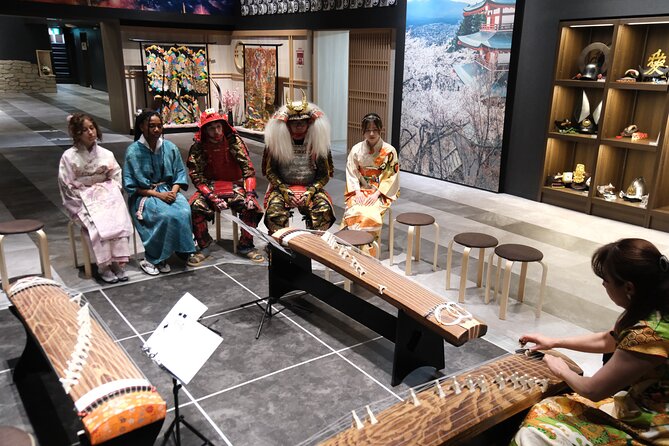
The live music is not simply background sound for the sword show. Music is presented as part of the cultural program, and you may also have the chance to take part in a music class.
That interactive element helps break up the costume portion. You are not spending the entire session watching staff perform while you remain on the sidelines. The program gives you several chances to try something for yourself.
The available details do not specify which instruments are used, how long the lesson lasts, or whether every session follows exactly the same order. I would therefore treat the music portion as a flexible part of the visit rather than expecting a fixed concert program.
Still, it is a valuable addition. A sword show gives you movement and spectacle. A music lesson gives you a closer look at how traditional sound fits into Japanese performance. Several activities also mean you have more than one chance to find something that suits your interests.
More Kimono Experiences in Osaka
- Osaka: Sumo Show & Experience w/ Optional Kimono & Hot Pot
★ 4.5 · 609 reviews - Learning Zen of Japanese Calligraphy in kimono near Osaka Castle
★ 4.5 · 53 reviews - Osaka: Kimono or Yukata Rental &Photos Service Options
★ 4.9 · 25 reviews - Kimono photoshoot-Includes 100 photo data
★ 5.0 · 21 reviews
Tea Ceremony brings a quieter change of pace
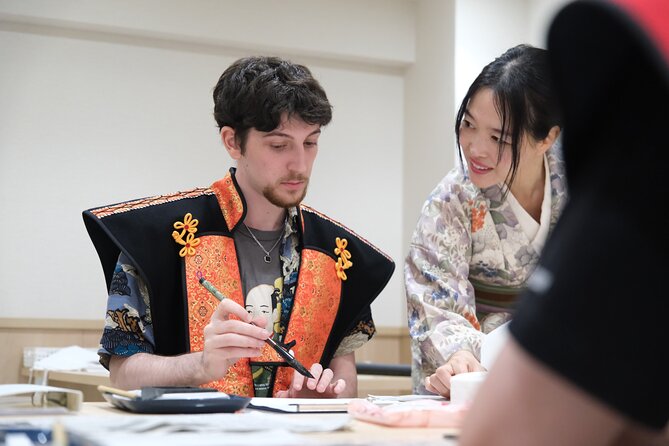
After the noise and movement of armor, the Tea Ceremony provides a useful pause. It is described as refined, and it gives you a chance to experience a more formal Japanese custom in a controlled indoor setting.
Do not expect a full study of tea culture in three hours. This is an introduction, designed for visitors who want to see and participate in a traditional ceremony without arranging a separate specialist appointment.
I like having this part alongside the samurai show. The contrast makes both sections work better. The sword performance feels more energetic after the quiet tea setting, while the Tea Ceremony feels more focused after the playful armor activities.
The available information does not specify the type of tea, the exact ceremony format, or the number of people in each session. You should book it for the experience of taking part, not for a long academic explanation of Japanese tea practice.
Coffee, tea, and complimentary hot or cold water are included at the venue. Those drinks are separate from the ceremonial experience, but they make the visit more comfortable.
Calligraphy gives you something to make
Japanese Calligraphy is another hands-on part of the program. You get to try brushwork and create your own piece rather than simply watch someone write.
This can be one of the best sections for a first visit to Japan because it gives you a physical reminder of the experience. You leave with something connected to an activity you tried yourself.
Calligraphy also rewards patience. The sword show is built around movement and performance, while brushwork asks you to slow down and pay attention to each stroke. That contrast gives the visit a better rhythm than a program made entirely of stage entertainment.
The exact materials, writing guidance, and whether your work can be taken home are not specified. I would ask staff about those details when you arrive if the finished piece matters to you.
The strong feedback for the calligraphy lesson is easy to understand. It is simple to try, suitable for beginners, and different from the usual sightseeing routine. You do not need prior experience to get something from it.
A possible kimono upgrade, and its steep price
Kimono wearing is not included in the listed price. The additional charge is ¥19,800 per person, which is substantial when added to the $123.87 admission cost.
If wearing a kimono is your main goal, check the final price carefully before committing. You may decide that samurai armor already gives you the dress-up element you want. For many people, paying extra for both costumes will not offer enough added value.
On the other hand, the kimono may appeal to you if this is a special occasion or if traditional clothing is the central reason for your visit. One couple used the experience to celebrate a 30th anniversary and received personalized attention from Roi and Maya. That kind of occasion can change how you judge the price.
The available information also includes a very positive response to the kimono experience. So the option appears to be a meaningful add-on, not a minor wardrobe change. But it remains an expensive extra, and I would not assume it is part of the standard booking.
What the staff do best
The staff are the clearest strength of this experience. The feedback repeatedly highlights friendly, polite, professional, and caring service.
That praise is especially important for an activity that involves costumes, props, unfamiliar customs, and several changes of pace. Good assistance can make the difference between feeling awkward and feeling looked after.
Roi and Maya are specifically praised for attention to detail and for accommodating individual requests. Other comments describe staff helping explain how the visit runs and making sure participants can enjoy different activities.
You should still keep your expectations realistic. Staff warmth does not turn a three-hour introduction into a complete course on samurai culture, tea, music, or calligraphy. What it does provide is a welcoming setting where you can try several new things without needing prior knowledge.
For visitors who worry about joining an activity in a foreign country, that personal help is a real part of the value.
Is $123.87 good value?
At $123.87 per person, this is not a bargain attraction. The price makes sense only if you plan to take part in several activities rather than treating the visit as a quick photo stop.
You are paying for about three hours of indoor programming, costume access, performances, traditional music, a Tea Ceremony, calligraphy, staff assistance, a locker, drinks, and Wi-Fi. Compared with booking separate cultural activities, the all-in-one format may save planning time and transport.
The value is strongest for you if:
- You want both active and quiet cultural activities.
- You enjoy participating rather than only watching.
- You are staying near Dotonbori, Namba, or Shinsaibashi.
- You need an indoor plan for poor weather.
- You are marking a special occasion.
- You want one booking that covers several different Japanese traditions.
The value is weaker if you only want to wear a costume for a few minutes, or if you already have separate plans for tea, calligraphy, and performances. The extra kimono fee also makes the total rise quickly.
The program has 5+ bookings recorded in the past month and a 5 out of 5 rating from 27 reviews, with 100 percent recommendation shown in the supplied information. Those figures suggest strong satisfaction, but they do not change the basic price question. Decide based on how many parts you will actually use.
Who should book this experience?
I would recommend it to first-time visitors who want an easy introduction to several Japanese cultural activities. It is also a good match for couples, families, cruise passengers with limited time in Osaka, and anyone who wants a weather-proof stop near Dotonbori.
It suits people who like a friendly, guided setting. You do not need to arrive with specialist knowledge, and most people can participate according to the available information.
It may not suit you if you want a long, quiet, scholarly explanation of samurai history or tea culture. The experience is active and entertainment-focused, with short introductions to several traditions rather than one deep subject.
It is also less attractive if your budget is tight. At this price, you should plan to use the full range of activities. If you do, the variety makes the cost easier to justify.
Cancellation is flexible if you act early. You can receive a full refund by canceling at least 24 hours before the local start time. Cancellations or changes within 24 hours are not accepted for a refund.
Should you book it?
Book this if you want one central Osaka stop with several hands-on cultural activities. The combination of samurai armor, sword performance, music, tea, and calligraphy gives you more variety than a single demonstration, and the staff’s personal service appears to be a major part of the appeal.
I would skip it if you only want a low-cost costume photograph or a serious, specialist study of one tradition. For everyone else, especially couples and first-time visitors, the three-hour format offers a convenient and enjoyable way to add Japanese culture to a Dotonbori day.
FAQ
Where does the experience take place?
It takes place at Shinsaibashi ARTY Inn in Osaka.
How far is the venue from Dotonbori?
The venue is about a five-minute walk from Dotonbori.
How long does the experience last?
The experience lasts approximately three hours.
What is included in the price?
The experience includes the listed cultural activities, complimentary coffee and tea, hot and cold water, Wi-Fi, and use of a locker.
Is samurai armor included?
Samurai armor dress-up and related activities are included in the experience description.
Is kimono wearing included?
No. Kimono wearing is listed separately at ¥19,800 per person.
Is the experience indoors?
Yes. All activities take place indoors.
Can I reach the venue by public transportation?
Yes. The venue is within a ten-minute walk of a station in the Namba or Shinsaibashi area.
Will I receive a mobile ticket?
Yes. The experience includes a mobile ticket, and confirmation is provided at the time of booking.
Can I cancel for a full refund?
Yes, if you cancel at least 24 hours before the experience start time. Cancellations or changes made within 24 hours are not refundable.
More Tea Ceremonies in Japan
- Kyoto: Tea Ceremony in a Traditional Tea House in Kiyomizu
★ 4.9 · 3,519 reviews - Kyoto: Tea Ceremony Ju-An at Jotokuji Temple
★ 4.9 · 3,207 reviews - Kyoto: 45-Minute Tea Ceremony Lesson Experience
★ 4.3 · 2,378 reviews - World Heritage Kyoto & Nara Uji Authentic Matcha Experience
★ 5.0 · 1,573 reviews
More Tea Ceremonies in Osaka
- Osaka: Tea Ceremony Experience
★ 4.9 · 1,426 reviews - Tea Ceremony Experience in Osaka Doutonbori
★ 5.0 · 754 reviews - Matcha Making Class in Osaka with Authentic Japanese Sweets Set
★ 5.0 · 509 reviews - Osaka: Matcha Making Experience with Japanese Sweets
★ 5.0 · 146 reviews
Just added in Japan
- A One-of-a-Kind Sushi Experience in a Special Place of Japan★ 5.0 · 15 reviews
- Tokyo Cute Bento Cooking Class – Make a Kawaii Character Lunchbox★ 5.0 · 126 reviews
- Japanese Home Cooking Class & Walk in Todoroki Temple Tokyo★ 5.0 · 88 reviews
- Japan Tokyo Tower Observatory Deck E-Ticket★ 4.0 · 34 reviews
- Catch a Baseball Game in Tokyo with a Local – Tickets Included★ 5.0 · 24 reviews
- JDM Experience with Fast&Furious RX-7 (English speaking Driver)★ 5.0 · 57 reviews
- Tokyo Private Day Tour by Car with English speaking Driver Guide★ 4.0 · 29 reviews
- Japan Classic 10 Day – One Life Adventures★ 5.0 · 129 reviews
Tea Ceremonies, compared.
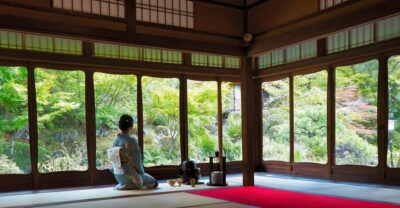
Tea Ceremony in a Traditional Tea House in Kiyomizu
Read our review →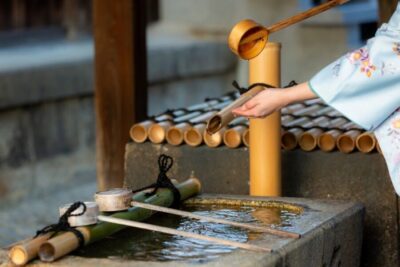
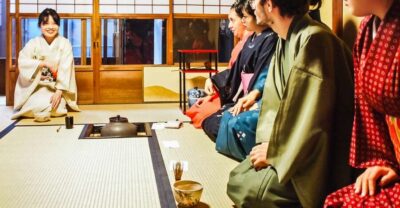
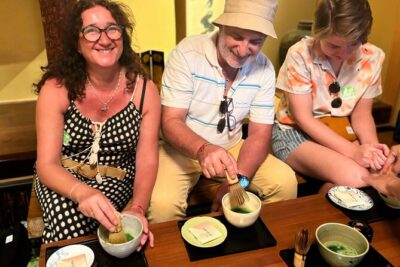
World Heritage Kyoto & Nara Uji Authentic Matcha Experience
Read our review →