
Reviewed · CASTLES AND HISTORIC SITES
Japanesel Archery Experience HIROSHIMA CASTLE SHARAKU
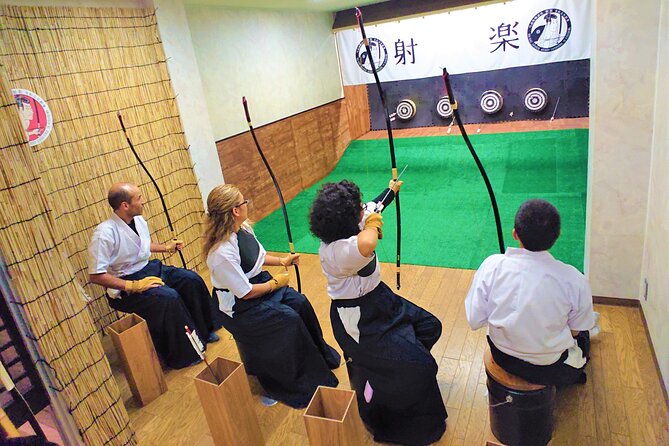
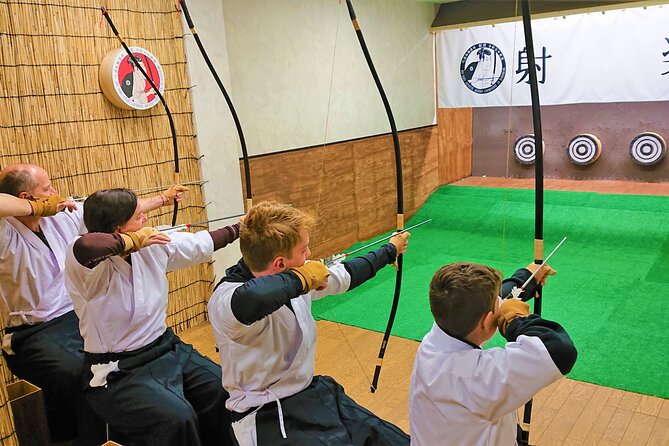
Traditional archery is harder than it looks. This one-hour session near Hiroshima Castle gives you a direct introduction to kyudo, the Japanese martial art of shooting a bow and arrow with careful form, calm focus, and respect for the equipment. You dress in dogi and hakama, watch a demonstration, learn the movements, then shoot arrows yourself.
I like the small groups of up to four people, which means the instructors can give you plenty of attention. I also like the mix of practice, cultural background, traditional clothing, and friendly competition. The main consideration is communication: some sessions rely on a translation app, and one or two people found an instructor too strict or impatient while beginners handled the equipment.
In This Review
- Key Points Before You Book
- Why Kyudo Feels Different From Western Archery
- Arriving at the Hiroshima Castle Sannomaru Ruins
- Dressing in Dogi and Hakama
- The Instruction: Slow, Precise, and Hands-On
- Your First Practice Round
- From Practice to Friendly Competition
- The Cultural Value of the Experience
- Is $43.11 a Fair Price?
- Who Will Enjoy This Most?
- Practical Advice for a Better Session
- Should You Book the Hiroshima Castle Kyudo Experience?
- FAQ
- How long does the Japanese archery experience last?
- Where does the activity begin?
- Where does the activity finish?
- How many people can join the session?
- Do I need previous archery experience?
- What clothing do participants wear?
- Can I take part if I have an arm or shoulder injury?
- Is the experience near public transportation?
- Is English instruction available?
- Can I cancel for a refund?
Key Points Before You Book
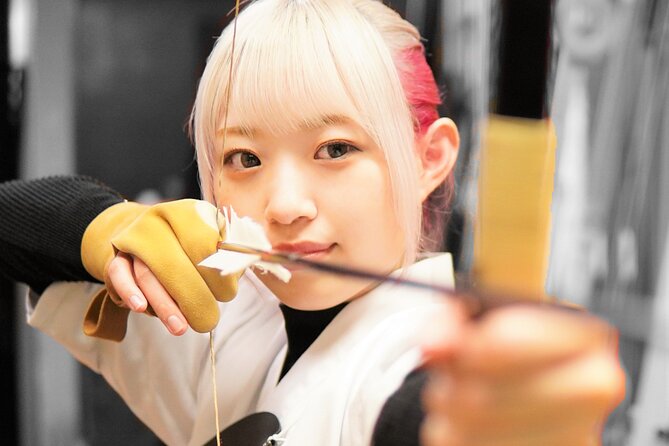
- Shoot real arrows as a beginner: You do not need to master the basics first, as you would in formal kyudo training.
- Wear dogi and hakama: The traditional uniform adds ceremony, useful instruction, and excellent photo opportunities.
- Expect a small group: The maximum is four people, with two instructors reported during some sessions.
- Plan for a full hour: You begin with instruction and practice, then may continue into several scoring rounds.
- Find it near Hiroshima Castle: The meeting point is at the Hiroshima Castle Sannomaru Ruins, close to public transportation.
- Allow for translation help: Translation apps may be used, and clear demonstrations do much of the teaching.
Why Kyudo Feels Different From Western Archery
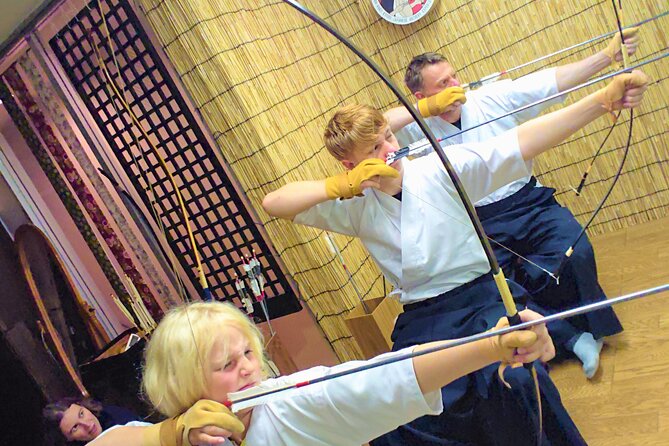
If you have tried western archery, you may recognize the basic idea immediately: hold a bow, nock an arrow, aim, and release. Kyudo asks you to slow down and pay attention to the entire sequence.
In this Japanese martial art, the shooting process follows a traditional routine. Each movement has a place. The way you stand, prepare the arrow, draw the bow, and release it is part of the practice, not just a method for hitting the target.
That difference gives the activity its character. The target matters, but so does the discipline needed to reach it. You are learning to coordinate your hands, arms, posture, breathing, and concentration. Even a missed arrow can show that your form is improving.
The instructors explain this before you begin and demonstrate the steps. For a complete beginner, the sequence can feel like a lot at first. One important detail is the bow itself: the shape and release may not behave as you expect if you are used to western equipment. Give yourself time to understand how the bow sends the arrow on its path.
More Castles and Historic Sites in Hiroshima:
- Hiroshima; Hiroshima Peace Memorial Museum and Castle Tour
★ 5.0 · 89 reviews - Osaka Castle Ticket
★ 4.7 · 12,450 reviews - Osaka Castle: Museum and Tower Entry Ticket
★ 4.5 · 2,380 reviews
Arriving at the Hiroshima Castle Sannomaru Ruins
The activity begins at Japanese Archery Experience HIROSHIMA CASTLE SHARAKU, at Hiroshima Castle Sannomaru Ruins, 21-7-2 Motomachi, Naka Ward, Hiroshima, 730-0011.
The location is convenient for fitting into a day of sightseeing around Hiroshima Castle. It is near public transportation, and the activity ends at the same meeting point, so you do not need to arrange a separate return transfer.
Finding the exact meeting point may take a little care. One participant found the instructions less clear than expected, and parking nearby can be difficult. If you are driving, allow extra time. If you are walking or using public transport, check the location before you leave and avoid arriving at the last minute.
The setting also gives the experience a useful sense of place. You are not simply visiting an indoor recreation center with Japanese decorations. You are taking part in a traditional activity beside one of Hiroshima’s major landmarks, then can continue exploring the castle area afterward.
Dressing in Dogi and Hakama
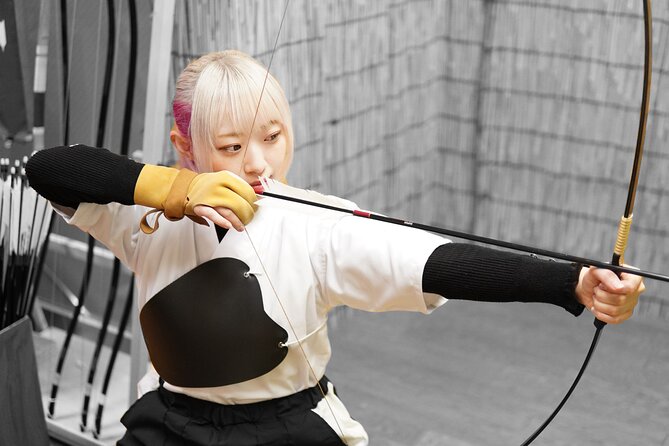
After arriving, you change into an authentic kyudo uniform. The dogi is the upper garment, while the hakama forms the lower part of the outfit.
This is not just a costume photo stop. The clothing changes how the session feels. The hakama adds a formal quality to your stance and movements, helping you understand that kyudo is practiced as a martial art rather than treated as casual target shooting.
It is also one of the most enjoyable parts for families and first-time visitors. Several children and teenagers particularly enjoyed putting on the uniform, and adults appreciated having photos and videos taken during the activity. If you are looking for a memorable picture from Hiroshima, wearing the full outfit with a Japanese bow offers something more personal than another sightseeing snapshot.
You should still treat the equipment and clothing with care. The bows, arrows, and armor are authentic and expensive, and the instructors may be firm about how you handle them. That strictness can feel uncomfortable if you are expecting a relaxed play session, especially with young children. Explain to children beforehand that they must wait for instructions before touching anything.
The Instruction: Slow, Precise, and Hands-On
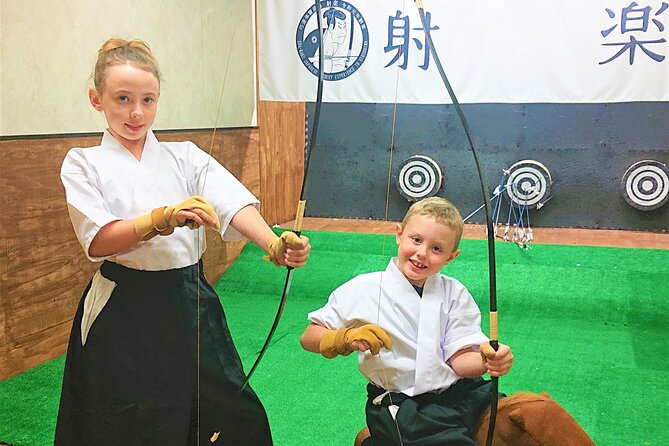
The lesson starts with an explanation of kyudo, followed by a demonstration. You then learn how to prepare and shoot the arrow step by step.
The process can seem complicated during the first few attempts. You may need to think about your feet, your grip, the arrow position, the draw, your aim, and the release all at once. That is normal. The instructors continue to correct your technique, and the small group size makes it easier to receive individual help.
Some instructors speak conversational English, while other sessions make greater use of a tablet or translation app. This has generally worked well because the movements are demonstrated directly. You can watch, copy the motion, and then receive a correction when needed.
Still, communication is worth considering. One person found the host’s manner too sharp when people made mistakes, while several others described the instructors as kind, patient, and supportive. Your experience may depend partly on which instructor leads the session and how comfortable you feel with a direct teaching style.
The activity is structured enough to feel authentic, but flexible enough for beginners. In standard kyudo practice, beginners usually do not pull and shoot a real arrow until they have mastered the basics. This lesson makes an exception so you can enjoy the central part of kyudo during a one-hour visit.
A few more options to weigh up in Hiroshima
- Peaceful Hiroshima & Miyajima UNESCO 1 Day Bus Tour
★ 5.0 · 5,309 reviews - Hiroshima Peace Memorial Museum Ticket
★ 4.8 · 2,727 reviews - Hiroshima: Hiroshima and Miyajima UNESCO Sites 1-Day Tour
★ 4.9 · 2,330 reviews - Hiroshima Peace Memorial Museum Admission
★ 4.6 · 1,308 reviews
Your First Practice Round
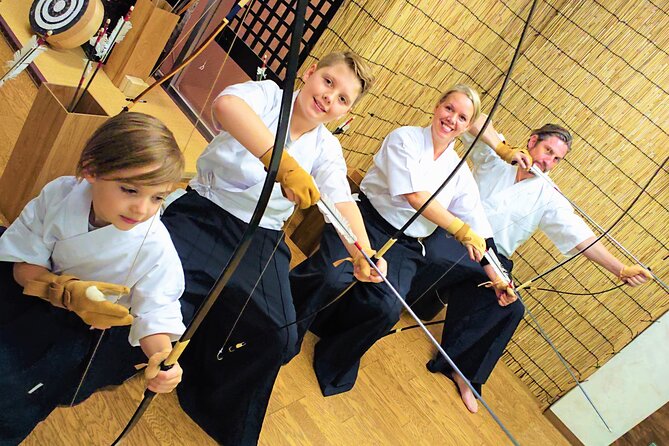
Once you understand the basic movements, you shoot a practice round. One account describes an opening round of eight arrows, with four arrows followed by another four.
This practice period is where the lesson becomes active. You are no longer watching a demonstration or trying to remember a list of instructions. You are standing at the range, drawing the bow, releasing the arrow, and seeing how your form affects the result.
Do not expect every arrow to fly straight. The bow’s shape and the unfamiliar technique can produce surprising results. You may need to aim slightly to one side to send the arrow toward the target. That can feel strange if you already know conventional archery, so listen carefully when the instructor explains how this bow behaves.
Your score may vary from shot to shot. One person may hit the target several times, while another may struggle to land an arrow close to it. The instructors focus on helping you improve, not on assuming you already have the right habits.
You may feel some strain in your hand or arm, especially if you have never used this kind of bow. The activity is short, but the draw requires effort. Anyone with an arm, hand, or shoulder injury should not book this experience.
From Practice to Friendly Competition
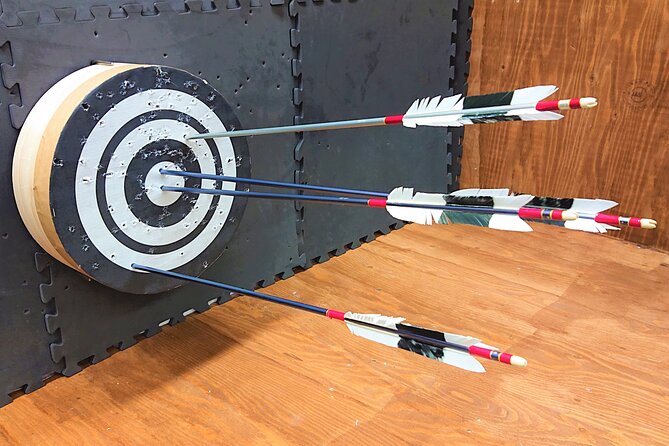
If the group learns the basic form quickly, the session can move beyond practice into a small competition. Each round is described as eight arrows, split into two sets of four.
This scoring element gives the hour a clear finish and works well for couples, families, and friends. You can compare results without needing to take the activity too seriously. The fun comes from discovering how much your accuracy changes once you stop rushing and follow the traditional sequence.
The amount of shooting can vary. A group that needs more instruction may complete fewer competition rounds. A fast-learning group may have time for several rounds and shoot more than 45 arrows each, including practice shots.
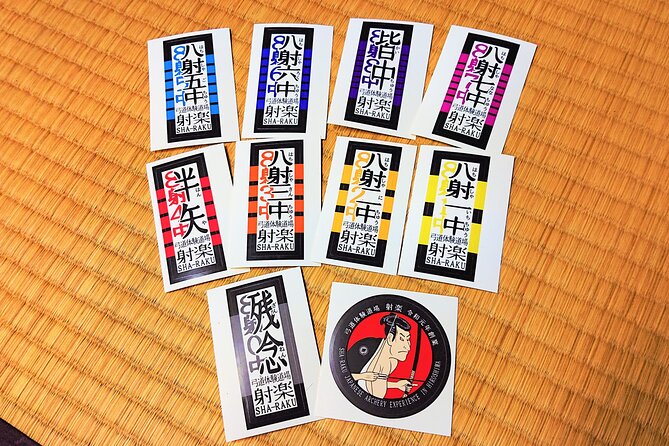
High scores can receive a special card or recognition on the wall. One group set its sights on getting all eight arrows on target, though not everyone reached that mark. The score is a pleasant extra, but the real achievement is learning a difficult new form in a short session.
If you are booking as a family, this format gives children a goal without making the lesson feel like a school exercise. Children aged 11 and 13 were described as enjoying the activity, and a 14-year-old called it an especially memorable part of the trip. Younger children can also participate, but adults should be ready to supervise them closely around the equipment.
The Cultural Value of the Experience
Hiroshima has important museums, memorial sites, and historic buildings, but a good trip also needs an activity that lets you do something. This archery session provides that change of pace.
You learn that kyudo is based on reaching a complete focus of mind and body. The traditional routine shows how Japanese martial arts connect technique with conduct. Respect for the equipment, the target, and the other people at the range is built into the activity.
The instructors also share facts about the history and mechanics of Japanese archery during the session. The information is not presented as a long lecture. It is tied to what you are doing, so the cultural context becomes easier to understand.
I find this more useful than simply dressing in traditional clothing for a photo. You wear the hakama, but you also learn why the movements matter. You leave with a better sense of the patience and control behind kyudo.
The experience is not a full formal course in the martial art. One hour is enough for an introduction, a practice round, and a game, but not for mastery. Book it for a hands-on taste of kyudo, not for advanced technical training.
Is $43.11 a Fair Price?
At about $43.11 per person, the price is reasonable if you value personal instruction and a cultural activity rather than a simple tourist photo.
Your fee covers the guided lesson, use of the bow and arrows, traditional clothing, demonstrations, and time to practice. The maximum group size of four is important here. You are not waiting behind a large crowd for one quick turn. The instructors can watch your form and offer corrections throughout the session.
The one-hour duration also makes the activity easy to fit into a busy Hiroshima schedule. You could place it before or after visiting Hiroshima Castle and nearby sights. It is long enough to feel substantial, but short enough that you are not committing half a day to an activity that may not suit you.
The value is weaker if you want a quiet museum visit or a polished English-language lesson with extensive technical detail. Translation apps may be part of the communication, and the teaching style can be direct. For most beginners, though, the clear demonstrations and personal guidance make the cost worthwhile.
The activity has a 4.9 rating from 387 reviews and is recommended by 98 percent of participants. Those figures suggest a strong record, while the occasional criticism about unclear meeting directions, parking, language, or instructor patience gives you useful points to weigh before booking.
Who Will Enjoy This Most?
This is a good choice if you want an activity that feels distinctly Japanese and gives you something to talk about afterward. It suits solo visitors, couples, families, and small groups of friends.
You do not need previous archery experience. In fact, the lesson is designed to let complete beginners shoot arrows under supervision. Experienced archers can enjoy the challenge too, but you will need to set aside familiar western archery habits and follow the kyudo method.
Families should like the short duration and competitive finish. The instructors have helped young children take part, but adults must keep an eye on children near the valuable equipment. The range is small, which means you receive attention but also need to follow safety directions closely.
This is not suitable for people with arm, hand, or shoulder injuries or disabilities that affect participation. The activity involves drawing a bow and handling arrows, so physical comfort matters more than enthusiasm.
Practical Advice for a Better Session
Arrive with enough time to find the Sannomaru Ruins meeting point. Parking can be a problem, and unclear directions may cause stress if you are rushing.
Wear the uniform. You could technically focus only on shooting, but the dogi and hakama make the experience feel more complete and produce better photos.
Listen before touching the equipment. The instructors are protective of the authentic bows, arrows, and armor for good reason. If you are bringing children, set this rule before the lesson begins.
Do not judge your ability by the first few arrows. The steps are unfamiliar, and the bow may send the arrow in a direction you did not expect. Follow the instructor’s correction, repeat the movement, and let the improvement happen gradually.
Ask for translation help when needed. A translation app is available, and the instructors can also show you the movement. You do not need fluent Japanese to take part, but you should speak up if a safety instruction is unclear.
Keep your phone ready near the end. Instructors may take photos and videos with your phone, giving you a record of the session in traditional clothing. Confirm that your phone has enough storage and battery before you arrive.
Should You Book the Hiroshima Castle Kyudo Experience?
I would book this if you want an active, unusual hour in Hiroshima and like the idea of learning through movement. The combination of traditional dress, careful form, real arrows, a small group, and a friendly competition gives you more than a basic archery lesson.
Book with realistic expectations. This is an introduction, not a full kyudo course. Communication may depend on demonstrations and translation apps, and the instructor’s manner may be firm. If you can accept those limits and follow directions carefully, the experience offers strong value at $43.11.
For families, first-time archers, and anyone seeking a memorable cultural activity close to Hiroshima Castle, it is an easy recommendation. Just allow extra time to find the meeting point, skip it if you have a relevant arm or shoulder injury, and be ready to concentrate before you start shooting.
FAQ
How long does the Japanese archery experience last?
The experience lasts approximately one hour.
Where does the activity begin?
It begins at Japanese Archery Experience HIROSHIMA CASTLE SHARAKU, at Hiroshima Castle Sannomaru Ruins, 21-7-2 Motomachi, Naka Ward, Hiroshima, 730-0011, Japan.
Where does the activity finish?
The activity ends back at the meeting point.
How many people can join the session?
The maximum group size is four people.
Do I need previous archery experience?
No. Complete beginners can take part and shoot arrows during this lesson.
What clothing do participants wear?
You wear an authentic kyudo uniform consisting of dogi for the upper garment and hakama for the lower garment.
Can I take part if I have an arm or shoulder injury?
The activity is not recommended for people with arm, hand, or shoulder injuries or disabilities.
Is the experience near public transportation?
Yes. The meeting point is near public transportation.
Is English instruction available?
Translation apps may be used to assist customers. Some instructors can provide conversational English, while other sessions may rely more on demonstrations and translation.
Can I cancel for a refund?
Yes. You can cancel at least 24 hours before the local start time for a full refund. Cancellations or changes made less than 24 hours before the start time are not accepted for a refund.
Just added in Hiroshima
- Hiroshima Peace Memorial Museum Ticket★ 4.8 · 2,727 reviews
- Hiroshima Peace Memorial Museum Admission★ 4.6 · 1,308 reviews
- Private Full Day Hiroshima Tour★ 4.5 · 29 reviews
- The Peace Memorial to Miyajima : Icons of Peace and Beauty★ 4.5 · 31 reviews
- Shore Excursion from Hiroshima Port : Private Tour in Hiroshima★ 5.0 · 17 reviews
- Hiroshima & Miyajima All-Inclusive Tour w/Licensed guide Pancho★ 5.0 · 54 reviews
- Hiroshima Country Cycling: Explore Rural Life 1 HR from City★ 5.0 · 22 reviews
- Hiroshima Saijo Sake Tasting Tour with visit to 7 Breweries★ 5.0 · 104 reviews
Castles and Historic Sites, compared.


Imperial Palace and Shogun Historical Walking Tour
Read our review →
Tokyo Castle & Imperial PalaceーShogun Walking Tour
Read our review →
Nijo-jo Castle and Ninomaru Palace Guided Tour
Read our review →
Samurai Ninja Museum Guided tour and Experience
Read our review →Browse the lists this tour appears in