
Reviewed · COOKING CLASSES
Little EDO Sushi Making workshop in Kawagoe
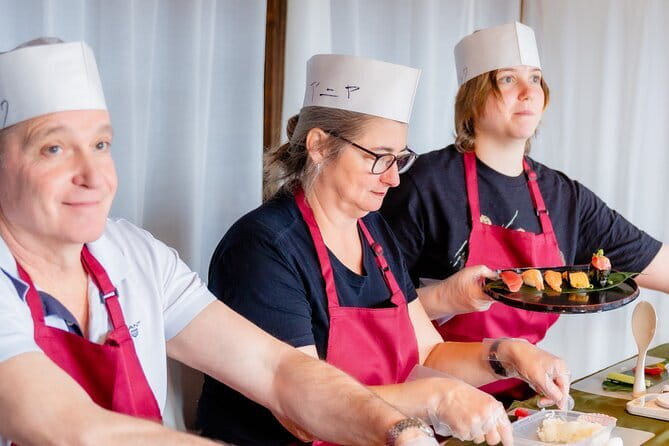
Make sushi in an old rice shop. This Kawagoe class combines hands-on nigiri and maki making with a look inside a 140-year-old building near Kashiya Yokocho. An English-speaking Japanese chef guides you through sushi rice, fish preparation, and the hand movements behind each piece.
I like the small maximum of six people, which should give you useful one-on-one help. I also like the setting, with its staircase cabinets and old ceiling beams. The main drawback is that drinks cost extra, and the scheduled class is listed as 90 minutes even though the description also calls it a two-hour class, so confirm the timing before you go.
- Historic setting: Learn inside a former rice wholesale shop with staircase cabinets and old wooden ceiling beams.
- Two sushi styles: Make both hand-formed nigiri and rolled maki sushi.
- English instruction: An English-speaking Japanese sushi chef leads the class.
- Small group: The class accepts a maximum of six people.
- Dietary planning: Vegan, vegetarian, gluten-free, halal, and several allergy requests can be arranged in advance.
- Kawagoe location: MUSUBIYA is a three-minute walk from Kashiya Yokocho.
In This Review
- Inside Kawagoe’s 140-year-old rice shop
- Meeting the English-speaking sushi chef
- Learning why nigiri is more than fish on rice
- Making sushi rice you can repeat at home
- Forming nigiri with the chef’s hand movements
- Rolling maki and eating what you make
- Timing, group size, and the Kawagoe setting
- Is $84.08 a fair price?
- Dietary requests and practical limits
- Who will get the most from this class?
- Should you book the Little EDO Sushi Making workshop?
- FAQ
- Where does the sushi class take place?
- How long does the experience last?
- What types of sushi will I make?
- Is the class taught in English?
- How many people can join?
- Is food included in the price?
- Are drinks included?
- Can I request a special menu?
- Can the class accommodate every allergy?
- Is the venue accessible without stairs?
- Is hotel pickup included?
- Can I cancel for a refund?
Inside Kawagoe’s 140-year-old rice shop
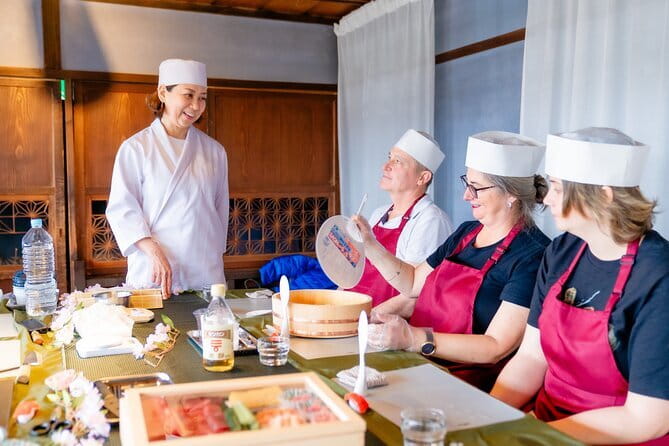
The class takes place at MUSUBIYA, also written as 結家, at 1-6-7 Ishiharacho in Kawagoe. The building began as an established rice merchant and is now a local cafe and cooking venue. That history gives the class more character than a standard kitchen studio.
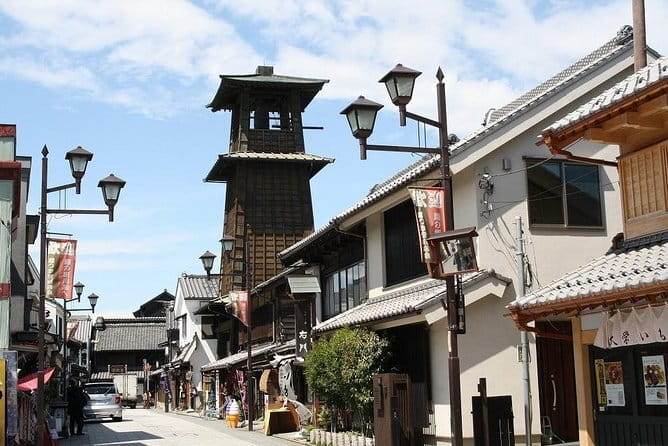
You enter a building with the feel of old Japan. Look for the staircase cabinets, an unusual storage feature built into the stairs, and the heavy ceiling beams that preserve the look of the structure from roughly a century ago. These details matter because the building connects sushi to the wider food culture of Kawagoe, rather than treating the dish as a stand-alone craft.
The location is especially handy if you are already walking around the old town. MUSUBIYA is about three minutes from Kashiya Yokocho, the famous candy alley. You can pair the class with a walk through Kawagoe’s historic streets, though the sushi session itself ends back at the meeting point.
The venue has stairs. If you prefer to avoid them, contact the provider before the class so an alternative arrangement can be discussed. Do not wait until the day of the activity.
Meeting the English-speaking sushi chef
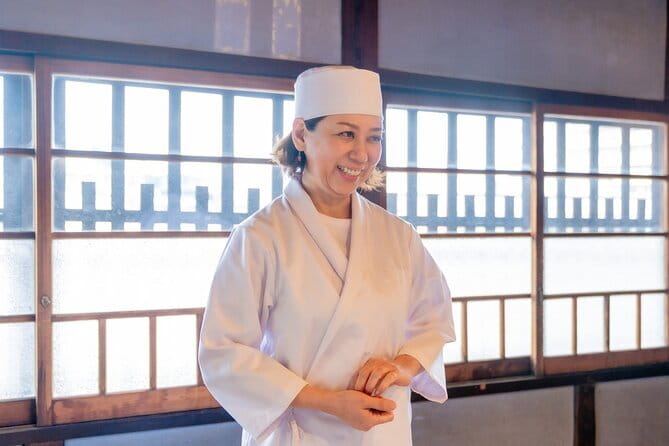
The class is led by an English-speaking Japanese female sushi chef with international experience. That is important for a practical lesson. You are not simply watching someone work quickly behind a counter and hoping to copy the motions later.
The chef explains the process in English and demonstrates the hand movements needed for sushi. One of the main goals is learning how to shape rice and topping together without crushing either one. The class also covers how to prepare the rice and how to cut neta, the fish or other topping used for sushi.
A past participant specifically valued learning the history of sushi, the method for making sushi rice, how to cut neta, and how to form nigiri. Those are useful takeaways because sushi rice is often the part home cooks get wrong. It needs the right texture and seasoning, and the rice must hold together without becoming heavy.
The small group limit of six works in your favor. With fewer people at the table, you have a better chance to see the chef’s hand position and ask for help as you work. The class is likely a better fit for active participation than for anyone who wants a quiet demonstration.
More Cooking Classes in Japan:
- Sushi Making Tokyo Roll and Authentic Japanese Sushi Class
★ 5.0 · 3,971 reviews - Tokyo: Roll and Authentic Sushi Making Class in Asakusa
★ 4.9 · 1,957 reviews - Ramen Cooking Class at Ramen Factory in Kyoto
★ 5.0 · 1,937 reviews
Learning why nigiri is more than fish on rice
One of the cultural points covered in the class is the origin of nigiri sushi. Nigiri was created in Japan about 300 years ago, making it a relatively modern form of sushi compared with older preservation methods.
That detail changes how you look at the finished piece. Nigiri is not just a slice of fish placed on rice. The rice is shaped by hand, the topping is cut to fit, and the proportions need to work together in one bite. The chef’s skill comes from small movements that look simple until you try to repeat them.
You will also get a chance to make maki sushi, or rolled sushi. Maki gives you a different problem to solve. You need to spread and position the ingredients, roll the sushi with enough pressure to hold its shape, and cut it cleanly.
Making both styles is a smart use of a short class. Nigiri teaches precision and touch. Maki gives you a more familiar entry point and shows how ingredients, rice, and seaweed work as a single roll.
Making sushi rice you can repeat at home
The most useful part of the class may be the sushi rice lesson. Fish and seaweed get the attention, but rice determines whether homemade sushi feels light and balanced or dense and clumsy.
The chef teaches a method you can recreate at home. The provided information does not specify every ingredient or measurement, so you should pay close attention during the demonstration and take notes if you want to repeat the recipe later.
You can expect the rice lesson to connect directly to the shaping work. The rice needs to be prepared properly before you attempt nigiri or maki. It also needs to be handled with care, since pressing too firmly can make the final sushi compact.
This is where the hands-on format earns its price. You are not just receiving a meal. You are practicing a basic skill, getting correction from a chef, and then eating the result. If you already make sushi often, the class may feel introductory. If sushi is something you normally order but never make, it offers a clear first step.
Forming nigiri with the chef’s hand movements

Nigiri is the technique that most clearly shows the difference between watching and doing. The chef demonstrates the movement, then you try to repeat it. The challenge is to create a neat piece without overworking the rice.
The class includes instruction on cutting neta as well. That is a worthwhile detail because topping size and shape affect the balance of the finished sushi. The exact seafood or topping selection is not specified, so check the menu when you book if particular ingredients matter to you.
You should expect some pieces to look less polished than the chef’s. That is part of the point. The value comes from understanding the sequence and learning what your hands need to do, not from producing restaurant-perfect sushi on the first attempt.
The chef’s English instruction also helps here. Sushi technique depends on short, exact directions, and it is easier to adjust your grip when you can ask a direct question. The small group setting should make that exchange more manageable than it would be in a large class.
A completely different kind of day out:
- Tokyo Disney Resort – Tokyo Disneyland & Tokyo DisneySea Park Tickets
★ 4.8 · 99,488 reviews - Universal Studios Japan Studio Pass
★ 4.8 · 89,883 reviews - Universal Studios Japan Express Pass
★ 4.7 · 53,138 reviews - SHIBUYA SKY Ticket
★ 4.7 · 46,509 reviews
Rolling maki and eating what you make
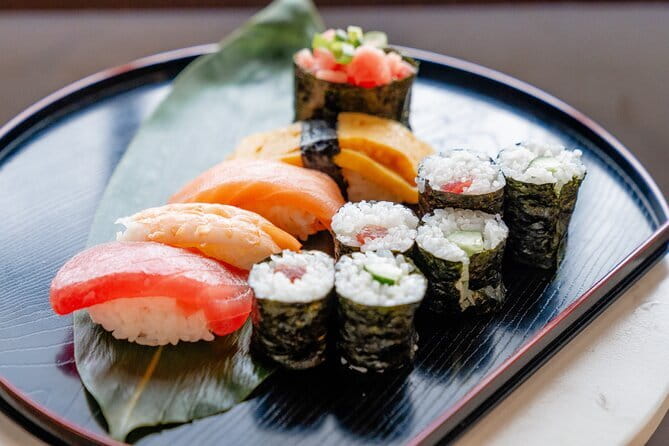
Maki sushi gives the class a second practical exercise. You work with rolled sushi and a selection of fillings, then enjoy the pieces you prepare.
The roll-making process is more forgiving than nigiri in some ways, but it still rewards careful handling. Too much filling can make the roll difficult to close. Too much pressure can squeeze out the contents. The class lets you see those problems firsthand, then eat the results rather than treating the work as a disposable demonstration.
The meal is included in the class price. Beverages are not included, so budget for a drink if you want one. The supplied details do not identify the exact menu or beverage choices, and menu changes must be requested at booking.
After you finish making the sushi, the class includes time to savor your creations. That closing meal gives the session a pleasant rhythm: learn the background, practice the technique, and sit down with what you made.
Timing, group size, and the Kawagoe setting
The activity is advertised as about one hour and 30 minutes. The detailed description also refers to a two-hour class, while the listed Monday sessions run from noon to 1:30 p.m. or from 3 p.m. to 4:30 p.m. For planning purposes, use the scheduled 90-minute window and confirm if you need the longer estimate for another part of your day.
The class is offered on Mondays during the listed operating period from May 9, 2025, through February 11, 2027. The listed times are 12 p.m. to 1:30 p.m. and 3 p.m. to 4:30 p.m. Check the available date and time when booking, since the information provided does not show a daily schedule.
A maximum of six people keeps the format personal. That makes this a good pick for a couple, a family, or a small group of friends who want to work at the same table. It may be less suitable if you need a wide range of departure times or want a larger social event.
The class is near public transportation, but hotel pickup and drop-off are not included. You need to make your own way to MUSUBIYA. The meeting point is also the ending point, which keeps the route simple once you arrive.
Is $84.08 a fair price?
At $84.08 per person, this is not a cheap lunch. It makes more sense as a cooking class, cultural activity, and meal in one package.
You are paying for ingredients, instruction from an English-speaking Japanese chef, a small group format, and the use of a historic building. The class also gives you a sushi rice method you can use at home, which adds value if you take notes and practice later.
The price is easier to justify if you want to do more than eat sushi. You get to work with both nigiri and maki, learn about the development of nigiri, and see an old rice merchant’s building from inside. The setting is part of the experience, not just a room where the cooking happens.
I would think twice if your main goal is simply to have a large sushi meal. The class includes the sushi you make, but the focus is instruction rather than quantity. Drinks cost extra, and transport to the venue is your responsibility.
The small group helps balance the price. A six-person limit gives the chef less ground to cover and gives you a better chance to receive corrections. For a first sushi-making class in Kawagoe, that level of attention can be worth more than a lower-priced session with a crowded table.
Dietary requests and practical limits
The class can accommodate vegan, vegetarian, gluten-free, and halal menus. Allergy requests are also possible, with stated exceptions for meat, nuts, fruits, and dairy.
You must request menu changes when booking. The kitchen cannot handle changes on the day of the class, so do not rely on making a last-minute request at check-in. If you have a serious allergy, provide the details clearly in advance and confirm that the proposed menu works for you.
The listed cancellation terms allow a full refund if you cancel at least 24 hours before the start time. Changes or cancellations inside that 24-hour window are not accepted for a refund.
The activity may also be canceled if poor weather affects the operation or if the minimum number of participants is not reached. In those cases, you are offered another date or experience, or a full refund. The weather condition is worth noting even though the class is indoors.
Service animals are allowed. Because there are stairs, contact the provider ahead of time if stairs present a problem.
Who will get the most from this class?
I would recommend this class to anyone who likes food with a story and prefers doing something over simply taking photos. It suits first-time sushi makers, curious home cooks, and people who want a compact activity during a day in Kawagoe.
Families may like the hands-on format, though the available information does not give a minimum age. Ask the provider before booking if children are part of your group.
The class also suits visitors who want English instruction. You can ask questions directly and receive guidance while your hands are working, which is much more useful than trying to follow a silent demonstration.
It may not be the right choice for you if you want a long, elaborate cooking program, a full drinks package, or a broad menu of dishes. The session centers on two sushi types, and its short format leaves little room for unrelated cooking lessons.
If you have only a few hours in Kawagoe, the location near Kashiya Yokocho makes it easy to combine with sightseeing. If you are coming from far outside the old town, allow time to reach Ishiharacho because pickup is not provided.
Should you book the Little EDO Sushi Making workshop?
Book it if you want a small, practical sushi lesson in a building with real local character. The strongest reasons are the English-speaking chef, the six-person limit, the chance to make both nigiri and maki, and the lesson on rice that you can repeat at home.
Before paying, confirm the exact class length, available Monday time, menu, and any dietary arrangement. Bring a willingness to practice rather than expecting every piece to look like the chef’s. At $84.08, the value lies in the instruction and setting as much as in the meal.
For a short Kawagoe activity that combines food, craft, and a historic interior, this is a solid choice. If you want only a quick sushi lunch, spend less at a restaurant and save the class for another day.
FAQ
Where does the sushi class take place?
The class takes place at MUSUBIYA, also written as 結家, at 1-6-7 Ishiharacho, Kawagoe City, Saitama, Japan.
How long does the experience last?
The scheduled sessions run for about 90 minutes. The description also refers to a two-hour class, so confirm the exact timing when you book.
What types of sushi will I make?
You will make nigiri sushi, which is hand-formed sushi, and maki sushi, which is rolled sushi.
Is the class taught in English?
Yes. An English-speaking Japanese female sushi chef leads the class.
How many people can join?
The activity has a maximum of six participants.
Is food included in the price?
Yes. The cooking-class ingredients and the meal you make are included.
Are drinks included?
No. Beverages are not included in the price.
Can I request a special menu?
Yes. Vegan, vegetarian, gluten-free, halal, and some allergy-related menu requests can be accommodated. You must request changes when booking.
Can the class accommodate every allergy?
No. The stated exclusions include meat, nuts, fruits, and dairy. Contact the provider before booking to discuss your needs.
Is the venue accessible without stairs?
The venue has stairs. If you prefer to avoid them, contact the provider in advance to ask about alternative arrangements.
Is hotel pickup included?
No. Hotel pickup and drop-off are not included. You need to reach MUSUBIYA yourself.
Can I cancel for a refund?
You can receive a full refund if you cancel at least 24 hours before the scheduled start time. Cancellations or changes made less than 24 hours in advance are not refunded.
Just added in Japan
- Tokyo Cute Bento Cooking Class – Make a Kawaii Character Lunchbox★ 5.0 · 126 reviews
- Japanese Home Cooking Class & Walk in Todoroki Temple Tokyo★ 5.0 · 88 reviews
- A One-of-a-Kind Sushi Experience in a Special Place of Japan★ 5.0 · 15 reviews
- Japan Tokyo Tower Observatory Deck E-Ticket★ 4.0 · 34 reviews
- Catch a Baseball Game in Tokyo with a Local – Tickets Included★ 5.0 · 24 reviews
- JDM Experience with Fast&Furious RX-7 (English speaking Driver)★ 5.0 · 57 reviews
- Tokyo Private Day Tour by Car with English speaking Driver Guide★ 4.0 · 29 reviews
- Japan Classic 10 Day – One Life Adventures★ 5.0 · 129 reviews
Cooking Classes, compared.
Sushi Making Tokyo Roll and Authentic Japanese Sushi Class
Read our review →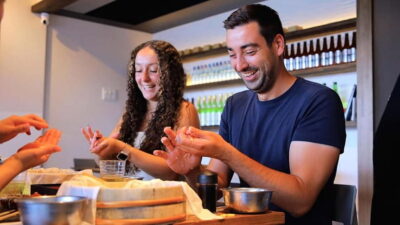
Roll and Authentic Sushi Making Class in Asakusa
Read our review →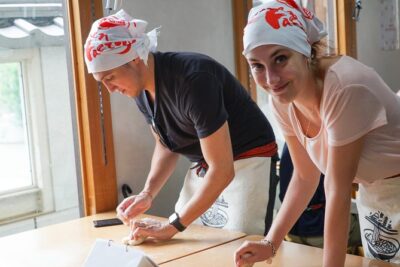
Ramen Cooking Class at Ramen Factory in Kyoto
Read our review →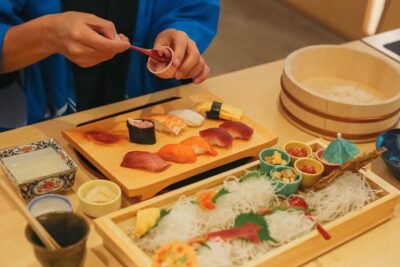
Sushi Making Class in a Happi Coat near a Famous Spot
Read our review →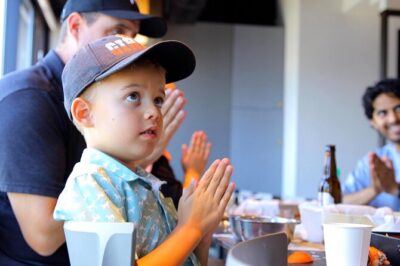
Sushi Making Osaka Roll and Authentic Japanese Sushi Class
Read our review →
Tokyo Sushi Making Class in Tsukiji with Professional Chef
Read our review →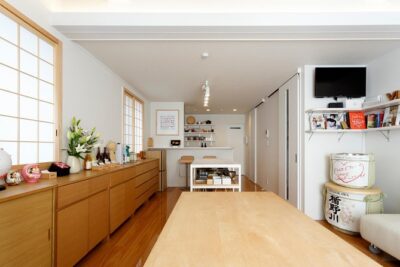
Ramen & Gyoza Cooking Class in Tokyo with Local Supermarket Visit
Read our review →Browse the lists this tour appears in