
Reviewed · TEMPLES AND SHRINES
Miyajima Highlights: Itsukushima Shrine & Island Nature
Miyajima rewards a slower pace. This private, five-hour walking tour combines Itsukushima Shrine and its famous floating torii gate with Daishoin Temple, Senjokaku, local shopping streets, and quieter corners of the island. I like the one-to-one format, which lets you ask questions as they arise, and I like the chance to shape the outing around your interests instead of following a fixed group script.
The guides also bring more than dates and names. Aya, Yuka, Masayo Kobayashi, Masa, and Mana have each been praised for being kind, flexible, and attentive, with several guides sharing personal connections to Hiroshima and Miyajima. The main consideration is cost: at $141.23 per person, you are paying for private attention rather than transport, food, or a long list of included admissions.
You should also plan for plenty of walking and public transportation. The ¥1,340 transportation charge is separate, lunch is not included, and the tour depends on good weather. Still, for a first visit to Miyajima, the mix of sacred sites, nature, food, and local explanation gives you a useful half-day on one of Hiroshima’s most memorable outings.
In This Review
- Key points to know before booking
- Why a private half-day works well on Miyajima
- Leaving Hiroshima by public transportation
- First impressions of Miyajima and its sacred character
- Seeing the floating torii at two different tides
- Entering UNESCO-listed Itsukushima Shrine
- Daishoin Temple, the quieter spiritual stop
- Senjokaku and a broad, quiet hall
- Omotesando Street and Miyajima’s edible souvenirs
- Guides who add a human side to the day
- What the $141.23 price really buys
- Who should book this Miyajima tour?
- Should you book it?
- FAQ
- How long does the Miyajima tour last?
- Is transportation included in the tour price?
- Is the Itsukushima Shrine admission included?
- Can the tour include Peace Memorial Park?
- What happens at high and low tide?
- Is lunch included?
- Is this a private tour?
- Can I cancel for a full refund?
Key points to know before booking
- Private attention from a local guide: Only your group participates, so you can ask questions freely and request changes to the pace or focus.
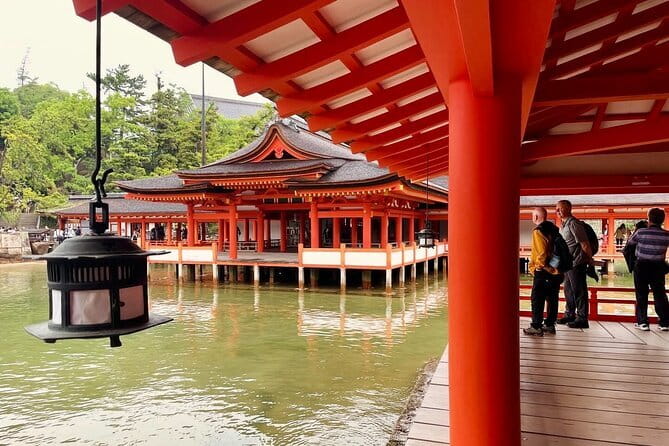
- Tide changes the torii experience: At high tide, the gate appears to float offshore. At low tide, you can walk near it and see its scale from ground level.
- Daishoin adds depth beyond the main shrine: This old temple sits amid Miyajima’s natural setting and offers a quieter, more varied visit.
- Public transport keeps the price clearer: Trains, ferries, and other standard transport cost ¥1,340 per person, while direct boats and taxis cost extra.
- Local food comes after the monuments: Omotesando Street is the place to consider oysters, conger eel rice, and momiji manju.
- The schedule can connect with Hiroshima sights: The order may be adjusted to include Peace Park, but you should confirm the timing and transport plan in advance.
Why a private half-day works well on Miyajima
Miyajima is easy to recognize and harder to understand. The floating torii is the picture everyone knows, but the island’s meaning comes from the relationship between shrine, temple, mountain, forest, deer, and sea. A guide helps connect those pieces.
This tour is private, not a large walking group. That matters in a place where questions can range from simple practical points, such as how the tide works, to more sensitive subjects involving Japanese religious traditions and Hiroshima’s past. You do not need to save questions for a scheduled stop or worry about slowing down strangers.
The flexible format is especially helpful for families, cruise passengers, and people with limited time. One family visiting from a cruise found the half-day schedule workable, while another group appreciated changing the pace to suit their interests. The tour can also be adapted around Hiroshima’s Peace Park, although the exact order is not fixed.
I would not choose this experience if you want a cheap transfer with a quick photo stop. The value comes from conversation, interpretation, and personal attention. If you prefer exploring alone with a guidebook, the price may feel high. If you want someone to explain why a site matters and help manage the day, the private setup is easier to justify.
More Temples and Shrines in Hiroshima
- Hiroshima and Miyajima Day Trip with Itsukushima Shrine & Ferry
★ 5.0 · 378 reviews - Miyajima: Cultural Experience in Zen Temple
★ 5.0 · 258 reviews - Day Trip to Hiroshima & Miyajima with Itsukushima Shrine
★ 4.6 · 124 reviews
Leaving Hiroshima by public transportation
The meeting point is arranged at a hotel or train station in Hiroshima City, with the guide meeting you on foot. From there, the journey to Miyajima uses public transportation. The listed transport cost is ¥1,340 per person, paid separately.
The trip to and from the island takes time. The return movement toward Peace Memorial Park is described as about one hour using a ferry, JR service, or train. A direct boat to Peace Memorial Park is also possible as an option, with a stated journey of about 45 minutes and an additional cost. Private transport such as fast boats, direct boats, or taxis can cost roughly ¥2,300 to ¥8,000 each way.
This is useful information when planning your day. Five hours sounds generous, but part of it is spent moving between Hiroshima and Miyajima. You should not place a tight museum reservation immediately after the tour unless the guide has confirmed the transport plan.
The transport itself is part of the outing. You see how Miyajima fits into Hiroshima rather than treating it as an isolated attraction. Still, you pay your own fare, and the tour does not include a private vehicle.
First impressions of Miyajima and its sacred character
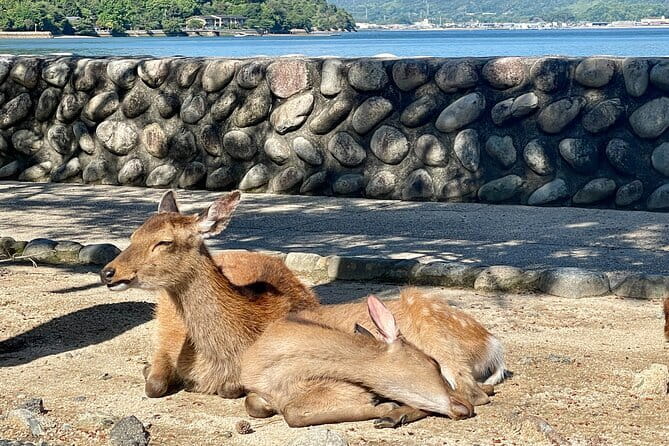
Miyajima has long been regarded as a sacred island, often described as the island of the gods. Deer are part of that first impression. They are treated as messengers of the gods and may be seen as you enter and move around the island.
The scheduled introduction to Miyajima is short, about 30 minutes, but your guide can add context as you walk. This is where the private arrangement earns its keep. A guide can explain the island’s religious importance while you are actually seeing the deer, water, shrine buildings, and wooded surroundings.
Do keep your attention on the practical side, too. Deer are a memorable part of the visit, but they are not the main attraction. The day is built around places of worship and cultural meaning, not simply wildlife viewing.
Seeing the floating torii at two different tides
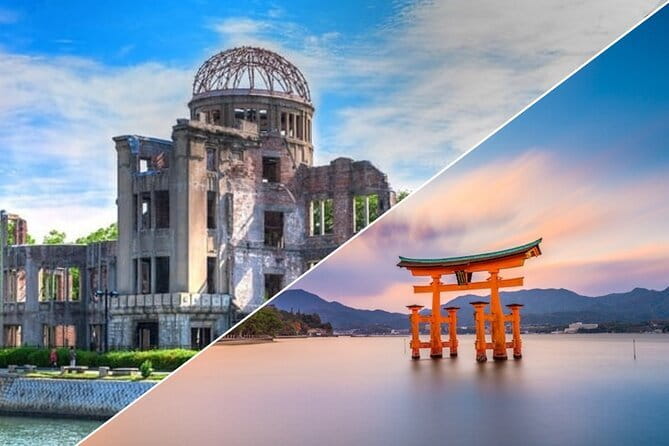
The torii gate is the visual centerpiece of Miyajima. At high tide, seawater surrounds its lower structure, creating the famous floating appearance. At low tide, the water recedes and you can walk near the gate, which gives you a much better sense of its size.
The schedule allows about 15 minutes at the torii. That is enough for a focused stop, but the experience will depend heavily on the tide when you arrive. If the gate is surrounded by water, you get the classic view. If the tide is out, you gain a close look at the structure and its setting.
This is one reason to ask about timing before the tour. The order of stops can change, but the tide follows its own timetable. You should not expect the guide to control which version you see.
The gate is also a good example of why local explanation helps. Its appearance is not just a matter of scenery. It forms part of the sacred approach to Itsukushima Shrine, where the sea is central to the site’s identity. A guide can give you the cultural context while keeping the visit grounded in what you can see.
A completely different kind of day out:
- Peaceful Hiroshima & Miyajima UNESCO 1 Day Bus Tour
★ 5.0 · 5,309 reviews - Hiroshima Peace Memorial Museum Ticket
★ 4.8 · 2,727 reviews - Hiroshima: Hiroshima and Miyajima UNESCO Sites 1-Day Tour
★ 4.9 · 2,330 reviews - Hiroshima Peace Memorial Museum Admission
★ 4.6 · 1,308 reviews
Entering UNESCO-listed Itsukushima Shrine
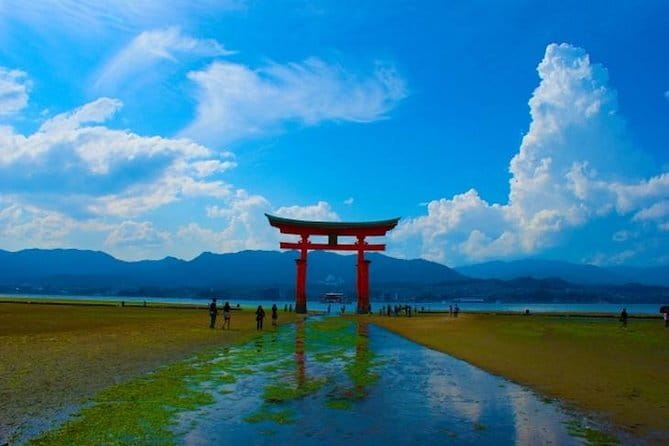
Itsukushima Shrine is the tour’s main paid admission and the place where the island’s relationship with the sea becomes clearest. The shrine is built above the water and changes in appearance as the tide moves. It is both a National Treasure and a UNESCO World Heritage site.
The planned visit lasts about 30 minutes. That is enough to see the principal areas, though visitors who enjoy architecture or religious history may want more time. You should tell your guide early if the shrine is your top priority, since the tour is customizable but still has to fit within five hours.
The setting can make the shrine feel very different from a conventional inland temple. Water, walkways, open views, and changing tide levels all shape the visit. I like that the tour does not stop at the postcard image of the torii. It takes you inside the shrine and then continues to another major religious site.
The entrance fee is included, which removes one small expense from the day. Food, drinks, and transport are not included, so keep those separate in your budget.
Daishoin Temple, the quieter spiritual stop
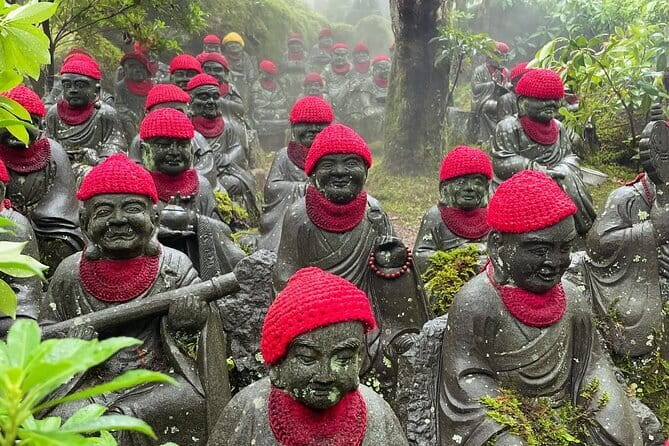
Daishoin Temple receives about 45 minutes, making it one of the longer stops. It is described as the oldest temple on Miyajima and is set amid the island’s natural surroundings. The temple has many points of interest, and its long connection with powerful historical figures, including Shogun Hideyoshi, adds another layer to the visit.
For me, Daishoin is important because it prevents the tour from becoming a single-site excursion. Itsukushima Shrine is the famous name, but Daishoin helps you see that Miyajima’s religious character is broader than one gate and one shrine.
The temple is also likely to suit you if you prefer a calmer setting. The tour description emphasizes quieter areas beyond the main landmarks, and Daishoin provides a natural place for that slower pace. You can ask about Buddhist practice, island traditions, architecture, and the differences between shrine and temple customs.
The route is still a walking tour, so comfortable shoes matter. The information provided does not promise a fully level route or a particular amount of stair climbing. If mobility is a concern, discuss the route when arranging the tour rather than assuming every stop will be easy.
Senjokaku and a broad, quiet hall
Senjokaku is a large hall connected with Itsukushima Shrine and built in the 16th century under orders from Shogun Hideyoshi. Its open, wall-less spaces create a different mood from the more detailed shrine buildings.
The stop lasts about 20 minutes. Admission is not included, so you should confirm the current entrance charge with your guide or at the site. The hall’s appeal is less about a packed program and more about space, views, and a chance to pause.
I would especially value this stop after the shrine. Itsukushima gives you ceremonial structure and water. Senjokaku gives you a broad, quiet interior. Together, they show two different ways religious buildings shape the experience of Miyajima.
Omotesando Street and Miyajima’s edible souvenirs
The final island stop is Omotesando Shopping Street, with about 40 minutes to browse. Food shops and souvenir stores sell well-known Miyajima specialties, including oysters, conger eel rice bowls, and momiji manju, the island’s steamed maple-leaf-shaped cakes.
Nothing is included for lunch, so this is your chance to buy a snack or meal, although 40 minutes may not allow a leisurely restaurant visit if the day is running late. If food matters to you, tell the guide at the start. The private format may make it easier to decide how much time to spend eating rather than shopping.
Momiji manju is also practical as a small gift. One guide even gave a rice scoop and kanji keychains to a family, showing the personal touch that can develop during a private outing. Such gifts are not part of the formal inclusions, so do not book expecting them, but the guides appear comfortable sharing small local connections.
Omotesando is the most commercial section of the tour. That is not a flaw, but it is a contrast with Daishoin and the quieter paths. I would keep your expectations balanced: this is a useful place for food and souvenirs, not a secluded village street.
Guides who add a human side to the day
The strongest theme in the available feedback is the guides’ personal care. Aya was praised for punctuality, professionalism, flexibility, and warmth. Yuka helped a mother and daughter arrange island tickets and guided them through the day, while also explaining Hiroshima and Miyajima in a clear, enjoyable way.
Masayo Kobayashi was described as kind and attentive, and Masa received particular praise for sharing family stories and explaining the meaning of Miyajima. Mana brought a personal connection as a second-generation Hiroshima survivor, making the discussion of the city’s past especially moving.
These details matter because Miyajima can otherwise become a rapid sequence of famous names. The guide’s role is not just to point at buildings. It is to help you connect religion, family memory, local food, and Hiroshima’s wider story.
English ability was specifically praised in one family’s experience. Still, guide assignments can vary, and the tone of the day will depend on who leads your group. You should use the advance customization consultation to share your interests, such as theology, architecture, Hiroshima history, food, or a relaxed family pace.
What the $141.23 price really buys
At $141.23 per person, this is not the bargain option for reaching Miyajima. The public transportation fee of ¥1,340 per person is extra, and you also pay for food, drinks, optional private transport, and gratuities.
The price makes more sense for a small group that values a private guide. If several people share the experience, the cost per group can be easier to accept than booking separate services or trying to organize every train, ferry, admission, and walking route alone.
Included benefits are the Itsukushima Shrine entrance, photo data from the tour, advance planning, and a live local guide. Senjokaku admission is not included. The photo data is a pleasant extra, but the main value is the guide’s undivided attention and the ability to ask for cultural context in real time.
A 5 rating from 21 published ratings and a 100 percent recommendation mark show a very strong satisfaction record. That does not remove the need to consider your priorities. You pay for quality of contact and flexibility, not luxury transport or a private meal.
Who should book this Miyajima tour?
I think this tour suits:
- First-time visitors who want the main sights explained properly
- Families who need a flexible pace
- Cruise passengers with limited time in Hiroshima
- History teachers, students, and curious readers who want more than photographs
- Small groups interested in religion, architecture, food, or local customs
- People who prefer a private conversation to a large scheduled group
You may want another option if you are trying to minimize cost, dislike walking, or want to spend a full day hiking and exploring Miyajima at your own pace. The experience covers a lot in five hours, but it cannot give every site unlimited time.
For a balanced day, ask about the tide, your preferred shrine timing, the amount of shopping, and whether Peace Park should be included or handled separately.
Should you book it?
Book this tour if you want Miyajima explained by a caring local guide and you value a flexible private schedule. Its strongest points are the personal attention, the thoughtful cultural background, and the balance between Itsukushima Shrine, Daishoin, Senjokaku, food, and island life.
Skip it if your main goal is simply to reach the floating torii as cheaply as possible. The added cost is worthwhile when you want the island to make sense, not just look good in a photograph.
FAQ
How long does the Miyajima tour last?
The experience lasts approximately five hours, including travel by public transportation between Hiroshima and Miyajima.
Is transportation included in the tour price?
No. Public transportation costs ¥1,340 per person and must be paid separately. Optional fast boats, direct boats, and taxis cost extra.
Is the Itsukushima Shrine admission included?
Yes. The entrance fee for Itsukushima Shrine is included. Admission to Senjokaku is not included.
Can the tour include Peace Memorial Park?
The order of the tour can be changed between Miyajima and Peace Park. Confirm the preferred arrangement and timing with the guide before the experience.
What happens at high and low tide?
At high tide, the torii gate appears to float on the sea. At low tide, you can walk near it and see its size from a closer position.
Is lunch included?
No. Food and drinks are not included. You can consider local specialties such as oysters, conger eel rice, and momiji manju during the Omotesando Street stop.
Is this a private tour?
Yes. Only your group participates, and the experience includes a private local guide.
Can I cancel for a full refund?
You can cancel at least 24 hours before the start time for a full refund. If poor weather causes the tour to be canceled, you will be offered another date or a full refund.
Just added in Hiroshima
- Hiroshima Peace Memorial Museum Ticket★ 4.8 · 2,727 reviews
- Hiroshima Peace Memorial Museum Admission★ 4.6 · 1,308 reviews
- Private Full Day Hiroshima Tour★ 4.5 · 29 reviews
- The Peace Memorial to Miyajima : Icons of Peace and Beauty★ 4.5 · 31 reviews
- Shore Excursion from Hiroshima Port : Private Tour in Hiroshima★ 5.0 · 17 reviews
- Hiroshima & Miyajima All-Inclusive Tour w/Licensed guide Pancho★ 5.0 · 54 reviews
- Hiroshima Country Cycling: Explore Rural Life 1 HR from City★ 5.0 · 22 reviews
- Hiroshima Saijo Sake Tasting Tour with visit to 7 Breweries★ 5.0 · 104 reviews
Temples and Shrines, compared.
![[Kyoto & Nara Day Tour] Sagano Scenic Railway & Nara Park & Fushimi Inari Taisha Thousand Torii Gates & Togetsukyo Bridge & Bamboo Grove & Kimono Forest (Departing from Osaka)](https://media.japanvisits.com/wp-content/uploads/kyoto-nara-day-tour-sagano-scenic-railway-nara-park-fushimi-inari-taisha-thousand-torii-gates-togetsukyo-bridge-bamboo-grove-kimono-forest-departing-from-osaka-k110001-400x257.jpg)
Kyushu One-Day Tour: Yufuin no Mori Train & Yufuin Town & Nyoirin-ji Temple & Dazaifu & Hell Hot Springs (Departing from Fukuoka)
Read our review →
Fushimi Inari, Kinkakuji, Bamboo Grove 1 Day Bus Tour
Read our review →
Tea Ceremony in a Traditional Tea House in Kiyomizu
Read our review →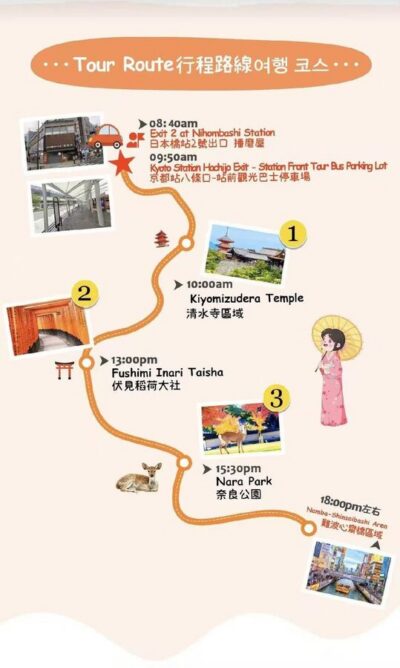
Kyoto Nara Day Trip │ Kiyomizu-dera Temple + Fushimi Inari-taisha Shrine + Nara Park (Departing from Osaka/Kyoto)
Read our review →
Browse the lists this tour appears in