
Reviewed · WALKING TOURS
Osaka: Walking Tour and Top Highlights
Osaka rewards a fast start. I like the way this four-hour tour links Osaka Castle, Shitennoji Temple, Shinsekai, Kuromon Market, and Dotonbori without wasting time on long transfers. I also like the guide’s practical role: taking photos, explaining local customs, and helping you use the subway. The tradeoff is a demanding pace, with roughly 15 minutes at several stops and plenty of walking.
The tour works especially well on a first visit, when Osaka can feel like a city of separate worlds. Guides including Minori, Kenji, Buchi, Nagi, and Haruka have been praised for adjusting the route, answering questions, and offering food suggestions. Bring comfortable shoes and cash, since subway fares and the castle admission are extra.
In This Review
- Key points to know before you go
- Why this tour makes sense for a first day in Osaka
- Osaka Castle and Hokoku Shrine: 65 minutes of history
- Shinsekai and Tsutenkaku: Osaka’s retro side
- Shitennoji Temple: a quiet contrast
- Kuromon Ichiba Market: save your appetite
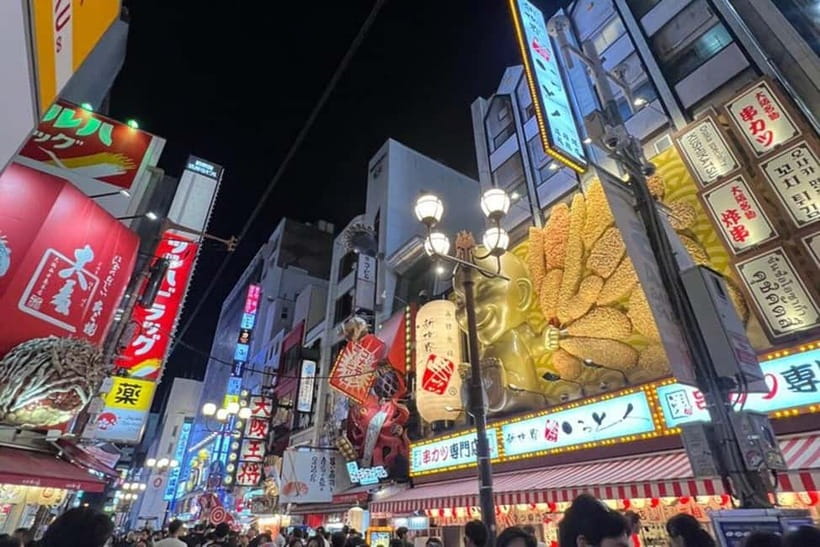
- Dotonbori: the right place to finish
- What the guides add to the experience
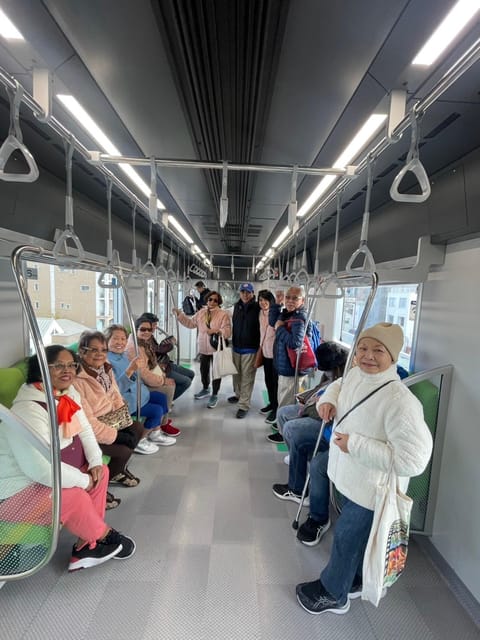
- Pace, transport, and comfort
- Who should book this Osaka walking tour?
- Should you book it?
- FAQ
- How long does the Osaka walking tour last?
- What is included in the tour price?
- Are subway fares included?
- Is Osaka Castle admission included?
- Where does the tour meet?
- Does the tour operate in rainy weather?
- Is hotel or cruise-terminal pickup available?
Key points to know before you go
- Six major Osaka sights in four hours: The route covers the castle, two historic religious sites, Shinsekai, Kuromon Market, and Dotonbori.
- Subway travel keeps the route moving: Expect about 40 minutes underground, with approximately ¥800 in fares not included in the tour price.
- The best food stops come late: Kuromon Ichiba Market and Dotonbori give you time to look, taste, and decide where to eat afterward.
- The guides add real practical value: They help with photos, explain Osaka’s past and present, and can suggest restaurants and shopping areas.
- This is a walking tour, not a gentle stroll: The operator says it is unsuitable for people with mobility impairments, recent surgery, or those over 75.
- The meeting point takes attention: Find the Osaka JOINER base in Namba Walk, between exits B21 and B23, near the DOCOMO and MIZUNO shops.
Why this tour makes sense for a first day in Osaka
Osaka is easy to enjoy and surprisingly easy to misread. The castle is far from the food markets, the temples feel removed from the neon districts, and Shinsekai has a personality all its own. This tour ties those pieces together in one day, giving you a useful map of the city before you explore on your own.
The price is $64 per person. That is fair if you value an English-speaking guide, photo help, local explanations, and the convenience of moving between distant sights. You should add about ¥800 for subway fares, ¥1,200 if you enter Osaka Castle, and extra money for snacks or drinks. The guide must be paid in cash, so do not arrive with an empty wallet.
You can choose a private or small-group format. A private booking gives you more room to ask questions and adjust the experience. That flexibility has mattered for people who wanted more time at certain stops, restaurant advice, or help with the subway. In one especially useful example, a guide showed a visitor how to use Osaka’s train system, saving the need for taxis later.
The meeting point is in Namba Walk, an underground shopping arcade. Look between exits B21 and B23, and use the DOCOMO and MIZUNO shops as landmarks. Namba Walk has two parallel walkways, so if you cannot see the store between those businesses, check the other side rather than wandering through the entire complex.
More Walking Tours in Osaka
- Osaka: Hotspots & Hidden Gems Walking Tour Private or Group
★ 4.9 · 1,300 reviews - Osaka Local Foodie Walking Tour in Dotonbori and Shinsekai
★ 5.0 · 985 reviews - Osaka Bar Hopping Night Walking Tour in Namba (3 bars, 6 tastes)
★ 5.0 · 958 reviews
Osaka Castle and Hokoku Shrine: 65 minutes of history
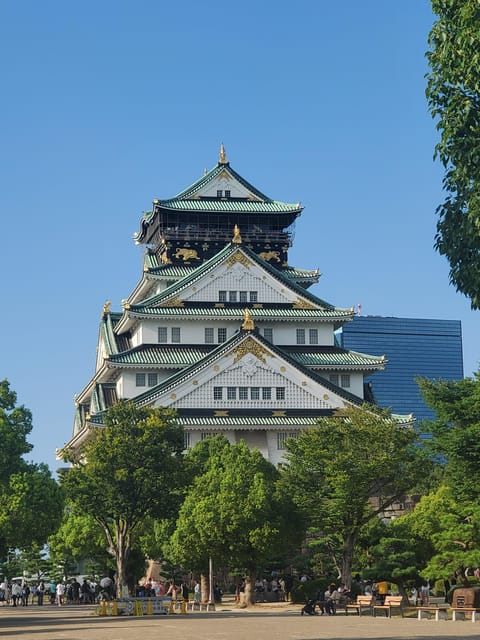
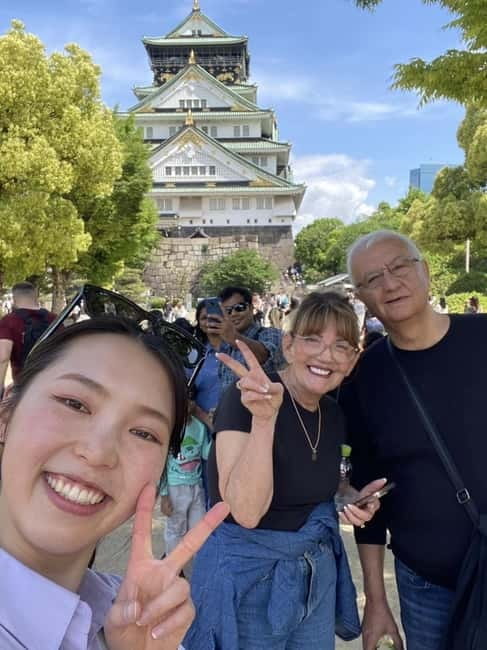
The tour begins with a subway ride of about 15 minutes, followed by roughly 50 minutes at Osaka Castle. That time includes the castle grounds and surrounding park, along with photo stops and sightseeing. The outdoor setting is a strong part of the visit, especially if you want views, gardens, and a sense of the castle’s scale without spending the whole morning indoors.
You can pay ¥1,200 for castle entry if you want to go inside. That fee is not included, and the schedule does not leave unlimited time for a long interior visit. I would decide before the tour starts. If the castle’s displays are a priority, you may want to confirm with your guide how the entry fits into the group’s timing.
The nearby Hokoku Shrine receives about 15 minutes. This is a short stop, but it adds useful context to the castle visit. Your guide can connect the shrine and castle area to Osaka’s past, while you get a quieter place for photographs before the tour returns to the subway.
The first section is strongest for orientation. You get a major landmark, open park space, and a historic religious site in one area. The limitation is simple: the schedule favors breadth, so you should not expect a long, unhurried castle visit.
Shinsekai and Tsutenkaku: Osaka’s retro side
Another subway ride of about 15 minutes brings you to Shinsekai, known as Osaka’s New World. You receive around 20 minutes for a break, photographs, shopping, and a short walk, followed by about 15 minutes at Shinsekai Market and 10 minutes near Tsutenkaku Tower.
This district gives the tour a welcome change of mood. Osaka Castle presents a formal, historic image. Shinsekai is more playful and everyday, with local food, old-fashioned streets, and the tower as a bright visual marker. The tour does not simply whisk you past it for a photograph. You have a little time to look around and notice how the area feels.
The Shinsekai Market stop includes tea, and a matcha tea experience is available if you select that option. Check your chosen option carefully, since matcha is not automatically included in every booking. The stop is short, so think of it as a taste of local custom rather than a full tea ceremony lesson.
Tsutenkaku receives only about 10 minutes. That is enough for a photo and a quick explanation, but not enough for a slow tower visit. If you want extensive time inside the tower, this tour is not designed around that goal.
I like Shinsekai because it helps you see Osaka beyond polished landmarks. You get a glimpse of the city’s food culture and local character, then move on before the day loses momentum. Keep your camera ready and do not spend the entire break in one shop.
Shitennoji Temple: a quiet contrast
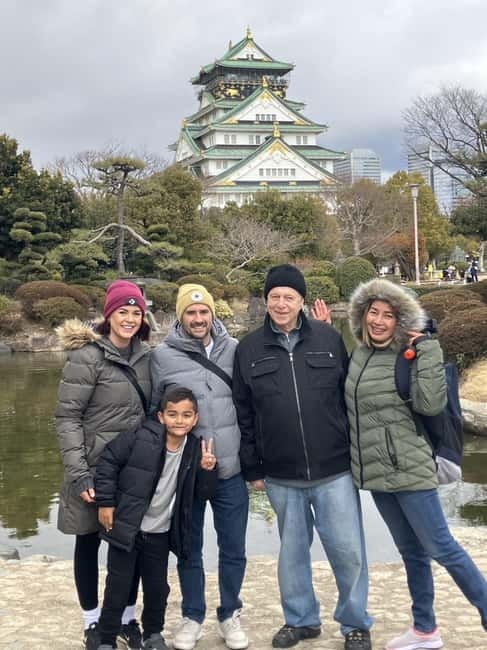
After another subway trip of approximately 15 minutes, the group reaches Shitennoji Temple for about 30 minutes. The tour presents it as one of Japan’s oldest Buddhist temples, with historic architecture and gardens.
Thirty minutes is a sensible amount of time for a first look. You can walk through the grounds, take photographs, and listen to an explanation of the temple’s importance. It also gives the day a needed pause after Shinsekai’s signs, shops, and street energy.
The guide’s explanation matters here. Temple visits can blur together when you are moving quickly through Japan, but a local guide can point out what to notice and explain the place in relation to Osaka’s history and religious traditions. Guides such as Ken and Miki have been praised for making the background clear while answering questions along the way.
This is still a group outing, so you will not have unlimited time for quiet reflection. If you prefer spending an hour or more at temples, save a return visit for another day. For a first introduction, the half-hour stop gives you a meaningful sample without dropping the rest of the route.
More Walking Tours in Japan:
- Kyoto Geisha Walking Tour: Gion District & Hidden Gems
★ 4.7 · 3,273 reviews - Tokyo Tsukiji Fish Market Food and Culture Walking Tour
★ 5.0 · 3,184 reviews - Kyoto: Gion Magical Night Walking Tour with Geisha Trivia
★ 4.9 · 2,393 reviews - Tokyo: Imperial Palace and Shogun Historical Walking Tour
★ 5.0 · 2,251 reviews
Kuromon Ichiba Market: save your appetite
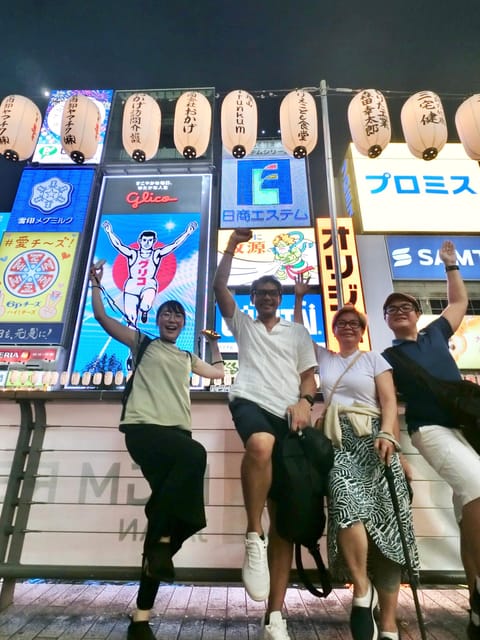
The next subway ride takes about 10 minutes, followed by a 20-minute walk through Kuromon Ichiba Market. This is one of the tour’s most useful stops because it turns Osaka’s food reputation into something you can see and taste.
Kuromon is often called Osaka’s kitchen. You can browse fresh seafood, street food, local snacks, and other treats, with time for free exploration and food tasting. Food and drinks are not included, so bring cash and decide how much you want to spend before the display counters start making decisions for you.
Twenty minutes goes quickly. I would use the guide’s help to identify one or two foods, then leave room to choose something that catches your eye. You are not getting a full market lunch here, but you are getting a practical introduction to a place you may want to revisit.
The guide can also help you understand how locals shop. One guide, Halu, was praised for showing exactly that side of Osaka, which is more useful than simply pointing at a row of seafood stalls. The market becomes a lesson in daily life, not just a snack break.
If food is your main reason for booking, be realistic about the timing. Kuromon is an appetizer. You may want to return later with more time, especially if you plan to sample several dishes or shop for edible gifts.
Dotonbori: the right place to finish
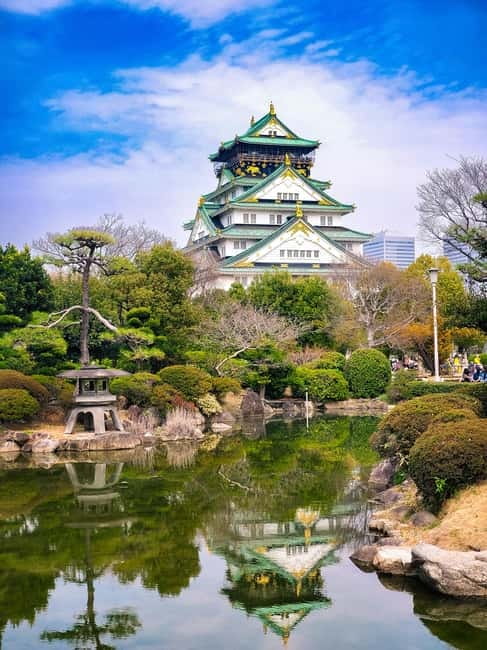
From Kuromon Market, you walk for about 10 minutes to Dotonbori. The final stop lasts around 15 minutes and includes sightseeing and photographs. The tour ends in Dotonbori, with drop-off points listed at Dotonbori in Osaka.
This ending is smart. Dotonbori is one of the city’s best places to continue independently, with neon lights, food, shopping, and plenty of choices for dinner. Instead of returning you to a quiet starting point, the tour leaves you in the middle of an area where you can keep exploring.
The short formal stop is enough for an introduction, but not enough to experience all of Dotonbori. You will want extra time for photographs, restaurants, and a walk along the canal area. Ask your guide for food suggestions before the tour ends. Guides such as Nagi, Victor, Kenji, and Buchi have been praised for offering useful restaurant and shopping advice.
Dotonbori can also be overwhelming. There are bright signs, crowds, competing restaurant messages, and plenty of tempting smells. A guide helps you get your bearings, but you should not expect a carefully selected food crawl. This is an orientation stop that points you toward your own evening.
What the guides add to the experience
The guide is the main reason to choose this tour over following the same route with a map. The stops are famous, but the value comes from knowing what you are seeing, moving between districts without confusion, and getting help with small practical matters.
Several guides have been praised for clear English, friendly attitudes, and flexible planning. Kenji tailored a tour for a small booking, stopped for photographs, and shared ideas for the following day. Minori has been praised for keeping a group together on the subway, allowing free time at each stop, and checking on water breaks during hot weather.
That personal attention is particularly useful because the tour moves quickly. You may be carrying shopping bags, checking directions, and watching traffic at the same time. A guide who keeps the group together and explains where to go removes much of that mental work.
Photo support is included. This is a small feature with real value for couples, families, and solo visitors who want more than rushed selfies. Guides have also helped with restaurant recommendations and local food advice, which can make the rest of your stay easier.
The experience is not tied to one named guide. Your guide may be Buchi, Tony, Halu, Lily, Kyoka, Minori, Sergio, Nagi, or another member of the team. The strong feedback across many guides suggests a consistent service style, but individual personalities will naturally differ.
Pace, transport, and comfort
The tour includes about 40 minutes of subway travel, plus walking between stations and attractions. Subway fees are extra, at around ¥800. If you already have a Suica card, you can use it rather than buying a separate all-day ticket, according to one useful tour experience.
You should wear proper walking shoes. The operator specifically says the experience is not suitable for people with mobility impairments, recent surgeries, or people over 75. That warning makes sense: the schedule includes city walking, stairs or station changes may arise, and the group must keep moving to reach every district.
There are brief breaks, but this is not a slow-paced sightseeing day. One person described feeling tired by the end, yet still considered the route worthwhile. On a hot day, ask for water breaks. In rain, the tour continues, so bring an umbrella or raincoat and protect your phone and camera.
Cruise passengers can arrange pickup near the cruise terminal for an extra ¥5,000, tax included. You must request it at least one day ahead. Hotel pickup is also available for the selected option, with the guide meeting you in the lobby about 10 minutes before the start. A sign marked Osaka JOINER may be used, but it is not guaranteed, so confirm the meeting details carefully.
Who should book this Osaka walking tour?
I would choose this tour if you have one or two days in Osaka and want a solid first look at the city. It suits first-time visitors, people who like history and food, and anyone who would rather have a local guide handle subway connections.
It is also useful at the start of a longer stay. After seeing the main districts, you can decide where to return for more time. Dotonbori may deserve a full evening, Kuromon may deserve a longer lunch, and Osaka Castle may deserve a separate indoor visit.
Families can enjoy the variety, especially if children like castles, towers, markets, and bright signs. Still, the pace and walking distance may be tiring for younger children or anyone who needs frequent rest. The guide can sometimes adapt the experience, but do not count on a relaxed schedule.
I would skip it if you want deep time at every attraction, a dedicated food tour, or a slow temple visit. You can also save money by using public transport and exploring independently, though you will give up the guide’s explanations, photos, local advice, and help with navigation.
Should you book it?
Book this Osaka walking tour if you want many of the city’s major sights in one organized half-day and value a friendly English-speaking guide. The strongest points are the range of neighborhoods, the practical subway help, the photo assistance, and the restaurant advice that can improve the rest of your stay.
Before booking, accept the limits: the pace is brisk, entry fees and food cost extra, and some stops are short. Bring cash, wear comfortable shoes, and treat Kuromon and Dotonbori as introductions rather than complete food experiences. For a first day in Osaka, $64 is a reasonable price for getting your bearings fast and learning where to spend your free time afterward.
FAQ
How long does the Osaka walking tour last?
The tour lasts four hours, including subway travel and visits to Osaka Castle, Hokoku Shrine, Shinsekai, Shitennoji Temple, Kuromon Ichiba Market, and Dotonbori.
What is included in the tour price?
The price includes an English-speaking guide, the walking tour, and help with photography. A matcha tea experience is included only if you select that option.
Are subway fares included?
No. Subway fees are extra and cost around ¥800.
Is Osaka Castle admission included?
No. Castle entry costs ¥1,200 and is paid separately.
Where does the tour meet?
The standard meeting point is the Osaka JOINER base in Namba Walk, between exits B21 and B23, near the DOCOMO and MIZUNO shops.
Does the tour operate in rainy weather?
Yes. The tour continues in rain, so bring an umbrella or raincoat.
Is hotel or cruise-terminal pickup available?
Hotel pickup is available with the selected option. Cruise passengers can request pickup near the cruise terminal for an additional ¥5,000, tax included, by contacting the operator at least one day before the tour.
Just added in Japan
- A One-of-a-Kind Sushi Experience in a Special Place of Japan★ 5.0 · 15 reviews
- Tokyo Cute Bento Cooking Class – Make a Kawaii Character Lunchbox★ 5.0 · 126 reviews
- Japanese Home Cooking Class & Walk in Todoroki Temple Tokyo★ 5.0 · 88 reviews
- Japan Tokyo Tower Observatory Deck E-Ticket★ 4.0 · 34 reviews
- Catch a Baseball Game in Tokyo with a Local – Tickets Included★ 5.0 · 24 reviews
- JDM Experience with Fast&Furious RX-7 (English speaking Driver)★ 5.0 · 57 reviews
- Tokyo Private Day Tour by Car with English speaking Driver Guide★ 4.0 · 29 reviews
- Japan Classic 10 Day – One Life Adventures★ 5.0 · 129 reviews
Walking Tours, compared.
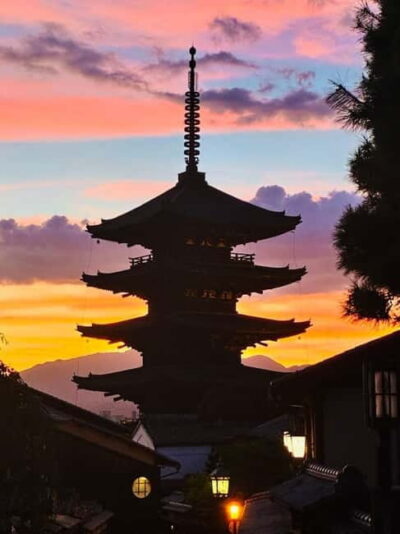
Kyoto Geisha Walking Tour: Gion District & Hidden Gems
Read our review →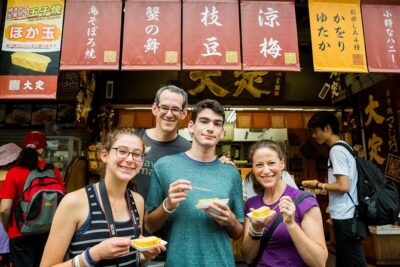
Tokyo Tsukiji Fish Market Food and Culture Walking Tour
Read our review →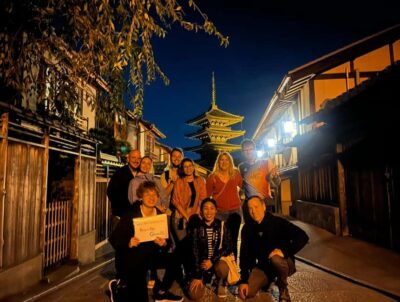
Gion Magical Night Walking Tour with Geisha Trivia
Read our review →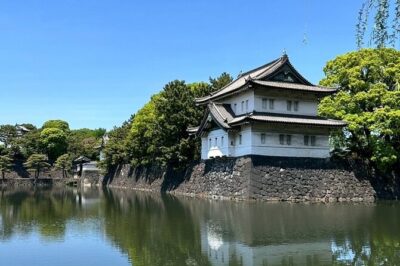
Imperial Palace and Shogun Historical Walking Tour
Read our review →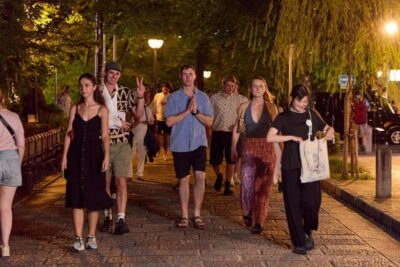
Gion Geisha District Walking Tour – Stories of Geisha
Read our review →
Shinjuku Local Bar and Izakaya Guided Walking Tour
Read our review →
Browse the lists this tour appears in