
Reviewed · WALKING TOURS
Osaka: Walking Tour to Local Gems, Food & Culture
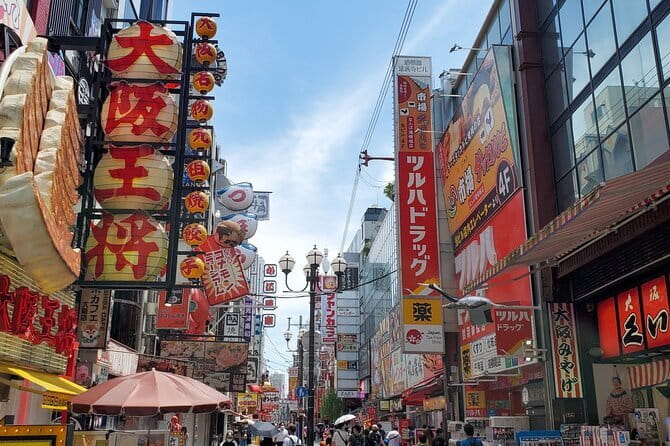
Osaka reveals itself one street at a time. This 150-minute walking tour links the city’s best-known sights with local stories, food stops, and cultural details that are easy to miss when you explore alone. For $25, I like the efficient route and the chance to see Dotonbori, Hōzenji Temple, Kuromon Ichiba Market, and Nipponbashi Denden Town in one outing.
I also like that a licensed English-speaking guide leads the walk, rather than leaving you to connect Osaka’s history and present-day street life on your own. Guides named Rico and J have earned especially warm praise for clear English, useful cultural explanations, and willingness to answer questions. The main drawback is that food costs extra, and the walking route is not suitable for wheelchair users.
In This Review
- Six Reasons This Osaka Walk Is Worth Considering
- Starting at Shinsaibashi With the City Close Around You
- Dotonbori: Osaka’s Big Street Scene in 20 Minutes
- Hōzenji Temple Brings a Quiet Contrast
- Kuromon Ichiba Market Is the Best Place to Add Your Own Food Stop
- Denden Town Shows Osaka’s Playful Side
- The Short Guided Stops Keep the Route Moving
- What the Guide Adds to the Walk
- Is $25 Good Value for 150 Minutes?
- Who Should Book This Osaka Walking Tour?
- Final Verdict: A Useful First Walk Through Central Osaka
- FAQ
- How much does the Osaka walking tour cost?
- How long does the tour last?
- What language is the tour conducted in?
- Where is the meeting point?
- Where does the tour finish?
- Is the tour wheelchair accessible?
Six Reasons This Osaka Walk Is Worth Considering
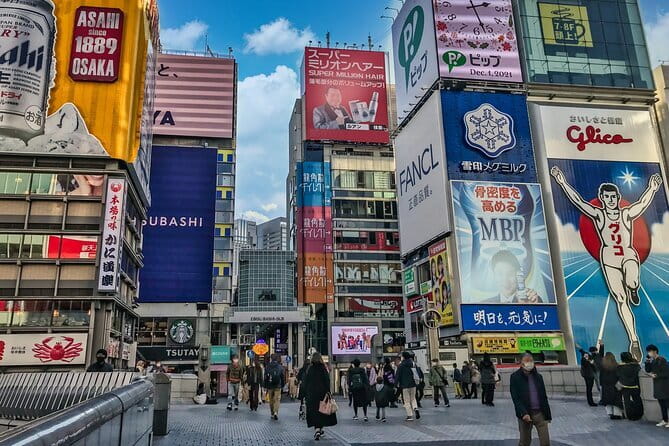
- Dotonbori in 20 minutes: Get your famous canal-side photo and a quick explanation of Osaka’s best-known entertainment district.
- Hōzenji Temple adds a quieter pause: This short visit brings a traditional religious site into an otherwise energetic central Osaka route.
- Kuromon Ichiba Market is the food highlight: You can see one of the city’s major food markets, but budget separately for anything you want to eat.
- Denden Town changes the mood: Nipponbashi’s electronics and pop-culture identity gives the tour a different side of Osaka.
- A smart $25 introduction: The route covers several central sights without taking a full day from your schedule.
- The guide shapes the experience: Rico and J are praised for informative, entertaining English explanations and thoughtful answers about Japanese culture.
Starting at Shinsaibashi With the City Close Around You
The meeting point is in front of the Apple store at Shinsaibashi. Your guide will hold a sign, which makes the starting point easier to identify in a busy shopping district. I would arrive a little early, since the tour begins on foot and you will want to settle in before the group moves off.
Shinsaibashi is a useful place to begin because it puts you near several central Osaka districts. From here, the route shifts between shopping streets, food areas, temples, entertainment zones, and pop-culture districts. You get a quick sense of how Osaka changes from block to block.
The first guided portion lasts about 15 minutes, followed by several shorter 10-minute stops. That timing tells you what kind of experience this is. It is not a slow, scholarly tour with long periods at one monument. Instead, the guide keeps you moving and gives each place enough context to make the next stop more meaningful.
I like this approach for a first visit. Osaka can feel scattered at first, especially when you are trying to decide which neighborhoods belong on your list. This route gives you a useful framework before you return to your favorite areas on your own.
More Walking Tours in Osaka
- Osaka: Hotspots & Hidden Gems Walking Tour Private or Group
★ 4.9 · 1,300 reviews - Osaka Local Foodie Walking Tour in Dotonbori and Shinsekai
★ 5.0 · 985 reviews - Osaka Bar Hopping Night Walking Tour in Namba (3 bars, 6 tastes)
★ 5.0 · 958 reviews
Dotonbori: Osaka’s Big Street Scene in 20 Minutes
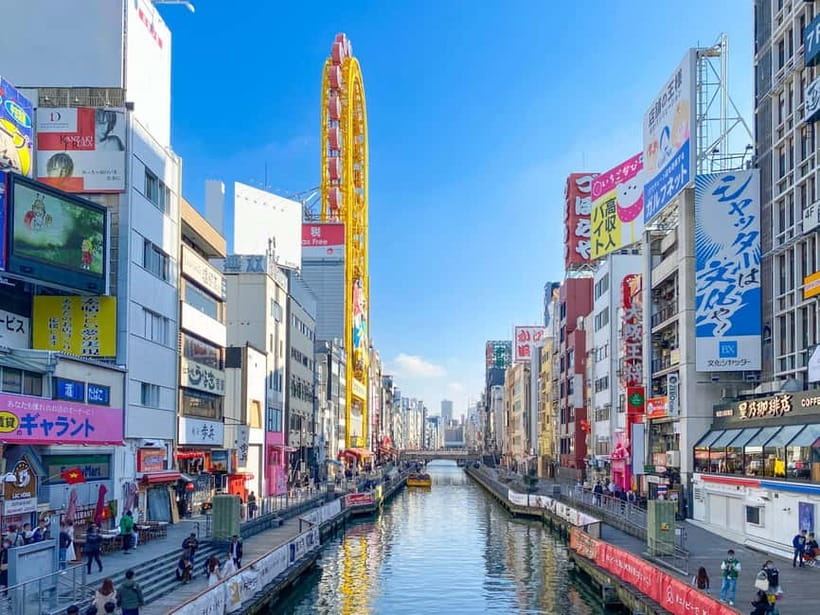
Dotonbori receives the longest stop on the route, about 20 minutes, with time for a visit, photographs, and guided explanation. This is the part of Osaka most closely associated with bright signs, food culture, and the canal-front center of the city.
You should expect a lively urban setting rather than a quiet cultural visit. The guide’s role here is useful because Dotonbori can seem like a wall of signs and crowds if you only stop for a photograph. A local explanation helps connect the district’s entertainment identity with Osaka’s wider reputation for food and easygoing street culture.
The timing is practical. Twenty minutes gives you a chance to take photographs and listen without allowing one famous area to swallow the whole tour. If you want a long meal or extensive shopping in Dotonbori, plan to return later. This tour gives you an introduction, not enough free time for a full exploration.
I especially like Dotonbori as an early anchor for the walk. You see the image of Osaka that appears in most guidebooks, then continue into places that give the city more texture.
Hōzenji Temple Brings a Quiet Contrast
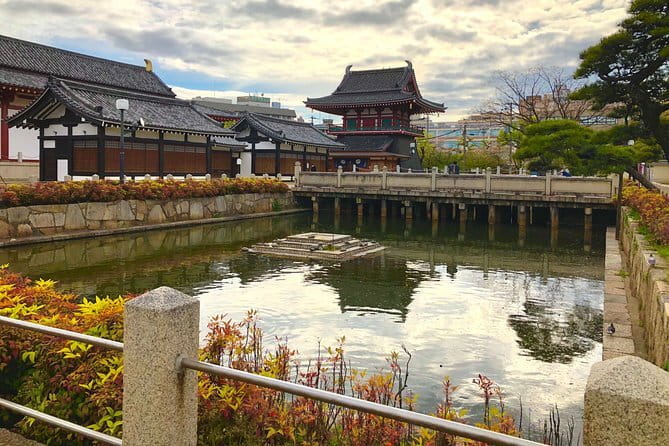
The stop at Hōzenji Temple lasts about 10 minutes. That may sound brief, but the short visit works well as a contrast to Dotonbori’s noise and commercial energy.
A temple visit in the middle of a central city route helps you see that Osaka is not only about signs, restaurants, and shopping arcades. The guide can explain the site’s cultural importance and give you a better sense of how traditional places remain part of daily city life.
I would treat this as a focused introduction rather than a long temple visit. Ten minutes is enough to look around and hear the essential explanation, but not enough for a leisurely period of quiet reflection. If Hōzenji catches your interest, note it as a place to revisit after the tour.
This is one of the better choices in the route. It prevents the walk from becoming a parade of commercial districts and gives the afternoon a more balanced rhythm.
Kuromon Ichiba Market Is the Best Place to Add Your Own Food Stop
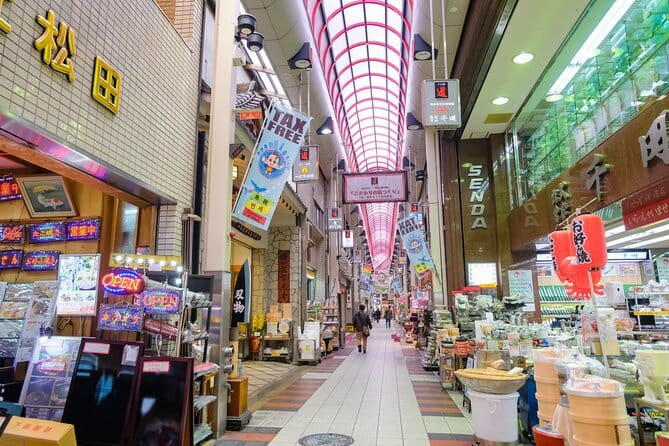
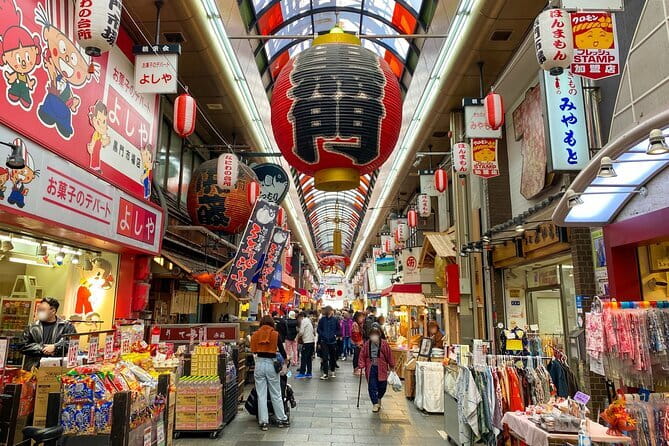
Kuromon Ichiba Market receives about 20 minutes, with a guided visit. For many people, this will be the most useful stop because it connects Osaka’s food reputation with a real market setting.
The important practical point is that food is not included. Your $25 covers the tour and guide, but you should carry extra money if you want to buy something at the market. The tour may point out what makes the area interesting, but you decide if you want to eat.
That arrangement keeps the base price low. At $25, the tour remains accessible, while you control your own food spending. It also suits people with different appetites and budgets. You can simply look around, or add a small bite if something catches your eye.
Twenty minutes passes quickly in a market. I would avoid arriving hungry if you want to listen carefully, but I would also avoid planning a full meal during the guided portion. You will get more from the stop if you treat it as an introduction and return later for a slower look.
The market also makes the route more personal. Dotonbori gives you Osaka’s public face, while Kuromon shows how food fits into the city’s everyday identity. Those two stops work well together.
More Walking Tours in Japan:
- Kyoto Geisha Walking Tour: Gion District & Hidden Gems
★ 4.7 · 3,273 reviews - Tokyo Tsukiji Fish Market Food and Culture Walking Tour
★ 5.0 · 3,184 reviews - Kyoto: Gion Magical Night Walking Tour with Geisha Trivia
★ 4.9 · 2,393 reviews - Tokyo: Imperial Palace and Shogun Historical Walking Tour
★ 5.0 · 2,251 reviews
Denden Town Shows Osaka’s Playful Side
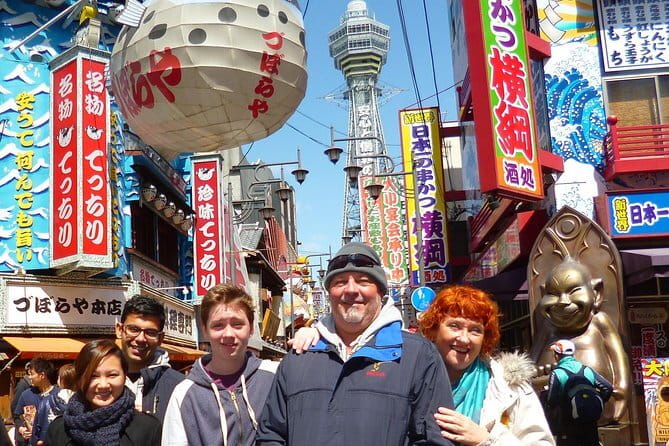
The tour then reaches Nipponbashi Denden Town for about 10 minutes, including a photo stop, visit, and guide commentary. This area adds a different note to the day, with its association with electronics and Japanese pop culture.
I like the variety here. After the market and temple, Denden Town shows another part of Osaka’s identity. The short stop is best for orientation and photographs rather than serious shopping. If you are interested in the district’s stores, you will need to come back with more time.
The guide’s explanation matters because a quick walk through the area may not tell you why it is significant. An informed local can help connect the streetscape to Japanese entertainment and technology culture without turning the stop into a shopping mission.
For fans of anime, games, electronics, or Japanese pop culture, this may be one of the most appealing sections. For everyone else, it still helps show that Osaka has more than food and historic sites.
The Short Guided Stops Keep the Route Moving

Several sections of the itinerary are listed simply as visits with 10-minute guided tours, without named attractions. That means you should expect additional points of interest along the route, but you should not book this experience expecting a detailed stop-by-stop monument tour.
The shorter stops are a strength if you want to cover ground. You will not spend half the afternoon at one site, and the guide can keep the day moving toward Namba. The tradeoff is depth. Ten minutes gives you a story, an overview, and perhaps a few photographs, but not much time for independent exploration.
I would choose this format if you want to get your bearings in central Osaka. It suits a first or short visit, especially if you have other plans later. It is less suitable if you prefer long museum visits, extended photography, or a slow food crawl.
The route finishes at Namba Grand Kagetsu. Ending there is convenient for continuing into the Namba area, though the tour does not include onward transport or a meal. You can treat the finish as a useful handoff into your own evening plans.
What the Guide Adds to the Walk
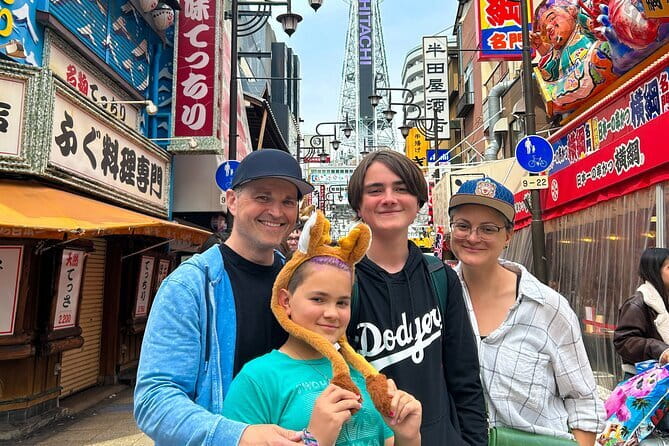
The strongest part of this experience is the live English commentary. The guide is not just there to lead you from one location to another. The most positive feedback highlights clear English, entertaining explanations, and answers to questions about Japanese culture.
One guide, Rico, is praised for sharing many interesting details during the route. Another guide, J, is described as becoming more engaging as the tour progressed and as being willing to answer questions beyond the immediate sights. Those details matter because cultural tours often succeed or fail on the quality of the conversation.
You should feel comfortable asking questions during the walk. The experience is designed around stories and explanations, not just photographs. Still, guide quality can vary from one departure to another, so I would judge the tour by its format rather than assume a particular guide will lead every session.
The short stops also make the guide’s delivery important. With limited time at each place, clear explanations help you understand what you are seeing before the group moves on.
Is $25 Good Value for 150 Minutes?
At $25 per person, this is a fair price for a guided introduction to several central Osaka districts. The fee includes all taxes and fees and a licensed guide. Food is separate, which is common sense for a market-focused walk because you may want to choose your own snack, meal, or nothing at all.
The value comes from the route. Seeing Dotonbori, Hōzenji Temple, Kuromon Ichiba Market, Denden Town, and other stops independently is possible, but you would need to research the connections and cultural background yourself. The tour saves planning time and gives you a local voice for two and a half hours.
I would not choose it as your only Osaka experience. The schedule is too compact for extended time in each district. Instead, I see it as a strong orientation walk near the beginning of your stay. Afterward, you can return to Kuromon for food, Dotonbori for more photographs, or Denden Town for shopping.
The booking terms also reduce risk. You can reserve now and pay later, and cancellation is free up to 24 hours before the activity for a full refund. Check the available start times before booking because the exact departure time is not fixed in the supplied details.
Who Should Book This Osaka Walking Tour?
I would recommend this tour to first-time visitors who want a clear introduction without giving up a whole day. It also suits solo visitors who want company, couples who prefer a guided route, and anyone who enjoys learning local context while walking.
Food lovers should consider it, but remember that this is not a food tasting package. Kuromon Ichiba Market is included as a stop, yet food purchases are your responsibility. If you want a formal tasting tour, this is not the right format.
The walk is also a good fit for people who like variety. In 150 minutes, you move from Shinsaibashi to Dotonbori, a temple, a food market, Denden Town, and Namba. That range gives you a useful first impression of Osaka’s central districts.
I would skip it if you use a wheelchair, since the experience is specifically listed as unsuitable for wheelchair users. I would also skip it if you want a slow, detailed visit at each attraction. The schedule favors movement, short explanations, and broad coverage.
Final Verdict: A Useful First Walk Through Central Osaka
I would book this tour if I wanted to understand Osaka quickly and spend the rest of my visit choosing where to return. The combination of Dotonbori, Hōzenji Temple, Kuromon Ichiba Market, and Denden Town gives you food, tradition, city energy, and pop culture in one compact route.
The best reason to choose it is the guide. Rico and J are praised for strong English, cultural knowledge, and an entertaining style, exactly what you need when each stop lasts only 10 or 20 minutes. The main compromises are clear: you pay for your own food, some attractions receive only a short visit, and the route is not wheelchair accessible.
For $25, that is a sensible trade. Book it near the start of your Osaka stay, keep extra money ready for Kuromon, wear comfortable walking shoes, and save time afterward if one of the neighborhoods deserves a second look.
FAQ
How much does the Osaka walking tour cost?
The tour costs $25 per person. All fees and taxes are included, but food is not included.
How long does the tour last?
The walking tour lasts 150 minutes, or two and a half hours. Available starting times can be checked before booking.
What language is the tour conducted in?
The tour is conducted in English with a live English-speaking guide.
Where is the meeting point?
Meet the guide in front of the Apple store at Shinsaibashi. The guide will be holding a sign.
Where does the tour finish?
The tour finishes at Namba Grand Kagetsu.
Is the tour wheelchair accessible?
No. The experience is listed as unsuitable for wheelchair users.
Just added in Japan
- Japanese Home Cooking Class & Walk in Todoroki Temple Tokyo★ 5.0 · 88 reviews
- A One-of-a-Kind Sushi Experience in a Special Place of Japan★ 5.0 · 15 reviews
- Tokyo Cute Bento Cooking Class – Make a Kawaii Character Lunchbox★ 5.0 · 126 reviews
- Japan Tokyo Tower Observatory Deck E-Ticket★ 4.0 · 34 reviews
- Catch a Baseball Game in Tokyo with a Local – Tickets Included★ 5.0 · 24 reviews
- JDM Experience with Fast&Furious RX-7 (English speaking Driver)★ 5.0 · 57 reviews
- Tokyo Private Day Tour by Car with English speaking Driver Guide★ 4.0 · 29 reviews
- Japan Classic 10 Day – One Life Adventures★ 5.0 · 129 reviews
Walking Tours, compared.
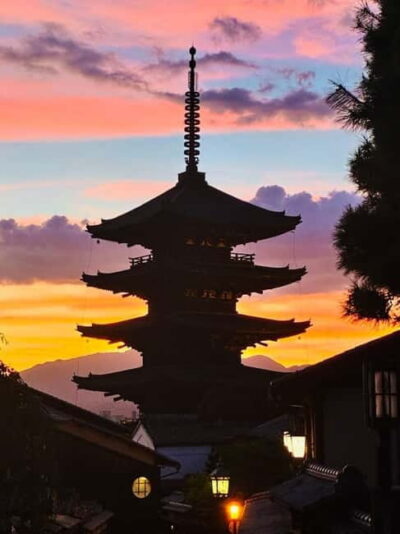
Kyoto Geisha Walking Tour: Gion District & Hidden Gems
Read our review →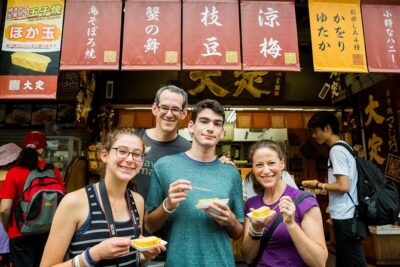
Tokyo Tsukiji Fish Market Food and Culture Walking Tour
Read our review →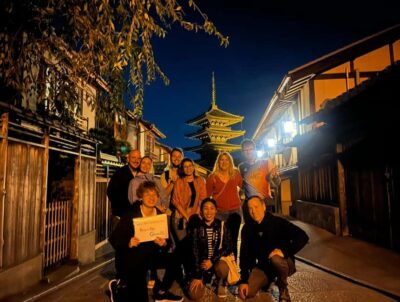
Gion Magical Night Walking Tour with Geisha Trivia
Read our review →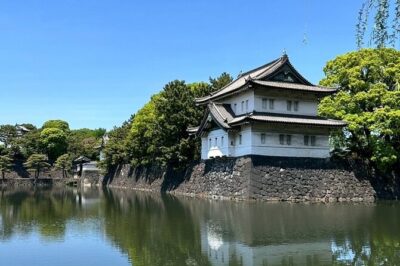
Imperial Palace and Shogun Historical Walking Tour
Read our review →
Gion Geisha District Walking Tour – Stories of Geisha
Read our review →
Shinjuku Local Bar and Izakaya Guided Walking Tour
Read our review →
Browse the lists this tour appears in