
Reviewed · WALKING TOURS
Osaka Walking Tour
Osaka reveals itself quickly. This three-hour walk links Osaka Station, Shinsekai, and Dotonbori, giving you a useful first look at the city’s modern, historic, and food-loving sides. I like the small group, capped at 10 people, and the chance to try kushikatsu with a local guide. The main drawback is that the tour covers neighborhoods rather than major sights, and you must pay the subway fare separately.
I also like the relaxed pace and the practical orientation. Guides such as Hide, Minako, Keiko, Rika, Kaori, and Ichiro have been praised for clear English, local tips, and patient answers. If you expect a full sightseeing tour with castle views and formal museum stops, this may feel light for $53.06.
In This Review
- Key points at a glance
- Why this tour works best early in your Osaka stay
- Starting among the shops at Osaka Station City
- Riding the subway like a local
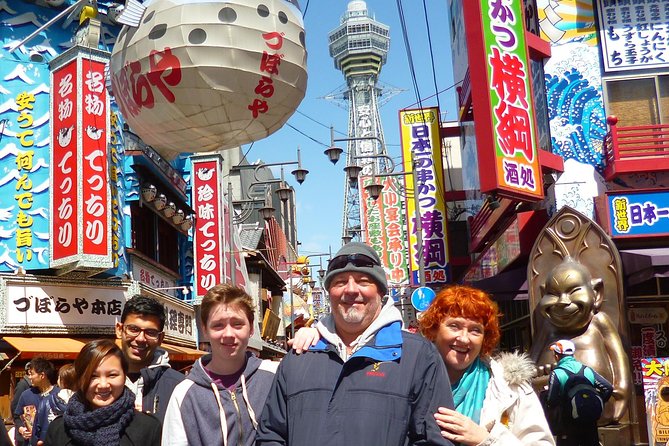
- Shinsekai, kushikatsu, and Osaka’s old-school character
- Alleys, arcades, and the less polished side of Osaka
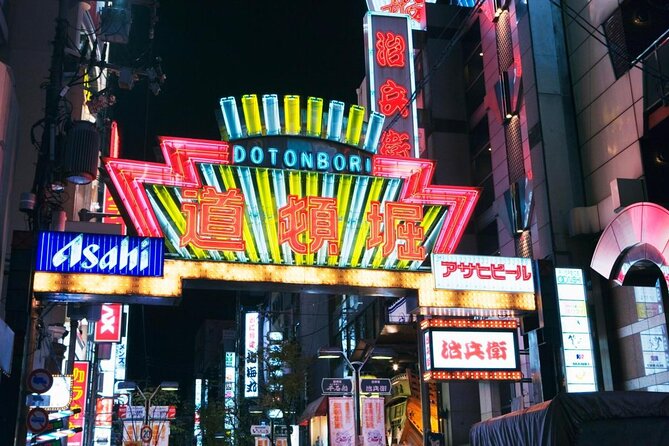
- Dotonbori and the finish at Ebisu Bridge
- What the guides add to the experience
- How much value do you get for $53.06?
- Practical advice before you book
- Who should book this Osaka walk?
- FAQ
- How long is the Osaka Walking Tour?
- What time does the tour start?
- Where does the tour meet?
- How will I identify the guide?
- Where does the tour end?
- Is the subway fare included?
- What food and drink are included?
- Can I cancel for a full refund?
Key points at a glance
- Three distinct Osaka districts: Begin in modern Umeda, continue to old-school Shinsekai, and finish amid the signs and crowds of Dotonbori.
- A taste of kushikatsu: One non-alcoholic drink and a kushikatsu tasting are included.
- A small group of up to 10: The size allows more room for questions and easier movement through busy streets.
- A useful first-day introduction: You get basic city orientation, food advice, cultural context, and a short lesson in using Osaka’s subway.
- A straightforward finish: The tour ends at Ebisu Bridge, placing you in the heart of Dotonbori for lunch or more exploring.
- Bring comfortable shoes and extra yen: Moderate walking, escalators, steps, and a separate subway fare are part of the plan.
Why this tour works best early in your Osaka stay

Osaka can feel confusing at first. Umeda and Namba are both major centers, but they have very different moods and layouts. This tour helps you connect those areas while explaining how the city fits together.
I would book it near the beginning of a visit, especially if you have only one day in Osaka. The route gives you enough information to decide where you want to return later. You may leave with a better sense of where to eat, which shopping areas interest you, and how to get around by train.
This is not mainly a monument checklist. You will not spend the morning touring Osaka Castle or entering a string of museums. Instead, you walk through working commercial areas, food streets, entertainment zones, and a small temple site. That makes the experience more useful for understanding daily Osaka, but less satisfying if your main goal is famous attractions.
The 9:50 a.m. meeting time also makes sense for a first-day outing. The tour starts at exactly 10 a.m., before the afternoon crowds become strongest in Dotonbori. Still, allow extra time to find the meeting point. Osaka Station is large and busy, and the meeting place is in front of the Osaka Tourist Information Center on the ground level, near the central gate of JR Osaka Station. Look for the guide holding a yellow All Star Osaka flag.
More Walking Tours in Osaka
- Osaka: Hotspots & Hidden Gems Walking Tour Private or Group
★ 4.9 · 1,300 reviews - Osaka Local Foodie Walking Tour in Dotonbori and Shinsekai
★ 5.0 · 985 reviews - Osaka Bar Hopping Night Walking Tour in Namba (3 bars, 6 tastes)
★ 5.0 · 958 reviews
Starting among the shops at Osaka Station City
The tour begins in Osaka Station City, the modern complex in the northern center of town. This is an important choice of starting point because Osaka Station is more than a place to catch a train. It is a major shopping, dining, and transportation center, with many layers and passageways.
You spend about 45 minutes here. Your guide may explain how the station area works and place modern Osaka in context. This first section is especially useful if you are staying near Umeda or plan to use Osaka Station later for day trips.
The tradeoff is easy to see. Some people will enjoy learning how the city’s northern hub functions. Others may feel they have paid for a walking tour only to spend a large part of it around a train station. If you already know Osaka Station well, this opening may offer less value.
That is why I would not treat the first stop as a sightseeing attraction. Think of it as orientation. You are learning the city’s north side, getting comfortable with local transit, and setting up the move toward Namba and the southern districts.
Riding the subway like a local
The route includes a subway ride between parts of Osaka. That small detail adds real value, because you are not simply being driven from one stop to another. You get a brief introduction to the way many people move through the city.
The subway fare is not included. The listed cost is 430 yen for adults and youths, and 220 yen for children. Bring enough Japanese yen or be prepared to pay the fare as directed by the guide. Since the tour uses public transportation, you should also expect escalators, steps, station corridors, and a bit of standing or waiting.
The train ride helps connect the districts in your mind. Umeda can feel polished and modern, while Shinsekai and Dotonbori offer a more colorful, informal side of Osaka. Seeing those areas in one morning gives the tour its basic shape.
If you use a stroller, take extra care. The route includes escalators and some steps, and the tour operator specifically advises families to consider this. Children are welcome, but they must be accompanied by an adult.
Shinsekai, kushikatsu, and Osaka’s old-school character
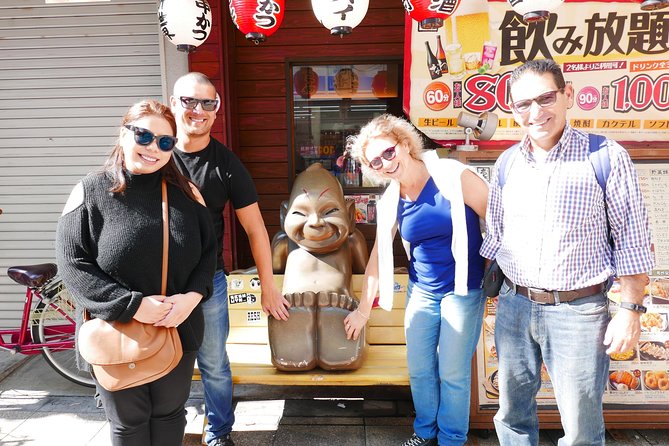
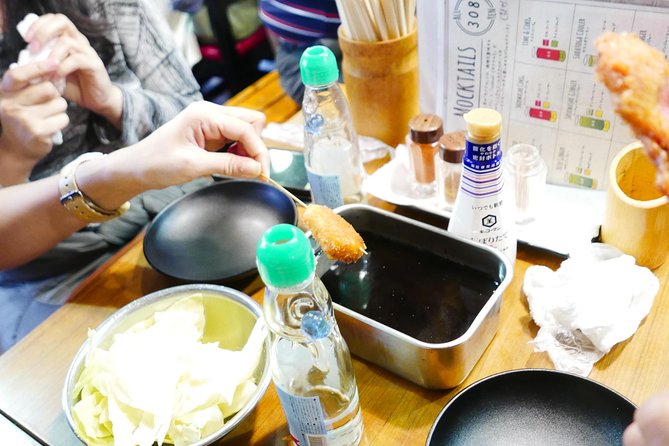
Shinsekai is the food-focused heart of the route. The district is known for kushikatsu, a local specialty made from ingredients placed on skewers, coated, and deep-fried. The tour stops at a restaurant so you can sample it, with a non-alcoholic drink included.
This is a good place for a guide to explain Osaka’s food culture. Kushikatsu is casual, filling, and tied closely to the character of Shinsekai. It is not a formal tasting menu, and you should not book this expecting a full food crawl. The included portion is a sample and a break during the walk.
Details of the food setting can vary. One account describes eating inside an old Volkswagen van at a restaurant, which gives you an idea of the informal and sometimes unusual places connected with the tour. The safest expectation is a simple local snack rather than a long restaurant meal.
I like this stop because food makes the city easier to understand. You are not only hearing that Osaka is famous for eating well. You are trying one of its recognizable specialties in the district associated with it.
You should also keep your expectations in check. One unhappy participant felt the food amounted to a skewer and a soft drink after a lot of walking. That criticism is fair if you want a substantial lunch. If you view the snack as one small part of a city introduction, it fits the tour better.
More Walking Tours in Japan:
- Kyoto Geisha Walking Tour: Gion District & Hidden Gems
★ 4.7 · 3,273 reviews - Tokyo Tsukiji Fish Market Food and Culture Walking Tour
★ 5.0 · 3,184 reviews - Kyoto: Gion Magical Night Walking Tour with Geisha Trivia
★ 4.9 · 2,393 reviews - Tokyo: Imperial Palace and Shogun Historical Walking Tour
★ 5.0 · 2,251 reviews
Alleys, arcades, and the less polished side of Osaka
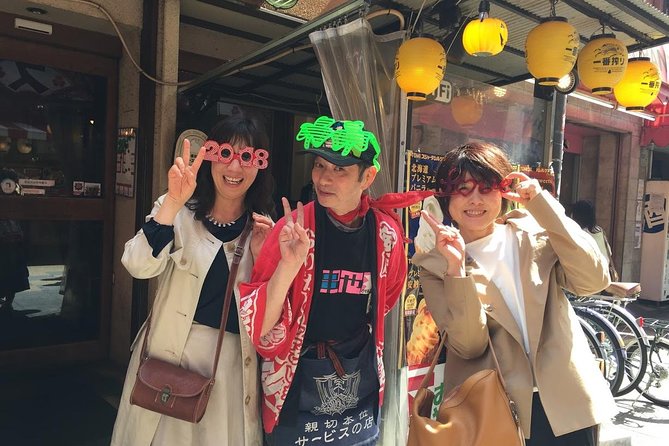
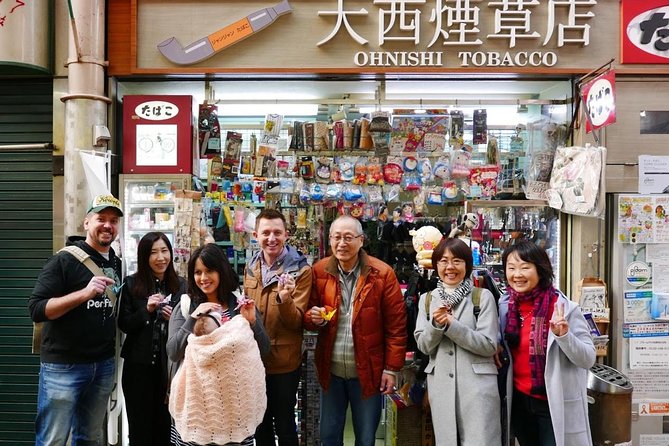
After or around the Shinsekai visit, the route passes through a narrow alley lined with restaurants. These smaller streets are part of the appeal. They offer a closer look at the kind of commercial Osaka that is easy to miss if you only visit major department stores and famous viewpoints.
The exact alley and sequence can vary, so you should not expect a fixed list of named shops. You might find restaurants, small businesses, and local hangouts rather than a set of major attractions. That uncertainty is also part of the tour’s limitation.
The route then moves through a lively commercial district with restaurants, shops, theaters, and large illuminated signs. This section gives you a taste of Osaka’s entertainment culture. Flashy signs and crowded shopping streets make a strong contrast with the modern station complex you saw earlier.
For me, this is where the tour earns its place as an introduction rather than a standard sightseeing circuit. You see how Osaka shifts from business center to food district to entertainment quarter. The guide’s explanations are important here, since the streets themselves can otherwise feel like a blur of signs and storefronts.
The walking pace appears to be moderate. Several people have praised guides for not rushing and for adjusting the pace in hot, humid weather. That matters in Osaka, where a three-hour walk can feel much longer during summer.
Dotonbori and the finish at Ebisu Bridge
The tour ends at Ebisu Bridge, in the center of Dotonbori. This is one of the most recognizable meeting points in Osaka, surrounded by restaurants, shops, theaters, and bright advertising signs.
You spend about 10 minutes at the bridge itself, but the value comes from where the tour leaves you. You can continue exploring Dotonbori on your own, stop for lunch, or use the area as a base for further time in Namba.
Ending here is convenient, but it is not a guided return to your hotel. You need to make your own way afterward. A helpful guide may offer directions, and one guide reportedly went out of the way to help a participant find the route back to a cruise ship, but that should be treated as personal assistance rather than a guaranteed part of the service.
Dotonbori can be crowded and visually intense. If you prefer quiet streets, the last section may feel tiring. If you want to finish close to Osaka’s most famous food and entertainment area, it is an excellent endpoint.
What the guides add to the experience
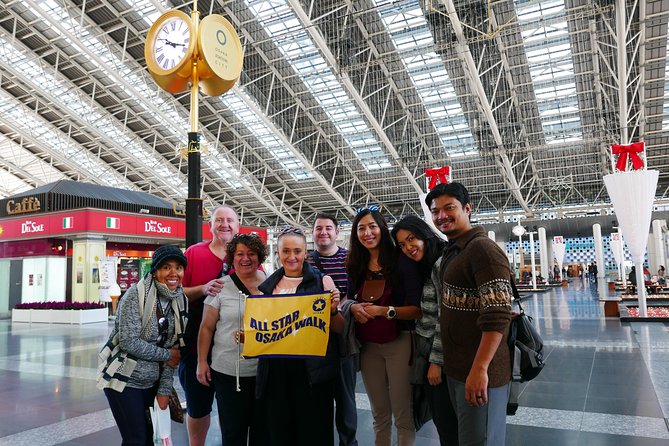
The quality of a short walking tour depends heavily on the guide. The strongest praise here goes to guides who explain Osaka’s past, answer questions, and share practical advice rather than simply naming streets.
Hide, also referred to as Harry in some feedback, has been praised for his English, historical explanations, friendly manner, and steady walking pace. Minako has been appreciated for giving advice about Osaka and Japan more broadly, while Keiko has been noted for explaining details carefully and checking answers when she did not immediately know them.
Other guides, including Rika, Kaori, Yahiro, Ichi, and Ichiro, have also received strong comments for warmth and local insight. That range suggests the experience is not dependent on one individual guide, though your personal experience will naturally depend on who leads your departure.
A small concern is that one participant disliked repeated requests to pose for company photographs. If you prefer not to be photographed, say so politely at the start. This is a minor issue, but it is worth knowing before you go.
How much value do you get for $53.06?
At $53.06 per person, this is not the cheapest way to walk through Osaka. You are paying for a guide, a small group, a food sample, one non-alcoholic drink, and help with the route between several districts.
The price makes the most sense if you are new to Osaka, have limited time, or feel unsure about navigating the station and subway system. A good guide can save you from spending your first morning staring at maps and can point out places you would likely pass without understanding.
The value is weaker if you already know Umeda, Shinsekai, and Dotonbori. It is also weaker if you expect entry to major attractions, a large meal, or a private tour. The subway fare is an extra cost, and the food included is only a tasting.
The maximum group size is 10, though some departures may be smaller. One group had only five people and found that size nearly ideal. A very small group allows more questions and less time waiting for others. A full group will still be manageable, but busy station passages and narrow streets may feel less relaxed.
Practical advice before you book
Wear comfortable walking shoes. The tour lasts about three hours and includes moderate walking, station corridors, escalators, and steps. Comfortable clothing matters more than dressing up.
Carry some cash for the subway fare and any extra food or drinks. Only one non-alcoholic drink and the kushikatsu tasting are included. If you expect to eat lunch in Dotonbori afterward, plan for that separately.
Arrive early at Osaka Station. Meet at 9:50 a.m. in front of the Tourist Information Center, on the ground level and in front of the central JR Osaka Station gate. The tour begins at 10 a.m. sharp, and the yellow flag helps identify the guide.
The tour operates in rain or shine, but poor weather can lead to cancellation, with a different date or a full refund offered. If you need to cancel, do it at least 24 hours before the start time for a full refund. Changes or cancellations within 24 hours are not refunded.
The tour is not covered by insurance. Most people can participate, but families using a stroller should think carefully about the escalators and steps.
Who should book this Osaka walk?
I would choose this tour for a first morning in Osaka, a short stay, or a port visit when you want a quick introduction to the city. It suits you if you enjoy walking, local food, public transit, and explanations about ordinary neighborhoods.
It is also a good match if you want a guide who can answer practical questions. The best part is not a single grand monument. It is the connection between three different areas and the chance to see Osaka as a working city rather than only a collection of tourist sights.
I would skip it if your priority is Osaka Castle, panoramic views, museums, or a serious food tour. You may also find the price hard to justify if you are already comfortable using the subway and exploring the three districts alone.
For the right person, this is a friendly, efficient first look at Osaka. Book it early in your stay, wear good shoes, bring the subway fare, and treat the kushikatsu as a sample rather than lunch. You will finish at Ebisu Bridge with a clearer idea of where to spend the rest of your time.
FAQ
How long is the Osaka Walking Tour?
The tour lasts approximately three hours.
What time does the tour start?
Meet at 9:50 a.m. The tour starts exactly at 10 a.m.
Where does the tour meet?
Meet in front of the Osaka Tourist Information Center on the ground level, in front of the central gate of JR Osaka Station in Umeda.
How will I identify the guide?
The guide will hold an All Star Osaka yellow flag.
Where does the tour end?
The tour ends at Ebisu Bridge in Dotonbori, at 1 Chome-6 Dotonbori, Chuo Ward, Osaka.
Is the subway fare included?
No. The listed fare is 430 yen for adults and youths, and 220 yen for children.
What food and drink are included?
The tour includes a kushikatsu tasting and one non-alcoholic drink.
Can I cancel for a full refund?
Yes, if you cancel at least 24 hours before the experience start time. Cancellations within 24 hours are not refunded. If poor weather causes the tour to be canceled, you will be offered another date or a full refund.
Just added in Japan
- A One-of-a-Kind Sushi Experience in a Special Place of Japan★ 5.0 · 15 reviews
- Tokyo Cute Bento Cooking Class – Make a Kawaii Character Lunchbox★ 5.0 · 126 reviews
- Japanese Home Cooking Class & Walk in Todoroki Temple Tokyo★ 5.0 · 88 reviews
- Japan Tokyo Tower Observatory Deck E-Ticket★ 4.0 · 34 reviews
- Catch a Baseball Game in Tokyo with a Local – Tickets Included★ 5.0 · 24 reviews
- JDM Experience with Fast&Furious RX-7 (English speaking Driver)★ 5.0 · 57 reviews
- Tokyo Private Day Tour by Car with English speaking Driver Guide★ 4.0 · 29 reviews
- Japan Classic 10 Day – One Life Adventures★ 5.0 · 129 reviews
Walking Tours, compared.
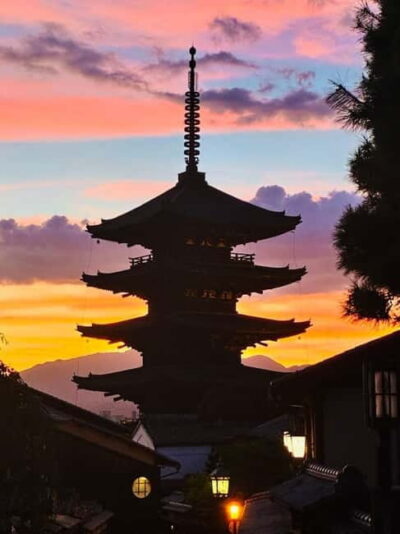
Kyoto Geisha Walking Tour: Gion District & Hidden Gems
Read our review →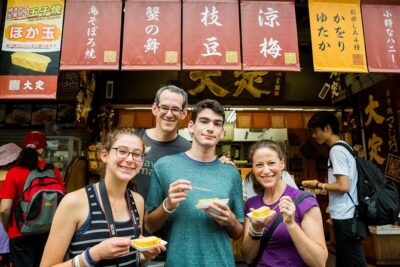
Tokyo Tsukiji Fish Market Food and Culture Walking Tour
Read our review →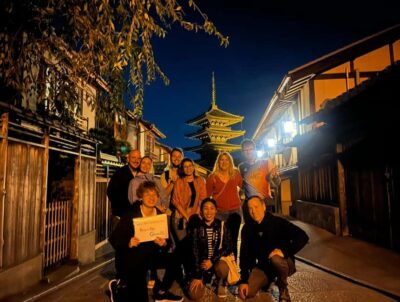
Gion Magical Night Walking Tour with Geisha Trivia
Read our review →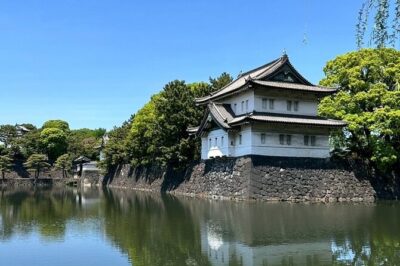
Imperial Palace and Shogun Historical Walking Tour
Read our review →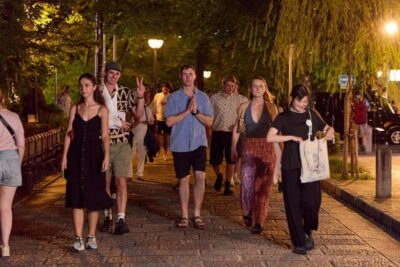
Gion Geisha District Walking Tour – Stories of Geisha
Read our review →
Shinjuku Local Bar and Izakaya Guided Walking Tour
Read our review →
Browse the lists this tour appears in