Reviewed · KYOTO TOURS
Private Pewter Sake Cup Experience with a Kyoto Artisan
Make your own drinking vessel in Kyoto. This private pewter workshop gives you a rare chance to work beside artisan Kanako at Craft Gallery SALUK, outside central Kyoto. Over about two and a half hours, you hammer patterns into a prepared cup, shape its rim, add initials or a date if you wish, and leave with a handmade keepsake.
I like the hands-on format and the fact that your cup is genuinely personal, not a pre-made souvenir with your name added later. I also like the calm setting away from central Kyoto, where the craft gets your full attention. The main drawback is the trip out: some visitors describe a scenic train ride of about an hour from Kyoto Station, so this is not a quick activity to squeeze between Kiyomizu-dera and Nishiki Market.
The experience costs $144.96 per person, which is a serious price for a small craft class. Still, the fee covers instruction, materials, use of the tools, finishing work, and a functional pewter cup you can keep for years. With a 100 percent recommendation rate and a perfect rating from 31 reviews, the workshop has earned unusually strong praise for Kanako’s patience, hospitality, and clear English instruction.
In This Review
- Key points at a glance
- A quiet workshop far from central Kyoto
- Meeting Kanako and choosing your tools
- Why pewter works well for a sake cup
- Hammering patterns into your own cup
- Adding initials, dates, and small personal marks
- Filing the rim and finishing the cup
- A private class with time for conversation
- What you take home
- Is $144.96 a fair price?
- Who should book this Kyoto craft experience?
- Final verdict: book it for the craft, not just the cup
- FAQ
- Where does the pewter sake cup experience take place?
- How long does the workshop last?
- Is the activity private?
- What do I need to bring?
- Can I add a personal inscription?
- How large is the finished cup?
- Can I use the cup for drinks other than sake?
- What is the cancellation policy?
Key points at a glance
- Hammer your own design: Choose from several hammers and create different textures by striking the cup as you rotate it.
- Personalize the base: Add letters, numbers, initials, or a date for a more meaningful souvenir.
- Work with artisan Kanako: Her teaching style is patient and beginner-friendly, with clear instructions in English.
- Visit a peaceful Kyoto setting: The workshop sits outside the city center, near public transportation and scenic surroundings.
- Take home a useful cup: The finished vessel holds about 90 milliliters, or 115 milliliters when filled to the rim, and also works for whiskey or green tea.
- Enjoy a private class: Only your group participates, making this a good choice for couples, families, and friends who want time together.
A quiet workshop far from central Kyoto
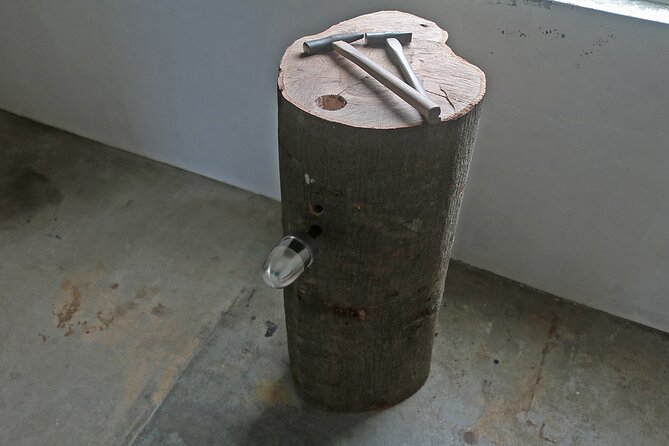
Craft Gallery SALUK is at 35-2 Shizuichinonakachō in Sakyo Ward, Kyoto. The meeting point is also where the activity ends, so you do not need to arrange a second pickup location.
The setting is part of the appeal. This is not a loud craft counter in a shopping arcade. The workshop is in a calmer area outside central Kyoto, and several people have found the surrounding scenery worth the extra effort. One account describes a beautiful setting with a small stream nearby. Another calls the workshop a peaceful place in the mountainous north of Kyoto.
That location changes the mood of the class. You are not racing through a tourist district or watching the clock between major sights. You have time to listen, try a technique, make an imperfect mark, and try again.
The trade-off is clear. Getting there requires planning, and the journey may take about an hour by scenic train from Kyoto Station. That can be a pleasant part of the day, but it is still travel time. If you want a class near Gion or Kyoto Station, this is the wrong pick. If you enjoy pairing a craft with a quieter corner of the city, the setting adds real value.
A few more options to weigh up in Kyoto
- PERFECT KYOTO 1-Day Bus Tour
★ 5.0 · 13,518 reviews - [Kyoto & Nara Day Tour] Sagano Scenic Railway & Nara Park & Fushimi Inari Taisha Thousand Torii Gates & Togetsukyo Bridge & Bamboo Grove & Kimono Forest (Departing from Osaka)
★ 4.9 · 10,942 reviews - Kyoto: Fushimi Inari, Kinkakuji, Bamboo Grove 1 Day Bus Tour
★ 4.8 · 4,316 reviews
Meeting Kanako and choosing your tools
The class is led by Kanako, the owner and craftswoman at SALUK. Her role is central to the experience. The strongest praise focuses not only on her pewter skills, but also on her warmth, patience, humor, and ability to make first-time makers feel at ease.
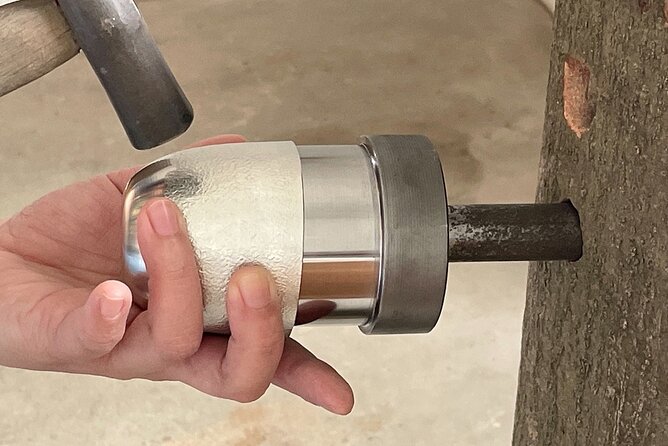
You begin with a blank pewter cup and an explanation of the decorating process. You then choose a hammer from several types. This matters because the hammer controls the look of the finished surface. Different shapes leave different marks, and combining tools gives you more options.
You place the cup on an anvil and begin striking. The process is simple to describe but takes care. You tap the metal while rotating the cup, building a pattern around its curved surface. You can use one hammer for a regular texture or switch between several for a more varied design.
This is the point where the class becomes personal. Two people can start with identical cups and finish with completely different results. Your pressure, rhythm, spacing, and choice of hammer all show in the metal. You do not need a background in metalwork, but you do need patience.
Do not treat the hammering as a race. Slow, steady work gives you more control. The cup’s shape is designed to sit comfortably in the hand, so the finished object feels made for use, not just display.
Why pewter works well for a sake cup
Pewter has long been valued for drinking vessels, and the class gives you a chance to understand the material through touch. You work directly with the metal rather than hearing a long lecture about it.
The cup is compact, measuring about 64 millimeters across and 53 millimeters high. It holds roughly 90 milliliters in normal use, or 115 milliliters if filled to the rim. That is a modest serving, suited to sipping rather than pouring a large drink.
Sake is the obvious choice, but it is not the only one. The finished cup can also be used for whiskey, chilled green tea, and other drinks. One participant who does not drink alcohol used green tea instead. That small detail makes the class more welcoming for people who want the craft but not the sake.
The material also connects the souvenir to ordinary life. You can use the cup at home, rather than placing it on a shelf and forgetting it. Each drink brings back the time you spent making it in Kyoto.
Hammering patterns into your own cup
The hammering is the main event, and it is more satisfying than a simple paint-your-own souvenir activity. Every mark comes from your hand. The process has a pleasant rhythm: place the cup, strike, rotate, check the pattern, and continue.
Kanako guides you through the technique and helps you correct mistakes. That support matters because the metal surface records each hit. A heavy blow cannot simply be erased like pencil on paper. Still, the finished design does not need to be perfect. Small variations are part of the appeal.
One couple created a forest-inspired design, while another pair produced cups with sparkling textures from careful, repeated hammering. Those examples show how much room there is for personal style. You can follow the basic method closely or make your own pattern within the limits of the process.
This is also a good activity for different skill levels. A family group can work together without everyone needing the same amount of artistic ability. Couples can compare designs. Friends can create matching cups with different surface patterns.
The work is hands-on but not physically demanding in the way a full metalworking course might be. The main challenge is concentration. If you are looking for a class where you can chat continuously while doing something almost automatic, this may require more focus than expected.
A completely different kind of day out:
- Kyoto: Tea Ceremony in a Traditional Tea House in Kiyomizu
★ 4.9 · 3,519 reviews - Kyoto: Gion Make Your Own Chopsticks with Engraving Option
★ 5.0 · 3,465 reviews - Kyoto Nara Day Trip │ Kiyomizu-dera Temple + Fushimi Inari-taisha Shrine + Nara Park (Departing from Osaka/Kyoto)
★ 4.7 · 3,408 reviews - Kyoto Geisha Walking Tour: Gion District & Hidden Gems
★ 4.7 · 3,273 reviews
Adding initials, dates, and small personal marks
After decorating the outside, you may stamp letters, numbers, initials, or a date on the base. This is optional, but I think it is one of the best reasons to choose this workshop instead of buying a ready-made cup.
A date can mark a honeymoon, anniversary, birthday, or first trip to Japan. Initials can identify a cup made by one person in a family set. You could also add a short number or letter combination that means something only to you.
Keep the inscription simple. The cup is small, and the base has limited space. A date or two initials will likely feel more polished than trying to fit a long message.
The engraving turns the object into a record of your trip. It also makes the souvenir easier to recognize years later. A handmade item can lose some of its story once it sits at home among other possessions. A personal mark helps keep that story attached.
Filing the rim and finishing the cup
The class does not stop once the decorative marks are complete. You use a file to adjust the height and bevel the rim at an angle. This step helps give the cup a comfortable feel when you drink from it.
It is a useful reminder that craft is not only about appearance. A cup can have a beautiful pattern and still feel awkward if the rim is rough or poorly shaped. Filing lets you take part in the functional side of making the object.
The final polishing is done by Kanako with a rotary machine for safety. This is a sensible division of work. You get to shape the cup and leave your mark, while the craftsperson handles the stage that requires powered equipment and greater control.
That finishing work also helps explain the price. You are not simply receiving raw materials and a short demonstration. An artisan checks the piece, helps refine it, and completes the safest final polish.
A private class with time for conversation
The activity is private, so only your group takes part. The class can therefore work well for a couple, a family, or a small circle of friends. You do not have to keep pace with strangers or wait while a large group takes turns.
The private format also gives Kanako more time to respond to your design. If you make a mistake or want to try something different, you have a better chance of receiving direct help. One couple specifically appreciated that she helped them finish attractive, usable cups even after they went off-script.
The atmosphere appears to be as important as the technique. Kanako has welcomed people with tea and snacks, and she has taken time to talk about Japanese culture, local craft, and the visitors’ own creative interests. The exchange can go beyond a basic class. People who work in photography, woodcraft, textiles, cooking, and other fields have found common ground with her.
That personal side is not guaranteed to feel the same for every group. Much depends on your pace and your willingness to talk. Still, the private setup gives the experience a more personal character than a standard group demonstration.
What you take home
Your completed cup is the main souvenir. The size makes it easy to pack, and the object has a clear use after the trip. Some participants have received their cups beautifully packaged in wooden boxes, adding a traditional touch and extra protection for the journey home.
Because the final cup reflects your own hammer marks, no two should be identical. That is more meaningful than buying a mass-produced item from a souvenir shop. The cup may not look factory-perfect, and that is exactly the point. Its small irregularities show that you made it.
You can use it for sake, whiskey, chilled green tea, and other drinks. One person even viewed the pewter piece as suitable for flowers, noting the material’s association with keeping water clean and helping flowers stay fresh longer. The supplied details specifically describe the cup as a drinking vessel, so I would treat other uses as a personal choice rather than the main purpose of the class.
The finished size is also worth considering. At around 90 milliliters, this is a small cup. If you prefer large tumblers or generous wine glasses, its compact scale may surprise you. For sipping sake or enjoying a small drink slowly, the size makes sense.
Is $144.96 a fair price?
At $144.96 per person, this is not a budget activity. You are paying more than you would for a short factory visit or a simple souvenir-making station.
The value comes from the combination of factors: private instruction, a small-group setting, all materials provided, a prepared pewter cup, access to specialist tools, optional personalization, artisan finishing, and the finished object itself. You also get an activity that occupies about two and a half hours, rather than a quick ten-minute demonstration.
I would call it good value for someone who wants a serious craft memory and plans to use the cup at home. It is weaker value if you mainly want a cheap souvenir or if your Kyoto schedule is already packed with major sights.
The price makes most sense for a special trip: a honeymoon, anniversary, family reunion, or final evening in Kyoto. It can also suit people who collect handmade objects and care about how an item was produced.
The experience is booked, on average, 37 days in advance. That suggests planning ahead, especially if you need a private time slot during a busy visit. Free cancellation is available up to 24 hours before the local start time. Cancellations or changes made less than 24 hours before the start are not accepted for a refund.
Who should book this Kyoto craft experience?
I would recommend it most strongly to:
- Couples who want matching but individually designed souvenirs
- Families looking for an activity everyone can do together
- Visitors interested in Japanese craft and artisan techniques
- People who prefer quiet neighborhoods to crowded central attractions
- Anyone who values a useful souvenir over a decorative trinket
- Non-drinkers who would enjoy using the cup for green tea
You should think twice if you dislike repetitive handwork, have very little free time, or want a workshop in the heart of Kyoto. The scenic ride to the northern part of the city may be a highlight for some people and an inconvenience for others.
The class is suitable for most participants, and service animals are allowed. It is near public transportation. The available details do not provide a specific minimum age, physical access description, or maximum group size, so ask the provider directly if those points affect your plans.
Final verdict: book it for the craft, not just the cup
I would book this experience if I wanted a quiet Kyoto afternoon, direct guidance from an artisan, and a souvenir with a story built into every mark. Kanako’s patient teaching and the private format make the class approachable, even if you have never worked with metal.
The key question is simple: do you want to make something, or do you only want to buy something? If you want the making, the journey outside central Kyoto and the $144.96 price are easier to justify. If your priority is convenience or a low-cost keepsake, choose an activity closer to the center.
For the right person, this is more than a sake tasting and more than a standard craft lesson. You leave with a small cup, but also with the memory of choosing the hammer, hearing each strike, shaping the rim, and putting your own mark on a piece of Kyoto craft.
FAQ
Where does the pewter sake cup experience take place?
It takes place at Craft Gallery SALUK, 35-2 Shizuichinonakachō, Sakyo Ward, Kyoto, 601-1122, Japan.
How long does the workshop last?
The experience lasts approximately 2 hours and 30 minutes.
Is the activity private?
Yes. Only your group participates in the activity.
What do I need to bring?
You do not need to bring materials. The materials for the workshop are provided.
Can I add a personal inscription?
Yes. You may stamp letters, numbers, initials, or a date on the base of the cup.
How large is the finished cup?
The cup measures about 64 millimeters in diameter and 53 millimeters in height. It holds about 90 milliliters, or about 115 milliliters when filled to the rim.
Can I use the cup for drinks other than sake?
Yes. The cup can also be used for whiskey, chilled green tea, and other drinks.
What is the cancellation policy?
You can cancel up to 24 hours before the local start time for a full refund. Cancellations or changes made less than 24 hours before the start time are not accepted for a refund.
Just added in Kyoto
- The “Golden Route” and Ancient Japan by DIAMIR Erlebnisreisen – 14-Day Tour★ 2.0 · 2 reviews
- Japan: Castles & Cuisine by G Adventures – 6-Day Kyoto to Osaka Tour★ 4.5 · 4 reviews
- Cycle Japan by Explore! – 13-Day Kyoto to Tokyo Tour★ 4.7 · 12 reviews
- Cycle Japan by Intrepid Travel – 11-Day Kyoto to Tokyo Tour★ 4.8 · 2 reviews
- Classic Japan by Intrepid Travel – 11-Day Kyoto to Tokyo Tour★ 4.4 · 14 reviews
- Ancient & Modern Japan 14-Day Tour by Exodus Adventure Travels★ 4.4 · 40 reviews
- 5 Day Cultural Adventure of Kyoto, Nara & Osaka by Tourist Journey★ 2.5 · 2 reviews
- 12 Days Kinosaki Onsen Escape: A Journey Through Japan’s Timeless Towns by UME Travel★ 4.8 · 5 reviews
Kyoto Tours, compared.

![[Kyoto & Nara Day Tour] Sagano Scenic Railway & Nara Park & Fushimi Inari Taisha Thousand Torii Gates & Togetsukyo Bridge & Bamboo Grove & Kimono Forest (Departing from Osaka)](https://media.japanvisits.com/wp-content/uploads/kyoto-nara-day-tour-sagano-scenic-railway-nara-park-fushimi-inari-taisha-thousand-torii-gates-togetsukyo-bridge-bamboo-grove-kimono-forest-departing-from-osaka-k110001-400x257.jpg)

Fushimi Inari, Kinkakuji, Bamboo Grove 1 Day Bus Tour
Read our review →
Tea Ceremony in a Traditional Tea House in Kiyomizu
Read our review →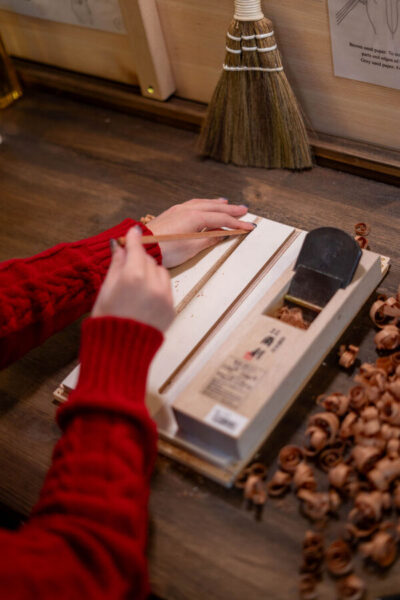
Gion Make Your Own Chopsticks with Engraving Option
Read our review →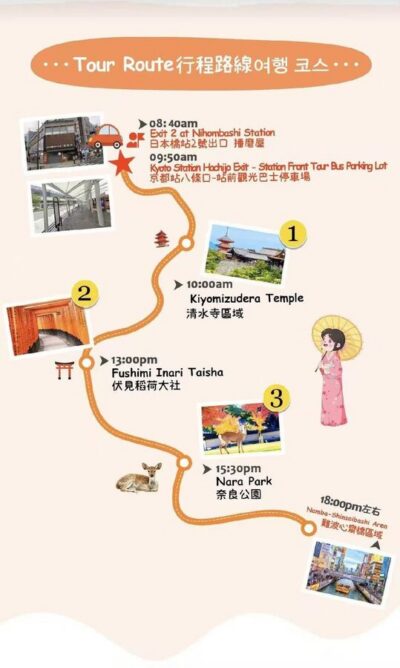
Kyoto Nara Day Trip │ Kiyomizu-dera Temple + Fushimi Inari-taisha Shrine + Nara Park (Departing from Osaka/Kyoto)
Read our review →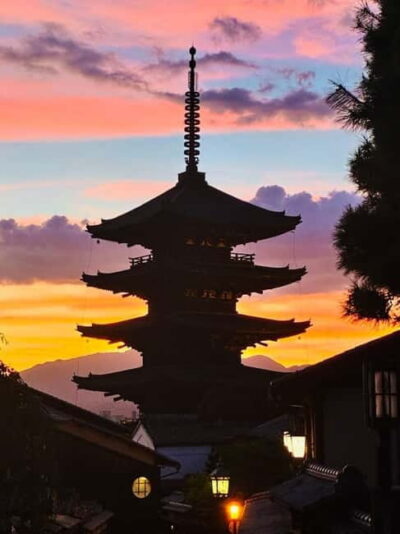
Kyoto Geisha Walking Tour: Gion District & Hidden Gems
Read our review →