
Reviewed · WALKING TOURS
Sakai – Knife Factory and Craft Walking Tour
Sakai cuts through the usual Osaka sightseeing. This three-to-four-hour walking tour takes you into a working knife factory, where raw blades from blacksmiths become handmade cooking tools. I especially like the factory access and the chance to practice sharpening with a professional, two details that make this more than a photo stop. The main caution is that the quality of the experience can depend on your guide’s knife knowledge and on which factory staff are working that day.
I also like the small local touches: a 400-year-old cinnamon mochi tradition, Sakai’s craft museum, and a direct chance to order a knife made to your preferences. Guides such as Scott, Jean-Yves, and Rémi have earned warm praise for their conversation, language skills, and ability to connect the craft with Sakai’s past. Still, if you only want to browse knives, you can visit some places independently, so the tour makes the most sense if you value access, explanation, and a hands-on lesson.
In This Review
- Key points at a glance
- Why Sakai is worth a morning
- A sweet beginning at Yao Gen Raikodo
- Inside the century-old knife factory
- The sharpening lesson is the practical payoff
- Sakai Traditional Crafts Museum and Knife Shop
- What the price includes, and where the value lies
- Guides, language, and the feel of the walk
- Timing, group size, and seasonal changes
- Who will enjoy this most
- Should you book the Sakai knife tour?
- FAQ
- Where does the tour start?
- How long does the experience last?
- What is included in the price?
- Can I buy or customize a knife?
- Is a French-speaking guide guaranteed?
- Can one person book the tour?
- What happens if I cancel?
Key points at a glance
- Enter a working knife factory: See the sharpening station and main office inside a family business with more than 100 years of history.
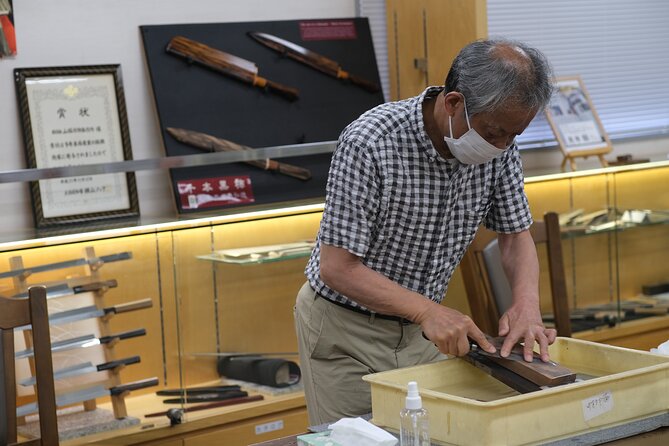
- Practice traditional sharpening: A professional shows you how the technique works, giving the visit a useful, hands-on edge.
- Watch a knife take shape: Raw blades arrive from the blacksmith and are finished as proper handmade cooking knives.
- Taste Sakai’s cinnamon mochi: Receive one sweet tied to a 400-year-old local tradition.
- Shop for a custom knife: You can order a knife suited to your preferences and watch it being made.
- Keep the group small: A maximum of 10 people allows more room for questions, though at least two bookings are needed for the tour to operate.
Why Sakai is worth a morning
Sakai sits in Osaka Prefecture, but it feels like a different chapter of the region. The city is known for traditional crafts, handmade knives, bicycles, and local foods. The tour uses knife making as its main thread, then adds enough local culture to keep the morning from becoming a single-subject factory visit.
That focus is useful. Japanese knives are often admired in shops, but a display case does not explain the labor behind a sharp edge. Here, you see the work in progress. The blade arrives from a blacksmith, then moves through sharpening and finishing. That simple sequence helps you understand why a handmade knife costs more than a mass-produced kitchen tool.
I also appreciate the scale. The group can reach no more than 10 people, which is far easier to manage inside a working craft space than a large coach group. You have a better chance to see the sharpening station and ask a question without shouting over a crowd.
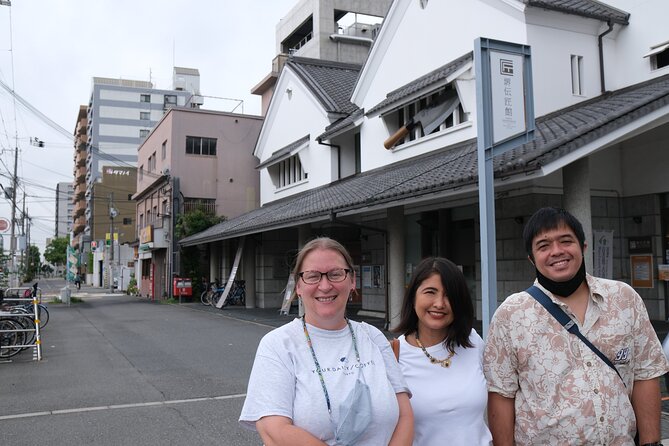
The morning begins at 9:00 a.m. at 3-chōme-22 Ebisujimachō in Sakai Ward. The activity lasts about three to four hours and finishes back at the meeting point. Since the tour is near public transportation, you can fit it into an Osaka day without giving up the whole schedule.
More Walking Tours in Osaka
- Osaka: Hotspots & Hidden Gems Walking Tour Private or Group
★ 4.9 · 1,300 reviews - Osaka Local Foodie Walking Tour in Dotonbori and Shinsekai
★ 5.0 · 985 reviews - Osaka Bar Hopping Night Walking Tour in Namba (3 bars, 6 tastes)
★ 5.0 · 958 reviews
A sweet beginning at Yao Gen Raikodo
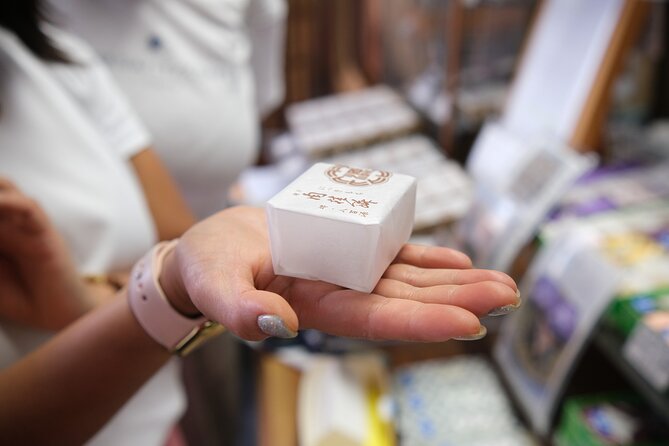
The first stop is 八百源来弘堂本店, a traditional shop connected with Sakai’s cinnamon mochi. You receive one sweet at no extra charge and have the option to buy more.
This is a small stop, about 15 minutes, but it gives the morning a pleasant local beginning. The point is not to fill you up. It is to show you that Sakai’s identity is broader than knives. The 400-year-old origin story adds a human scale to the city’s past, while the snack gives you something concrete to remember.
I would treat this as a taste, not a food tour. Extra food is not included, and the included item is one sweet per person. If you enjoy Japanese confectionery or want a modest souvenir, you can purchase more, but the main purpose is cultural context and a quick introduction to a local specialty.
Inside the century-old knife factory
The factory is the heart of the experience. At 1-chōme-2-21 Shukuyachōnishi, you enter a traditional Japanese knife business with more than a century of family history. This is not simply a retail counter. You go inside the sharpening station and the main office, where you can see professionals at work.
The important word here is working. The value comes from seeing the craft in its normal setting rather than only hearing a polished explanation in a museum. You may watch blades being turned into finished cooking knives, with each stage requiring control and care.
The factory visit lasts about one hour. That is enough time to watch the process without making the morning feel slow. It also leaves room for the sharpening lesson and the later museum stop.
A useful expectation: the blacksmith and the knife factory are not necessarily the same place. The factory receives raw blades directly from the blacksmith, then handles later work such as sharpening and finishing. From the information provided, you should not expect to watch every stage of forging in one room.
The factory is also where the shopping opportunity becomes meaningful. You may order a knife with your own preferences and watch it being made in front of you. That is a stronger experience than buying a finished item from a department store because you can connect the object with the people and process behind it.
There is no hard-sell approach described, which matters. You can look, ask questions, and decide. Still, custom knives and handmade tools can become a serious purchase, so set your budget before you arrive. The tour price does not include shopping or souvenirs.
The sharpening lesson is the practical payoff
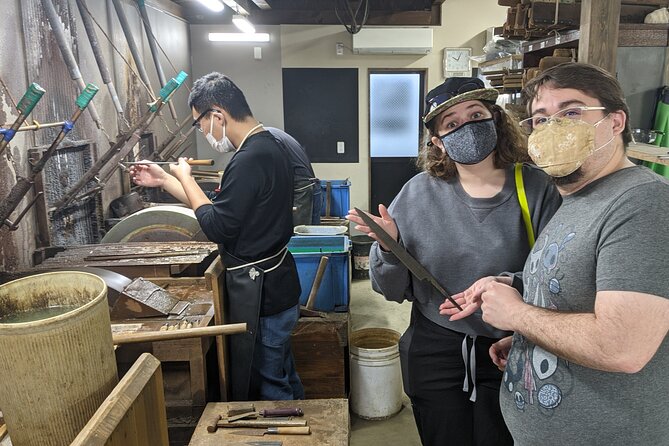
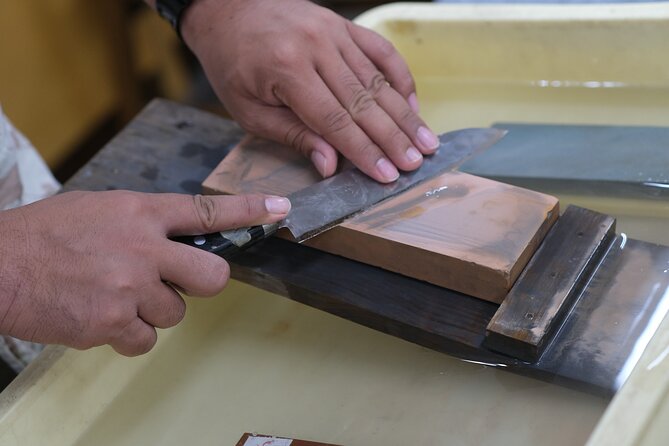
Many craft tours are interesting for an hour and forgotten by dinner. The sharpening lesson gives this one a more useful afterlife. A professional introduces you to traditional sharpening techniques and lets you practice.
The supplied details do not specify the exact equipment, length of the lesson, or whether you sharpen a personal knife. I would therefore think of it as an introduction, not a full apprenticeship. You should leave with a better sense of the patience and precision involved, not expect to become a master sharpener before lunch.
This part is especially valuable if you cook at home. It changes the way you look at a knife. Sharpness is not magic, and it is not maintained by tossing a blade into a drawer. The lesson helps explain why handmade knives need proper care and why the maker’s work continues after the purchase.
The quality of the explanation may vary by guide. Several guides, including Scott, Jean-Yves, and Rémi, have been praised for friendly conversation and strong cultural explanations. One less favorable account raised concerns about a guide’s knife knowledge and about historical explanations that felt too centered on a European viewpoint. That is worth keeping in mind. The best version of the tour depends on a guide who can explain both the technical work and the local setting with accuracy.
More Walking Tours in Japan:
- Kyoto Geisha Walking Tour: Gion District & Hidden Gems
★ 4.7 · 3,273 reviews - Tokyo Tsukiji Fish Market Food and Culture Walking Tour
★ 5.0 · 3,184 reviews - Kyoto: Gion Magical Night Walking Tour with Geisha Trivia
★ 4.9 · 2,393 reviews - Tokyo: Imperial Palace and Shogun Historical Walking Tour
★ 5.0 · 2,251 reviews
Sakai Traditional Crafts Museum and Knife Shop
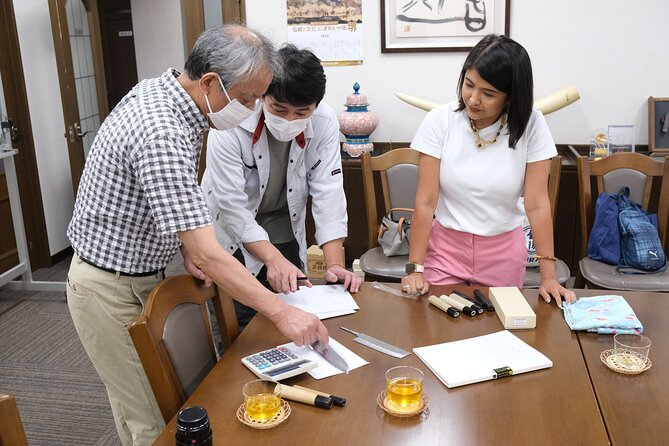
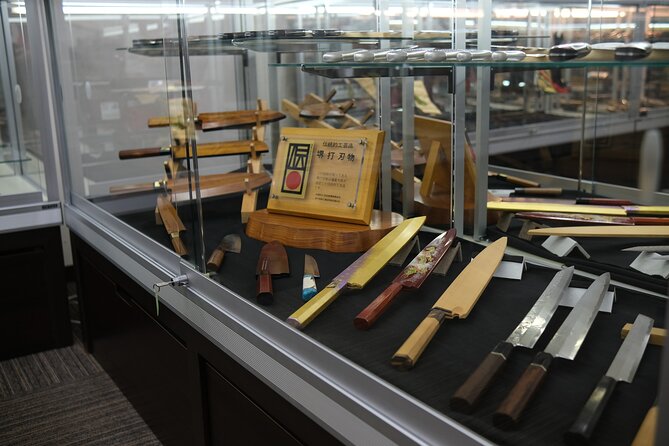
The final major stop is the Sakai Traditional Crafts Museum and Knife Shop, with about 30 minutes set aside. The museum introduces the city’s wider craft culture, including local products, handmade goods, bicycles, and the Sakai connection to Shimano.
This stop helps place knife making in a larger picture. Sakai is not only a destination for cooks hunting a Japanese blade. It is a city where skilled manufacturing and local craft have shaped daily life in different ways.
The museum also serves a practical purpose. If you are still deciding about a purchase, the knife shop gives you another chance to compare products. The factory offers the personal connection. The museum shop offers a broader retail setting. Having both in one morning lets you consider your options without rushing into the first knife you see.
The drawback is time. Thirty minutes passes quickly, especially if you are reading displays or comparing knives. You may need to choose between careful museum browsing and shopping. I would arrive with a short list of questions and a clear idea of what type of knife interests you.
One scheduling warning matters here. On the third Tuesday of each month, the museum may close for inventory without notice. If that happens, the guide takes the group directly to The Craftsman location instead. This keeps the tour moving, but the exact museum experience may not be available.
What the price includes, and where the value lies
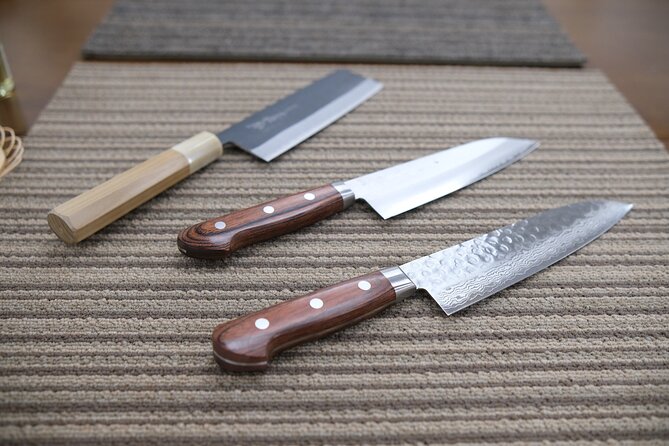
The price is $66.05 per person. Included are the bilingual guide, all fees and taxes, one sweet per person, the factory visit, and the sharpening lesson. Extra food, knives, and other purchases cost more.
I see the price as fair if you want access to the factory and value direct contact with the craft. The cost is not mainly paying for a long list of attractions. It pays for a small-group introduction to a working business, a guide who connects the stops, and a practical lesson that you cannot get from simply walking past a shop.
The value is weaker if you only want to see Sakai’s public sights. The museum and some local areas can be visited on your own, and the tour’s biggest advantage is access to the knife maker. You are paying for the explanation and the door opening, not for expensive inclusions.
The opportunity to order a personalized knife can also change the value for you. If you already planned to buy a serious Japanese kitchen knife, meeting the maker and seeing the process may justify the tour price. If you have no interest in cooking or shopping, the factory visit remains worthwhile, but the purchase element will matter less.
Guides, language, and the feel of the walk
The tour is bilingual, but French service is not guaranteed on a shared departure. If French is important, ask before booking rather than assuming a French-speaking guide will be assigned.
Rémi has guided in French, English, and Japanese, and has been praised for explaining both the knife craft and Japanese culture. Jean-Yves has received warm praise for his kindness, local suggestions, and help with food recommendations. Scott has been praised for interesting history and easy conversation. These names suggest that the operator has several personable guides, but you may not be assigned a particular one.
The walking format suits people who like a little conversation between stops. It also means you should wear comfortable shoes. The supplied information does not give a total walking distance, so I would not assume a completely effortless route. The activity is near public transportation, and most people can participate, but a private accessibility assessment is not provided.
Timing, group size, and seasonal changes
The 9:00 a.m. start is early enough to leave your afternoon open for Osaka. Since the tour returns to its meeting point, you can plan another activity afterward without needing to arrange a separate return route.
A group size of up to 10 people is a good compromise. It keeps the tour social but small enough for a factory setting. The catch is the minimum booking rule: a single person can book directly, but the tour needs at least two participants to operate. If that minimum is not reached, you will be offered another date or experience, or receive a full refund.
There is also a specific seasonal change. From March 6 through April 6, 2026, the blacksmith portion is available only on Tuesdays, Wednesdays, and Thursdays. The notice says that during this period the dates will be for the blacksmith only, so check the exact departure details carefully before paying.
Free cancellation is available until 24 hours before the start time for a full refund. Changes or cancellations made inside that window are not accepted or refunded. The local time in Japan controls the cut-off.
Who will enjoy this most
I would recommend this tour to you if you fit one or more of these descriptions:
- You cook and want to understand what makes a handmade Japanese knife different.
- You are considering buying a personal or custom knife.
- You enjoy small workshops more than large museums.
- You want a side trip from Osaka with local food, craft, and city history.
- You like guided walks that mix practical information with conversation.
- You want an experience that offers access normally difficult to arrange alone.
It is less suitable if you want a full blacksmithing demonstration, a long food tour, or a completely independent morning. The available factory visit focuses on sharpening and finishing, while the blacksmith may be a separate part of the operation. Also, the tour is not ideal for someone who does not want to spend time considering a purchase, since knife shopping is one of its main attractions.
The mixed response on historical framing is another reason to choose with care. Many people have enjoyed the cultural explanations, but one critical account found the presentation too Euro-centric and felt the guide lacked strong knife expertise. That does not cancel the tour’s strengths, but it tells you to ask direct questions and judge the technical explanation for yourself.
Should you book the Sakai knife tour?
Book it if you want to see the craft up close, practice sharpening, and possibly commission a knife from the people who make it. The factory access is the key benefit, and the mochi stop and museum add enough local color to make the morning feel like a visit to Sakai, not just a shopping trip.
Skip it if you only want a quick look at knives or if you expect to watch every stage of blacksmithing. In that case, independent visits may cover much of the public side of Sakai.
For most cooks, craft fans, and curious Osaka visitors, I think the $66.05 price is reasonable. Go with time for questions, comfortable shoes, and a firm shopping budget. Confirm the date rules if you visit in spring 2026, and remember that a French-speaking guide cannot be promised on a shared tour.
FAQ
Where does the tour start?
It starts at 3-chōme-22 Ebisujimachō, Sakai Ward, Sakai, Osaka 590-0985, Japan, at 9:00 a.m.
How long does the experience last?
The tour lasts approximately three to four hours and ends back at the meeting point.
What is included in the price?
The price includes one sweet per person, all fees and taxes, a bilingual guide, the knife factory visit, and a knife sharpening lesson.
Can I buy or customize a knife?
Yes. You have the chance to order a customizable knife and watch it being made. Shopping and souvenirs are not included in the tour price.
Is a French-speaking guide guaranteed?
No. French-speaking guides may be available, but French service cannot be guaranteed on a shared tour.
Can one person book the tour?
A single person can book directly, but at least two participants are needed for the tour to operate. If the minimum is not met, you will be offered another date or experience, or a full refund.
What happens if I cancel?
You can cancel at least 24 hours before the start time for a full refund. Cancellations or changes made less than 24 hours before the start time are not accepted or refunded.
Just added in Japan
- A One-of-a-Kind Sushi Experience in a Special Place of Japan★ 5.0 · 15 reviews
- Tokyo Cute Bento Cooking Class – Make a Kawaii Character Lunchbox★ 5.0 · 126 reviews
- Japanese Home Cooking Class & Walk in Todoroki Temple Tokyo★ 5.0 · 88 reviews
- Japan Tokyo Tower Observatory Deck E-Ticket★ 4.0 · 34 reviews
- Catch a Baseball Game in Tokyo with a Local – Tickets Included★ 5.0 · 24 reviews
- JDM Experience with Fast&Furious RX-7 (English speaking Driver)★ 5.0 · 57 reviews
- Tokyo Private Day Tour by Car with English speaking Driver Guide★ 4.0 · 29 reviews
- Japan Classic 10 Day – One Life Adventures★ 5.0 · 129 reviews
Walking Tours, compared.
Kyoto Geisha Walking Tour: Gion District & Hidden Gems
Read our review →
Tokyo Tsukiji Fish Market Food and Culture Walking Tour
Read our review →
Gion Magical Night Walking Tour with Geisha Trivia
Read our review →
Imperial Palace and Shogun Historical Walking Tour
Read our review →
Gion Geisha District Walking Tour – Stories of Geisha
Read our review →

Shinjuku Local Bar and Izakaya Guided Walking Tour
Read our review →
Browse the lists this tour appears in