
Reviewed · MUSEUMS AND GALLERIES
Seki: Samurai Knife Making Experience at the Knife Museum
Sharp steel, slow craft, lasting memories. In Seki, Japan’s historic blade-making city, you spend the day making a personalized Damascus kitchen knife with master craftsman Sumi and his team. I especially like the hands-on work, including polishing, sharpening, assembly, and engraving your name in kanji or kana. I also like that the day includes lunch and visits to both a knife museum and a swordsmith museum.
The main thing to consider is time. The knife-making session can run longer than the stated schedule, and the full day may feel long if you only have a passing interest in knives. The choice of knife styles is also limited, though the available blades are high quality.
In This Review
- Key points at a glance
- Why Seki is the right place for this experience
- Meeting Hiro at Sekitomioka Station
- Choosing and shaping your own knife
- Learning to sharpen, not just assemble
- Testing the blade on fresh vegetables
- A Japanese lunch after the workshop
- Inside the G. Sakai Knife Museum
- The Blacksmith Museum and Samurai sword tradition
- What the $322 price includes
- Timing, transport, and practical planning
- Who should book this Seki experience?
- Should you book it?
- FAQ
- Where does the experience begin?
- How long does the experience last?
- How far is Seki from Kyoto?
- What do I make during the workshop?
- Can I put my name on the knife?
- Is lunch included?
- Are museum tickets included?
- Is transportation included?
- Is the activity available in English?
- Can children join?
Key points at a glance
- Make a useful Damascus kitchen knife: Choose from available blade shapes and handle styles, then polish, sharpen, assemble, and personalize your knife.
- Learn from a lifelong craftsman: Sumi has more than 50 years of knife-making experience, with Yoshi helping guide the practical work.
- Put the blade to work: Test your finished knife on fresh local vegetables and feel how sharply it cuts.
- Enjoy a proper Japanese lunch: The meal may be sushi prepared by a veteran sushi master, or another local specialty such as eel.
- Travel with a small group: The maximum group size is five, making it easier to receive personal help.
- See Seki’s blade tradition from two angles: The day links modern cutlery production with Samurai sword history at the Blacksmith Museum.
Why Seki is the right place for this experience
Seki City sits in Gifu Prefecture, in central Honshu. It has been associated with sword and cutlery production since the Kamakura period, from 1185 to 1333. The area had the basic ingredients traditional smiths needed: good iron sand, charcoal, and plentiful water.
That old trade has changed with modern manufacturing, but it has not disappeared. Seki remains known for producing sharp, durable knives used by professional chefs and home cooks around the world. The city also holds museums and annual events devoted to its blade-making past.
I like this setting because the activity is not simply a craft class placed in a random tourist town. The knife has a real connection to the place. You are learning in a city where blade-making has shaped local industry and identity for centuries.
Seki is not the easiest stop to add to a Japan itinerary. From Kyoto, the journey takes roughly one and a half to two hours by train, and the activity begins at Sekitomioka Station when the Nagara River Train arrives at 10:06 in the morning. That extra travel is part of the cost in time, but it also takes you away from Japan’s busiest sightseeing routes.
More Castles and Historic Sites in Japan:
- Osaka Castle Ticket
★ 4.7 · 12,450 reviews - Osaka Castle: Museum and Tower Entry Ticket
★ 4.5 · 2,380 reviews - Tokyo: Imperial Palace and Shogun Historical Walking Tour
★ 5.0 · 2,251 reviews
Meeting Hiro at Sekitomioka Station
The day begins at Sekitomioka Station. You should plan carefully around the stated 10:06 arrival time, since the driver meets you as the train arrives. Hiro, the English-speaking guide, handles the local transportation and helps bridge the language gap during the workshop and museum visits.
This pickup matters. Seki’s knife-making sites are out of the way, and getting between the station, factory, restaurant, and museums would be awkward without local help. Hiro has also dropped participants at Gifu Station instead of Mino-Ota Station when that made the return trip easier, though you should confirm your own transport arrangements before booking.
The group is limited to five people. That is a real advantage here. Knife work involves small steps, careful handling, and repeated demonstrations. A large group would make it harder to get personal instruction, while a small group gives Sumi and Yoshi more time to watch your technique.
The guides are a major part of the appeal. Hiro translates explanations, answers questions, takes photographs and videos during the day, and keeps the transfers simple. Sumi and Yoshi are warm, patient teachers, and their relaxed manner helps if you have never worked with a blade before.
Choosing and shaping your own knife
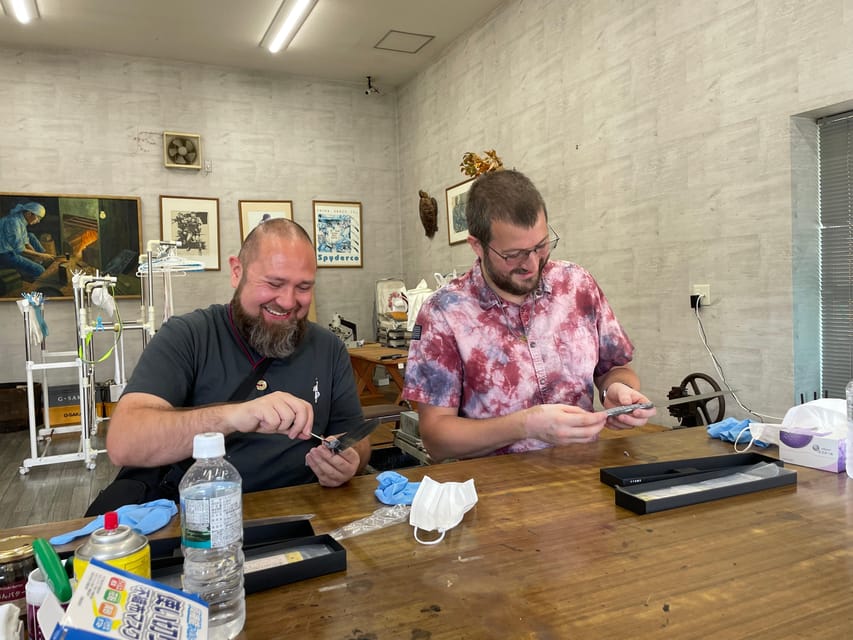
The workshop takes place beside the G. Sakai Knife Museum, in part of the G. Sakai factory. G. Sakai is one of Japan’s best-known knife makers, so you are working in an actual cutlery setting rather than a temporary craft booth.
You begin with a prepared blade blank and choose from the available knife colors and shapes. The selection is not unlimited. One participant found that there were not many types to choose from, so you should not book this expecting to design every detail from scratch.
Still, the process goes far beyond putting a handle onto a finished souvenir. You work through several stages:
- Polishing the blade
- Writing or engraving your name
- Assembling the knife
- Learning how to sharpen it
- Checking the finished edge on fresh vegetables
The exact balance between demonstration and hands-on work can vary, but the experience is built around your participation. You are not just watching a smith work while you wait for a finished product.
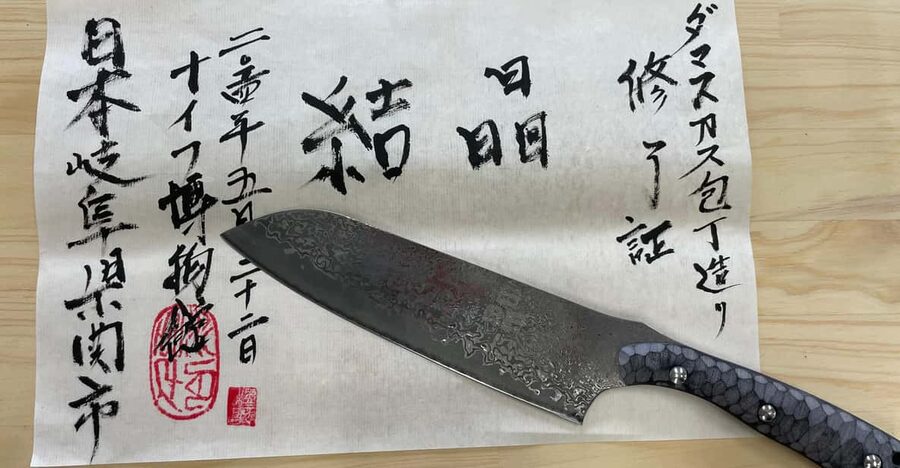
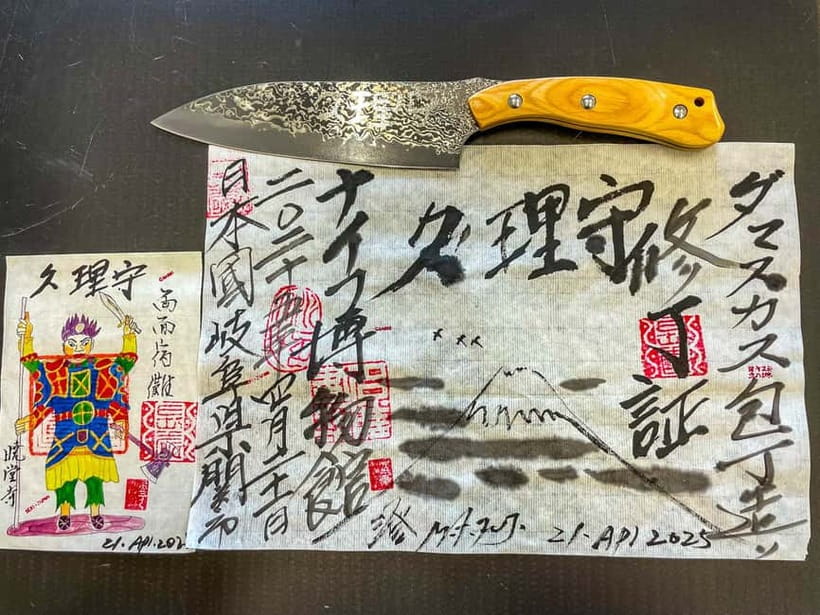
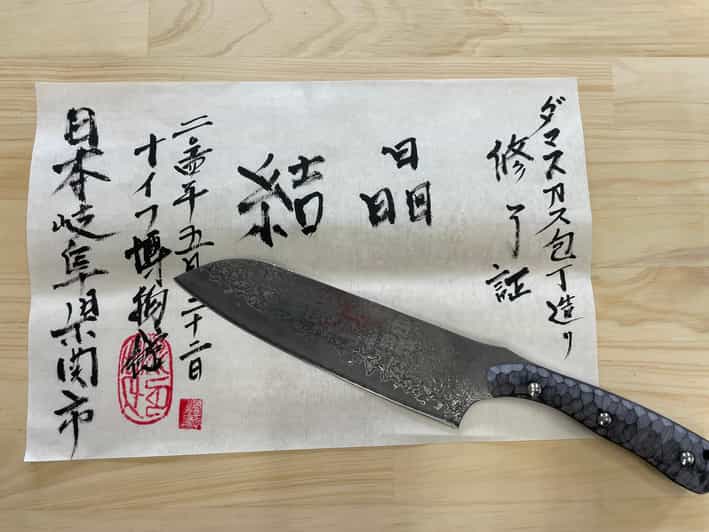
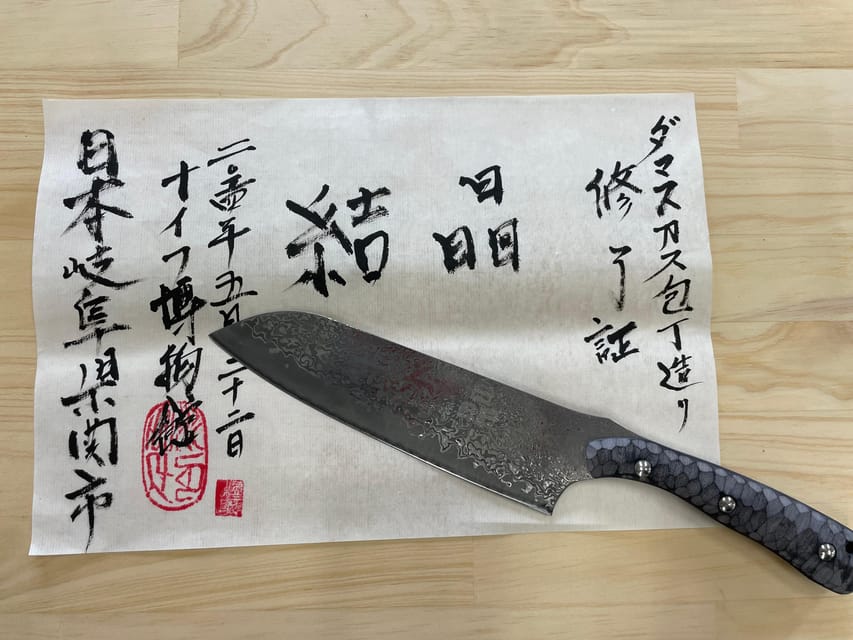
The name engraving is one of the most personal touches. Hiro can help translate your name into kanji, or explain how it can be written in Japanese characters. You then paint or etch it onto the blade using the workshop’s special technique. The result is not a generic kitchen item. It carries your name and the memory of the day.
Some participants received extra touches, including key rings, a small knife gift, a certificate, a chopping board, or a sumi-e painting matched to the knife design. These extras appear to vary, so I would treat them as possible gifts rather than guaranteed parts of the package.
Learning to sharpen, not just assemble
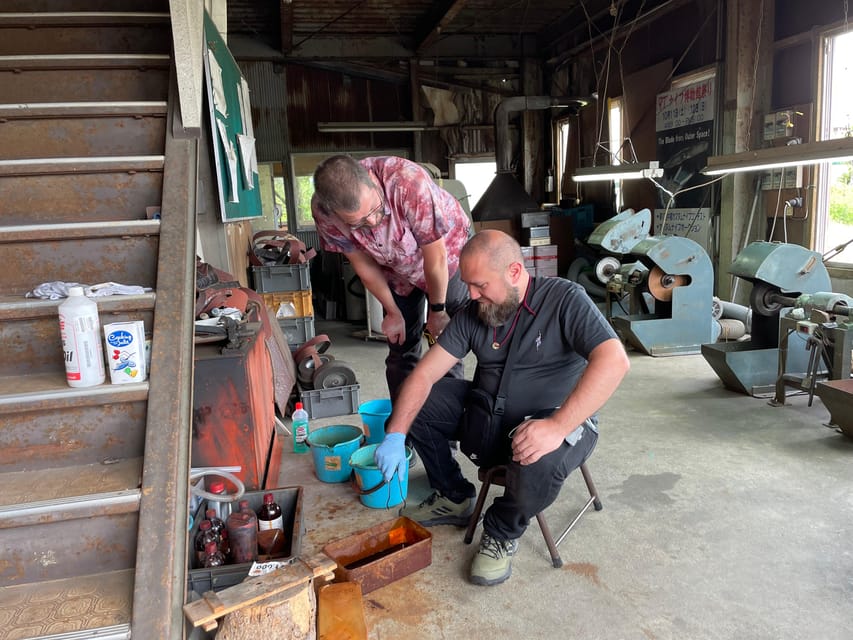
The sharpening lesson may be the most useful part of the workshop. Many visitors buy Japanese knives but never learn how to maintain the edge. Here, you get practical instruction that you can use later on your own knife, and potentially on knives belonging to friends or family.
The work requires patience. You may polish or sharpen under close guidance, and the session can take much of the day. One family arrived at the workshop around 11 in the morning and did not leave until about 4 in the afternoon. The published schedule allows two and a half hours for the museum and workshop, but you should leave room for the activity to run late.
That is not necessarily a flaw. The slow pace gives you time to ask questions and finish the knife properly. It does mean you should avoid scheduling a tight evening reservation or a long onward journey.
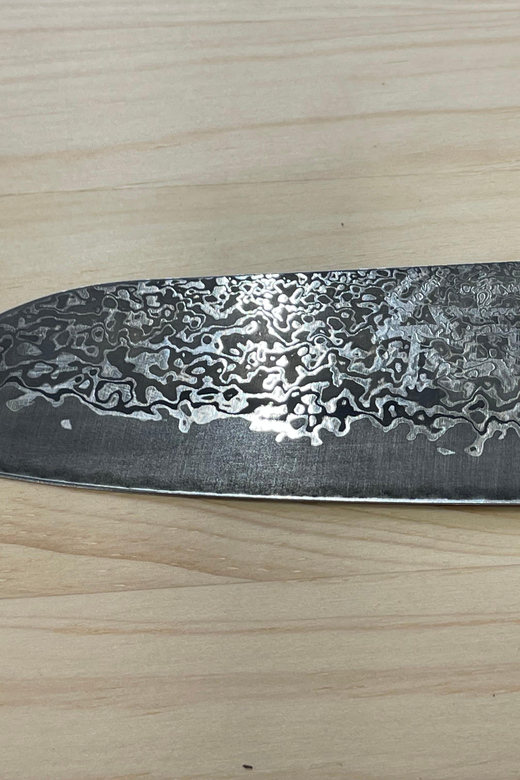
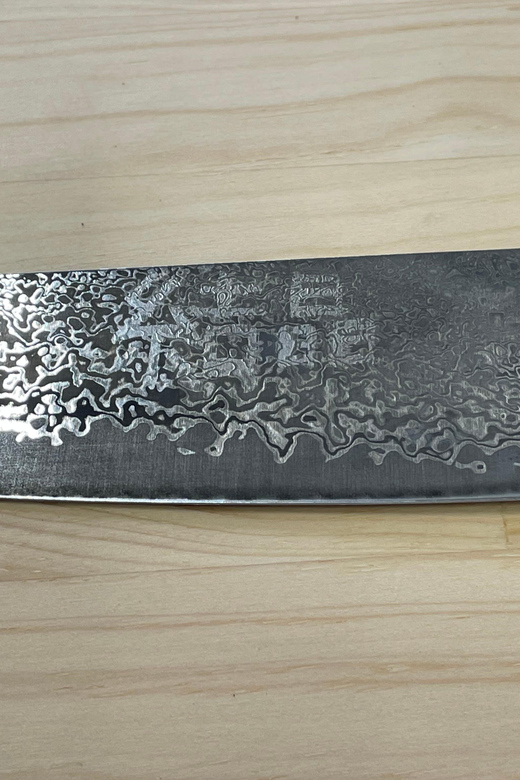
The finished knife is usually described as a Damascus kitchen knife, with some participants specifically identifying the steel as V10. The blade has a striking layered appearance, and the result is intended for daily kitchen use, not just display.
More Museums and Galleries in Japan:
- teamLab Borderless Tickets: MORI Building DIGITAL ART MUSEUM
★ 4.7 · 24,126 reviews - teamLab Planets TOKYO Ticket
★ 4.7 · 21,663 reviews - Tokyo: teamLab Planets TOKYO Digital Art Museum Entry Ticket
★ 4.6 · 9,779 reviews - teamLab Botanical Garden Osaka Ticket
★ 4.4 · 7,975 reviews
Testing the blade on fresh vegetables
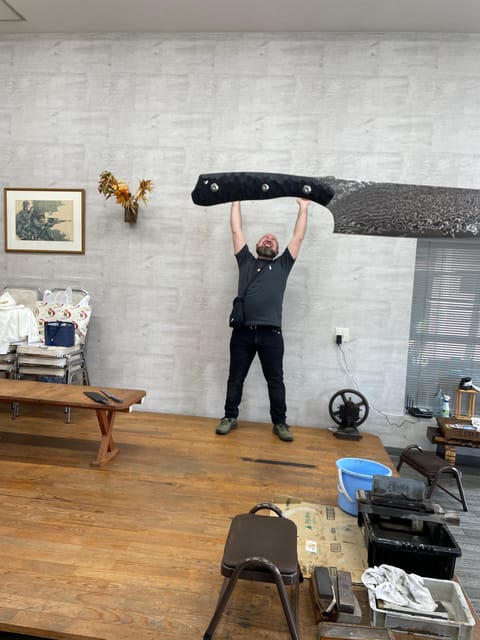
Once your knife is assembled and sharpened, you get to test it. Fresh local vegetables provide a simple but satisfying check of the blade’s performance.
This is where the lesson becomes real. You can feel whether the knife glides through food, how the handle sits in your hand, and how much pressure the edge needs. Some participants also had the chance to slice a water bottle, though that should be regarded as an occasional bonus rather than a promised part of the program.
I like this stage because it connects Japanese knife-making with Japanese food culture. The knife is not treated as a precious object that must remain untouched. You make it, maintain it, and use it.
A Japanese lunch after the workshop
After the knife work, Hiro takes you to a local restaurant for lunch. The meal is included, and the food adds another local layer to the day.
Several participants had sushi prepared by a sushi master with more than 20 years of experience. One account described a chef with 43 years of experience, and another mentioned a choice among three meal types. Eel was also served on at least one occasion.
Because the exact restaurant and menu can vary, you should not assume that sushi is guaranteed. Still, the meal is clearly more than a quick boxed lunch. It gives you a chance to sit down after the workshop and enjoy a proper Japanese meal in Seki.
For many people, this becomes one of the day’s highlights. If you are interested in food, the lunch helps justify the trip even if your enthusiasm for knife museums is only moderate.
Inside the G. Sakai Knife Museum
The Knife Museum is located as part of the G. Sakai factory. You can see a collection of unusual and rare knives, along with examples that show how broad the Japanese cutlery trade can be.
The museum is not a huge, formal institution in the style of a major national museum. One participant felt it was more like an impressive knife shop and factory collection than a conventional museum. That is a fair expectation to set.
The attached shop carries many types of knives, from small pocket knives and souvenirs to hunting knives and kitchen blades. It can be tempting, especially after making your own knife. I would suggest looking first and buying only if you have checked your airline and luggage rules for carrying blades home.
The collection is valuable because it places your own knife in a wider context. You see how Japanese makers apply different blade forms to different tasks. You also get a better sense of why Seki knives are prized for their sharpness, strength, and finish.
The Blacksmith Museum and Samurai sword tradition
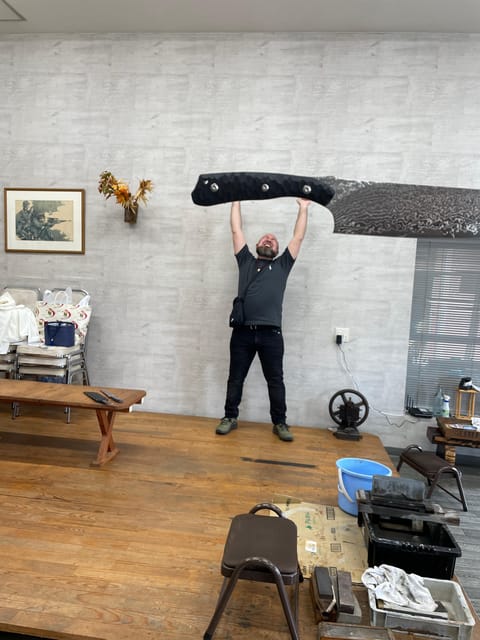
The final major stop is the Seki Swordsmith Museum, also described as a sword factory or artisan katana showroom. Here, you learn about Japanese Samurai swords and Seki’s role in sword production.
The visit gives the day a wider historical frame. The workshop focuses on a modern kitchen knife made from a prepared blank. The sword museum shows the older craft and the cultural value attached to Japanese blades.
You may see swords brought from around the world for repair and calibration. Some participants were able to speak with a katana expert and, in certain visits, hold an actual sword. The exact access can depend on the day and the workshop, so I would not assume that every visitor will handle a sword.
This stop is especially good for anyone interested in Samurai history, Japanese metalwork, or the difference between a working kitchen knife and a ceremonial or historical blade. It also helps explain why Seki takes its blade traditions seriously today.
What the $322 price includes
At $322 per person, this is not a cheap add-on. The value depends on how you measure a day in Japan.
The fee includes the knife set you make, lunch, museum admission, transportation during the day, an English guide, and a knife-making instructor. You are also paying for a small group and direct help from people who know the city and the craft.
If you compare the price with a basic museum ticket, it will seem high. If you compare it with a full day of private transport, translation, hands-on instruction, a quality Damascus knife, lunch, and two cultural visits, the price is easier to understand.
The knife is the main physical value. You leave with a useful item rather than a disposable souvenir. The sharpening lesson adds value over time, since it teaches you how to care for the blade.
Still, the experience makes the most sense for people who will use or display the knife and who care about the story behind it. If you want a quick factory tour or a low-cost souvenir, this is too expensive and too long.
Timing, transport, and practical planning
The published duration is one day, with the schedule beginning at Sekitomioka Station and ending back there. Transportation is included during the activity, and the vehicle makes the scattered stops manageable.
From Kyoto, allow roughly one and a half to two hours by train to reach the area. The meeting time is tied to the 10:06 arrival of the Nagara River Train. Check the current train schedule and make sure you are at the correct station, since the pickup depends on timing.
You should also plan for the workshop to run beyond its quoted time. The process is detailed, and instructors may give you extra help rather than rush you out. Keep your evening free if possible.
The experience is offered in English and Japanese. Hiro provides translation, while the instructors demonstrate the practical steps. The group is limited to five participants, which helps make the instruction personal.
It is not suitable for children under 18. That age rule is important because the activity involves sharpening and handling blades.
Free cancellation is available up to 24 hours before the start time, and you can reserve now and pay later. Check the current availability and starting details before committing, since the exact timing may change.
Who should book this Seki experience?
I would recommend it most strongly to:
- People who enjoy Japanese food and kitchen tools
- Culture-focused visitors who want a day outside the main tourist routes
- Home cooks interested in sharpening and knife care
- Visitors fascinated by Samurai swords and traditional metalwork
- Couples, families with adult children, and small groups of friends
- Anyone looking for a useful, personalized souvenir
You do not need prior knife-making experience. The instructors are patient, and the work is guided step by step.
I would be more cautious if you have a tight itinerary, dislike workshop activities, or expect to forge a blade from raw steel. The experience begins with a prepared blank, and you shape, polish, assemble, personalize, and sharpen it. That is a substantial craft session, but it is not the same as spending a day at a hot forge hammering molten metal.
Should you book it?
Book this if you want a personal connection to Japanese craft, not just another sightseeing stop. The combination of Sumi and Yoshi’s patient instruction, Hiro’s thoughtful guiding, a real knife you can use, a quality lunch, and the sword museum gives the day unusual range.
I especially like that the experience leaves you with both a skill and an object. You learn how to sharpen a blade, write your name in Japanese characters, and understand why Seki became a center for cutlery and swords.
Skip it if $322 feels too steep for a full-day activity or if you need a tightly timed schedule. For the right person, though, the long journey to Seki is part of the reward. You return with a knife made in Japan, a better sense of the craft behind it, and a story that is much better than another airport souvenir.
FAQ
Where does the experience begin?
It begins at Sekitomioka Station of the Nagara River Train. Pickup is arranged for the train’s stated arrival at 10:06 AM.
How long does the experience last?
It is a full-day experience. The published plan includes the workshop and museum, lunch, the Swordsmith Museum, and transport back to Sekitomioka Station.
How far is Seki from Kyoto?
Seki is roughly one and a half to two hours from Kyoto by train.
What do I make during the workshop?
You make a personalized Damascus kitchen knife. You choose from the available blade shapes and handle styles, then polish, assemble, sharpen, and personalize it.
Can I put my name on the knife?
Yes. You can write or etch your name on the blade using a special technique. The guide can help translate your name into kanji or kana.
Is lunch included?
Yes. Lunch is included in the price. The meal may include sushi, eel, or another local Japanese meal, depending on the arrangements.
Are museum tickets included?
Yes. Entry to the Knife Museum and the Seki Swordsmith Museum is included.
Is transportation included?
Yes. Transportation during the experience is included, with pickup at Sekitomioka Station and return transport to the station.
Is the activity available in English?
Yes. The experience is offered in English and Japanese, and an English-speaking guide provides translation and assistance.
Can children join?
No. The experience is not suitable for children under 18.
Just added in Japan
- A One-of-a-Kind Sushi Experience in a Special Place of Japan★ 5.0 · 15 reviews
- Tokyo Cute Bento Cooking Class – Make a Kawaii Character Lunchbox★ 5.0 · 126 reviews
- Japanese Home Cooking Class & Walk in Todoroki Temple Tokyo★ 5.0 · 88 reviews
- Japan Tokyo Tower Observatory Deck E-Ticket★ 4.0 · 34 reviews
- Catch a Baseball Game in Tokyo with a Local – Tickets Included★ 5.0 · 24 reviews
- JDM Experience with Fast&Furious RX-7 (English speaking Driver)★ 5.0 · 57 reviews
- Tokyo Private Day Tour by Car with English speaking Driver Guide★ 4.0 · 29 reviews
- Japan Classic 10 Day – One Life Adventures★ 5.0 · 129 reviews
Museums and Galleries, compared.

teamLab Borderless Tickets: MORI Building DIGITAL ART MUSEUM
Read our review →

teamLab Planets TOKYO Digital Art Museum Entry Ticket
Read our review →



Browse the lists this tour appears in