
Reviewed · WORKSHOPS
Shinjuku Tokyo: Authentic Japanese Home-Style Culinary Class
Japanese food becomes easier to understand at the stove. This 150-minute class near central Tokyo gives you a practical way to cook familiar dishes, ask questions, and sit down to a meal you helped make. I especially like the choice of several menus and the chance to learn recipes you can repeat at home. The English-speaking instructors, including Kana, Kayo, Lulu, Chieko, and Miyuki, are often praised for their patience and warmth.
I also like the class’s flexible approach to dietary needs. Vegetarian, vegan, and allergy-related requests can be discussed ahead of time, and past participants have had menus adjusted for special preferences. The main point to consider is that the exact kitchen address arrives only after booking, and one person had trouble finding the entrance, so allow extra time and read the arrival instructions carefully.
In This Review
- Key points at a glance
- Why this class works well in central Tokyo
- Choosing between four very different Japanese menus
- Okonomiyaki and yakisoba
- Gyoza and takoyaki
- Rolled sushi and teriyaki
- Traditional gozen set
- Requesting a different menu
- What the 150-minute cooking session feels like
- The value of learning food you can make again
- Dietary needs and menu changes
- The instructors are a major part of the experience
- What could be better
- Who should book this Shinjuku cooking class?
- Booking advice and final verdict
- FAQ
- Where does the cooking class take place?
- How long does the experience last?
- How much does the class cost?
- Which menus can I choose?
- Can I choose my menu after booking?
- Is the class taught in English?
- Can the class accommodate allergies or special diets?
- What is included in the price?
Key points at a glance
- Four popular menu choices: Cook okonomiyaki and yakisoba, gyoza and takoyaki, rolled sushi and teriyaki, or a traditional gozen meal.
- A real meal, not just a demonstration: You prepare several dishes, then eat what you made together.
- Near Shinjuku: The central Tokyo setting makes this easy to fit into a sightseeing day, though private transportation is not included.
- Helpful English instruction: The cooking team explains techniques, ingredients, and cultural background in English.
- Good for mixed-age groups: Children and teenagers have taken part, and the activities can be adjusted for different cooking abilities.
- Dietary requests are welcome: Tell the provider about allergies, vegetarian needs, vegan preferences, or other restrictions before the class.
Why this class works well in central Tokyo
Shinjuku is one of Tokyo’s most useful bases. It is central, well connected, and packed with restaurants, department stores, bars, and tall buildings. A cooking class here gives you a break from sightseeing without requiring a long trip across the city.
The kitchen studio is described as being in or around Shinjuku. You receive the precise address after booking, along with a message from the provider. That arrangement lets the host confirm the right location, but it also means you should not simply turn up at a broad Shinjuku map pin and expect to find the room.
One participant had trouble because the address led to part of a building without an obvious entrance. The group called the organizer and was eventually let in, but arrived about 15 minutes late. I would save the provider’s message, check the address before leaving, and leave a little time for finding the door.
The class lasts about two and a half hours. That is long enough to prepare a full meal without taking up an entire day. You can schedule it between other Shinjuku plans, but do not treat it like a quick snack stop. You will be cooking, eating, asking questions, and learning several recipes.
A few more options to weigh up in Tokyo
- Tokyo Disney Resort – Tokyo Disneyland & Tokyo DisneySea Park Tickets
★ 4.8 · 99,488 reviews - SHIBUYA SKY Ticket
★ 4.7 · 46,509 reviews - JR Whole Japan Rail Pass
★ 4.8 · 29,150 reviews
Choosing between four very different Japanese menus
The class offers four main menu sets. If you are the only booking group on the day, you can normally choose your preferred menu. If another group joins the class, menu choice may be limited, so make your preference clear when booking and confirm what is possible.
Okonomiyaki and yakisoba
This is the most teppan-style option. Okonomiyaki combines batter, chopped cabbage, and other ingredients on a hot grill, then gets finished with sauces and toppings. Yakisoba uses stir-fried noodles with vegetables and usually seafood or pork, covered in a sweet and savory sauce.
I would choose this menu if you want a lively meal with familiar Japanese festival and casual-dining flavors. It also teaches useful basics: managing a hot cooking surface, combining textures, and balancing a rich sauce with vegetables and batter.
A side dish completes the set. The menu includes common ingredients that may need checking for allergies or dietary restrictions, so tell the provider in advance if you do not eat seafood, pork, eggs, or other items.
Gyoza and takoyaki
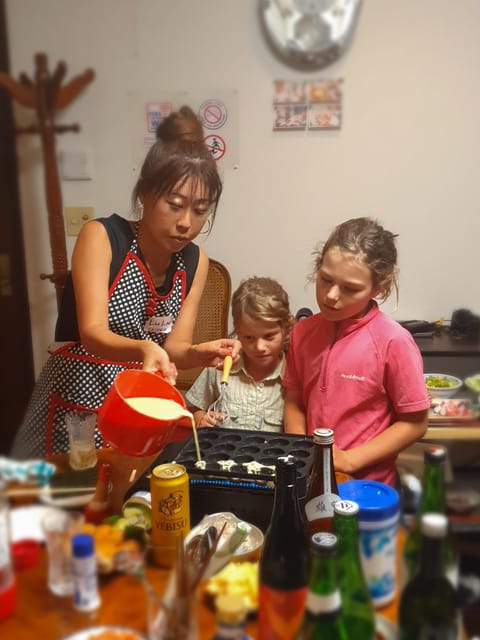
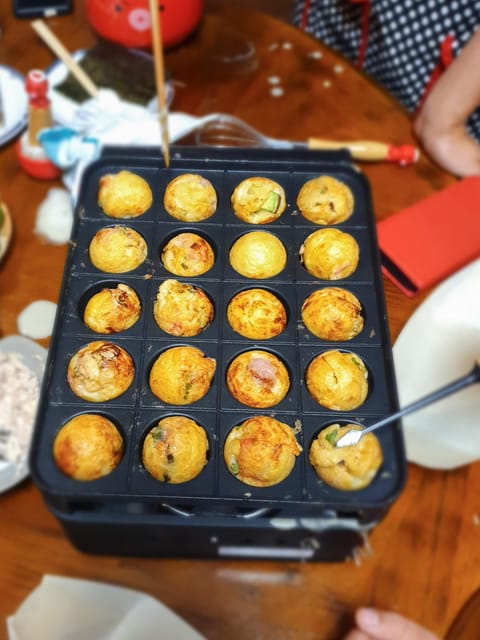
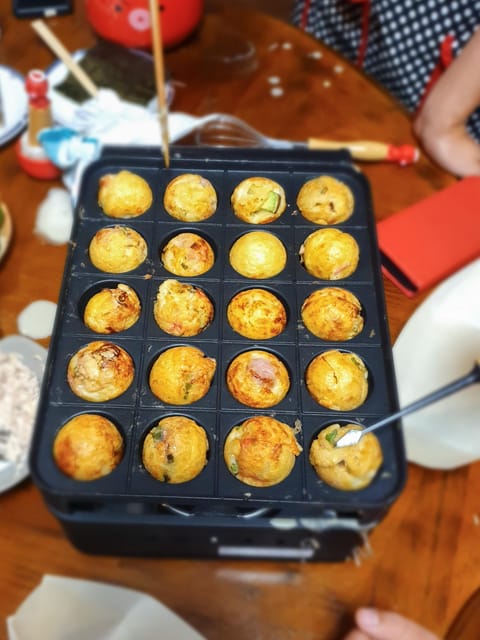
This set focuses on two foods that are fun to assemble and cook. The gyoza are pan-fried until crisp, while takoyaki are round batter dumplings associated with Osaka and summer festivals.
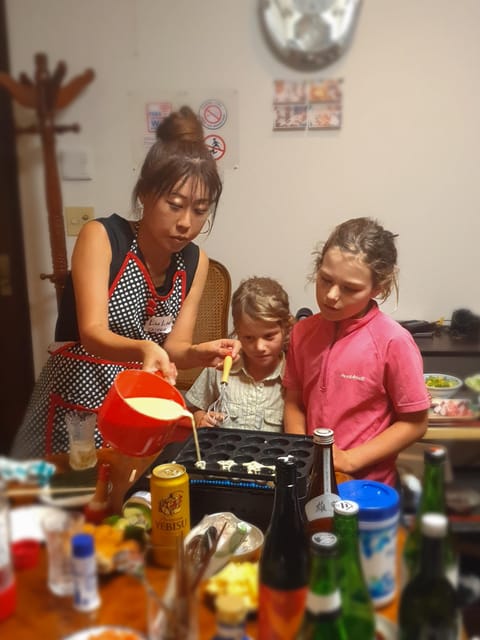
Takoyaki can be especially enjoyable for families because the shape and cooking process make the food feel like a small kitchen project. You are not simply watching a cook place food on a plate. You get to take part in preparing dishes that many people do not make at home outside Japan.
The gyoza also offer a useful lesson in texture. The goal is a browned, crisp underside with a tender filling and wrapper. If you enjoy hands-on cooking, this may be the strongest menu choice.
A completely different kind of day out:
- Mt Fuji and Hakone 1-Day Bus Tour Return by Bullet Train
★ 5.0 · 26,383 reviews - TOKYO SKYTREE® Ticket
★ 4.7 · 25,136 reviews - teamLab Borderless Tickets: MORI Building DIGITAL ART MUSEUM
★ 4.7 · 24,126 reviews - teamLab Planets TOKYO Ticket
★ 4.7 · 21,663 reviews
Rolled sushi and teriyaki
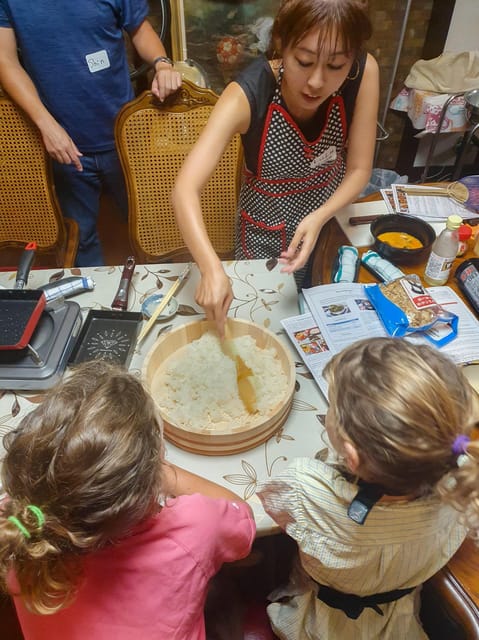
This menu combines rolled sushi with teriyaki and miso soup. You roll and cut your own sushi pieces, then prepare either yellowtail fish or chicken teriyaki, depending on the menu arrangement and your preferences.
I like this choice for first-time visitors because it covers several building blocks of Japanese cooking in one sitting. You work with rice, learn how fillings are arranged, handle a sushi roll, and prepare a sweet-savory teriyaki sauce. Miso soup adds a simple but important home-cooking lesson.
One participant said the class made it possible to recreate sushi and miso soup at home, and recipes were sent afterward. That is a good sign for anyone who wants more than holiday entertainment. The class aims to give you methods you can use again.
Traditional gozen set
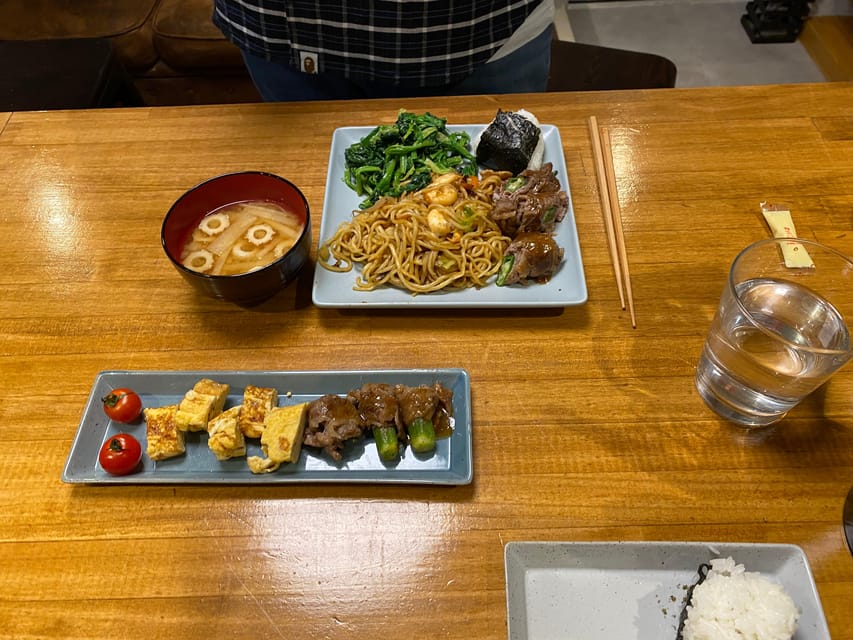
The gozen meal is the broadest home-cooking option. It includes a meat plate, a fish plate, a side dish, miso soup, and an onigiri rice ball.
Choose this set if you want to understand how a rounded Japanese meal is put together. Rather than focusing on one famous dish, it shows how several smaller elements share the table. You get variety in flavor, preparation, and presentation.
A participant chose the gozen set and requested chicken teriyaki, which the instructor accommodated. This illustrates why it pays to discuss preferences before class. The gozen menu may be a particularly good fit for people who want a balanced meal or who are less interested in festival foods.
Requesting a different menu
A fifth option allows you to request another menu and discuss it with the instructor. The available dishes are not guaranteed in advance, so you should treat this as a conversation rather than a promise.
If you have a specific Japanese dish in mind, contact the provider before the day of the class. The earlier you explain your request, the easier it will be to discuss ingredients, equipment, and possible substitutions.
What the 150-minute cooking session feels like
The class begins with prepared ingredients and cooking tools supplied by the studio. That saves time and lets you focus on technique instead of shopping, washing large amounts of produce, or measuring every item from scratch.
You can expect the instructor to explain the dishes, ingredients, and steps in English. Past classes have included cultural background as well as cooking advice. Aki, Miyuki, Chieko, Kana, Kayo, Lulu, and other instructors have received praise for clear explanations, humor, patience, and friendly conversation. The exact instructor depends on the date.
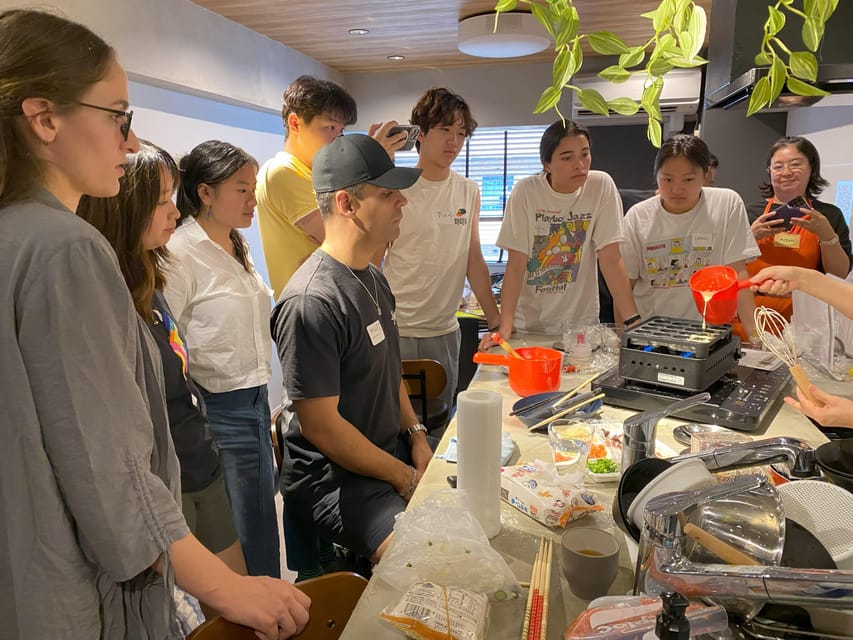
The level of participation can vary. Several people describe the class as interactive, with everyone involved in preparation and cooking. One person who already enjoyed cooking would have preferred to do more of the work instead of watching the instructor prepare some parts while explaining them.
That is the fairest way to view the format: it is a guided class, not an open kitchen where you control every task. The instructor needs to manage timing, heat, food safety, and several dishes at once. If you want maximum hands-on time, say so at the start.
The cooking is followed by the meal. This is an important part of the experience because you can taste the result while the instructions are still fresh. Several participants said the portions were generous, with one person arriving hungry and remaining full for much of the day.
The food is not an afterthought. It is the payoff for the chopping, mixing, shaping, rolling, and cooking. The meal also gives you time to ask follow-up questions about ingredients, restaurants, and Japanese food customs.
The value of learning food you can make again
At $88 per person, this is not the cheapest meal you will find in Tokyo. You can buy okonomiyaki, sushi, gyoza, or teriyaki for much less at a restaurant.
The value is in the instruction and the access to a private kitchen setting. Your fee includes ingredients, cooking tools, drinking water, and all taxes and fees. You also receive a meal, so the price covers both an activity and lunch or dinner.
The strongest value comes if you plan to use what you learn. Participants have taken home recipes for sushi, miso soup, and other dishes, and one person bought a pan afterward to recreate the food. That practical quality makes the class more worthwhile than a short demonstration with no written guidance.
The class can also save you guesswork. Japanese ingredients may be familiar at a restaurant but less clear in a supermarket. An instructor can explain how they are used and how different items fit into a dish. Kerrie specifically valued learning about Japanese ingredients and their uses.
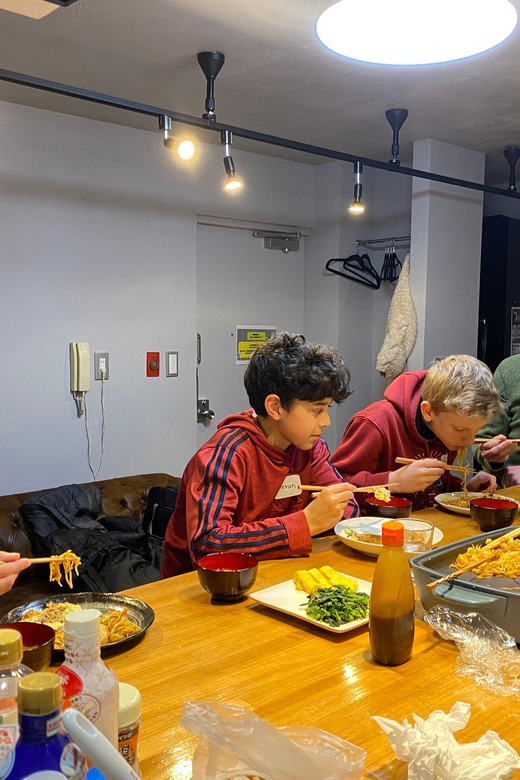
For a family, the price also buys a shared activity. Children aged 7 to 12 have taken part, and one family with teenagers called it a favorite part of a wider Japan trip. You should still consider your group’s interest in cooking. A child who dislikes kitchen tasks may find two and a half hours long, while a curious young cook may enjoy the shaping and grilling.
Dietary needs and menu changes
The provider asks you to share food allergies in advance. Vegetarian and vegan arrangements are available for discussion, and past groups have received substitutions for allergies and dietary restrictions.
Do not wait until you are standing at the studio. Japanese sauces, broths, fillings, and toppings can contain ingredients that are not obvious from the dish name. Explain your restrictions clearly when you book or in the follow-up messages.
The class has adjusted menus for vegetarians and made special requests such as chicken teriyaki within a gozen meal. Still, an accommodation is a discussion, not an automatic guarantee for every ingredient or menu. Ask what can be changed before you commit to a particular set.
This advance planning also helps with the menu choice rule. If another group attends on your date, you may not have complete freedom to select a separate menu. Early communication gives the provider a chance to find a workable arrangement.
The instructors are a major part of the experience
The cooking itself matters, but the people leading the class shape the day. The instructors are consistently described as warm, patient, friendly, and clear in English.
Kana has been praised for answering many questions and creating a welcoming class. Kayo has explained both the dishes and the techniques in a way that made a large amount of food manageable. Mika helped explain Japanese ingredients, while Chieko has been praised for traditional recipes and cooking methods.
Lulu, also identified in one booking as Chieko, has received praise for adapting menus, sharing cultural information, helping with plating, and sending recipes. Some sessions include an assistant, such as Yuki, which can make the work easier when several people are cooking.
These names do not mean you can request a particular instructor unless the provider confirms it. They do show the range of teaching styles you may encounter. The classes are not limited to silent step-by-step instruction. You can expect conversation about Japanese culture, local restaurants, and other places in Japan.
What could be better
The main weakness is the address process. Receiving the exact location only after booking is understandable for a small kitchen studio, but it is less convenient than meeting at a clearly marked public landmark. Check your message and call the provider if the entrance is not obvious.
The second consideration is the balance between watching and doing. Most people found the activity interactive, but an experienced home cook may occasionally want more control over the knife work, mixing, or cooking. Tell the instructor that you want to take an active role.
Menu choice is not completely fixed for every booking. You may choose from the listed options when your group is the only one attending, but a shared session can limit that choice. This matters if your group is divided between sushi, takoyaki, and a gozen meal.
Finally, the class is conducted in English, which is a major help for international visitors, but the pace and detail may vary by instructor and group. The available information points to strong English communication, but you should still explain allergies and cooking goals plainly.
Who should book this Shinjuku cooking class?
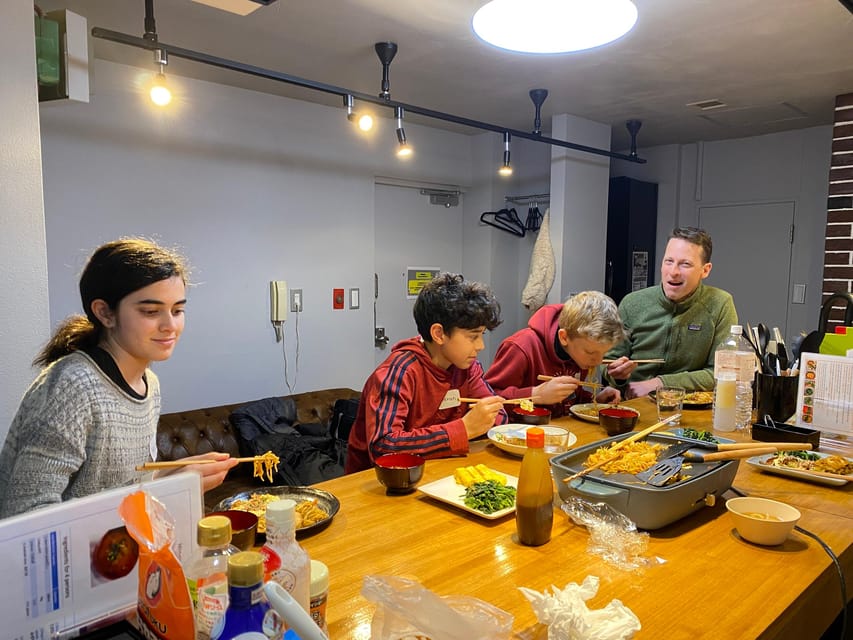
I would recommend it to people who want a useful cultural activity rather than another meal at a restaurant. It works particularly well for:
- Families with children or teenagers who enjoy making food
- Couples looking for a shared activity
- Home cooks who want Japanese recipes they can repeat
- First-time visitors who want context for familiar dishes
- Vegetarians, vegans, and people with food allergies who arrange needs early
- Anyone staying near Shinjuku who wants to keep travel time short
It is less suited to you if you want a strictly private class, complete control over every cooking step, or a guaranteed custom menu. Private sessions have taken place, but the booking information does not promise that every group receives one.
The class also suits a rainy Tokyo day. You get a warm indoor activity, a full meal, and practical skills without spending hours moving between attractions.
Booking advice and final verdict
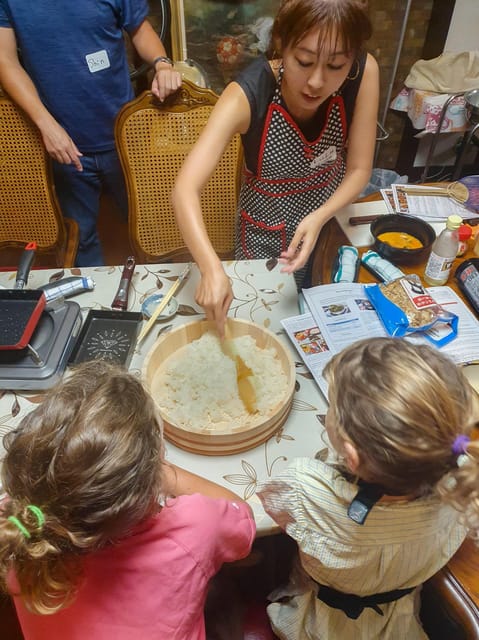
At $88, I see this as a good-value experience for people who care about food and want to remember more than the taste. The combination of instruction, ingredients, tools, a substantial meal, and recipes to use at home gives it more lasting value than a standard restaurant visit.
Book early if you have allergies, a vegetarian or vegan diet, children in your group, or a strong preference for one of the menus. After booking, watch for the exact address and arrival message. On the day, arrive with a little spare time and be ready to participate rather than simply observe.
I would book this class if I wanted a friendly, English-language introduction to Japanese home cooking near Shinjuku. Choose the menu based on your goal: gyoza and takoyaki for hands-on fun, sushi and teriyaki for repeatable basics, okonomiyaki and yakisoba for casual Japanese favorites, or gozen for the widest look at a home-style meal.
FAQ
Where does the cooking class take place?
It takes place at a kitchen studio in or around Shinjuku, Tokyo. The exact address is provided after booking, so wait for the provider’s message before traveling to the class.
How long does the experience last?
The class lasts 150 minutes, or about two hours and 30 minutes. This includes cooking the dishes and eating the meal you prepare.
How much does the class cost?
The listed price is $88 per person. All fees and taxes are included.
Which menus can I choose?
The main choices are okonomiyaki and yakisoba, gyoza and takoyaki, rolled sushi with teriyaki, and a traditional gozen set. You can also request another menu for discussion.
Can I choose my menu after booking?
You can usually select a menu when your group is the only group attending that day. If another group joins the same class, your menu choice may be limited.
Is the class taught in English?
Yes. The instructor language is English, and the activity information lists English as the available language.
Can the class accommodate allergies or special diets?
Yes, dietary preferences and food allergies can be discussed. Contact the provider in advance so the menu and possible substitutions can be planned.
What is included in the price?
Ingredients, cooking tools, drinking water, and all fees and taxes are included. Private transportation is not included.
Just added in Tokyo
- A One-of-a-Kind Sushi Experience in a Special Place of Japan★ 5.0 · 15 reviews
- Tokyo Cute Bento Cooking Class – Make a Kawaii Character Lunchbox★ 5.0 · 126 reviews
- Japanese Home Cooking Class & Walk in Todoroki Temple Tokyo★ 5.0 · 88 reviews
- Japan Tokyo Tower Observatory Deck E-Ticket★ 4.0 · 34 reviews
- Catch a Baseball Game in Tokyo with a Local – Tickets Included★ 5.0 · 24 reviews
- JDM Experience with Fast&Furious RX-7 (English speaking Driver)★ 5.0 · 57 reviews
- Tokyo Private Day Tour by Car with English speaking Driver Guide★ 4.0 · 29 reviews
- Japan Classic 10 Day – One Life Adventures★ 5.0 · 129 reviews
Workshops, compared.
Sushi Making Tokyo Roll and Authentic Japanese Sushi Class
Read our review →
Gion Make Your Own Chopsticks with Engraving Option
Read our review →
Roll and Authentic Sushi Making Class in Asakusa
Read our review →
Ramen Cooking Class at Ramen Factory in Kyoto
Read our review →
Tokyo Asakusa Chopsticks Workshop: Make Your Own Pair
Read our review →
Ring Making Workshop : Vintage Japanese Coin Ring
Read our review →Browse the lists this tour appears in