
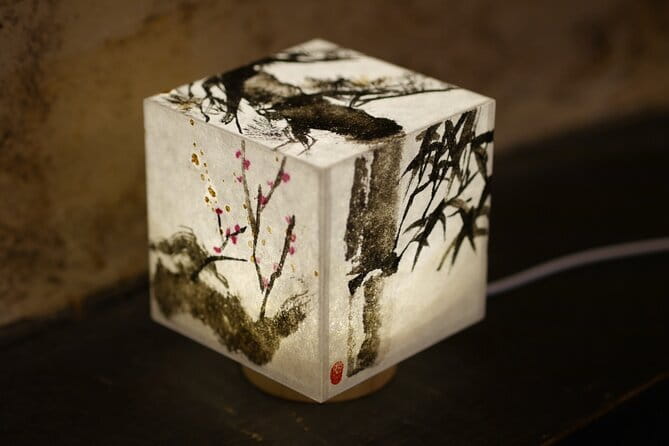
Reviewed · WORKSHOPS
Sumi-e Ink Painting Suiboku-Ga Workshop in a Japanese Teahouse
Slow down in Tokyo. This one-hour workshop brings you into a Japanese teahouse for a hands-on lesson in Suiboku-ga, the ink-wash style that uses water, shading, and carefully placed brushstrokes instead of layers of paint. I like the calm setting, and I like that you leave with both your artwork and a packet of green tea. The main consideration is that one hour goes quickly, especially if you discover, as many beginners do, that a single brushstroke is harder than it looks.
The class is led by award-winning artist and calligrapher Rensui, who teaches simple ways to control ink and water. The group is limited to eight people, so this feels more like a personal art lesson than a large tourist activity. You choose a subject at booking, with options including pine, bamboo, plum, orchid, chrysanthemum, or Japanese kanji characters.
In This Review
- Key points to know before booking
- Entering the Tsukiji teahouse
- Learning why Suiboku-ga uses so little paint
- Working with Rensui and the single brushstroke
- Choosing your subject before the brush touches paper
- Tea, tools, and the finished souvenir
- What one hour feels like
- Is $93.34 a fair price?
- Who will enjoy this workshop most?
- Booking, timing, and cancellation details
- Should you book the Suiboku-ga workshop?
- FAQ
- Where does the Suiboku-ga workshop take place?
- How long does the workshop last?
- What is included in the price?
- Do I take home the painting I make?
- Which subjects can I paint?
- How many people can join the class?
- Is the activity suitable for children?
- Is hotel pickup included?
- Can I cancel for a refund?
Key points to know before booking
- You paint in a real Tokyo teahouse setting: The workshop takes place at Uogashi Meicha Chanomi Club in Tsukiji, adding a distinctly Japanese setting to the lesson.
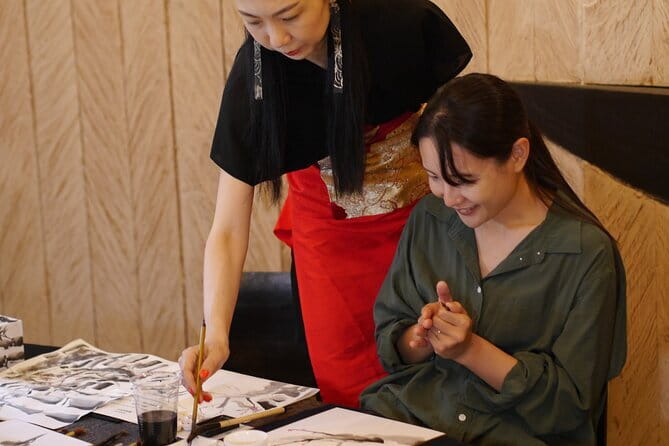
- Rensui teaches the basics directly: The class focuses on brush control, ink washes, water, texture, contrast, and the challenge of completing an image with very few strokes.
- Your artwork becomes the main souvenir: You take home the finished piece, while a packet of green tea adds a second, practical reminder of the experience.
- The class is limited to eight people: That small size suits beginners who want close guidance rather than a crowded demonstration.
- Children can take part: A family group with children aged 7 and 9 enjoyed the class, and one child even asked to paint Snoopy instead of the usual plant subjects.
- The price reflects more than a sightseeing stop: At $93.34 per person, you are paying for instruction, materials, tea, and a small-group cultural activity rather than a quick look at Japanese art.
Entering the Tsukiji teahouse
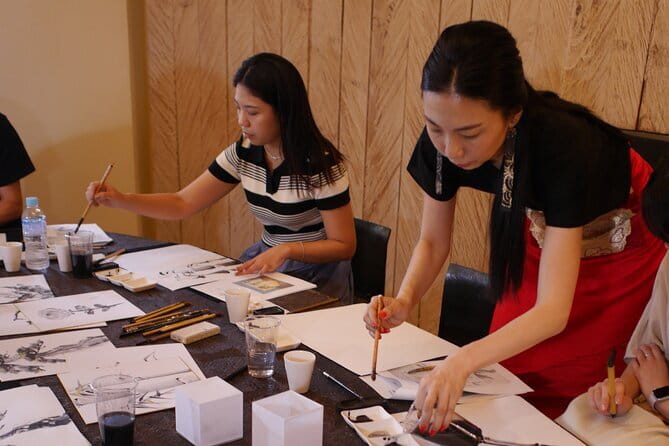
The meeting point is Uogashi Meicha Chanomi Club, at 2-chome-11-12 Tsukiji, Chuo City, Tokyo. The location is near public transportation, and the activity both starts and ends there. Hotel pickup is not included, so you need to make your own way to the teahouse.
That arrangement keeps the workshop simple. You arrive at one central point, settle in, complete the lesson, and leave from the same place. Since the whole class lasts about an hour, arriving with enough time to find the address matters. A late arrival could take a noticeable chunk out of a short session.
The setting is part of the appeal. You are not painting in a generic craft studio or sitting in a hotel meeting room. You are learning Japanese ink painting in a teahouse while enjoying green tea. That connection between place, drink, and art gives the class a stronger sense of purpose.
The experience is offered as a mobile ticket, which means you can keep the booking on your phone. Confirmation arrives within 48 hours, subject to availability. Since the activity is often booked about 25 days ahead, I would reserve early if your Tokyo dates are fixed.
A few more options to weigh up in Tokyo
- Tokyo Disney Resort – Tokyo Disneyland & Tokyo DisneySea Park Tickets
★ 4.8 · 99,488 reviews - SHIBUYA SKY Ticket
★ 4.7 · 46,509 reviews - JR Whole Japan Rail Pass
★ 4.8 · 29,150 reviews
Learning why Suiboku-ga uses so little paint
Suiboku-ga is a form of Sumi-e, or Japanese ink painting. Instead of building a picture with many layers of colored paint, you use black ink diluted with water to create different tones. The same ink can suggest a dark branch, a soft leaf, a distant edge, or a wash of shadow.
This sounds simple until you try it. Ink does not behave like a pencil. A stroke cannot always be erased or covered. Too much water can make the image faint, while too little can leave a heavy, blunt mark. The paper, brush, pressure, and timing all matter.
That difficulty is also the reason the lesson can be satisfying. The aim is not to produce a polished museum piece in sixty minutes. It is to learn how a few deliberate marks can suggest a plant, a character, or a small scene. You get a direct lesson in restraint, which is a useful change of pace after Tokyo’s bright signs, packed stations, and constant motion.
The workshop presents Suiboku-ga as painting from the heart. Its simple method lets your mood and confidence show in the marks. You do not need a long art background to understand the idea. You quickly see that the painting is less about filling space and more about deciding what to leave out.
Working with Rensui and the single brushstroke
Artist and calligrapher Rensui leads the class. The instruction centers on basic techniques, including how to manage the relationship between water and ink. You also learn how to use the brush to create texture and contrast.
A key lesson is finishing with a single brushstroke. That may sound like a small exercise, but it captures the whole character of Suiboku-ga. One stroke can look graceful, awkward, dark, thin, controlled, or rushed. You have to commit to it.
Rensui’s role is especially important for first-time painters. A beginner can easily focus so much on making a perfect picture that the activity becomes tense. The workshop is designed as a relaxed introduction, and the teaching helps turn the process into an experiment rather than a test.
You should still expect some frustration. One participant enjoyed the class but was surprised by how difficult ink painting was. That is useful advice. If you want an effortless craft activity, this may demand more concentration than expected. If you like learning a skill with a real chance of getting messy or uneven, the challenge adds value.
The small group limit of eight helps here. You are not one person in a room of dozens, trying to copy a demonstration from the back. A compact class gives the lesson a more personal feel, even though the exact amount of individual guidance can vary with the group.
Choosing your subject before the brush touches paper
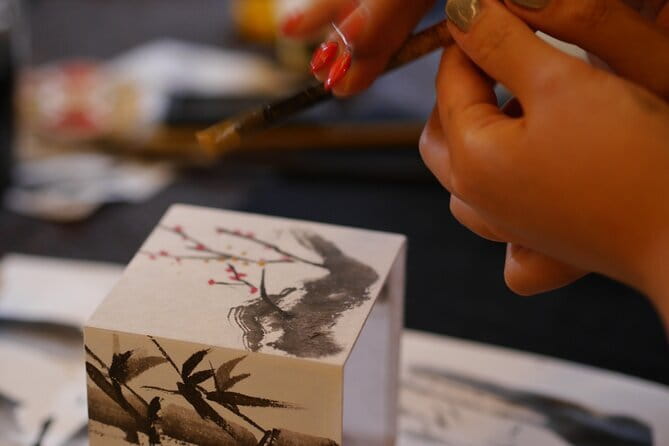
At booking, you choose the type of image you would like to paint. The listed themes are pine, bamboo, plum, orchid, chrysanthemum, and Chinese kanji characters.
These choices connect to familiar subjects in East Asian painting. Each plant has its own shapes and brush movements, so the choice is not only decorative. Bamboo, for example, calls for attention to clean lines and segmented forms. A pine tree may require different marks for needles and branches. Kanji characters make you focus on balance, order, and the weight of each stroke.
The choice also gives you a personal souvenir. You are not simply handed a preprinted item at the end. You make a piece based on the subject you selected, with your own variations in line and shading.
Families should note that the standard subjects may not be the only possibility in practice. A class with children aged 7 and 9 included a request to paint Snoopy, after the younger child chose that character instead of bamboo or pine. The supplied information does not promise custom characters for every booking, so treat that as a charming example rather than a guaranteed option. If you are bringing children, it is sensible to ask the provider in advance about subject choices.
A completely different kind of day out:
- Mt Fuji and Hakone 1-Day Bus Tour Return by Bullet Train
★ 5.0 · 26,383 reviews - TOKYO SKYTREE® Ticket
★ 4.7 · 25,136 reviews - teamLab Borderless Tickets: MORI Building DIGITAL ART MUSEUM
★ 4.7 · 24,126 reviews - teamLab Planets TOKYO Ticket
★ 4.7 · 21,663 reviews
Tea, tools, and the finished souvenir
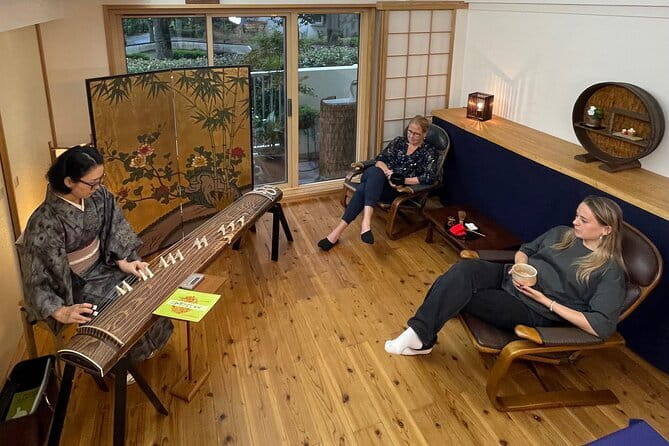
The workshop fee includes the materials, so you do not need to assemble an art kit before arriving. You also receive a light green tea refreshment during the class and a packet of green tea to take home.
That combination makes the souvenir more useful than a small trinket. Your painting records the moment and your effort. The tea gives you something you can enjoy later or share with someone at home. It also ties the activity back to Japanese tea culture without turning the workshop into a formal tea ceremony.
Your artwork may be the best reason to book. A souvenir bought in a shop can remind you of Tokyo, but a painting made by your own hand carries a different kind of memory. It will not be perfect, and that is part of its charm. The uneven spots show that you made it during a short lesson rather than selecting it from a shelf.
The finished work can also make a thoughtful gift. You can take it home for yourself or give it to friends or family. Because the image is created during the class, it has a story attached to it, not just a location printed on it.
What one hour feels like
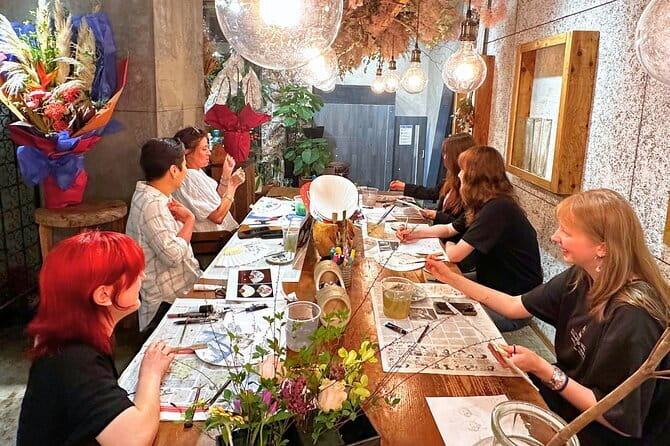
The schedule is compact. You meet at the teahouse, receive the materials, enjoy green tea, learn the basic principles, practice the brush and ink, and complete your chosen design. The activity ends back at the meeting point.
Do not expect a long formal lecture on Japanese art. The value is in trying the tools yourself. The class gives you enough background to understand the method, then moves toward making an image.
I like the one-hour length for a Tokyo itinerary. It is short enough to fit between other plans, yet long enough to produce something tangible. You can place it into a day in Tsukiji or combine it with nearby sightseeing without giving up half a day.
The tradeoff is limited time for refinement. If your first attempt does not go well, you may not have much time to start over. The workshop works best when you accept the first piece as a record of the lesson. Come ready to learn, not to produce a flawless wall hanging.
Is $93.34 a fair price?
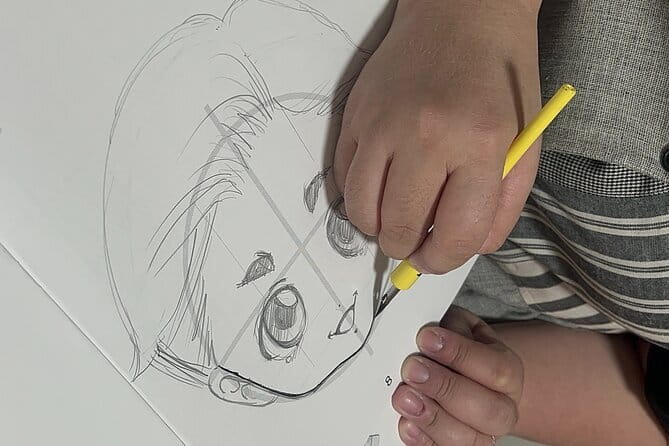
At $93.34 per person, this is not a bargain activity in the usual sense. You could buy green tea, paper, and basic brushes for far less. The price makes more sense when you count the small group, the materials, the instruction from Rensui, the teahouse setting, the tea refreshment, and the finished artwork.
The question is how much you value guided cultural activities. If you only want a cheap souvenir or a quick introduction to painting, the cost may feel high. If you want a focused lesson with an artist and a keepsake you create yourself, the price is easier to justify.
The group limit is important to the value. With no more than eight participants, the experience avoids the feel of a mass-market demonstration. You are paying for time in a small class, not just admission to watch someone else paint.
It is also a good choice for a repeat visitor to Tokyo. First-time visitors often fill their schedules with major sights. This workshop offers a quieter activity that many people skip, and it gives you a way to engage with Japanese aesthetics rather than simply photograph them.
Who will enjoy this workshop most?
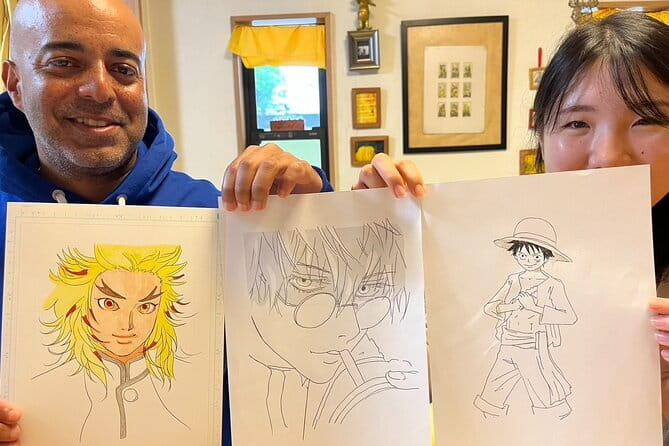
I would recommend the class to adults and children who enjoy making things with their hands. You do not need formal art training. In fact, the beginner-friendly format may be most rewarding if you have never tried ink wash painting.
It suits:
- Art-lovers who want a creative activity in Tokyo
- Visitors seeking a small-group cultural lesson
- Families with children who can take part in a short, focused class
- People who prefer an experience that produces a personal souvenir
- Repeat Tokyo visitors looking beyond the major sightseeing stops
- Anyone curious about Japanese calligraphy, brushwork, and Zen-inspired simplicity
You may want to skip it if you dislike guided activities, need a very flexible schedule, or want a polished souvenir without making one yourself. The lesson is relaxed, but it is not passive. You will need to pay attention to water, ink, pressure, and the direction of the brush.
Most people can participate, and the activity is near public transportation. The supplied information does not give specific details about wheelchair access, so you should contact Beauty of Japan directly if you have access needs that require confirmation.
Booking, timing, and cancellation details
Beauty of Japan operates the experience. It is commonly booked about 25 days in advance, so reserving early is wise for weekends, school holidays, or a short Tokyo stay.
You receive a mobile ticket, and confirmation is sent within 48 hours if space is available. The class has a maximum of eight people, which means a preferred date may fill before larger tours do.
Free cancellation is available if you cancel at least 24 hours before the local start time. Cancellations made less than 24 hours ahead are not refunded, and changes inside that window are not accepted. I would check your train and sightseeing plans before booking, since the activity is short but the cancellation deadline is firm.
Should you book the Suiboku-ga workshop?
Book this experience if you want a calm, personal activity that connects Japanese tea, calligraphy, and painting. The strongest reasons are the small group, direct teaching from Rensui, and the chance to take home art that you made yourself.
I would especially choose it for a family, a couple, or a solo visitor who wants something quieter than Tokyo’s usual attractions. The class is also a good fit when rain or tired feet make another outdoor stop less appealing.
The price is the main hurdle, and the one-hour format leaves little room for perfection. Still, if you accept the artwork as a personal souvenir rather than a professional painting, the experience offers a memorable use of one hour in Tokyo. Bring patience, choose your subject carefully, and let the brushstroke tell the story.
FAQ
Where does the Suiboku-ga workshop take place?
It takes place at Uogashi Meicha Chanomi Club, located at 2-chome-11-12 Tsukiji, Chuo City, Tokyo 104-0045, Japan.
How long does the workshop last?
The workshop lasts approximately one hour.
What is included in the price?
The price includes the workshop, materials, a light green tea refreshment, and a packet of green tea to take home.
Do I take home the painting I make?
Yes. Your finished artwork becomes a souvenir that you can keep or give to friends and family.
Which subjects can I paint?
The available themes include pine, bamboo, plum, orchid, chrysanthemum, and Chinese kanji characters. You choose a subject at booking.
How many people can join the class?
The workshop has a maximum of eight participants.
Is the activity suitable for children?
Most people can participate, and the experience has been enjoyed by children aged 7 and 9. A child in one family group asked to paint Snoopy, though custom subjects are not listed as a standard option.
Is hotel pickup included?
No. Hotel pickup and drop-off are not included. You meet at the teahouse, and the activity ends at the same location.
Can I cancel for a refund?
Yes, if you cancel at least 24 hours before the experience start time. Cancellations or changes made less than 24 hours before the start time are not accepted for a refund.
Just added in Tokyo
- Very popular in Harajuku♡Animal petting zoo★ 4.6 · 39 reviews
- Yokohama Port: Private Customizable Tour with Transfer★ 5.0 · 19 reviews
- Wagyu & Sake 8 Course Tasting Dinner in Shinjuku★ 4.9 · 20 reviews
- Warner Bros. Studio Tour Tokyo – The Making of Harry Potter★ 4.8 · 181 reviews
- Yanaka District: Historical Walking Tour in Tokyo’s Old Town★ 4.8 · 117 reviews
- Tokyo: Classic Tsukiji Food Tour★ 4.9 · 78 reviews
- Tokyo: Tsukiji Fish Market Tour with 6 Stops & Seafood Lunch★ 4.5 · 165 reviews
- Tokyo Wagyu & Sake Pairing Tasting Experience with Local Flavors★ 5.0 · 108 reviews
Workshops, compared.
Sushi Making Tokyo Roll and Authentic Japanese Sushi Class
Read our review →
Gion Make Your Own Chopsticks with Engraving Option
Read our review →
Roll and Authentic Sushi Making Class in Asakusa
Read our review →
Ramen Cooking Class at Ramen Factory in Kyoto
Read our review →
Tokyo Asakusa Chopsticks Workshop: Make Your Own Pair
Read our review →
Ring Making Workshop : Vintage Japanese Coin Ring
Read our review →Browse the lists this tour appears in