
Reviewed · CYCLING AND E-BIKE TOURS
Tokyo: 2-Hour Night Bike Tour of the City’s Hidden Gems
Tokyo looks different from a bicycle seat. This two-hour night ride links glowing city districts with a fun set of custom neon-lit bikes, giving you a moving view of places that can feel scattered when explored by train. I especially like the friendly English-speaking guides and the chance to see Tokyo Tower, Shibuya, Omotesando, Roppongi, and Tokyo Midtown in one evening.
I also like that the route can have some flexibility. Guide Kei has adjusted rides to suit personal interests and added places guests were curious about. The main caution is simple: this is not a bike lesson. You need to ride confidently, since parts of Tokyo require cycling on roads without dedicated bike lanes.
The tour costs $73 per person and begins at the main entrance of Yoyogi Park. Look for the glowing bikes. The ride ends back at the same meeting point, which keeps the evening fairly tidy for your plans afterward.
In This Review
- Key Points Before You Book
- Why Tokyo Works So Well on Two Wheels After Dark
- Meeting the Glowing Bikes at Yoyogi Park
- Shibuya: Tokyo’s Brightest Moving Picture
- Omotesando’s Seasonal Lights
- Roppongi and Tokyo Midtown After Dark
- Tokyo Tower Makes the Best Finish
- What the Guides Add to the Ride
- Cycling Conditions You Should Take Seriously
- Who Gets the Most Value for $73
- My Verdict: Book It If You Can Ride With Confidence
- FAQ
- How long is the Tokyo night bike tour?
- Where does the tour begin?
- Where does the activity end?
- What language is the tour offered in?
- What kind of bikes are provided?
- Is bike insurance included?
- What sights are included on the route?
- Can children join the tour?
- What should I bring?
- Can I cancel for a full refund?
Key Points Before You Book
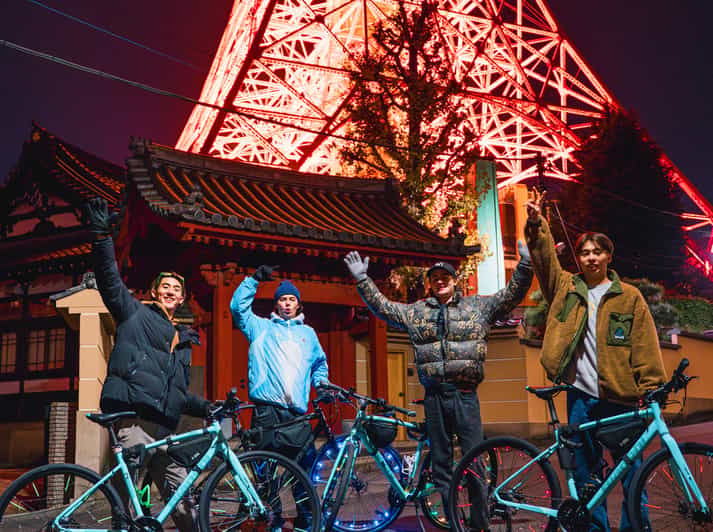
- Neon-lit Bianchi and Fuji bikes: The customized bikes are decorated with lights, giving the group a cheerful glow as you pedal through Tokyo.
- A two-hour city route: You can cover several major districts in one evening without spending the night changing trains.
- English-speaking guides: Guides explain local sights and can sometimes adjust the route to match your interests.
- Tokyo Tower finale: The red and white tower provides a strong finish and one of the clearest night views on the ride.
- Experienced cyclists only: Road cycling is part of the deal, and some streets do not have bike lanes.
- Yoyogi Park start and finish: You meet at the park’s main entrance, then return there after the ride.
Why Tokyo Works So Well on Two Wheels After Dark
Tokyo is famous for its trains, but rail travel can make the city feel like a series of separate rooms. You go underground at one station, rise into a crowd at the next, and miss the streets between them. A bicycle changes that rhythm.
On this ride, you move through several parts of central Tokyo under your own power. You see the light shift from giant screens and shop signs to polished office towers, seasonal displays, and the steady red glow of Tokyo Tower. That change is the real appeal. It is not just a photo stop tour.
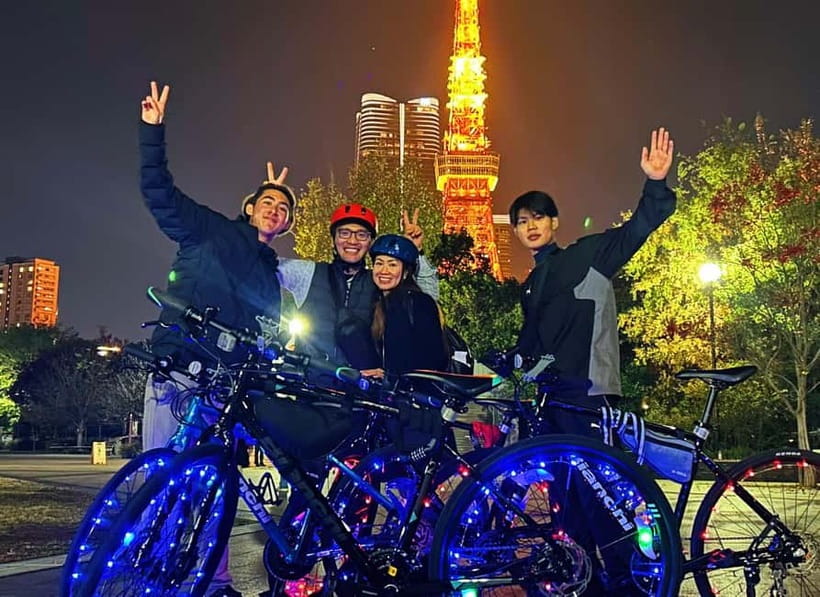
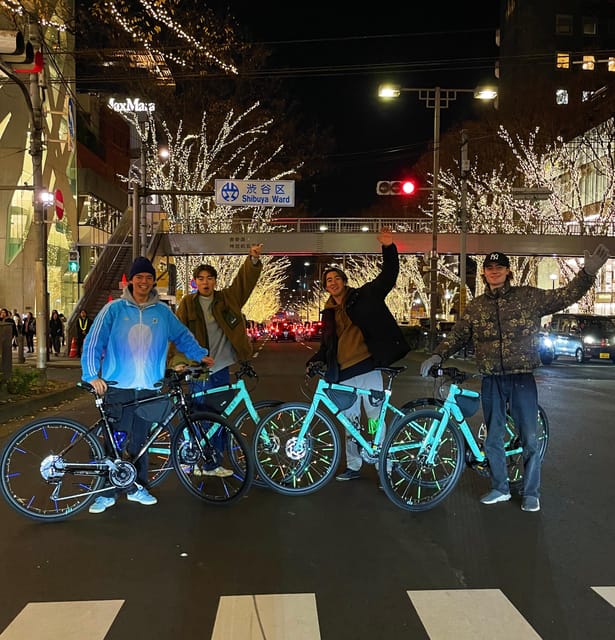
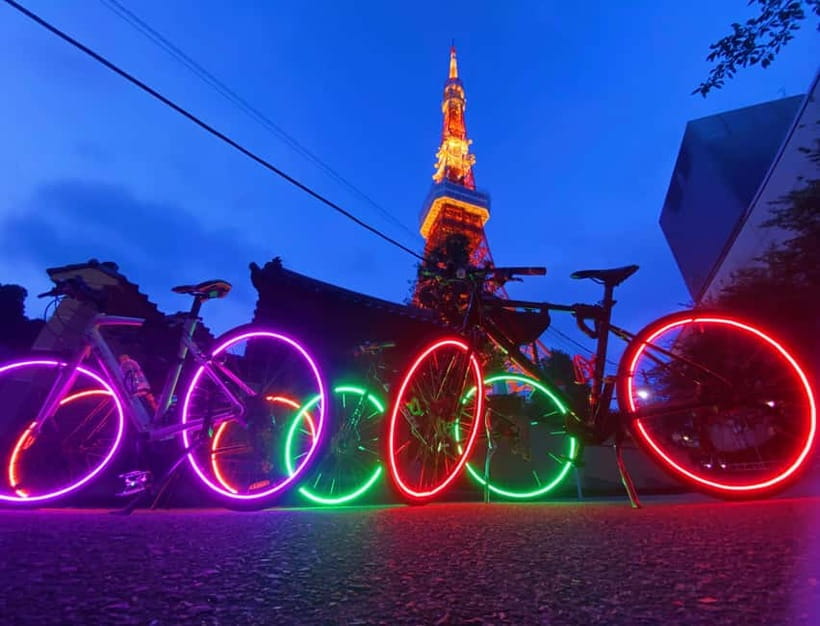
The neon bikes add a playful touch. They are high-quality Bianchi and Fuji models customized with lights, rather than ordinary rental bicycles. That matters for two reasons: the bikes are part of the fun, and the glowing wheels make it easier for the group to remain visible at night.
The tour is priced at $73 per person. That is more than a basic bicycle rental, but you are paying for the bike, guide, local stories, route planning, and bike insurance. The value is strongest if you want a structured evening and would not feel comfortable planning a night cycling route through several Tokyo districts yourself.
More Bike Tours in Tokyo
- Tokyo Great Cycling Tour
★ 5.0 · 811 reviews - Tokyo Top Highlights 3h Guided E-bike Tour
★ 5.0 · 714 reviews - 3h Tokyo E-Bike Tour: Hidden Gems, and Local Life with guide
★ 5.0 · 670 reviews
Meeting the Glowing Bikes at Yoyogi Park
The start point is the main entrance of Yoyogi Park. The illuminated bikes should make the meeting place easy to spot, which is useful in an area that can feel busy and confusing after dark.
Arrive ready to ride rather than dressed for a formal night out. Comfortable clothes and shoes are recommended, and you should bring water. A small pouch attached to the bike holds a phone, wallet, keys, and other small items. That is a modest feature, but it keeps your pockets lighter and your phone within reach.
The tour returns to Yoyogi Park at the end. You do not need to arrange a second pickup point, and you can plan the rest of your evening from the same general area. The exact departure time is not provided here, so check your booking details carefully before setting your dinner plans.
The minimum age is 12. The ride is not suitable for pregnant women, people with back problems, or anyone who cannot ride a bike. Those restrictions are practical rather than fussy. Night cycling on city streets requires balance, awareness, and the ability to react quickly.
Shibuya: Tokyo’s Brightest Moving Picture
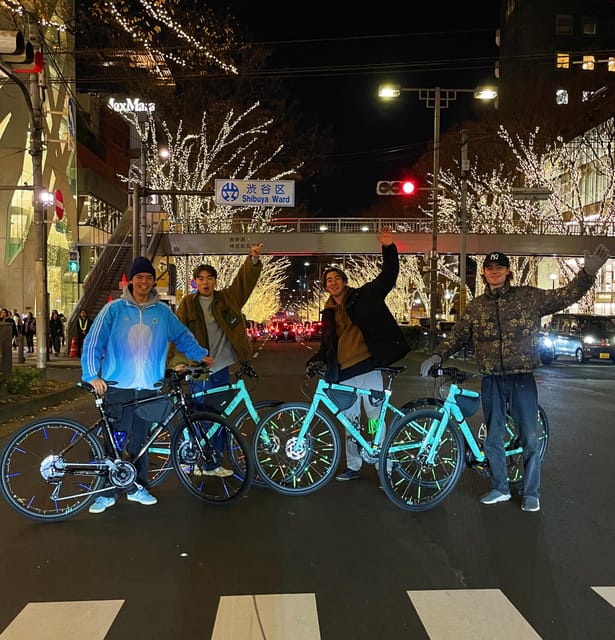
Shibuya Scramble Crossing is one of Tokyo’s most recognizable night scenes. From the bicycle, you can appreciate not only the crossing itself but also the visual storm around it: screens, signs, buildings, and streams of people moving in several directions.
The attraction here is scale. On foot, you often concentrate on getting across the street without losing your group. From a bike route, the surrounding streets and high-rise glow become part of the view.
Do not expect the bicycle to turn the crossing into a private photo stop. This is an active city center, and road conditions can be demanding. Your guide will lead the way, but you still need to follow traffic rules and keep control of your bike.
For confident cyclists, Shibuya gives the ride an immediate jolt of energy. For nervous cyclists, it may be the point that confirms this tour is not suitable for beginners. I would not choose it as your first attempt at riding in Tokyo.
Omotesando’s Seasonal Lights
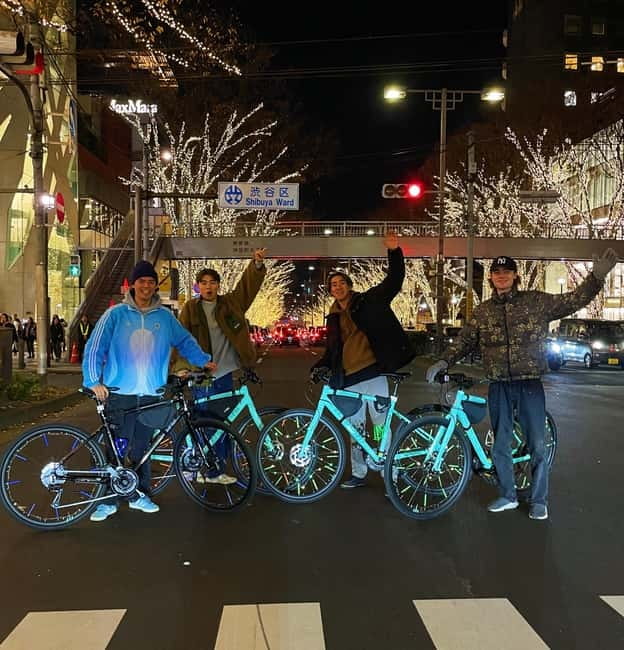
From the intense signage of Shibuya, the mood shifts around Omotesando. The area is known for polished streets, upscale storefronts, and seasonal light displays that can give the ride a calmer, more designed feel.
The seasonal element is important. Illumination displays can change during the year, so the exact look of the route depends on when you visit. You should book this ride for the night cycling and city views first, then treat the decorations as a bonus rather than expecting one fixed display.
Omotesando works well on a bicycle because you can take in a longer stretch of the street while continuing toward the next district. You are not tied to one viewing platform or one photo angle. The ride lets the city’s appearance change gradually.
The tradeoff is that you are moving. If you want extended time for photographs, ask the guide about stopping opportunities at the beginning of the ride. Route flexibility has been one of the tour’s strengths, and guides such as Kei have accommodated requests when possible.
A completely different kind of day out:
- Tokyo Disney Resort – Tokyo Disneyland & Tokyo DisneySea Park Tickets
★ 4.8 · 99,488 reviews - SHIBUYA SKY Ticket
★ 4.7 · 46,509 reviews - JR Whole Japan Rail Pass
★ 4.8 · 29,150 reviews - Mt Fuji and Hakone 1-Day Bus Tour Return by Bullet Train
★ 5.0 · 26,383 reviews
Roppongi and Tokyo Midtown After Dark
Roppongi brings a different kind of night view. Here, modern glass buildings and carefully planned lighting create a more polished, futuristic mood. Reflections from office towers and light installations add depth to the streets, especially around Tokyo Midtown.
Tokyo Midtown is also associated with seasonal illuminations. These displays can turn ordinary open areas into a coordinated evening scene, with lights arranged across the complex rather than concentrated in one sign or building.
This section of the ride shows why a bicycle can be useful. You can connect Roppongi and Tokyo Midtown without repeatedly entering and leaving stations. You also get a sense of how the districts relate to one another, something that is easy to miss when you travel only underground.
Still, the route is not a quiet park ride. Roppongi is a city district with roads, traffic, and changing conditions. Stay alert and do not let the lights distract you from the guide or the street ahead.
Tokyo Tower Makes the Best Finish
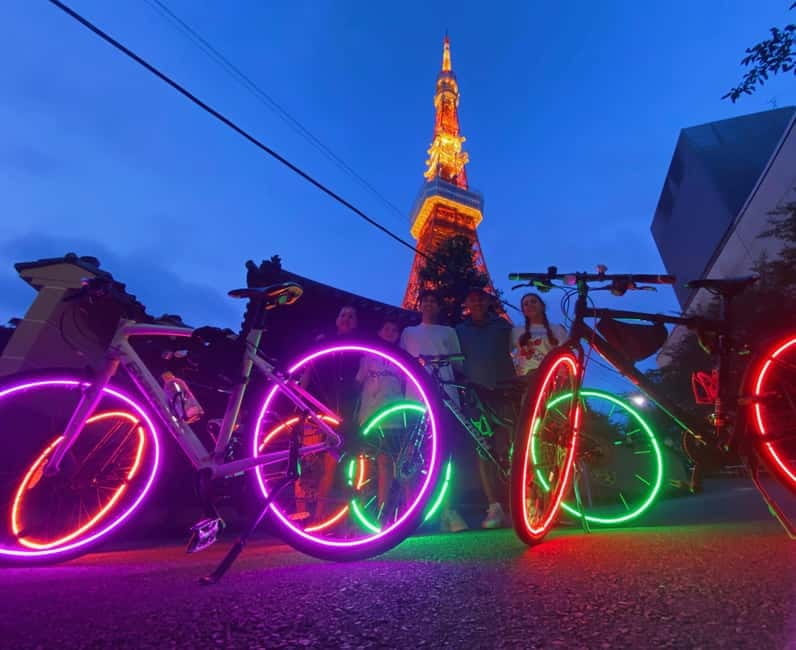
The ride ends its sightseeing portion at Tokyo Tower, one of Tokyo’s most recognizable landmarks. Its red and white frame looks especially strong against the darker sky, and it gives the evening a clear visual payoff.
Tokyo Tower is a better finale than another shopping street because it feels like a single, unmistakable image. After the bright signs of Shibuya, the refined lighting of Omotesando, and the glass towers of Roppongi, the tower brings the route together with a classic view of Tokyo.
The available information does not promise a special tower access visit or a long stop inside the tower. Think of it as an exterior sighting and photo opportunity during a guided ride. If entering Tokyo Tower is important to you, plan a separate visit.
After the tower, the ride returns to the Yoyogi Park meeting point. The full activity lasts two hours, so you get a compact evening rather than an all-night cycling program.
What the Guides Add to the Ride
A guide is the main reason to choose this over renting a bicycle on your own. The English-speaking guides provide local stories and help connect the districts, rather than leaving you to follow a map and guess where to turn.
Kei has received particular praise for being kind, entertaining, and willing to adjust the route. That is useful when you have already seen the standard sights or want to spend a little more time in a certain area. Another guide might lead the ride, but the service appears to place real value on personal attention.
The strongest part of the guiding is not just information. It is the confidence of having someone set the pace and choose the streets. Tokyo’s night roads can be difficult to read at first, especially when bike lanes are absent. A guide reduces the planning burden, though it does not remove your responsibility to ride safely.
Group size is not specified, so do not assume a private ride. If you have special route preferences, raise them early. The guides have shown flexibility, but they cannot promise every request or every stop.
Cycling Conditions You Should Take Seriously
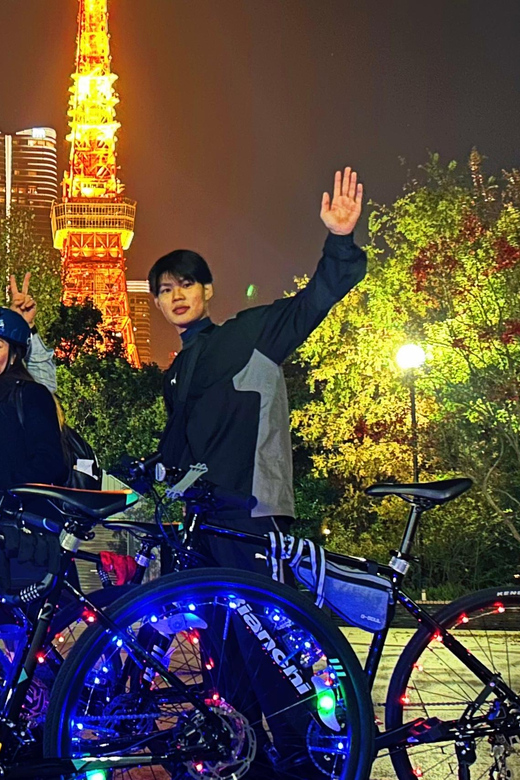
The biggest question is not how much you like neon. It is how comfortable you are on a bicycle.
You may need to ride on roads without bike lanes. That means you should already be able to start, stop, steer, and maintain awareness around cars, intersections, pedestrians, and other cyclists. The tour is not designed to teach basic riding skills.
I would choose this tour if you regularly cycle in cities or feel calm riding in traffic. I would skip it if you have not ridden for years, dislike road cycling, or want a slow sightseeing stroll with occasional pedaling.
Comfortable shoes are more important than stylish ones. Wear clothing that lets you move freely, bring water, and keep valuables limited to what you need. Smoking, alcohol, drugs, and littering are not allowed.
The bikes include insurance, which is reassuring, but insurance should not be confused with a guarantee of a risk-free ride. You still need to listen to the guide and ride within your ability.
Who Gets the Most Value for $73
This tour is a good match for a visitor who wants to see several Tokyo districts in one compact evening. It is also a strong choice for families with children aged 12 and older, provided everyone can ride confidently.
Teenagers may especially enjoy the neon wheels. The glowing bikes make the activity feel more memorable than a standard bicycle rental, while the route supplies plenty of recognizable Tokyo scenery.
First-time visitors can use the ride as a broad introduction to central Tokyo at night. Repeat visitors may get even more from it, since a guide can show streets and connections you might not notice from trains or cars. The experience has also worked well for people who already know Tokyo but want a different way to move through it.
The value is weaker if your only goal is to photograph one landmark. You could visit Shibuya, Omotesando, or Tokyo Tower separately for less money. The $73 price makes sense when you want the bike, guide, local commentary, insurance, and a planned route bundled together.
The cancellation policy is friendly: you can cancel up to 24 hours in advance for a full refund. You can also reserve and pay later, which helps if your Tokyo schedule is still taking shape.
My Verdict: Book It If You Can Ride With Confidence
I would book this tour for a two-hour look at Tokyo’s night lights without the usual station changes and route planning. The neon Bianchi and Fuji bikes, English-speaking guides, route flexibility, and Tokyo Tower finish give the evening personality.
I would not book it as a beginner cycling lesson or as a gentle family outing for young children. The road sections are a real consideration, and the minimum age is 12.
Choose it if you want motion, city views, and a little spectacle. Skip it if you prefer long photo stops, quiet paths, or total control over your route. For confident cyclists, this is a lively and practical way to see Tokyo after dark.
FAQ
How long is the Tokyo night bike tour?
The ride lasts two hours.
Where does the tour begin?
You meet at the main entrance of Yoyogi Park. The neon-lit bikes should make the meeting point easy to find.
Where does the activity end?
The tour ends back at the Yoyogi Park meeting point.
What language is the tour offered in?
The tour is offered in English with an English-speaking guide.
What kind of bikes are provided?
The tour provides customized neon-lit Bianchi and Fuji bicycles.
Is bike insurance included?
Yes, bike insurance is included in the tour price.
What sights are included on the route?
The route features Tokyo illumination areas including Shibuya Scramble Crossing, Omotesando, Roppongi, Tokyo Midtown, and Tokyo Tower.
Can children join the tour?
Children under 12 cannot join. Participants aged 12 and older must also be able to ride a bike confidently.
What should I bring?
Bring comfortable shoes, water, and comfortable clothing. A mini pouch on the bike is provided for a phone, wallet, keys, and similar small items.
Can I cancel for a full refund?
Yes. You can cancel up to 24 hours before the activity for a full refund.
Just added in Tokyo
- A One-of-a-Kind Sushi Experience in a Special Place of Japan★ 5.0 · 15 reviews
- Tokyo Cute Bento Cooking Class – Make a Kawaii Character Lunchbox★ 5.0 · 126 reviews
- Japanese Home Cooking Class & Walk in Todoroki Temple Tokyo★ 5.0 · 88 reviews
- Japan Tokyo Tower Observatory Deck E-Ticket★ 4.0 · 34 reviews
- Catch a Baseball Game in Tokyo with a Local – Tickets Included★ 5.0 · 24 reviews
- JDM Experience with Fast&Furious RX-7 (English speaking Driver)★ 5.0 · 57 reviews
- Tokyo Private Day Tour by Car with English speaking Driver Guide★ 4.0 · 29 reviews
- Japan Classic 10 Day – One Life Adventures★ 5.0 · 129 reviews
Cycling and E-Bike Tours, compared.
3h Tokyo E-Bike Tour: Hidden Gems, and Local Life with guide
Read our review →
Arashiyama Bamboo Forest & Hidden Gems Bike Tour (Early Bird)
Read our review →
5 Top Highlights of Kyoto Full Day Bike Tour (E-bike option)
Read our review →
Hiroshima 2hr Peace Cycling Tour with Local Guide
Read our review →Browse the lists this tour appears in