
Reviewed · CYCLING AND E-BIKE TOURS
Tokyo: 3-Hour Bike/E-Bike Tour of the City’s Highlights
Tokyo is easier on two wheels. This three-hour ride links temples, palace grounds, Tokyo Station, Olympic landmarks, Aoyama, and Shibuya in one well-planned sweep. I especially like the chance to cover a huge area quickly and hear local stories from guides such as Naoki, Rinto, Rin, Sho, and Hiroto. I also like that the route ends near Yoyogi Park and Harajuku, a useful place to continue sightseeing. The tradeoff is simple: you need moderate fitness and comfort riding near city traffic.
The pedal-assist e-bikes make the distance manageable, but this is still an active outing, not a rolling photo bus. You will sometimes ride in traffic, pass through crowded districts, and have only a few minutes at some stops. The meeting point at the Commodore Perry statue can also be hard to locate, so arrive early.
In This Review
- Key points to know before you book
- Why a bike works so well in Tokyo
- Starting at Zojo-ji near Tokyo Tower
- The Imperial Palace and Otemon Gate
- Tokyo Station’s red-brick face
- Akasaka Palace and Tokyo’s Olympic story
- Aoyama streets and a quieter side of the city
- Cat Street, Harajuku, and the ride into Shibuya
- Finishing near Yoyogi Park and Harajuku
- E-bikes, helmets, traffic, and comfort
- How much value do you get for $63.01?
- Who should book this ride?
- Should you book the Tokyo bike tour?
- FAQ
- How long is the Tokyo bike tour?
- What sights are included?
- Where does the tour start?
- Where does the tour finish?
- Is bike rental included?
- Is a helmet included?
- Is an e-bike available?
- Is a child seat available?
- What happens if it rains?
- Can I cancel for a full refund?
Key points to know before you book
- Eight major Tokyo areas in three hours: The route connects Zojo-ji, the Imperial Palace, Tokyo Station, Akasaka Palace, the National Stadium, Aoyama, Harajuku, and Shibuya.
- Pedal assist makes the distance practical: You can see far more than on foot without treating the ride like a serious athletic event.
- Shibuya Crossing is part of the ride: You do not just view this famous intersection from a platform. The route takes you through it.
- The start and finish are in different districts: Begin near Zojo-ji and Tokyo Tower, then finish in Jinnan near Yoyogi Park, Harajuku, and Shibuya.
- Helmet rental costs extra: Bikes, insurance, a raincoat on wet days, and a small handlebar pouch are included. A helmet costs ¥1,000 in cash.
- Weather can change the plan: Poor weather may lead to a new date or a full refund, while cancellations made less than 24 hours before departure are not refundable.
Why a bike works so well in Tokyo
Tokyo is enormous, and its major sights are spread across several districts. Trains are excellent, but every station ride includes walking, transfers, escalators, and time spent figuring out which exit you need. A bicycle gives you a direct line between areas that feel far apart on a subway map.
This route is particularly useful at the beginning of a Tokyo stay. You get a quick sense of how Zojo-ji, the Imperial Palace, Tokyo Station, Aoyama, Harajuku, and Shibuya relate to one another. I would use it as an orientation ride, then return later to the places that deserve more time.
The three-hour schedule includes the time spent moving between stops. That matters. The listed visits add up to roughly 80 minutes, so the rest of the tour is spent cycling. You should expect a steady outing with short stops, rather than long visits inside temples, museums, or palace buildings.
The route is private, meaning only your party participates in the activity. The provider also supplies an English and Japanese guide, and several guide names are praised in the booking information, including Naoki, Hiroto, Sho, Rinto, Rin, Kei, and Casey. The strongest pattern is clear: guides help keep the group together, explain road rules, check on slower riders, and add stories about Tokyo beyond the standard postcard facts.
More Bike Tours in Tokyo
- Tokyo Great Cycling Tour
★ 5.0 · 811 reviews - Tokyo Top Highlights 3h Guided E-bike Tour
★ 5.0 · 714 reviews - 3h Tokyo E-Bike Tour: Hidden Gems, and Local Life with guide
★ 5.0 · 670 reviews
Starting at Zojo-ji near Tokyo Tower
The meeting point is the Statue of Commodore Perry at 2-chōme-2-20 Shibakōen, in Minato City. It is near public transportation, but the exact statue can be difficult to identify. One rider noted that even local people were unsure where the memorial stood, so do not leave this search until the last minute.
From there, you see Zojo-ji Temple, one of Tokyo’s most important Buddhist temples. Its location beside Tokyo Tower creates one of the city’s best old-and-new contrasts: a traditional religious complex backed by the bright orange tower.
The temple is connected with the Tokugawa shoguns and serves as a resting place for important warlords. The scheduled stop is only about five minutes, so think of it as a first look and a short explanation, not a full temple visit. If Zojo-ji is high on your personal list, you may want to return independently for more time.
This opening stop also sets the tone for the ride. Tokyo is not divided neatly into old and new districts. Sacred grounds, office towers, royal sites, shopping streets, and sports facilities often sit within a short ride of one another.
The Imperial Palace and Otemon Gate
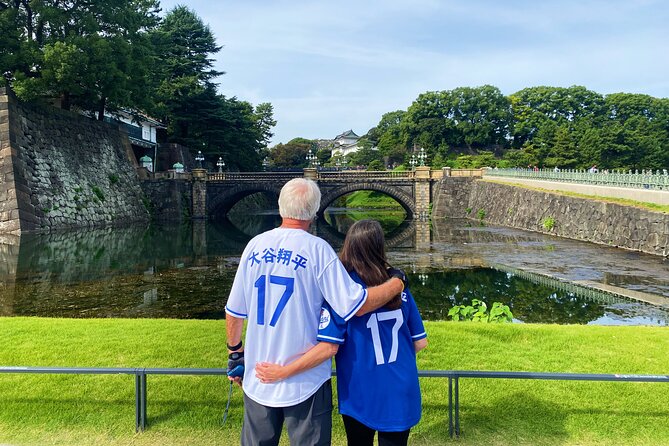
The route continues to the Imperial Palace, the residence of Japan’s Emperor. You spend about 15 minutes here, enough to understand the site’s importance and take in the broad approach, but not enough for an extended palace visit.
The palace area is valuable because it gives you historical context for central Tokyo. The city around it is intensely modern, yet the Imperial grounds preserve a sense of ceremony and national identity. Your guide can explain the palace’s cultural role while you pause away from the bike.
A separate stop follows at Kokyo Otemon Gate, the impressive main entrance to the palace grounds. This is another short, 10-minute visit, with time for photographs and a closer look at the traditional gate architecture.
The two palace stops work better together than either would alone. The first gives you the national and historical setting. Otemon Gate gives you a strong visual detail. Still, do not expect admission to palace interiors or an extended exploration of the grounds. The route is built around seeing major landmarks from the outside and understanding where they fit in Tokyo.
Tokyo Station’s red-brick face
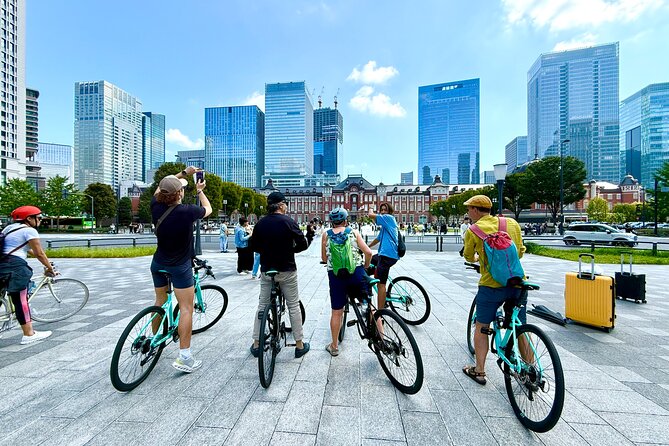
Tokyo Station Marunouchi Station Square is the next major pause, scheduled for about 10 minutes. The station opened in 1914, and its red-brick facade is one of the city’s most recognizable pieces of early modern architecture.
This stop is a good example of the tour’s value. You get a quick look at a building that many visitors might otherwise rush through while changing trains. From the Marunouchi side, the station reads as a grand civic landmark rather than just a transport hub.
Ten minutes is enough for photographs and a short explanation. It is not enough to explore the station’s interior passages, underground shopping, or food halls. If you want those experiences, mark Tokyo Station for a separate visit after the ride.
Cycling here also helps you see how Tokyo’s central districts connect. The transition from palace grounds to business streets to the station square happens quickly, and a guide can point out details you might miss while walking with your eyes fixed on a map.
A completely different kind of day out:
- Tokyo Disney Resort – Tokyo Disneyland & Tokyo DisneySea Park Tickets
★ 4.8 · 99,488 reviews - SHIBUYA SKY Ticket
★ 4.7 · 46,509 reviews - JR Whole Japan Rail Pass
★ 4.8 · 29,150 reviews - Mt Fuji and Hakone 1-Day Bus Tour Return by Bullet Train
★ 5.0 · 26,383 reviews
Akasaka Palace and Tokyo’s Olympic story
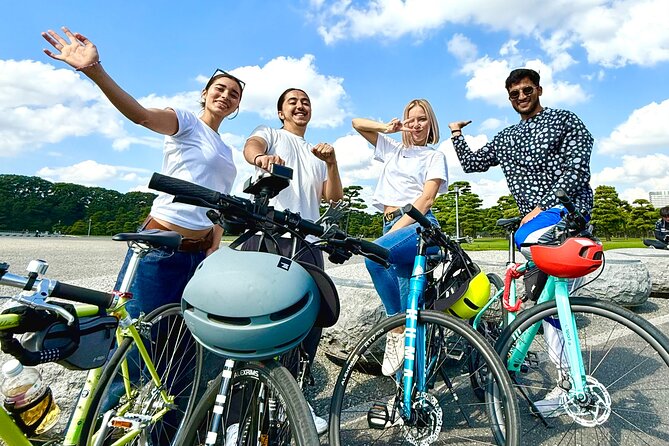
Akasaka Palace, also called the State Guesthouse, receives a brief five-minute stop. The building began as a royal villa and now serves as a state guesthouse. Its formal design makes it a worthwhile exterior sight for anyone interested in Japan’s imperial and diplomatic past.
The short visit is the main limitation. You will see the setting and hear why the building matters, but this is not a guided interior tour. The route favors breadth, so you should treat Akasaka Palace as a pleasant glimpse rather than the central purpose of the outing.
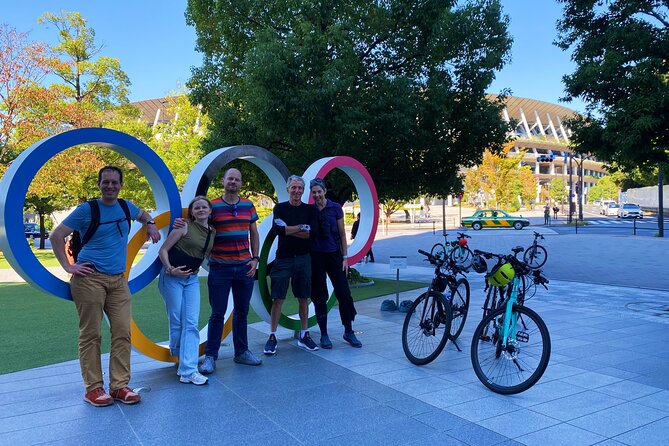
Next comes Japan National Stadium, the site of the 2020 Tokyo Olympic and Paralympic Games. The scheduled stop lasts about 15 minutes, giving you time to see the venue and hear about its place in modern Tokyo.
This pairing gives the tour a useful range. Akasaka Palace represents royal tradition and official state functions. The stadium represents contemporary Japan, international sport, and a city that continued preparing for a major global event through difficult circumstances. You get two very different sides of Tokyo without spending half a day in a museum.
Aoyama streets and a quieter side of the city
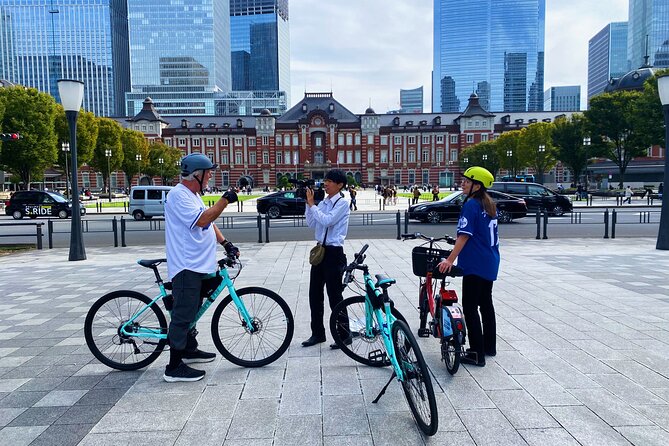
Aoyama Street is a short five-minute stop, but it changes the feel of the route. The area is known for high-end fashion brands and distinctive architecture. Here, Tokyo’s style is expressed through storefronts, clean lines, and carefully designed buildings rather than temple roofs or palace walls.
The stop is brief, so you will not have time for serious shopping. That is probably a good thing for a three-hour ride. You get a snapshot of the district, then continue before the outing becomes a shopping trip.
A few riders especially enjoyed riding through parks and less obvious city spaces. That is one of the advantages of a bicycle route. You are not limited to the most direct subway corridors, and the journey itself becomes part of the sightseeing. The city changes block by block, from formal avenues to small streets and open green areas.
The guide’s role is important here. A short stop means you benefit from someone explaining what you are seeing. Without that context, Aoyama might simply look like an expensive shopping district. With local guidance, it becomes part of the story of Tokyo’s design, fashion, and changing neighborhoods.
Cat Street, Harajuku, and the ride into Shibuya
Shibuya Cat Street brings you toward the younger, more fashion-focused part of the route. The street is associated with current brands, independent shops, and vintage clothing. The scheduled stop is only five minutes, so you will see the atmosphere without browsing properly.
If you want to shop, plan to return after the bike ride. The end point is close enough to make that easy, especially since the route finishes between Yoyogi Park and Shibuya.
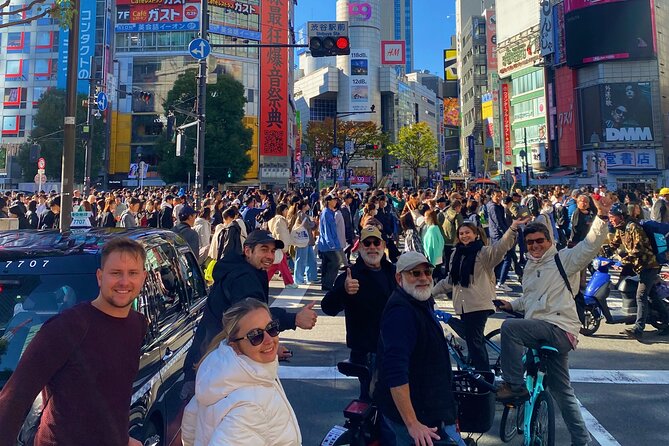
The tour then reaches Shibuya Crossing, one of Tokyo’s most famous public spaces. The stop lasts about five minutes, and the route is designed to take you through the crossing rather than simply point at it from a nearby observation deck.
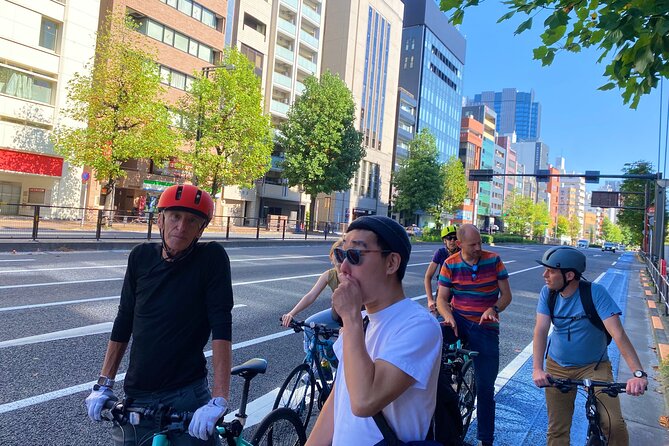
That makes this moment exciting, but it also requires concentration. You need to be comfortable handling a bicycle around other riders and pedestrians. The guides generally position themselves at the front and back of the group, explain how to stay safe, and keep an eye on the pace. Even so, crowded city riding can feel stressful at moments.
An afternoon or later departure may offer a different mood, and one guide was specifically praised for showing Shibuya Crossing at night. Check the available departure time when you book if seeing the crossing after dark matters to you. Do not assume every departure has the same lighting or crowd conditions.
Finishing near Yoyogi Park and Harajuku
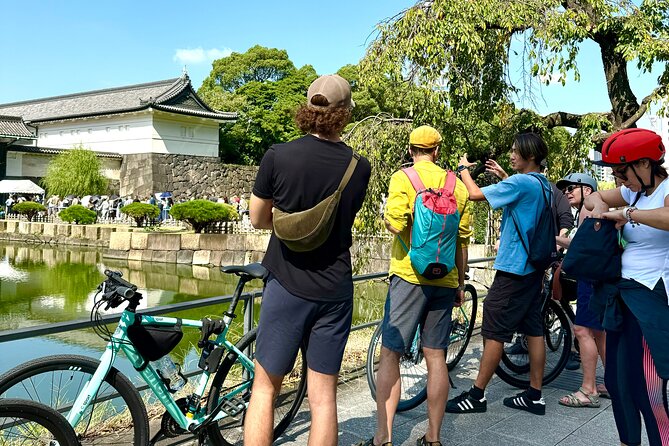
The ride ends at the Bell of Peace in Jinnan, at 1 Udagawacho. The finish is a practical one: Yoyogi Park is about a five-minute walk away, and Shibuya Station is about 10 minutes on foot. Harajuku Station is also nearby from the end area.
This gives you several good ways to continue your day. You can walk through Yoyogi Park, explore Harajuku, eat in Jinnan, or continue toward Shibuya’s shops and restaurants. The end point is not back at the start, so plan your next move rather than expecting a return to Minato.
The route’s final section also includes one of the most personal bits of local flavor. The supplied trip details refer to the grave of Hachikō, the famous loyal dog associated with Shibuya. If that point is included on your departure, it adds a human story to the famous district and gives you more than the usual crossing photograph.
E-bikes, helmets, traffic, and comfort
The bicycle is included, along with bike insurance, a small pouch for your phone, wallet, or keys, and a raincoat on rainy days. The pouch is a minor detail, but it helps because you do not need to keep loose items in a pocket while riding.
Pedal assist is worth choosing if it is available for your booking. It reduces the strain of covering a large part of central Tokyo, especially in hot weather or if you have already spent several days walking. The ride is described as manageable on e-bikes, but you still need a moderate level of fitness and basic confidence on a bicycle.
A helmet is not included. Rental costs ¥1,000, payable in cash on the activity date. I would bring the cash and use the helmet, especially because the route includes traffic and crowded areas.
The ride can be hot in warm weather, and one rider specifically wished they had gone earlier in the day. Another completed the ride in rain with a raincoat and still enjoyed it, but conditions clearly affect comfort. If you have a choice, an early departure can be the kinder option during Tokyo’s hottest periods.
You will not stop constantly for photos. Guides are generally patient if you need a moment, and planned restrooms or breaks may be included, but the route keeps moving. Wear comfortable clothing, bring water, and avoid treating this as a chance to carry a large day bag.
How much value do you get for $63.01?
At $63.01 per person, the tour is reasonably priced for three hours of bike use, a guide, insurance, and a route that crosses several major districts. You are paying less for formal admissions and more for time saved, navigation, and local explanation.
The value is strongest if you have only one day in Tokyo, a long layover, or limited energy for subway transfers. One family used the ride to see much of the city in a single day, and another group used it during a 12-hour layover. That is exactly where the price makes sense: the bicycle turns a scattered list of sights into one efficient outing.
The value is weaker if you prefer long visits at temples, palace sites, and shopping streets. You will not get extended time at any one attraction, and food and drinks are not included. Someone who already knows Tokyo well may prefer a focused neighborhood tour instead.
Who should book this ride?
I would recommend it to first-time visitors who want a fast orientation, people on a short stopover, families with older children who can ride confidently, and anyone who prefers outdoor sightseeing to sitting on a bus. The e-bike option helps, and the guides appear to be particularly good at supporting mixed-age groups and slower riders.
I would think twice if you dislike riding beside traffic, feel uneasy in crowds, or want a relaxed photography tour. Shibuya Crossing and central Tokyo streets demand attention. The route is suitable for people with moderate fitness, not for anyone seeking a completely effortless excursion.
The private format can also work well for a family or a small group with a shared pace. If you need a child seat, it costs ¥3,000 and must be arranged at least two days ahead, with cash required on the day.
Should you book the Tokyo bike tour?
Book it if your priority is seeing many sides of Tokyo quickly, with a guide handling the route and adding useful context. The strongest reasons are the wide coverage, included e-bike, capable guides, and finish near Yoyogi Park, Harajuku, and Shibuya.
Skip it if your ideal Tokyo day means lingering at Zojo-ji, touring the Imperial Palace area in depth, or spending hours shopping in Aoyama and Cat Street. For everyone else, this is a smart first-day activity, especially with pedal assist, cash for the helmet, an early start in hot weather, and a few extra minutes to find the Perry statue.
FAQ
How long is the Tokyo bike tour?
The tour lasts approximately three hours, including the time spent cycling between stops.
What sights are included?
The route includes Zojo-ji Temple, the Imperial Palace, Tokyo Station Marunouchi Station Square, Kokyo Otemon Gate, Akasaka Palace, Japan National Stadium, Aoyama Street, Shibuya Cat Street, and Shibuya Crossing.
Where does the tour start?
It starts at the Statue of Commodore Perry at 2-chōme-2-20 Shibakōen, Minato City, Tokyo 105-0011, Japan.
Where does the tour finish?
It finishes at the Bell of Peace at 1 Udagawacho, Shibuya, Tokyo 150-0042, Japan. The end area is in Jinnan, between Yoyogi Park and Shibuya.
Is bike rental included?
Yes. Use of the bicycle and bike insurance are included in the tour price.
Is a helmet included?
No. A helmet can be rented for ¥1,000. You should bring cash for the rental on the activity date.
Is an e-bike available?
The experience is offered as a bike or e-bike tour. Pedal assist is recommended in the practical tour information and can make the three-hour route easier.
Is a child seat available?
Yes. A child seat costs ¥3,000. You must contact the provider at least two days before the tour and bring cash on the activity date.
What happens if it rains?
A raincoat is provided on rainy days. If poor weather causes the experience to be canceled, you will be offered another date or a full refund.
Can I cancel for a full refund?
Yes, if you cancel at least 24 hours before the experience start time. Cancellations or changes made less than 24 hours before the start time are not refundable or accepted.
Just added in Tokyo
- Fish Market & Tokyo Skyline Private Walking Tour★ 5.0 · 14 reviews
- Mt. Fuji & Hakone Cherry Blossom private One Day Tour★ 4.5 · 35 reviews
- 25-Min Downtown Helicopter Tour : Tokyo Skytree and Tokyo Tower★ 5.0 · 19 reviews
- Private Tour with a Local Guide – Learn about daily life in Japan★ 5.0 · 22 reviews
- Official Japan Go-Kart Through Tokyo Bay / Ginza (IDP Required)★ 4.5 · 71 reviews
- 30-Min Tokyo Central Private Heli Tour– Asakusa, Skytree, Shibuya★ 5.0 · 13 reviews
- Tokyo 2-Hour Genuine Samurai Experience: Kendo in Japan★ 5.0 · 112 reviews
- Tokyo Private SightSeeing Day Tour With Guide★ 5.0 · 16 reviews
Cycling and E-Bike Tours, compared.
3h Tokyo E-Bike Tour: Hidden Gems, and Local Life with guide
Read our review →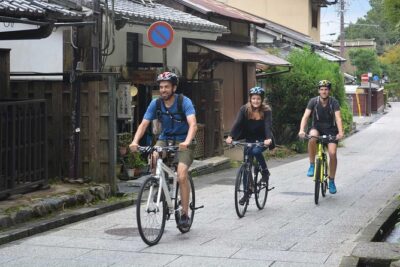
Arashiyama Bamboo Forest & Hidden Gems Bike Tour (Early Bird)
Read our review →
5 Top Highlights of Kyoto Full Day Bike Tour (E-bike option)
Read our review →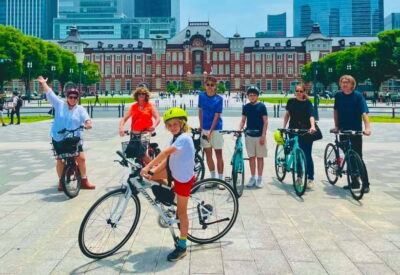
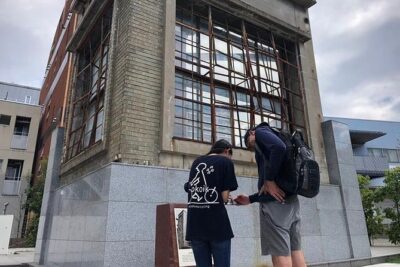
Hiroshima 2hr Peace Cycling Tour with Local Guide
Read our review →Browse the lists this tour appears in