
Reviewed · WALKING TOURS
Tokyo: Asakusa Walking Tour with Japanese Comedian
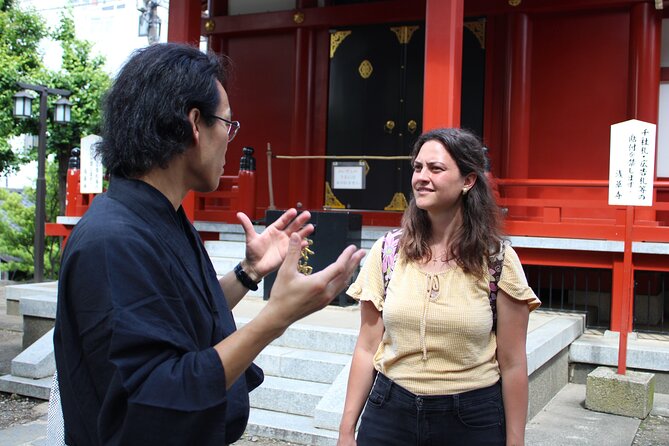
Asakusa gets funnier with a local guide. This 90-minute walk with Ryo, a Japanese comedian and former Asakusa rickshaw driver, gives you a lively introduction to Tokyo’s oldest temple district. You’ll see Buddhist temples, Shinto shrines, historic gates, shopping streets, and quiet corners that are easy to miss when you explore alone.
I like the small-group format and the mix of clear cultural explanations with humor. I also like the useful local advice, especially the stop for melon bread and tips on shops and snacks. The main consideration is timing: the walking route covers many stops quickly, and the area becomes much busier after about 9 a.m.
In This Review
- Key points about this Asakusa walking tour
- Why Ryo’s Asakusa tour feels different
- Starting above Asakusa at the tourist information center
- Kaminarimon and Nakamise Shopping Street
- Bentendo and the Bell of Time
- Nisombutsu and Nitenmon Gate
- Asakusa Shrine and the Shinto side of the district
- Yogodo, Awashimado, and the quieter temple grounds
- A sweet break on Nishi-sando Shopping Street
- Hozomon and the final approach to Senso-ji
- Finishing at Tokyo’s oldest temple
- What the comedy adds to the history
- Timing, walking pace, and practical comfort
- Is $37.99 good value?
- Who should book this walk?
- Should you book the Asakusa comedian walking tour?
- FAQ
- How long is the Asakusa walking tour?
- What is the price?
- Where does the tour start?
- Where does the tour end?
- Is the tour led by a comedian?
- How large is the group?
- Does the tour include temple admission?
- Can I use a mobile ticket?
- Can I cancel for a full refund?
- Can most people participate?
Key points about this Asakusa walking tour
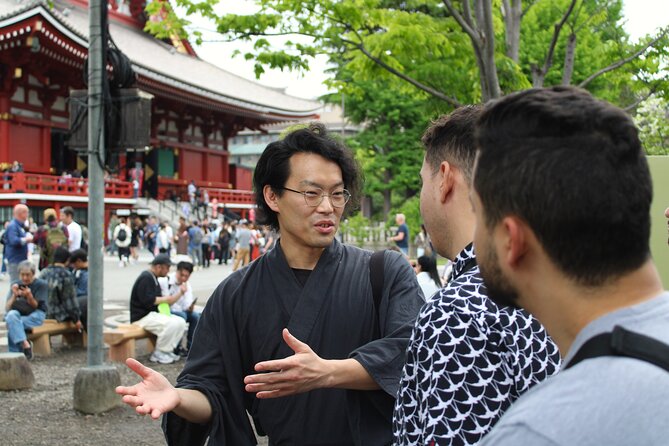
- Ryo brings comedy and local experience: His background as a comedian and former rickshaw driver gives the walk a personal feel.
- The route covers more than Senso-ji: You’ll visit Asakusa Shrine, Bentendo, Nitenmon Gate, the Bell of Time, Yogodo, and Awashimado.
- Early starts are a smart choice: An 8 a.m. start can mean cooler weather and fewer people around the temple grounds.
- The group is intended to stay small: The tour description says six people, while the booking information lists a maximum of eight, so confirm the exact group size.
- Melon bread adds a tasty local pause: Kagetsudo on Nishi-sando Shopping Street is a suggested stop for one of Asakusa’s popular sweets.
- The price is modest for a guided introduction: At $37.99 per person, the value comes from the context, shortcuts, and chance to ask questions.
Why Ryo’s Asakusa tour feels different
Many walks through Asakusa follow the same simple pattern: Kaminarimon Gate, Nakamise Shopping Street, the main hall of Senso-ji, then goodbye. This route covers those famous sights but spends time on smaller religious sites and details around the temple grounds.
That difference matters. Without a guide, you can admire a gate or statue without knowing why it is there. Ryo explains the customs, symbols, and connections between the Buddhist temple and nearby Shinto shrine. He also leaves room for questions, conversation, photographs, and food suggestions.
The comedy is not the entire point of the walk. It is a way to make the information easier to follow. The strongest praise for Ryo centers on his good English, easy conversation, patience with questions, and ability to explain Japanese culture in an approachable way.
The experience is best understood as a compact orientation to Asakusa. You will not spend a long time at every stop, but you will come away with a clearer sense of how the district fits together.
More Walking Tours in Tokyo
- Tokyo Tsukiji Fish Market Food and Culture Walking Tour
★ 5.0 · 3,184 reviews - Tokyo: Imperial Palace and Shogun Historical Walking Tour
★ 5.0 · 2,251 reviews - Tokyo: Shinjuku Local Bar and Izakaya Guided Walking Tour
★ 4.9 · 1,794 reviews
Starting above Asakusa at the tourist information center
The walk begins at the Asakusa Culture Tourist Information Center, near Asakusa Cruise Pier at 1-1-1 Hanakawado. The first stop takes you to the building’s eighth-floor view.
This is a smart opening because it helps you get your bearings before walking into the temple district. From above, you can look across the surrounding streets and understand the relationship between the shopping lanes, Senso-ji, and the nearby river area.
Ten minutes is enough for a quick orientation and photographs. Do not expect a long sightseeing session here. The value is the overview, especially if this is your first time in Asakusa.
The meeting point is close to public transportation, which makes the start fairly simple. Still, give yourself time to find the exact spot, since the area around the pier and station has several large landmarks.
Kaminarimon and Nakamise Shopping Street
From the information center, you enter the main Asakusa area through Kaminarimon Gate. Its enormous lantern is one of Tokyo’s most recognizable sights, and it makes a strong entrance to Senso-ji.
Ryo explains the role of the gate and helps place it within the larger temple approach. You then continue along Nakamise Shopping Street, the direct route toward the temple grounds.
This is one of the liveliest parts of the walk, with souvenir shops, sweets, and traditional items. The timing matters. One person who took an early morning start found the area much quieter before 9 a.m., while the shops and market activity become more noticeable later in the morning.
You should choose your preferred atmosphere before booking your time. Start early for cooler temperatures, easier photographs, and a calmer look at the gates. Start later if you want more shop activity and food stalls. The tradeoff is space and heat.
Bentendo and the Bell of Time
The route then moves away from the main flow to Bentendo, a smaller temple associated with art and prosperity. This short stop gives you a chance to see a quieter religious site within the larger Senso-ji complex.
Bentendo is useful for understanding that Senso-ji is not just one large hall. The grounds include several buildings and religious traditions, each with its own purpose. Five minutes is not much, but Ryo’s explanation gives the stop more meaning than a quick photograph would.
Nearby, you see the Bell of Time. During the Edo period, the temple monk regularly rang it to tell people the time. That simple detail helps connect the temple grounds to daily life in old Tokyo.
The stop is brief and may feel too short if you want to linger at each building. Still, the quick pace keeps the full route within about an hour and a half.
A completely different kind of day out:
- Tokyo Disney Resort – Tokyo Disneyland & Tokyo DisneySea Park Tickets
★ 4.8 · 99,488 reviews - SHIBUYA SKY Ticket
★ 4.7 · 46,509 reviews - JR Whole Japan Rail Pass
★ 4.8 · 29,150 reviews - Mt Fuji and Hakone 1-Day Bus Tour Return by Bullet Train
★ 5.0 · 26,383 reviews
Nisombutsu and Nitenmon Gate
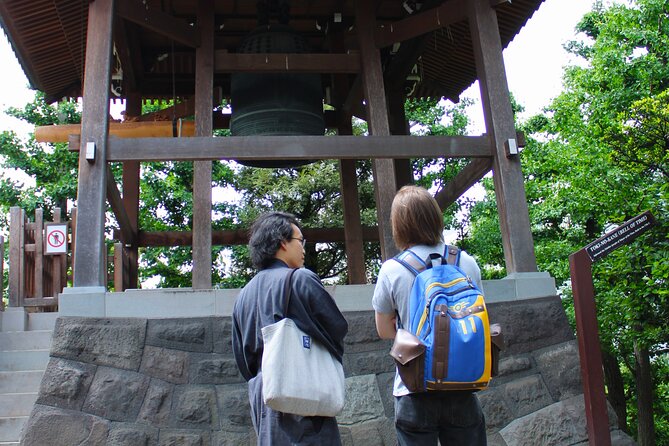
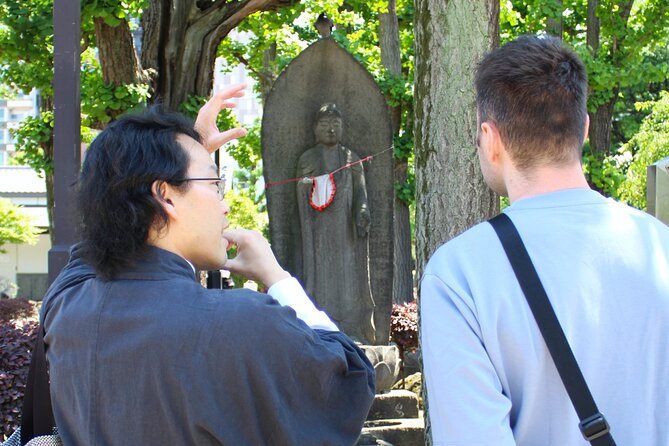
Nisombutsu offers a calmer pause beside two bronze statues and four stone statues of Buddhist deities dating from the seventeenth century. This is the type of place that can disappear from an independent visit, especially when you are focused on reaching the main hall.
Ryo’s role is especially useful here. He points out the statues and explains why they matter, rather than treating them as background decoration. The setting also gives you a moment away from the main approach.
Next comes Nitenmon Gate, on the right side of the main Senso-ji hall. The gate is listed as a National Cultural Property in Japan and was used as a shogun’s gate, meaning only the general was allowed to pass through it.
The exact historical explanation is the reason to have a guide at this stop. A gate can look impressive on its own, but its former political role changes how you see it. Plan on around ten minutes here, including time for questions and photographs.
Asakusa Shrine and the Shinto side of the district
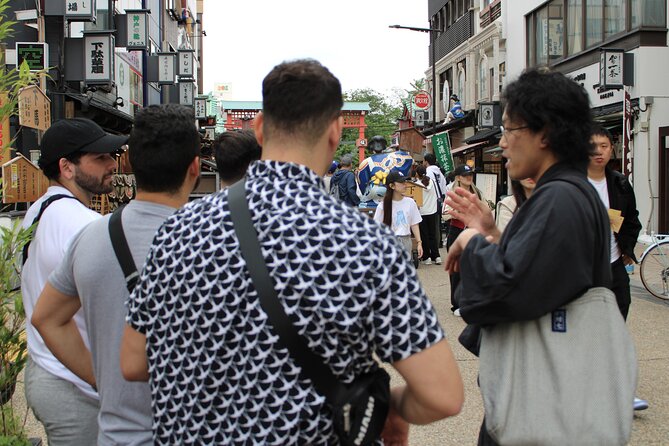
Asakusa Shrine is an important part of the route because it introduces the Shinto side of an area often associated mainly with Buddhism. The shrine has three deities connected with the origin of Senso-ji.
You also see the garage for three large portable shrines used during local festivals. Even if no festival is taking place, the building and its purpose give you a better sense of how religious practice continues beyond the main temple halls.
This is one of the most useful stops for first-time visitors who want to understand the difference between a Buddhist temple and a Shinto shrine. Ryo explains the links between the two without turning the walk into a lecture.
Ten minutes is a reasonable amount of time here. You can look around, ask about customs, and take photographs without losing the rhythm of the tour.
Yogodo, Awashimado, and the quieter temple grounds
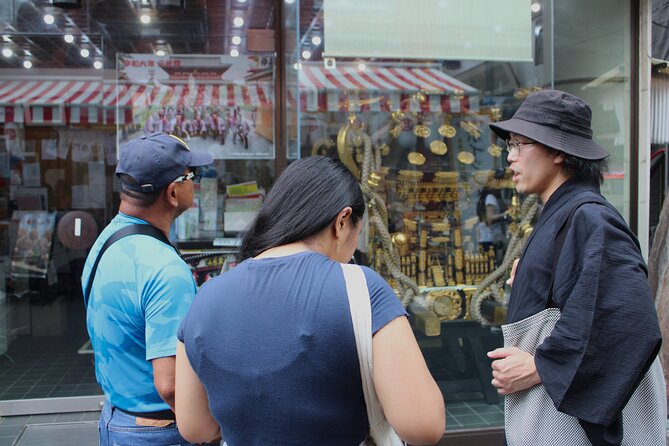
Yogodo and Awashimado are smaller stops within the Senso-ji area. They are not the headline sights, and that is precisely why they add value.
Yogodo receives about five minutes, while Awashimado receives about ten. The route gives you a look at parts of the complex that many people skip while heading straight to the main hall.
These stops also show how much there is to see around Senso-ji beyond the familiar gates and lantern. If you have already visited the main hall on a previous trip, this section may be especially worthwhile.
The limitation is that the itinerary names these sites but gives little detail about what you will see at each one. Their appeal depends heavily on Ryo’s explanations and your interest in smaller religious buildings.
A sweet break on Nishi-sando Shopping Street
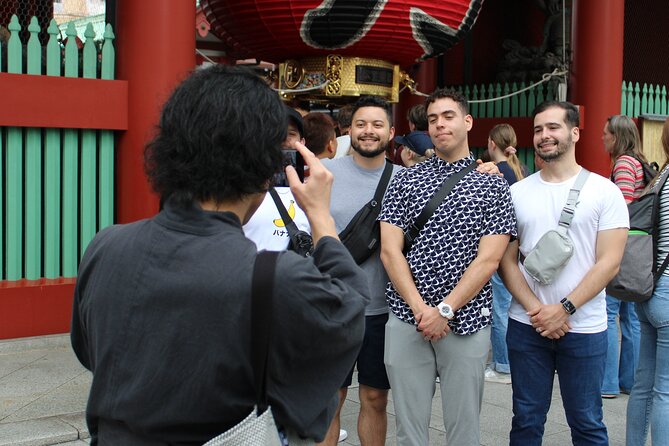
At Asakusa Nishisando, Ryo can stop at Kagetsudo if you would like to try melon bread. This is one of the most practical touches on the walk because it connects sightseeing with an everyday local snack.
Melon bread is known for its sweet crust and soft bread inside. The stop is optional, and the listed tour price does not say that food is included, so expect to purchase your own snack.
This is also a good point to ask Ryo for food and shopping advice. Several visitors appreciated his recommendations for local shops, souvenirs, sandals, and snacks. His former work as a rickshaw driver gives him useful familiarity with the area.
The stop lasts about five minutes. That is enough for a quick taste, but not a full food tour. If trying local sweets is a major goal, treat this as an introduction rather than the main event.
Hozomon and the final approach to Senso-ji
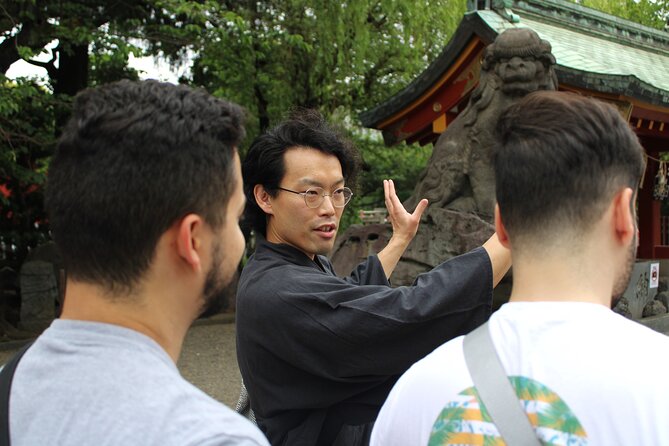
Hozomon is the second major gate in front of the temple. A pair of guardian statues watches over the entrance, giving the structure a more imposing feel than the smaller sites earlier in the walk.
Ryo uses the gate to build toward the final stop rather than rushing straight to the main hall. The sequence makes sense: you begin with an overview, pass through Kaminarimon and Nakamise, explore the surrounding religious sites, then return to the main approach through Hozomon.
Five minutes is listed here, so the stop is mainly for explanation and photographs. If the approach is crowded, staying close to the guide will help you hear what is being said.
Finishing at Tokyo’s oldest temple
The walk ends in front of the main hall of Senso-ji, described as Tokyo’s oldest temple, with 1,400 years of history. This is the point where the earlier stops come together.
You have already seen smaller temples, a Shinto shrine, old gates, statues, and the route through Nakamise. By the time you reach the main hall, you have a better idea of how the whole complex functions.
Ryo explains Senso-ji and its Buddhist deity, Kannon Bodhisattva. The temple’s long appeal to people from many backgrounds is part of the story, and this final explanation gives the tour a clear finish.
The tour ends here rather than returning you to the starting point. That is convenient if you want to continue sightseeing, visit the main hall on your own, shop along Nakamise, or explore more of Asakusa. It also means you should plan your next destination from Senso-ji, not from the cruise pier.
What the comedy adds to the history
The best feature of Ryo’s guiding is the balance. You get history and cultural explanation, but the tone remains conversational. The humor helps keep the walk from feeling like a string of dates and names.
His English is described as very good, and the repeated praise focuses on his ability to answer questions clearly. Families with teenagers found him patient, and private groups appreciated being able to ask questions throughout the walk.
Do not book this expecting a stand-up show at every corner. The comedy is mixed into the guiding. The result should suit you if you enjoy learning through conversation and do not want a formal lecture.
The small group also helps. The advertised group size is capped at six, though the additional booking details allow up to eight people. That is still a fairly intimate format, but the difference could affect how easy it is to ask questions. I would confirm the expected group size if that matters to you.
Timing, walking pace, and practical comfort
The tour lasts about one hour and 30 minutes. The route includes many short stops, so you should expect steady walking rather than long periods inside one building.
An early start is the strongest practical tip. An 8 a.m. departure can help you avoid the worst heat and crowds, although the market shops may not yet be fully active. Later times offer more shopping and food activity but can be less comfortable around the busiest gates.
Wear comfortable shoes and bring what you need for outdoor walking. The provided information says most people can participate, service animals are allowed, and the route is near public transportation. It does not provide detailed information about step-free access, seating, or shelter, so ask ahead if you have specific mobility needs.
The meeting point is Tokyo Cruise Asakusa Pier, 1-1-1 Hanakawado, Taito City. The finish is Senso-ji at 2-3-1 Asakusa, Taito City. Since the start and finish differ, this works well as a first activity in Asakusa, followed by independent sightseeing.
Is $37.99 good value?
At $37.99 per person, this is a reasonable price for a private-feeling introduction to one of Tokyo’s most important historic districts. There are no admission fees listed for the stops, so you are paying mainly for Ryo’s time, explanations, route planning, humor, and local suggestions.
The value is strongest if you would otherwise walk through Asakusa without understanding what you are seeing. A guide can show you the smaller buildings, explain the connection between Senso-ji and Asakusa Shrine, and point out details that do not announce themselves.
It is less useful if you only want to photograph Kaminarimon and the main hall. You can visit those sights freely. The reason to pay is the interpretation and the chance to ask questions.
Group discounts are available, and the experience uses a mobile ticket. Free cancellation applies when you cancel at least 24 hours before the start time. Changes or cancellations within 24 hours are not refunded, so keep that cutoff in mind when weather or transport plans are uncertain.
Who should book this walk?
I would recommend it to first-time visitors who want a clear introduction to Asakusa without spending half a day on a large bus tour. Families may like Ryo’s humor and patience, while curious solo visitors can benefit from the easy conversation and chance to ask anything that comes to mind.
It also suits repeat visitors. One person booked Ryo a second time with a friend and found the experience worthwhile again, particularly because the guide could show different places around Asakusa.
You should consider another option if you dislike group walking, want extensive time at each temple, or prefer a food-focused tour. This is a compact sightseeing walk with cultural context, not a full-day historical program or dedicated culinary outing.
Should you book the Asakusa comedian walking tour?
Book it if you want to understand more than the postcard view of Senso-ji. The combination of Ryo’s local experience, good English, humor, cultural explanations, and practical recommendations gives this tour more personality than a basic orientation walk.
Choose an early start if you value quiet temple grounds and cooler weather. Choose a later time if shops, snacks, and market activity matter more. At $37.99, the tour is a particularly good buy for first-time visitors, families, and anyone who wants a friendly guide to connect Asakusa’s Buddhist and Shinto sights.
FAQ
How long is the Asakusa walking tour?
The tour lasts approximately 1 hour and 30 minutes.
What is the price?
The listed price is $37.99 per person. Group discounts are available.
Where does the tour start?
It starts at Tokyo Cruise Asakusa Pier, 1-chōme-1-1 Hanakawado, Taito City, Tokyo 111-0033, Japan.
Where does the tour end?
The tour ends in front of the main hall of Senso-ji Temple at 2-chōme-3-1 Asakusa, Taito City, Tokyo 111-0032, Japan.
Is the tour led by a comedian?
Yes. The provider is Karate Comic Ryo, and the guide Ryo combines comedy with explanations of Asakusa’s history and culture.
How large is the group?
The tour description says the group is capped at six people. The additional booking information lists a maximum of eight, so confirm the exact size when booking.
Does the tour include temple admission?
The listed stops show free admission. No separate entrance fee is stated for the temples, shrines, gates, or information center.
Can I use a mobile ticket?
Yes. The experience includes a mobile ticket.
Can I cancel for a full refund?
Yes, if you cancel at least 24 hours before the experience start time. Cancellations within 24 hours are not refunded.
Can most people participate?
The provided information says most people can participate. Service animals are allowed, and the tour is near public transportation. Detailed accessibility information is not provided.
Just added in Tokyo
- Tokyo: Shinjuku Bar Hopping & Night Walking Tour★ 5.0 · 53 reviews
- Tokyo:Samurai sword and archery class from a samurai descendant★ 5.0 · 121 reviews
- Tokyo Ultimate Daikoku & JDM Experience (R35 GTR Private Tour)★ 5.0 · 27 reviews
- Authentic Geisha Performance with Dinner in Tokyo★ 4.5 · 101 reviews
- Asakusa: 1400-year history exploration★ 5.0 · 155 reviews
- Tokyo Asakusa Temple & Shrine Walking Tour with Local Guide★ 5.0 · 52 reviews
- Asakusa Night Evening Walking Tour with English-Speaking Guide★ 5.0 · 16 reviews
- Tokyo Anime Adventure: Studio Tour, Drawing Class & Museum Visit★ 4.5 · 18 reviews
Walking Tours, compared.
Kyoto Geisha Walking Tour: Gion District & Hidden Gems
Read our review →
Tokyo Tsukiji Fish Market Food and Culture Walking Tour
Read our review →
Gion Magical Night Walking Tour with Geisha Trivia
Read our review →
Imperial Palace and Shogun Historical Walking Tour
Read our review →
Gion Geisha District Walking Tour – Stories of Geisha
Read our review →
Shinjuku Local Bar and Izakaya Guided Walking Tour
Read our review →
Browse the lists this tour appears in