
Reviewed · WORKSHOPS
Tokyo Chopstick Making Workshop with Artisan
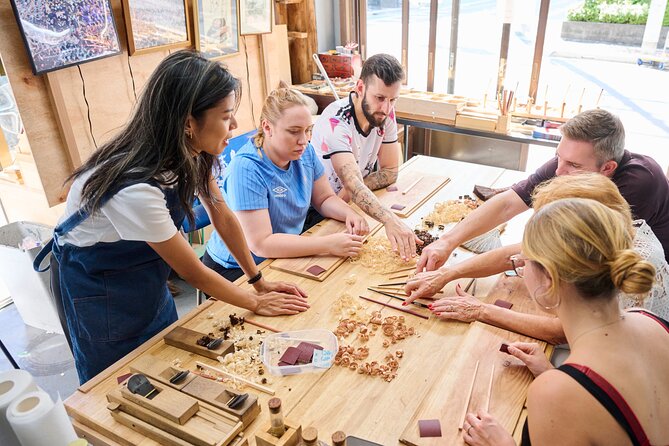
Small tools, lasting souvenir. This Tokyo workshop turns an everyday object into a hands-on lesson in Japanese craft, with an artisan guiding you as you shape, smooth, and finish your own wooden chopsticks. I especially like the personal souvenir you take home the same day and the chance to work with traditional tools rather than simply watching a demonstration. The main consideration is that the advertised one-hour session can take closer to two hours, and some wood types and engraving cost extra.
The setting at 1-chōme-7-1 Misuji in Taito City puts you in one of Tokyo’s old craft districts, away from the usual sightseeing checklist. I also like the small group limit of 10, since it allows for hands-on help. Still, you should know that this is more of a workshop than a structured group tour, and walk-in customers may be accepted at a lower direct price.
In This Review
- Key points before you book
- A quiet craft corner in Taito City
- Choosing your wood and starting the chopsticks
- Planing wood with traditional tools
- Smoothing and finishing your pair
- Learning about chopsticks beyond the souvenir
- Engraving and the finished souvenir
- Is $26.53 good value?
- Who will enjoy this workshop most?
- How it fits into a Tokyo day
- Booking, cancellation, and practical details
- Should you book the Tokyo chopstick workshop?
- FAQ
- Where does the chopstick-making workshop begin?
- How long does the workshop last?
- How many people can join?
- Are premium wood types included in the price?
- Can I have the chopsticks engraved?
- What is the cancellation policy?
Key points before you book
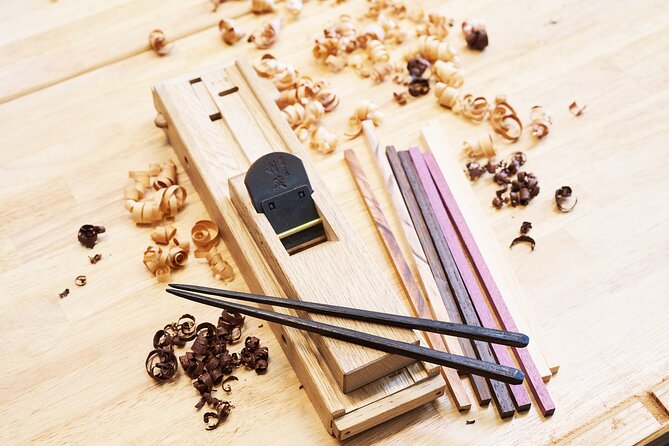
- You make a usable pair from raw wood: You plane, shape, smooth, and finish the chopsticks yourself rather than buying a ready-made souvenir.
- The workshop is capped at 10 people: The small room and limited group size make it easier to get help when your hands need correcting.
- The price starts at $26.53 per person: That is fair for a short craft session and finished souvenir, but premium wood and engraving add to the bill.
- Your arms will do real work: Planing wood is not difficult, but it can feel like a small workout, especially with harder wood.
- You can finish with a personal touch: Engraving is available for an additional fee, and the finished chopsticks are wrapped for carrying or gifting.
- The timing is flexible in practice: The stated duration is about one hour, though some people finish in two hours without being rushed.
A quiet craft corner in Taito City
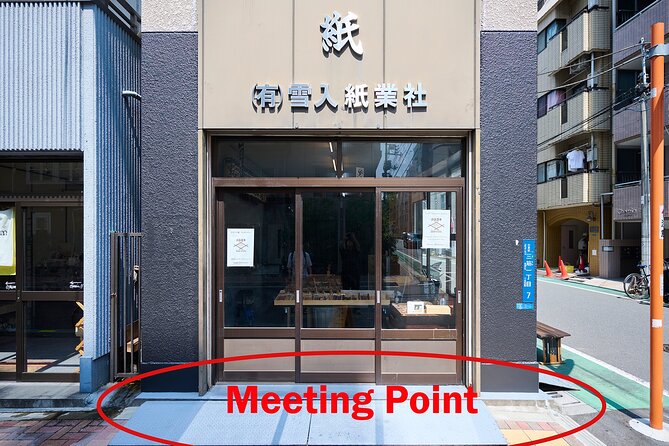
The workshop begins at 1-chōme-7-1 Misuji, in Tokyo’s Taito City. The address places you in a part of the city associated with traditional making and small craft businesses, not in a large attraction built for mass sightseeing.
That setting matters. You are not just picking up a souvenir in a station shop. You are spending time with the material, learning how a plain piece of wood changes under your hands. The activity gives you a brief look at the patient work behind an object most people use without thinking.
The meeting point is near public transportation, and the activity ends back there. Since the workshop is indoors and lasts about an hour, it fits neatly into a Tokyo day. You could pair it with other sights in Taito City, though the exact walking times to nearby attractions are not specified.
The room is small, with space for no more than 10 people at a time. That creates a friendly, focused feel, but it also means you should not picture a spacious studio or a large class with lots of room between workstations.
A few more options to weigh up in Tokyo
- Tokyo Disney Resort – Tokyo Disneyland & Tokyo DisneySea Park Tickets
★ 4.8 · 99,488 reviews - SHIBUYA SKY Ticket
★ 4.7 · 46,509 reviews - JR Whole Japan Rail Pass
★ 4.8 · 29,150 reviews
Choosing your wood and starting the chopsticks
At the beginning, you choose the wood for your pair. The available selection includes different types of wood, while more expensive choices require a supplement. This is a useful moment to think about your goal.
If you want the easiest first attempt, a softer or simpler wood may be the sensible choice. Planing is physical work, and one person found that a harder selection made the process more demanding than expected. You can choose a premium wood if the material matters to you, but the higher price does not necessarily make the experience more enjoyable.
The basic booking price is $26.53 per person. For that amount, the workshop offers an activity, instruction, and a finished object you can use at home. That is a good value compared with a standard souvenir, particularly if you enjoy making things.
Still, budget a little extra if you want finer wood or engraving. The upgrades are optional, so you can keep the experience close to the advertised price. If you are buying for a gift or marking a special trip, the engraving may be worth the added cost.
Planing wood with traditional tools
The main work is shaping the chopsticks with traditional tools. You remove wood gradually, learning how to control the tool and keep the pair balanced.
This is the part that makes the workshop different from a simple painting class. Your result depends on your pressure, patience, and attention. The wood does not become chopsticks by magic. You have to keep working until the two pieces begin to match.
For a beginner, the process is approachable but not entirely effortless. If you have never planed wood before, choose an easier wood and listen closely to the instructions. The activity is suitable for beginners, but beginner-friendly does not mean completely passive.
Expect some arm movement. One person described it as an arm workout, which is a fair warning for anyone who has planned a packed sightseeing day. The task is not described as dangerous or extreme, but you should be ready to use your hands and arms for much of the session.
The good news is that help is close by. Staff members guide you through each stage and correct your technique when needed. Angie has been praised for making the process easy and welcoming, while Kaana received special praise for working well with children. Other staff names connected with the workshop include Rasmus, Sakura, and Sensei.
Because the group is limited to 10, you have a better chance of getting individual attention than in a large craft class. That small scale is especially useful when you are trying to make two chopsticks the same thickness.
Smoothing and finishing your pair
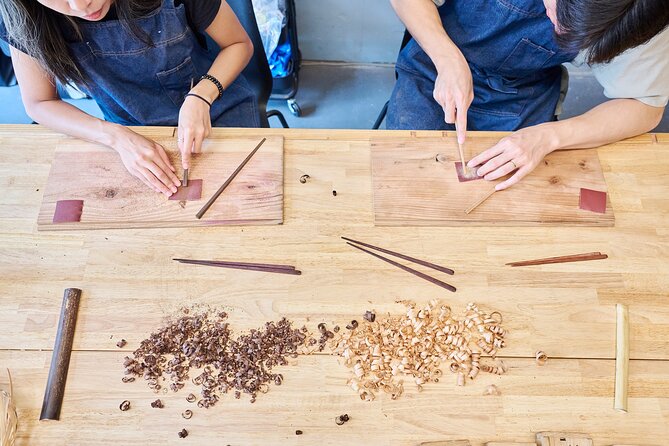
Once the rough shape is complete, you smooth the surface and refine the form. This stage takes patience. A pair can look finished from a distance while still needing more work along the edges and tips.
I like this part because it gives you time to notice the difference between handmade and factory-made objects. Small changes in the surface affect how the chopsticks feel in your hand. You begin to see why everyday Japanese items can carry such a strong sense of care.
The guides explain what to do and remain available when you need help. The session is designed to be relaxed, and you are not expected to arrive with woodworking experience.
The timing deserves a practical note. The official duration is approximately one hour, but one person needed closer to two hours to finish. Another account describes arriving early, being welcomed inside before the scheduled time, and completing the work without feeling rushed.
So, do not schedule a train departure immediately after the stated end time. The work may take longer depending on your wood, pace, and desire for a polished result. That extra time can be a benefit, since you are making something rather than racing through a fixed demonstration.
A completely different kind of day out:
- Mt Fuji and Hakone 1-Day Bus Tour Return by Bullet Train
★ 5.0 · 26,383 reviews - TOKYO SKYTREE® Ticket
★ 4.7 · 25,136 reviews - teamLab Borderless Tickets: MORI Building DIGITAL ART MUSEUM
★ 4.7 · 24,126 reviews - teamLab Planets TOKYO Ticket
★ 4.7 · 21,663 reviews
Learning about chopsticks beyond the souvenir
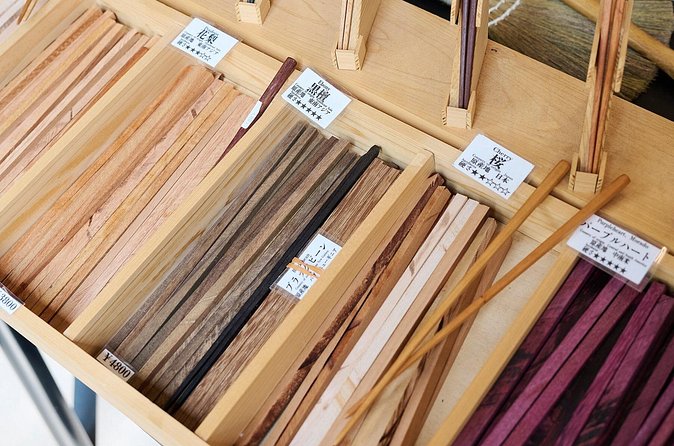
The workshop also introduces the cultural importance of chopsticks in Japan. You get a little context for an object used at nearly every meal, along with a practical look at the craft behind it.
The background information appears to be lighter than the woodworking itself. One person wished for more explanation about the history of chopstick-making. If you are booking this mainly for a detailed cultural lecture, you may find the session too brief.
If you see it as a craft activity with cultural context, the balance works better. You learn through touch and repetition, not just through a long talk. The strongest part of the experience is making the object yourself, while the cultural material adds meaning to the process.
That distinction is important. This is not a full museum-style lesson on Japanese utensils. It is a practical workshop where the cultural story supports the making.
Engraving and the finished souvenir
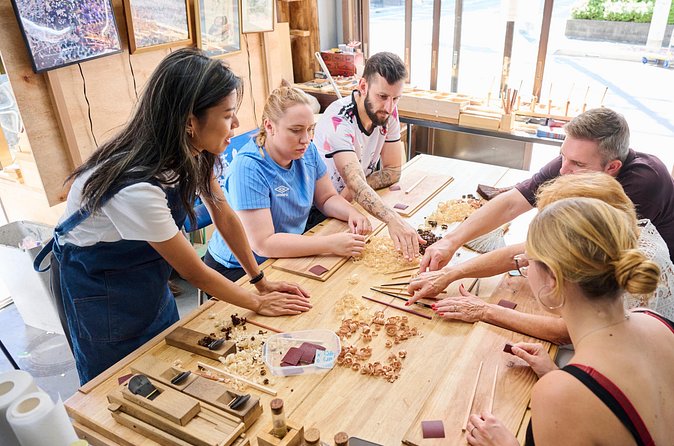
After shaping and smoothing, you can have the chopsticks engraved for an additional fee. Engraving gives the finished pair a more personal feel and can turn a useful object into a proper keepsake.
It is not required. The plain handmade chopsticks already provide the main reward, and choosing not to engrave keeps your final cost lower. If you are making a pair for a child, partner, friend, or family member, though, the added mark can make the gift more memorable.
Your chopsticks are wrapped beautifully before you leave. That makes them easy to carry in your luggage and ready to give as a present. It also means you do not need to worry about the finished pair being presented as loose workshop materials.
The result is practical. You can use the chopsticks at home, display them, or give them away. Unlike a decorative object that sits in a drawer, this souvenir has a clear purpose and a story attached to it.
Is $26.53 good value?
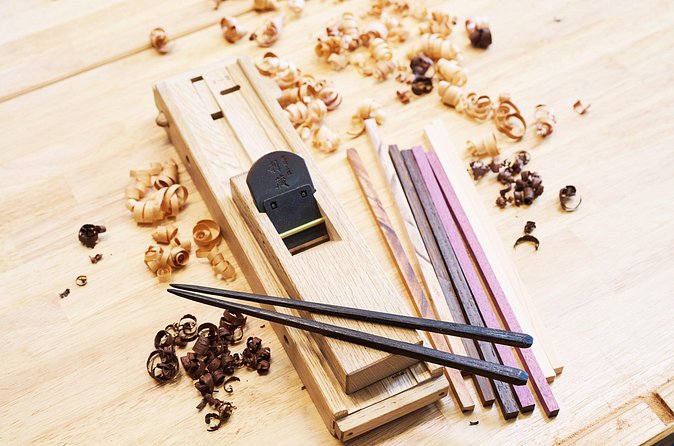
At $26.53, I consider the base price reasonable. You receive about an hour of instruction and hands-on work, along with a personalized wooden item to take home. The value is strongest if you enjoy craft activities and want more than a quick purchase.
The price is less compelling if you expected a formal guided tour or a long lesson in Japanese culture. The workshop may feel simple because the room is small and the main task is repeated planing. You are paying for access to the activity, tools, material, and guidance, not for a full-day cultural program.
The optional charges deserve attention. Premium wood costs extra, and engraving also costs extra. Ask about these costs before selecting upgrades so the final price does not surprise you.
There is also a direct-booking question. One dissatisfied customer understood the experience as a group tour, then found it was a workshop that accepted walk-ins and could cost less when booked directly. That is a fair concern. If the platform price is higher than the walk-in price, the convenience of advance confirmation is what you are mainly buying.
Advance booking still has value if your Tokyo schedule is tight. Confirmation arrives at booking, and the group limit is small. You avoid arriving at a busy time and finding no room. Just compare the direct price if saving money matters more than locking in a place.
Who will enjoy this workshop most?
I would choose this for you if you like making things with your hands, want a useful souvenir, or need a compact indoor activity in Tokyo. It suits solo visitors, couples, families, and friends.
It is particularly good for older children who can follow instructions and handle a simple hand tool. A 10-year-old and a 12-year-old were both said to enjoy it, which suggests the format works well for families. Kaana was praised for making the experience especially successful with children.
You should choose a softer wood if this is your first attempt at planing. You should also allow more time than the one-hour estimate if you want to work carefully or add engraving.
I would be less likely to recommend it to someone who wants a polished, formal presentation about Japanese craft. The cultural explanation is present, but the physical making takes center stage.
How it fits into a Tokyo day
The workshop lasts approximately one hour and returns you to the same meeting point. That makes it easy to use as a short activity between sightseeing stops, though the possibility of a two-hour finish means you should leave some breathing room.
The Taito City location gives you a reason to spend time in an older craft area instead of staying only around Tokyo’s major shopping streets. One person also found it walkable to the Ryogoku Kokugikan, making the workshop a possible addition to a day in the wider eastern Tokyo area.
The activity is indoors, which helps when the weather is poor. One booking was made as an alternative to a day trip after the forecast changed, then paired with a sushi-making class. That is a good use of the workshop: it is short, creative, and not dependent on clear skies.
Arriving early may be worthwhile, but do not assume early entry is guaranteed. Staff have allowed early arrivals in some circumstances, especially when the room was comfortable and ready. Treat that as a kindness, not part of the fixed schedule.
Booking, cancellation, and practical details
You receive confirmation at the time of booking, and the activity is available with a mobile ticket. Most people can participate, and the workshop is near public transportation.
The maximum group size is 10. The activity begins and ends at 1-chōme-7-1 Misuji, Taito City, Tokyo 111-0055, Japan.
Free cancellation is available if you cancel at least 24 hours before the scheduled start time. Cancellations made less than 24 hours in advance are not refunded, and changes within that period are not accepted. The cut-off follows Tokyo local time, so check the deadline carefully if you are booking from another time zone.
The activity has a 5 out of 5 rating from 466 ratings, with 99 percent recommending it. Those figures point to a strong overall experience, but the practical limits remain clear: the class is small, the work can be physical, and extras cost more.
Should you book the Tokyo chopstick workshop?
Book it if you want a personal, useful souvenir and a short break from sightseeing. The strongest reasons are the hands-on work, kind instruction, small group, and the satisfaction of leaving with chopsticks you shaped yourself.
Choose a less demanding wood if you are new to planing, and leave enough time for the work to take longer than an hour. Ask about premium wood and engraving before you commit to them.
I would skip it only if you want a full cultural lecture, a large organized tour, or the lowest possible price without checking direct walk-in rates. For most people who enjoy simple craft and want a story behind their souvenir, this is an easy activity to add to a Tokyo itinerary.
FAQ
Where does the chopstick-making workshop begin?
The workshop begins at 1-chōme-7-1 Misuji, Taito City, Tokyo 111-0055, Japan. It ends back at the same meeting point.
How long does the workshop last?
The stated duration is approximately one hour. Depending on your pace and the wood you choose, finishing can take closer to two hours.
How many people can join?
The activity has a maximum of 10 participants.
Are premium wood types included in the price?
The base price is $26.53 per person, but nicer or more expensive wood types cost extra.
Can I have the chopsticks engraved?
Yes. Engraving is available for an additional cost.
What is the cancellation policy?
You can cancel for a full refund up to 24 hours before the experience start time. Cancellations or changes made less than 24 hours in advance are not accepted for a refund.
Just added in Tokyo
- A One-of-a-Kind Sushi Experience in a Special Place of Japan★ 5.0 · 15 reviews
- Tokyo Cute Bento Cooking Class – Make a Kawaii Character Lunchbox★ 5.0 · 126 reviews
- Japanese Home Cooking Class & Walk in Todoroki Temple Tokyo★ 5.0 · 88 reviews
- Japan Tokyo Tower Observatory Deck E-Ticket★ 4.0 · 34 reviews
- Catch a Baseball Game in Tokyo with a Local – Tickets Included★ 5.0 · 24 reviews
- Tokyo Private Day Tour by Car with English speaking Driver Guide★ 4.0 · 29 reviews
- Japan Classic 10 Day – One Life Adventures★ 5.0 · 129 reviews
- JDM Experience with Fast&Furious RX-7 (English speaking Driver)★ 5.0 · 57 reviews
Workshops, compared.
Sushi Making Tokyo Roll and Authentic Japanese Sushi Class
Read our review →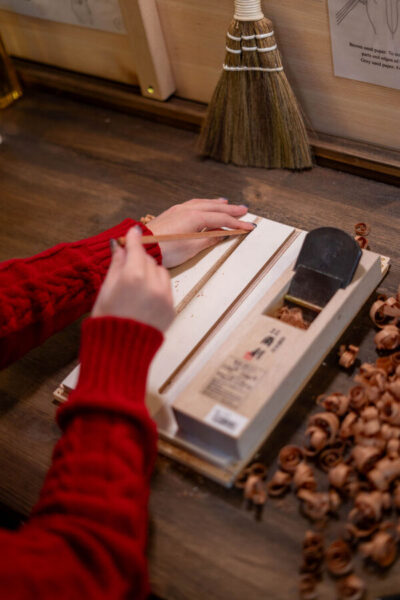
Gion Make Your Own Chopsticks with Engraving Option
Read our review →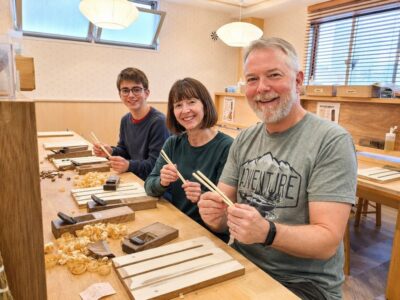
Roll and Authentic Sushi Making Class in Asakusa
Read our review →
Ramen Cooking Class at Ramen Factory in Kyoto
Read our review →
Tokyo Asakusa Chopsticks Workshop: Make Your Own Pair
Read our review →
Ring Making Workshop : Vintage Japanese Coin Ring
Read our review →Browse the lists this tour appears in