
Reviewed · MARKETS AND FOOD HALLS
Tokyo Food Tour Taste Fresh Delights at Tsukiji Market
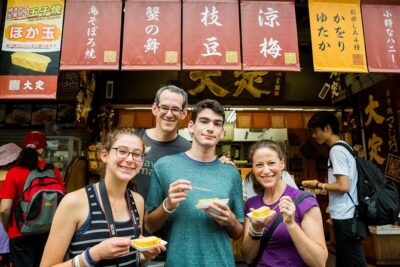
Come hungry, leave happily full. This 2.5-hour Tokyo food tour turns the Tsukiji Outer Market into a moving brunch, with around five to eight tastings along the way. I like the personal guidance from hosts such as Keiko and Miyu, and I like that the food is paired with stories about sushi, Japanese customs, and the market’s past. The one catch is that the market can feel crowded and confusing, so this is not a quiet, slow-paced meal.
You meet near the LAWSON Tsukiji 4 Chome Store and finish inside the Tsukiji Outer Market. I especially like the small-group limit of 12 people, since a guide can adjust food choices and answer questions without losing the group. At $90 per person, the value depends on your appetite and curiosity: you are paying for several tastings, a guided route, cultural context, and help finding stalls you might otherwise walk past.
In This Review
- Key points at a glance
- Why Tsukiji still matters after the inner market moved
- Meeting at LAWSON and getting your bearings
- Eating your way through the Outer Market
- The best part: guidance inside a confusing market
- A cultural tour that works for children
- Shopping, knives, and the final stretch
- Is $90 a fair price?
- What to know before you book
- Who should book the Tsukiji food tour?
- FAQ
- How long does the Tokyo Tsukiji food tour last?
- Where does the tour meet?
- Where does the tour end?
- How many food samples are included?
- What is the maximum group size?
- Can I cancel for a full refund?
Key points at a glance
- Five to eight food samples: Plan for a full brunch, with seafood, sushi, oysters, tamago, sweets, drinks, and other market specialties appearing along the route.
- Keiko and Miyu bring the market to life: Keiko receives especially strong praise for clear English, patience, and adapting tastings to group preferences.
- A useful guide through market chaos: The tour covers both outdoor and indoor areas, helping you manage crowds, signs, queues, and busy food stalls.
- More than a seafood crawl: Depending on the day and group, tastings have included miso cod, puffer fish, ice cream, black tea, and other unusual bites.
- A convenient 2.5-hour introduction: The short format fits neatly into a Tokyo morning or afternoon, and you can continue shopping after the guided portion.
- Small groups make a real difference: The maximum group size is 12, with personalized attention rather than a guide shouting over a large crowd.
Why Tsukiji still matters after the inner market moved
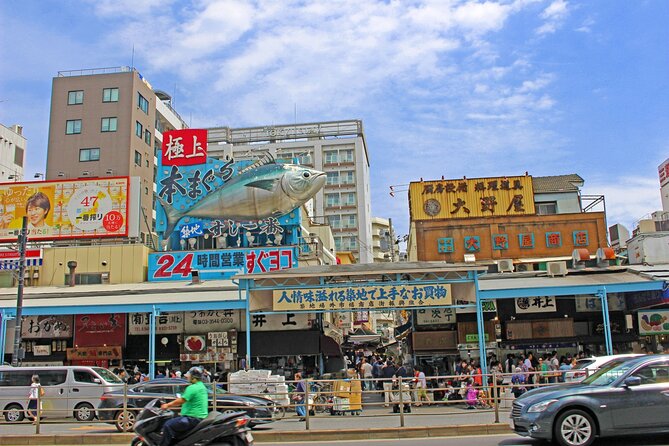
Tsukiji’s famous wholesale inner market relocated, but the Outer Market remains a major place to see Japanese food culture in action. The streets and shops continue to focus on seafood, kitchen goods, prepared food, and ingredients used in everyday cooking.
That distinction matters. You are not touring the old wholesale auction floor. Instead, you are walking through the public-facing market, stopping at food shops and eating as you go. The experience is less about watching a single grand event and more about seeing how many different businesses, ingredients, and eating traditions fit into one compact district.
The guide adds useful order to the scene. Tsukiji has plenty of signs, vendors, queues, and people moving in several directions at once. If you arrive without a plan, you may spend much of your time deciding where to stop. With a guide, you can concentrate on tasting, asking questions, and noticing details around you.
I also like that the tour presents the market through food rather than through a long lecture. You hear about the story of sushi and the role of the fish market while standing among actual stalls. That connection makes the information easier to remember.
More Food Tours in Tokyo
- Tokyo: Shinjuku Food Tour (13 Dishes at 4 Local Eateries)
★ 5.0 · 6,603 reviews - Tokyo: Shinjuku Food Tour (15 Dishes and 4 Eateries)
★ 4.9 · 2,033 reviews - Best of Shinjuku: Izakaya Food Tour (4 Stops, 14+ Tastings)
★ 5.0 · 1,863 reviews
Meeting at LAWSON and getting your bearings
The meeting point is the LAWSON Tsukiji 4 Chome Store at 4-chōme-8-1 Tsukiji, Chuo City, Tokyo 104-0045. This gives you a clear place to begin, but you should still allow enough time to find it without rushing. Confirmation is provided when you book, and the mobile ticket makes it practical to keep the reservation on your phone.
From there, the walking route moves into the market area. Private transportation is not included, and none is really needed for the tour itself. The point is to walk between food shops, so comfortable shoes and a free stomach matter more than arranging a vehicle.
The guide usually begins by explaining what you are seeing and how the market works. This opening orientation is valuable because the food stops are not presented as random snacks. The route connects individual shops with Japanese food customs, market traditions, and the story of sushi.
The group limit is 12 people. That is small enough for questions and personal guidance, though it is not the same as a private tour. If your group has strong preferences, tell the guide early. Keiko has been praised for adjusting the route and tastings around likes and dislikes, which is helpful when one person wants seafood and another is more cautious.
Eating your way through the Outer Market
The central idea is simple: walk, stop, taste, and continue. Around five to eight food samples are included, although the exact selection can vary. This is best treated as brunch rather than a few token nibbles.
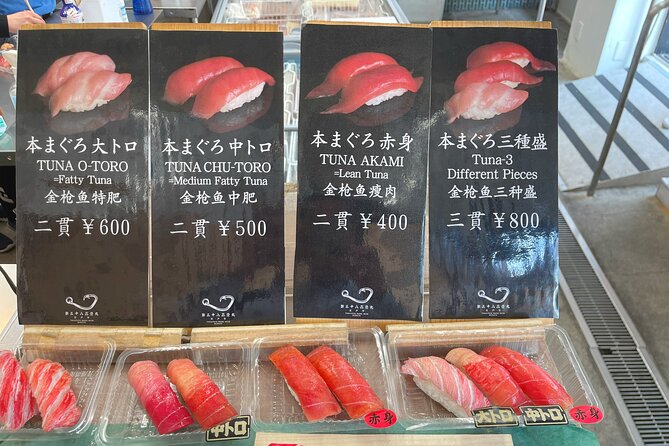
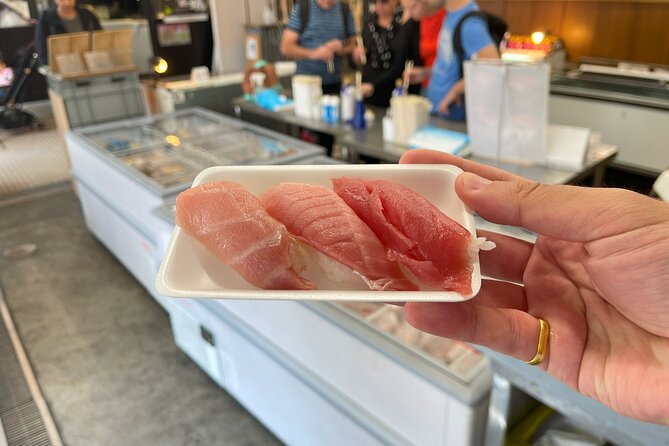
Seafood is a major part of the experience. Tastings have included fresh tuna, sushi, oysters, and miso cod. If you are looking forward to Japanese fish and shellfish, the tour gives you a good range of textures and preparations without requiring you to order full meals at several different stalls.
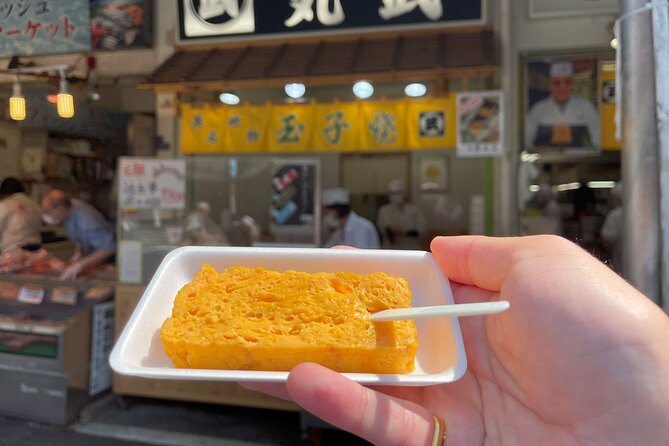
Tamago, or Japanese rolled omelet, has also been a highlight for some groups. It is a useful reminder that Tsukiji is not only about raw fish. The market offers sweet, savory, cooked, chilled, and grilled foods, and the guide can explain what makes each item worth trying.
The food can move beyond familiar choices. Some groups have sampled puffer fish, unusual drinks, black tea with a surprising vanilla-like flavor, and ice cream. These details make the tour more interesting than a standard sushi tasting, but they also point to an important limitation: the precise menu is not fixed in the information provided.
You should therefore expect variety, not a guaranteed checklist. Around five to eight samples are promised, while the exact foods depend on the route, availability, and group preferences. If there is something you cannot eat, tell the guide before accepting a sample.
The tour includes brunch, but drinks and extra purchases may need clarification on the day. Food purchases are handled by the guide during the route, and one group also enjoyed a rooftop lunch at the end. Since the tour ends at the market, you can keep eating or shopping afterward, though many people may already feel quite full.
The best part: guidance inside a confusing market
I see the guide as the main reason to book this experience rather than simply visiting Tsukiji independently. You can certainly walk through the Outer Market alone, but a guide helps you find the stops, manage the pace, and understand what you are eating.
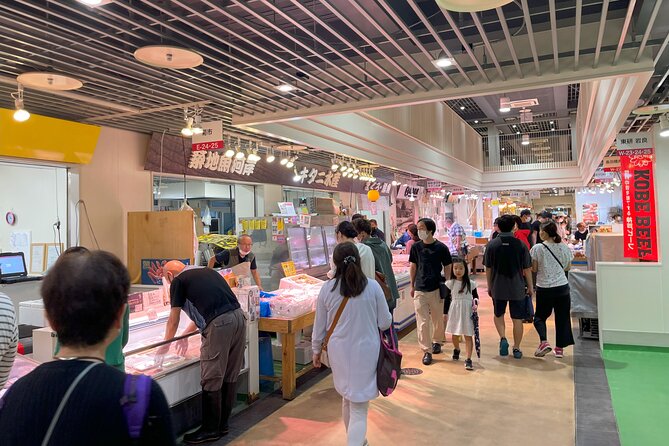
Crowds are part of the setting. Even when the market is described as not especially busy, it can still feel like a swirl of vendors, signs, lines, and pedestrians. A guide who knows the stalls can reduce the mental work. You do not have to keep checking a map while holding food or deciding which shop looks trustworthy.
Keiko receives particularly warm praise for her English, patience, and ability to relate to both adults and children. She has also been described as someone who knows the vendors well and can secure space for the group to eat. That last detail matters because many market shops are small, and standing in the right place can make the difference between a pleasant tasting and a cramped one.
Miyu has also led enjoyable tours, with food education and less familiar items such as puffer fish. The specific guide may vary, so you should not book on the assumption that one named host is guaranteed. Still, the consistent strength is the guide’s role in translating the market into an understandable, friendly experience.
More Markets and Food Halls in Tokyo
- Tokyo Tsukiji Fish Market Food and Culture Walking Tour
★ 5.0 · 3,184 reviews - Tokyo: Tsukiji Fish Market Food and Walking tour
★ 5.0 · 1,724 reviews - Senkyaku Banrai Toyosu Manyo Club Onsen Experience in Tokyo
★ 4.7 · 1,690 reviews - Tokyo: Tsukiji Fish Market Guided Walking Tour
★ 4.9 · 1,397 reviews
A cultural tour that works for children
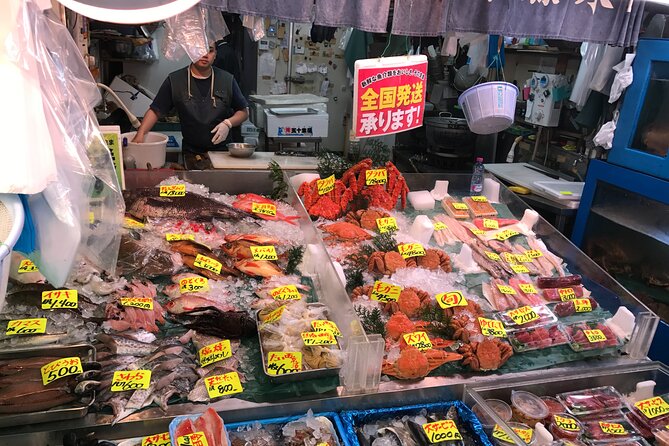
This is not just an adult food crawl. The tour has worked well for families, including groups with toddlers and a 10-year-old child. The food format gives children something concrete to focus on, while the guide can adjust explanations and help them handle the crowded setting.
That said, parents should remember that Tsukiji is a working market. It is not a wide, quiet pedestrian plaza. Young children need close supervision, especially around stalls, queues, and people carrying food or goods.
The short duration is helpful for families. Two and a half hours gives you enough time to see several parts of the market without committing to a full-day activity. If your children are selective eaters, the ability to adjust some stops is a real advantage, though you should not expect the route to become entirely non-seafood.
The same qualities help older family members. The guide leads the walking and explains where to go, while the group can focus on sampling and conversation. Most people can participate, and service animals are allowed.
Shopping, knives, and the final stretch
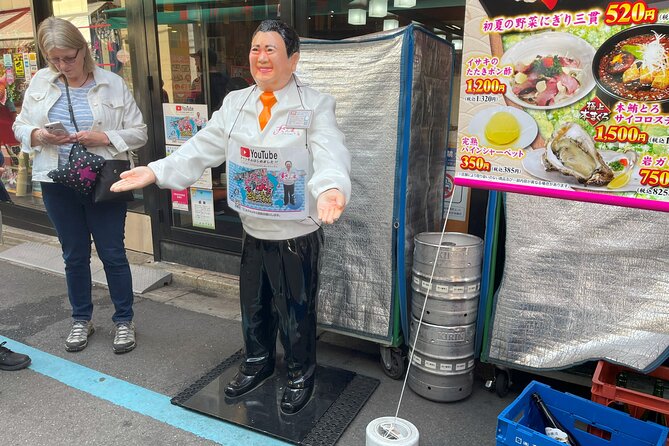
Food is the main event, but Tsukiji is also a shopping district. The route may include shops selling kitchen goods, and one particularly memorable stop has been a Japanese knife store. Even if you are not planning to buy a blade, it gives you another view of the market and Japanese food preparation.
A knife shop also shows why a guided visit can be useful. You may notice a shop on your own, but a guide can explain its place in the cooking culture and help you understand why certain tools matter. Do not feel pressured to buy anything. The tour is meant to help you see and taste the market, not turn the final stop into a sales appointment.
The tour ends at the Tsukiji Outer Market, where you are free to continue shopping. This is one of the better design features of the outing. You get a guided introduction first, then have the option to return to a stall, buy ingredients, browse kitchen goods, or find another snack at your own pace.
The end point also makes the tour easy to combine with the rest of a Tokyo day. Since the activity lasts about 2.5 hours, you can place it into a morning or afternoon schedule without giving up an entire day.
Is $90 a fair price?
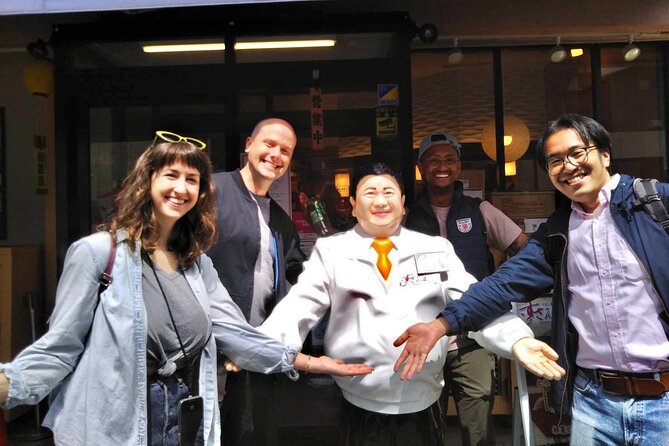
At $90 per person, this is not the cheapest way to eat at Tsukiji. If your only goal is to buy one sushi set or a single oyster, independent visiting will cost less. The tour earns its price through the amount of food, the route planning, and the guide’s help inside a complicated market.
Five to eight tastings can add up quickly, especially when they include premium seafood. You are also getting a full brunch rather than a single sample. The cultural explanations and personal recommendations matter most if you are new to Japanese food or uncertain about ordering from small market stalls.
The value is stronger for first-time visitors, families, and people with limited time. You can learn the basic story of the market, sample a broad selection, and finish with enough orientation to return on your own. The value is weaker if you already know Tsukiji well, speak Japanese comfortably, and enjoy exploring markets without any help.
I would also consider your appetite. The tour is generous enough that you should not schedule a large meal immediately afterward. Some people leave very full, which is a pleasant problem, but it may be too much food for someone who prefers a light breakfast.
What to know before you book
Wear shoes suited to walking and crowded surfaces. The tour is on foot, and you will move between food shops rather than sit in one restaurant for the whole experience.
Arrive at the LAWSON meeting point with your mobile ticket ready. The market can be distracting from the moment you enter, so finding the guide first will save time.
Tell the guide about allergies, dislikes, or food concerns at the start. The route can be adapted to group preferences, but the experience is largely seafood focused.
Keep your schedule flexible after the tour. The official duration is approximately 2 hours and 30 minutes, and the final market stop may tempt you to continue shopping or eating.
The activity requires good weather. If poor weather forces a cancellation, you are offered another date or a full refund. For your own cancellation, you can receive a full refund if you cancel at least 24 hours before the start time. Changes or cancellations inside that window are not accepted.
Who should book the Tsukiji food tour?
I would choose this tour if you want a friendly introduction to Tokyo’s food culture without spending half a day planning a market route. It is especially well suited to first-time visitors, families, seafood fans, and anyone who wants to try foods that are easy to miss when walking alone.
I would also recommend it to people who enjoy learning through eating. The strongest moments come from the combination of a bite and an explanation: sushi with market history, tamago with food tradition, or a knife shop with a look at Japanese kitchen culture.
I would skip it if you want a private, quiet meal or complete control over every dish. A group of up to 12 moves through a busy public market, and the exact food selection is not fixed. You should also think twice if seafood is not appealing, since fish and shellfish play a large role in the route.
For most visitors, though, the combination of guidance, generous tastings, and a useful finishing point makes this a strong Tokyo food introduction. Book it early in your stay, then use what you learn to return to Tsukiji on your own.
FAQ
How long does the Tokyo Tsukiji food tour last?
The tour lasts approximately 2 hours and 30 minutes.
Where does the tour meet?
The meeting point is the LAWSON Tsukiji 4 Chome Store at 4-chōme-8-1 Tsukiji, Chuo City, Tokyo 104-0045, Japan.
Where does the tour end?
The tour ends at the Tsukiji Outer Market. You can continue shopping there after the guided portion.
How many food samples are included?
Around five to eight food samples are included. The selection can vary and is largely focused on seafood, with other foods and drinks also possible.
What is the maximum group size?
The tour has a maximum of 12 participants.
Can I cancel for a full refund?
Yes. You can cancel at least 24 hours before the experience start time for a full refund. Poor weather cancellations offer either another date or a full refund.
Just added in Tokyo
- A One-of-a-Kind Sushi Experience in a Special Place of Japan★ 5.0 · 15 reviews
- Tokyo Cute Bento Cooking Class – Make a Kawaii Character Lunchbox★ 5.0 · 126 reviews
- Japanese Home Cooking Class & Walk in Todoroki Temple Tokyo★ 5.0 · 88 reviews
- Japan Tokyo Tower Observatory Deck E-Ticket★ 4.0 · 34 reviews
- Catch a Baseball Game in Tokyo with a Local – Tickets Included★ 5.0 · 24 reviews
- Tokyo Private Day Tour by Car with English speaking Driver Guide★ 4.0 · 29 reviews
- Japan Classic 10 Day – One Life Adventures★ 5.0 · 129 reviews
- JDM Experience with Fast&Furious RX-7 (English speaking Driver)★ 5.0 · 57 reviews
Markets and Food Halls, compared.
Tokyo Tsukiji Fish Market Food and Culture Walking Tour
Read our review →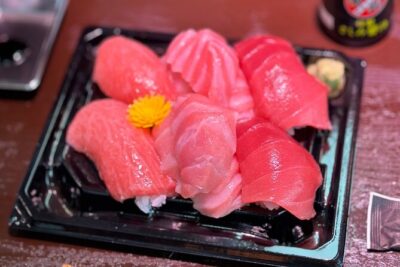

Senkyaku Banrai Toyosu Manyo Club Onsen Experience in Tokyo
Read our review →
Nishiki Market Brunch Walking Tour (7 Tastings + Brunch)
Read our review →
Tokyo Sushi Making Class in Tsukiji with Professional Chef
Read our review →
Tsukiji Fish Market Guided Tour and Sushi Making with Pro Chef
Read our review →Browse the lists this tour appears in