Reviewed · TOKYO TOURS
Tokyo Japanese Calligraphy Experience with a Master Artist
Brushes can turn silence into art. This Tokyo calligraphy class gives you hands-on practice with shodo, the traditional Japanese art of brush writing, under master calligrapher Eizuru Matsumura. I like the calm studio setting and the chance to work with real brushes, ink, and paper rather than simply watch a demonstration. I also like that an English-speaking guide helps you from Umeyashiki Station to the studio and back.
The main drawback is the price: at $92.24 per person, this is not a cheap one-hour activity. The session is also advertised as approximately 90 minutes, so you should not expect a long course in Japanese calligraphy. Still, the small group size, personal instruction, equipment, and finished work you can keep give the experience real value for the right visitor.
- A five-minute walk from Umeyashiki Station: You meet near the Keikyu Line and walk to the studio with assistance.
- Instruction from Eizuru Matsumura: The calligrapher teaches both basic and creative calligraphy and has worked in workshops, events, and television programs.
- A quiet, small-group setting: The class allows no more than 10 participants, with a minimum of two people for a booking.
- All materials are supplied: You use the brush, ink, and paper needed for the lesson.
- Suitable for children from age seven: Children must attend with an adult.
- A practical cultural souvenir: You get to keep the calligraphy you create during the session.
In This Review
- Why This Tokyo Calligraphy Class Feels Different
- Reaching the Studio Near Umeyashiki Station
- Meeting Calligrapher Eizuru Matsumura
- What You Actually Do During the 90-Minute Session
- A Small Studio and a Calm Pace
- How Much Value Do You Get for $92.24?
- The English Guidance Makes the Difference
- Children, Families, and Different Skill Levels
- What to Know Before You Book
- Who Should Book This Calligraphy Experience?
- Should You Book It?
- FAQ
- Where does the calligraphy experience take place?
- Where do I meet the guide?
- How long does the activity last?
- What is included in the price?
- Is hotel pickup included?
- What age can children join?
- How many people can join the class?
- Do I need previous calligraphy experience?
- Can I cancel for a refund?
Why This Tokyo Calligraphy Class Feels Different
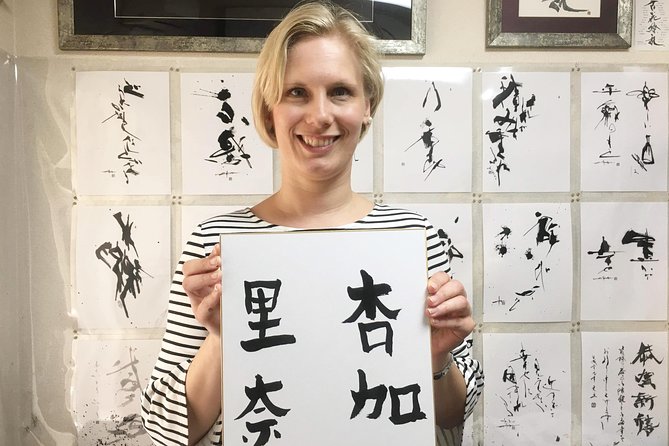
Many cultural activities in Tokyo move at the speed of the city. This one asks you to slow down. You sit with a brush, prepare your hand, and pay attention to pressure, direction, and balance.
That change of pace is the real appeal. You are not just looking at a finished scroll in a museum. You are trying to create the marks yourself, with guidance from someone who has spent years studying and practicing the craft.
The setting also matters. The class takes place at 球鶴書道教室, a calligraphy school near Umeyashiki Station in Ota City. The studio is described as a small, quiet space with gentle music. That makes it a better fit for you if you like focused activities and a calm break from Tokyo’s crowds.
The class also connects traditional and modern Japan. Shodo was once closely linked with nobles and samurai, but Matsumura also works as an artist and teaches creative forms of calligraphy. His experience includes workshops, public events, television programs, and the official logo for a Kyokushin Karate World Tournament pamphlet.
Reaching the Studio Near Umeyashiki Station
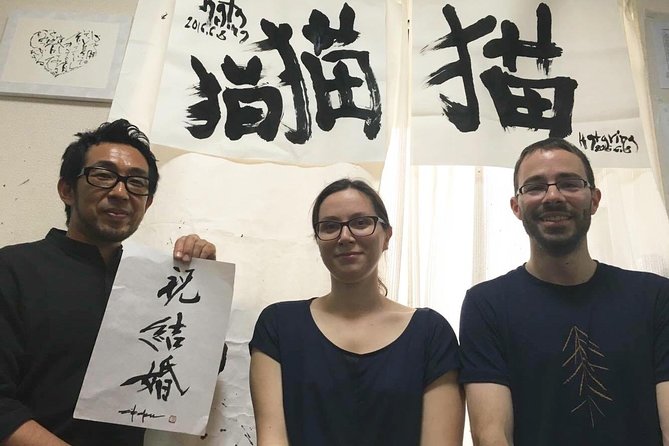
Your meeting point is Umeyashiki Station on the Keikyu Line, at 2 Chome-28 Kamata, Ota City. The school is about a five-minute walk from the station.
That short walk should be easy in practical terms, but the guide makes an important difference. English-speaking guides have met participants at the station, helped them get their bearings, and led them to the studio. The same guide accompanies you back to the station afterward.
I like this arrangement because a small local studio can be harder to find than a major Tokyo attraction. You do not have to spend part of your paid class time searching for an address or worrying about a wrong turn.
There is no hotel pickup included. A hotel pickup can be arranged for an extra 6,000 yen, but private transportation by taxi, car, or bus is otherwise not part of the standard price. For most people, the train meeting point is the sensible choice.
Allow enough time to reach Umeyashiki Station. Your confirmation arrives within 48 hours of booking, subject to availability, and the activity is often booked well ahead of time, around 37 days in advance on average.
A few more options to weigh up in Tokyo
- Tokyo Disney Resort – Tokyo Disneyland & Tokyo DisneySea Park Tickets
★ 4.8 · 99,488 reviews - SHIBUYA SKY Ticket
★ 4.7 · 46,509 reviews - JR Whole Japan Rail Pass
★ 4.8 · 29,150 reviews
Meeting Calligrapher Eizuru Matsumura
At the studio, you meet Eizuru Matsumura, the calligrapher leading the lesson. His background gives the class more depth than a basic craft workshop.
Matsumura teaches from beginner level through creative calligraphy. He has practiced calligraphy since the age of 31 and also works as an artist and lecturer. His work on a Kyokushin Karate World Tournament logo shows how calligraphy can function as design, not only as formal handwriting.
That is useful context for you. Japanese characters are not simply letters written with a brush. The shape, spacing, speed, and force of each stroke affect the final work. A character can look controlled, bold, delicate, or expressive depending on how the brush is used.
The available feedback describes Matsumura as patient, kind, funny, and talented. Those qualities matter in a class where beginners may feel awkward at first. You need an instructor who can correct your technique without making the session feel stiff or intimidating.
The English guide or translator also helps connect the instruction to your own questions. Guides named in the feedback include Michiko and Yoko, both praised for meeting participants at the station and helping throughout the visit. The exact guide may vary, so you should not book expecting one particular person unless the provider confirms it.
What You Actually Do During the 90-Minute Session
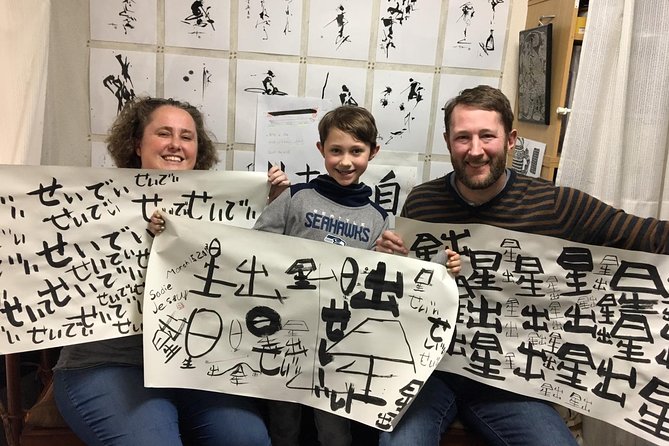
The activity lasts approximately one hour and 30 minutes. The detailed school visit is listed as one hour, so the full timing likely includes meeting, walking, and the class itself. The description also notes that longer sessions may be estimates, so I would treat the schedule as flexible rather than expecting a precise two-hour lesson.
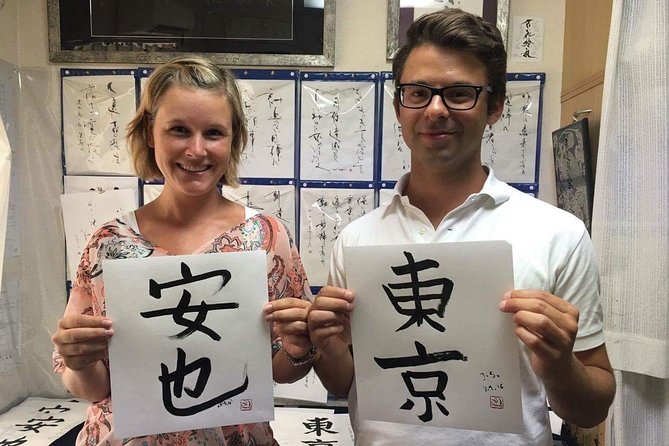
You begin by getting settled in the studio and learning about the basic tools. The essential set is simple: brush, ink, and paper. These materials are supplied, so you do not need to bring equipment or buy a starter kit.
The lesson then moves into brush practice. You learn how to place the brush on the paper, control the stroke, and create Japanese characters in an artistic form. The point is not to copy a character once and call it done. You practice the movement and adjust your technique with the master’s help.
The class includes both traditional and contemporary cultural context. You learn why shodo has been valued in Japan and how the art continues to be used in modern creative work.
You should expect to make several attempts. Some may be uneven. That is part of the appeal. Calligraphy rewards concentration more than speed, and the process gives you a clear reason to stop rushing.
The most useful outcome is not perfect handwriting. It is an understanding of how much control goes into a single brushstroke. By the end, you may have a piece you are proud to keep, even if it has the charming irregularities of something made by hand.
A Small Studio and a Calm Pace
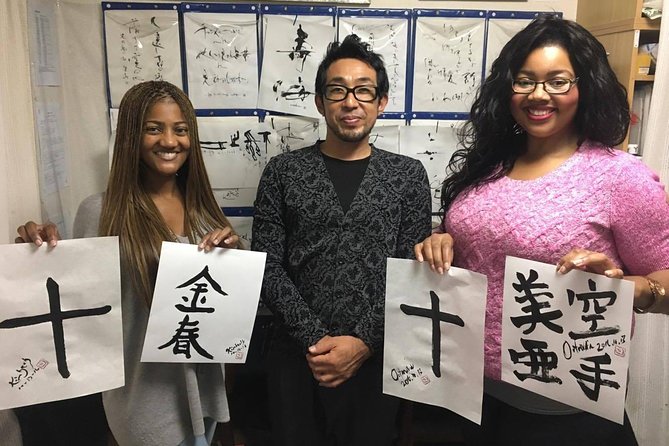
The studio atmosphere is one of the strongest parts of this experience. A small room with gentle music creates a focused mood, and the group limit of 10 keeps the class from becoming a large demonstration.
Small does not always mean private. If the class reaches its maximum size, you will still be sharing the instructor’s attention. Even so, 10 people is a manageable limit for a hands-on activity, especially when the guide assists with English communication.
The contemplative quality may appeal to you if you enjoy yoga, drawing, music, or other activities that depend on concentration. One participant compared the experience with yoga and music, a useful way to understand the mood. You are working with your hands, but your attention is also on breathing, timing, and restraint.
This is not the best pick if you want nonstop sightseeing or a lively group performance. It is a seated studio activity with a quiet rhythm. That is exactly why it can work well near the end of a busy Tokyo trip.
One participant described it as a calming and focusing way to finish a two-week stay in Japan. I can see why. After trains, department stores, temples, and crowded crossings, a controlled brushstroke offers a welcome change of pace.
A completely different kind of day out:
- Mt Fuji and Hakone 1-Day Bus Tour Return by Bullet Train
★ 5.0 · 26,383 reviews - TOKYO SKYTREE® Ticket
★ 4.7 · 25,136 reviews - teamLab Borderless Tickets: MORI Building DIGITAL ART MUSEUM
★ 4.7 · 24,126 reviews - teamLab Planets TOKYO Ticket
★ 4.7 · 21,663 reviews
How Much Value Do You Get for $92.24?
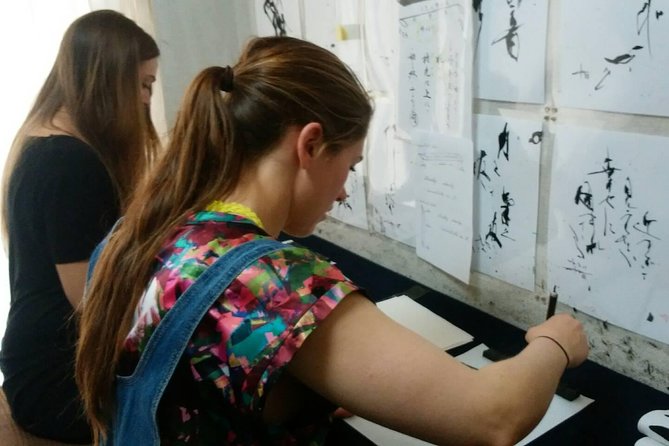
At $92.24 per person, the cost is higher than a casual souvenir-making class. You are paying for more than materials, though. The price includes a professional guide, English assistance, all necessary equipment, access to a master calligrapher, and a small-group setting.
The finished artwork also has value. Several participants appreciated being able to keep what they made. Unlike a mass-produced souvenir, your piece carries a direct memory of the time spent in the studio. It may not be museum quality, but it is yours.
The personal guidance is the key factor. If you were only watching a demonstration, I would find the price harder to justify. Here, you use the tools yourself and receive instruction as you work.
The class is especially good value for you if you want cultural understanding rather than another Tokyo photo stop. It also suits families, couples, and small groups who want one shared activity. Group discounts are available, although the exact saving is not given, so check the price for your party before booking.
The value is weaker if you already practice Japanese calligraphy or expect advanced instruction. One dissatisfied participant was a professional artist who wanted more time and refinement. The teacher and guide were praised, but the length and course expectations did not match that participant’s needs.
For a first introduction, the price is easier to defend. For an advanced workshop, you should ask the provider about the exact lesson length and level before paying.
The English Guidance Makes the Difference
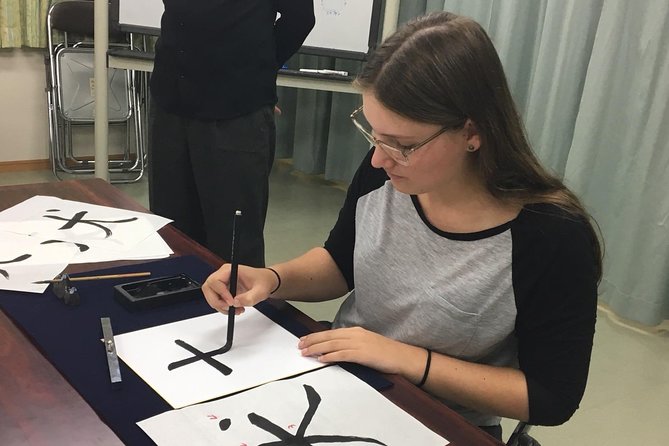
The English guide is not just a language convenience. It helps the entire visit run smoothly.
Guides have met participants at the station, walked them to the studio, interpreted the master’s instructions, and returned them to the meeting point. That support is useful because calligraphy instruction depends on small details. A brief explanation about hand position or brush pressure can be easy to miss if you are working across a language barrier.
The personal care also shows up in small moments. One guide noticed a participant’s birthday, arranged a song, and helped make the occasion special. Another helped a visitor find the station before leading the walk to the studio.
You should still remember that this is an English-guided activity, not necessarily an English-only private class. With up to 10 participants, the amount of individual translation and instruction can depend on the group.
Children, Families, and Different Skill Levels
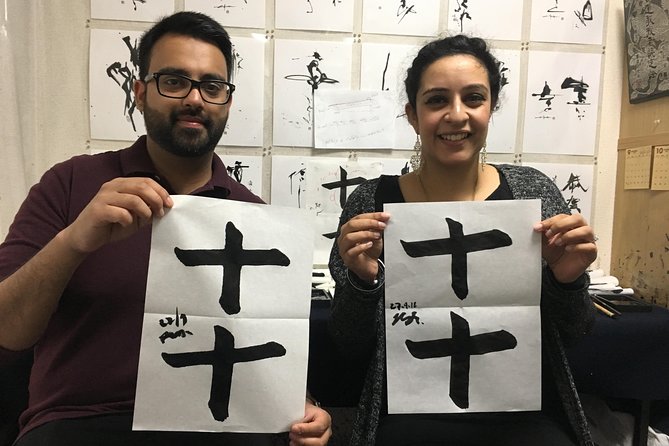
The minimum age is seven, and children must be accompanied by an adult. That makes the activity an option for families who want something more hands-on than a standard sightseeing stop.
A nine-year-old participant worked on her name and other characters. That detail suggests that children can take part meaningfully, especially when the lesson is adjusted to a beginner’s level.
You should consider your child’s attention span. The class takes place in a quiet studio and asks for patience. A child who enjoys drawing, crafts, or careful handwork may get a lot from it. A child who needs constant movement may find the pace slow.
Beginners are welcome. The school offers instruction from basic to creative calligraphy, and the teacher is described as patient with first-time students. You do not need previous experience.
The activity also suits adults who want a gentle cultural lesson. One participant described developing a new love for Japanese calligraphy after the class. That is a good sign for anyone who wants to try something unfamiliar without committing to a full course.
What to Know Before You Book
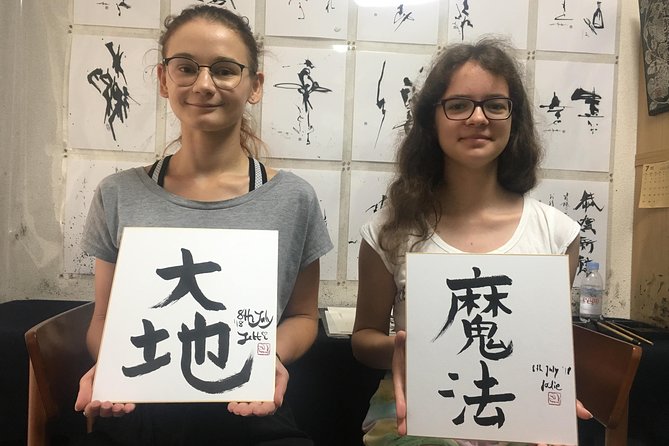
Book this as a focused cultural session, not as a full-day class. The listed duration is about 90 minutes, while the school portion is listed as one hour, and timing may be approximate.
Plan your route to Umeyashiki Station carefully. The station meeting point is convenient on the Keikyu Line, but hotel pickup is not included. If you choose hotel pickup, add 6,000 yen to the tour price.
The activity requires at least two participants for a booking and allows no more than 10 people. Most people can participate, and the minimum age is seven with an accompanying adult.
Free cancellation is available up to 24 hours before the start time. If you cancel or request changes inside that 24-hour window, you will not receive a refund. The cut-off follows Tokyo local time.
The strongest practical tip is to allow a little breathing room around the appointment. You do not want a train delay or a wrong exit to turn a calm art lesson into a race.
Who Should Book This Calligraphy Experience?
I would recommend this class to you if you want:
- A quiet break from Tokyo’s busy streets
- A first introduction to Japanese calligraphy
- Direct instruction rather than a simple demonstration
- A meaningful handmade souvenir
- An activity suitable for adults and children from age seven
- A small-group cultural experience with English help
- A gentle way to finish a Japan trip
I would be more cautious if you want a long, advanced lesson or a private session. The approximate timing may feel short to an experienced artist, and the $92.24 price needs to be weighed against your interest in hands-on instruction.
The class also works best when you approach it with patience. Your first strokes may wobble. That is not failure. It is a useful reminder that Japanese calligraphy is a physical skill, not just a decorative font.
Should You Book It?
Yes, if you want to slow down and make something with your own hands. The combination of a patient master, English-speaking support, supplied materials, and a small Tokyo studio creates a personal cultural experience.
I would book it as a special activity for a couple, family, or small group, especially near the end of a busy trip. I would not choose it for advanced artistic training or if your schedule cannot handle approximate timing.
At 97 percent recommended and a 4.9 rating from 35 ratings, the experience has a strong record. The one serious complaint points to an important lesson: confirm what duration and level you are buying. For a beginner seeking a calm introduction and a souvenir with personal meaning, this is a worthwhile use of an hour and a half in Tokyo.
FAQ
Where does the calligraphy experience take place?
It takes place at 球鶴書道教室 in Tokyo, about a five-minute walk from Umeyashiki Station on the Keikyu Line.
Where do I meet the guide?
The meeting point is Umeyashiki Station, listed at 2 Chome-28 Kamata, Ota City, Tokyo 144-0052, Japan.
How long does the activity last?
The experience lasts approximately one hour and 30 minutes. The school visit itself is listed as one hour, so the total timing includes the meeting and walk.
What is included in the price?
The price includes a professional guide, an English guide, and all necessary calligraphy equipment.
Is hotel pickup included?
No. Hotel pickup and drop-off are not included. Hotel pickup can be arranged for an additional 6,000 yen.
What age can children join?
The minimum age is seven. Children must be accompanied by an adult.
How many people can join the class?
The minimum number for a booking is two people, and the maximum group size is 10 participants.
Do I need previous calligraphy experience?
No previous experience is stated as a requirement. The school provides instruction ranging from basic to creative calligraphy.
Can I cancel for a refund?
Yes. You can cancel up to 24 hours before the experience start time for a full refund. Cancellations or changes made less than 24 hours before the start time are not accepted for a refund.
Just added in Tokyo
- Very popular in Harajuku♡Animal petting zoo★ 4.6 · 39 reviews
- Yokohama Port: Private Customizable Tour with Transfer★ 5.0 · 19 reviews
- Wagyu & Sake 8 Course Tasting Dinner in Shinjuku★ 4.9 · 20 reviews
- Warner Bros. Studio Tour Tokyo – The Making of Harry Potter★ 4.8 · 181 reviews
- Yanaka District: Historical Walking Tour in Tokyo’s Old Town★ 4.8 · 117 reviews
- Tokyo: Classic Tsukiji Food Tour★ 4.9 · 78 reviews
- Tokyo: Tsukiji Fish Market Tour with 6 Stops & Seafood Lunch★ 4.5 · 165 reviews
- Tokyo Wagyu & Sake Pairing Tasting Experience with Local Flavors★ 5.0 · 108 reviews
Tokyo Tours, compared.

Tokyo Disney Resort – Tokyo Disneyland & Tokyo DisneySea Park Tickets
Read our review →
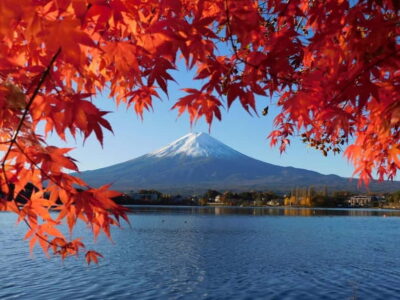
Mt Fuji and Hakone 1-Day Bus Tour Return by Bullet Train
Read our review →

teamLab Borderless Tickets: MORI Building DIGITAL ART MUSEUM
Read our review →