
Reviewed · WORKSHOPS
Tokyo Keen Japanese Knife and Sashimi Workshop
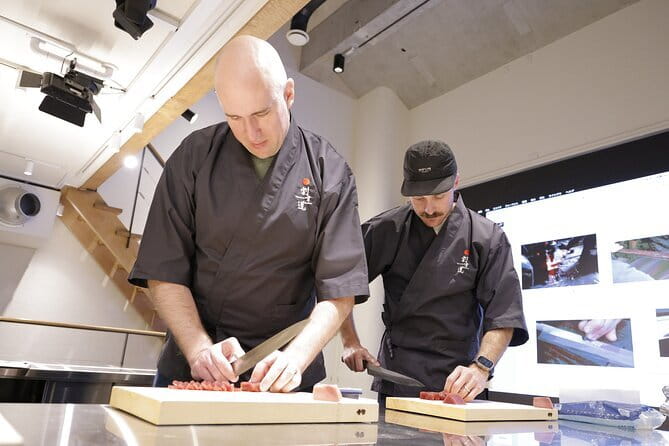
Sharp knives tell a story. This compact Tokyo workshop brings you close to Japanese knife culture through knife-making traditions, sharpening practice, sashimi cutting, and a lunch you prepare yourself. I especially like the hands-on practice and the way the class connects tools with food, rather than treating a Japanese knife as a souvenir. I also like that lunch, drinks, an apron, tools, and a participation certificate are included.
The main consideration is time. At about two hours, this is an introduction, not a full professional course. You will learn useful methods, but you should not expect to master sashimi presentation or whetstone sharpening in one sitting. The $130.78 price also feels easier to justify if you value instruction and lunch, not just the meal.
In This Review
- Key points at a glance
- Why this Tokyo class is more than a cooking lesson
- The opening lesson: how Japanese knives are made
- Watching the demonstration before picking up the knife
- Whetstone sharpening for first-time students
- Making zuke-don, then sitting down to eat
- What the small group changes
- Is $130.78 a fair price?
- Who should book this workshop?
- Practical planning for your Tokyo day
- The best parts, and the limits
- Should you book the Tokyo Keen Japanese Knife and Sashimi Workshop?
- FAQ
- Where does the workshop begin and end?
- How long does the experience last?
- How many people can join the class?
- Is lunch included?
- Is sake included?
- Do I need previous knife-sharpening experience?
- Are tools and aprons provided?
- Can I cancel for a full refund?
Key points at a glance
- Small class size: The workshop accepts no more than eight people, so you should have a fair chance to practice rather than only watch.
- Real knife work: You learn how Japanese knives are made, how they fit into Japanese culture, and how their cutting style differs from familiar Western methods.
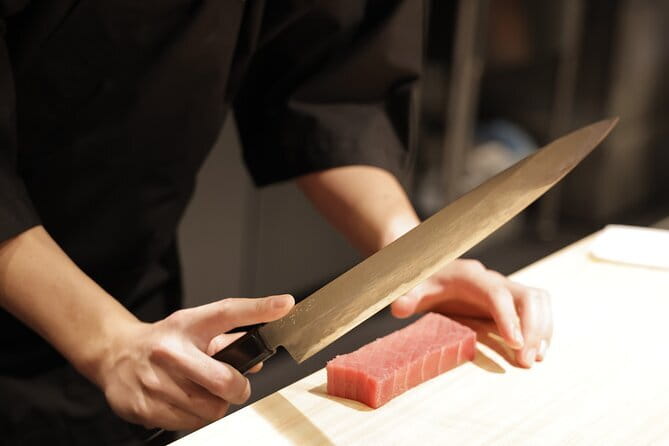
- Sashimi and zuke-don: You cut sashimi, marinate the fish, and prepare a rice bowl topped with the fish you worked with.
- Whetstone practice: Sharpening is part of the lesson, even for first-timers, with help from the instructor.
- A meal and sake tasting: Your finished tuna bowl, miso soup, and a taste of Kappodo’s original sake are included.
- Useful shopping perk: You receive 10 percent off purchases at the first-floor shop on the day of your workshop.
Why this Tokyo class is more than a cooking lesson
Many food classes in Tokyo focus on recipes. This one begins with the tool itself. That change of emphasis matters because Japanese cooking places great value on the knife’s edge, the angle of the cut, and the way a cook handles the ingredient.
You begin at Kappodo H.Q., also identified as the Tokyo D Kitchen Studio, in Nishiazabu, Minato City. The address is 2-chome 21-12 DK Building, Tokyo 106-0031. The studio is near public transportation, but private transportation is not included, so you need to make your own way there.
The class is capped at eight people. That is a useful limit for a lesson involving sharp blades and whetstones. A very large class would turn the practical parts into a quick demonstration followed by a long wait. Here, you should expect a more direct chance to handle the knife and repeat the movements.
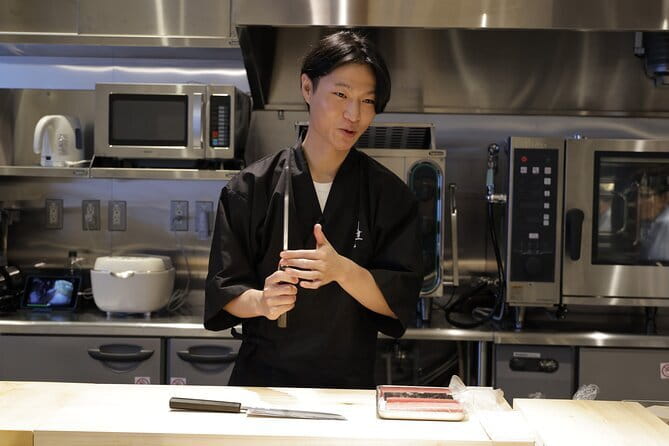
The teaching is available in Japanese and English, with interpretation when needed. Chef Naoya and interpreter Hiromi are specifically associated with the class. Hiromi’s role is important for a subject that depends on small movements and precise explanations. One participant described the instruction as patient and detailed, and that matches what you should want from this type of workshop.
A few more options to weigh up in Tokyo
- Tokyo Disney Resort – Tokyo Disneyland & Tokyo DisneySea Park Tickets
★ 4.8 · 99,488 reviews - SHIBUYA SKY Ticket
★ 4.7 · 46,509 reviews - JR Whole Japan Rail Pass
★ 4.8 · 29,150 reviews
The opening lesson: how Japanese knives are made
The first part explains how a Japanese knife is made and the customs surrounding these knives. This gives you useful context before you pick one up. You learn that the object in your hand is not simply a kitchen utensil. Its construction, edge, care, and handling all affect how it performs.
The class also introduces different types of Japanese knives. The exact selection is not specified, so you should think of this as an overview rather than a chance to study every blade used in a Japanese kitchen. Still, the lesson helps explain why a knife designed for clean sashimi cuts behaves differently from the general-purpose knife in many home kitchens.
I like this part because it makes the later practice easier to understand. When the instructor shows a particular grip or cutting motion, you know it is connected to the blade’s design. You are not just copying a hand movement without context.
This section may feel less active than the cutting practice. If you came mainly to eat, the opening explanations could seem long. If you are curious about Japanese food culture, they give the meal more meaning.
Watching the demonstration before picking up the knife
Next, the instructor demonstrates Japanese knife work. Watch closely here. The style may differ from what you use at home, and the cutting motion is central to the class.
You then use a Japanese knife to cut sashimi yourself. This is the moment when the lesson becomes practical. You can feel how sharp the blade is and learn how the knife should move through the fish. The goal is not merely to make pieces small enough to eat. It is to cut the sashimi cleanly and understand why the motion matters.
The class allows repeated practice. That is one of its strongest features. A single demonstration can look easy, but your first attempt may not feel natural. Having the instructor correct your movement and let you try again is far more useful than watching a polished chef work at full speed.
The workshop is also friendly to people from outside Japan. The instruction is presented in Japanese and English, and the presence of an interpreter helps with questions. Still, this is a class about technique, so pay attention to the visual demonstration as well as the spoken explanation.
Whetstone sharpening for first-time students
While the fish marinates, you learn to sharpen a Japanese knife with a whetstone. This is a smart use of the waiting time, and it gives the workshop a second practical skill beyond sashimi preparation.
Sharpening can be intimidating. You need to control the angle, keep the blade steady, and avoid rushing. The class is designed to support beginners, and the instructor helps even if you have never used a whetstone.
You should leave with a better sense of what sharpening involves, but keep your expectations sensible. Two hours is enough for an introduction and guided practice. It is not enough to turn a first-time student into a knife sharpener who can confidently restore every blade at home.
The value here is that you learn care, not just performance. A good knife needs maintenance. If you buy a Japanese knife during your trip, this lesson may help you treat it properly instead of putting it in a drawer and forgetting about it.
A completely different kind of day out:
- Mt Fuji and Hakone 1-Day Bus Tour Return by Bullet Train
★ 5.0 · 26,383 reviews - TOKYO SKYTREE® Ticket
★ 4.7 · 25,136 reviews - teamLab Borderless Tickets: MORI Building DIGITAL ART MUSEUM
★ 4.7 · 24,126 reviews - teamLab Planets TOKYO Ticket
★ 4.7 · 21,663 reviews
Making zuke-don, then sitting down to eat
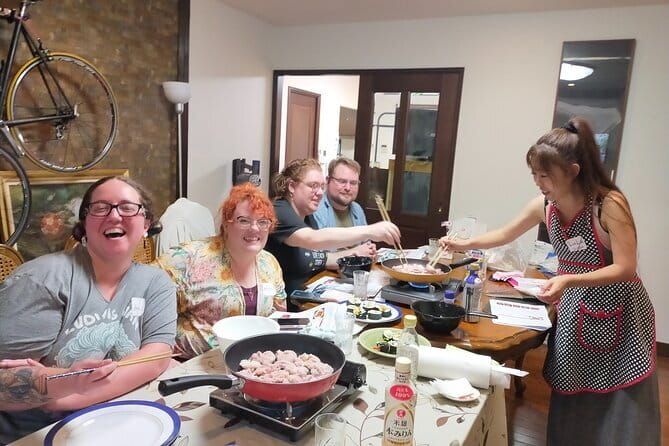
After the knife practice, you prepare zuke-don. This dish consists of rice topped with marinated sashimi, usually tuna, though the fish can change depending on availability.
The process ties together the earlier parts of the class. You have learned about the blade, cut the sashimi, and then use that fish in a simple dish. While it marinates, you work on sharpening. By the time the meal is ready, you have seen how knife technique affects the food on your plate.
The finished lunch includes the tuna bowl you made and miso soup. You can also taste Kappodo’s original sake. Some class feedback also describes enjoying tea, but the listed inclusion is an alcoholic beverage tasting, so you should treat sake as the confirmed drink offering.
This is a satisfying format for a short class. You are not watching someone else cook a meal while you stand nearby. You eat the result of your own cutting and preparation. That creates a small but real sense of achievement, even if your sashimi slices are not as neat as the instructor’s.
The food is also practical. Zuke-don is a dish you can recreate at home, provided you have suitable fish and a sharp knife. The class does not only give you a pleasant lunch in Tokyo. It gives you a simple idea for using the skills later.
What the small group changes
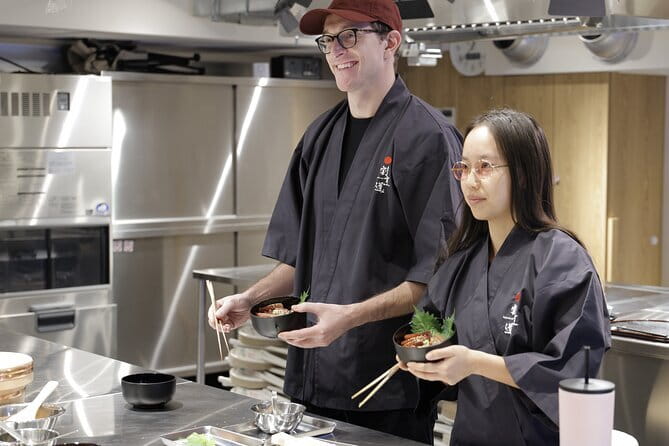
With a maximum of eight people, the workshop has the right size for close instruction. You should have room to watch the demonstration and take your turn with the tools. A smaller group can also make it easier to ask questions about knife care, cutting style, or Japanese food customs.
The tradeoff is that small-group availability may be limited. This experience is booked, on average, 46 days ahead. That does not guarantee every date sells out, but it is a clear reason to plan early, especially if your Tokyo schedule is fixed.
The class is not private. If you book alone or as a couple, you may work alongside other participants. That can be a plus if you enjoy a social lesson, but it means the pace may be shared rather than set entirely around your own interests.
Group discounts are available. Since the regular listed price is $130.78 per person, a discount could matter for couples, families, or friends booking together. Check the price shown for your date and group size before deciding.
Is $130.78 a fair price?
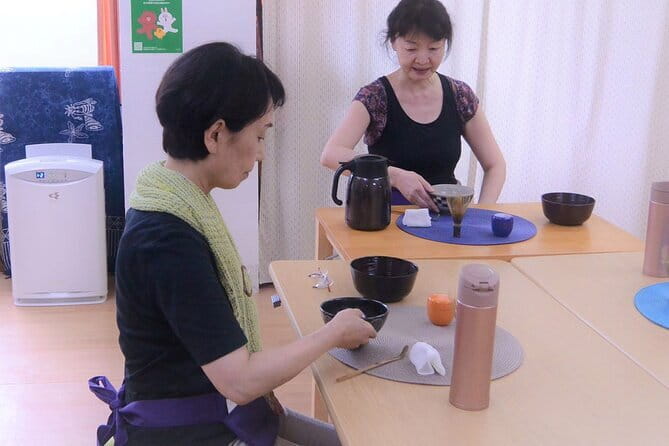
At first glance, $130.78 is a serious price for a two-hour activity. The value becomes clearer when you count what is included: an instructor and interpreter, use of the tools and apron, guided knife practice, sashimi preparation, whetstone instruction, lunch, miso soup, sake tasting, and a participation certificate.
You are paying for access to instruction, not only ingredients. A restaurant meal might cost less, but it would not teach you how the knife is made, how to sharpen it, or how to cut sashimi. A basic cooking class might also cost less, but it may not include specialist knife work.
The certificate is a pleasant extra, though I would not use it as the main reason to book. The stronger value is the chance to practice under supervision and ask questions while using a Japanese knife.
The 10 percent same-day discount at the first-floor shop may add value if you are considering a purchase. Do not let the discount pressure you into buying. Use the class to learn what type of knife feels suitable, then decide based on your cooking habits and luggage plans.
For a visitor who already owns Japanese knives and knows how to sharpen them, the class may feel less worthwhile. For a beginner who wants cultural context and a meal, the package is easier to defend.
Who should book this workshop?
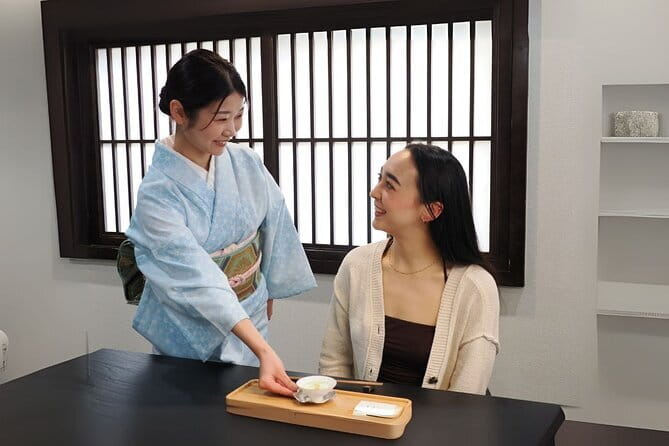
I would recommend it most strongly to:
- People interested in Japanese food beyond restaurant meals
- Home cooks who want to understand knife care
- First-time visitors looking for a practical cultural activity
- Couples, friends, or small groups who enjoy learning together
- Anyone curious about sashimi preparation but not ready for a full-day course
It is less suitable if you dislike raw fish, have no interest in handling kitchen knives, or want a long cooking session with several recipes. The workshop centers on one dish and a focused set of knife skills.
Families should consider the age and comfort level of each participant. The class involves sharp knives and a whetstone, and the maximum group size is eight. The supplied information does not specify a minimum age, so ask the provider before booking for children.
You also need to be comfortable with a lesson that mixes demonstration, explanation, practice, and lunch. It is not a quick photo opportunity. You will need to concentrate.
Practical planning for your Tokyo day
Allow time to reach Nishiazabu and find DK Building before the start. The meeting and ending point are the same, at Kappodo H.Q. and the Tokyo D Kitchen Studio. Since private transportation is not included, plan your public transport route in advance and avoid arriving at the last moment.
Wear something suitable for a cooking class. Aprons and all lesson tools are supplied, but the details of clothing requirements are not specified. A practical outfit is a sensible choice whenever you will be preparing food and handling a sharp knife.
The class lasts about two hours. That makes it easy to fit into a Tokyo day, but do not schedule a major attraction immediately afterward if you want time to find the studio, settle in, and finish the meal without rushing.
Confirmation is provided at booking. The activity requires a minimum number of participants, so a cancellation is possible if that minimum is not reached. In that case, you are offered another date or experience, or a full refund.
Free cancellation is available up to 24 hours before the local start time. If you cancel or request changes later than that, you generally will not receive a refund, so check your plans carefully before the cutoff.
The best parts, and the limits
The most praised elements are consistent: the instruction is patient, the teachers are friendly, and the practice is genuinely hands-on. The class earns its strongest marks when it lets you repeat a technique until it makes more sense.
The combination of Japanese and English instruction is another practical strength. Chef Naoya provides the technical lesson, while Hiromi helps make the information accessible to international participants. That pairing is especially helpful when discussing sharpening angles and cutting methods.
The biggest limit is the short format. You will not cover every Japanese knife type or become an expert in sashimi presentation. You may also find the price high if you judge the activity only by the amount of food served.
I would treat the meal as the pleasant finish, not the whole product. The workshop’s real purpose is to show you how Japanese knives fit into cooking culture and daily practice.
Should you book the Tokyo Keen Japanese Knife and Sashimi Workshop?
Book it if you want a focused, well-supported introduction to Japanese knives, especially if you enjoy learning by doing. The small group, patient instruction from Naoya and Hiromi, repeated cutting practice, whetstone lesson, and zuke-don lunch give the two hours a clear purpose.
Skip it if you want a cheap meal, a broad Japanese cooking course, or a relaxed activity with no sharp tools. At $130.78, this is a specialist experience, but the included lunch, drinks, equipment, and instruction make the cost reasonable for the right audience.
My practical advice is to reserve early, particularly since bookings often happen 46 days ahead. If you leave Tokyo wanting a better knife, use what you learned before shopping, then take advantage of the same-day 10 percent discount only if the purchase makes sense for you.
FAQ
Where does the workshop begin and end?
The workshop begins and ends at Kappodo H.Q., also called the Tokyo D Kitchen Studio, at DK Building in Nishiazabu, Minato City, Tokyo 106-0031.
How long does the experience last?
The workshop lasts approximately two hours.
How many people can join the class?
The activity has a maximum of eight participants.
Is lunch included?
Yes. You prepare and eat a zuke-don bowl, usually made with tuna or another available fish, and miso soup is included.
Is sake included?
Yes. The experience includes a tasting of Kappodo’s original sake.
Do I need previous knife-sharpening experience?
No. The workshop includes instruction with a whetstone, and the instructor helps beginners.
Are tools and aprons provided?
Yes. All tools and aprons used during the lesson are included.
Can I cancel for a full refund?
You can cancel up to 24 hours before the local start time for a full refund. Later cancellations and changes are not accepted for a refund, and the activity may also be rescheduled or refunded if its minimum number of participants is not reached.
Just added in Tokyo
- Very popular in Harajuku♡Animal petting zoo★ 4.6 · 39 reviews
- Yokohama Port: Private Customizable Tour with Transfer★ 5.0 · 19 reviews
- Wagyu & Sake 8 Course Tasting Dinner in Shinjuku★ 4.9 · 20 reviews
- Warner Bros. Studio Tour Tokyo – The Making of Harry Potter★ 4.8 · 181 reviews
- Yanaka District: Historical Walking Tour in Tokyo’s Old Town★ 4.8 · 117 reviews
- Tokyo: Classic Tsukiji Food Tour★ 4.9 · 78 reviews
- Tokyo: Tsukiji Fish Market Tour with 6 Stops & Seafood Lunch★ 4.5 · 165 reviews
- Tokyo Wagyu & Sake Pairing Tasting Experience with Local Flavors★ 5.0 · 108 reviews
Workshops, compared.
Sushi Making Tokyo Roll and Authentic Japanese Sushi Class
Read our review →
Gion Make Your Own Chopsticks with Engraving Option
Read our review →
Roll and Authentic Sushi Making Class in Asakusa
Read our review →
Ramen Cooking Class at Ramen Factory in Kyoto
Read our review →
Tokyo Asakusa Chopsticks Workshop: Make Your Own Pair
Read our review →
Ring Making Workshop : Vintage Japanese Coin Ring
Read our review →Browse the lists this tour appears in