
Reviewed · WORKSHOPS
Tokyo: Knife Making Workshop (Sharpening, Engraving)
A knife can tell a story.
At BUB Activity Center in Asakusa, you spend 90 minutes learning how Japanese kitchen knives are sharpened, choosing a blade, attaching its handle, and engraving your name in Japanese. I especially like the hands-on sharpening practice and the chance to leave with a useful souvenir rather than another decorative trinket. The friendly English-speaking staff, including guides such as Lisa, Joe, Mori, and Agata, also earn high marks for patient instruction.
The main consideration is price: at $161 per person, this is not a cheap craft class. Larger knife styles cost extra, and the standard knife has a simple handle that may not satisfy someone seeking a finely finished collector’s piece. Still, for cooks, families, and anyone curious about Japanese tools, it offers more substance than a quick shopping stop.
In This Review
- Key points to know before you book
- Arriving at the BUB Activity Center in Asakusa
- The haori, name badge, and first cup of tea
- The opening lesson on knives and Japanese swords
- Choosing between five knife types
- Sharpening the blade, the real work of the class
- Engraving your name and attaching the handle
- Why the staff make such a difference
- What you take home
- Is $161 a fair price?
- Who should book this Asakusa workshop?
- Practical booking advice
- Should you book the Tokyo knife workshop?
- FAQ
- Where does the knife-making workshop take place?
- How long does the activity last?
- Do I need previous knife-sharpening experience?
- Which knife is included in the price?
- Can I bring a friend who does not participate?
- Can I take the knife on the airplane?
Key points to know before you book
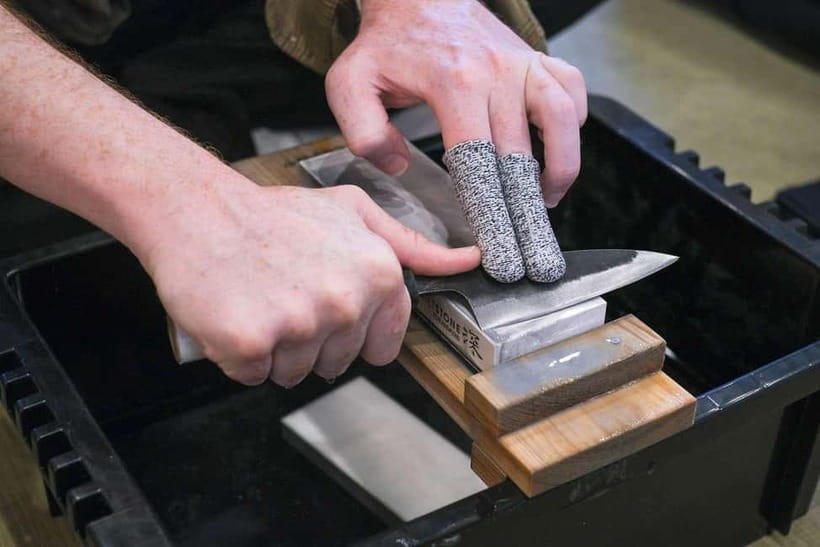
- You sharpen the blade yourself: The process takes focus and some elbow grease, but staff watch your technique and offer polite corrections.
- The standard knife is a practical choice: It is described as a multitasking knife, suitable for everyday kitchen use.
- Five knife types may be available: Usuba, deba, and petit yanagiba styles require a small additional payment.
- Your name becomes part of the handle: You can engrave Japanese letters, a picture, or another simple design with help from the staff.
- The workshop connects knives with sword culture: The opening talk covers Japanese knives, katana, and differences from Western swords.
- Bring it home carefully: Put the knife box in checked luggage, or ask the staff about shipping it.
Arriving at the BUB Activity Center in Asakusa
The workshop takes place at BUB Activity Center, at 2 Chome 6-11 in Asakusa’s Heiwa Building. You need the elevator to the fifth floor. The building is easy to reach by public transport, but the entrance may not look like a grand craft studio from the street, so keep the full address handy.
I like the location because Asakusa already gives you plenty to do before or after the class. You can pair the workshop with temples, traditional shopping streets, and Tokyo’s kitchenware district. The knife class works especially well before a shopping visit, since you will understand more about blade shapes and sharpening instead of simply choosing the prettiest handle.
Allow a few extra minutes to find the building and get upstairs. If you have trouble, the activity provider asks you to contact the staff. The room is wheelchair accessible, and the instruction is offered in English.
A few more options to weigh up in Tokyo
- Tokyo Disney Resort – Tokyo Disneyland & Tokyo DisneySea Park Tickets
★ 4.8 · 99,488 reviews - SHIBUYA SKY Ticket
★ 4.7 · 46,509 reviews - JR Whole Japan Rail Pass
★ 4.8 · 29,150 reviews
The haori, name badge, and first cup of tea
When you arrive, you put on a light haori, a short Japanese jacket, to help protect your clothes from stains. It also gives the class a pleasant sense of occasion without turning it into a stiff ceremony.
You receive a badge with your name written in Japanese letters. This is a small touch, but it helps set up the engraving later. You are not just sharpening a generic object; you are preparing a knife with a personal mark.
The session begins with tea, juice, or another soft drink, along with Japanese snacks. That opening pause gives you time to settle in before handling tools. Alcohol and drugs are not allowed, which is sensible for a workshop involving sharp blades and hammers.
The opening lesson on knives and Japanese swords
Before you choose your blade, the instructor explains the cultural background of Japanese knives and swords. The talk includes the difference between Japanese katana and Western swords, as well as the role of different kitchen knives.
This part matters because the blade options are not simply different sizes. A usuba, deba, and petit yanagiba are designed for different kitchen tasks, while the standard multitasking knife offers a more flexible choice for everyday use. The introduction helps you understand what you are holding before you start working on it.
The English support is one of the strongest parts of the class. Mori and Agata have been praised for clear, fluent explanations, while Lisa and Joe are noted for keeping the mood relaxed and helping people who feel unsure. You do not need prior experience, and the staff adapt their explanations to your level of English.
If you have a question about Japanese terms, this is a good time to ask. The class also offers a small chance to learn Japanese language basics through your name and the engraving process.
Choosing between five knife types
You choose the blade you want to sharpen, with up to five types available. The standard multitasking knife is included in the price. Some larger or more specialized styles cost extra, specifically usuba, deba, and petit yanagiba.
I would treat the standard knife as the sensible starting point. It gives you a useful blade for home cooking and keeps the advertised price under control. If you already cook often or want a knife suited to a particular task, paying the small add-on for a different style may make sense.
Ask what each knife is best for before making your choice. A specialized blade may look more distinctive, but it may also be less practical for general use. The class is partly a craft activity and partly a buying lesson, so do not feel pushed toward the largest option.
You also choose the knife size. That matters for comfort, storage, and how you expect to use it at home. If your main aim is a personal souvenir, the standard size may be enough. If you want a tool for regular cooking, think about what you already use in your kitchen.
A completely different kind of day out:
- Mt Fuji and Hakone 1-Day Bus Tour Return by Bullet Train
★ 5.0 · 26,383 reviews - TOKYO SKYTREE® Ticket
★ 4.7 · 25,136 reviews - teamLab Borderless Tickets: MORI Building DIGITAL ART MUSEUM
★ 4.7 · 24,126 reviews - teamLab Planets TOKYO Ticket
★ 4.7 · 21,663 reviews
Sharpening the blade, the real work of the class
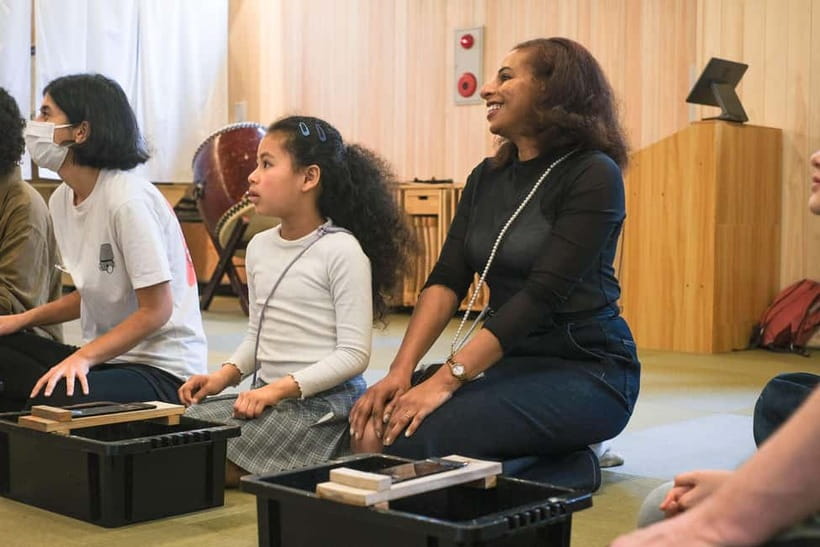
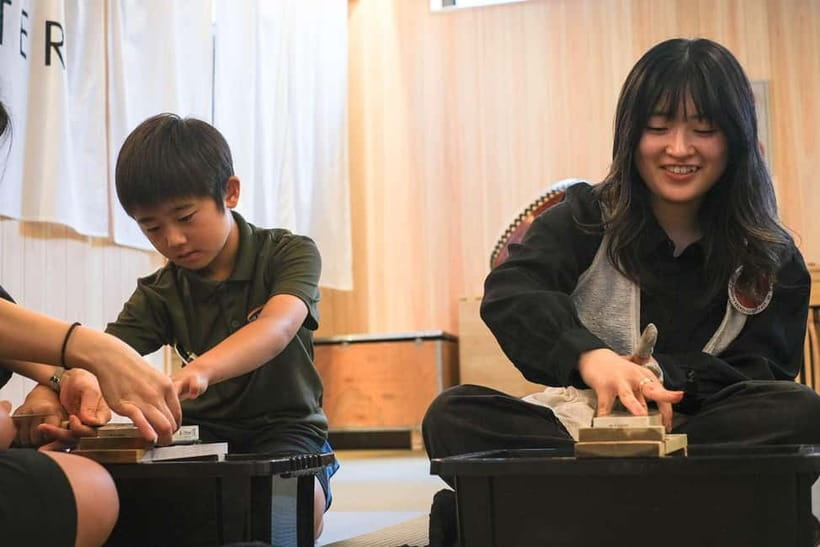
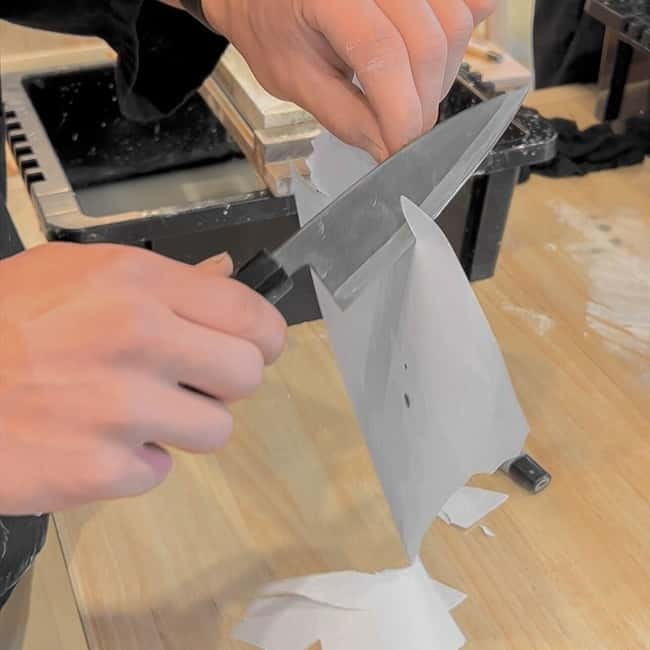
The sharpening stage is the heart of the workshop. You work the blade against the sharpening surface, concentrating on your angle and movement while staff check your technique.
This is not a quick demonstration where you watch an instructor make a knife sharp in five minutes. You do the work yourself. Several people describe it as harder than expected, but also satisfying because you can see the result develop under your hands.
I like this part because it gives the souvenir a real connection to your effort. You are not simply buying a Japanese knife in a shop. You are learning a maintenance skill that can help you care for the blade long after your Tokyo visit.
The process rewards patience. If your movements are not quite right, staff correct you politely and show you how to adjust. That close help makes the class suitable for beginners, including children who can follow instructions and work with adult supervision. A 10-year-old participant was able to enjoy the activity with a parent.
Do not expect to master professional sharpening in one session. Ninety minutes is enough to learn the basic motion and understand the concentration required, but not enough to turn you into a seasoned knife maker. Think of it as a guided introduction with a finished knife at the end.
Engraving your name and attaching the handle
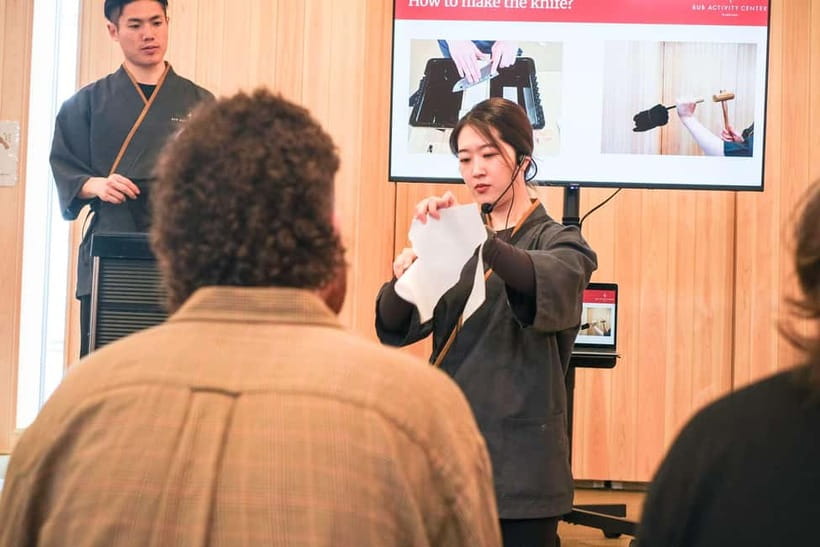
After sharpening, you personalize the handle. The main option is engraving your name in Japanese letters, using the badge you received at the start as a reference. Staff can help with the Japanese basics, which makes the name more than a random set of marks.
You may also engrave a picture or another design. The available method is hands-on and traditional in feel, so the final result may have a handmade look. That is part of the charm, but it also means the engraving may not be perfectly uniform.
The handle is attached with a traditional hammer. The sound of the hammer finishing the knife is one of the memorable details of the session. It gives the final stage a clear sense of completion, especially after the slower sharpening work.
One point to keep in mind is handle quality. One participant felt the handle could be improved and wished for more engraving methods. If you want a flawless luxury finish, you may find the standard handle a little plain. If you value a personal object made during your trip, its small imperfections may feel appropriate.
Why the staff make such a difference
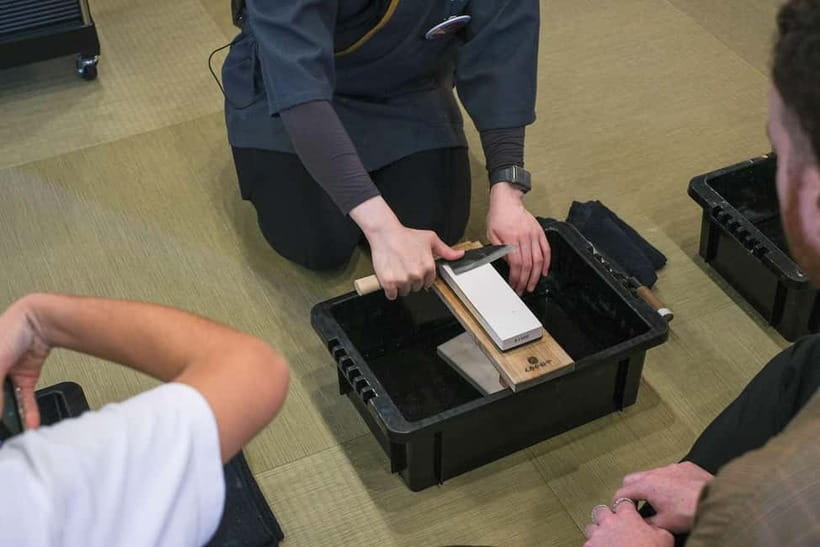
The tools matter, but the instructors shape the experience. The class works because staff stay close, explain each step, and keep conversation going while you polish the blade.
Lisa and Joe have been singled out for their teaching and teamwork. Mori and Agata also receive praise for energy, patience, and excellent English. Other staff members help with engraving, so you are not left waiting if you need assistance.
The tone is friendly rather than formal. There are jokes, casual conversation, and plenty of encouragement. That makes a difference when your first sharpening movements feel awkward. You can ask for help without feeling that you are slowing everyone down.
The class can sometimes run longer than the planned 90 minutes if the group needs extra help. That can be useful, though you should not schedule another important appointment immediately afterward. One participant had to leave early, and staff helped finish the knife, but it is wiser to leave some breathing room in your day.
What you take home
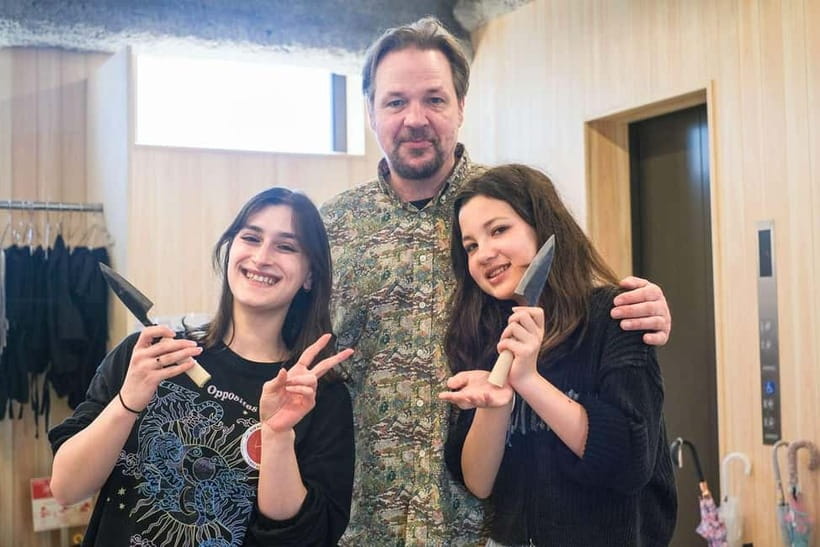
The standard booking includes a knife, customized crafting session, drinks, Japanese snacks, attractive packaging, and a customized key holder with a unique design. The package helps protect the knife and makes it easier to present as a gift.
The knife is the main souvenir, of course. It is practical, personal, and tied to a specific place in Tokyo. You can use it at home, display it, or give it to a friend. One participant planned to place the finished knife in a shadow box, which shows that it can work as a display piece even if you are reluctant to use it.
The key holder is a nice extra rather than the reason to book. The snacks and tea also add comfort, but they should not be treated as a meal. Eat beforehand if you need something substantial.
Pay attention to the travel rules for the finished knife. Put the knife box into your checked luggage, or ask the staff about shipping it. Do not plan to carry it casually through airport security or pack it in your hand luggage.
Is $161 a fair price?
At $161 per person, the cost is high for a 90-minute activity. The value depends on what you want from it.
If you only want to buy a Japanese kitchen knife, you can likely find other shopping options in Tokyo. If you want a short cultural talk, guided sharpening, personalized engraving, drinks, snacks, packaging, and a finished knife, the price becomes easier to justify.
The strongest value comes from participation. You learn a useful maintenance skill, make decisions about the blade, and put your own mark on the handle. That is quite different from purchasing a ready-made souvenir.
The price also works better for someone who enjoys craft and food culture. If you are not interested in cooking, blades, or hands-on work, you may find the class expensive for the object you take home. Companions who only want to watch can attend by paying an observation fee on site, which may be useful when two people want to share one knife-making session.
Specialized knife upgrades are an extra cost, so set your budget before arriving. The standard knife is the best way to keep spending predictable.
Who should book this Asakusa workshop?
I would recommend it to:
- Home cooks who want to understand sharpening and knife care.
- Families with older children who enjoy guided practical activities.
- Couples or friends looking for a shared souvenir rather than separate shopping.
- Visitors interested in Japanese craft who prefer making something to simply buying it.
- People with a connection to Japanese food who want a tool they can use after returning home.
It is less suitable if you want a quiet museum visit, a polished luxury product, or a full lesson in professional knife forging. You sharpen and assemble a prepared knife. You do not forge the blade from raw steel.
The workshop is also a good choice if rainy weather disrupts your outdoor plans. The activity takes place indoors and lasts about an hour and a half, with a central Asakusa location that is easy to combine with other sightseeing.
Practical booking advice
Free cancellation is available up to 24 hours before the activity for a full refund. You can also reserve now and pay later, which helps if your Tokyo schedule is still changing.
Check the available starting times before booking. The listed duration is approximately 90 minutes, but allow extra time for the building, introductions, and possible help at the end.
Wear clothes you do not mind protecting with the provided haori. You do not need previous sharpening experience. Bring curiosity, patience, and enough room in your luggage for the boxed knife.
If someone wants to come only to watch, ask about the observation fee before the session. This can be a practical arrangement when one person wants a knife and another wants to share the activity without taking home a second blade.
Should you book the Tokyo knife workshop?
Book it if you want a personal, useful Tokyo souvenir and enjoy learning by doing. The patient English-speaking staff, the short lesson on knives and swords, and the chance to engrave your name make the session feel more meaningful than a standard shopping trip.
Skip it if $161 feels too steep for a basic knife, or if you are hoping to forge a blade from scratch. Also keep the handle concern and upgrade fees in mind.
For cooks, families, and craft-minded visitors, this is a strong Asakusa activity. You leave with a knife that carries your effort, your chosen design, and a small piece of Japanese tool culture. That is a much better story than simply saying you bought another souvenir.
FAQ
Where does the knife-making workshop take place?
It takes place at BUB Activity Center in the Heiwa Building at Tokyo, Taito-ku, Asakusa, 2 Chome 6-11. Take the elevator to the fifth floor.
How long does the activity last?
The activity lasts approximately 90 minutes.
Do I need previous knife-sharpening experience?
No. The workshop is suitable for beginners, and bilingual staff guide you through the sharpening, engraving, and handle assembly.
Which knife is included in the price?
A standard-size multitasking knife is included. Usuba, deba, and petit yanagiba knives require an additional fee.
Can I bring a friend who does not participate?
Yes. An observation fee applies on site if a relative or friend comes to watch without making a knife.
Can I take the knife on the airplane?
Put the boxed knife in your checked luggage, or ask the staff about shipping it. Do not place it in your hand luggage.
Just added in Tokyo
- A One-of-a-Kind Sushi Experience in a Special Place of Japan★ 5.0 · 15 reviews
- Tokyo Cute Bento Cooking Class – Make a Kawaii Character Lunchbox★ 5.0 · 126 reviews
- Japanese Home Cooking Class & Walk in Todoroki Temple Tokyo★ 5.0 · 88 reviews
- Catch a Baseball Game in Tokyo with a Local – Tickets Included★ 5.0 · 24 reviews
- Japan Tokyo Tower Observatory Deck E-Ticket★ 4.0 · 34 reviews
- JDM Experience with Fast&Furious RX-7 (English speaking Driver)★ 5.0 · 57 reviews
- Tokyo Private Day Tour by Car with English speaking Driver Guide★ 4.0 · 29 reviews
- Japan Classic 10 Day – One Life Adventures★ 5.0 · 129 reviews
Workshops, compared.
Sushi Making Tokyo Roll and Authentic Japanese Sushi Class
Read our review →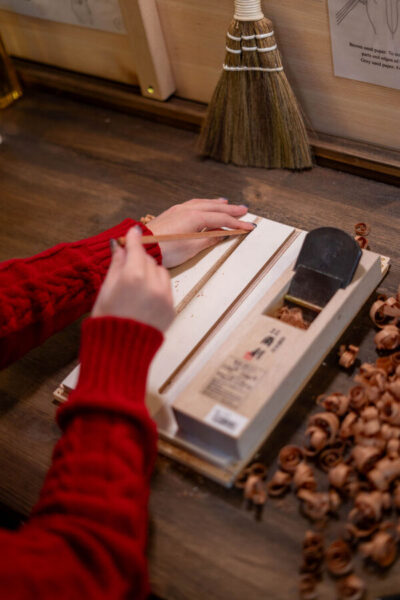
Gion Make Your Own Chopsticks with Engraving Option
Read our review →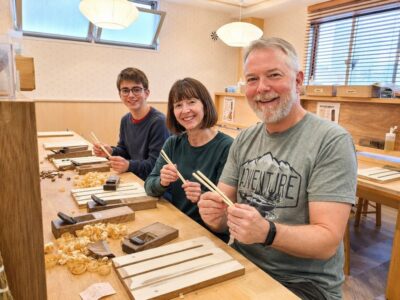
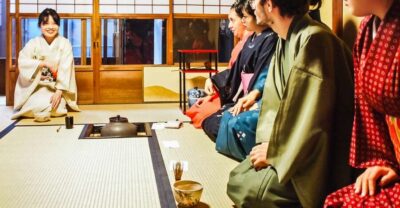
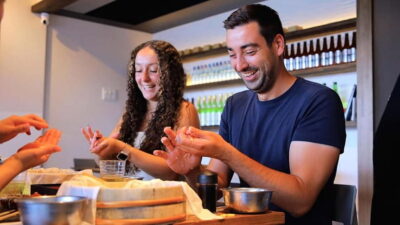
Roll and Authentic Sushi Making Class in Asakusa
Read our review →
Ramen Cooking Class at Ramen Factory in Kyoto
Read our review →
Tokyo Asakusa Chopsticks Workshop: Make Your Own Pair
Read our review →
Ring Making Workshop : Vintage Japanese Coin Ring
Read our review →Browse the lists this tour appears in