
Reviewed · WORKSHOPS
Tokyo: Making a Lantern Workshop in Asakusa with a Craftsman
Make a lantern, keep the memory. This two-hour workshop takes you into a more personal side of Tokyo, where a 100-plus-year-old family atelier still makes Japanese chochin lanterns by hand. I like the use of real bamboo, washi paper, glue, and brushes, rather than tourist-grade craft materials. I also like that you leave with a finished lantern, not just a quick demonstration.
The setting near Tokyo Skytree gives the experience a strong local feel, and the small family business has earned a perfect 5.0 rating from 20 published ratings. Guides including Rinka and Noriko have helped make the session easy for English speakers, while the artisans provide the hands-on instruction. The main thing to watch is the meeting point: it changes during the January, May, and September Grand Sumo Tournament periods.
In This Review
- Why this lantern workshop deserves a place in your Tokyo plans
- Entering a 100-year-old lantern atelier
- Learning what makes a chochin different
- Working with bamboo and washi paper
- Decorating your own colorful lantern
- What the two-hour schedule feels like
- The important venue change during sumo tournaments
- Is $96 a fair price?
- Who will enjoy this most?
- My advice for making your lantern
- Should you book the Tokyo lantern workshop?
- FAQ
- How long does the lantern workshop last?
- What materials are included?
- Is the workshop suitable for children?
- Where is the workshop located?
- Is English assistance available?
- What should I bring and wear?
Why this lantern workshop deserves a place in your Tokyo plans
- A century-old craft setting: You work inside a traditional lantern atelier rather than a large modern activity center.
- Real chochin techniques: The workshop uses bamboo frames and washi paper, with guidance from a working lantern master.
- A useful two-hour pace: There is enough time for decorating and calligraphy without turning the class into an all-day project.
- A personal souvenir: Your completed lantern is packaged for the journey home and can become a display piece.
- Friendly English support: English-speaking guides or interpreters help you communicate with the Japanese artisans.
- Flexible for many types of visitors: The class suits families with children age 6 and older, solo visitors, couples, and creative adults.
Entering a 100-year-old lantern atelier
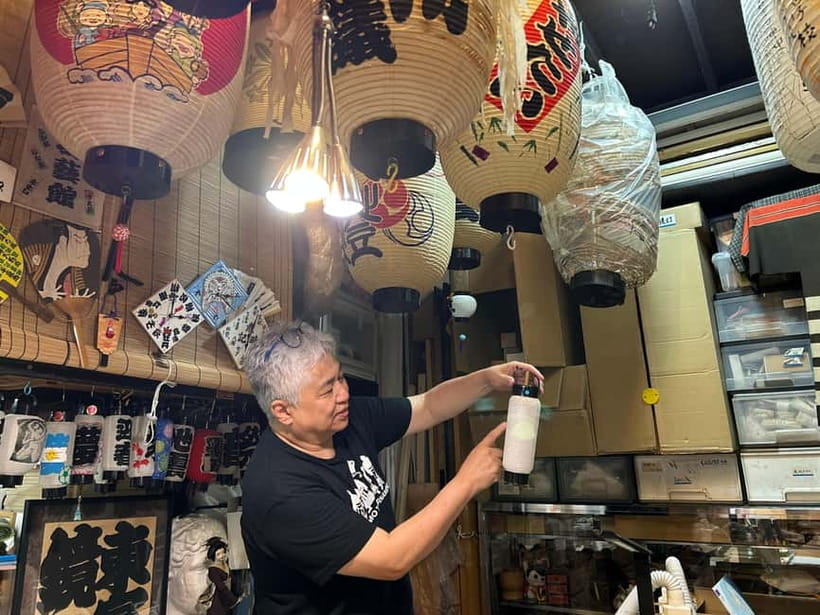
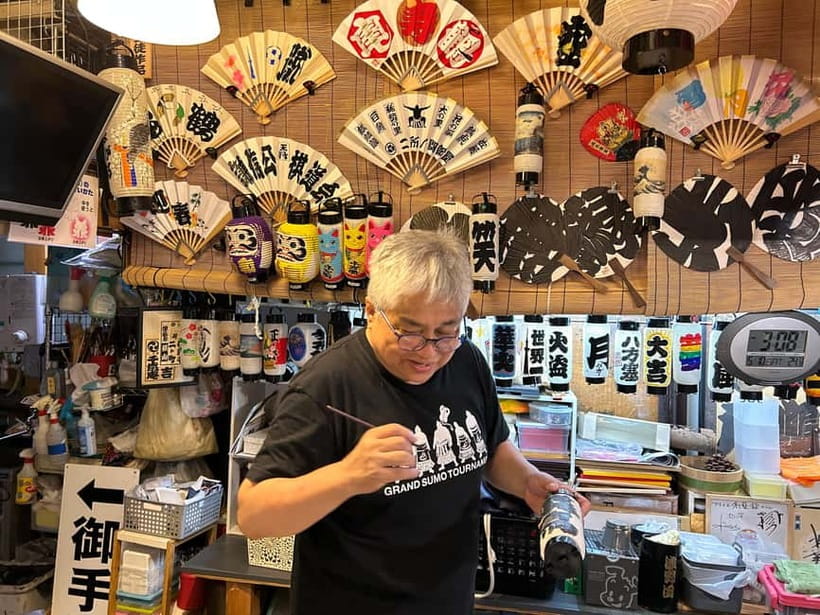
The appeal begins before you pick up a brush. The regular workshop is at 2-10-8 Yokokawa in Sumida City, close to the Tokyo Skytree and Oshiage Station area. You are not simply sitting in a generic classroom. You are entering a working craft space filled with paper lanterns in different shapes, sizes, and colors.
That visual setting matters. Chochin lanterns are familiar across Japan, but seeing many of them gathered in the place where they are made helps explain why this craft is more than a souvenir motif. The lanterns have a light, delicate look, yet the process calls for careful work and a steady hand.
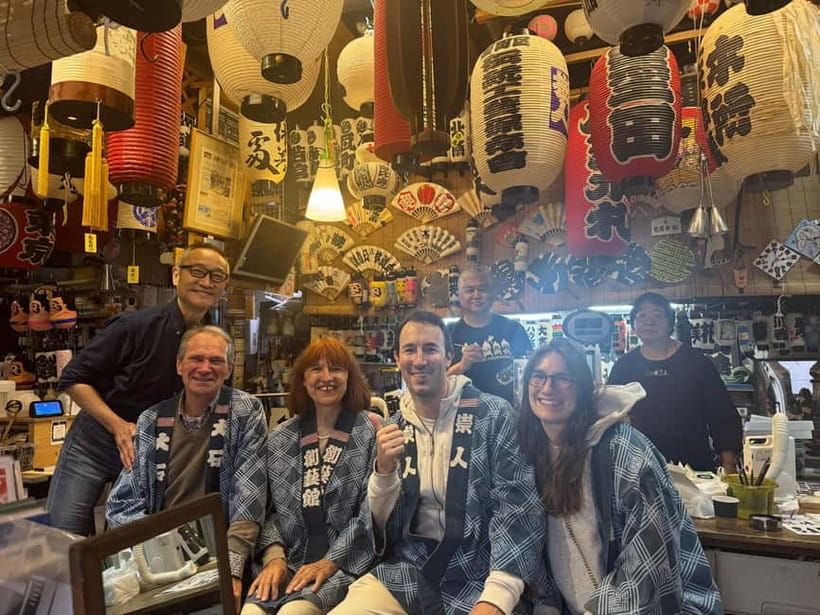
The atmosphere is described as warm and personal, with the master craftsman and family members involved in the workshop. That can make the class feel less polished than a large commercial attraction, but it is also the point. You get a look at a small traditional business and meet the people keeping the work going.
The atelier is especially appealing after a day of Tokyo sightseeing. You can sit down, work with your hands, and slow your pace for a couple of hours. One practical warning: ink or paint may be used, so wear clothing you would not mind staining.
A few more options to weigh up in Tokyo
- Tokyo Disney Resort – Tokyo Disneyland & Tokyo DisneySea Park Tickets
★ 4.8 · 99,488 reviews - SHIBUYA SKY Ticket
★ 4.7 · 46,509 reviews - JR Whole Japan Rail Pass
★ 4.8 · 29,150 reviews
Learning what makes a chochin different
The class starts with an introduction to the history and meaning of Japanese lanterns. You learn what a chochin is and get a sense of how the craft has developed over many years.
The English support is useful here. Guides such as Rinka and Noriko have helped explain the process and interpret between participants and the master. Rinka has also offered suggestions for things to do in Tokyo, which adds a helpful local conversation to the activity without turning the workshop into a sightseeing tour.
You do not need previous craft experience. The instruction is designed for beginners, and the process is broken into manageable steps. That makes this a good choice if you want to try a traditional art without committing to a difficult technical class.
The master craftsman remains the central figure. You are not only following printed instructions. You can watch his methods, ask for help, and gain a better sense of why handmade lanterns take time. The experience gives you more respect for the finished pieces sold in shops and used at festivals, restaurants, and other Japanese settings.
Working with bamboo and washi paper
The materials are simple, but the skill lies in using them well. Bamboo provides the structure, while washi paper forms the lantern surface. Glue, brushes, and decorating materials are included, so you do not need to bring craft supplies.
You begin by working with the prepared lantern components and then move into the decorative stage. The exact design choices can vary, but the activity allows you to create a colorful lantern and add your own painted or calligraphic details.
This is where the workshop becomes more than a demonstration. You have to pay attention to the paper, handle the materials with care, and follow the advice of the instructor. The work is approachable, but it is not completely effortless. That is good news for anyone who wants a souvenir with some personal work behind it.
Calligraphy can take longer than expected. One visitor noted that completing the calligraphy decoration required enough time to make the full two-hour session feel appropriate. If you are traveling with young children, keep in mind that the activity may demand patience during this part.
The result will probably not look exactly like a master-made lantern, and that is not a flaw. Your lantern shows your own choices and your beginner’s hand. The master can produce more polished pieces, which are also available for purchase if you want a professional example or an additional gift.
Decorating your own colorful lantern
The decorating stage is likely to be the most relaxed and enjoyable part. You can take photos around the workshop, which is useful because the room itself provides much of the visual interest.
The finished lantern is more substantial as a keepsake than a small paper charm or mass-produced trinket. It gives you something to display at home and a clear reminder of your time in Tokyo. The lanterns are carefully packaged for the trip back, an important detail if you are carrying souvenirs through several more destinations.
I like the balance here. You get guidance, but the finished design still feels personal. You are not merely watching someone else make an object. You take part in the decoration and bring home the result.
The class also works well for solo participants. The setting is friendly, and the guide can help prevent the awkwardness that sometimes comes with joining a group activity alone. Couples and friends can work side by side, while families can share a hands-on project instead of splitting up for separate interests.
For children, the minimum age is 6. Younger children are not permitted, and the use of paint, glue, and delicate paper means adults should expect to offer some help. Older children who enjoy drawing or making things should find the activity easy to understand and rewarding.
A completely different kind of day out:
- Mt Fuji and Hakone 1-Day Bus Tour Return by Bullet Train
★ 5.0 · 26,383 reviews - TOKYO SKYTREE® Ticket
★ 4.7 · 25,136 reviews - teamLab Borderless Tickets: MORI Building DIGITAL ART MUSEUM
★ 4.7 · 24,126 reviews - teamLab Planets TOKYO Ticket
★ 4.7 · 21,663 reviews
What the two-hour schedule feels like
Two hours is a sensible length for this experience. It gives you time to hear about chochin lanterns, follow the construction and decoration process, and complete your own piece without rushing through every step.
The pace also leaves room for conversation. You might ask about the atelier, the craft, or Tokyo recommendations from the guide. The experience has received strong praise for the patience and kindness of the people leading it, and that personal attention is a large part of its value.
Do not expect a fast, five-minute craft stop. The calligraphy and painting require care, and some participants may work more slowly than others. That can be a positive feature if you want a calm activity, but it may feel long to anyone looking only for a quick photo opportunity.
You should plan your wider day around the location. The regular venue is in Sumida City near Tokyo Skytree, so it can fit well with time in the Oshiage area. Transportation is not included, and you are responsible for reaching the meeting point. Check the exact address and start time before leaving your hotel.
The important venue change during sumo tournaments
The regular workshop location applies outside the official 2026 Grand Sumo Tournament periods. During the tournaments, the class moves to the Ryogoku Kokugikan area at 1-3-20 Yokoami, Sumida City, listed as a first-floor venue.
The special dates are:
- January 11 to January 25, 2026
- May 10 to May 24, 2026
- September 13 to September 27, 2026
Outside those periods, the regular address is 2-10-8 Yokokawa, Sumida City, Tokyo. This is not a minor detail. The two locations are in different parts of Sumida City, and arriving at the wrong one could cause a stressful start or a missed session.
Check the venue tied to your booking date before setting out. The date ranges around the tournament periods are also worth noting, especially for a January or late September visit. If you are combining the workshop with a visit to Tokyo Skytree or the Ryogoku area, the correct venue can help you plan the rest of the day.
Is $96 a fair price?
At $96 per person, this is not Tokyo’s cheapest craft activity. The value comes from what is included and from the setting.
You receive a two-hour guided workshop, all the materials, English-language assistance, instruction from a real lantern artisan, and a finished lantern to take home. You also gain access to a traditional family workshop that you would not experience by simply buying a lantern in a department store.
The price makes the most sense if you care about process and personal contact. If you only want an inexpensive souvenir, buying a ready-made lantern may cost less and take less time. If you want to understand how a chochin is decorated and appreciate the work behind it, the workshop offers more.
The optional purchase of a professionally made lantern gives you another choice. You can compare your piece with the master’s work, buy a gift, or simply leave with the lantern you made. There is no need to purchase an extra item for the activity to feel complete.
The perfect 5.0 rating from 20 published ratings supports the idea that the workshop delivers a friendly and satisfying experience. Still, the rating should not hide the practical limits: transportation is extra, the class uses materials that may stain clothing, and the venue changes during tournament dates.
Who will enjoy this most?
I would recommend this workshop to families with children age 6 and older, solo visitors, couples, and anyone who prefers a hands-on cultural activity to a standard sightseeing stop.
It is particularly good for you if:
- You want a Japanese souvenir that you helped create.
- You enjoy crafts, painting, or calligraphy.
- You like meeting local artisans in a small setting.
- You need a quieter activity after a full day outdoors.
- You want English support during a traditional Japanese experience.
- You are happy to spend two hours on one focused activity.
It may be less suitable if you dislike careful handwork or want a fast-paced attraction. The class is also not suitable for children under 6. Pets, alcohol, and drugs are not allowed, and you should bring a passport or other identification.
Wheelchair access is available, which makes the experience more practical for many visitors. Advance reservations are required, and the booking can be canceled up to 24 hours ahead for a full refund. You can also reserve now and pay later, which helps if your Tokyo schedule is still changing.
My advice for making your lantern
Think about your design before you arrive, but do not plan anything too complicated. A simple image, character, or color scheme will be easier to complete within two hours and will usually read better once the lantern is lit.
Leave room for the instructor’s advice. The master and assistants know how the washi paper behaves and where decoration can make the lantern look balanced. Trying to control every step may be less useful than listening carefully and allowing the craft process to guide your choices.
Bring a camera or phone for the workshop itself, since the colorful lanterns make the room worth photographing. Wear comfortable clothing that can handle a little ink or paint, and allow enough time to reach the correct address without rushing.
Should you book the Tokyo lantern workshop?
Book it if you want a personal Tokyo memory and enjoy making something with your hands. The combination of a traditional atelier, direct instruction, English support, authentic materials, and a take-home lantern gives the $96 price a reasonable basis.
I would especially choose it for a family day, a creative date, or a solo afternoon near Tokyo Skytree. Skip it if you want a low-cost souvenir, dislike crafts, or have no patience for careful calligraphy and decoration.
Before paying, check the venue against your date. Outside the three 2026 sumo tournament periods, go to the Yokokawa workshop. During those periods, go to the Ryogoku Kokugikan area. Get that detail right, and this looks like one of the more personal ways to spend two hours in Tokyo.
FAQ
How long does the lantern workshop last?
The workshop lasts two hours. This includes the introduction to chochin lanterns, instruction from the artisan or assistant, and time to make and decorate your lantern.
What materials are included?
Bamboo, washi paper, glue, brushes, and the other materials needed for the workshop are included. You also receive your completed lantern to take home.
Is the workshop suitable for children?
Yes. Children age 6 and older can join, but children under 6 are not permitted. Adults should expect to help younger participants with the careful paper, paint, and calligraphy work.
Where is the workshop located?
The regular venue is at 2-10-8 Yokokawa, Sumida City, Tokyo, near the Tokyo Skytree and Oshiage Station area. During the January, May, and September 2026 Grand Sumo Tournament periods, it moves to 1-3-20 Yokoami near Ryogoku Kokugikan.
Is English assistance available?
Yes. The experience is offered in Japanese and English, with an English-speaking guide or interpreter available to help explain the activity and communicate with the artisans.
What should I bring and wear?
Bring your passport or another identification card. Wear clothes you do not mind getting stained, since the workshop may involve ink or paint. Transportation, meals, drinks, and personal purchases are not included.
Just added in Tokyo
- A One-of-a-Kind Sushi Experience in a Special Place of Japan★ 5.0 · 15 reviews
- Tokyo Cute Bento Cooking Class – Make a Kawaii Character Lunchbox★ 5.0 · 126 reviews
- Japanese Home Cooking Class & Walk in Todoroki Temple Tokyo★ 5.0 · 88 reviews
- Japan Tokyo Tower Observatory Deck E-Ticket★ 4.0 · 34 reviews
- Catch a Baseball Game in Tokyo with a Local – Tickets Included★ 5.0 · 24 reviews
- Japan Classic 10 Day – One Life Adventures★ 5.0 · 129 reviews
- JDM Experience with Fast&Furious RX-7 (English speaking Driver)★ 5.0 · 57 reviews
- Tokyo Private Day Tour by Car with English speaking Driver Guide★ 4.0 · 29 reviews
Workshops, compared.

Sushi Making Tokyo Roll and Authentic Japanese Sushi Class
Read our review →
Gion Make Your Own Chopsticks with Engraving Option
Read our review →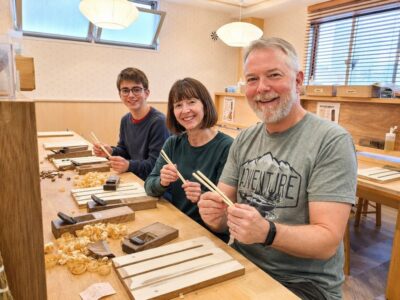
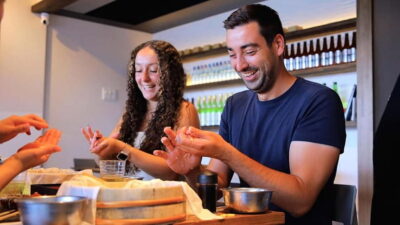
Roll and Authentic Sushi Making Class in Asakusa
Read our review →
Ramen Cooking Class at Ramen Factory in Kyoto
Read our review →
Tokyo Asakusa Chopsticks Workshop: Make Your Own Pair
Read our review →
Ring Making Workshop : Vintage Japanese Coin Ring
Read our review →Browse the lists this tour appears in