Reviewed · GUIDED
Tokyo: Open Top Panoramic Sightseeing Bus with Audio Guide
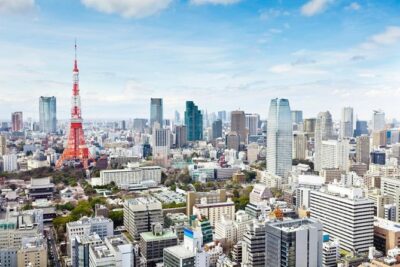
Tokyo looks different from the top of a bus. This 70-minute ride gives you wide city views of Tokyo Tower, Ginza, Tokyo Bay, and Rainbow Bridge without the cost or time of a long guided tour. I like the low price and the simple route, especially if you are new to Tokyo or have only one free afternoon.
I also like the GPS audio guide, which starts information as the bus reaches each area. It is a relaxed way to learn what you are seeing, though music between announcements can be too loud, and live Japanese commentary may make the audio harder to hear.
The main catch is the weather. On a hot, cold, or rainy day, an open-top bus can be uncomfortable, and rain may force the roof to close. You also need to find the meeting point early. Late arrivals are not accepted, even if you call ahead.
In This Review
- Key points before you book
- Why this bus works well on your first day
- Finding Tokyo VIP Lounge near Tokyo Station
- Bay Course: Tokyo Bay, Rainbow Bridge, and Odaiba
- City Course: Imperial Palace, Roppongi, and Ginza
- The GPS audio guide and what you actually hear
- What the open roof feels like in real weather
- Comfort, staff, and the pace of the ride
- How much sightseeing fits into 70 minutes?
- Who should book this Tokyo bus tour?
- Practical booking advice for the best ride
- Should you book it?
- FAQ
- How long is the Tokyo open-top bus tour?
- What routes can I choose?
- Where is the meeting point?
- How early should I arrive?
- Is a live guide included?
- What languages are available on the audio guide?
- Are headphones included?
- What happens if it rains?
Key points before you book
- Two routes, two views of Tokyo: Choose the Bay Course for Rainbow Bridge and Odaiba, or the City Course for the Imperial Palace area, Roppongi, Tokyo Tower, and Ginza.
- The ride lasts 70 minutes: It is long enough to get your bearings but short enough to fit around other sightseeing plans.
- Audio comes through a GPS system: Commentary is available in Japanese, English, Chinese, French, Korean, Vietnamese, and Thai.
- Rainbow Bridge is the Bay Course highlight: The bus crosses both the first and second levels, giving you a memorable view of Tokyo Bay.
- The meeting point is near Tokyo Station: Tokyo VIP Lounge is about a five-minute walk from the Yaesu North Exit, but check the map before departure.
- The price is unusually low: At $11 per person, this is a good orientation ride, but it does not replace a full guided tour or a visit inside the landmarks.
Why this bus works well on your first day
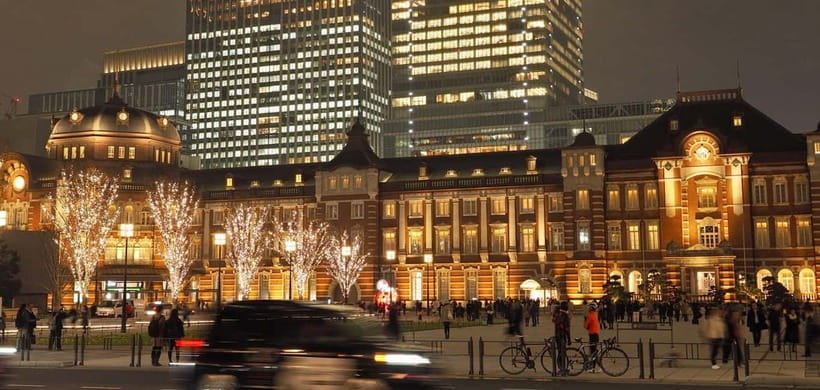
Tokyo can feel enormous at first. The train system is excellent, but underground travel hides the scale of the city. An open-top bus lets you see how the districts connect, from Tokyo Station and Marunouchi to Ginza, Tokyo Tower, and the waterfront.
I especially like this kind of ride at the start of a visit. You can spot places you may want to revisit later, such as Odaiba, Zojoji Temple, or the streets around Roppongi. The bus does not stop for sightseeing, so think of it as a moving introduction rather than a collection of individual visits.
At $11, the value is clear. You are paying less than many museum admissions for a seat, a city route, and commentary in your chosen language. The tradeoff is that you see the sights from outside. There is no time to enter Tokyo Tower, explore the temple grounds, or walk through Odaiba.
This tour also suits you if you have a long layover or a short stay. Seventy minutes is manageable between other plans, provided you allow extra time to reach the lounge and board.
A few more options to weigh up in Tokyo
- Tokyo: 60min Panoramic Open Top Bus Tour with Audio Guide
★ 4.0 · 40 reviews
Finding Tokyo VIP Lounge near Tokyo Station
The meeting point is Tokyo VIP Lounge, on the second and third floors of a building with Family Mart on the ground floor. It is about a five-minute walk from Tokyo Station’s Yaesu North Exit.
That sounds easy, but Tokyo Station is large, and the surrounding streets can be confusing when you are carrying luggage or arriving for the first time. I would check the map and route before leaving your hotel. Do not rely on finding the place at the last minute.
Plan to arrive 20 to 40 minutes before departure. The operator asks you to check in during that window, and the bus leaves promptly. There is no waiting for late arrivals, and a missed departure is not refunded.
The lounge is a shared paid facility. Open-top bus customers can use it free of charge from 40 minutes before departure. If you arrive earlier, you may need to pay the facility fee. The space is basic rather than luxurious, so do not expect a full-service VIP waiting room.
One useful detail: staff are Japanese-speaking, and English communication may be limited. The check-in process has been described as organized, with a map and a short walk to the bus, but it helps to have your booking details ready and to know the route you selected.
Bay Course: Tokyo Bay, Rainbow Bridge, and Odaiba
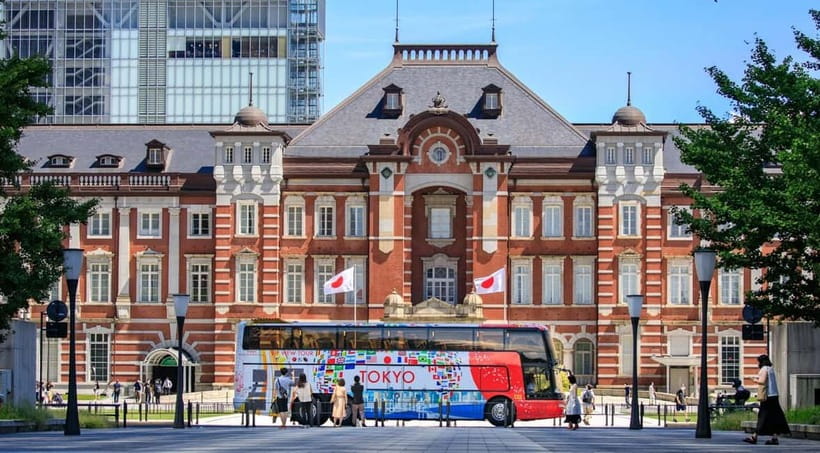
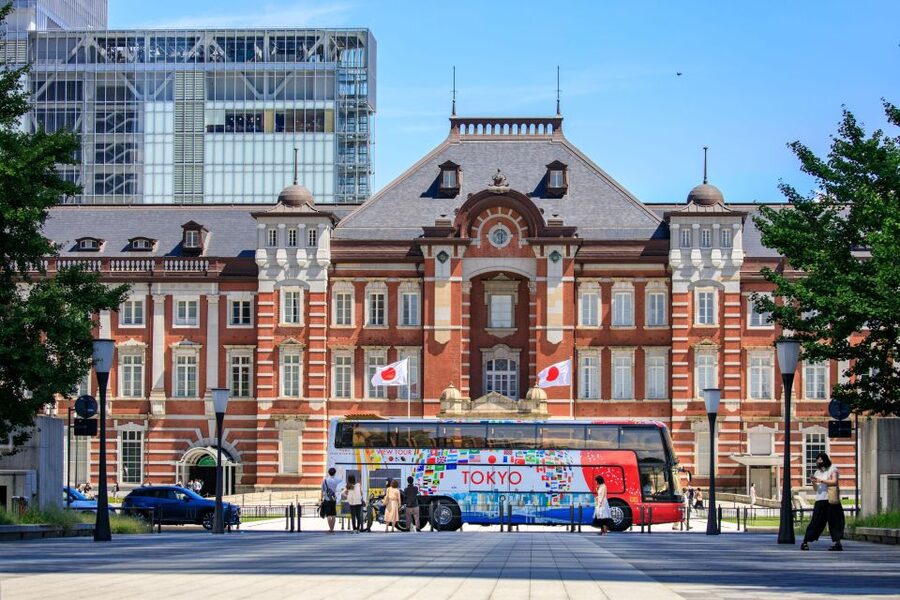
The Bay Course is the better choice if you want water views and a sense of Tokyo’s newer waterfront districts. It begins at Tokyo Station’s red brick building, then moves through Marunouchi toward the bay.
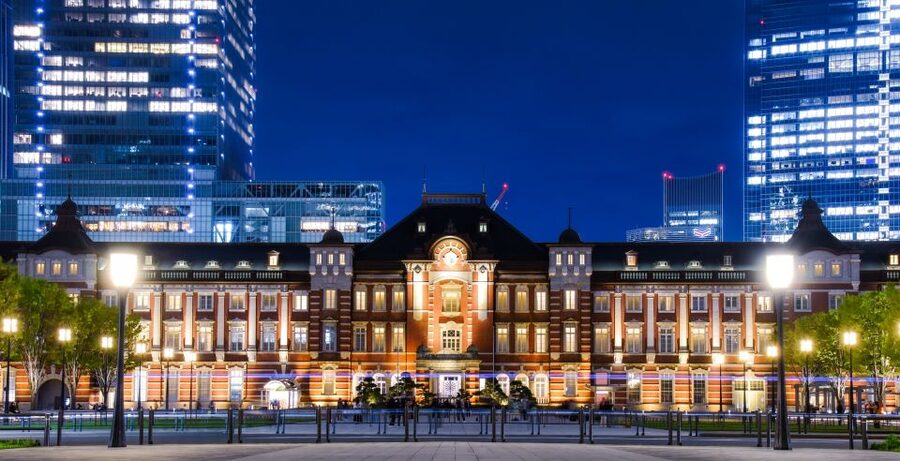
The opening section gives you a look at Marunouchi, Tokyo’s polished business district. Tokyo Station’s red brick exterior is one of the city’s most recognizable sights, and the bus offers a useful outside view before heading south.
The route then passes Zojoji Temple and Tokyo Tower. These two landmarks make a strong pair. Zojoji provides a traditional temple setting, while Tokyo Tower rises nearby as a bright symbol of postwar Tokyo. You will not have time to stop, but the open roof can give you a clear view upward when traffic allows.
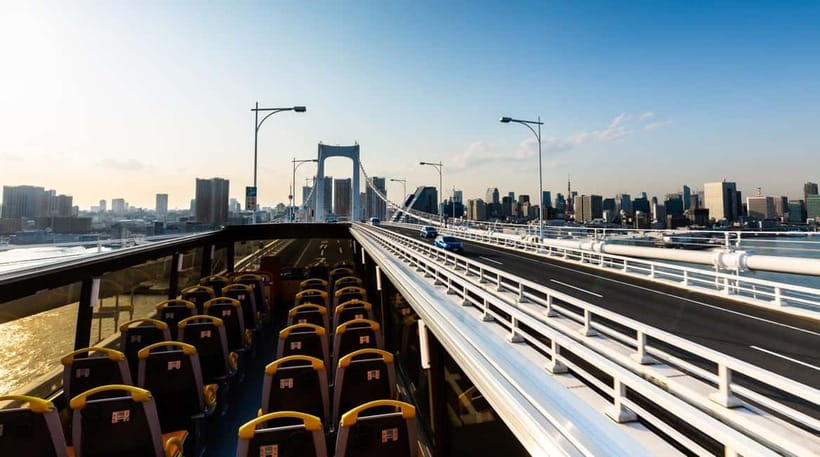
The bus continues toward Shibaura and Rainbow Bridge. One unusual feature is that the route includes both the first level and second level of the bridge. That gives you different angles on the structure and the surrounding bay. The bridge crossing is the main reason I would choose this route.
The Bay Course continues past the Fuji TV Building, the Statue of Liberty replica, and Odaiba Seaside Park. Odaiba is a planned waterfront district with broad public spaces and modern buildings. The Statue of Liberty replica is smaller than the Paris original, of course, but it is an amusing landmark and an easy one to spot from the road.
The return leg passes over Rainbow Bridge again, then heads through Shiodome and Ginza. Shiodome is known for its tall office buildings and modern urban design. Ginza brings the ride back into one of Tokyo’s best-known shopping districts, where grand department stores and major avenues replace the open waterfront.
The Bay Course works best in daylight if you want to read the buildings and see the water. A later departure can add city lights, though the audio and views may be less useful in darkness. The route may also feel less rewarding on a rainy day if the roof is closed.
City Course: Imperial Palace, Roppongi, and Ginza
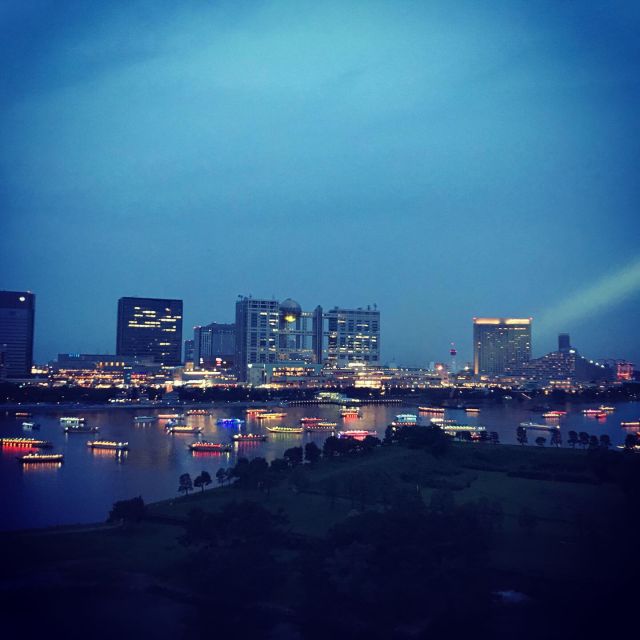
The City Course stays inland and focuses on central Tokyo’s major districts. It begins at Tokyo Station and passes through Marunouchi before heading toward Chidorigafuchi, near the Imperial Palace.
This route gives you a stronger sense of Tokyo’s central government and business areas. Chidorigafuchi is known for its greenery and moat-side setting, a welcome change from the office towers nearby. From the bus, you receive a passing view rather than a walk through the palace grounds.
The next major sight is the Akasaka State Guest House. The building is a notable western-style landmark used for official receptions. It provides a striking contrast to the temples, towers, and glass offices elsewhere on the route.
The bus then passes Meiji Jingu Gaien, an area with broad avenues and public park space, before reaching Tokyo Midtown and Roppongi. Tokyo Midtown is a modern complex with offices, shops, and cultural facilities. Roppongi is one of the city’s best-known entertainment and international districts, with a dense collection of towers and nightlife venues.
Tokyo Tower appears again on this route, followed by Hibiya and Ginza. Hibiya is close to the Imperial Palace and major theaters, while Ginza brings the tour back to central Tokyo’s grand shopping streets.
I would choose the City Course if this is your first visit and you want a broad look at central Tokyo rather than the bay. It also suits anyone more interested in major streets, skyline views, and well-known districts than waterfront scenery. If crossing Rainbow Bridge is high on your list, choose the Bay Course instead.
A completely different kind of day out:
- Tokyo Disney Resort – Tokyo Disneyland & Tokyo DisneySea Park Tickets
★ 4.8 · 99,488 reviews - SHIBUYA SKY Ticket
★ 4.7 · 46,509 reviews - JR Whole Japan Rail Pass
★ 4.8 · 29,150 reviews - Mt Fuji and Hakone 1-Day Bus Tour Return by Bullet Train
★ 5.0 · 26,383 reviews
The GPS audio guide and what you actually hear
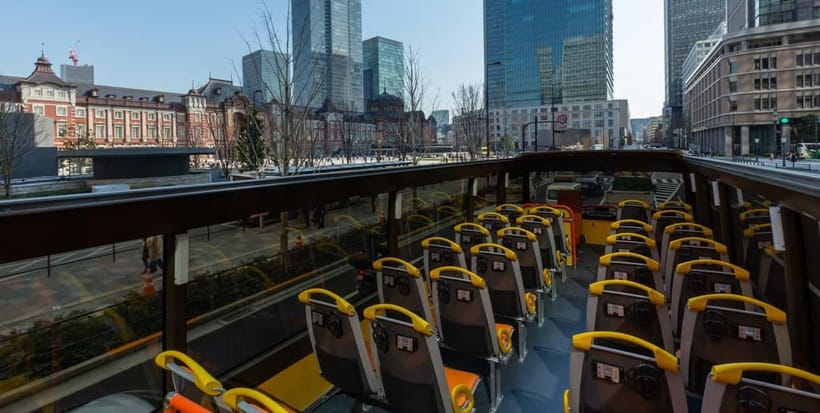
The audio system uses GPS to identify the bus’s location and provide information as the route changes. It is designed to adjust when traffic or road conditions alter the timing, so the commentary should match the area outside rather than play according to a fixed clock.
The listed languages are Japanese, English, Chinese, French, Korean, Vietnamese, and Thai. That is a strong benefit for a low-cost city ride. You can take in the sights without depending on a live guide who may speak too quickly or use a language you do not understand.
The commentary focuses on landmarks, history, and background information. It gives the ride structure and helps explain why places such as Tokyo Tower, Zojoji Temple, and Rainbow Bridge matter.
There are two sound issues to know about. First, the music between segments can be louder than the spoken information. Second, a Japanese-speaking staff member may provide live announcements over a loudspeaker while you are listening to the audio guide. That can make some sections difficult to follow.
Headphones are not included. You may buy a pair for 100 yen, or bring your own, but the headphone jack accepts only a 3.5mm mini plug. Check your headphones before you go. Wireless headphones may not work with this setup.
What the open roof feels like in real weather
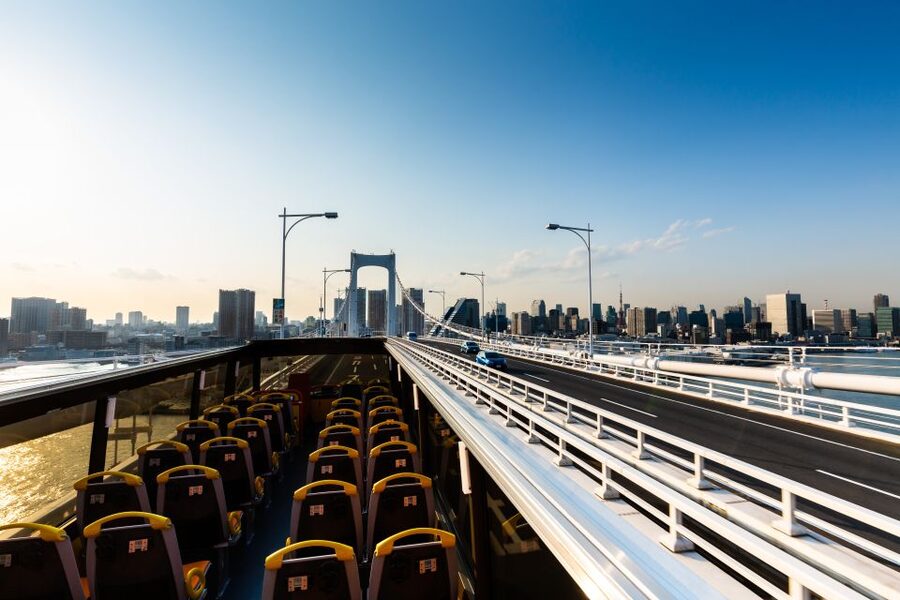
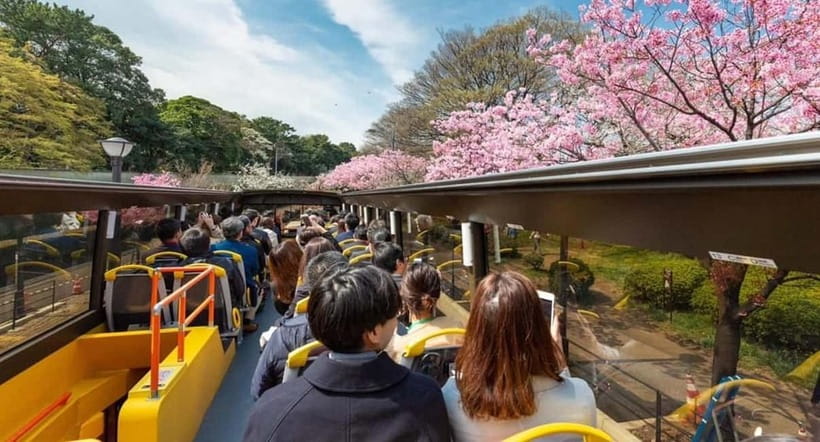
The open top is the point of the tour, but it is also the source of its biggest risk. On a clear, mild day, you get an unobstructed view of towers, bridge cables, signs, and the sky above Tokyo. It feels more open than sightseeing from a normal bus window.
On a cold day, the wind can be sharp, especially during the Rainbow Bridge crossing. On a hot day, you are exposed to the sun. Bring suitable clothing, but do not bring an umbrella onto the vehicle. Food and smoking are also prohibited, and selfie sticks are not allowed.
The tour runs in rain or shine unless extreme weather, such as a typhoon, forces cancellation. If it rains, the open top may be closed. That changes the experience considerably, since reflections and bus windows can limit your view.
I would check the forecast before booking a nonrefundable schedule. Free cancellation is available up to 24 hours before departure, and you can reserve now and pay later, which helps if Tokyo’s weather looks uncertain. Minor timing or route adjustments can also occur because of traffic, weather, or other unexpected conditions.
Comfort, staff, and the pace of the ride
The ride is simple and relaxed. You sit, listen, and watch Tokyo pass by. It is not a walking tour, so you avoid the effort of covering large distances on foot.
Legroom may be limited. If you are tall or dislike close seating, the 70-minute duration is worth considering. The bus is also not a quiet sightseeing capsule. Road noise, Japanese announcements, music, and traffic all form part of the ride.
The staff help with boarding and basic arrangements. A friendly escort can make a real difference, especially at the start, when the meeting point and bus location are not obvious. English support is not guaranteed, so a translation app may be useful if you need to ask detailed questions.
Safety is another positive point. The driving has been praised as careful and professional, which matters when you are seated above the road with city traffic around you.
How much sightseeing fits into 70 minutes?
You cover a surprising amount of ground, but the word cover matters. You pass the landmarks rather than stop at them.
That makes the bus useful for orientation. You can note the location of Tokyo Tower, compare Ginza with Marunouchi, and see how far Odaiba is from the central station area. You also get a sense of Tokyo’s size that is difficult to gain from the subway.
The audio adds value, but it is not a full cultural explanation of daily life in Tokyo. If you want detailed stories, personal guidance, restaurant advice, or time inside monuments, you need a different tour.
For many people, that limited depth is acceptable at $11. The ride is a practical first look, not the centerpiece of a week in Japan.
Who should book this Tokyo bus tour?
I would recommend it for:
- First-time visitors who want a quick city orientation
- People with limited time in Tokyo
- Families or older visitors who prefer sightseeing without long walks
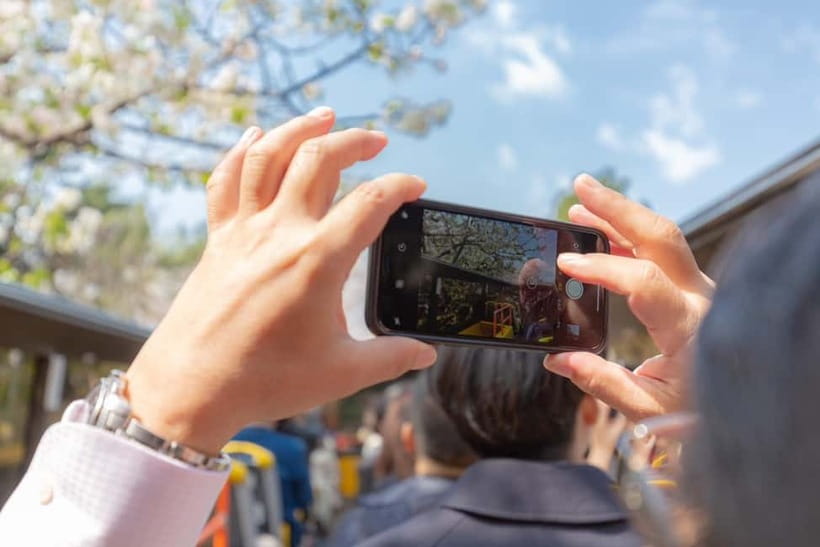
- Anyone who enjoys photography from an open vehicle
- Visitors deciding between the central city and waterfront areas
- People who want a low-cost activity near Tokyo Station
I would be more cautious if you dislike outdoor exposure, need generous legroom, or want a detailed live guide. It is also a weaker choice during poor weather, when the roof may close and the best feature of the bus disappears.
The average rating is 3.8 out of 5 from 254 ratings, which fits the experience well. The sightseeing and value are strong, while weather, meeting-point communication, sound quality, and comfort keep it from being perfect.
Practical booking advice for the best ride
Pick the route before you arrive. The Bay Course offers Tokyo Bay, Odaiba, and Rainbow Bridge. The City Course covers the Imperial Palace area, Akasaka, Meiji Jingu Gaien, Roppongi, Tokyo Tower, Hibiya, and Ginza.
Arrive early enough to find the lounge without rushing. I would aim for 30 to 40 minutes before departure, especially if Tokyo Station is unfamiliar. Keep your phone charged, save the meeting-point map, and do not assume the staff can solve a last-minute location problem outside business hours.
Business hours for the contact number are Monday through Saturday, 9:30 AM to 6 PM Japan time. The number may not respond outside those hours, so sort out questions before the day of the tour.
If the weather is cool, dress in layers. If the forecast calls for rain, decide if you are happy with a closed roof. The bus operates on schedule, and a late arrival means losing the booking.
Should you book it?
Book this tour if you want cheap, easy orientation and a broad view of Tokyo in just 70 minutes. The Bay Course is my pick for the bridge crossing and waterfront scenery. The City Course is better for central districts and the Tokyo skyline.
Do not book it expecting a full guided tour, generous space, or guaranteed open-air views in bad weather. At $11, the tour delivers good value when conditions are right. For a first day in Tokyo, it can help you decide where to spend the rest of your trip.
FAQ
How long is the Tokyo open-top bus tour?
Each route lasts 70 minutes.
What routes can I choose?
You can choose the Bay Course or the City Course. The Bay Course visits Tokyo Bay, Rainbow Bridge, Odaiba, Shiodome, and Ginza. The City Course visits the Imperial Palace area, Akasaka, Meiji Jingu Gaien, Roppongi, Tokyo Tower, Hibiya, and Ginza.
Where is the meeting point?
The meeting point is Tokyo VIP Lounge, on the second and third floors of a building with Family Mart on the ground floor. It is about a five-minute walk from Tokyo Station’s Yaesu North Exit.
How early should I arrive?
You should check in 20 to 40 minutes before the scheduled departure. The bus leaves promptly and cannot wait for late arrivals.
Is a live guide included?
No. The tour includes a GPS audio guide and Japanese-speaking staff for assistance, but it does not include a live guide.
What languages are available on the audio guide?
The audio system is listed as available in Japanese, English, Chinese, French, Korean, Vietnamese, and Thai.
Are headphones included?
No. Headphones are optional and cost 100 yen. The headphone jack supports 3.5mm mini plugs only.
What happens if it rains?
The tour operates in rain unless extreme weather causes cancellation. If it rains, the open top may be closed. Scheduling can also change slightly because of weather, traffic, or other unexpected conditions.
Just added in Tokyo
- A One-of-a-Kind Sushi Experience in a Special Place of Japan★ 5.0 · 15 reviews
- Tokyo Cute Bento Cooking Class – Make a Kawaii Character Lunchbox★ 5.0 · 126 reviews
- Japanese Home Cooking Class & Walk in Todoroki Temple Tokyo★ 5.0 · 88 reviews
- Japan Tokyo Tower Observatory Deck E-Ticket★ 4.0 · 34 reviews
- Catch a Baseball Game in Tokyo with a Local – Tickets Included★ 5.0 · 24 reviews
- JDM Experience with Fast&Furious RX-7 (English speaking Driver)★ 5.0 · 57 reviews
- Tokyo Private Day Tour by Car with English speaking Driver Guide★ 4.0 · 29 reviews
- Japan Classic 10 Day – One Life Adventures★ 5.0 · 129 reviews
Guided, compared.
Tokyo 6hr Private Tour with Government-Licensed Guide
Read our review →
Shiraito Falls & Forest Cafe & Handmade Flower Salt Pudding & Grilled Seafood & Totoro Forest & Sakurai Futamigaura & Angel’s Wings & Coconut Tree Swing Day Tour (Departing from Hakata Station, with Mandarin, English, and Cantonese speaking guide)
Read our review →
Shinjuku Local Bar and Izakaya Guided Walking Tour
Read our review →
Private City Highlights Tour with Local Guide
Read our review →
Kyoto Early Morning Tour with English-Speaking Guide
Read our review →