
Reviewed · WORKSHOPS
Tokyo Photography Masterclass – Private Photography Lesson
Tokyo rewards a camera ready for surprises. This private three-hour lesson combines hands-on photography coaching with a local walk through Shibuya, Harajuku, Shinjuku, or Asakusa, depending on the style of pictures you want. You are not simply led to famous sights and told to press the shutter. The guide works with your level, from first-time camera users to semi-professional photographers.
I like the one-on-one format, which gives you room to ask questions and spend time on the pictures that matter to you. I also like the choice of subjects, from Hachiko Crossing and youth fashion to neon car trails and Senso-ji after dark. The main consideration is price: at $190 per person, this costs far more than a standard group walk, and your camera is not included.
A lesson early in your Tokyo stay could pay off for the rest of your trip. The guide can cover aperture, shutter speed, ISO, focus, composition, light, and image review, rather than offering only a quick sightseeing stroll. Just remember that a private lesson is most useful when you arrive with a few clear questions or photo goals.
In This Review
- Key points at a glance
- Why a private photo lesson works well in Tokyo
- Meeting Hachiko and reading the Shibuya crossing
- From Shibuya back streets to Harajuku style
- Shinjuku after dark: neon, towers, and car trails
- A calmer alternative around Senso-ji
- What the lesson actually teaches
- Is $190 per person a fair price?
- Who will get the most from this tour?
- Should you book the Tokyo Photography Masterclass?
- FAQ
- How long does the Tokyo Photography Masterclass last?
- Where does the tour start?
- Where does the tour end?
- Is this a private tour?
- Is the tour suitable for beginners?
- Is a camera included?
- Can I rent a tripod?
- What is the cancellation policy?
Key points at a glance
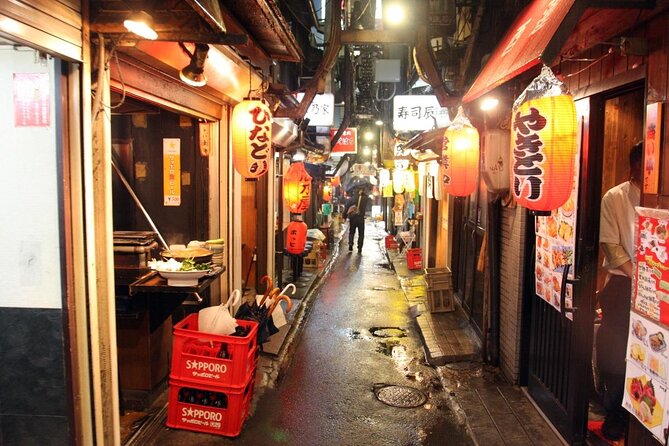
- Start at Hachiko Statue: The meeting point is beside one of Shibuya’s most famous photo subjects, at 2 Chome-1 Dogenzaka.
- Choose your photographic mood: The route may focus on Shibuya and Harajuku street scenes, Shinjuku at night, or calmer Asakusa and Senso-ji.
- Private instruction matters: Only your group takes part, so the guide can adjust the pace and teaching to your ability.
- Learn the camera controls: Aperture, shutter speed, ISO, focusing, lighting, and composition are all part of the lesson.
- Bring your own camera: A camera is not supplied. Tripods are available to rent.
- Strong overall rating: The experience has a 4.8 rating from 25 reviews, with 96 percent recommending it.
Why a private photo lesson works well in Tokyo
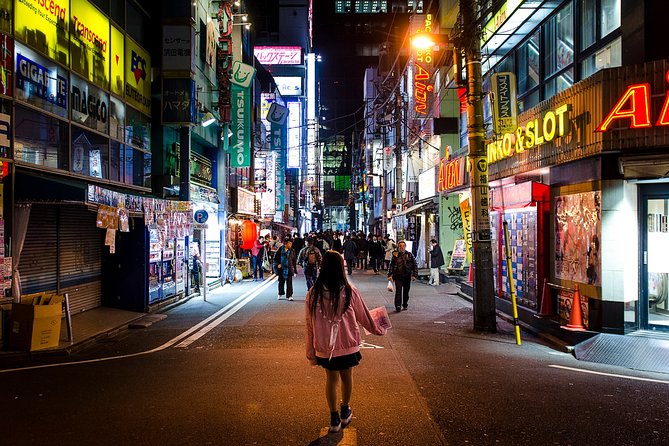
Tokyo can be visually exhausting. You have giant signs, narrow lanes, packed crossings, temples, polished towers, unusual clothing, and changing light all competing for your attention. A guide who is also a professional photographer can help you decide what deserves the frame and what should stay outside it.
That is the real value here. You are not just collecting locations. You are learning how to see lines, repetition, texture, angles, subjects, and light. These are skills you can use at Hachiko Crossing, in a temple courtyard, or back home on an ordinary street.
The private setup makes a difference. In a large group, a guide has to give one general explanation and move on. Here, you can stop to ask why a picture feels flat, how to freeze movement, or how to create a sense of motion with a slower shutter speed. If you are new to photography, you can work through the basics without feeling rushed. If you already understand manual settings, you can spend more time on composition and style.
The lesson is suitable for all levels, but that does not mean every session will feel identical. Tell the guide what you already know and what you want to improve. A first-time camera user may need help understanding aperture and ISO, while a semi-professional may want a sharper eye for framing and light.
A few more options to weigh up in Tokyo
- Tokyo Disney Resort – Tokyo Disneyland & Tokyo DisneySea Park Tickets
★ 4.8 · 99,488 reviews - SHIBUYA SKY Ticket
★ 4.7 · 46,509 reviews - JR Whole Japan Rail Pass
★ 4.8 · 29,150 reviews
Meeting Hachiko and reading the Shibuya crossing
The tour begins at the Hachiko Statue in Shibuya, at 2 Chome-1 Dogenzaka. This is a practical meeting point because it is near public transportation and puts you close to one of Tokyo’s most recognizable scenes from the start.
Hachiko Crossing offers a useful first exercise. A huge pedestrian crossing can produce cluttered images unless you make deliberate choices. Your guide can help you consider angles, repeated movement, leading lines, and the relationship between people and the surrounding signs. The point is not simply to photograph a famous crossing. It is to learn why one frame feels balanced while another looks chaotic.
You might work on timing, focusing, and shutter speed here. A faster setting can freeze a single moment, while a slower setting may create a sense of movement. The exact technique depends on your camera and your goal, but this is a good place to test settings because the scene changes constantly.
There is one drawback to starting at such a famous location: it can be visually overwhelming. If you hope for a quiet, carefully controlled photo session, Shibuya may feel noisy and crowded. That is also part of its value. The guide can show you how to make order from a complicated urban scene.
From Shibuya back streets to Harajuku style
The street photo route continues through the back streets of Shibuya and toward Harajuku. This gives you a different kind of Tokyo picture than the standard landmark shot. Instead of one famous subject, you work with changing streets, signs, storefronts, movement, and people.
Harajuku is included for its eclectic youth fashion. That makes it a strong setting for practicing candid street photography and thinking about subject, background, and timing. Your guide can help you avoid a common mistake: finding an interesting person but placing that person against a distracting background. A small change in position or camera angle can make the subject much clearer.
The composition exercises are especially useful here. Look for repeated shapes, strong lines, surface texture, unusual angles, and contrasts between old and new. You may find that the lesson is less about taking a large number of photographs and more about making each frame intentional.
Photography involving people requires care. The supplied details do not promise formal portrait sessions or arranged encounters, so you should not book this expecting a model or staged shoot. The emphasis is on street scenes and the guide’s instruction. If you have concerns about photographing people, discuss your approach with the guide at the beginning.
This part of the route may suit you best if you want photographs with energy and character. It is less suited to someone who only wants postcard views of major sights.
Shinjuku after dark: neon, towers, and car trails
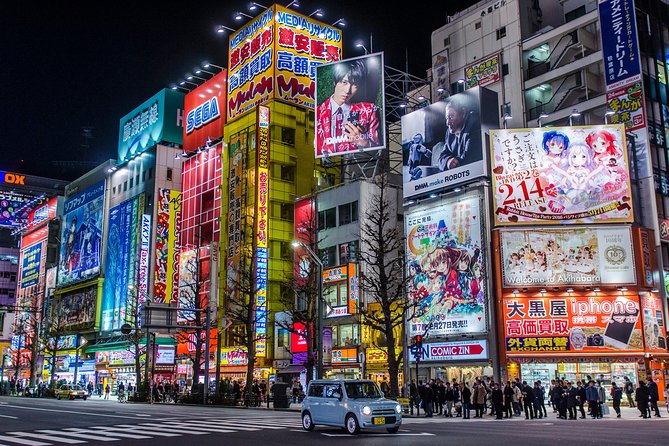
The night option moves toward Shinjuku, where neon lights, skyscrapers, and late street activity create a very different classroom. Night photography can expose weaknesses in camera technique quickly. Focus becomes harder, light levels drop, and bright signs can overwhelm darker areas.
That makes Shinjuku useful for learning how aperture, shutter speed, ISO, and focus work together. You can explore how to keep a subject sharp, how to handle bright signs, and how to capture the feeling of movement. The tour also mentions streaking car trails against a futuristic Tokyo backdrop, which points to longer-exposure work and the possible use of a tripod.
A tripod is not included, but one is available to rent. That matters if car trails or other long-exposure images are your priority. You should ask about renting one before the session rather than assuming one will be waiting at the meeting point.
The night route has a clear strength and a clear limitation. It offers dramatic light and a setting that is hard to reproduce elsewhere, but the conditions can be technically demanding. If you are new to photography, do not judge yourself harshly if the first few images are too dark, too bright, or out of focus. The guide’s role is to help you understand the adjustments.
If you already know the basics, Shinjuku may give you more room to experiment with mood and motion. You can work on turning ordinary traffic and buildings into deliberate visual patterns rather than simple snapshots.
A completely different kind of day out:
- Mt Fuji and Hakone 1-Day Bus Tour Return by Bullet Train
★ 5.0 · 26,383 reviews - TOKYO SKYTREE® Ticket
★ 4.7 · 25,136 reviews - teamLab Borderless Tickets: MORI Building DIGITAL ART MUSEUM
★ 4.7 · 24,126 reviews - teamLab Planets TOKYO Ticket
★ 4.7 · 21,663 reviews
A calmer alternative around Senso-ji
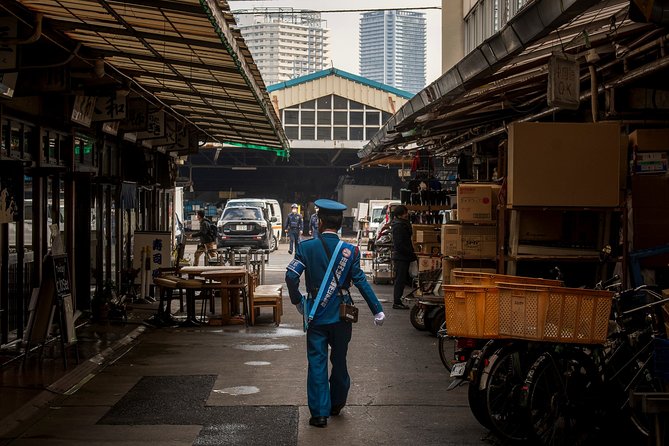
If neon and crowds are not your priority, the night lesson can take a quieter direction around Asakusa and Senso-ji. The Buddhist temple and nearby paths offer a slower subject than Shibuya or Shinjuku, with architecture, shadow, texture, and evening light taking the lead.
Senso-ji after dark may be a good choice for you if you want to practice photographing a fixed subject under changing light. Instead of chasing fleeting street moments, you can think more carefully about framing, symmetry, lines, and the way the temple relates to the surrounding paths.
The calmer setting does not mean the photography is automatically easier. Low light still requires careful focus and exposure. A temple can also tempt you into taking the same centered photograph everyone else takes. A private guide can encourage you to try different angles and look beyond the obvious front-facing view.
The supplied details do not specify exactly which route every booking follows. The experience offers several possible styles, so tell Aperture Tours what interests you most when arranging the session. If you want Senso-ji, Shinjuku, or the Shibuya and Harajuku route, make that preference clear.
What the lesson actually teaches
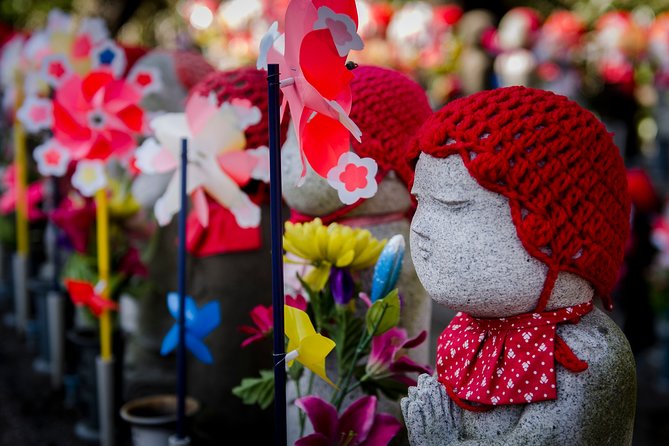
The instruction covers both camera technique and visual judgment. That balance is important. Knowing how to change ISO will not automatically give you a strong photograph, and good composition will not help much if the image is badly exposed.
You can expect attention to:
- Aperture and its effect on exposure and focus
- Shutter speed for freezing or showing movement
- ISO for working in darker conditions
- Focusing techniques
- Composition using lines, repetition, texture, and angles
- Choosing a subject and handling available light
- Reviewing your photography after shooting
The phrase sharpening your eye is useful here. The guide is not only correcting camera settings. You are being encouraged to notice what is happening inside the frame before you take the picture.
The photo review is another valuable part of the session. Looking back at your images lets you connect a technical choice with its result. You may see why a distracting object weakened one frame, why a different angle improved another, or why a particular exposure captured the mood better.
One reported session with guide Karl received especially warm praise for clear teaching, extensive experience, and a friendly manner. The most practical lesson from that feedback is timing: if you book early in your trip, you can use the techniques during the rest of your time in Japan. If you schedule it near the end, you may still take home better pictures, but you lose the chance to practice the advice across several more days.
Is $190 per person a fair price?
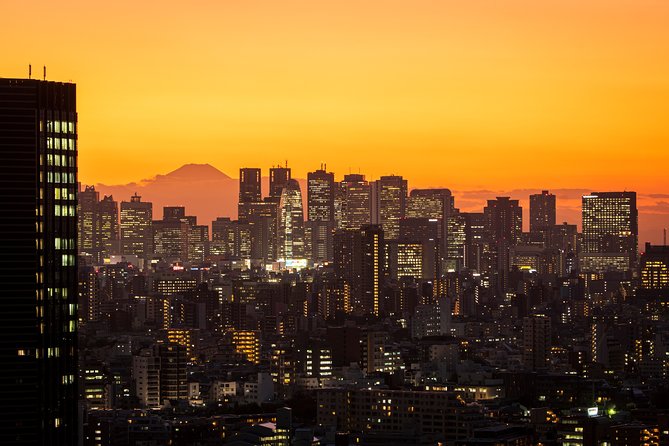
At $190 per person, this is not a budget sightseeing walk. The price makes the most sense if you value personal instruction and would otherwise pay for a private photography lesson elsewhere.
You are paying for about three hours with a professional photographer guide and a local guide, with only your group participating. That private attention can be worthwhile for a couple, family, or small group with shared photography goals. Group discounts may also improve the cost for a larger booking, though the exact discount is not provided.
The value is weaker if you mainly want a guide to point out famous places. Tokyo has many inexpensive walking tours for that purpose. This experience is designed around learning, practice, and image improvement.
Your equipment also affects the calculation. You must bring your own camera, and a tripod is an extra rental if needed. A phone may be enough for some composition discussions, but the lesson specifically covers camera controls such as aperture, shutter speed, ISO, and focusing. If you want to use those settings, bring a camera that allows manual control and arrive with its battery charged.
Who will get the most from this tour?
I would recommend this lesson most strongly to:
- Beginners who want patient, practical help with a new camera
- Couples or friends who want a private activity built around a shared interest
- Experienced photographers who want fresh ideas for street or night photography
- People who prefer local streets and visual details over a standard sightseeing route
- Anyone hoping to improve pictures for the rest of a Tokyo visit
It may not suit you if you want a fixed list of attractions, a large social group, or a guaranteed professional portrait session. It is also not the right choice if you plan to arrive without a camera and expect equipment to be supplied.
The mobile ticket and nearby public transportation make the meeting process fairly simple. The tour ends back at the Hachiko meeting point, so allow time afterward to continue your evening or catch a train.
Cancellation is free if you cancel at least 24 hours before the local start time. Changes or cancellations made later are not accepted for a refund, so keep that deadline in mind when planning around weather or other Tokyo bookings.
Should you book the Tokyo Photography Masterclass?
Book it if you want to come home with more than attractive snapshots. The private format, flexible subject choices, and direct coaching give you a chance to improve both your camera technique and your way of seeing.
I would book early in your Tokyo schedule, especially if you want to use the advice at other locations. Choose the route that fits your interests: Shibuya and Harajuku for street scenes, Shinjuku for neon and motion, or Asakusa for temple photography after dark.
At $190 per person, it is a specialist experience rather than a cheap activity. But for someone who cares about photography, three focused hours with a professional guide can offer more lasting value than another hurried sightseeing stop.
FAQ
How long does the Tokyo Photography Masterclass last?
The lesson lasts approximately three hours.
Where does the tour start?
It starts at the Hachiko Statue, 2 Chome-1 Dogenzaka, Shibuya, Tokyo 150-0043, Japan.
Where does the tour end?
The activity ends back at the meeting point.
Is this a private tour?
Yes. Only your group participates in the activity.
Is the tour suitable for beginners?
Yes. It is designed for all photography levels, including people using a camera for the first time.
Is a camera included?
No. You need to bring your own camera.
Can I rent a tripod?
Yes. A tripod is available to rent, but it is not included in the tour.
What is the cancellation policy?
You can cancel for a full refund up to 24 hours before the experience starts. Cancellations or changes made less than 24 hours before the start time are not refunded or accepted.
Just added in Tokyo
- Very popular in Harajuku♡Animal petting zoo★ 4.6 · 39 reviews
- Yokohama Port: Private Customizable Tour with Transfer★ 5.0 · 19 reviews
- Warner Bros. Studio Tour Tokyo – The Making of Harry Potter★ 4.8 · 181 reviews
- Yanaka District: Historical Walking Tour in Tokyo’s Old Town★ 4.8 · 117 reviews
- Wagyu & Sake 8 Course Tasting Dinner in Shinjuku★ 4.9 · 20 reviews
- Tokyo: Classic Tsukiji Food Tour★ 4.9 · 78 reviews
- Tokyo: Tsukiji Fish Market Tour with 6 Stops & Seafood Lunch★ 4.5 · 165 reviews
- Tokyo Wagyu & Sake Pairing Tasting Experience with Local Flavors★ 5.0 · 108 reviews
Workshops, compared.
Sushi Making Tokyo Roll and Authentic Japanese Sushi Class
Read our review →
Gion Make Your Own Chopsticks with Engraving Option
Read our review →
Roll and Authentic Sushi Making Class in Asakusa
Read our review →
Ramen Cooking Class at Ramen Factory in Kyoto
Read our review →
Tokyo Asakusa Chopsticks Workshop: Make Your Own Pair
Read our review →
Ring Making Workshop : Vintage Japanese Coin Ring
Read our review →Browse the lists this tour appears in