
Reviewed · MARKETS AND FOOD HALLS
Tokyo: Tsukiji Fish Market Seafood & Street Eats
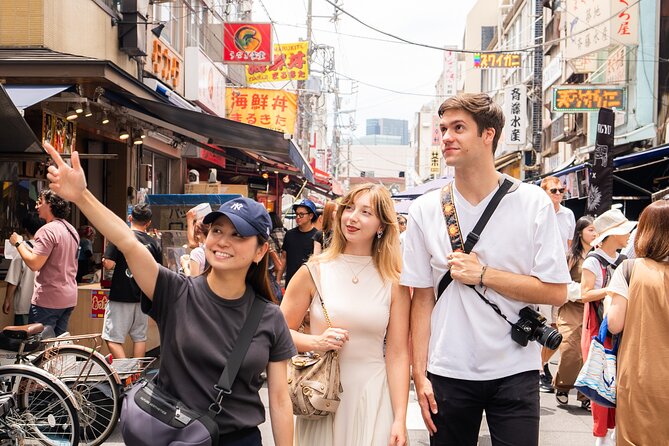
Come hungry, leave better oriented. This 2.5-hour morning walk gives you a practical way to see Tsukiji Fish Market without guessing which stall to try, and I especially like the small group size and the chance to ask an English-speaking guide direct questions. I also like that the tour includes Tsukiji Hongwanji Temple, adding a cultural stop before the food stalls take over.
The main catch is simple: food and drinks cost extra, so your final bill depends on how much you sample. That can be a plus if you want control, but it means the $42 tour price is for the guide and market walk, not a complete food tour with tastings included.
In This Review
- Key points at a glance
- Why Tsukiji still matters after the wholesale market moved
- Begin at Tsukiji Hongwanji Temple
- One and a half hours around Tsukiji Fish Market
- An hour in Tsukiji Jogai Market
- What the $42 price really covers
- Small groups make a real difference here
- Is it suitable for children and older family members?
- Morning timing and meeting point
- What you should budget for food
- Cancellation and weather details
- Who should book this Tsukiji walk?
- Should you book it?
- FAQ
- How long does the Tsukiji Fish Market tour last?
- What is included in the tour price?
- Is food included?
- Where does the tour begin?
- Where does the tour end?
- How many people can join the tour?
- Is the tour available in English?
- Can I cancel for a full refund?
Key points at a glance
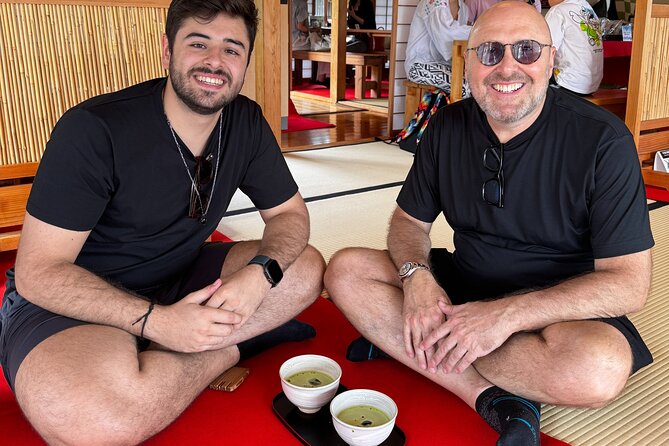
- Guide-led market tasting: Your local Japanese guide helps you navigate seafood stalls, prepared foods, and Japanese street eats.
- Small group, maximum 10 people: You get more room to ask questions and less chance of being lost in the crowd.
- Food is paid separately: Buy as much or as little as you like, from one snack to a full meal.
- Two useful stops: The visit covers Tsukiji Hongwanji Temple, Tsukiji Fish Market, and Tsukiji Jogai Market.
- Strong guide feedback: Haru, Toko, and Ryo received specific praise for food advice, patience, and friendly help.
- Morning timing: The tour lasts about 2 hours and 30 minutes, making it easy to fit before another Tokyo activity.
Why Tsukiji still matters after the wholesale market moved
Tsukiji is often described as Tokyo’s fish market, but you need one important bit of context. The famous wholesale tuna auction moved to Toyosu, while Tsukiji’s outer market, known as Tsukiji Jogai Market, continued as a place to shop, eat, and explore.
That distinction matters. You will not be touring the old wholesale auction floor on this experience. Instead, you’ll spend time among the shops and food stalls that made Tsukiji famous with the public. The focus is on fresh seafood, Japanese snacks, local food customs, and the people who sell them.
I think this makes the tour a good fit if you want the flavor of Tsukiji without treating the market as a museum. Your guide can explain what you are seeing while you decide what looks worth eating. A market can be confusing at first, especially when menus are unfamiliar and queues form around popular counters. A local guide gives you a faster start.
More Markets and Food Halls in Tokyo
- Tokyo Tsukiji Fish Market Food and Culture Walking Tour
★ 5.0 · 3,184 reviews - Tokyo: Tsukiji Fish Market Food and Walking tour
★ 5.0 · 1,724 reviews - Senkyaku Banrai Toyosu Manyo Club Onsen Experience in Tokyo
★ 4.7 · 1,690 reviews
Begin at Tsukiji Hongwanji Temple
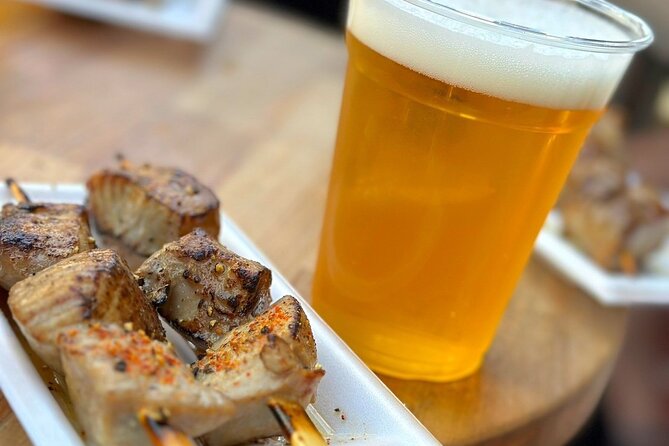
The tour begins at 3-chōme-9-10 Tsukiji in Chuo City, near public transportation. From there, you visit Tsukiji Hongwanji Temple with your local Japanese guide.
The temple is known for its unusual architecture, which gives the morning a useful change of pace. You are not walking straight into a seafood stall. Instead, you first get a short cultural introduction to the neighborhood and one of its most distinctive buildings.
The temple stop also helps frame Tsukiji as more than a place to eat. Tokyo’s food districts often sit beside religious sites, offices, homes, and older streets. That mix is part of what makes a guided walk worthwhile. You can ask questions about the temple, the area, and local customs before moving into the market.
The supplied details do not give a fixed length for the temple visit, so you should think of it as an opening stop rather than a separate long sightseeing tour. The main time is spent at the markets.
One and a half hours around Tsukiji Fish Market
The first main market section lasts about 1 hour and 30 minutes. Your guide introduces the history and culture of Tsukiji while leading you through places connected with its seafood trade.
This is where the tour becomes most useful for first-time visitors. You may see fresh fish, seafood snacks, and prepared dishes, but the value is not only in spotting the food. Your guide can help explain what you are looking at and point you toward dishes that suit your appetite.
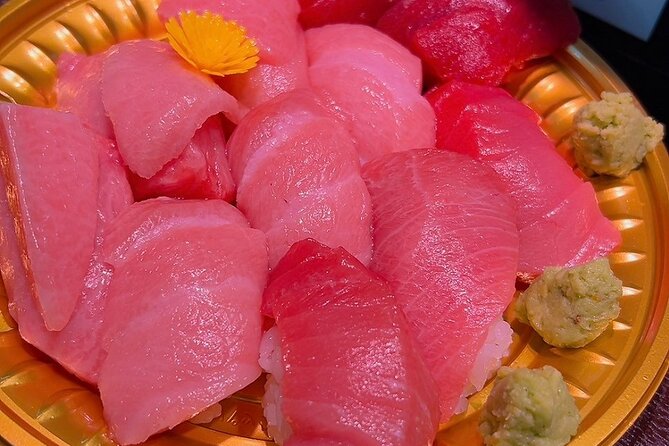
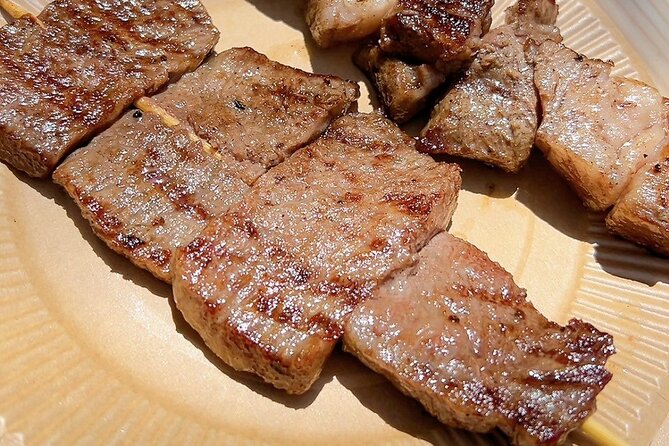
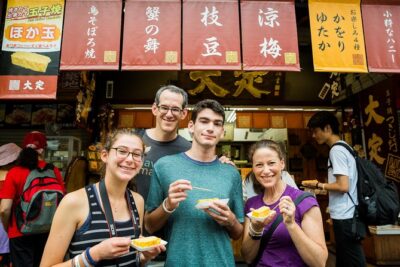
The food is not included, so you buy each item yourself. That setup gives you flexibility. If you only want to try a small taste, you can keep spending low. If you want fatty tuna, seafood rice crackers, tuna skewers, crab, eel, scallops, or several types of sashimi, you can build a larger meal as you go.
Several specific food suggestions come through strongly from the guide feedback. Haru introduced one family to fatty tuna, which became a highlight. Another group’s children tried three types of fatty tuna sashimi, along with freshly made seafood rice crackers and tuna kebabs. A sit-down stop with crab, eel, and scallops was also part of one family’s food-filled visit.
These examples show the range you might find, but they should not be treated as a fixed tasting menu. The exact food stops can vary, and your purchases are always your responsibility. That is important if you are budgeting carefully or have a family with different tastes.
An hour in Tsukiji Jogai Market
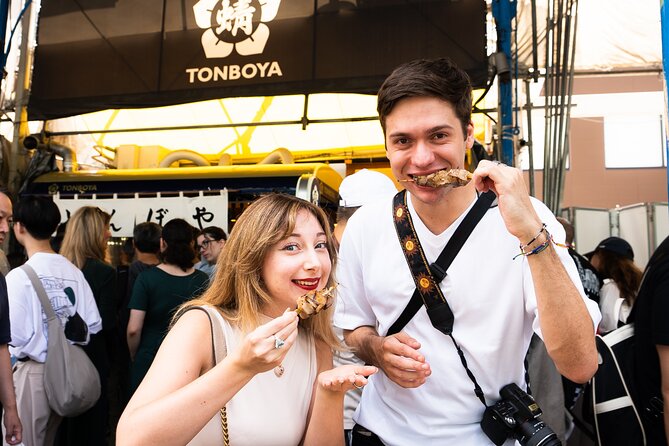
The final major section is about one hour in Tsukiji Jogai Market. This is the outer market area, packed with stalls and shops selling seafood, ingredients, and Japanese street food.
I like this part because it turns the market into a place you can understand rather than a maze of counters. You can browse while your guide explains what is popular and where to spend your limited stomach space. The market offers both quick bites and more substantial seafood dishes, so you can shape the stop around your own appetite.
The tour description emphasizes fresh seafood and Japanese street food, but the practical appeal is the guide’s help with choices and queues. Haru was specifically praised for knowing where to find good food and for helping people deal with a popular tuna establishment. On one visit, he waited in line while the group looked around. Ryo was also praised for focusing on food rather than turning the walk into a long lecture.
That difference may matter to you. Some people want detailed cultural background at every stop. Others mainly want the best possible bites and enough local explanation to make sense of them. The available guide feedback suggests that the experience can be adjusted to the group, at least when the guide is able to respond to those preferences.
A completely different kind of day out:
- Tokyo Disney Resort – Tokyo Disneyland & Tokyo DisneySea Park Tickets
★ 4.8 · 99,488 reviews - SHIBUYA SKY Ticket
★ 4.7 · 46,509 reviews - JR Whole Japan Rail Pass
★ 4.8 · 29,150 reviews - Mt Fuji and Hakone 1-Day Bus Tour Return by Bullet Train
★ 5.0 · 26,383 reviews
What the $42 price really covers
At $42 per person, the price is reasonable if you want orientation, local guidance, and cultural context in a market that can be hard to read on your own. You are paying for an English-speaking local guide, the organized walking route, the temple and market visits, and the convenience of a small group.
You are not paying for food. This is the point to consider most carefully. Your total cost could stay modest if you buy only one or two snacks, or rise quickly if you order premium seafood and several dishes. Fatty tuna, sashimi, crab, and other fresh seafood can turn a simple market walk into a much larger meal.
I see the separate food bill as a sensible arrangement for mixed groups. One person can sample freely, while another can simply watch and take photos. Families may also appreciate not having to pay for a fixed tasting menu that includes items their children will not eat.
Still, if you want a fully prepaid food tour, this is not that product. Think of it as a guided market visit with optional eating.
Small groups make a real difference here
The group limit is 10 people. That is small enough to make questions practical, though the market itself may still feel crowded around popular stalls.
A guide can speak with you more easily in a small group than on a large coach-style outing. You can ask what a particular seafood item is, how a dish is usually eaten, or which purchase makes sense for your budget. The guide can also help the group move through the market without everyone stopping at once.
The strongest guide feedback centers on this personal help. Haru was described as arriving early and adapting when a multigenerational family became delayed by subway accessibility needs. He also waited in a food queue for the group. Toko was praised for being patient and friendly with two children. Ryo suited a group that wanted strong food recommendations with less formal explanation.
Guide names are not a guarantee of who will lead your departure, but they show the kind of service this experience aims to provide. The best version of this tour depends heavily on the individual guide, since food choices, pacing, and conversation shape much of the morning.
Is it suitable for children and older family members?
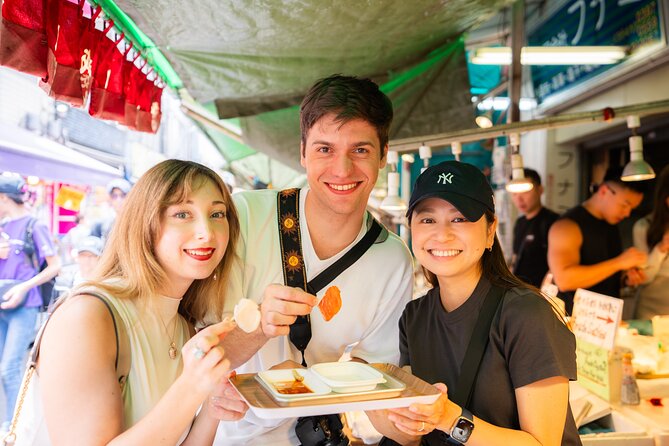
The experience can work well for families, especially those who enjoy trying small portions instead of sitting down for one long meal. Children may like the visual side of the market and the chance to choose snacks, though seafood preferences will naturally vary.
The guide feedback includes families with children and multigenerational groups. Toko was patient with two children, while Haru helped a family manage a subway-related accessibility problem and adjusted the plan without fuss.
That said, the tour requires walking through a market environment. The information provided confirms that most people can participate, but it does not promise a fully accessible route or describe restroom access, seating at every stop, or the exact surface conditions. If you need a specific subway exit or mobility arrangement, contact the provider before booking and allow extra time to reach the meeting point.
Morning timing and meeting point
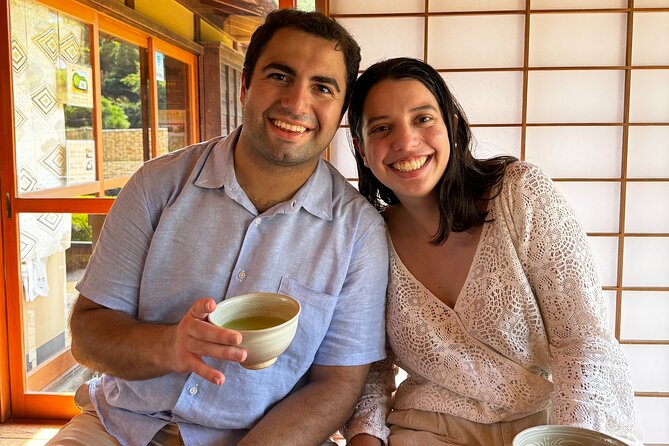
The experience lasts approximately 2 hours and 30 minutes and takes place in the morning. That timing is useful in Tokyo, where you may want to reserve afternoons for museums, shopping, gardens, or another neighborhood.
The tour begins at 3-chōme-9-10 Tsukiji, Chuo City, Tokyo 104-0045, and ends back at the meeting point. Since the start is near public transportation, it can fit neatly into a day based around central Tokyo.
Give yourself enough time to arrive. The meeting point is a street address rather than a large landmark, and Tokyo station areas can be confusing when you are moving between subway exits. One guide successfully waited for a delayed family, but you should not count on that for every departure.
The morning schedule also suits people who want to eat while exploring. You can arrive with an appetite, buy a few items during the market portion, and continue with your day after returning to the starting area.
What you should budget for food
The tour does not set a food allowance, so decide in advance how much you want to spend. You can purchase as much or as little as you like, which is one of the better features for careful planners.
If you want only a taste, choose one dish that interests you most and ask your guide for advice. If seafood is a major reason for visiting Tsukiji, plan to spend more than the tour fee and consider trying several small items rather than one large order.
The food examples connected with the experience include:
- Fatty tuna and several types of tuna sashimi
- Fresh seafood rice crackers
- Tuna kebabs
- Crab
- Eel
- Scallops
- Japanese street food and other seafood dishes
These are examples from actual visits, not guaranteed inclusions. Availability, prices, and queues can change. Your guide can help you decide what is worth the wait, but you pay each vendor directly.
Cancellation and weather details
You can cancel for a full refund up to 24 hours before the start time. Changes or cancellations made less than 24 hours before the experience are not refundable.
The tour requires good weather. If poor weather forces a cancellation, you are offered another date or a full refund. The experience also requires a minimum number of participants, so a cancellation for that reason comes with the choice of another date or experience, or a full refund.
Who should book this Tsukiji walk?
I would choose this experience if you want three things at once: a short morning activity, a local guide, and the freedom to decide what you eat.
It is especially suited to first-time visitors who do not want to wander through Tsukiji without context. It also works for families, food-focused couples, and small groups with different budgets. You can ask for help with food choices without committing everyone to the same tasting menu.
You may want a different option if you are looking for the old wholesale tuna auction, a guaranteed list of tastings, or a fully prepaid food experience. This tour visits Tsukiji’s public market areas, not the former wholesale auction site, and the food bill is separate.
Should you book it?
Book it if you want an easy introduction to Tsukiji with a friendly English-speaking guide and flexible food spending. The $42 fee is fair for a small group capped at 10, especially when the guide helps with popular stalls, explains local food customs, and keeps the morning moving.
I would book with realistic expectations. You are paying for guidance, not unlimited seafood, and the exact guide and food stops can vary. Arrive ready to walk, bring room in your budget for extra purchases, and tell the guide what kind of morning you want. If you do that, this is a practical, food-centered way to make sense of one of Tokyo’s most famous market districts.
FAQ
How long does the Tsukiji Fish Market tour last?
The tour lasts approximately 2 hours and 30 minutes.
What is included in the tour price?
The price includes a local Japanese English-speaking guide, information about Tsukiji’s history and culture, entry to Tsukiji Jogai Market, and entry to Tsukiji Hongwanji Temple.
Is food included?
No. Foods and drinks are not included. You purchase any dishes or drinks at your own expense.
Where does the tour begin?
The meeting point is 3-chōme-9-10 Tsukiji, Chuo City, Tokyo 104-0045, Japan.
Where does the tour end?
The activity ends back at the meeting point.
How many people can join the tour?
The tour has a maximum of 10 travelers.
Is the tour available in English?
Yes. The experience includes a local Japanese guide who speaks English.
Can I cancel for a full refund?
Yes. You can cancel at least 24 hours before the start time for a full refund. Cancellations made less than 24 hours before the start time are not refunded.
Just added in Tokyo
- A One-of-a-Kind Sushi Experience in a Special Place of Japan★ 5.0 · 15 reviews
- Tokyo Cute Bento Cooking Class – Make a Kawaii Character Lunchbox★ 5.0 · 126 reviews
- Japanese Home Cooking Class & Walk in Todoroki Temple Tokyo★ 5.0 · 88 reviews
- Catch a Baseball Game in Tokyo with a Local – Tickets Included★ 5.0 · 24 reviews
- Japan Tokyo Tower Observatory Deck E-Ticket★ 4.0 · 34 reviews
- JDM Experience with Fast&Furious RX-7 (English speaking Driver)★ 5.0 · 57 reviews
- Tokyo Private Day Tour by Car with English speaking Driver Guide★ 4.0 · 29 reviews
- Japan Classic 10 Day – One Life Adventures★ 5.0 · 129 reviews
Markets and Food Halls, compared.
Tokyo Tsukiji Fish Market Food and Culture Walking Tour
Read our review →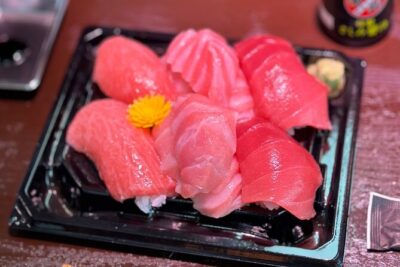

Senkyaku Banrai Toyosu Manyo Club Onsen Experience in Tokyo
Read our review →
Nishiki Market Brunch Walking Tour (7 Tastings + Brunch)
Read our review →
Tokyo Sushi Making Class in Tsukiji with Professional Chef
Read our review →
Tsukiji Fish Market Guided Tour and Sushi Making with Pro Chef
Read our review →Browse the lists this tour appears in