
Reviewed · MARKETS AND FOOD HALLS
Tokyo Tsukiji Food & Culture Private Tour Licensed Guide
Tokyo tastes better on foot. This private food and culture tour links Toyosu and Tsukiji markets with neighborhood streets, kitchenware shops, and local snacks, all with an English-speaking licensed guide. I like the flexible route, and I like having a guide who can explain what you are seeing instead of simply pointing at it. The main drawback is cost: at $141 per person, food and transportation are extra.
The six-hour option lets you visit three or four areas, while the four-hour version covers two or three. Guides such as Kenji Kasama, Fumiko, Naomi, Michio Akutsu, and Katsu have received especially warm praise for patient explanations, careful route planning, and help with Tokyo’s railway system. Expect plenty of walking, changing trains or taking taxis, and a day shaped around your interests rather than a fixed script.
In This Review
- Key points at a glance
- Why this private Tokyo food tour works
- Toyosu Market, Tokyo’s modern seafood center
- Outer Tsukiji, where browsing meets breakfast
- Asakusa and the pleasure of street food
- Kappabashi, Tokyo’s kitchenware wonderland
- Tsukishima’s Monja Street
- Yanaka Ginza and its fried croquettes
- What the guide adds to Tokyo’s complicated transport
- A six-hour schedule that makes sense
- What to expect from the guides
- Weather, comfort, and practical planning
- Who should book this experience?
- Should you book the Tokyo Tsukiji Food and Culture Tour?
- FAQ
- How long is the Tokyo Tsukiji food and culture tour?
- Which places can I request?
- Is hotel pickup included?
- Are food and drinks included in the price?
- Is the tour private?
- What languages are available?
Key points at a glance
- Toyosu and Tsukiji offer two different market experiences: Toyosu is the newer wholesale market, while outer Tsukiji is better suited to walking, browsing, and buying ready-to-eat food.
- You choose the route: Select from Toyosu, Tsukiji, Kappabashi, Tsukishima, and Yanaka Ginza before the day begins.
- A private guide makes Tokyo transport much easier: Your guide can meet you at your hotel or a requested station and lead you by public transport or taxi.
- Kappabashi is a treat for cooks and curious shoppers: Expect kitchen supply shops and the famous plastic food displays used outside Japanese restaurants.
- The food is not included: Budget separately for snacks, meals, drinks, train fares, and possible entrance fees.
- The six-hour option is the better value for serious food exploring: It gives you enough time for three or four areas without forcing every stop into a rushed schedule.
Why this private Tokyo food tour works
Tokyo’s food culture is spread across the city. One market may specialize in wholesale seafood, another in walk-up snacks, and another in restaurant equipment. That makes independent planning rewarding but time-consuming, especially when you are trying to work out train connections, opening hours, and what each street is actually known for.
I like the way this experience solves that problem without locking you into a large group itinerary. You meet your guide in your hotel lobby or at a station in Tokyo’s 23 wards, then set off on foot. From there, the day can be adjusted around your interests, food preferences, walking pace, and energy.
The guide’s role is more than translation. Several guides have helped people understand Japanese dining customs, food vocabulary, local behavior, and the background of the neighborhoods. One guide even helped a visitor buy products correctly in Japanese. That kind of assistance can turn a quick purchase into a much more comfortable local experience.
You should still think of this as a walking and public transportation day, not a sit-down food tour. You pay for food and drinks yourself, and the route may involve trains, stations, taxis, and crowded market lanes. The freedom is useful, but it also means you need to communicate clearly about what you want to see.
More Markets and Food Halls in Tokyo
- Tokyo Tsukiji Fish Market Food and Culture Walking Tour
★ 5.0 · 3,184 reviews - Tokyo: Tsukiji Fish Market Food and Walking tour
★ 5.0 · 1,724 reviews - Senkyaku Banrai Toyosu Manyo Club Onsen Experience in Tokyo
★ 4.7 · 1,690 reviews
Toyosu Market, Tokyo’s modern seafood center
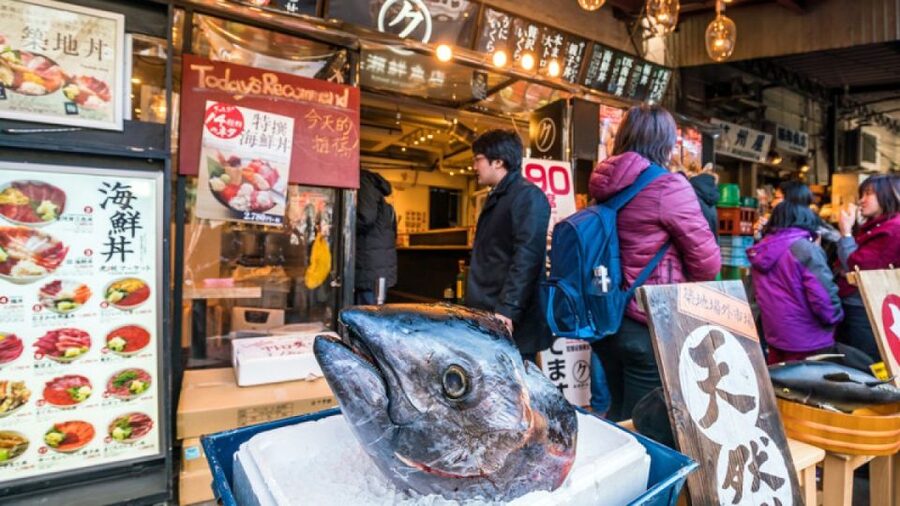
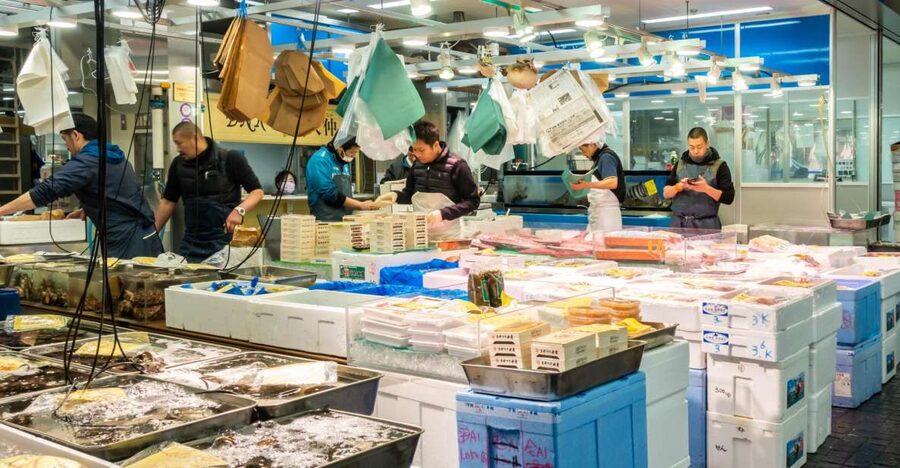
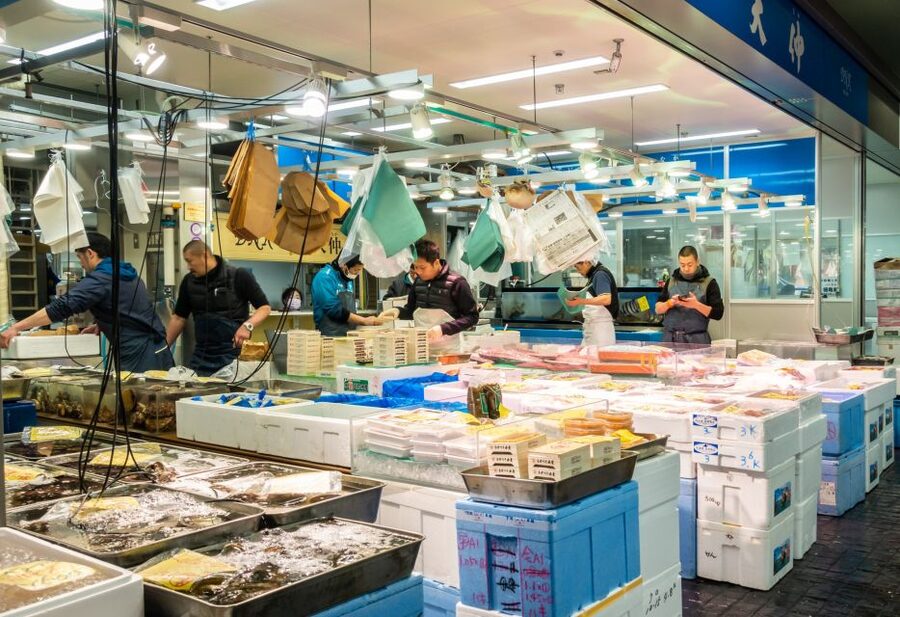
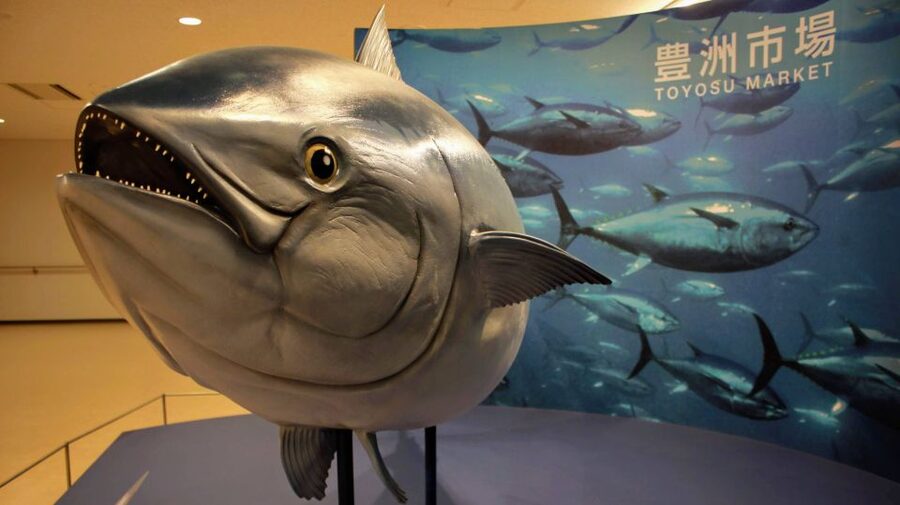
Toyosu is the newer fish market and gives you a different look at Tokyo’s seafood trade. Its broad, modern setting contrasts with the older streets of Tsukiji. A guide can help explain the market’s role and point out how the experience differs from the traditional shopping lanes you may visit later.
Toyosu makes sense if you are interested in seafood, market organization, and the modern side of Tokyo’s food system. It is also a strong choice for anyone who wants to compare the city’s present-day wholesale market with its older predecessor.
Do not expect Toyosu alone to feel like a casual street-food arcade. The experience is more about seeing a major food center and understanding its place in Tokyo. If your main goal is to snack as you walk, outer Tsukiji or Asakusa may suit you better.
Your guide can make this stop more useful by supplying context that is easy to miss on your own. Yoshii, for example, was praised for patiently leading people through both outer Tsukiji and Toyosu. That matters because the two markets reward different kinds of attention.
Outer Tsukiji, where browsing meets breakfast
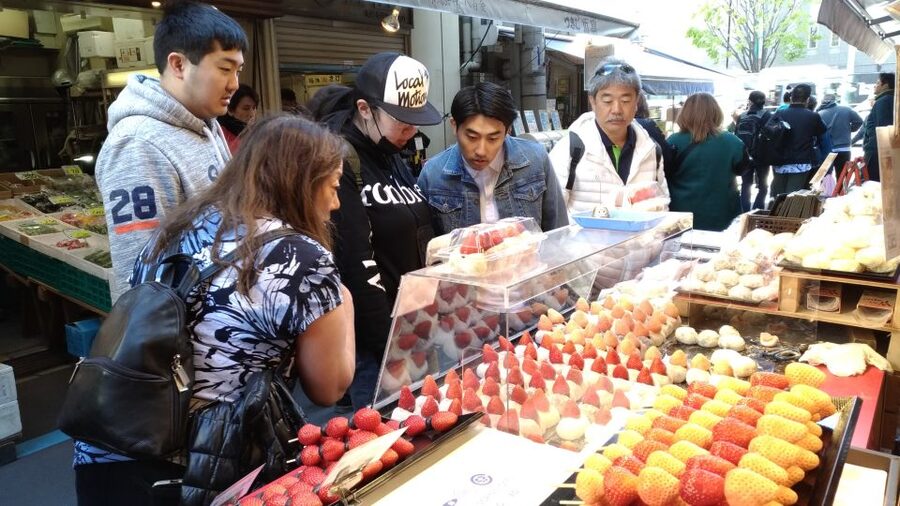
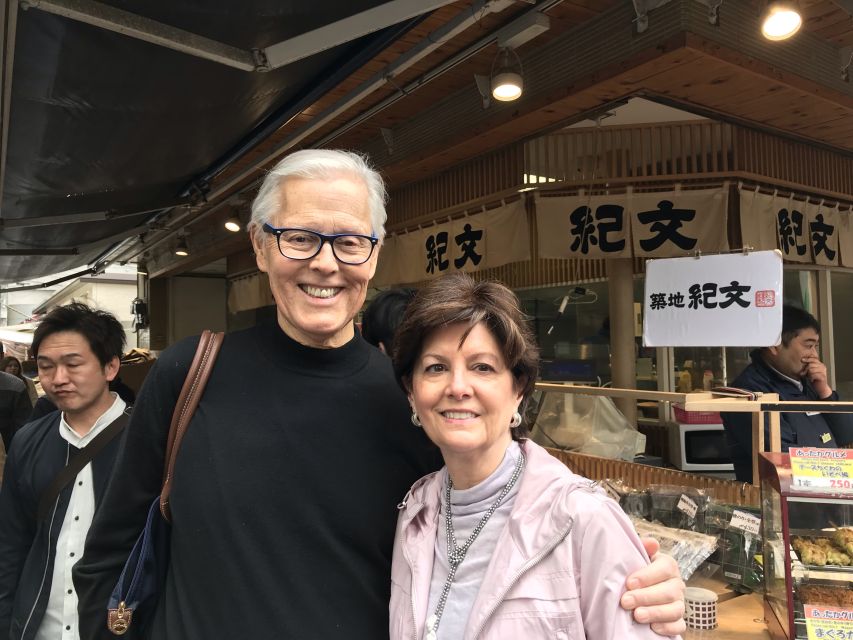
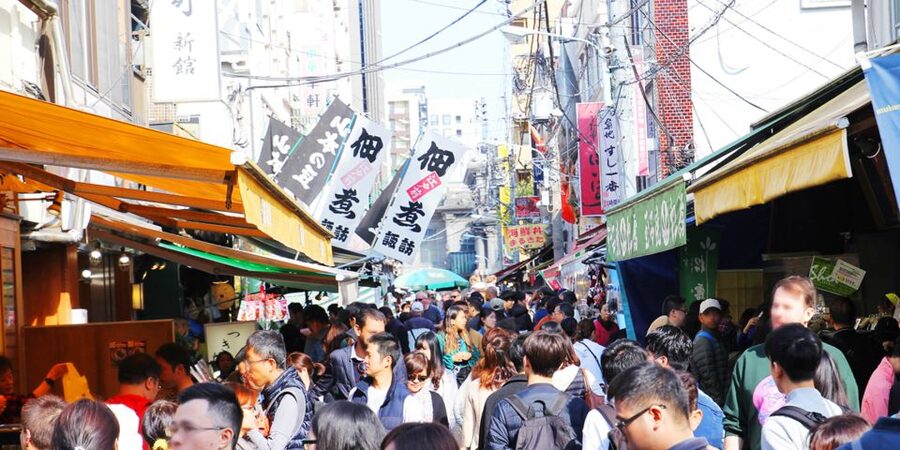
Outer Tsukiji is the more immediately accessible food stop. Its lanes are lined with shops and places selling fresh foods, making it easy to sample several small items rather than commit to one long meal.
I would choose Tsukiji if you want the strongest mix of food, shopping, and atmosphere. You might find seafood, prepared foods, snacks, and ingredients, but the exact choices depend on the day and the individual shops. Since food is not included, your guide can help you decide what to try while you pay directly for each purchase.
This is also where a guide can explain everyday details that are easy to miss. Japanese food etiquette, ways to order, and the difference between an ingredient shop and a ready-to-eat stall all make more sense when someone explains them as you go.
Allow time to move carefully. Market lanes can be crowded, and a six-hour route that includes Toyosu, Tsukiji, and two more areas may involve a fair amount of walking. Rain does not cancel the experience, so comfortable shoes and weather protection are sensible choices.
Asakusa and the pleasure of street food
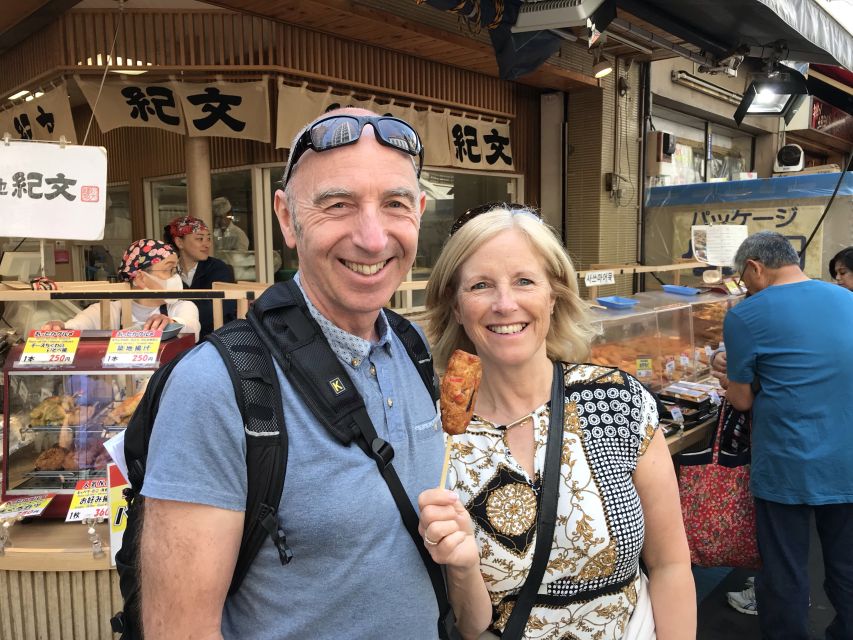
Asakusa brings a different flavor to the day. Its shopping streets are known for authentic Tokyo street food, making this a good choice if you want to connect eating with one of the city’s best-known traditional districts.
The value here comes from having someone explain the setting while you eat. A guide can help you understand what you are buying and how it fits into local food culture. You may also find this stop easier to enjoy than a market if you prefer a broad pedestrian shopping street with many small food options.
Asakusa is a useful choice for first-time visitors who want a familiar Tokyo highlight without giving up the food focus. It also pairs well with Tsukiji: one gives you market shopping, while the other offers street snacks and a different neighborhood feel.
The tradeoff is time. Asakusa, Toyosu, and Tsukiji are not next door to one another, so you should not try to force every possible location into a six-hour schedule. A private guide helps, but trains and taxis still take time.
More Private Tours in Tokyo
- Tokyo 6hr Private Tour with Government-Licensed Guide
★ 5.0 · 3,902 reviews - Private Tour to Mt. Fuji and Hakone (Fully Licenced Operator)
★ 5.0 · 1,910 reviews - Tokyo Customized Private Tour (Must See Places in 1 Day)
★ 5.0 · 1,499 reviews - Mount Fuji Full-Day Private Tour from Tokyo (Customizable)
★ 4.9 · 1,470 reviews
Kappabashi, Tokyo’s kitchenware wonderland
Kappabashi Street is the most distinctive option for cooks, restaurant fans, and shoppers looking for unusual souvenirs. The street is filled with kitchen supply shops and displays of realistic plastic food samples.
Those fake food models are not just decoration. They are used to show customers what a restaurant serves, and they make Kappabashi a fun place to browse even if you do not cook. You might find knives, dishes, utensils, restaurant equipment, and other food-related goods, but purchases are your responsibility.
I like Kappabashi because it adds depth to a food tour. Instead of only eating, you see the tools, tableware, and visual language that support Japanese dining. Your guide can also help with communication and explain what a product is for, which is useful when labels and shop displays are unfamiliar.
This stop works especially well with Asakusa because the areas can be combined more naturally than some of the farther-flung choices. It is less useful if you want a day devoted entirely to tasting food. In that case, Tsukiji, Asakusa, and perhaps Yanaka Ginza may be a better mix.
Tsukishima’s Monja Street
Tsukishima offers a food experience built around monja, a Tokyo specialty cooked on a hot plate. The tour information identifies Monja Street as one of the possible stops, so you can request it if this dish interests you.
This is a good pick for people who want to explore a food tradition rather than simply collect snacks. Your guide can provide cultural context and help you navigate the local dining setting. Since meals are not included, you will pay separately for anything you order.
Tsukishima also gives the day a more focused purpose. Rather than browsing a large market, you are visiting an area tied to one particular style of eating. Ask for it in advance if monja is high on your list, because the six-hour tour only includes three or four sites.
Yanaka Ginza and its fried croquettes
Yanaka Ginza is another optional stop, known here for tasty fried croquettes. It offers a neighborhood food walk with a more relaxed feel than the major markets.
I would consider Yanaka Ginza if you want small bites and local shopping without making the entire day about seafood. Croquettes are an easy snack to share, and the stop can work well for families or anyone who prefers familiar fried foods alongside more adventurous market choices.
The limitation is again route planning. Yanaka Ginza may not be the best fit with every other option, particularly if you also want Toyosu and Kappabashi. Tell your guide your priorities before the tour so the route can be planned around the places you care about most.
What the guide adds to Tokyo’s complicated transport
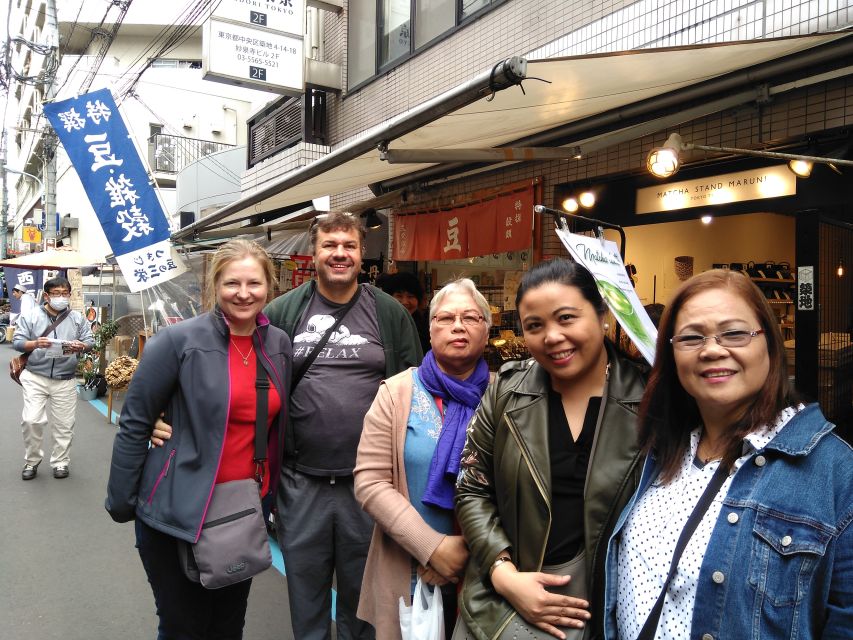
Public transportation is included in the experience only in the sense that your guide leads you through it. You pay your own train fares or taxi costs during the day.
That arrangement is worth understanding before you book. The guide can show you how to buy a train card, as Naomi did for one family on a rainy day, and can patiently lead you through Tokyo’s railway system. For many people, this practical help is one of the best parts of the day.
You will still need to walk between stations, markets, and shops. One family described walking a lot, while another praised a guide for keeping the day well optimized. Those comments point to the central benefit of a private tour: you can adjust the pace and route when your group needs a break.
The experience is wheelchair accessible, but the specific route should be discussed with the local partner in advance. Market streets, station transfers, and shop entrances can vary, so your guide needs to know what support you require.
A six-hour schedule that makes sense
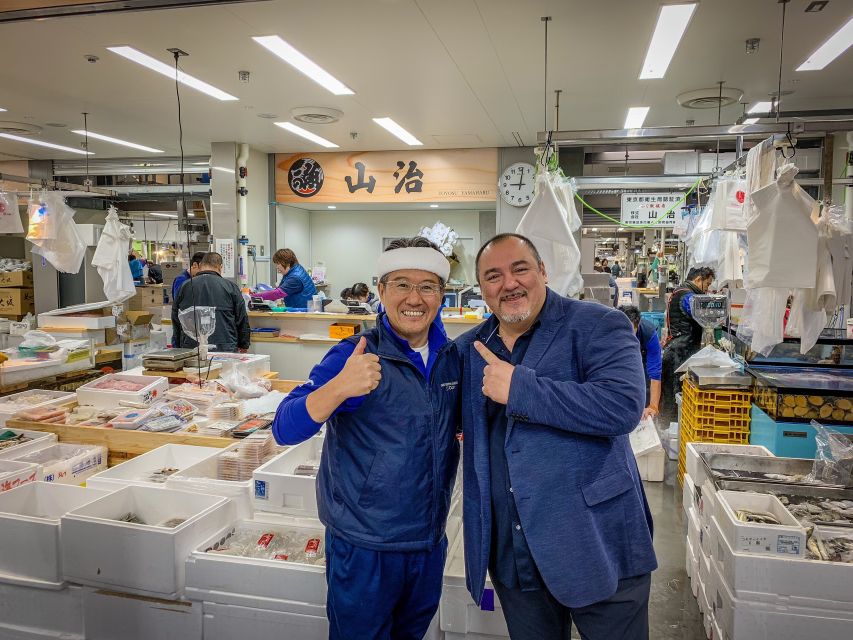
The six-hour version costs $141 per person and allows three or four sites. That is the option I would choose if food and culture are central to your Tokyo plans.
A sensible day might combine Toyosu and Tsukiji with Asakusa and Kappabashi. This gives you a modern market, an older market district, street food, and kitchenware. Another plan could focus on Tsukiji, Tsukishima, Yanaka Ginza, and Asakusa for a more neighborhood-based food day.
The four-hour version covers two or three sites. It is better if you have limited time, young children, mobility concerns, or a separate afternoon plan. You will need to be selective. Trying to cover Toyosu, Tsukiji, Asakusa, and Kappabashi in four hours would leave little room for eating or browsing.
At $141 per person, the value depends on group size and your comfort with independent planning. For a private group, the price buys personal attention, route planning, language help, and cultural explanations. It does not cover meals, drinks, transport, or entrance fees, so add those costs before comparing it with a standard food walk.
For families, the value can be strong. Michio Akutsu was praised for patience with a family that included teenagers and a younger child, while another guide adjusted plans for a change during the day. If you are traveling with several people, the private format also avoids asking strangers to follow a pace that may not suit your group.
What to expect from the guides
The guide quality is central to this experience, and the feedback points to a consistent pattern of care. Katsu was praised for food tastings and explanations of Japanese cuisine and behavior. Show was described as attentive and skilled at using the day efficiently, even lending a fan to a child.
Kenji Kasama received strong praise for building an itinerary around specific requests and patiently handling public transportation. Michio Akutsu was appreciated for restaurant recommendations, historical explanations, and flexibility when plans changed.
Other named guides, including Fumiko, Naomi, Yoshii, Koji Shinjo, Yasuho Suzuki, and Kimy, were praised for friendly service, route planning, local food advice, and clear explanations. You cannot select a particular guide with certainty from the information provided, but you can send your interests and requests after booking.
The experience is offered in English and Japanese. Your guide contacts you to confirm the details, and the booking is not fully confirmed until a guide accepts it. Most guides make contact within seven days, but you should allow time for that process before building an unchangeable schedule around the tour.
Weather, comfort, and practical planning
The tour runs rain or shine. Wear shoes suited to several hours of walking, and bring clothing for the forecast. A rainy day did not stop Naomi from guiding her group through the railway system and market, but cold, wet weather made the outing less comfortable.
Start with a clear list of priorities. Tell the guide whether you care most about sushi and seafood, snacks, kitchenware, neighborhood streets, monja, or cultural explanations. You can request sites after booking, and the itinerary can be customized.
Keep money available for food and transportation. Entrance fees, if your chosen route has any, are also separate. You should also decide how much time you want to spend eating versus shopping, since an enthusiastic stop at every market stall can quickly consume the afternoon.
Free cancellation is available up to 24 hours before the start time, and you can reserve now and pay later. If a guide has not accepted the tour, the local team continues looking until close to the tour date and provides updates. That flexibility is helpful, but I would not wait until the final day to confirm your route and meeting point.
Who should book this experience?
I would recommend it to first-time Tokyo visitors who want a practical introduction to food culture without spending hours planning train routes. It also suits families, couples, and small private groups with different interests.
It is particularly useful if you want to combine several areas that are difficult to connect on your own. A guide can turn a confusing day of stations, markets, and unfamiliar food into a manageable plan.
You may prefer another experience if you want all tastings included, a fixed restaurant meal, or a slow tour of one neighborhood. The price does not cover food or transport, and the six-hour route can be physically demanding. Independent food explorers may also find the structure unnecessary if they already feel comfortable navigating Tokyo.
Should you book the Tokyo Tsukiji Food and Culture Tour?
Book it if you want flexibility, personal guidance, and a full day built around Tokyo food rather than a fixed sightseeing checklist. I especially like the six-hour option for its mix of Toyosu, Tsukiji, Asakusa, and Kappabashi, though you should choose only the areas that truly interest you.
The strongest reason to book is the guide. Patient help with trains, ordering, Japanese customs, shopping, and last-minute changes can be worth more than another list of restaurants. Just budget for your own meals and fares, wear good shoes, and send your preferred route before the day begins.
FAQ
How long is the Tokyo Tsukiji food and culture tour?
The available options are four hours or six hours. The four-hour tour covers two to three sites, while the six-hour tour covers three to four sites.
Which places can I request?
You can request Toyosu Market, Tsukiji Old Fish Market, Kappabashi Street, Tsukishima’s Monja Street, and Yanaka Ginza. The itinerary can be customized around your requests and preferences.
Is hotel pickup included?
Your guide can meet you in your hotel lobby or at a train station you request in Tokyo’s 23 wards. The tour then sets off on foot.
Are food and drinks included in the price?
No. You pay separately for food, drinks, public or private transportation, and any entrance fees.
Is the tour private?
Yes. This is a private group experience with a licensed local guide.
What languages are available?
The tour is offered with live guidance in English or Japanese.
Just added in Tokyo
- A One-of-a-Kind Sushi Experience in a Special Place of Japan★ 5.0 · 15 reviews
- Tokyo Cute Bento Cooking Class – Make a Kawaii Character Lunchbox★ 5.0 · 126 reviews
- Japanese Home Cooking Class & Walk in Todoroki Temple Tokyo★ 5.0 · 88 reviews
- Catch a Baseball Game in Tokyo with a Local – Tickets Included★ 5.0 · 24 reviews
- Japan Tokyo Tower Observatory Deck E-Ticket★ 4.0 · 34 reviews
- JDM Experience with Fast&Furious RX-7 (English speaking Driver)★ 5.0 · 57 reviews
- Tokyo Private Day Tour by Car with English speaking Driver Guide★ 4.0 · 29 reviews
- Japan Classic 10 Day – One Life Adventures★ 5.0 · 129 reviews
Markets and Food Halls, compared.
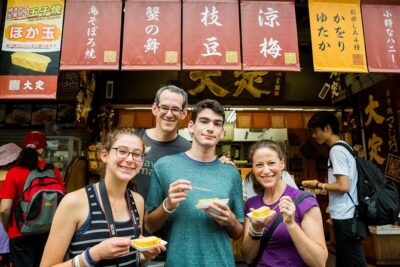
Tokyo Tsukiji Fish Market Food and Culture Walking Tour
Read our review →
Senkyaku Banrai Toyosu Manyo Club Onsen Experience in Tokyo
Read our review →
Nishiki Market Brunch Walking Tour (7 Tastings + Brunch)
Read our review →
Tokyo Sushi Making Class in Tsukiji with Professional Chef
Read our review →
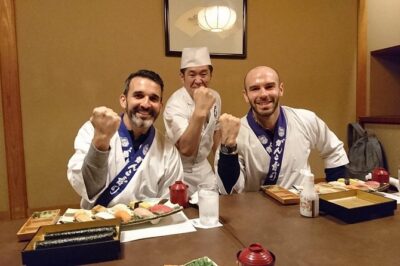
Tsukiji Fish Market Guided Tour and Sushi Making with Pro Chef
Read our review →Browse the lists this tour appears in