
Reviewed · CYCLING AND E-BIKE TOURS
Tokyo West-Side Cycling & Food Tour
Tokyo is best understood one back street at a time. The Tokyo West-Side Cycling and Food Tour leaves the big sights behind and carries you through Nakano, Koenji, and Asagaya, where daily life replaces the usual sightseeing circuit. I like the small group of no more than eight and the chance to eat local snacks and lunch along the way. I also like that guide Andy has lived in Japan for more than 20 years and brings practical insight into housing, schooling, religion, food, and ordinary routines.
The main consideration is the riding. You need to handle a bicycle in narrow, sometimes crowded streets and cover roughly 12 to 15 kilometers. The ride is mostly flat, but the bikes are Japanese-sized mamachari bicycles, and the outing can take three and a half to four hours. This is not a sightseeing bus with a few gentle spins around the block.
In This Review
- Key things to know before you book
- Why western Tokyo makes a better bike ride than a landmark checklist
- Starting at Koenji Station with a mamachari
- Riding Nakano, Koenji, and Asagaya
- Along the Zenpukuji River
- Snacks, drinks, and a local-style lunch
- The bicycle parking challenge
- What Andy adds to the experience
- Price, timing, and overall value
- Who should book this ride?
- Should you book the Tokyo West-Side Cycling and Food Tour?
- FAQ
- Where does the Tokyo West-Side Cycling and Food Tour start?
- Where does the tour finish?
- How long does the experience last?
- How far do you cycle?
- What kind of bicycles are provided?
- Is a helmet available?
- Can children join the tour?
- Is food included?
- Can the tour accommodate food allergies or special diets?
- What happens if it rains?
- Can I cancel for a refund?
Key things to know before you book
- You ride salvaged Japanese mamachari bicycles: They are sometimes creaky or squeaky, but they are maintained and fitted with front baskets.
- The route links three local neighborhoods: Nakano, Koenji, and Asagaya offer a quieter view of western Tokyo away from Shibuya and Shinjuku.
- Food is part of the ride, not an afterthought: Included snacks, drinks, and a Japanese-style lunch turn the outing into a moving meal.
- Andy is a central part of the experience: His long experience living locally shapes the cultural stories and practical advice.
- You ride about 12 to 15 kilometers: Basic urban cycling ability matters more than speed or athletic fitness.
- Rain usually does not cancel the ride: Basic ponchos are provided, though poor weather can lead to a new date or refund.
Why western Tokyo makes a better bike ride than a landmark checklist
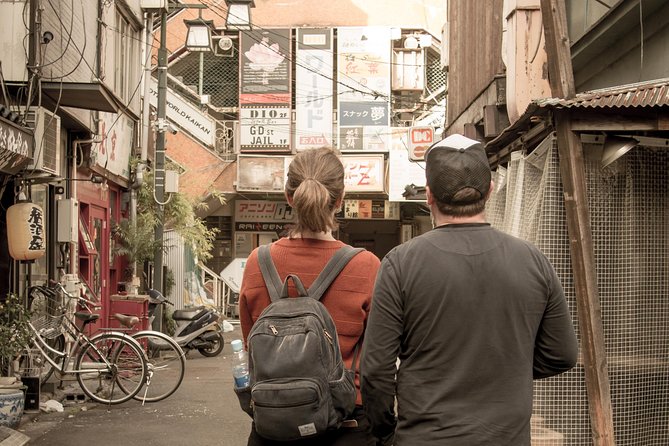
Tokyo’s famous districts are exciting, but they can also feel like a steady stream of crossings, crowds, signs, and train stations. On this ride, you move at street level through residential lanes and local commercial areas. That slower pace gives you time to notice bicycle habits, compact homes, small shops, river paths, and the way people use public space.
The route focuses on Nakano, Koenji, and Asagaya. These are not presented as a string of major monuments. Their appeal comes from the ordinary details that are easy to miss when you move around Tokyo by train.
I like this approach because it gives you context for the rest of your Japan trip. After hearing about how people live, work, shop, eat, and get around, you may look at other parts of Tokyo with sharper eyes. The tour is especially useful early in your stay, when you are still trying to understand the city beyond its best-known districts.
It also works well as a change of pace. If you have spent days in Shibuya, Shinjuku, Tokyo Station, and other busy areas, the west side offers a calmer counterpoint without taking you far outside the city.
More Bike Tours in Tokyo
- Tokyo Great Cycling Tour
★ 5.0 · 811 reviews - Tokyo Top Highlights 3h Guided E-bike Tour
★ 5.0 · 714 reviews - 3h Tokyo E-Bike Tour: Hidden Gems, and Local Life with guide
★ 5.0 · 670 reviews
Starting at Koenji Station with a mamachari
The meeting point is outside Koenji Station at 4-chome-48-2 Koenjiminami, in Suginami City. The station is near public transportation, so reaching the start should fit neatly into a Tokyo day.
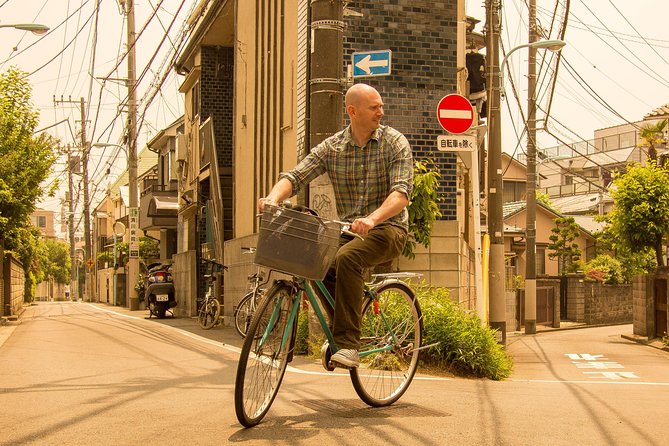
From there, you are given a salvaged mamachari bicycle. The name refers to the practical, everyday bicycles commonly used in Japan, especially for errands and short neighborhood trips. These are not racing bikes or polished rental models. They are simple, upright bicycles with front baskets and a distinctly local feel.
That choice is more than a novelty. You ride the same kind of practical machine that fits the neighborhoods. The upright position suits a relaxed urban ride, and the basket can hold a standard-sized backpack. Still, the bikes are Japanese-sized, so the height requirement matters. You should be over 140 centimeters, or about 4 feet 7 inches, to ride comfortably.
Helmets are available on request. Ask for one when booking or before setting off if you want to wear one.
The bikes may squeak or feel a little rough around the edges, but the important point is that they are maintained. You should expect character, not luxury. If you normally ride a road bike or a high-end city bike, the mamachari may feel slow and basic. That is part of the experience, though it also means you should not book this tour expecting a sporty ride.
Riding Nakano, Koenji, and Asagaya
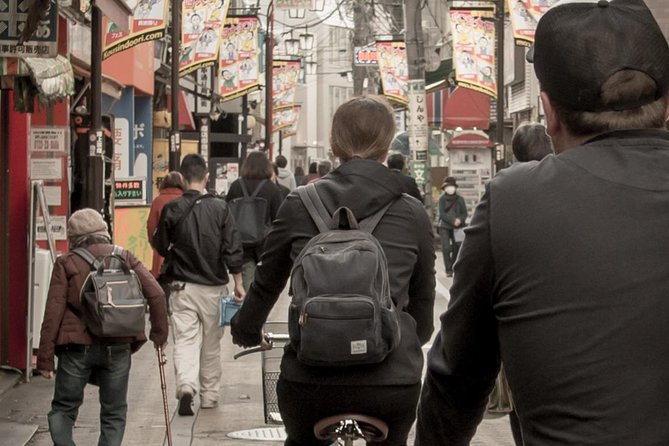
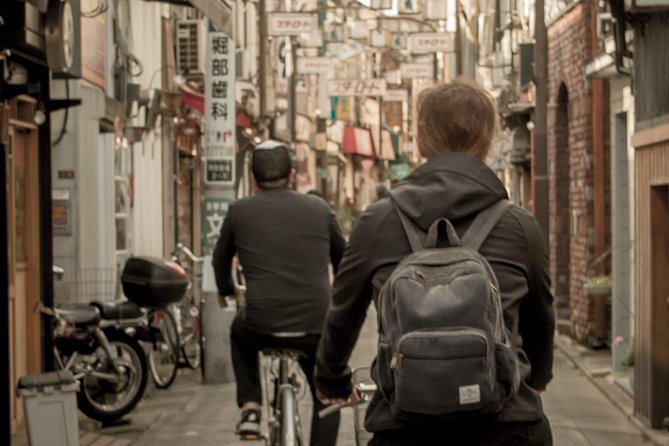
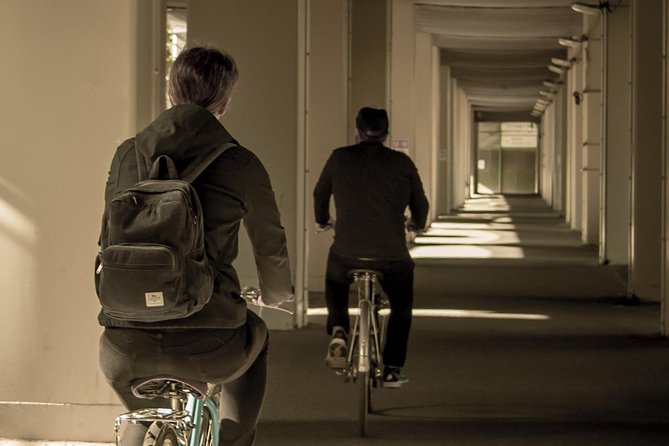
The first part of the experience is about learning the rhythm of the route. You pedal through twisting streets where traffic, pedestrians, parked bicycles, and uneven surfaces require attention. The guide keeps the pace manageable and gives you advance notice about what is coming.
The ride is mainly flat, according to the practical route descriptions, but flat does not mean effortless. You need to start, stop, turn, and steer confidently in an urban setting. The official guidance is clear that you should be competent riding through narrow and potentially crowded streets.
That makes the tour a good fit for regular bicycle riders, families with older children who can manage city cycling, and anyone who prefers a relaxed pace over a fast workout. It is not ideal if you rarely ride, feel uneasy around other road users, or want a fully passive morning.
Koenji, Nakano, and Asagaya are valuable here because they show different layers of everyday Tokyo without requiring a long transfer. The ride may take you down back streets, through local areas, and along routes you would be unlikely to find by following a standard sightseeing map.
Andy’s commentary adds the meaning. He has been praised for explaining Japanese culture in plain, useful terms, including subjects such as housing, schooling, religion, work, and local customs. He also answers questions as they arise, which is often more helpful than a memorized speech.
The small group size helps. With a maximum of eight people, it is easier to hear the guide and stop without creating a large cluster. It also gives the outing a social feel. You are cycling with a handful of people rather than being processed through the city in a large group.
Along the Zenpukuji River
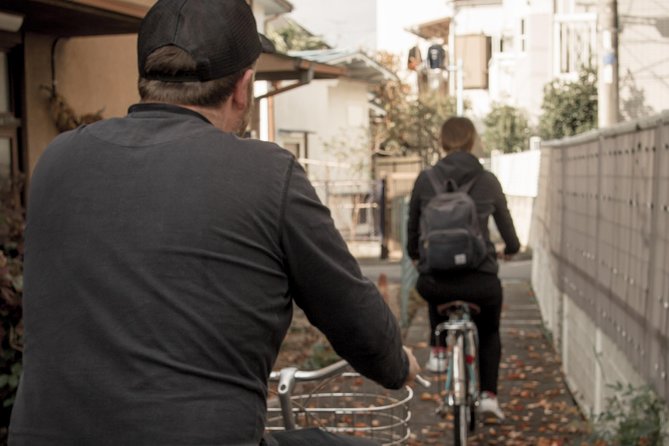
A particularly pleasant part of the route follows the Zenpukuji River. Riverside paths give you a break from the tighter back streets and offer a more open stretch for cycling.
This section helps vary the outing. You are not threading through narrow lanes for three and a half hours. The river path provides a quieter setting, a change in scenery, and a chance to settle into the bicycle before the next neighborhood or food stop.
The route is still an active city ride, not a countryside escape. You remain in western Tokyo, and the value comes from seeing how a river corridor fits into an urban district. The guide can connect the physical surroundings with local life, making the ride about more than simply getting from one snack stop to the next.
You should also allow for changing conditions. The tour runs in all seasons and generally proceeds in light rain, with basic ponchos supplied. Since you are outdoors for several hours, comfortable clothing and a willingness to ride in less-than-perfect weather are sensible. Poor weather can cause cancellation, in which case you are offered another date or a full refund.
More Food Tours in Tokyo
- Tokyo: Shinjuku Food Tour (13 Dishes at 4 Local Eateries)
★ 5.0 · 6,603 reviews - Tokyo: Shinjuku Food Tour (15 Dishes and 4 Eateries)
★ 4.9 · 2,033 reviews - Best of Shinjuku: Izakaya Food Tour (4 Stops, 14+ Tastings)
★ 5.0 · 1,863 reviews - Tokyo Night Foodie Tour in Shinjuku – Seasonal Sushi, Wagyu Beef
★ 5.0 · 1,161 reviews
Snacks, drinks, and a local-style lunch
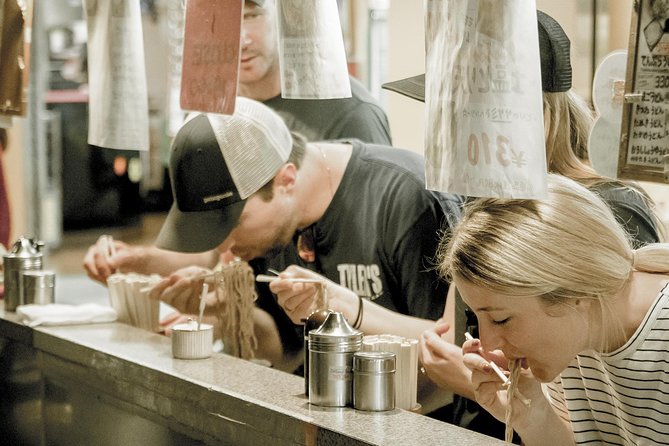
Food is one of the strongest reasons to choose this experience. The tour includes a selection of popular local snacks, drinks, and a Japanese-style lunch. Stops are built into the route, so eating becomes part of the neighborhood exploration rather than a separate restaurant reservation.
The food is described as local and typical, not fine dining. That distinction matters. You are visiting ordinary eateries and sampling items that may not be obvious to order on your own. The experience can introduce you to noodles, snacks, and other everyday Japanese foods while the guide explains what you are eating.
The lunch stop also gives you a view of local eating habits. You may find yourself sharing counter space with hungry salarymen, which is a small but memorable part of the outing. It is the sort of practical cultural moment that a restaurant chosen solely for international visitors may not provide.
I like that the food is tailored to the group and tied to the route. You are not just handed a generic boxed meal. The stops help reveal what people eat during ordinary days and how food fits into the pace of city life.
There are limits. Japanese cuisine often includes meat and seafood, and dashi, a common soup stock, can contain fish elements. The tour visits typical local eateries, so it may be difficult to meet personal tastes, allergies, or strict dietary requirements. If you have important food restrictions, ask before booking rather than assuming substitutions will be easy.
The bicycle parking challenge
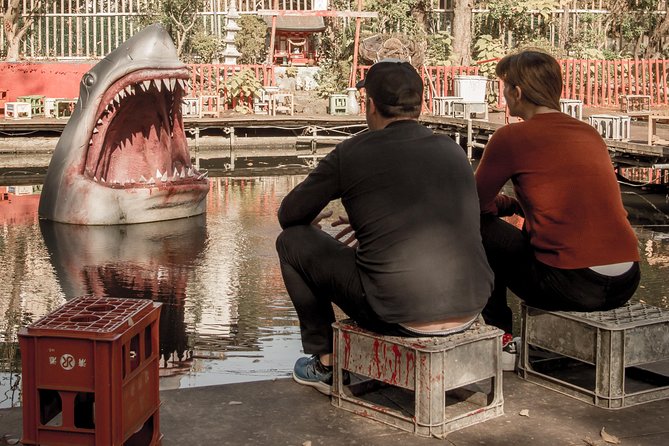
One of the more unusual details is the chance to experience Tokyo’s bicycle parking systems. Parking a bicycle in Japan is not always as simple as leaving it beside a shop. The tour uses this everyday task as part of the cultural lesson.
It sounds like a small detail, but it tells you something about how Tokyo manages limited space. You get to take part instead of only hearing an explanation. The activity also adds a little humor and a practical challenge to the day.
This is exactly the sort of stop that suits the tour’s purpose. You are not collecting famous photographs. You are learning how the city works through normal tasks, including where bicycles go when they are not being ridden.
What Andy adds to the experience
Andy receives especially strong praise for his warmth, energy, and personal style. He is described as an Australian from Melbourne who has lived in Japan for more than 20 years. That background gives him a useful position as both an outsider and a long-term local.
He does not simply point out streets. His role is to help you make sense of them. He can discuss local customs, daily routines, food, and the neighborhoods themselves. Several people also appreciated the way he helped with directions before and after the tour, including recommendations suited to personal interests.
That follow-up matters if this is your first day in Tokyo. A good local guide can help you understand where to eat, what to notice, and how to move around after the bikes are returned. Still, the quality of the outing depends partly on the guide leading your date, so Andy’s presence is an important part of the appeal.
The tone appears friendly and conversational rather than formal. If you want a tightly scripted lecture or a list of major historical facts, this may not be your ideal choice. If you enjoy asking questions and talking with your guide, it should suit you well.
Price, timing, and overall value
The price is $99.49 per person, and the outing lasts about three and a half hours. In practice, you should allow three and a half to four hours because group size, weather, eating speed, and cycling pace can affect the finish time.
That price covers the bicycle experience, guide, included snacks, drinks, and lunch. You are also paying for a small group and a route that would be difficult to reproduce on your own without local knowledge. Compared with a simple bicycle rental, it costs much more. Compared with a guided food and culture experience that includes several hours of personal attention and a meal, the value is reasonable.
The tour may be particularly good value at the start of a longer Tokyo stay. You get local orientation, food ideas, neighborhood context, and a better sense of how the city fits together. The outing can also help you decide which parts of western Tokyo deserve a return visit.
Group discounts are available, which may improve the price for families or small parties. The tour is often booked well in advance, with an average booking lead time of about 57 days, so popular dates may be worth planning ahead.
Who should book this ride?
I would choose this tour if you:
- Ride a bicycle comfortably in city streets.
- Want everyday Tokyo rather than a checklist of famous sights.
- Enjoy trying local food in ordinary settings.
- Like small groups and conversation with a guide.
- Want a gentle, mostly flat ride rather than a demanding cycling workout.
- Are visiting Tokyo early in your trip and want local orientation.
Families can enjoy it, and one family specifically included an 11-year-old. You should judge your own child’s ability carefully, since the route includes narrow streets, uneven surfaces, and a substantial distance.
I would think twice if you have food allergies, need a fully vegetarian or seafood-free menu, dislike riding in rain, or are uncomfortable cycling around other people. The tour is flexible in spirit, but it cannot remove the basic demands of an outdoor city ride.
Should you book the Tokyo West-Side Cycling and Food Tour?
Yes, if you want a personal and grounded look at Tokyo. The best parts are not major sights. They are the quiet lanes, river path, practical bicycle habits, local snacks, counter lunch, and conversations about how life works in Japan.
Book it early if your schedule is fixed, and request a helmet if you want one. Bring a standard-sized backpack rather than bulky luggage, and be honest about your cycling ability and dietary needs.
At $99.49, this is not the cheapest way to spend a morning in Tokyo. But for a small group, a three-and-a-half-hour guided ride, included food, and access to neighborhoods you might otherwise skip, it offers solid value. If your idea of a good city experience involves moving slowly, eating simply, and seeing how people actually live, this is a smart addition to your Tokyo plans.
FAQ
Where does the Tokyo West-Side Cycling and Food Tour start?
The tour starts at Koenji Station, at 4-chome-48-2 Koenjiminami, Suginami City, Tokyo 166-0003, Japan.
Where does the tour finish?
The activity ends back at the meeting point near Koenji Station.
How long does the experience last?
The stated duration is about three hours and 30 minutes. You should allow roughly three and a half to four hours because eating speed, group size, weather, and cycling pace can affect the finish time.
How far do you cycle?
You should expect to ride roughly 12 to 15 kilometers, or about 7.5 to 9.5 miles.
What kind of bicycles are provided?
The tour uses salvaged mamachari bicycles. They are Japanese-sized, maintained for urban riding, and fitted with front baskets that can hold a standard-sized backpack.
Is a helmet available?
Yes. Helmets can be provided for all participants on request.
Can children join the tour?
Participants should be over 140 centimeters tall, or about 4 feet 7 inches, to ride the bicycles comfortably. Most people can participate, but every rider must be competent on a bicycle in an urban setting.
Is food included?
Yes. The experience includes local snacks, drinks, and a Japanese-style lunch. The food is served at typical local eateries rather than fine-dining restaurants.
Can the tour accommodate food allergies or special diets?
Japanese food often contains meat, seafood, or dashi made with seafood elements. Since the tour visits typical local eateries, personal tastes, dietary requirements, and allergies may be difficult to accommodate.
What happens if it rains?
The ride generally proceeds in rainy weather, and basic ponchos are provided. If poor weather causes the tour to be canceled, you are offered another date or a full refund.
Can I cancel for a refund?
You can cancel at least 24 hours before the start time for a full refund. Cancellations or changes made less than 24 hours before the experience are not refunded or accepted.
Just added in Tokyo
- Tokyo Cute Bento Cooking Class – Make a Kawaii Character Lunchbox★ 5.0 · 126 reviews
- Japanese Home Cooking Class & Walk in Todoroki Temple Tokyo★ 5.0 · 88 reviews
- A One-of-a-Kind Sushi Experience in a Special Place of Japan★ 5.0 · 15 reviews
- Japan Tokyo Tower Observatory Deck E-Ticket★ 4.0 · 34 reviews
- Catch a Baseball Game in Tokyo with a Local – Tickets Included★ 5.0 · 24 reviews
- JDM Experience with Fast&Furious RX-7 (English speaking Driver)★ 5.0 · 57 reviews
- Tokyo Private Day Tour by Car with English speaking Driver Guide★ 4.0 · 29 reviews
- Japan Classic 10 Day – One Life Adventures★ 5.0 · 129 reviews
Cycling and E-Bike Tours, compared.
3h Tokyo E-Bike Tour: Hidden Gems, and Local Life with guide
Read our review →
Arashiyama Bamboo Forest & Hidden Gems Bike Tour (Early Bird)
Read our review →
5 Top Highlights of Kyoto Full Day Bike Tour (E-bike option)
Read our review →
Hiroshima 2hr Peace Cycling Tour with Local Guide
Read our review →Browse the lists this tour appears in