Reviewed · TOKYO TOURS
Tokyo : Yanaka and Nezu-Old Traditional Town Cultural Experience
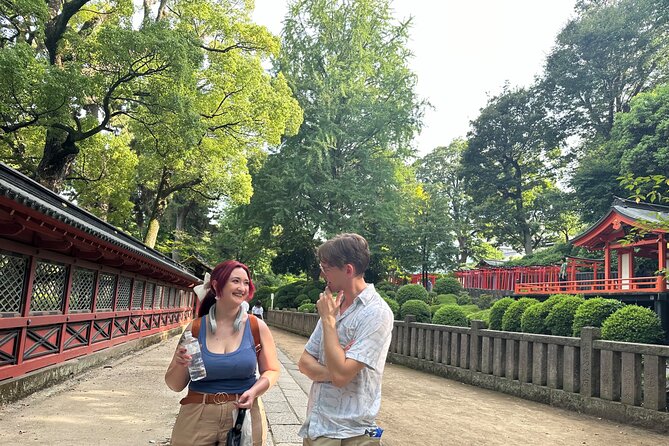
Old Tokyo still has quiet corners. This 3.5-hour walk through Yanaka, Nezu, and Sendagi offers a slower look at Tokyo, with temple gardens, neighborhood homes, old wooden shops, and the lively Yanaka Ginza shopping street. I especially like the small group of no more than nine people and the practical cultural guidance from Sui, the guide most often praised for her warm manner, clear English, and helpful food recommendations. The main consideration is that this is a walking tour with many outdoor stops, so it may feel less appealing on a very hot, wet, or tiring day.
I also like the way the route connects different eras, from Meiji and Taishō buildings to Showa-era shops and converted wooden houses. You get useful instruction on shrine and temple customs, including how to pray, write a wish, and draw a fortune. The $39.41 price is fair for a guided half-day introduction, though food, drinks, and shopping at Yanaka Ginza are not included.
In This Review
- Key points at a glance
- Why Yanaka and Nezu feel different from central Tokyo
- Meeting at Nippori Station
- Nezu Shrine and the lesson in shrine etiquette
- Tennoji Temple and a brief pause
- Yanaka’s Meiji, Taishō, and Showa-era streets
- A slow walk through residential Nezu
- Yanaka Cemetery and the old Himalayan cedar
- Yuyake Dandan and the view toward Yanaka Ginza
- A 200-year-old bathhouse turned art gallery
- Ueno Sakuragi Atari and wooden houses with new lives
- Finishing at Yanaka Ginza
- Sui’s guiding style and the value of a small group
- Is $39.41 a fair price?
- Who should book this walking tour?
- Should you book the Yanaka and Nezu tour?
- FAQ
- How long does the Yanaka and Nezu tour last?
- Where does the tour start?
- Where does the tour end?
- How large is the group?
- What is the price?
- Is Nezu Shrine included?
- Can I learn Japanese shrine and temple etiquette?
- Is food included?
- Are mobile tickets accepted?
- What is the cancellation policy?
Key points at a glance
- A maximum of nine people: The small group makes it easier to hear the guide and ask questions in narrow residential lanes.
- Nezu Shrine customs: You can learn how to approach a shrine, make a wish, and try a fortune telling ritual.
- Old Tokyo through several periods: The walk points out buildings and shops linked with the Meiji, Taishō, and Showa periods.
- A calm route through Yanaka Cemetery: This scenic cemetery offers a quiet break and views of old neighborhood character.
- Yanaka Ginza food and shopping: The tour ends on a local shopping street where Sui introduces Japanese sweets, street foods, and souvenirs.
- Flexible planning: Confirmation is provided at booking, mobile tickets are accepted, and free cancellation is available up to 24 hours before the start.
Why Yanaka and Nezu feel different from central Tokyo
Tokyo can be loud, crowded, and relentlessly modern. Yanaka and Nezu offer a different rhythm. The streets are more residential, the pace is gentler, and the route gives you time to notice small details instead of rushing from one major sight to the next.
This part of the city is known for old temples, traditional homes, small shops, and streets that retain traces of earlier Tokyo. The walk does not focus on one grand attraction. Instead, it helps you connect ordinary-looking streets with the city’s past.
That approach is the chief reason I would consider booking it. You are not simply checking off a shrine and a shopping street. You are learning how those places fit into daily life, religion, architecture, and local customs.
The tour lasts about three hours and 30 minutes. Its advertised stops include around 30 minutes at Nezu Shrine, 50 minutes in the Yanaka district, 30 minutes in Nezu, and 20 minutes at Yanaka Cemetery, with shorter visits at several other sites. The rest of the time is used for walking between neighborhoods and taking in the streets.
A few more options to weigh up in Tokyo
- Tokyo Disney Resort – Tokyo Disneyland & Tokyo DisneySea Park Tickets
★ 4.8 · 99,488 reviews - SHIBUYA SKY Ticket
★ 4.7 · 46,509 reviews - JR Whole Japan Rail Pass
★ 4.8 · 29,150 reviews
Meeting at Nippori Station
The tour begins at Nippori Station, at 2 Chome-19 Nishinippori in Arakawa City. This is a practical starting point for the route because the tour then moves through Yanaka and Nezu before ending at Yanaka Ginza.
You should arrive ready to walk. The experience is built around streets, steps, shrine paths, cemetery lanes, and small shopping areas rather than a bus or private vehicle. The pace is described as relaxed, which matters in a neighborhood tour. You have enough time to listen, take photographs, and ask questions without feeling pushed along.
A small group can make a real difference here. With no more than nine participants, the guide can speak to everyone without shouting. It should also be easier to pause in tight spaces without blocking the path.
Nezu Shrine and the lesson in shrine etiquette
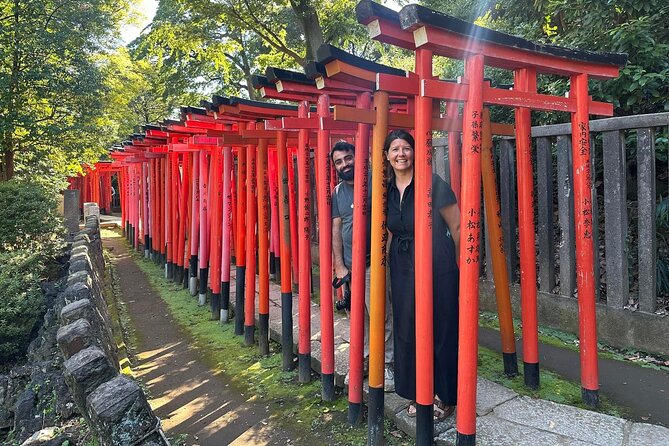
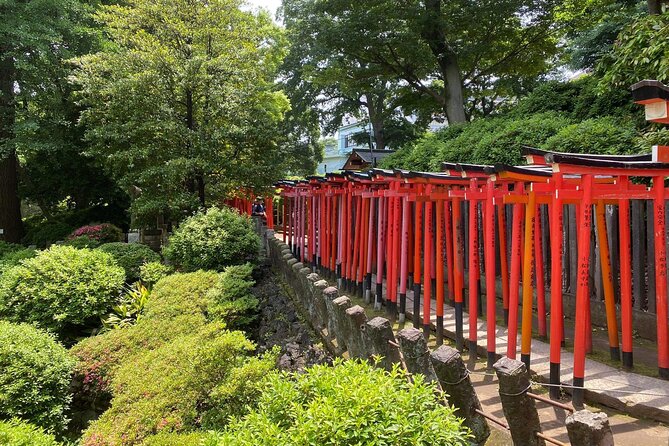
Nezu Shrine is the first major stop, with a picturesque path lined by torii gates. The setting gives you an immediate introduction to Japanese religious spaces, but the most useful part is the guidance on what to do once you arrive.
Sui explains how to pray, write a wish, and receive a fortune. These are simple actions, but they can feel confusing when you first encounter them alone. A short explanation helps you take part with respect instead of copying the nearest person and hoping for the best.
The shrine visit is scheduled for about 30 minutes, which is enough for an introduction without turning the tour into a long religious lecture. I like this balance. You get cultural context and practical instruction, then continue walking while the experience is still fresh.
The shrine is free to enter, and the tour price includes the guide’s explanations rather than a special admission charge. Bring a little patience if the area is busy, since the torii-lined path is also a popular photo setting.
Tennoji Temple and a brief pause
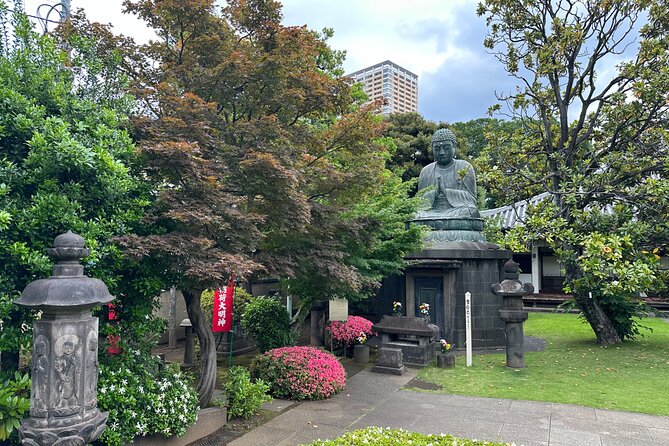
The stop at Tennoji Temple is much shorter, listed at about five minutes. The temple is one of the oldest in the Yanaka area and is known for its large bronze seated Buddha.
This is a quick look rather than a full temple visit. You can appreciate the statue, the calm setting, and the surrounding garden view, but do not expect a long period for independent exploration. That short timing may disappoint you if temples are your main reason for booking.
Still, the stop works well as part of the larger route. Nezu Shrine introduces one side of Japanese religious practice, while Tennoji gives you a compact temple experience. Together, they help explain why Yanaka has so many spiritual sites.
A completely different kind of day out:
- Mt Fuji and Hakone 1-Day Bus Tour Return by Bullet Train
★ 5.0 · 26,383 reviews - TOKYO SKYTREE® Ticket
★ 4.7 · 25,136 reviews - teamLab Borderless Tickets: MORI Building DIGITAL ART MUSEUM
★ 4.7 · 24,126 reviews - teamLab Planets TOKYO Ticket
★ 4.7 · 21,663 reviews
Yanaka’s Meiji, Taishō, and Showa-era streets
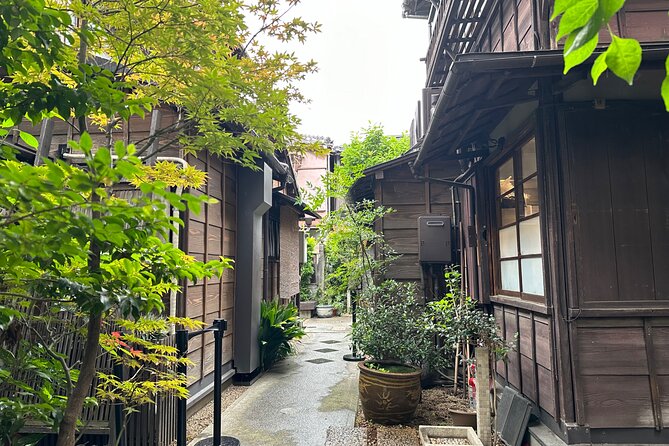
The 50-minute walk through Yanaka is the heart of the experience. Here you see remains of buildings from the Meiji, Taishō, and Showa periods, along with small shops passed down through generations.
The appeal is not polished spectacle. You are looking at the way older buildings and neighborhood businesses sit within present-day Tokyo. That mix gives the walk its character. A modern city can still contain modest storefronts, older houses, and long-running local trades.
The guide’s role matters most here. Without context, you might pass an old building and simply call it charming. With Sui, you get a clearer sense of the period it represents and how the area changed over time. Her explanations are repeatedly praised for adding information that guidebooks may not provide.
The route also includes time to chat with the guide. I would use that opportunity to ask for restaurant suggestions, nearby places worth visiting, or advice on other parts of Tokyo. Sui is especially noted for recommending places to eat, which can be valuable once the tour reaches Yanaka Ginza.
A slow walk through residential Nezu
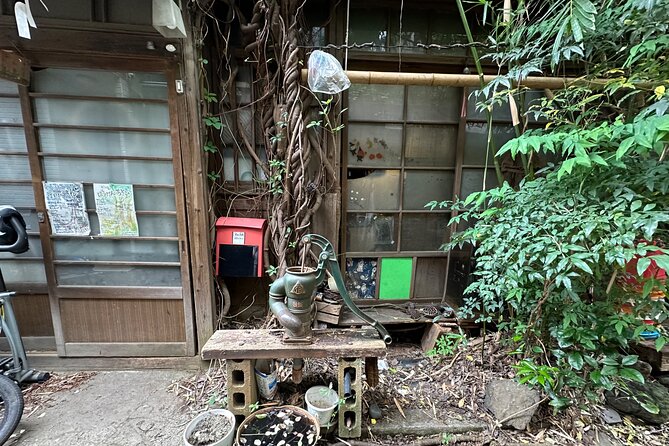
Nezu receives about 30 minutes of walking time. This section moves away from formal sights and into a local residential area, where you can see old and new houses alongside neighborhood shops.
For me, this is one of the more useful parts of the tour. Famous Tokyo sights show you what the city presents to outsiders. A residential walk gives you a better sense of how the city is organized around everyday streets and homes.
The route is guided rather than free roaming, so you are not left to guess which details matter. You might notice a traditional exterior, a newer house, or a small shop, then hear how it fits into the area. The tour does not promise access inside private homes, and it should be treated as an observational walk through public streets.
Because this section is less dramatic than a shrine or shopping street, some people may find it quiet. That is also its strength. If you want a break from Tokyo’s major crowds, Nezu provides it.
Yanaka Cemetery and the old Himalayan cedar
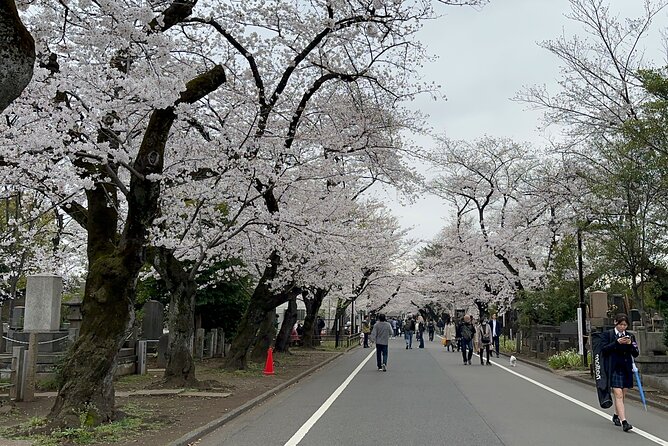
Yanaka Cemetery is described as one of Tokyo’s largest and most scenic cemeteries. The route spends about 20 minutes here and points out that important figures are buried in the grounds.
A cemetery requires a different mood from a shopping street or shrine. You should expect a calm, respectful stop, with time to appreciate the setting and learn about the area. The cemetery also helps explain why Yanaka has retained such a strong connection to temples, memorials, and older neighborhoods.
The tour passes a Himalayan cedar tree said to be 100 years old. It is a small detail, but details like this make a walking tour memorable. Rather than giving you only famous landmarks, the route draws attention to living pieces of the neighborhood that you could easily miss on your own.
Photography should be handled thoughtfully in a cemetery. The supplied details do not state specific photography rules, so follow the guide’s lead and keep the surroundings in mind.
Yuyake Dandan and the view toward Yanaka Ginza
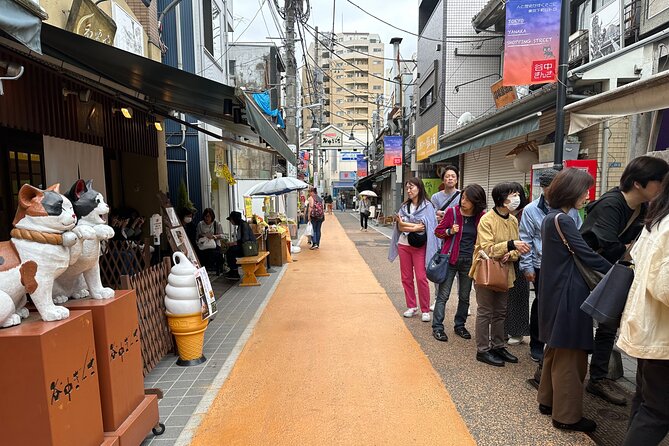
Yuyake Dandan means sunset staircase in Japanese. The stop lasts only about two minutes, but it is intended as a photo point overlooking Yanaka Ginza and the street scene below.
Do not judge this stop by its short timing. A staircase viewpoint is naturally brief, and the value comes from the angle it gives you before you enter the shopping street. If the timing and light cooperate, it can be one of the most attractive photographs on the route.
The name suggests sunset, but the tour details do not promise a sunset departure or a particular time of day. You should think of it as a viewpoint rather than a guaranteed sunset event.
The stairs may also be worth noting if you have mobility concerns. The tour is described as suitable for most participants, but the route includes a staircase and several walking sections. Ask the provider about your specific needs before booking if stairs are difficult for you.
A 200-year-old bathhouse turned art gallery
Along the way, the group passes a bathhouse said to be 200 years old that has been converted into an art gallery. It is a quick pass-by rather than a full gallery visit.
This is another example of the route’s style. You are seeing how older structures can take on new uses, rather than only visiting preserved sites behind admission gates. The building connects the neighborhood’s past with its present creative life.
Since the stop is not listed as an interior visit, you should not expect dedicated gallery time or included entry. Treat it as an exterior point of interest unless the guide says otherwise.
Ueno Sakuragi Atari and wooden houses with new lives
Ueno Sakuragi Atari adds a more deliberate stop to the walking route. Here, old wooden houses have been turned into shops, and about 15 minutes are set aside to explore the area.
This is a strong example of adaptive reuse. The buildings retain their older form while serving a modern purpose. That makes the stop especially useful if you enjoy architecture, neighborhood planning, or small independent businesses.
Admission is included at this stop. The details do not specify exactly what you will buy or how much time is available for shopping, so keep your expectations modest. The main benefit is seeing the wooden structures and hearing how the area functions today.
I would keep some space in your schedule after the tour if you want to browse carefully. Fifteen minutes can introduce you to Ueno Sakuragi Atari, but it is not a long shopping session.
Finishing at Yanaka Ginza
The tour ends at Yanaka Ginza, an old local shopping street. This is where the walk shifts from quiet lanes and religious sites to food, souvenirs, and everyday commerce.
Sui introduces popular local street foods, Japanese desserts, and souvenir ideas. You then choose what you want to eat or purchase. Food is not listed as included, so bring money for anything that catches your eye.
This ending works well because it gives you a practical reward after the walking. You finish with choices rather than a fixed meal, which is useful if you have dietary preferences or simply want to decide for yourself.
The advertised visit is about 10 minutes, so do not assume you will have a long shopping period with the group. The tour ends here, and you can decide how long to stay afterward. That makes Yanaka Ginza a convenient place to continue exploring independently.
I would ask Sui for recommendations before the tour ends. Her food suggestions are one of the most useful extras highlighted by the experience, and you may want to return later when you have more time.
Sui’s guiding style and the value of a small group
Sui receives especially strong praise for being friendly, engaging, enthusiastic, and clear in English. She explains temple and shrine etiquette, shares local food suggestions, and keeps the group moving at an even pace.
That last point matters. An uneven walking tour can become tiring, especially when the route includes many short stops. The stated pace gives you time to pause and enjoy each site while still covering several neighborhoods.
The group limit of nine supports a more personal experience. You have a better chance to ask questions, hear explanations, and receive a recommendation suited to your interests. It is not a private tour, but it should feel more intimate than a large coach group.
The tour has received a five-star rating from 23 reviews, with 100 percent recommending it. That is a strong record, though the sample is not large. I would place the greatest weight on the repeated praise for the guide’s warmth, cultural explanations, relaxed pace, and food advice.
Is $39.41 a fair price?
At $39.41 per person, this is reasonably priced for a 3.5-hour guided walk in Tokyo. The main value is not paid admission. Most stops are free, and the tour does not include food or shopping.
You are paying for structure, local interpretation, and the convenience of connecting several areas in one route. A person who can find Nezu Shrine and Yanaka Ginza alone may spend less, but may miss the explanations that give the streets meaning.
The price is strongest for a first visit to Tokyo, especially if you want help with shrine customs and neighborhood history. It is less compelling for someone who already knows Yanaka well or prefers exploring without a set pace.
Group discounts may be available, and the activity accepts mobile tickets. Confirmation is provided when you book. Free cancellation is available if you cancel at least 24 hours before the start time. Changes or cancellations inside that window are not accepted for a refund.
Who should book this walking tour?
I would recommend it to you if you enjoy:
- Older neighborhoods over major city attractions
- Small temples, shrines, cemeteries, and traditional architecture
- Local food suggestions and casual shopping
- A slower walking pace
- Practical explanations of Japanese customs
- Small groups rather than large sightseeing crowds
It is also a good first or second-day activity. One person who booked it early in a Japan visit found that the tour set the tone for the rest of their time in Tokyo. That makes sense: you receive both cultural basics and neighborhood recommendations before spending more time on your own.
I would hesitate if you want a long temple tour, extensive interior visits, or a food tour with tastings included. The itinerary moves through many places, but several stops are short. You will get breadth and context rather than lengthy time at each site.
The tour is suitable for most participants, and service animals are allowed. It operates near public transportation, but the supplied details do not describe the exact walking distance, step-free access, or restroom arrangements. Contact the provider in advance if those points are important to you.
Should you book the Yanaka and Nezu tour?
Book it if you want to see a quieter side of Tokyo and would value a guide who can explain what you are seeing. The strongest reasons are Sui’s engaging style, the relaxed pace, the nine-person limit, and the mix of shrines, temples, residential streets, cemetery paths, wooden houses, and local shopping.
Skip it if you prefer to explore completely alone or want a tour built around extensive food sampling. For most visitors seeking an introduction to old Tokyo, though, $39.41 buys a useful three and a half hours, with enough local guidance to make Yanaka and Nezu feel more than just a pleasant walk.
FAQ
How long does the Yanaka and Nezu tour last?
The experience lasts approximately three hours and 30 minutes.
Where does the tour start?
The meeting point is Nippori Station at 2 Chome-19 Nishinippori, Arakawa City, Tokyo 116-0013, Japan.
Where does the tour end?
The tour ends at Yanaka Ginza, and the activity finishes back at the meeting point according to the provided details.
How large is the group?
The tour has a maximum of nine participants.
What is the price?
The listed price is $39.41 per person.
Is Nezu Shrine included?
Yes. The tour visits Nezu Shrine, and there is no admission charge listed.
Can I learn Japanese shrine and temple etiquette?
Yes. The guide explains how to pray, write a wish, and receive a fortune at Nezu Shrine, along with etiquette connected with temples and shrines.
Is food included?
No food or drinks are listed as included. At Yanaka Ginza, the guide introduces local street foods, Japanese desserts, and souvenirs, and you choose what you want to buy.
Are mobile tickets accepted?
Yes. The experience offers a mobile ticket.
What is the cancellation policy?
You can cancel at least 24 hours before the start time for a full refund. Cancellations or changes made less than 24 hours before the start time are not accepted for a refund.
Just added in Tokyo
- Tokyo Private Day Tour by Car with English speaking Driver★ 5.0 · 25 reviews
- Tokyo Private Customizable Tour with English Speaking Chauffeur★ 5.0 · 92 reviews
- Chill Out in Tokyo: Personalized Private Tours with Local Friends★ 5.0 · 104 reviews
- Tokyo Private Customized Walking tours with Local guide★ 5.0 · 23 reviews
- Tokyo 6 hour Tour : English Speaking Driver Only, No Guide★ 4.0 · 15 reviews
- Tokyo Private Tour with Local Expert Guide – Hidden Gems★ 5.0 · 36 reviews
- Tokyo Metropolis★ 5.0 · 51 reviews
- Tokyo Portrait Tour with a Professional Photographer★ 5.0 · 58 reviews
Tokyo Tours, compared.

Tokyo Disney Resort – Tokyo Disneyland & Tokyo DisneySea Park Tickets
Read our review →

Mt Fuji and Hakone 1-Day Bus Tour Return by Bullet Train
Read our review →

teamLab Borderless Tickets: MORI Building DIGITAL ART MUSEUM
Read our review →