
Reviewed · WALKING TOURS
The Old Quarter of Tokyo – Yanaka Walking Tour
Tokyo has a quieter story to tell. This three-hour walk through Yanaka trades neon and high-rises for wooden homes, temples, shrines, and local shopping alleys. I like the small maximum group of 10, which gives your English-speaking guide room to answer questions and keep the walk personal. I also like the route’s mix of religion, neighborhood life, and old architecture, rather than a simple parade of famous sights.
The tour is especially good for seeing a side of Tokyo that is easy to miss on your own. Guides such as Aya, Junko, Rei, Mei, Kiyo, Mami, and Polina have been praised for clear English, patient answers, local knowledge, and a friendly manner. The main consideration is that this is a walking tour with several outdoor stops, so comfortable shoes, sun protection, and water are important, especially in hot, humid weather.
In This Review
- Key points at a glance
- Why Yanaka makes a useful change from central Tokyo
- Starting at Nippori Station
- Tennoji Temple and the Yanaka Buddha
- Yanaka Cemetery and local customs
- Ueno-Sakuragi Atari and an old cider tree
- Enju-ji Temple and the god of strong legs
- Nezu Shrine and its red torii gates
- Hebimichi and everyday residential Tokyo
- Yanaka Ginza, where the walk ends
- Guide quality and the small-group advantage
- Is $40 a fair price?
- Practical advice before you go
- Who should book the Yanaka walk?
- My verdict on this three-hour Yanaka experience
- FAQ
- How long does the Yanaka walking tour last?
- How much does the tour cost?
- What is the maximum group size?
- Where does the tour begin?
- Where does the tour end?
- Is food included in the tour price?
- Is admission to the temples, cemetery, and Nezu Shrine included?
- Can I cancel for a full refund?
Key points at a glance
- Yanaka feels far removed from central Tokyo: Quiet residential lanes, old houses, temples, and small shops replace the polished city center.
- The group is limited to 10 people: This is small enough for questions, photos, and personal attention from the guide.
- Religion is explained in everyday terms: You learn about Buddhist temples, Shinto shrines, cemetery customs, and how these traditions fit into Japanese life.
- The route ends at Yanaka Ginza: You can finish with local sweets, snacks, and shopping, though food costs extra.
- Several old buildings have been given new life: Ueno-Sakuragi Atari turns roughly 80-year-old wooden houses into a cafe, bakery, beer hall, and community space.
- The tour costs $40 per person: That is fair value if you want context and introductions you would probably miss while walking alone.
Why Yanaka makes a useful change from central Tokyo
Tokyo can feel almost too modern. Ginza, Shibuya, and Omotesando offer sleek department stores, bright signs, and polished streets, but Yanaka gives you a slower view of the city. It has a more residential feel, with narrow lanes, low wooden buildings, religious sites, and shops serving the local community.
Part of Yanaka’s appeal comes from what survived here. Some wooden homes and older structures escaped the World War II bombings and earlier fires and disasters that reshaped much of Tokyo. You should not expect an open-air museum. Yanaka is still a lived-in neighborhood, and that is the point.
I like this tour because it gives you a contrast with the rest of your Tokyo visit. You are not just looking at old buildings. You are learning how ordinary homes, temples, shrines, food shops, and quiet back streets fit together.
The guide helps explain details that are easy to overlook. A small religious marker, a cemetery custom, or a row of wooden boards at a temple becomes more meaningful when someone explains what you are seeing. Several guides have also used photos and laminated images to show how places or traditions looked in another period.
More Walking Tours in Tokyo
- Tokyo Tsukiji Fish Market Food and Culture Walking Tour
★ 5.0 · 3,184 reviews - Tokyo: Imperial Palace and Shogun Historical Walking Tour
★ 5.0 · 2,251 reviews - Tokyo: Shinjuku Local Bar and Izakaya Guided Walking Tour
★ 4.9 · 1,794 reviews
Starting at Nippori Station
The walk begins at Nippori Station in Nishinippori, at 2 Chome-19 Nishinippori, Arakawa City. The station is a practical meeting point, and the tour ends at Yanaka Ginza, at 3-chōme-13-1 Yanaka, Taito City.
That start and finish make sense. You begin near a major rail station and end in an area where you can continue eating, browsing, or exploring on foot. You should pay attention to the meeting instructions and allow enough time to find the group, since Tokyo stations can be large and confusing.
The experience lasts about three hours. The listed sightseeing stops are short, usually between five and 20 minutes, with walking between them. This keeps the route moving, but it also means you should not expect long, formal visits inside every temple or shrine.
The mobile ticket is useful for keeping your booking details on your phone. The maximum group size is 10, a real advantage here. Yanaka’s narrow lanes and residential character would be less pleasant with a large crowd.
Tennoji Temple and the Yanaka Buddha
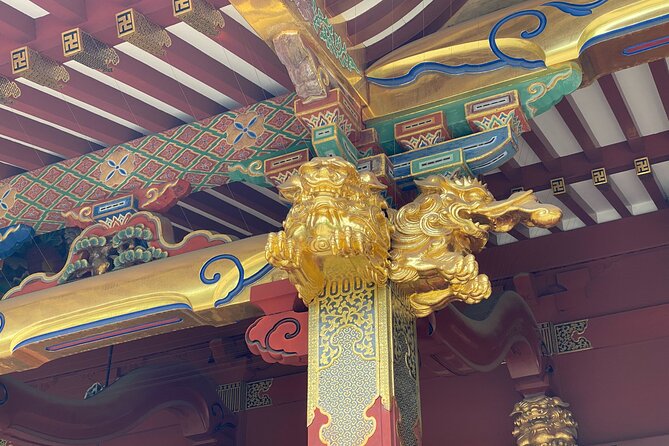
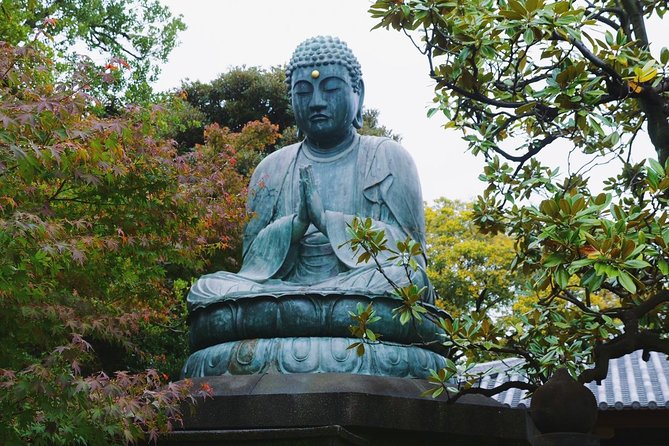
The first main stop is Tennoji Temple, where you see the Yanaka Buddha. The statue was created in 1690, giving the guide a clear starting point for the area’s religious and cultural story.
The stop lasts about 15 minutes and has no admission charge. That is enough time to look closely, take photos, and hear the background without turning the visit into a long lecture.
The value here is the explanation. Japanese religious sites can seem confusing when you first arrive. A Buddhist temple and a Shinto shrine may both look peaceful and beautifully maintained, but they serve different traditions and customs. The guide begins sorting out those differences in a simple way.
You may also hear folk stories and local beliefs that do not fit neatly into a textbook description of religion. That was one of the most praised parts of the tour. Guides are not only reciting dates. They connect the site to customs, stories, and everyday life.
Yanaka Cemetery and local customs
From Tennoji, the route continues into Yanaka Cemetery. This is not a quick photo stop beside a famous monument. You walk through the cemetery while the guide explains what a Japanese cemetery is like and the customs local people follow.
The visit lasts about 15 minutes and is free. You should treat the area with care. This is an active place of remembrance, not simply a sightseeing backdrop, so listen to the guide’s advice about respectful behavior.
For many people, this is one of the most useful sections of the walk. Cemeteries reveal a lot about how a society approaches family, ancestors, and religious practice. The guide explains details you might not understand if you wandered through alone.
This stop also slows the pace. The walk is not packed with one famous attraction after another. You have time to notice the setting, ask questions, and understand how the cemetery relates to the surrounding neighborhood.
A completely different kind of day out:
- Tokyo Disney Resort – Tokyo Disneyland & Tokyo DisneySea Park Tickets
★ 4.8 · 99,488 reviews - SHIBUYA SKY Ticket
★ 4.7 · 46,509 reviews - JR Whole Japan Rail Pass
★ 4.8 · 29,150 reviews - Mt Fuji and Hakone 1-Day Bus Tour Return by Bullet Train
★ 5.0 · 26,383 reviews
Ueno-Sakuragi Atari and an old cider tree
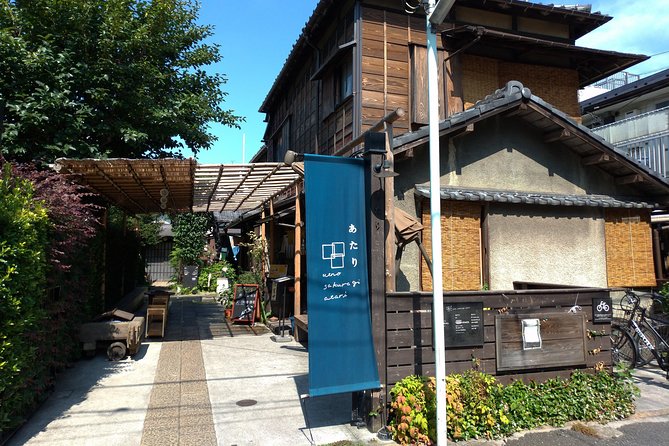
The next stop, Ueno-Sakuragi Atari, shows a different kind of preservation. Roughly 80-year-old wooden houses have been renovated into a cafe, bakery, beer hall, and community space for local residents.
Admission is not included, although the tour description does not list a required entrance fee. Food, drinks, and personal purchases are extra. The stop lasts around 15 minutes, so you may have time for a quick look rather than a full meal.
I like this part because it shows that old Tokyo is not frozen in the past. Traditional buildings can be repaired and used again without losing their character. A bakery in an old house tells you something about present-day Yanaka as well as its past.
The route also points out a 100-year-old cider tree, described as a symbol of Yanaka. It is a small detail, but that is often what makes a neighborhood walk memorable. You are seeing local markers rather than only major attractions printed in every guidebook.
Do not plan on a long cafe break here unless the timing allows it. The listed visit is brief, and the overall walk has several later stops.
Enju-ji Temple and the god of strong legs
Enju-ji Temple is a very short stop, about five minutes. It is unusual because the temple enshrines a god associated with strong legs rather than the kind of Buddhist figure most visitors expect.
Wooden boards at the temple carry wishes from people with foot problems. This gives the guide a chance to explain how religious practice can be direct, practical, and connected to daily concerns.
The stop does not include admission. Its short length is both a strength and a limitation. You get an interesting cultural detail without spending too much time, but if you want a long look at the temple, you may find the visit brief.
This is the sort of stop that benefits from a guide’s explanation. Without context, you might walk past the boards and see only a collection of wooden plaques. With context, the place becomes a window into the way people bring ordinary hopes and worries to religious sites.
Nezu Shrine and its red torii gates
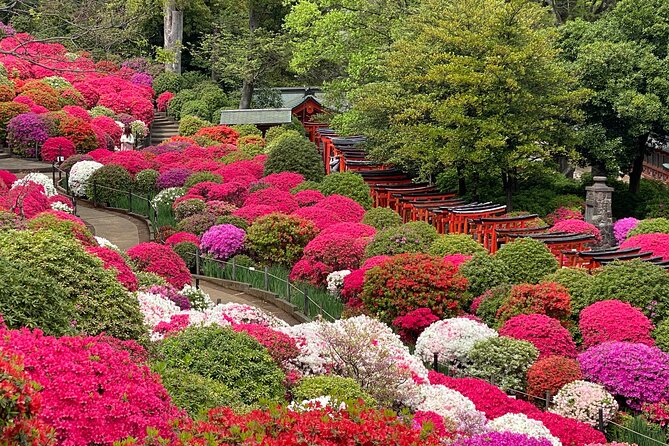
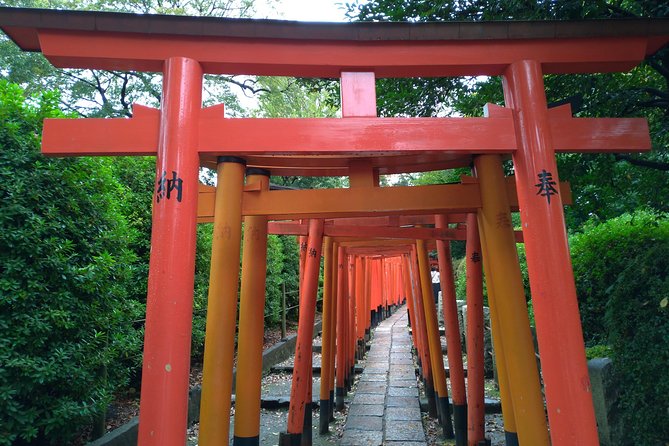
Nezu Shrine is one of the visual highlights. The shrine has rows of red torii gates that recall the famous Fushimi Inari shrine in Kyoto. You have about 20 minutes here, and there is no admission charge.
This is a good photo stop, but the guide also explains shrine etiquette. That matters. You learn not only where to point your camera, but how to behave at a Shinto site and what certain actions mean.
Nezu Shrine gives the tour a strong contrast with the Buddhist locations earlier in the walk. The guide can show how Shinto and Buddhism coexist in Japan, a subject that several people found especially useful. You leave with a clearer sense that Japanese religious life is not divided into simple boxes.
The shrine can also be one of the more visually appealing places on the route. Still, the time is limited, so keep your camera ready and avoid wandering too far from the group.
Hebimichi and everyday residential Tokyo
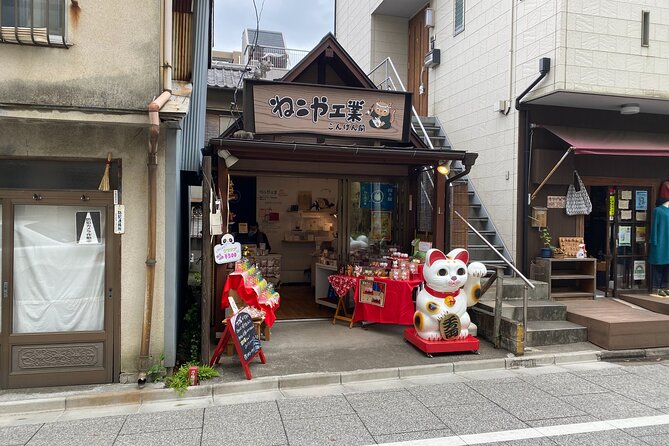
After Nezu Shrine, the route moves through Hebimichi, a back street in a residential area. The name refers to a snake-like road, and the point is to see ordinary Japanese life at close range.
This may be the least dramatic section if you are measuring the tour by monuments. It may also be one of the most valuable. You see the quiet lanes between major stops, where people live rather than pose for visitors.
I like this kind of walking because it gives scale to Tokyo. The city is not only train stations, office towers, shopping districts, and famous crossings. It is also modest homes, narrow streets, small gardens, and local routines.
You should keep your voice low and remain aware that this is a residential area. The tour is not a license to treat private homes as photo props. The guide’s presence helps you pass through with more understanding and respect.
Yanaka Ginza, where the walk ends
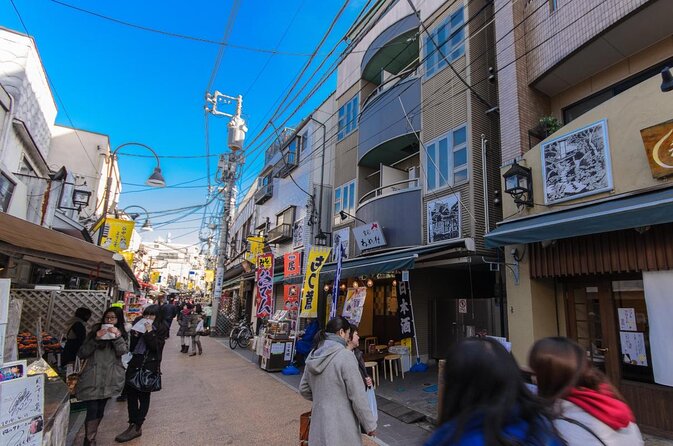
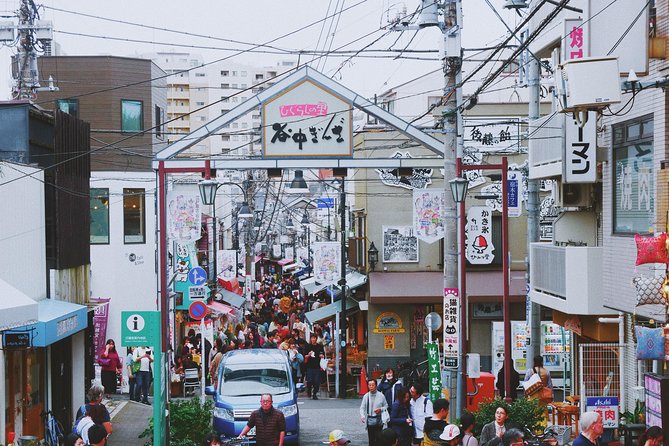
The final stop is Yanaka Ginza Shopping Street. The guide explains the shops and the local food available here, giving you a useful introduction to a marketplace where people shop, snack, and meet.
The stop lasts about 20 minutes, and food is not included. You can try local foods and sweets at your own expense, but you should not assume there is time for a full meal during the official tour.
Ending here is practical. You finish with choices. You can buy a snack, browse local products, or continue exploring Yanaka after the group separates. If you are hungry, budget a little extra for food and drinks.
This final stop also ties the whole walk together. You have seen religious sites, old houses, quiet lanes, and community spaces. Now you see how the neighborhood functions as a shopping district. It feels like an ending with somewhere to go, rather than a drop-off at an isolated monument.
Guide quality and the small-group advantage
Guide quality is central to this experience. The strongest feedback has focused on clear English, local familiarity, patience, humor, and a willingness to answer questions.
Aya has been praised for bringing laminated photos, offering thoughtful explanations, taking photos for the group, and making time for individual questions. Junko has been described as warm and well informed, with a personal connection to the neighborhood. Rei has received praise for handling questions and explaining cultural and religious customs clearly.
Other guides, including Mei, Kiyo, Mami, and Polina, have also been singled out for friendly presentation and strong area knowledge. The exact guide depends on the departure, so you should not book based on one particular person. Still, the repeated praise for different guides suggests that the experience is not dependent on a single standout host.
The group limit of 10 helps. You can hear the explanation, ask a question without holding up a large crowd, and get help with photos. One group of nine found the pace comfortable and the setting intimate.
Is $40 a fair price?
At $40 per person, this is not the cheapest way to walk around Yanaka. You can enter the free temples, shrine, cemetery, and shopping street without paying for admission.
The question is what you are paying for. You are paying for three hours of structure, interpretation, neighborhood orientation, religious context, and access to small details that are easy to miss. You also avoid spending your own time piecing together the route and deciding which side streets are worth following.
I think the price is fair if this is your first visit to Yanaka or if you want cultural context rather than a self-guided stroll. It is less useful if you already know the neighborhood well, prefer wandering alone, or want to spend a long time inside each site.
The value improves if you use the ending well. Try a snack at Yanaka Ginza, note places you want to revisit, and continue exploring after the formal tour. Food and drinks cost extra, so plan for that separately.
Practical advice before you go
Wear comfortable shoes. You walk for about three hours, and the route includes residential lanes, temple grounds, cemetery paths, and shopping streets.
Bring sun protection and water, especially in warm weather. One participant described walking in 35-degree heat and humidity, so conditions can make a major difference.
The tour requires good weather. If poor weather cancels it, you are offered another date or a full refund. You can cancel for a full refund up to 24 hours before the start time, but changes or cancellations inside that window are not accepted.
The experience is near public transportation, and most people can participate. Service animals are allowed. Since the route visits religious sites and a residential neighborhood, modest, respectful behavior is appropriate.
Who should book the Yanaka walk?
I recommend it if you want a calmer counterpoint to Tokyo’s major commercial districts. It suits first-time visitors who want help understanding Buddhist and Shinto customs, as well as repeat visitors looking for a neighborhood with a different pace.
Families with older children may also find it useful, especially if they enjoy stories, food stops, and short visits rather than long museum sessions. The small group makes it easier to keep questions moving.
You should think twice if you dislike walking in heat, need long breaks, or want a tour focused only on major landmarks. Some stops are short, and food purchases are not part of the $40 price.
My verdict on this three-hour Yanaka experience
I would book this tour for a first look at old Tokyo. Its best feature is not one spectacular sight. It is the way the route connects temples, cemetery customs, wooden buildings, neighborhood streets, and a local market into one understandable picture.
The guides are the main reason to choose it over walking alone. With a good guide such as Aya, Junko, Rei, Mei, Kiyo, Mami, or Polina, Yanaka becomes more than a quiet district. You start noticing how religion, family customs, old homes, food, and daily life share the same streets.
At $40, it offers solid value for personal attention and cultural explanation. Book it if you want to see Tokyo at a human pace, and leave room afterward to explore Yanaka Ginza on your own.
FAQ
How long does the Yanaka walking tour last?
The tour lasts approximately three hours.
How much does the tour cost?
The price is $40 per person.
What is the maximum group size?
The tour has a maximum of 10 travelers.
Where does the tour begin?
It begins at Nippori Station, at 2 Chome-19 Nishinippori, Arakawa City, Tokyo 116-0013, Japan.
Where does the tour end?
The tour ends at Yanaka Ginza, at 3-chōme-13-1 Yanaka, Taito City, Tokyo 110-0001, Japan.
Is food included in the tour price?
No. Food, drinks, and personal expenses are not included. You can buy local foods and sweets at Yanaka Ginza for an additional cost.
Is admission to the temples, cemetery, and Nezu Shrine included?
The listed admission for Tennoji Temple, Yanaka Cemetery, and Nezu Shrine is free. Admission is not included for stops where a ticket may apply.
Can I cancel for a full refund?
Yes. You can cancel at least 24 hours before the start time for a full refund. Cancellations or changes made less than 24 hours before the start time are not accepted.
Just added in Tokyo
- Japanese Home Cooking Class & Walk in Todoroki Temple Tokyo★ 5.0 · 88 reviews
- A One-of-a-Kind Sushi Experience in a Special Place of Japan★ 5.0 · 15 reviews
- Tokyo Cute Bento Cooking Class – Make a Kawaii Character Lunchbox★ 5.0 · 126 reviews
- Japan Tokyo Tower Observatory Deck E-Ticket★ 4.0 · 34 reviews
- Catch a Baseball Game in Tokyo with a Local – Tickets Included★ 5.0 · 24 reviews
- JDM Experience with Fast&Furious RX-7 (English speaking Driver)★ 5.0 · 57 reviews
- Tokyo Private Day Tour by Car with English speaking Driver Guide★ 4.0 · 29 reviews
- Japan Classic 10 Day – One Life Adventures★ 5.0 · 129 reviews
Walking Tours, compared.
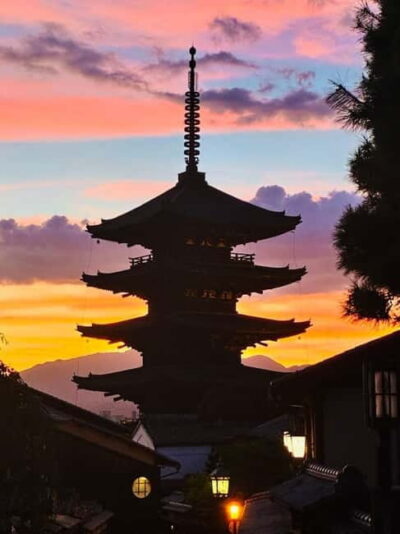
Kyoto Geisha Walking Tour: Gion District & Hidden Gems
Read our review →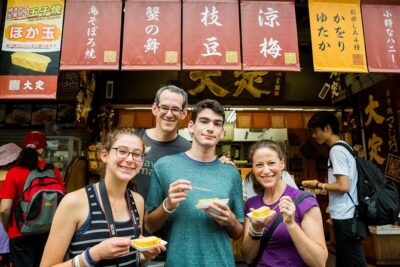
Tokyo Tsukiji Fish Market Food and Culture Walking Tour
Read our review →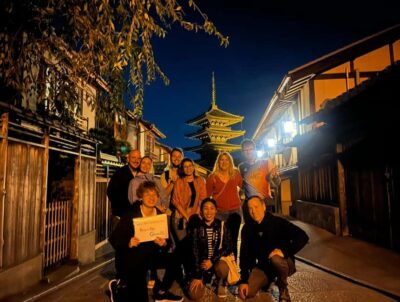
Gion Magical Night Walking Tour with Geisha Trivia
Read our review →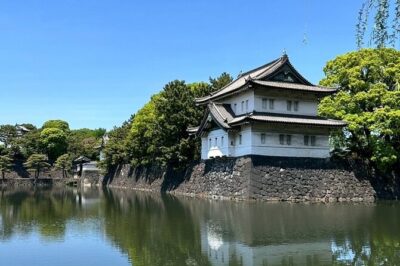
Imperial Palace and Shogun Historical Walking Tour
Read our review →
Gion Geisha District Walking Tour – Stories of Geisha
Read our review →

Shinjuku Local Bar and Izakaya Guided Walking Tour
Read our review →
Browse the lists this tour appears in