
Reviewed · KIMONO AND CULTURAL DRESS
:Tokyo,Shibuya/ Pro Photography in Kimono / English-Friendly
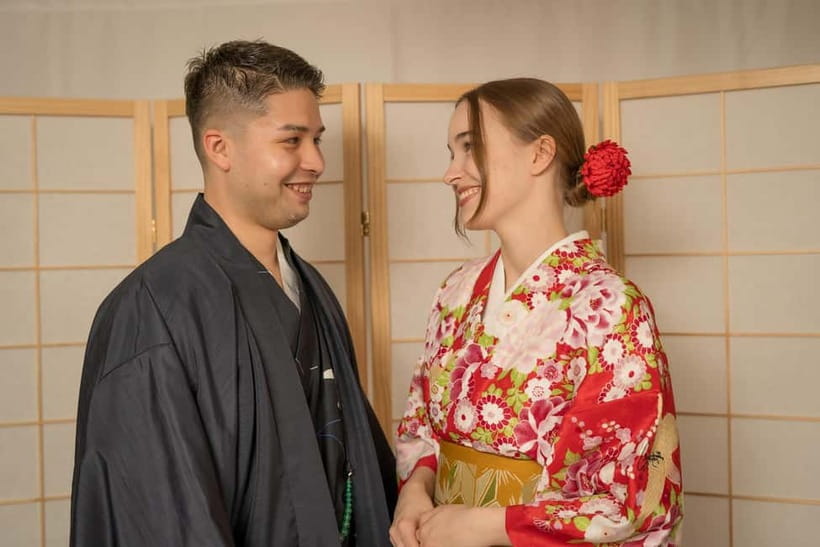
A kimono portrait makes a lasting Tokyo souvenir. Kimono SHIBUI combines dressing, accessories, and a professional photo session in one hour, just a short walk from Meiji Shrine and Takeshita Street. I especially like the large choice of kimonos for women, men, and children, along with the friendly English-speaking staff who guide you through each step.
I also like the quieter format. You are not committing to wearing a kimono all day or trying to manage complicated layers on your own. The main consideration is the location: the studio is in Jingumae Room 413 at Harajuku Cope Anex, and the building has little or no obvious signage. Give yourself time to find it, and call the shop if you are standing outside and feeling lost.
In This Review
- Key Details Before You Book
- Why This Short Kimono Session Works Well
- Finding Jingumae Room 413
- Choosing Your Kimono and Accessories
- Professional Dressing in About an Hour
- Studio Portraits and Outdoor Harajuku Photos
- What the $137 Price Really Covers
- The Staff Make the Difference
- Who Should Book This Experience
- A Practical Plan for Your Visit
- Should You Book Kimono SHIBUI?
- FAQ
- Where is Kimono SHIBUI located?
- How close is the studio to Meiji Shrine?
- How close is it to Takeshita Street?
- Is the experience private?
- Is English available?
- What does the package include?
- Is hair styling included?
- How long does the experience last?
- How many photographs can be taken?
- How do I receive the photographs?
Key Details Before You Book
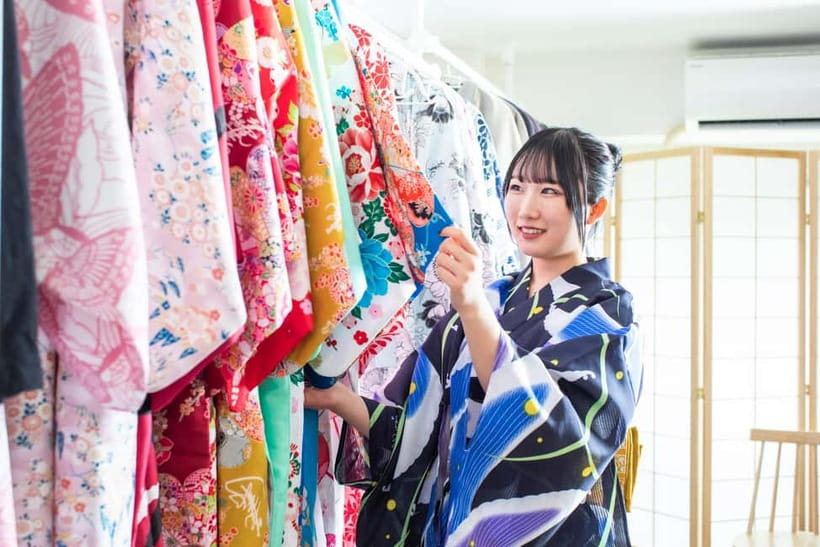
- Three minutes from Meiji Shrine: The studio is close to one of Tokyo’s best-known Shinto sites.
- Two minutes from Takeshita Street: You can pair the portrait session with Harajuku shopping and sightseeing.
- Private one-hour booking: The advertised price is $137 for a group up to one person, so check the price carefully if you are booking for more people.
- Indoor or outdoor photographs: Your session may use the studio, a nearby park, a shrine area, or negotiated outdoor spots.
- Hair styling costs extra: Hair styling is not included and is listed at 2,000 Japanese yen per person, paid at the shop.
- Up to 140 images: Photo data is sent by email or AirDrop, though the images are not edited.
Why This Short Kimono Session Works Well
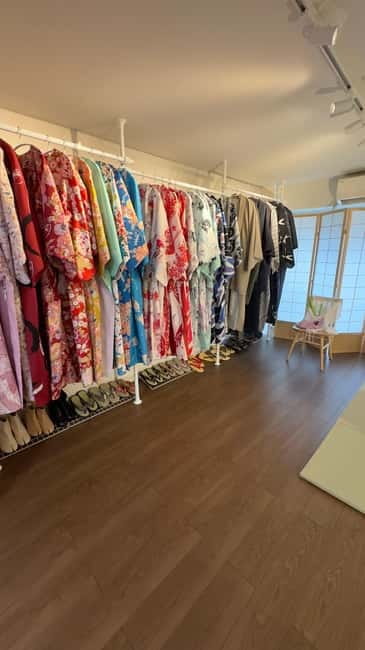
Many kimono rental plans ask you to spend most of the day dressed in formal clothing. That sounds appealing until you are walking, sitting, eating, and navigating Tokyo in stiff layers and traditional footwear. Kimono SHIBUI offers a simpler plan: get dressed properly, take professional photographs, then change back into regular clothes.
For me, that one-hour structure is the main appeal. You get the cultural experience and the finished photographs without giving up your whole afternoon. It also works well for a solo visitor who wants good portraits but does not want to depend on a stranger with a phone.
The staff speak English, which matters here. Choosing a kimono involves more than picking a color. You also choose accessories and coordinate the full look. The staff explain the clothing pieces and help you make choices that suit your style rather than simply handing you the first available outfit.
The personal service is another strong point. The people who help with dressing are described as kind, patient, and professional. One visitor specifically praised the way the staff explained kimono parts and shared cultural details during the dressing process. That turns a costume change into a more meaningful introduction to Japanese clothing.
More Kimono Experiences in Tokyo
- Tokyo Asakusa Kimono&Yukata Rental at Kimono Miyabi Asakusa Station
★ 4.9 · 8,489 reviews - Tokyo Kimono, Furisode, and Yukata Rental Experience | Exquisite Hairstyling & Japanese Makeup & Photo Shoot (Ookini Asakusa Kaminarimon)
★ 4.8 · 767 reviews - Let’s make kimono !(Kimono is a gift for you
★ 5.0 · 252 reviews
Finding Jingumae Room 413
The meeting point is Jingumae Room 413, Harajuku Cope Anex. It is in the Harajuku area, close to Meiji Shrine and Takeshita Street, but the building can be easy to miss because it does not have a clear shopfront sign.
This is the one practical problem that comes up repeatedly in the experience details. You may be standing directly in front of the building and still wonder if you are in the right place. The best solution is simple: save the booking information, arrive with the reservation code and number ready, and call the shop if you cannot identify the entrance.
Once inside, the setting is described as clean and professional. The first impression may feel less polished than a large street-level boutique, but the private studio format has a benefit. You avoid the feeling of being processed through a crowded rental shop, and the staff can focus on your clothing and photographs.
The location is useful for a full Harajuku day. Takeshita Street is about two minutes away, while Meiji Shrine is about three minutes away. You can schedule the session before sightseeing, then change back into normal clothes and continue exploring without having to protect a rented kimono for hours.
Choosing Your Kimono and Accessories
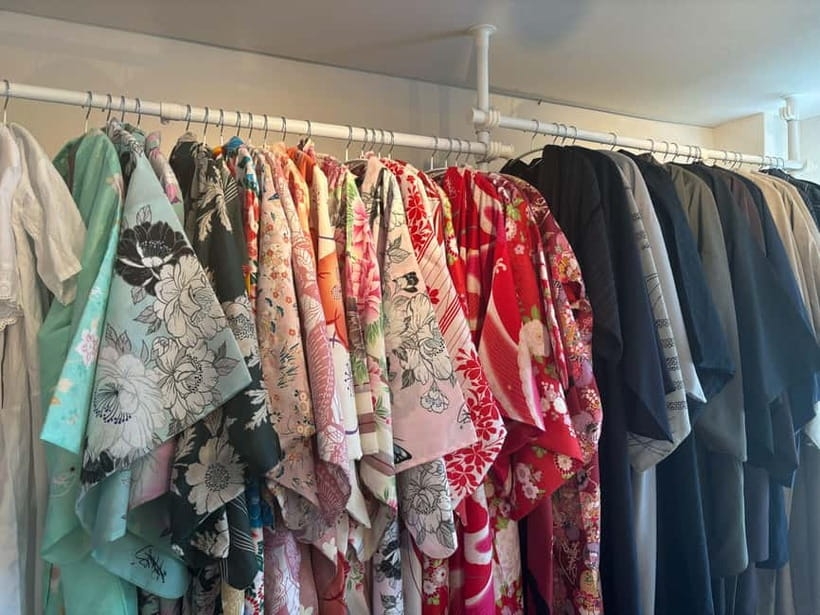
After check-in, the staff explain the service and discuss the possible photo locations. Then comes the most enjoyable decision: choosing your kimono and accessories.
The collection includes options for women, men, and children. That makes the experience practical for couples and families, not just solo visitors. You can also ask about buying a kimono if you find a style you particularly like.
The selection process is not just about color. The kimono, obi, collar, and accessories all work together. The staff help you coordinate the pieces, and the available choices allow you to create a look that feels personal. If you have a preferred color or a particular kind of portrait in mind, mention it early.
You should also decide if you want hair styling. The main package includes kimono and accessory rental, dressing, and the photo session, but hair styling is listed separately at 2,000 yen per person. One description says hair styling is not included, so do not assume it comes with the base price.
The information from one solo visitor suggests that hair was handled during the preparation, but the stated service terms clearly list it as an extra. I would confirm this when booking and budget for the additional charge if a finished hairstyle matters to you.
Professional Dressing in About an Hour
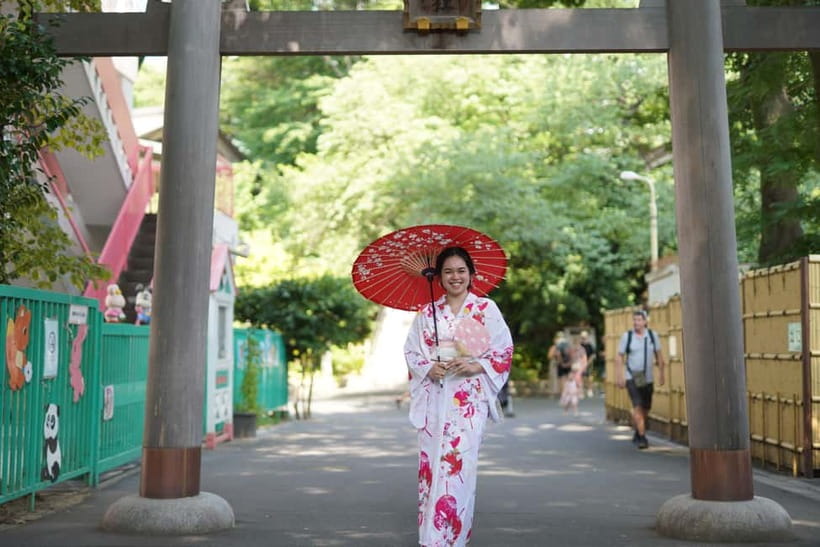
A professional dresser helps you put on the kimono. This is important because the layers need to sit correctly, and the obi must be tied securely. You do not need to know the names or order of each piece before arriving.
The dressing is also a chance to learn a little about what you are wearing. The staff explain parts of the kimono and some cultural details while they work. That makes the process less rushed and gives you a better sense of why the outfit has so many layers and accessories.
The short duration keeps things manageable. The complete visit lasts about one hour, including choosing the outfit, dressing, taking photographs, changing back, and receiving the files. The actual studio photo session is listed as approximately 15 minutes, although the full service may also include outdoor photographs and moving between nearby spots.
Expect the kimono to feel formal and structured. That is part of the charm, but it is also why this format is easier than wearing one all day. You get the look for the photographs, then return to comfortable clothing.
A completely different kind of day out:
- Tokyo Disney Resort – Tokyo Disneyland & Tokyo DisneySea Park Tickets
★ 4.8 · 99,488 reviews - SHIBUYA SKY Ticket
★ 4.7 · 46,509 reviews - JR Whole Japan Rail Pass
★ 4.8 · 29,150 reviews - Mt Fuji and Hakone 1-Day Bus Tour Return by Bullet Train
★ 5.0 · 26,383 reviews
Studio Portraits and Outdoor Harajuku Photos
The photo session may take place in the traditional Japanese-designed studio or outdoors at an agreed location. The studio provides a controlled setting, while outdoor photographs add a stronger sense of place.
The nearby outdoor options can include a park, shrine area, or neighborhood street. One family group walked for roughly three to five minutes to a nearby park, where the photographs were taken. Another description mentions photographs around the neighborhood with the photographer guiding the group to several locations.
This is a useful contrast with the crowded photo spots around Senso-ji in Asakusa. If you want a quieter portrait experience away from large crowds, the Harajuku studio and nearby streets may suit you better. You still have recognizable Tokyo surroundings nearby, but the session is not tied to the busiest temple approach.
Outdoor photography does bring some uncertainty. The final locations depend on the arrangement made at the studio, and conditions outside can affect the session. The supplied details do not promise a fixed shrine or park route, so treat the outdoor setting as an option rather than a guaranteed list of stops.
The photographer can take up to 140 photographs. That gives you plenty of poses and expressions to choose from, especially if you are taking portraits with family or a partner. The images are not edited, and the files are sent by email or AirDrop. You receive a large set of memories, but you should not expect retouching or a polished album.
What the $137 Price Really Covers
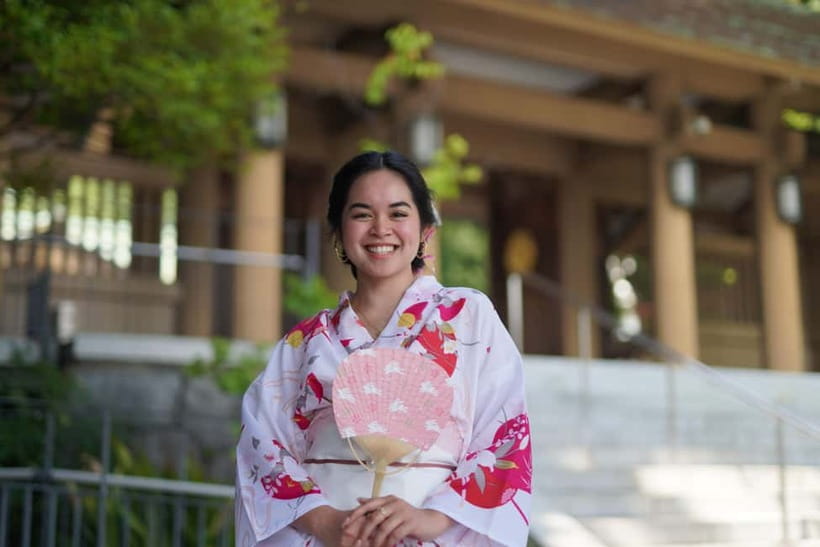
The listed price is $137 for a private group of up to one person. In practical terms, that price covers the kimono selection, accessories, professional dressing, and a photography session. It also includes the convenience of handling everything with one reservation rather than arranging a rental and photographer separately.
For a solo visitor, the value is easy to understand. You receive professional photographs of yourself in a traditional outfit, with English-language help and no need to ask passing strangers to take pictures. That can be worth more than a cheaper rental if the photographs are the main goal.
For families or couples, check how the pricing changes. The information supplied lists a group up to one person, while the collection includes clothing for children and adults. Do not assume the same price covers several people. Confirm the total before paying.
Hair styling is the main extra cost identified. It is listed at 2,000 yen per person and paid at the shop. The photographs are also unedited, so the price is best viewed as payment for the outfit, dressing service, photographer, and access to the files, not for professional retouching.
The reserve-now, pay-later option gives you flexibility, and cancellation is free up to 24 hours in advance for a full refund. Those terms are useful if your Tokyo schedule is still changing.
The Staff Make the Difference
The strongest part of the experience is the human service. The staff are consistently described as warm, helpful, and professional. They ask where you are from, take interest in your trip, and explain the clothing rather than treating the appointment as a quick transaction.
The owner is also described as friendly and well informed about the process. The photographer helps direct the group outdoors, which matters when you are wearing formal clothing and need help with posture, positioning, and suitable backgrounds.
That friendly approach is especially helpful for first-time kimono wearers. You do not need to know how to sit, where to place your hands, or how to arrange the sleeves. The staff guide you through the session.
The private setting also suits anyone who feels shy about being photographed. You can take your time choosing an outfit and ask questions in English. It is a more personal experience than a large rental counter where many people are being dressed at once.
Who Should Book This Experience
I would recommend Kimono SHIBUI to several types of visitors:
- Solo visitors who want professional portraits without asking someone else to take pictures.
- Couples who want matching or coordinated traditional clothing.
- Families with children who want a short cultural activity near Harajuku.
- First-time kimono wearers who prefer help with every part of the outfit.
- Visitors who want photographs but do not want to spend a full day in rented clothing.
- Anyone who prefers a quieter photo setting than the busiest parts of Asakusa.
It may be less suitable if you want a long outdoor tour in a kimono. The photography time is short, with the studio session listed at about 15 minutes, and the full appointment lasts about one hour. It is also not the right choice if you expect edited images, since the files are delivered without editing.
A Practical Plan for Your Visit
Arrive with your reservation code and number ready. Since the building can be hard to identify, do not leave the search until the last minute. If you are outside and unsure, call the shop and ask for directions.
Wear clothing that is easy to change out of. You will be dressed by the staff, so you do not need to manage the kimono yourself. If you want hair styling, confirm the 2,000 yen extra charge before the appointment.
Allow time after the session to check your files. The photographs may be delivered by email or AirDrop at the studio. Make sure your phone can receive the files before you leave, especially if you are relying on AirDrop.
Pair the appointment with nearby sights. Takeshita Street is only about two minutes away, and Meiji Shrine is about three minutes away. The location lets you build a pleasant Harajuku outing around a compact portrait session rather than making a separate cross-city trip.
Should You Book Kimono SHIBUI?
Book it if you want a short, personal kimono experience with professional photographs and English-speaking help. The friendly dressing service, broad clothing selection, private format, and nearby outdoor options give you more than a basic rental.
I would be cautious only about three points: the hard-to-find building, the extra charge for hair styling, and the fact that the photographs are not edited. Confirm the price for more than one person, arrive ready to call for directions, and treat the session as a one-hour portrait appointment rather than a full-day kimono tour.
For a solo visitor or a family that wants a lasting Tokyo keepsake without a long commitment, this is a strong choice near Harajuku.
FAQ
Where is Kimono SHIBUI located?
The meeting point is Jingumae Room 413 at Harajuku Cope Anex in Tokyo.
How close is the studio to Meiji Shrine?
The studio is about a three-minute walk from Meiji Shrine.
How close is it to Takeshita Street?
Takeshita Street is about a two-minute walk from the studio.
Is the experience private?
Yes. The activity is offered as a private group experience.
Is English available?
Yes. English-speaking staff are available to guide you through the service.
What does the package include?
The package includes choosing a kimono, accessory rental, professional dressing, and a photography session.
Is hair styling included?
No. Hair styling is listed as an additional 2,000 Japanese yen per person, paid at the shop.
How long does the experience last?
The full experience lasts about one hour. The studio photography portion is listed as approximately 15 minutes.
How many photographs can be taken?
The studio can take up to 140 photographs.
How do I receive the photographs?
The photo data is sent by email or AirDrop. The photographs are not edited.
Just added in Tokyo
- A One-of-a-Kind Sushi Experience in a Special Place of Japan★ 5.0 · 15 reviews
- Tokyo Cute Bento Cooking Class – Make a Kawaii Character Lunchbox★ 5.0 · 126 reviews
- Japanese Home Cooking Class & Walk in Todoroki Temple Tokyo★ 5.0 · 88 reviews
- Japan Tokyo Tower Observatory Deck E-Ticket★ 4.0 · 34 reviews
- Catch a Baseball Game in Tokyo with a Local – Tickets Included★ 5.0 · 24 reviews
- Tokyo Private Day Tour by Car with English speaking Driver Guide★ 4.0 · 29 reviews
- Japan Classic 10 Day – One Life Adventures★ 5.0 · 129 reviews
- JDM Experience with Fast&Furious RX-7 (English speaking Driver)★ 5.0 · 57 reviews
Kimono and Cultural Dress, compared.
![[Kyoto & Nara Day Tour] Sagano Scenic Railway & Nara Park & Fushimi Inari Taisha Thousand Torii Gates & Togetsukyo Bridge & Bamboo Grove & Kimono Forest (Departing from Osaka)](https://media.japanvisits.com/wp-content/uploads/kyoto-nara-day-tour-sagano-scenic-railway-nara-park-fushimi-inari-taisha-thousand-torii-gates-togetsukyo-bridge-bamboo-grove-kimono-forest-departing-from-osaka-k110001-400x257.jpg)

Tokyo Asakusa Kimono&Yukata Rental at Kimono Miyabi Asakusa Station
Read our review →
Kyoto Geisha Walking Tour: Gion District & Hidden Gems
Read our review →
Gion Magical Night Walking Tour with Geisha Trivia
Read our review →
Gion Geisha District Walking Tour – Stories of Geisha
Read our review →
Best of Kyoto: Gion, Geisha, Pagodas & Cobblestones
Read our review →
Kyoto Kimono Rental Experience (Optional Exquisite Hair Styling/Japanese Makeup/Photography) (Ookini Kiyomizu-dera Main Store)
Read our review →Browse the lists this tour appears in