
Reviewed · WORKSHOPS
Traditional Japanese Knife Sharpening Class
Sharp tools teach useful lessons. This small Tokyo class turns knife care into a practical cultural experience, with hands-on work, Japanese sharpening theory, and a knife you sharpen yourself. I like the small group of no more than six, and I like that all equipment is supplied, so you can focus on technique rather than shopping for stones. The main consideration is time: two hours gives you a solid introduction, not full mastery.
I also appreciate the clear result at the end. You begin with a dull blade and work toward a knife that can slice through a rolled paper tube, according to the class demonstration. Instructor Charlie receives especially warm praise for his clear English explanations, while Timothy is also noted for teaching the process in an engaging, patient way.
In This Review
- Key points to know before booking
- What makes this Tokyo class worth your time
- Starting in Nishiasakusa near Tokyo Skytree
- The first lesson: knives, steel, and sharpening theory
- Moving from a dull edge to a sharp blade
- Why the small group matters
- The knife you take home
- Is $98.53 a fair price?
- Who will enjoy this experience most?
- What the two hours feel like
- Booking, cancellation, and practical details
- Should you book the Japanese knife sharpening class?
- FAQ
- How long does the Japanese knife sharpening class last?
- Where does the experience begin?
- Where does the experience end?
- Is Tokyo Skytree part of the itinerary?
- How many people can join the class?
- Is equipment provided?
- Do I sharpen a knife myself?
- Can I take the sharpened knife home?
- How much does the class cost?
- Can I cancel for a full refund?
Key points to know before booking
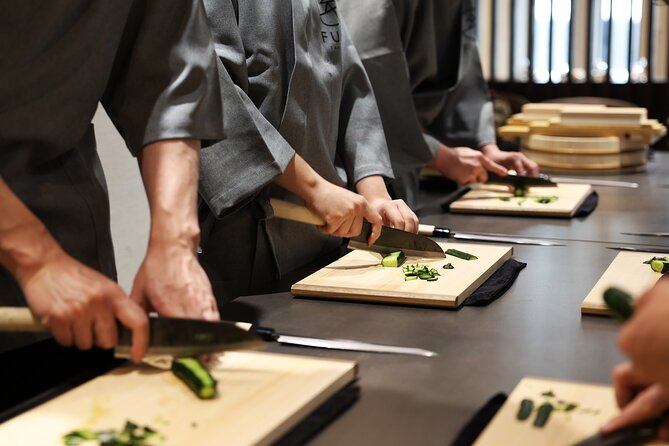
- You sharpen a real knife yourself: This is not a demonstration where you simply watch an instructor work.
- Several whetstone grits are used: You learn why different stones serve different stages of sharpening.
- The group is capped at six people: That should allow room for questions and hands-on guidance.
- The session covers steel and knife history: The class explains more than simply moving a blade across a stone.
- Your sharpened knife goes home with you: The finished tool is both a useful souvenir and a reminder of the skill.
- The meeting point is in Nishiasakusa: The experience begins and ends at 1-chōme-9-8 Nishiasakusa in Taito City.
What makes this Tokyo class worth your time
Tokyo offers plenty of ways to buy Japanese kitchen knives. This class takes a better long-term approach: it teaches you how to care for one. A beautiful knife is only as useful as its edge, and sharpening is the part many home cooks avoid because the angles, stones, and pressure can seem confusing.
Here, you get the equipment and instruction in one place. That matters for a first attempt. You do not need to guess which whetstone to buy or wonder if you are holding the blade correctly. You can work through the process with an instructor nearby to correct mistakes before they become habits.
The class also gives you a look at the ideas behind Japanese knife maintenance. You study different steel types, knife history, and the theory behind sharpening. That background helps explain why one knife may respond differently from another, and why sharpening is done in stages rather than with one quick pass.
I would not treat this as a casual souvenir activity with a token demonstration. The appeal is the physical work. Your hands do the learning. By the end, you should understand enough to continue practicing at home, though you will still need patience to become skilled.
A few more options to weigh up in Tokyo
- Tokyo Disney Resort – Tokyo Disneyland & Tokyo DisneySea Park Tickets
★ 4.8 · 99,488 reviews - SHIBUYA SKY Ticket
★ 4.7 · 46,509 reviews - JR Whole Japan Rail Pass
★ 4.8 · 29,150 reviews
Starting in Nishiasakusa near Tokyo Skytree
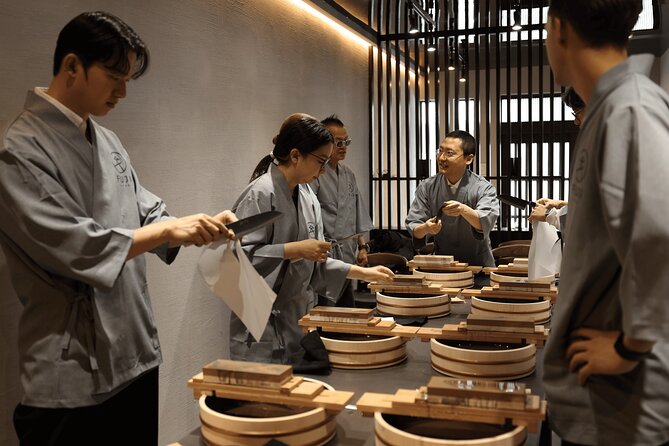
The listed meeting point is 1-chōme-9-8 Nishiasakusa, Taito City, Tokyo 111-0035. The area is near public transportation, and the activity ends at the same location. The itinerary identifies Tokyo Skytree as the stop, but the practical class information points you to the Nishiasakusa meeting address, so check your mobile ticket carefully for the exact arrival instructions.
This location places the experience in an area associated with old Tokyo atmosphere and easy access to major sights. You might combine the class with time around Asakusa or a visit toward Tokyo Skytree, but do not assume the class includes a sightseeing tour or transport between attractions. It is a focused workshop.
Plan to arrive with enough time to find the address. A hands-on class is not the place to rush in late, especially when the first part covers knife types, steel, and sharpening theory. The booking confirmation arrives at the time of booking, and the ticket is mobile, so keep it available on your phone.
The first lesson: knives, steel, and sharpening theory
The class begins with context before the stone work starts. You learn about the history of Japanese knives and the different kinds of steel used in them. This gives the practical lesson a useful foundation.
Steel affects how a blade behaves. The point is not to make you a metal expert in two hours, but to help you understand why Japanese knives require care and why sharpening methods are not one-size-fits-all. A knife with a fine edge can cut beautifully, but that edge still needs regular attention.
The instructors also explain Japanese sharpening theories. This is valuable because beginners often focus only on the visible motion. The real work involves angle, pressure, consistency, and knowing when to change stones. If you understand the reason behind each stage, you are more likely to repeat the method correctly at home.
Instructor Charlie is repeatedly praised for explaining the process in detail and answering questions in clear English. Timothy is also singled out for a well-taught lesson. The instructor assigned to your session may vary, but the available feedback points to patient teaching and strong communication as major strengths.
Moving from a dull edge to a sharp blade
The class gives you a knife to sharpen, and the process is designed to make the result easy to understand. One particularly useful detail is the starting point: the knife can be so dull that it barely cuts paper. That gives you a clear before-and-after comparison.
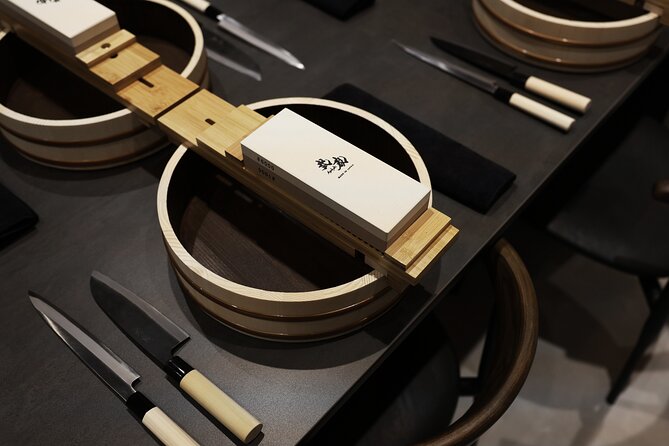
You then work with whetstones of different grits. Each stone has a role, and the instructor guides you through the progression. Coarser stones help establish or repair an edge, while finer stones refine it. The class presents this as a working skill rather than a trick.
Expect the lesson to require concentration. Sharpening is repetitive, controlled work. You need to keep the blade moving properly and pay attention to pressure. The instructor can help you avoid the common beginner problem of rushing through the motion.
The final test described in the class is strikingly simple: a properly sharpened knife can slice through a rolled paper tube standing on its own. It is a memorable way to see the difference between a dull blade and a finished edge. Do not mistake that test for a promise that your first attempt will produce professional results, but it does give the class a clear target.
A completely different kind of day out:
- Mt Fuji and Hakone 1-Day Bus Tour Return by Bullet Train
★ 5.0 · 26,383 reviews - TOKYO SKYTREE® Ticket
★ 4.7 · 25,136 reviews - teamLab Borderless Tickets: MORI Building DIGITAL ART MUSEUM
★ 4.7 · 24,126 reviews - teamLab Planets TOKYO Ticket
★ 4.7 · 21,663 reviews
Why the small group matters
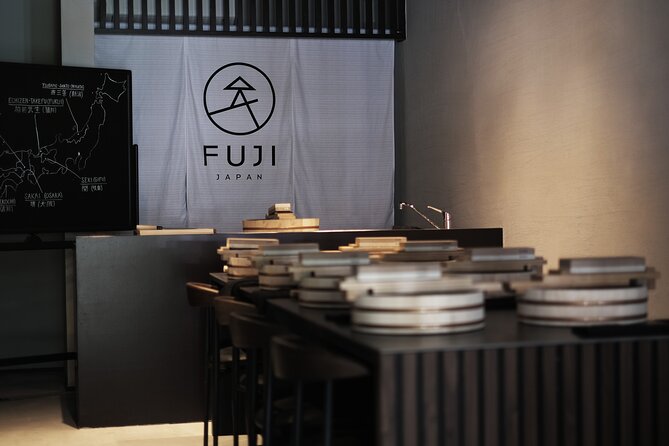
The class accepts a maximum of six people. That number is important because the experience depends on personal correction. If you hold the blade at the wrong angle, press too hard, or move unevenly, a teacher needs to be able to notice.
A crowded room would weaken the whole point of a practical workshop. In a group this small, you should have a better chance to ask about your own knife, technique, and sharpening concerns. The class is also more comfortable for people who may feel awkward making their first attempts in front of strangers.
The atmosphere is described as pleasant and engaging. That makes a difference during a task that can feel technical at first. Good teaching keeps the session from becoming a silent endurance exercise at a stone.
Still, a small group does not mean private tuition. You share the instructor’s attention with up to five other people. If you want a full personal apprenticeship, two hours will not provide that. If you want direct instruction and time to practice, the format is well judged.
The knife you take home
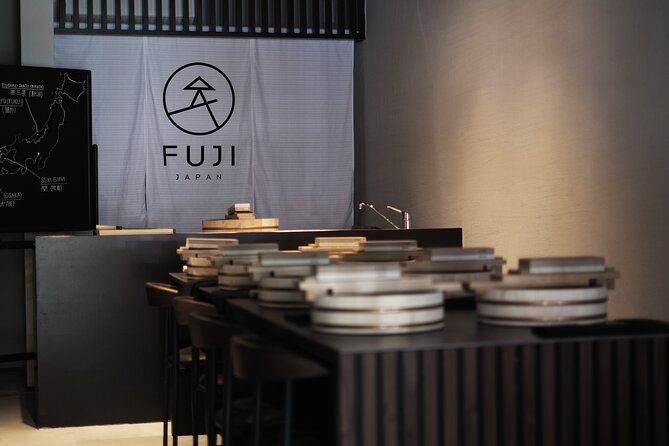
The strongest practical feature is the finished knife. You leave with the blade you sharpened yourself, rather than only a set of instructions or a photograph. It becomes a useful reminder of the class, not just a decorative souvenir.
The provided information does not specify the exact knife model, blade length, or steel type you receive. Do not book expecting a particular premium Japanese knife unless the provider confirms that detail separately. The value here is the skill and the hands-on work, not a guaranteed retail-priced blade.
This also means you should think about how you will use the knife afterward. You will understand more about whetstones and edge maintenance, but one class does not remove the need for practice. The benefit grows if you continue sharpening at home and apply the method to your own kitchen tools.
One useful extension is to buy a sharpening stone after the class. A participant specifically found a nearby recommended shop for this. The class itself supplies the equipment, but you can ask the instructor where to continue your practice in Tokyo if you want to build a home setup.
Is $98.53 a fair price?

At $98.53 per person, this is not the cheapest two-hour activity in Tokyo. Its value depends on what you want from an experience. If you only want to see Japanese knives, a shop visit will cost less. If you want a souvenir without doing any work, plenty of other options are easier.
I think the price makes sense for three reasons. First, the class supplies the tools and whetstones. Second, you receive guided instruction rather than trying to learn from a video. Third, you take home the knife you sharpen. Those pieces together make the session more than a standard cultural demonstration.
The value is strongest for cooks who already care about their kitchen tools. A sharp knife is safer and more useful when handled properly, and learning maintenance can save money over time. It is also a good choice for a birthday or shared activity. One couple used the class to celebrate a birthday, and the hands-on format suited someone who enjoys cooking.
The value is weaker if you are not interested in knives, cooking, or craft skills. The class requires attention and participation. You are paying for a lesson, not simply for entertainment or sightseeing.
Who will enjoy this experience most?
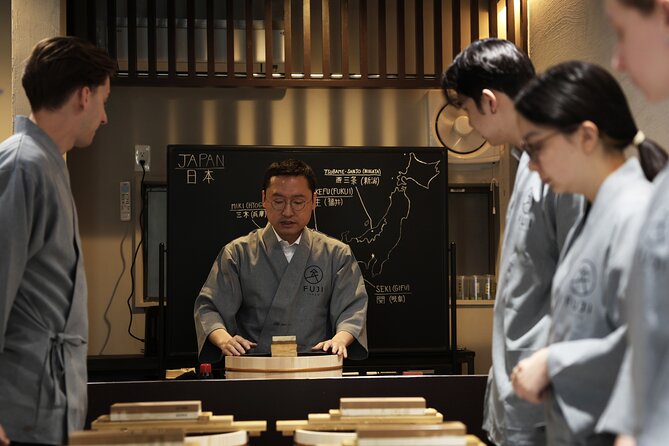
I would recommend this class to:
- Home cooks who want to maintain Japanese or Western kitchen knives
- People interested in traditional tools and craft methods
- Visitors seeking a cultural activity with a practical result
- Cooking enthusiasts looking for a memorable Tokyo gift
- Couples or friends who enjoy learning a skill together
- Anyone curious about whetstones and knife steel
It also suits people who like quiet, focused activities. You do not need to be an experienced cook, and the class information says most people can participate. Still, you should be ready to handle a blade carefully and follow instructions.
I would be more cautious about booking it for young children or anyone who cannot comfortably take part in a hands-on knife activity. The supplied information does not give a specific minimum age or detailed accessibility policy, so ask the provider if either point affects your plans.
What the two hours feel like
The session is approximately two hours. That is enough time to cover the background, watch the technique, practice on the whetstones, and check the result. It is also short enough to fit into a busy Tokyo day.
The pace should feel purposeful. The opening theory gives meaning to the practical work, and the sharpening itself takes time because good technique depends on repetition. You should not expect to spend the entire class listening. The point is to hold the knife and learn by doing.
The workshop may be especially satisfying after a morning of sightseeing. Tokyo can fill your day with temples, shops, towers, and train rides. This class changes the rhythm. You sit down, focus on one object, and leave with a skill you can use after the trip.
At the same time, do not expect a tour of Tokyo. The listed stop is Tokyo Skytree, but the activity description focuses on sharpening at the Nishiasakusa meeting point. If your main goal is a Skytree visit, treat that as a separate plan unless the provider gives you more precise details.
Booking, cancellation, and practical details
You receive confirmation when you book, and the experience uses a mobile ticket. It is near public transportation, and the class starts and ends at the same meeting point. The group size is limited to six people.
Free cancellation is available if you cancel at least 24 hours before the start time. Canceling less than 24 hours ahead does not qualify for a refund, and changes within that period are not accepted. The cut-off follows Tokyo local time, so keep that in mind if you are arranging plans from another time zone.
The class has a 100 percent recommendation rate from the supplied feedback and a five-star rating based on 18 reviews. The repeated praise centers on the instructors, clear communication, patience, and the amount participants learn. That consistency is more useful than a single glowing comment because the main risk with a workshop is uneven teaching.
Should you book the Japanese knife sharpening class?
Book it if you want to do something with your hands in Tokyo and you have a real interest in cooking, tools, or Japanese craft. The small group, supplied equipment, clear instruction, and take-home knife give the $98.53 fee a reasonable return.
Skip it if your schedule is already packed or you want a passive cultural activity. Two hours at a whetstone demands attention, and the class cannot make you an expert in one sitting. For the right person, though, it offers something better than a generic souvenir: you leave with a sharper knife and a useful skill you can keep practicing long after Tokyo.
FAQ
How long does the Japanese knife sharpening class last?
The class lasts approximately two hours.
Where does the experience begin?
It begins at 1-chōme-9-8 Nishiasakusa, Taito City, Tokyo 111-0035, Japan.
Where does the experience end?
The activity ends back at the meeting point.
Is Tokyo Skytree part of the itinerary?
Tokyo Skytree is identified as the itinerary stop, but the supplied meeting information places the start and end at the Nishiasakusa address. Confirm the exact arrangements with the provider.
How many people can join the class?
The activity has a maximum group size of six people.
Is equipment provided?
Yes. The class provides the equipment needed for the sharpening lesson, including whetstones of different grits.
Do I sharpen a knife myself?
Yes. The class is hands-on, and you sharpen your own blade under instructor guidance.
Can I take the sharpened knife home?
Yes. You can take home the knife you sharpen during the session.
How much does the class cost?
The listed price is $98.53 per person.
Can I cancel for a full refund?
Yes, if you cancel at least 24 hours before the experience start time. Cancellations made less than 24 hours ahead are not refunded, and changes within that period are not accepted.
Just added in Tokyo
- Very popular in Harajuku♡Animal petting zoo★ 4.6 · 39 reviews
- Yokohama Port: Private Customizable Tour with Transfer★ 5.0 · 19 reviews
- Wagyu & Sake 8 Course Tasting Dinner in Shinjuku★ 4.9 · 20 reviews
- Warner Bros. Studio Tour Tokyo – The Making of Harry Potter★ 4.8 · 181 reviews
- Yanaka District: Historical Walking Tour in Tokyo’s Old Town★ 4.8 · 117 reviews
- Tokyo: Classic Tsukiji Food Tour★ 4.9 · 78 reviews
- Tokyo: Tsukiji Fish Market Tour with 6 Stops & Seafood Lunch★ 4.5 · 165 reviews
- Tokyo Wagyu & Sake Pairing Tasting Experience with Local Flavors★ 5.0 · 108 reviews
Workshops, compared.

Sushi Making Tokyo Roll and Authentic Japanese Sushi Class
Read our review →
Gion Make Your Own Chopsticks with Engraving Option
Read our review →
Roll and Authentic Sushi Making Class in Asakusa
Read our review →
Ramen Cooking Class at Ramen Factory in Kyoto
Read our review →
Tokyo Asakusa Chopsticks Workshop: Make Your Own Pair
Read our review →
Ring Making Workshop : Vintage Japanese Coin Ring
Read our review →Browse the lists this tour appears in