
Reviewed · MULTI-DAY TOURS
Wonders of Japan end Tokyo 15-Day Tour by Europamundo: Itinerary & Reviews
Japan in 15 days means temples at dawn, city lights after dark, and long stretches of road between them. This Europamundo tour covers Tokyo, Kyoto, Hiroshima, Shikoku, the Japanese Alps and Nikko, with a ryokan night near Mount Fuji and a stay at a Buddhist monastery on Mount Koya.
I like two things in particular: the route reaches places that can be awkward to link independently, including Matsuyama and Mount Koya, and it pairs headline sights with quieter stops such as Tsumago and the Jizo-lined Kanmangafuchi Abyss. The included ferries, admissions, some meals and guided transport also make the trip easier to budget.
The trade-off is pace. You change hotels often, spend substantial time on the coach, and may have limited time at some major sights. English guidance is provided, but groups can be bilingual, and the guide may change during the tour.
In This Review
- At a glance
- The route trades slow travel for range
- Tokyo opens with temples, towers and a long day
- Mount Fuji brings the first ryokan night
- Kyoto’s great sights need time to breathe
- Castles, canals and Hiroshima’s difficult history
- Shikoku adds island travel and hot-spring culture
- Mount Koya offers the trip’s most unusual overnight
- The mountain loop ends with monkeys and Nikko
- What the hotels, guides and meals are like
- Is the $4,935 starting price good value?
- Should you book this Japan tour?
- FAQ
- How long is the tour, and where does it start and end?
- Are international flights included?
- Is an airport transfer included?
- What language is the tour guided in?
- What is the group size?
- Which meals are included?
- What kind of accommodation should I expect?
- Can the coach reach Mount Fuji’s Fifth Station in winter?
- Is the tour physically demanding?
At a glance
- Fuji views depend on the weather: Arakurayama Sengen Park, Lake Kawaguchiko and the Fifth Station offer several chances to see the mountain, but clouds and winter road closures can change the plan.
- Two very different nights: Sleep at a ryokan with onsen access near Fuji, then at a Mount Koya monastery with tatami rooms, shared bathrooms and a vegetarian dinner.
- A broad west-to-east loop: The route links Tokyo, Kyoto, Nara, Hiroshima, Shikoku, Mount Koya, the Alps and Nikko before returning to Tokyo.
- Many core costs are bundled: Hotels, breakfast, basic insurance, transport, selected admissions, five lunches and five dinners are included. Flights and your final airport transfer are not.
- Expect active sightseeing, not a strenuous trek: The tour is rated low intensity, but temple grounds, forest paths and Kotohira’s 785 steps still call for comfortable shoes and steady energy.
- Strong service is a real advantage, with a caveat: Tour guide and transport ratings are high, but mixed English and Spanish groups have caused communication frustrations for some English speakers.
The route trades slow travel for range
This is a coach tour for seeing a lot of Japan in a short stretch, not for lingering in one city. Over 15 days, you move from Tokyo to Mount Fuji, then west through Kyoto, Nara, Osaka and Hiroshima, cross to Shikoku, and return to the mountains and Nikko before ending in Tokyo.
That range is the chief value. You get famous city sights alongside places many first-time visitors would not reach as easily on their own, such as Kotohira, Ikaho and Kusatsu. The cost is a full schedule, frequent hotel check-ins and days with several stops.
Europamundo lists the starting price at $4,935 for the cheapest room. Flights are extra. For that price, you receive hotel stays, breakfast, ground transport, basic travel insurance, many admissions, ferry rides, an arrival shuttle and a meaningful number of meals. It is not a luxury package, and the exact value depends on your departure date and room choice, but the inclusions reduce the need to arrange every leg yourself.
A few more options to weigh up in Tokyo
- Tokyo Disney Resort – Tokyo Disneyland & Tokyo DisneySea Park Tickets
★ 4.8 · 99,488 reviews - SHIBUYA SKY Ticket
★ 4.7 · 46,509 reviews - JR Whole Japan Rail Pass
★ 4.8 · 29,150 reviews
Tokyo opens with temples, towers and a long day
Your first day is mostly for arrival and settling in. A shared shuttle takes you from Tokyo airport to the hotel, and the afternoon is free. Use it to rest or get oriented rather than planning a major outing after a long flight.
Day two is a guided tour of Tokyo, with stops at Zojoji Temple, Meiji Shrine, Tokyo Skytree and Asakusa’s Nakamise Street. You also see Shibuya Crossing from the bus and pass through Akihabara and Ginza. Skytree admission reaches the Tembo Deck at 350 metres, though weather or other exceptional conditions can limit access.
The day ends with a guided subway trip to Shinjuku, a walk and dinner at a local restaurant. That evening transfer is useful if you would rather not work out the subway straight off the plane, though it does make an already full day longer. Keep the next morning’s start in mind.
Mount Fuji brings the first ryokan night
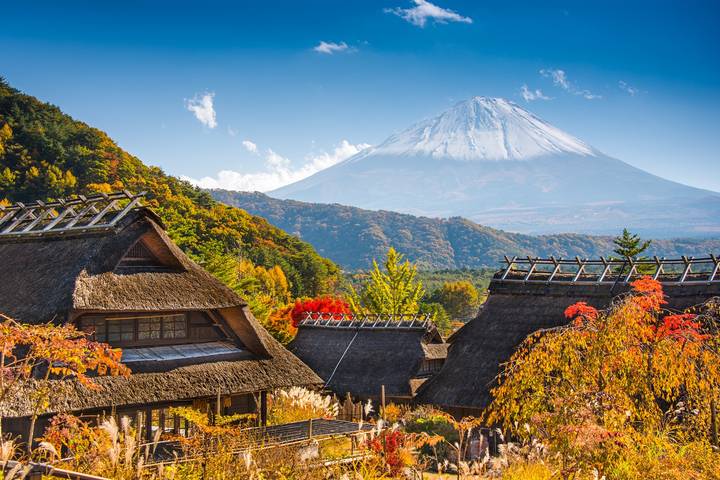
On day three, the coach heads toward the Fuji Five Lakes area. Arakurayama Sengen Park is a classic viewpoint, with a pagoda and a broad view of Mount Fuji when skies are clear. The mountain is famously fussy about showing itself, so treat the view as a bonus rather than a guarantee.
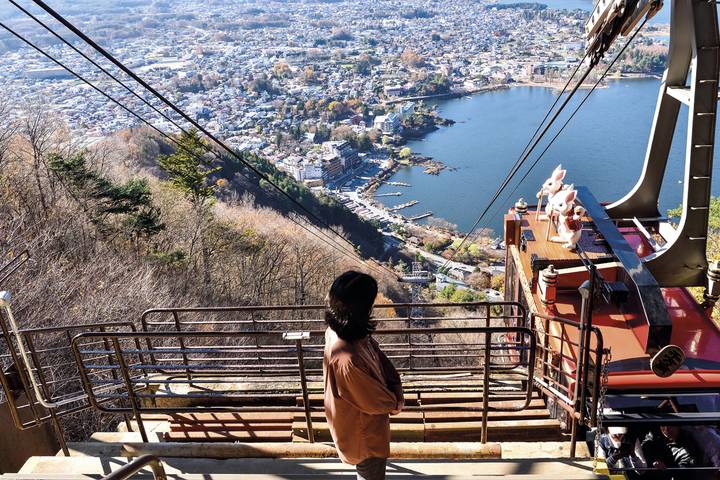
You also visit Kawaguchiko, take a boat ride on the lake and travel by road to the Fifth Station at 2,305 metres. This is a vehicle-accessible stop, not a climb. In winter, snow or weather may close the road, and the coach goes only as far as conditions allow.
The overnight stay is at a ryokan with access to an onsen and dinner included. Room styles can vary: some are Japanese-style with tatami, while others are Western-style, and the planned inn may occasionally be replaced by a Western-style hotel. It is a good introduction to the traditional inn experience, though it is not a promise of a particular room setup.
Kyoto’s great sights need time to breathe
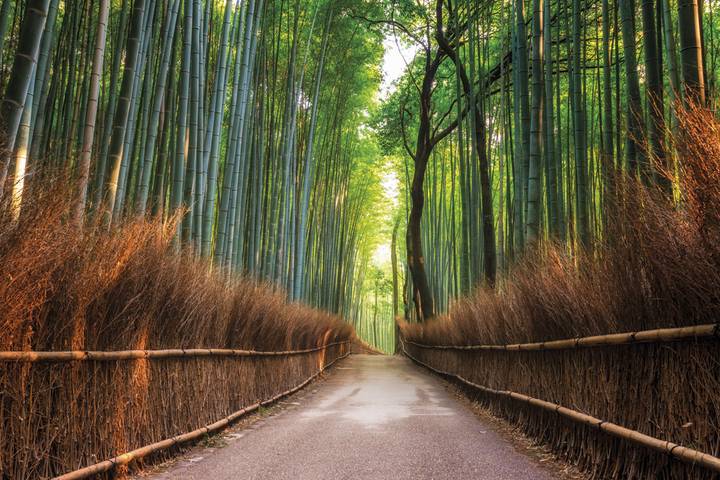
Day four strings together Iyashi no Sato Nenba, Shiraito Falls and the Toyota Museum before the drive to Kyoto. Iyashi no Sato is a restored open-air village museum, with traditional houses now used for shops, exhibits and cultural spaces. Shiraito Falls is a striking 20-metre cascade. The Toyota Museum adds a change of subject and suits anyone interested in cars or industry, but the combination makes for a long transit day.
Day five is Kyoto’s major sightseeing day. You visit Arashiyama, Togetsukyo Bridge, Tenryu-ji’s garden and the bamboo grove, then Fushimi Inari, the Imperial Palace and Kinkakuji, the Golden Pavilion. The order can vary. Fushimi Inari’s torii-lined route climbs the hillside, and walking farther up can mean fewer people, but the tour schedule may not leave time for a long hike.
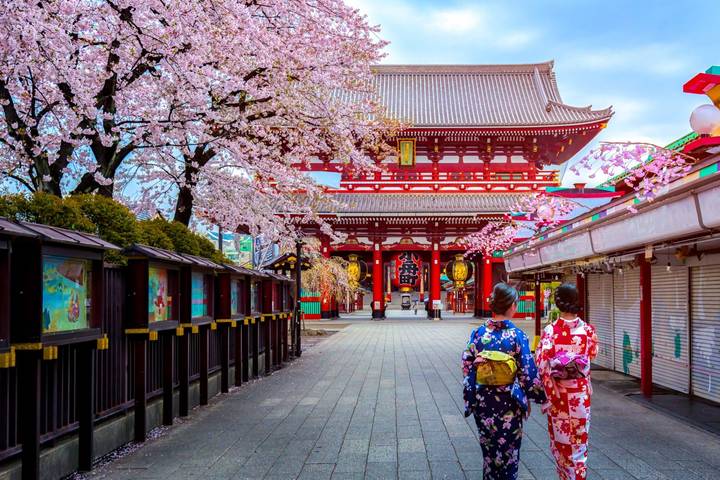
You have the evening to explore Gion, a traditional district known for its wooden townhouses and geisha culture. Treat that as free time, not an included guided tour. Day six begins with Nara’s Todaiji Temple and Great Buddha, followed by the deer in Nara Park, then continues to Osaka for Dotonbori, Osaka Castle and the Umeda area. Lunch in Nara is included. The quick succession of major sights is efficient, but you may want to return to Kyoto or Osaka independently if one place captures your imagination.
Day 12 brings another full free day in Kyoto after the Mount Koya stay. This is a welcome pause in a tightly scheduled trip. Ask your guide for suggestions, then choose one or two places rather than trying to repeat the previous day’s checklist.
A completely different kind of day out:
- Mt Fuji and Hakone 1-Day Bus Tour Return by Bullet Train
★ 5.0 · 26,383 reviews - TOKYO SKYTREE® Ticket
★ 4.7 · 25,136 reviews - teamLab Borderless Tickets: MORI Building DIGITAL ART MUSEUM
★ 4.7 · 24,126 reviews - teamLab Planets TOKYO Ticket
★ 4.7 · 21,663 reviews
Castles, canals and Hiroshima’s difficult history
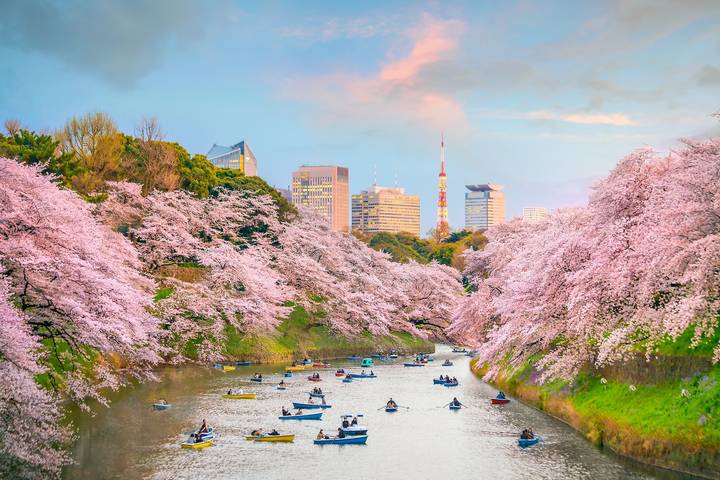
Day seven takes you to Himeji Castle, a major example of Japanese castle architecture, then to Okayama’s Korakuen Garden. The garden’s lakes, waterfalls and teahouses offer a slower contrast to the castle visit. You can see Okayama Castle from outside, but entry is not included. Some departures may sleep in Fukuyama or Kurashiki instead of Okayama, and the Kurashiki visit can shift to the previous afternoon.
On day eight, Kurashiki’s historic centre gives you time to walk its old streets before heading to Hiroshima. The Peace Memorial Park, Atomic Bomb Dome and Peace Memorial Museum form one of the trip’s most affecting visits. Give the museum your attention: it is not a light stop, and its value lies in understanding the human cost of the bombing as well as the city’s effort to remember.
The day continues by ferry to Itsukushima, where the Great Torii Gate rises from the water at the edge of the island. You have time for the shrine and island, but lunch is not included there, so keep some money and time aside. Dinner is included back in Hiroshima.
Shikoku adds island travel and hot-spring culture

A two-and-a-half-hour ferry carries you from Hiroshima to Matsuyama on Shikoku. You ride a cable car to Matsuyama Castle, visit Ishiteji Temple and have lunch at a local restaurant. Later, admission to Dogo Onsen is included. The 19th-century bathhouse is a chance to encounter public bathing as part of everyday Japanese culture, rather than just seeing hot springs from the outside.
The next day is a string of stops across Shikoku and the sea bridges toward Kobe. Kotohira Shrine sits above a long climb of 785 steps on Mount Zosu, so this is one of the tour’s clearest physical tests. Ritsurin Garden in Takamatsu is a calmer stop, with lunch included. At Naruto, you walk above the water on a glass floor and look for the sea whirlpools below. Their visibility and strength can vary, so the bridge itself is part of the visit even if the whirlpools are modest.
Mount Koya offers the trip’s most unusual overnight
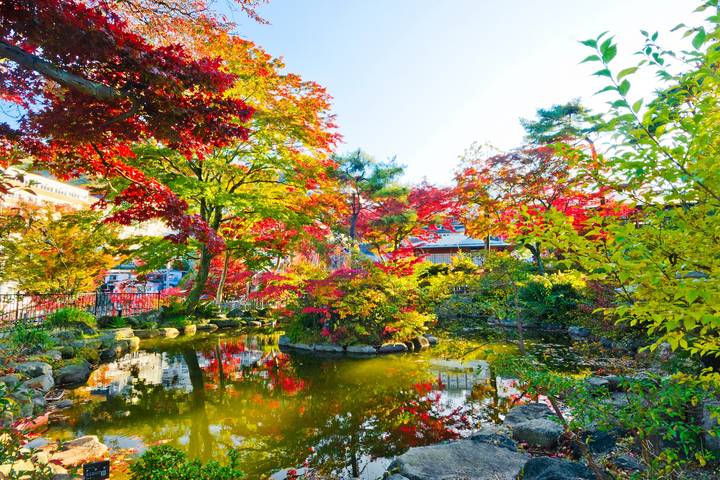
In Kobe, the Earthquake Memorial Museum recalls the 1995 disaster and the city’s rebuilding. Depending on the date, that visit may be replaced by the Sake Museum or a ride up Kobe Tower, so the Kobe stop is not fixed in every detail.
Then the tour climbs to Mount Koya, a centre of Shingon Buddhism with around 120 temples and monasteries. You visit Okuno Mausoleum, a vast woodland cemetery, and Kongobuji Temple, then spend the night at a Buddhist monastery. Monks lead an Ajikan Zen meditation practice when available, and dinner is vegetarian. A traditional Japanese breakfast follows in the morning, with the option to attend the temple ceremony before breakfast.
This is the trip’s most distinctive lodging, but go in with clear expectations. Rooms are simple, tatami-style and do not have private bathrooms. Shared facilities are part of the stay. During busy periods, limited temple capacity can also mean lodging in a nearby hotel, with half board.
The mountain loop ends with monkeys and Nikko
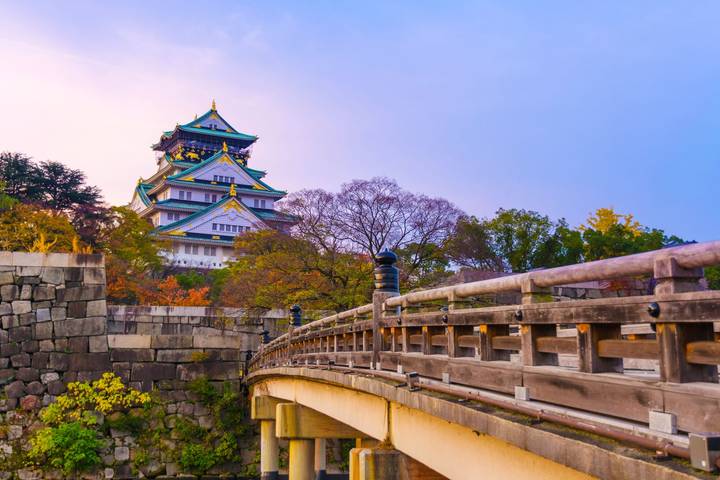
After the free day in Kyoto, day 13 heads to Tsumago, a small village of wooden houses, then Matsumoto. Lunch is included in Tsumago, and Matsumoto Castle, known as the Crow, is a highlight of the day. You also get some free time in Matsumoto before continuing to Nagano. The coach mileage is substantial, but these stops bring a welcome shift from large cities.
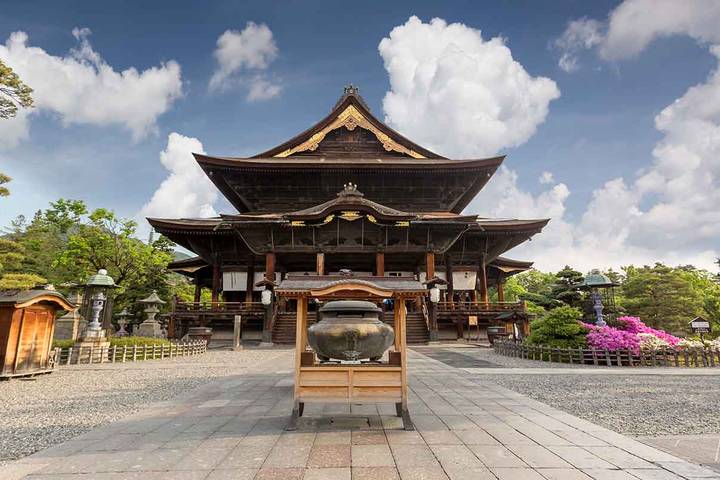
Day 14 begins at Zenkoji Temple in Nagano, where you can take part in the Gomakuyo ritual for good fortune. The route then enters the Japanese Alps for Jigokudani Monkey Park. Reaching the macaques involves a forested walk, and the monkeys’ movements can be unpredictable, especially in autumn when food availability affects where they go. The park may close if they do not come down.
Kusatsu adds another hot-spring town, with a stroll through its central area and a city park with open-air onsen. Weather can cancel this stop from November to April. The night is at a ryokan in Ikaho, known for its stone stairway, with hot-spring baths and a traditional Japanese dinner included.
On the final day, Nikko brings the ornate Toshogu Shrine, Taiyuinbyo Mausoleum and the Jizo statues beside Kanmangafuchi Abyss. You return to Tokyo at about 6:30 p.m. The airport transfer after the tour is not included, so avoid booking a flight that depends on an immediate connection.
What the hotels, guides and meals are like
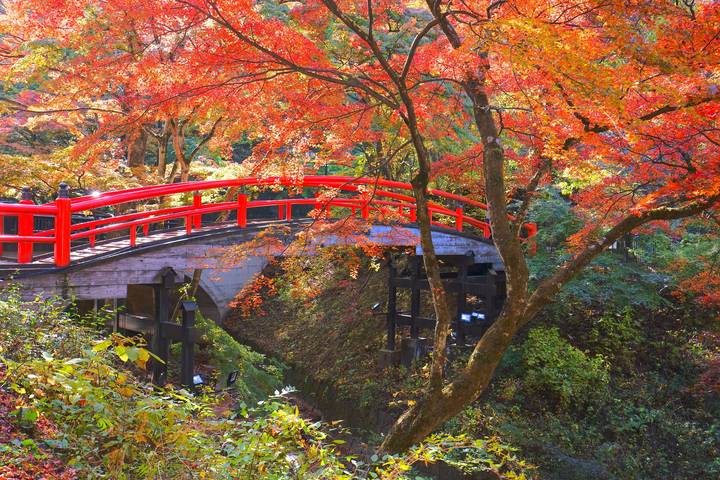
The tour uses hotels described as four-star, including the Shinagawa Prince, Miyako Kyoto Hachijyo, Hilton Hiroshima and Ana Crowne Plaza Matsuyama, along with ryokan and monastery stays. Europamundo says its hotels are selected for quality, price and location, with access to public transport, but they are not luxury properties. Room size, bed size and standards can vary by city. Most nights are conventional hotel stays; the ryokan and monastery are the exceptions that add local character.
Breakfast is included, usually as a hotel buffet, with a traditional breakfast at Mount Koya. Five lunches and five dinners are included. They fall on specific days, so do not assume every meal is covered. The included dinners are in Tokyo, Kawaguchiko, Hiroshima, Mount Koya and Ikaho. That leaves room to choose meals yourself, but you should budget for lunches and dinners outside the package.
English-speaking guidance is offered, though Europamundo may combine English and Spanish groups, with one or two tour leaders depending on group size. The guide may change during the trip, and passengers can rotate as different tour sections begin or end. Names connected with recent departures include Nadia, Midori, Emma, Asamatsu, Santiago, Santoro, Kiko, Paco, Dave Solanes, Akane, Ken and Luis, but you should not expect a particular guide. If clear spoken directions matter to you, ask before booking how the English-language arrangements work for your departure.
Is the $4,935 starting price good value?
The price makes most sense if you value having the route, transport and key admissions arranged for you. You cover a great deal of ground, including ferry crossings, the Mount Fuji area, the Hiroshima to Matsuyama crossing and sights across several regions. Hotel breakfasts, selected meals, basic insurance and the airport arrival transfer are also part of the package.
The limits matter just as much. Flights are extra, your final airport transfer is not included, and several meals are on your own. The cheapest-room price is a starting figure, not a universal fare. You are also paying for convenience and range, not extra nights in Kyoto or long, unhurried visits at every temple.
Should you book this Japan tour?
Book it if you want a guided first visit that connects the big names with less familiar stops, and you are comfortable with early starts, coach travel and changing hotels. The monastery night, two ryokan stays, Shikoku ferry route and mountain stops give this tour more variety than a Tokyo-Kyoto-only circuit.
Choose a slower plan if you prefer to spend several nights in each city, travel independently by train or set your own pace at museums and temples. Before booking, confirm the English-language setup for your departure, consider the 785-step climb at Kotohira, and leave a buffer after the 6:30 p.m. return to Tokyo. For a broad, well-supported introduction to Japan, this is a practical route, provided you are ready to keep moving.
FAQ
How long is the tour, and where does it start and end?
The tour lasts 15 days. It starts in Tokyo and returns to Tokyo, arriving at about 6:30 p.m. on the final day.
Are international flights included?
No. Flights are not included in the tour price.
Is an airport transfer included?
A shared shuttle transfer from Tokyo airport to the hotel is included on arrival. A departure transfer to the airport is not included.
What language is the tour guided in?
The tour is listed as English-guided. Europamundo notes that some departures may operate bilingually, usually in English and Spanish, and the guide may change during the tour.
What is the group size?
The group size is listed as 2 to 72 people.
Which meals are included?
Five lunches and five dinners are included, as well as breakfast at the hotels and a traditional breakfast at the Mount Koya temple stay.
What kind of accommodation should I expect?
The tour uses hotels described as four-star, plus ryokan stays near Mount Fuji and in Ikaho, and a planned monastery stay on Mount Koya. The monastery rooms are simple, with shared bathrooms, and may be replaced by a nearby hotel when temple capacity is limited.
Can the coach reach Mount Fuji’s Fifth Station in winter?
Not always. The road is often closed in winter because of snow or weather, and the tour goes as far up as conditions permit.
Is the tour physically demanding?
It is rated low intensity, but includes walking on forest trails and temple grounds, plus a climb of 785 steps at Kotohira Shrine. Comfortable shoes and a willingness to walk are sensible.
Just added in Tokyo
- Wonders Of Japan 10-Day Tour by Travel Talk★ 4.5 · 14 reviews
- Wonders of Japan end Tokyo GO 15-Day Tour by Europamundo★ 4.2 · 10 reviews
- Wonders of Japan End Osaka by Europamundo – 12-Day Tour★ 4.2 · 58 reviews
- Wonders of Japan End Osaka (including Fukuyama) 12-Day Tour by Europamundo★ 4.2 · 58 reviews
- Wonders of Japan End Osaka GO by Europamundo – 12-Day Tour★ 4.2 · 58 reviews
- Walk Japan – Kumano Kodo Trail 12-Day Tour by Explore!★ 4.7 · 20 reviews
- Visions of Japan with Hiroshima & Osaka 15-Day Tour by Globus★ 5.0 · 75 reviews
- Upgraded – Discover Japan 9-Day Tour by Explore!★ 4.8 · 6 reviews
Multi-Day Tours, compared.
9D Splendid Japan-Private 3 Star Hotels-Osaka to Tokyo by Stunning Tours
Read our review →
Japan Essentials 9 Day – One Life Adventures: Tokyo to Osaka
Read our review →
Tokyo to Osaka by Rail – Private Tour (14 Days) with Explore!
Read our review →
13-Day Japan Tour: Tokyo, Mount Fuji, Kyoto, Nara, Osaka & Beyond by The Dragon Trip
Read our review →
Browse the lists this tour appears in