
Reviewed · KAMAKURA TOURS
Your Own HANKO Name Seal Activity in Kamakura.
A stamp can tell your story. In this small Kamakura workshop, you learn how Japanese Hanko seals represent identity, choose a Japanese version of your name, and design a personal seal to take home. The activity is short, private, and built around real craft rather than a quick souvenir-shop purchase.
I like the one-on-one attention and the chance to understand the cultural role of Hanko before choosing a design. I also like that your seal is finished by hand in Japan, giving you something personal rather than a mass-produced trinket.
The main drawback is timing. The workshop is offered in the morning, but you collect the finished seal later in the afternoon, so you need to keep part of your Kamakura day open. Upgrades for materials, cases, typefaces, ink, and shipping can also raise the final cost.
In This Review
- Key points to know before booking
- Why a Hanko makes a better souvenir than another trinket
- Arriving at Kamakurahanko near the station
- The first 45 minutes: Hanko culture and name design
- Choosing the font, material, and color
- How the engraving is completed
- Afternoon pickup, shipping, and the practical catch
- Is $131.65 a fair price?
- What the private format adds
- Who should book this Kamakura activity?
- Booking, cancellation, and small details to check
- Should you book Your Own HANKO Name Seal in Kamakura?
- FAQ
- Where does the Hanko activity take place?
- How long does the workshop last?
- Is the activity private?
- Is the workshop offered all day?
- What is included in the price?
- Are premium materials available?
- Is a Hanko case included?
- Is red ink included?
- Can I cancel for a refund?
Key points to know before booking
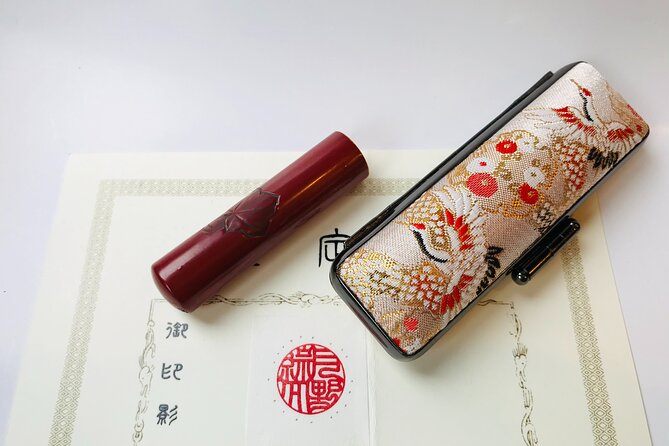
- Your name is converted into Japanese characters: You receive help choosing Katakana characters that reflect your name and personality.
- The seal is made for you in Japan: Initial rough carving uses a machine, while craftsmen complete the final details by hand.
- The activity is private: Only your own group takes part, making it a quiet setting for questions and design decisions.
- The shop is close to Kamakura Station: It is about a five-minute walk south of the station, near public transportation.
- Pickup takes planning: You choose an afternoon collection time, while the activity itself takes place in the morning.
- The basic price is only the starting point for some shoppers: Materials, cases, typefaces, red ink, and shipping may cost extra.
Why a Hanko makes a better souvenir than another trinket
Kamakura is full of easy souvenirs: snacks, postcards, small religious items, and the usual tourist goods. A Hanko gives you something different. It is linked to your name and made according to choices you make during the workshop.
In Japan, a Hanko is more than a rubber stamp. It can represent a person’s identity and has long been used in personal and official settings. Your custom seal may not replace a legal seal for Japanese paperwork, but it still carries the shape, style, and symbolism of an individual name.
That makes the activity especially appealing if you enjoy Japanese writing, calligraphy, traditional crafts, or souvenirs with a personal connection. You are not simply buying a finished object. You are learning how the object is designed and why the characters matter.
The experience also works well for couples and small groups. Since the activity is private, you can ask questions at your own pace. Two people can compare character choices, materials, and finished designs without being hurried along by a larger class.
A few more options to weigh up in Kamakura
- Tokyo: Kamakura & Enoshima Day Trip including Temple Tickets
★ 4.5 · 1,375 reviews - From Tokyo: Kamakura & Enoshima 1-Day Bus Tour
★ 4.5 · 189 reviews - Kamakura Historical Walking Tour with the Great Buddha
★ 5.0 · 129 reviews
Arriving at Kamakurahanko near the station
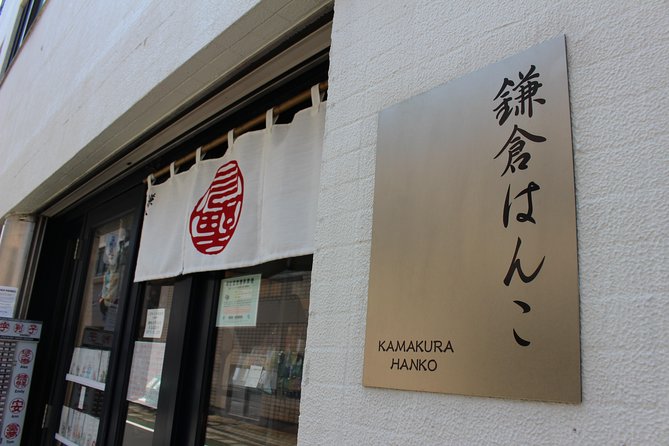
The meeting point is Kamakura seal shop Souvenir shop at 5-6 Onarimachi, Kamakura, Kanagawa 248-0012. The shop is roughly five minutes south of Kamakura Station, making it easy to add before or after other sightseeing in town.
That location is useful because Kamakura days often involve several stops. You can reach the workshop without arranging a separate taxi or long transfer. A mobile ticket is provided, and confirmation arrives when you book.
The activity is held in the morning, so arrive punctually. This matters more than it might for a casual shopping stop because the proprietor needs time to discuss your name, design, material, and engraving choices. A late arrival could leave less time for the explanation and selection process.
The workshop ends back at the same meeting point. It lasts about 45 minutes, though you should allow additional time in your day for the later pickup.
The first 45 minutes: Hanko culture and name design
The workshop begins with an explanation of Hanko history, uses, and styles. You learn why seals matter in Japanese life and how different types may be used. The proprietor also explains materials, ink colors, fonts, and the practical differences between choices.
This opening talk gives the rest of the activity a purpose. Without it, selecting characters and fonts could feel like choosing from a menu. With the background, you can make a design that has some connection to Japanese writing and seal culture.
Next comes the most personal step: turning your name into Japanese. The activity uses Katakana for the standard engraving option. You receive help selecting characters that represent the sound of your name and suit the shape of the seal.
You do not need to arrive knowing Japanese. The proprietor guides you through the writing process and answers questions. Several people have found the character and font discussion to be one of the most rewarding parts, particularly because it shows how a foreign name can be adapted into Japanese writing.
Pay close attention here. The characters may look small and decorative, but they determine the identity of your finished seal. Ask how the pronunciation works and why a particular combination is being suggested. You will get more from the activity if you treat this as a design decision, not a quick translation.
Choosing the font, material, and color
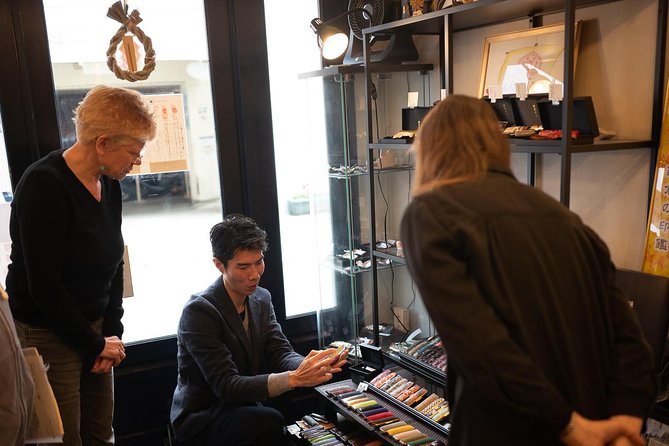
Once your name has been written in Japanese, you choose the seal style and font. A Katakana font suitable for official seals is recommended, but you can discuss other typeface choices and possible upgrades.
Font selection affects the entire look of the Hanko. Some styles feel formal and compact, while others have a more artistic appearance. The proprietor helps connect the style to your name and the personality you want the seal to show.
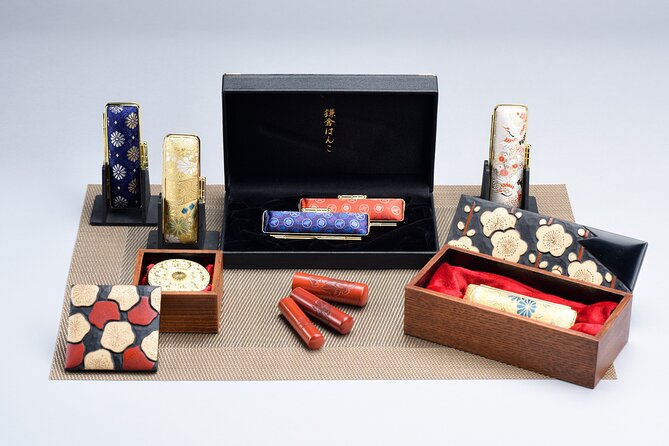
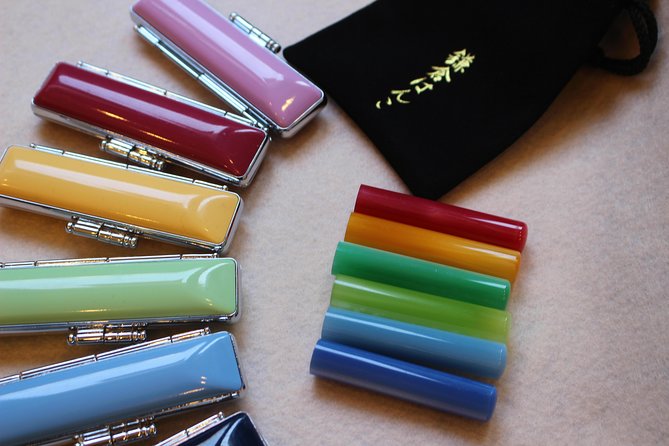
The materials section is where the listed package details need careful reading. The included package identifies a Japanese boxwood Hanko with Katakana engraving and an original pouch. The workshop information also describes acrylic seals in various colors, with horn, wood, and gemstone materials available for additional fees.
Because the material choices and package descriptions are not perfectly uniform, confirm your exact included material at the shop before finalizing your design. You may find that the standard option is enough, especially if your priority is the experience and the engraved name. If you want a more luxurious keepsake, ask about the upgrade price before agreeing.
Wood and horn can add a more traditional feel, while acrylic lets you choose a color and gives the object a cleaner modern look. The point is not that one material is best. It is that the material changes the character of the souvenir, so your choice should match how you plan to display or use it.
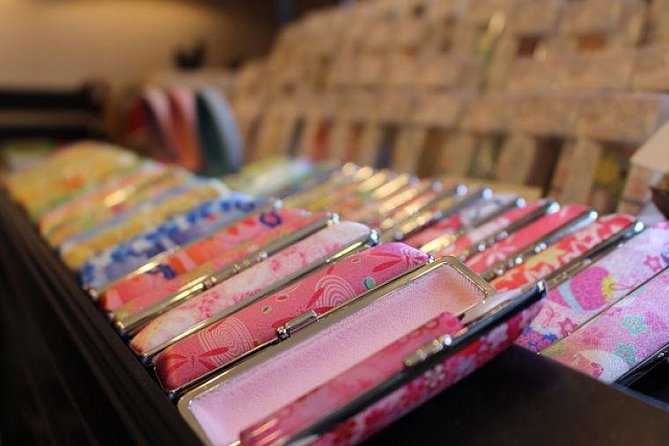
A case is not included. You can choose a case style and color separately, and some options include kimono-fabric designs. Red ink is also extra. These additions may be worthwhile if you want a ready-to-use set, but you can keep the cost down by taking the basic seal and pouch.
A completely different kind of day out:
- Kamakura Private Tour: Temples, Nature, and the Great Buddha
★ 5.0 · 121 reviews - Kamakura Walking Tour – The City of Shogun
★ 5.0 · 100 reviews - Kamakura 4hr Private Trip with Government-Licensed Guide
★ 5.0 · 58 reviews - When Emperors Reigned and Shoguns Ruled
★ 5.0 · 43 reviews
How the engraving is completed
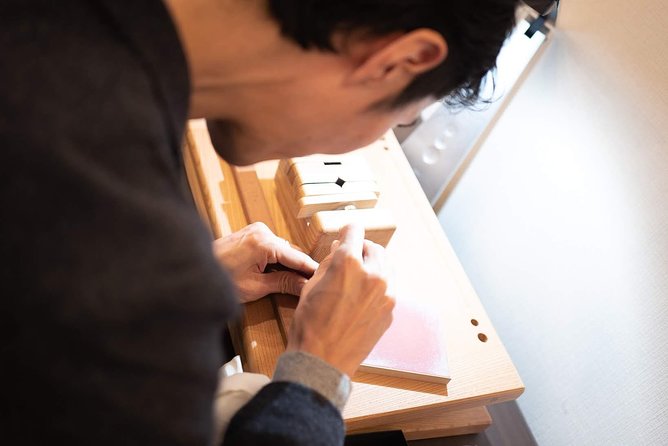
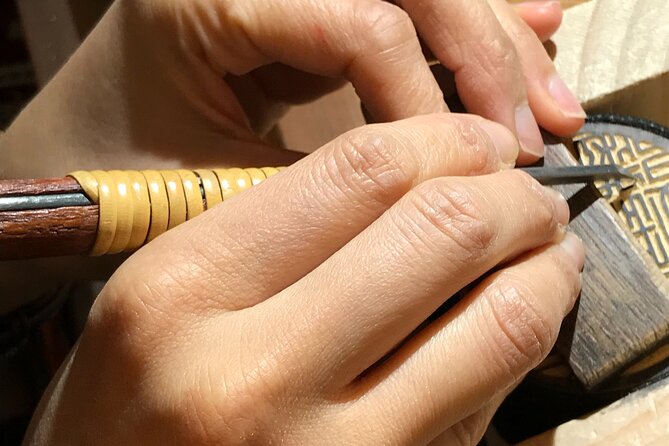
The seal is not carved entirely by hand from the first cut. The process combines modern precision with traditional finishing. An engraving machine handles the rough carving, and skilled craftsmen make the final corrections by hand.
That approach makes sense for a small personalized order. The machine provides a clean starting point, while hand finishing gives the seal its careful final character. The makers describe each seal as individually carved in Japan, using established craft techniques.
This is one of the strongest reasons to choose the workshop instead of buying a generic stamp. You get an object connected to your name, made through a real production process, with human attention at the end.
The standard experience lasts only about 45 minutes, so you do not watch every stage of carving. The workshop focuses on cultural explanation and design, then the craftsperson completes the engraving after you leave. That is important to understand. This is a design and craft introduction, not a full-day carving course.
Afternoon pickup, shipping, and the practical catch
You choose a pickup time in the afternoon of the experience day. The shop prepares the seal after your morning appointment, and the stated process allows collection later that day.
Some people have arranged pickup about two hours afterward. Shipping to a hotel in Japan has also been used, with delivery taking roughly one to two days. Shipping is not included, so ask about the cost and delivery timing before choosing that option.
The information also allows shipping instead of pickup, but the destination and price should be confirmed directly. If you are leaving Kamakura or Japan soon, pickup is the safer choice unless the shop confirms that delivery will arrive in time.
This two-part schedule is the chief logistical issue. A morning visit followed by an afternoon pickup can work well if you plan to visit the Great Buddha, Hase, or other Kamakura sights between appointments. It is less convenient if you have a fixed train departure, a cruise schedule, or only a few free hours.
Keep your mobile ticket and booking confirmation available when you arrive. Since the activity is private, the shop is preparing for your group rather than running a large open session.
Is $131.65 a fair price?
At $131.65 per person, this is not a bargain souvenir stop. The price makes more sense if you value the private explanation, the Japanese name-design process, and the individually finished seal.
The basic package includes the Hanko, Katakana engraving, and an original pouch. The listed inclusions also identify a Japanese boxwood seal. You are paying for the craft and guidance, not just the cost of a small piece of material.
Still, budget carefully. A case, red ink, premium material, upgraded typeface, or shipping can add to the total. If your aim is simply to own an inexpensive stamp, local shops may offer cheaper options. If you want a personal memento tied to your time in Kamakura, this experience offers more meaning than a standard purchase.
I would think of the price as paying for three things: instruction, design help, and a finished object made for you. The value is strongest for visitors who would otherwise spend money on a high-quality Japanese craft souvenir.
What the private format adds
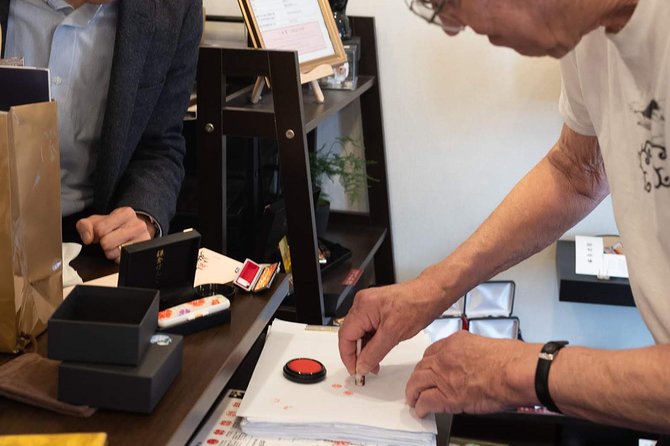
The private format is a real advantage. You can ask about pronunciation, seal types, materials, fonts, and ink without waiting for a large group to move along. That matters when you are working across a language difference or trying to make a choice you will keep for years.
The proprietor has been praised for patient explanations and a welcoming manner. Mitsuhiro is identified as the proprietor in customer feedback, while the shop’s replies are signed Tsukino. The shop is described as a third-generation business, and its craft tradition is central to the experience.
The tone is educational rather than pushy. You can consider upgrades, but you are not required to choose premium materials or a decorated case. That makes it easier to keep the activity focused on the basic Hanko if the listed price is your budget limit.
Since most people can participate and the activity takes place near public transportation, it suits a broad range of visitors. The main requirement is an interest in the process and enough flexibility to return for the finished item.
Who should book this Kamakura activity?
I would recommend it most strongly to:
- People who enjoy Japanese culture, writing, and traditional arts
- Couples seeking a small shared activity
- Visitors who want a personal souvenir rather than a standard gift
- Anyone interested in how foreign names are written in Katakana
- Families or friends who prefer a private appointment
- Repeat Japan visitors looking for a craft experience with a clear local connection
It may be less suitable if you want to watch a seal being carved from start to finish. It may also frustrate you if your Kamakura schedule is packed, since the workshop is in the morning and pickup is later in the day.
The activity is also not ideal for someone who wants a fully finished souvenir immediately. The design happens during the appointment, but the engraving requires additional preparation.
Booking, cancellation, and small details to check
You can cancel for a full refund if you do so at least 24 hours before the local start time. Cancellations or changes made inside that window are not accepted for a refund.
Before booking, check these points:
- Confirm the exact standard material included in your package.
- Ask about the cost of horn, wood, gemstone, or other upgrades.
- Check the price of a case and red ink.
- Confirm the afternoon pickup time.
- Ask about shipping if you will not return to the shop.
- Leave enough space between the morning appointment and your next fixed plan.
The activity is recommended by all current ratings supplied for it, with a five-star average from 24 reviews. That record is strong, though the small sample size means I would still pay attention to the scheduling and extra-fee details.
Should you book Your Own HANKO Name Seal in Kamakura?
Book it if you want a thoughtful souvenir and enjoy learning how Japanese writing connects to personal identity. The private setting, patient guidance, and hand-finished seal give the short appointment real substance.
Skip it if you are searching for the cheapest stamp, have no time for an afternoon pickup, or want a long hands-on carving class. For the right visitor, though, this is a fine way to take home a small piece of Japanese craft with your own name at its center.
FAQ
Where does the Hanko activity take place?
It takes place at Kamakura seal shop Souvenir shop, located at 5-6 Onarimachi, Kamakura, Kanagawa 248-0012, Japan.
How long does the workshop last?
The activity lasts approximately 45 minutes.
Is the activity private?
Yes. Only your own group participates in the private activity.
Is the workshop offered all day?
No. The event is available in the morning. You choose an afternoon pickup time for the completed seal.
What is included in the price?
The listed inclusions are a Hanko seal, Katakana engraving, and an original pouch. The package information identifies Japanese boxwood for the included seal.
Are premium materials available?
Yes. Horn, wood, and gemstone materials may be available for an additional fee. Confirm the current options and prices at the shop.
Is a Hanko case included?
No. A Hanko case is sold separately.
Is red ink included?
No. Red ink is not included and must be purchased separately if you want it.
Can I cancel for a refund?
Yes. You can receive a full refund by canceling at least 24 hours before the experience start time. Changes or cancellations made less than 24 hours before the start are not accepted.
Just added in Kamakura
- When Emperors Reigned and Shoguns Ruled★ 5.0 · 43 reviews
- First time in Kamakura? Enjoy a Tour of All Must-sees!★ 5.0 · 15 reviews
- Kamakura Walking Tour – The City of Shogun★ 5.0 · 100 reviews
- Kamakura 4hr Private Trip with Government-Licensed Guide★ 5.0 · 58 reviews
- Kamakura Bamboo Forest and Great Buddha Private Tour★ 5.0 · 12 reviews
- Exciting Kamakura – One Day Tour from Tokyo★ 5.0 · 40 reviews
- Kamakura Tours Half Day or Full Day Tours with a local guide.★ 5.0 · 12 reviews
- Buddha, Bamboo & Zen – Bespoke Kamakura Private Walking Tours★ 5.0 · 25 reviews
Kamakura Tours, compared.
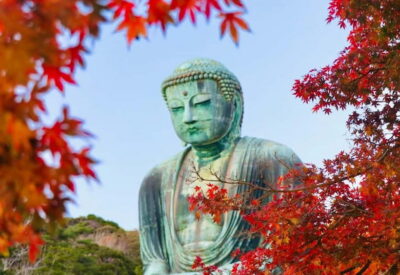
Kamakura & Enoshima Day Trip including Temple Tickets
Read our review →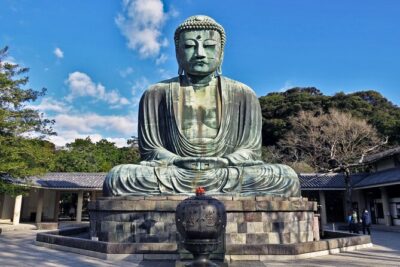
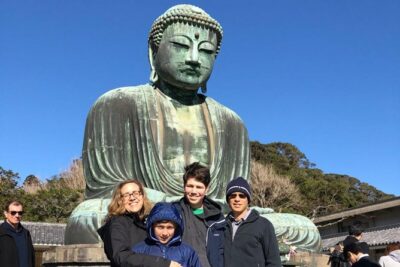
Kamakura Historical Walking Tour with the Great Buddha
Read our review →
Kamakura Private Tour: Temples, Nature, and the Great Buddha
Read our review →
Kamakura 4hr Private Trip with Government-Licensed Guide
Read our review →
Kamakura Full Day Tour with a Local Expert Guide
Read our review →
Browse the lists this tour appears in