
Reviewed · KAMAKURA TOURS
Kamakura 4hr Private Trip with Government-Licensed Guide
Kamakura rewards a slower pace. This private four-hour tour lets you shape the outing around the places you care about, with a government-licensed English-speaking guide helping you move between shrines, temples, shopping streets, and coastal sights. I like the freedom to choose two or three main stops, and I like meeting at Kamakura Station, which keeps the start simple. The main catch is that $108.99 per person does not include transport, admission fees, lunch, or other personal costs.
This is a walking and public-transport tour, not a private car excursion. That matters in Kamakura, where the best moments often come between the headline sights: a quiet temple lane, a train ride through town, or a short walk toward the sea. You get a private guide for your own group, but you should arrive with a clear idea of your priorities if you want the four hours to feel full.
In This Review
- Key points at a glance
- Why a private guide helps in Kamakura
- Starting at Tsurugaoka Hachimangu Shrine
- Meeting the Great Buddha at Kotoku-in
- Hasedera Temple and the view from above
- Hokoku-ji and its small bamboo grove
- Choosing a Zen temple route
- Lesser-known temple choices in the eastern hills
- Zeniarai Benten and the coin-washing custom
- Meigetsuin and the seasonal calendar
- Adding the coast and Enoshima
- What the four-hour schedule really means
- Cost, inclusions, and practical value
- Who should book this Kamakura outing?
- Should you book it?
- FAQ
- Where does the tour begin?
- How long is the experience?
- How many sights can I choose?
- Is transportation included?
- Are entrance fees included?
- Is this a private tour?
Key points at a glance
- Pick two or three priorities: Build the outing around the Great Buddha, Hasedera, Tsurugaoka Hachimangu, bamboo, Zen temples, Enoshima, or another listed site.
- Meet at Kamakura Station: The normal meeting arrangement is on foot within the designated Kamakura area, with pickup offered in that format.
- Expect trains and walking: Private transportation is not included, and you pay your own fares and entrance tickets.
- The guides add context: Guides such as Shinji, An, Yoshi, Hiro, Masako, and Mr. Goto have helped visitors understand religious customs, local history, food, and train routes.
- Best for personal pacing: Families, photographers, older relatives, and first-time visitors can shape the day around their own speed and interests.
- Allow time for crowds: Cherry blossoms, hydrangeas, and New Year bring extra people, making a private guide especially useful.
Why a private guide helps in Kamakura
Kamakura is easy to reach from Tokyo, but it is not one compact sightseeing block. The major attractions are spread among several neighborhoods, with temples in wooded hills, shrines near the center, and the Great Buddha and Hasedera farther west. Enoshima lies beyond the main town and requires another train ride.
On your own, you can certainly visit Kamakura. The challenge is choosing a sensible route and judging how much ground you can cover in four hours. A guide can help you avoid wasting time, explain which sights fit together, and adjust the plan if your family walks slowly or wants more time for photographs.
The private format also gives you room to ask ordinary questions. The guides have helped with train directions, restaurant suggestions, Japanese food customs, Shinto and Buddhist practices, and even basic Japanese conversation. One family used the outing to help a child practice Japanese, while another asked the guide to join them for a traditional lunch.
That personal contact is a major part of the value. You are not simply following a flag through a fixed route. You can stop to ask why a shrine is arranged in a certain way, how to behave at a temple, or what you are looking at in a garden.
There is one qualification. English ability may vary by guide. Most feedback is strongly positive, and Mr. Goto was praised for speaking excellent English and using a booklet of images to explain history and religious symbols. Still, one four-star assessment wanted stronger English communication. If detailed interpretation is important to you, state that clearly when arranging the tour.
More Private Tours in Kamakura:
- Kamakura Private Tour: Temples, Nature, and the Great Buddha
★ 5.0 · 121 reviews - Buddha, Bamboo & Zen – Bespoke Kamakura Private Walking Tours
★ 5.0 · 25 reviews - Kamakura Bamboo Forest and Great Buddha Private Tour
★ 5.0 · 12 reviews
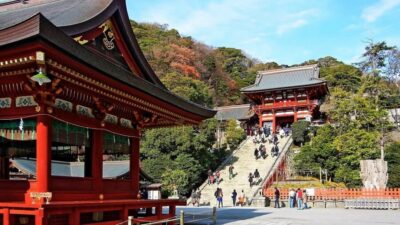
Starting at Tsurugaoka Hachimangu Shrine
Tsurugaoka Hachimangu is the most important central shrine option. It is dedicated to Hachiman, linked with Emperor Ojin and regarded as the patron deity of the Minamoto family and samurai in general. This gives the shrine a useful connection to Kamakura’s military past.
The shrine works well early in a route because it is near the center of town and close to Komachi Shopping Street. You can pair a visit with food or browsing before moving on to another district.
The listed stop time is only about 10 minutes, which is enough for a quick introduction but not a leisurely visit. If you want photographs, a fuller explanation, or time to observe shrine customs, tell your guide before the schedule is fixed. New Year is a special case: the shrine can become extremely crowded during the first three days, while Wakamiya-oji may close to traffic and turn into a pedestrian route.
Meeting the Great Buddha at Kotoku-in
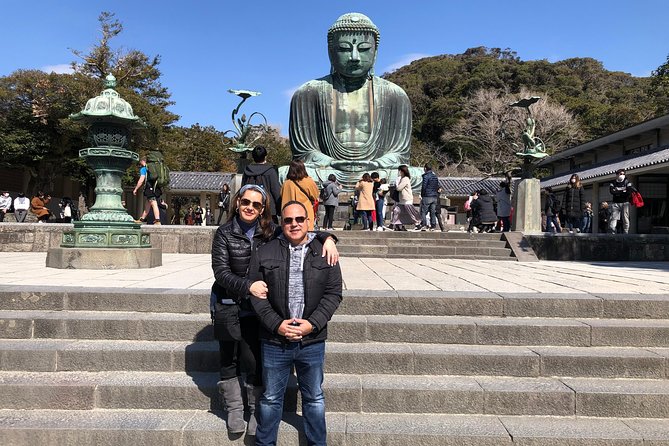
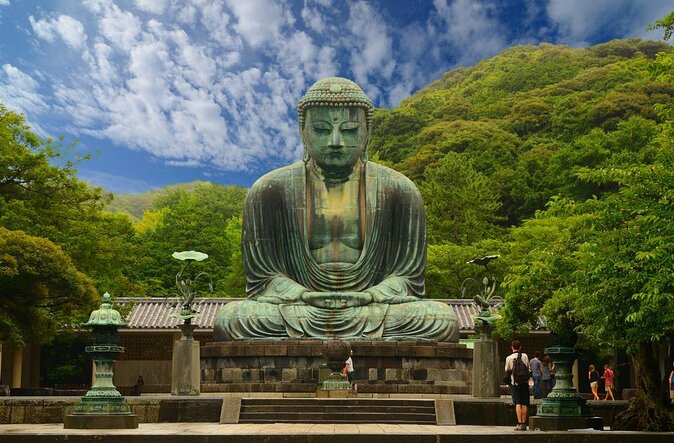
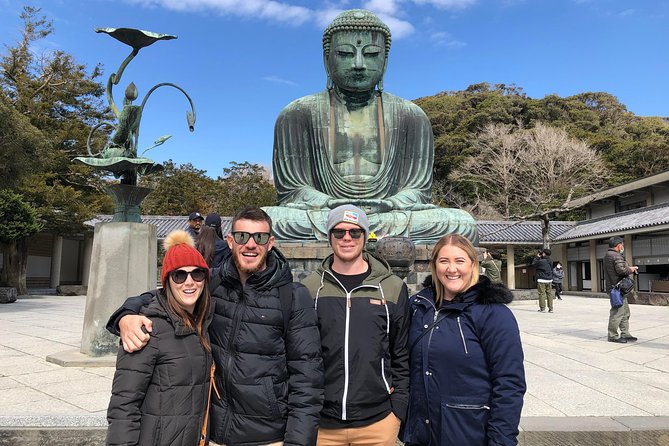
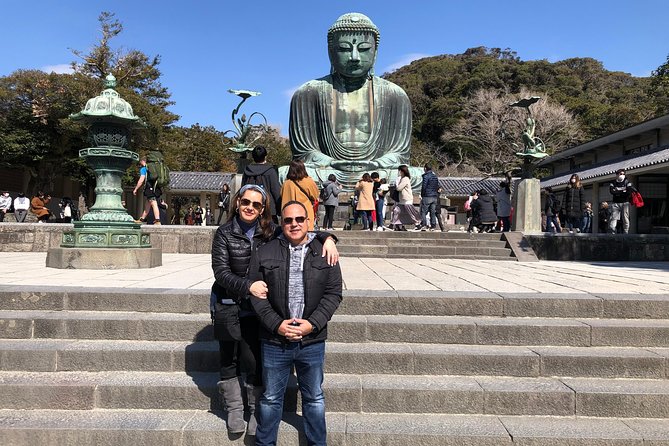
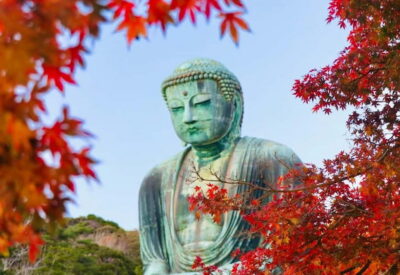
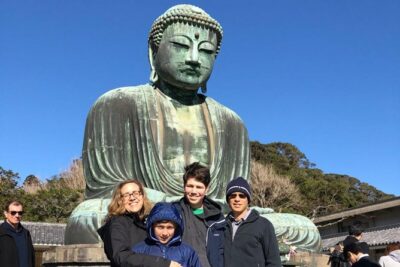
The Great Buddha is Kamakura’s signature sight. This bronze Amida Buddha measures 11.4 meters high and sits on the grounds of Kotoku-in Temple. Its scale is impressive, but the open setting also makes it easier to appreciate the statue from several angles.
I would make this a priority for a first visit. It gives you a clear sense of Kamakura’s Buddhist identity without requiring a long walk through a large complex. The planned time is about 10 minutes, so you should decide if you want a quick look or a more thoughtful visit.
Admission is not included. You should also remember that transportation costs are separate. The guide’s own entry fee is covered for sights listed in the tour information, but that does not remove your admission costs.
Hasedera Temple and the view from above
Hasedera is one of the best choices for visitors who want several different experiences in one stop. The temple is known for its eleven-headed Kannon, a 9.18-meter gilded wooden statue associated with compassion. The grounds also rise toward a higher point with views over Kamakura and the coast.
The short listed visit time of five minutes is not realistic for anyone wanting to enjoy the temple properly. That may be a planning placeholder rather than a promise of a full temple visit, so ask your guide how much time is available. Hasedera involves slopes and stairs, making it less suitable for anyone who needs a completely level route.
Several guides have helped visitors focus on Hasedera’s religious details. Masako, for example, was praised for answering questions about the temple and adapting the route to the group. If you want temple architecture, Buddhist practice, and a view in one stop, Hasedera deserves more time than the basic schedule suggests.
A few more options to weigh up in Kamakura
- Tokyo: Kamakura & Enoshima Day Trip including Temple Tickets
★ 4.5 · 1,375 reviews - From Tokyo: Kamakura & Enoshima 1-Day Bus Tour
★ 4.5 · 189 reviews - Kamakura Historical Walking Tour with the Great Buddha
★ 5.0 · 129 reviews - Kamakura Walking Tour – The City of Shogun
★ 5.0 · 100 reviews
Hokoku-ji and its small bamboo grove
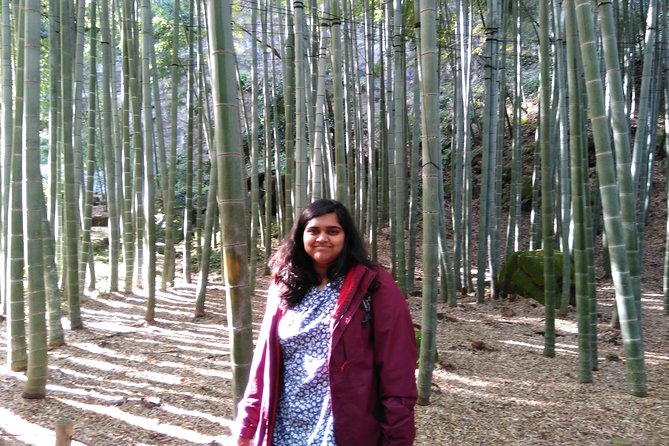
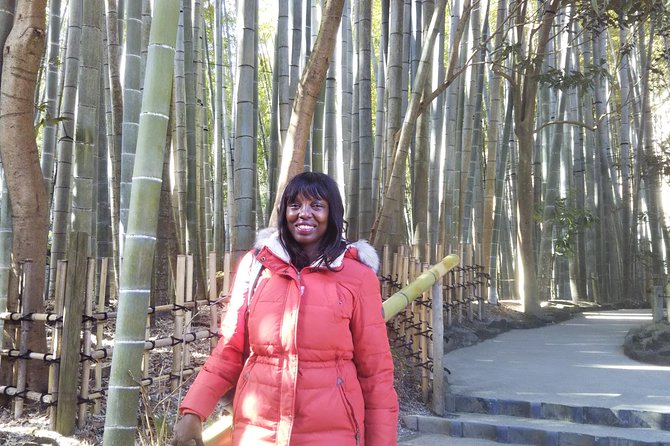
Hokoku-ji is known for a compact bamboo grove behind the main hall. More than 2,000 bamboo stalks grow along narrow paths, creating a cool, enclosed walk that feels very different from the open space around the Great Buddha.
This is a good pick if you want a calm garden setting and a photograph-friendly stop. It is also a useful alternative to a long list of temples. The planned time is about 15 minutes, though you may want to allow more if you hope to pause in the grove or have matcha.
One family specifically enjoyed a matcha and Japanese sweets workshop arranged with Shinji. That extra activity appears in the experience history, but it should not be treated as a standard part of every booking. Ask ahead if a tea or sweets activity is important to you.
Choosing a Zen temple route
Kamakura has several major Zen temples, and the tour can be shaped around them. Engaku-ji is the number two temple among Kamakura’s five great Zen temples and was founded in 1282 by the regent Hojo Tokimune. Kencho-ji ranks first and was founded in 1253, making it the oldest Zen temple in Kamakura.
Jochi-ji, Tokei-ji, and Jufuku-ji offer further choices. Jochi-ji is number four among the five great Zen temples. Tokei-ji is a small Rinzai branch temple near Engaku-ji. Jufuku-ji, ranked number three, was established on the order of Minamoto Yoritomo’s wife.
These sites are better for someone who enjoys quiet grounds, temple design, and religious history than for someone focused only on famous photo stops. Admission fees are generally not included, and the short suggested times mean you will need to choose carefully.
Engaku-ji worked particularly well for one family that wanted the Great Buddha and a Zen temple. Another guide used visual materials to explain the sites, which can help when symbolism or Buddhist vocabulary becomes difficult to follow. If you choose a Zen route, I would pick one or two temples rather than trying to collect them all.
Lesser-known temple choices in the eastern hills
The long list of possible stops includes several smaller temples that can suit repeat visitors or anyone seeking a quieter route. Zuisen-ji lies at the far eastern end of Kamakura in a narrow valley surrounded by wooded hills. Jomyo-ji is another eastern Zen temple, linked with the Ashikaga family and ranked fifth among the five great Zen temples.
Ankokuron-ji and Myohon-ji belong to the Nichiren tradition and sit among the southeastern hills. Eisho-ji is especially distinctive because it is the only surviving nunnery in Kamakura. It was founded in the early Edo period by a woman connected with the Tokugawa family.
These choices make the private format worthwhile. A standard group outing would have little reason to include them, but your guide can help you decide if a smaller temple matches your interests. The tradeoff is distance. Eastern Kamakura can consume more of your four hours, especially when walking and train time are included.
Zeniarai Benten and the coin-washing custom
Zeniarai Benten Shrine offers a memorable local ritual. The name refers to coin washing, and visitors wash money in the shrine’s spring because tradition says it may bring financial good fortune.
This is a fun choice if you want something participatory rather than a formal temple visit. The shrine is in western Kamakura, so it needs to fit sensibly with the Great Buddha and Hasedera rather than being added casually to a route covering distant eastern temples.
Your guide can explain the proper approach and help you understand the difference between shrine and temple customs. That kind of short cultural explanation is one of the strongest reasons to book a private guide instead of simply following a map.
Meigetsuin and the seasonal calendar
Meigetsuin is known as the Hydrangea Temple because hydrangeas bloom heavily on its grounds. It is a Rinzai Zen temple founded in 1160 and can be a strong choice during the flowering season.
The timing matters. A seasonal temple may be especially rewarding at the right time of year, but less essential if flowers are not your main interest. During peak periods, the private guide can help you handle crowds and decide if the stop is worth the time.
Cherry blossom season brings a similar issue. A family visiting with older parents and a child found that a dedicated guide made it easier to move through busy streets during peak bloom. The private format does not remove crowds, but it can reduce confusion.
Adding the coast and Enoshima
Enoshima is a separate island connected to the mainland by a bridge, a short train ride west of Kamakura. It offers a shrine and other attractions, along with a coastal change of scene.
One family chose Enoshima and the beach instead of spending the entire tour among temples. Their guide also took them to a local restaurant with floor-level seating and explained Shinto and Buddhist practices along the way. This is a good example of how the experience can become personal rather than purely sight-based.
The cost is time. Enoshima can easily take up a large share of four hours once the train ride and walking are counted. Choose it only if the sea and island atmosphere matter more to you than seeing several Kamakura temples.
What the four-hour schedule really means
The tour description lists many possible stops, but you choose only two or three. The suggested stop times range from five to 15 minutes, and those numbers should not be treated as a promise that you will meaningfully visit every place on the list.
A sensible four-hour plan might be:
- Tsurugaoka Hachimangu, Komachi Shopping Street, and one western temple
- The Great Buddha, Hasedera, and Zeniarai Benten
- Engaku-ji, Kencho-ji, and Tsurugaoka Hachimangu
- The Great Buddha, Hasedera, and Enoshima, with less time at each
Train rides, walking, photographs, food, and entrance lines all use the clock. One four-star assessment felt the tour finished well before the scheduled end and wished another activity had been added. To avoid that problem, discuss a backup stop or lunch plan before you begin.
Guides have also handled late starts caused by train accidents and delays. Shinji was praised for waiting patiently after a delayed arrival. Even so, you should contact the provider promptly if your train is late, since changes made less than 24 hours before the start are not accepted.
Cost, inclusions, and practical value
At $108.99 per person, this is not the cheapest way to see Kamakura. You still pay public-transport fares, entrance fees, lunch, and personal expenses. The guide does not provide a private vehicle, and the pickup arrangement is on foot within the designated area.
The price makes more sense for a small group that values personal attention. You are paying for route planning, local explanation, help with trains, and the ability to adjust the day. A family of four or five can also spread the benefit of one private guide across the whole group, though the per-person rate remains the same unless a group discount applies.
The tour is especially useful if you have only half a day, want to avoid getting lost, or need help balancing different interests. A self-guided route may be better value if you already understand Kamakura’s train system and want to spend hours at just one temple.
Free cancellation is available when you cancel at least 24 hours before the local start time. After that point, the amount paid is not refunded.
Who should book this Kamakura outing?
I would recommend it to first-time visitors from Tokyo who want a guided introduction without joining a large group. It also suits families, photographers, older relatives, and anyone who wants to set a gentle walking pace.
The experience has earned a 4.9 rating from 58 assessments, with 100 percent recommending it. The strongest pattern is personal service: guides have been patient with children, helpful after train delays, flexible with food requests, and willing to answer questions after the tour.
I would be more cautious if you want a polished, fixed itinerary with guaranteed long visits at every attraction. Four hours passes quickly, English fluency can vary, and the tour’s many options may require firm decisions from you.
Should you book it?
Book this tour if you want a private, adjustable introduction to Kamakura and value a local person who can explain what you are seeing. Before paying, decide your top three choices, ask how much walking each route involves, confirm the meeting point, and state your preferred English level.
For the best use of time, choose either a central and western route, a Zen temple route, or a coastal route with Enoshima. Trying to combine every district will leave you rushing. With realistic expectations, this is a friendly and practical way to turn Kamakura’s scattered sights into a coherent half-day.
FAQ
Where does the tour begin?
The usual meeting point is Kamakura Station, with the guide meeting you on foot within the designated Kamakura area.
How long is the experience?
The tour lasts approximately four hours.
How many sights can I choose?
You can customize the outing around two or three sites from the listed choices.
Is transportation included?
No. You travel by public transportation and on foot, and transportation fees are not included. Private transportation is also not provided.
Are entrance fees included?
No. Your entrance fees are separate. The guide’s entry fees are covered only for sights listed in the tour information.
Is this a private tour?
Yes. Only your group participates, and multiple tour groups cannot be combined.
Just added in Kamakura
- When Emperors Reigned and Shoguns Ruled★ 5.0 · 43 reviews
- First time in Kamakura? Enjoy a Tour of All Must-sees!★ 5.0 · 15 reviews
- Kamakura Walking Tour – The City of Shogun★ 5.0 · 100 reviews
- Your Own HANKO Name Seal Activity in Kamakura.★ 5.0 · 24 reviews
- Kamakura Bamboo Forest and Great Buddha Private Tour★ 5.0 · 12 reviews
- Exciting Kamakura – One Day Tour from Tokyo★ 5.0 · 40 reviews
- Kamakura Tours Half Day or Full Day Tours with a local guide.★ 5.0 · 12 reviews
- Buddha, Bamboo & Zen – Bespoke Kamakura Private Walking Tours★ 5.0 · 25 reviews
Kamakura Tours, compared.
Kamakura & Enoshima Day Trip including Temple Tickets
Read our review →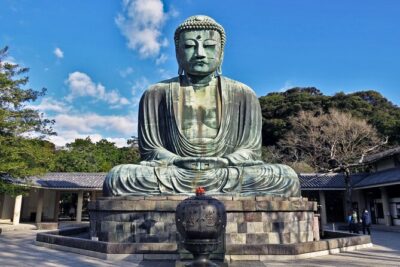
Kamakura Historical Walking Tour with the Great Buddha
Read our review →
Kamakura Private Tour: Temples, Nature, and the Great Buddha
Read our review →
Kamakura Full Day Tour with a Local Expert Guide
Read our review →
Browse the lists this tour appears in