
Reviewed · DAY TRIPS
Exciting Kamakura – One Day Tour from Tokyo
Tokyo’s best history lesson is nearby. This private eight-and-a-half-hour tour takes you from your Tokyo hotel to Kamakura’s major temples and shrine, with a guide handling the trains, buses, timing, and explanations along the way.
I like the personal format and the careful shortlist of sights. You get direct access to a guide such as Akira, Yumiko, Yoshi, or Kono-san, and you see the Great Buddha, Hase-dera, Hokoku-ji, and Tsurugaoka Hachimangu in one day. The main drawback is the amount of walking and public transportation, plus extra costs for fares and admission.
The tour starts at 9:00 am in your hotel lobby. You should expect a full day on your feet, several train and bus rides, and a fairly brisk schedule. If your guide is a strong English speaker, the history comes alive. If communication is limited, the experience may feel more like guided transport than a deep cultural visit.
In This Review
- Key points to know before booking
- Why Kamakura makes a strong side trip from Tokyo
- Hotel pickup and the journey south
- Kotoku-in and Kamakura’s Great Buddha
- Hase-dera combines gardens, views, and a cave
- Hokoku-ji and its small bamboo forest
- Tsurugaoka Hachimangu and warrior-era Kamakura
- What the guides add to the day
- Price, extra fees, and overall value
- Pace, walking, and who should book
- Booking and cancellation details
- Should you book this Kamakura tour?
- FAQ
- What time does the tour start?
- Where does the tour begin?
- How long does the tour last?
- Is this a private tour?
- Is transportation included?
- Are temple entrance fees included?
- Is admission to Tsurugaoka Hachimangu free?
- Is lunch included?
- Is the tour suitable for children?
- Can I cancel for a full refund?
Key points to know before booking
- The Great Buddha is only one part of the day: Kotoku-in gives you Kamakura’s most famous sight, but Hase-dera and Hokoku-ji often provide the quieter moments.
- Your guide helps with Tokyo’s rail system: This matters if you are unsure about navigating Tokyo Station, changing trains, or using a Pasmo card.
- Hase-dera is especially seasonal: Its hydrangeas are at their best in June and July, adding color to the hillside temple.
- Hokoku-ji offers a different mood: The compact bamboo grove and tea house feel distinct from Kamakura’s larger temple grounds.
- You will walk a lot: The schedule is manageable for someone with moderate fitness, but it is not a lazy sightseeing day.
- Check the extra charges carefully: The tour price is $145.31 per person, but transportation and admission fees are separate.
Why Kamakura makes a strong side trip from Tokyo
Kamakura was Japan’s political center from the 12th through the 14th centuries. Today, it offers a sharp change from Tokyo’s scale and speed: temple grounds, wooded hills, old religious centers, and a coastal setting.
The appeal is not just one famous statue. Kamakura works because several different kinds of places fit into one day. You see a landmark at Kotoku-in, gardens and a cave shrine at Hase-dera, bamboo at Hokoku-ji, and a major Shinto shrine at Tsurugaoka Hachimangu.
That mix is useful for a first visit. You do not have to spend your limited time choosing between ten temples on a map. Your guide provides the route and explains why each place matters.
I also like the fact that the day includes ordinary movement between sights. You use trains and local buses rather than staying inside a sightseeing vehicle. That can be a little tiring, but it gives you a better sense of how Kamakura connects to Tokyo.
More Day Trips in Kamakura:
- Tokyo: Kamakura & Enoshima Day Trip including Temple Tickets
★ 4.5 · 1,375 reviews - From Tokyo: Kamakura Full Day Tour with a Local Expert Guide
★ 4.6 · 43 reviews - Kamakura Half Day Tour with a Local Expert Guide
★ 4.4 · 23 reviews
Hotel pickup and the journey south
Your guide meets you in your hotel lobby at 9:00 am. From there, the trip uses public transportation, and the guide helps your group find the right trains and buses.
This is one of the tour’s most useful features. Tokyo’s rail network can feel like a puzzle, especially on a first visit. Yoshi helped one group handle the train ride when it was their first experience with Tokyo rail travel. Other guides helped with Pasmo cards and directions from the station.
The journey can take about an hour, while some descriptions from the day suggest up to 1.5 hours depending on the route and conditions. The tour includes about 8 hours and 30 minutes overall, so transport takes a meaningful part of the day.
The listed transportation cost is about ¥2,720 per person, and that is not included in the tour price. Ask for the exact route and current fare before you go, since the practical cost depends on the trains and buses used.
The private setup means only your group joins the activity. That gives you more room to ask questions, pause for photographs, or explain dietary needs. Akira helped one group find food suitable for a gluten-free diet, and another guide found a restaurant for a guest with food allergies.
Kotoku-in and Kamakura’s Great Buddha
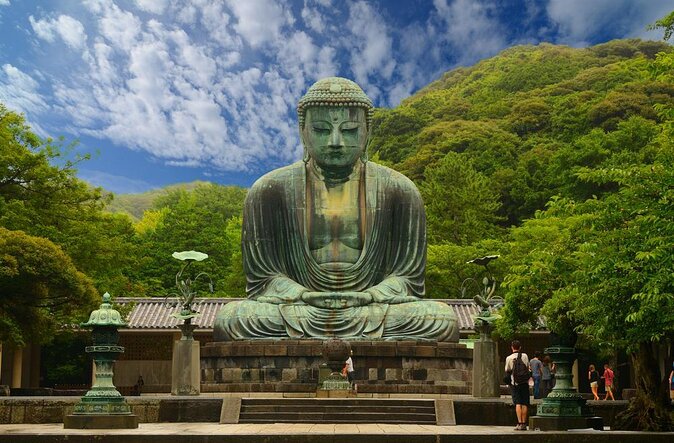
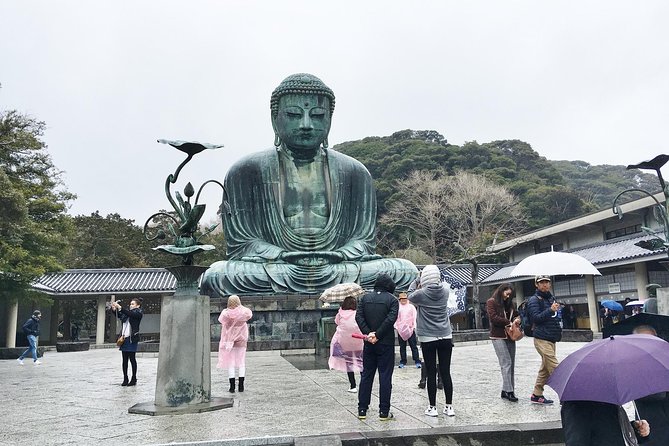
The first major stop is Kotoku-in, home of the Great Buddha of Kamakura. The bronze statue dates to the 13th century and is the city’s most recognized landmark.
You get about an hour here. The statue is large, calm, and impressive without needing much explanation to make an impact. Your guide can add the religious and historical context that you would miss by simply taking a photograph and moving on.
You may also be able to enter the statue, a small extra experience noted in the tour details. It is not a good choice for someone who dislikes tight spaces.
The listed entrance fee information is inconsistent. One part gives ¥300, while the separate cost details list ¥1,100. Treat this as something to confirm before departure rather than assuming either figure is correct.
Kotoku-in is a strong opening stop because it gives you the instantly recognizable Kamakura image. The limitation is that the grounds can feel brief if you want time for quiet reflection or extensive photography. The one-hour allocation keeps the whole day moving.
Hase-dera combines gardens, views, and a cave
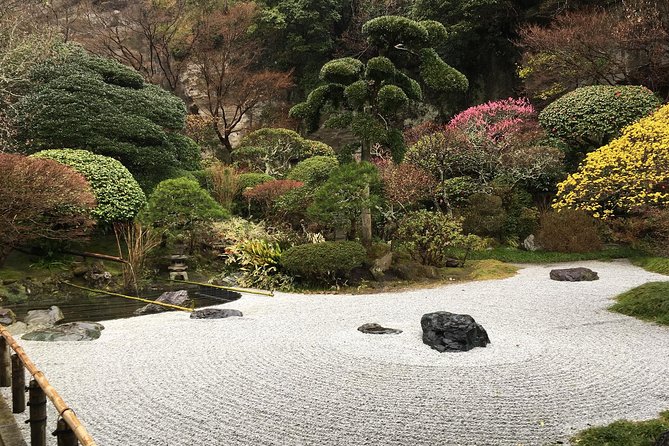
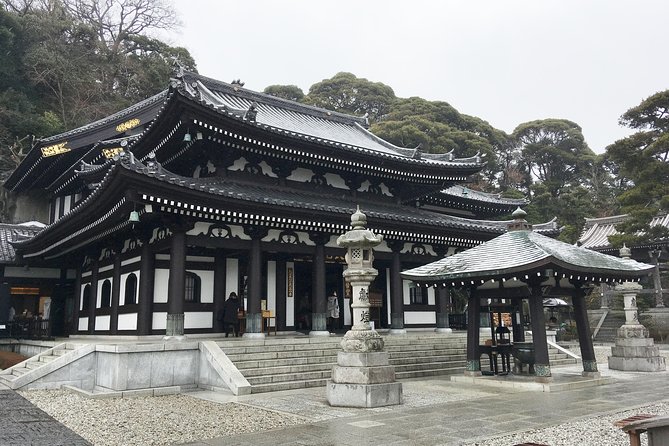
Hase-dera gives you a fuller temple visit. The grounds include a Japanese garden, Buddhist statues, a hillside setting, a view toward the Pacific Ocean, and a distinctive cave shrine.
The temple was built in the 8th century, according to the tour information, and is associated with Kannon. One account of the visit describes a Buddhist vegetarian lunch nearby with a broad view across the town, mountains, and coast. Lunch is not listed as included, so you should plan and pay for that separately with your guide’s help.
The temple is particularly appealing in June and July, when hydrangeas bloom along the hillside. If flowers matter to you, this may become the visual highlight of the day. The tour also works outside hydrangea season because the garden, statues, and cave offer several kinds of interest.
You have about an hour here, which is enough to see the main features but may feel short during peak flower season. You will want to move at a steady pace, especially if you stop for photographs or visit the cave.
Hase-dera is also a good place to ask questions. A well-prepared guide can explain the role of Kannon, the temple’s setting, and how Buddhist spaces differ from the Shinto shrine later in the day.
A few more options to weigh up in Kamakura
- From Tokyo: Kamakura & Enoshima 1-Day Bus Tour
★ 4.5 · 189 reviews - Kamakura Historical Walking Tour with the Great Buddha
★ 5.0 · 129 reviews - Kamakura Private Tour: Temples, Nature, and the Great Buddha
★ 5.0 · 121 reviews - Kamakura Walking Tour – The City of Shogun
★ 5.0 · 100 reviews
Hokoku-ji and its small bamboo forest
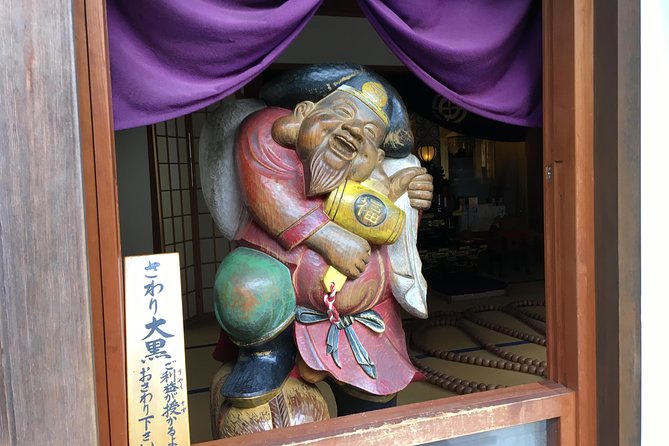
Hokoku-ji is the most different stop on the route. Its main attraction is a compact bamboo grove, with a tea house that adds a quiet pause to the visit.
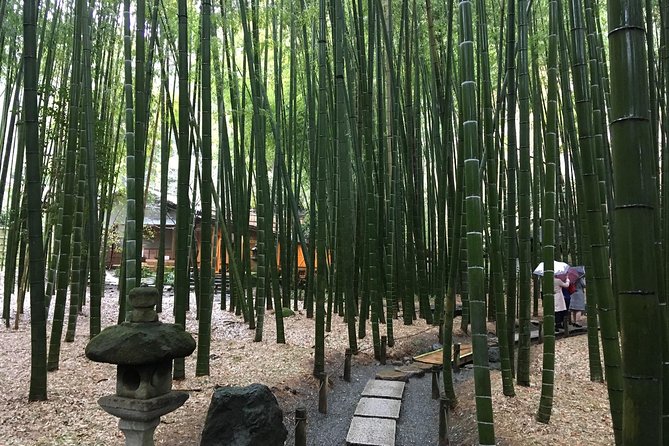
The temple dates to the 14th century, and the setting feels more contained than Hase-dera or Tsurugaoka Hachimangu. You are not visiting a huge complex. You are visiting for the atmosphere of the bamboo, the temple grounds, and the chance to slow down for a few minutes.
The tour allows about an hour. That is generous for a small temple, though you may use the time for tea, photographs, or conversation with your guide.
The fee is also unclear in the supplied details. One section gives ¥400, while the separate admission information lists ¥300. Confirm the current charge when booking.
Hokoku-ji is especially valuable if you have already seen several large temples in Japan. The bamboo changes the rhythm of the day. It is also a good stop for families, though young children may need encouragement to keep the visit calm and respectful.
Tsurugaoka Hachimangu and warrior-era Kamakura
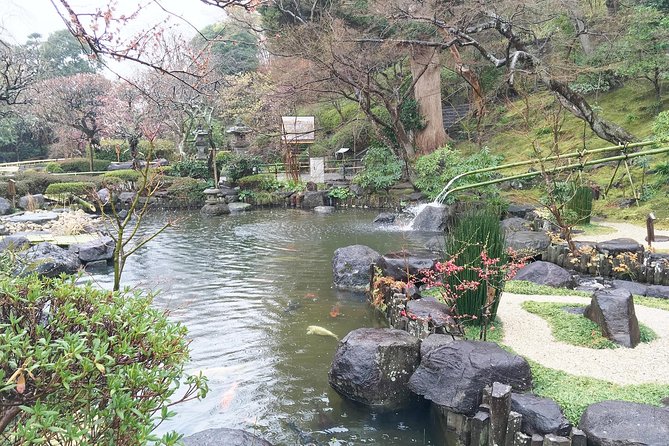
Tsurugaoka Hachimangu is the tour’s major Shinto stop. The shrine served as the official guardian shrine of the Kamakura shogunate and was connected with warriors and military worship.
You get about an hour here, and admission is free. The scale and ceremonial feel make it a useful contrast with the Buddhist temples earlier in the day.
This is where a guide can help you understand the difference between Buddhist temples and Shinto shrines. You can ask about the shogunate, warrior culture, religious practice, and the role of the shrine in Kamakura’s political life.
The grounds also provide a peaceful setting with lotus and carp noted in the tour details. That makes the stop more than a history lesson. You can take a quieter walk and enjoy the natural elements before returning to the city and train network.
Because the shrine is free, it helps offset some of the admission charges at the other stops. Still, the hour may pass quickly if you want to explore beyond the main route.
What the guides add to the day
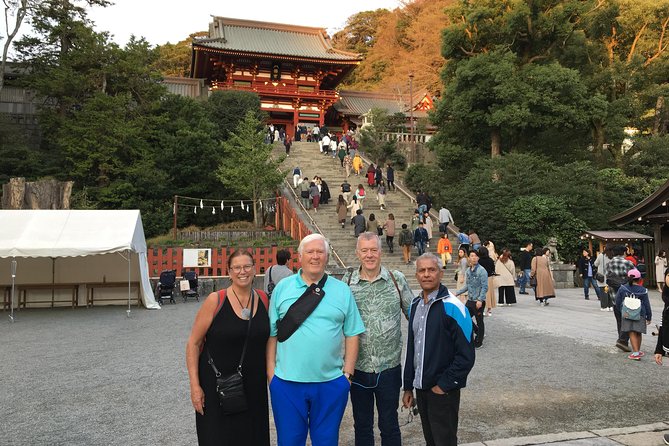
The quality of this tour depends heavily on the individual guide. The most praised guides include Akira Kamada, Yumiko Sano, Yoshi, Yoshio, Kono-san, and Hideaki Murayama.
Akira is described as punctual, organized, and strong at explaining the history of each site. He has also prepared a typed itinerary, helped with trains, recommended lunch, and looked after dietary needs.
Yumiko has been especially appreciated for her warmth, flexibility, cultural explanations, and practical food suggestions. She helped one family enjoy noodles and made the hydrangea season more memorable.
Yoshi is praised for keeping a full day on schedule without making it feel rushed. He also helped with goshuincho books, which are used to collect temple and shrine stamps. If you want stamps, mention this early so the route has time for it.
Yoshio offers a more personal style, mixing local stories with the formal facts. One group especially enjoyed an unexpected meeting with Kappa, though the supplied details do not explain exactly where or how that occurred.
You should also be realistic about language. One guide received a poor assessment because communication in English was difficult. Another was described as walking too fast and sticking closely to a prepared explanation. If you need slow walking, frequent questions, or detailed English commentary, request those preferences before the tour.
Price, extra fees, and overall value
The advertised price is $145.31 per person. That is not the full cost of the day.
You also need to budget for approximately ¥2,720 in transportation per person. Entrance charges are separate as well, with the supplied information listing Kotoku-in, Hase-dera, and Hokoku-ji fees. Because the stated amounts conflict, confirm the exact current prices before booking.
Lunch is not listed as included. Your guide can help you choose a local restaurant, including places suitable for gluten-free diets, allergies, noodles, or okonomiyaki. You pay for that meal yourself.
The value is strongest for a first visit to Tokyo. You are paying for a private guide, hotel pickup, route planning, rail assistance, historical explanations, and a carefully chosen Kamakura day. If you already know Tokyo’s train system and are happy researching temples on your own, the price may feel high.
For a family or small group, the private format can make more sense. Group discounts are offered, and only your own party takes part. You also avoid the uncertainty of joining a large bus group with a fixed commentary style.
Pace, walking, and who should book
You need moderate physical fitness. The day includes walking between sites, station transfers, temple grounds, and local transportation. One full day in Kamakura can produce a lot of steps.
I would book this for first-time Japan visitors, families that want help with trains, older adults who can walk steadily, and anyone who wants historical context instead of simply taking photographs.
I would think twice if you want a slow temple retreat. Four major stops, plus transport and lunch, leave limited room for lingering. You also need to be comfortable following a guide’s pace.
The tour is private, so you can ask for adjustments, but the available details do not promise a fully customized itinerary. Ask in advance about walking speed, lunch needs, photography, and which admission fees apply.
Booking and cancellation details
Confirmation normally arrives at booking. If you reserve within two days of the tour, confirmation may arrive within 48 hours and depends on availability.
Free cancellation is available up to 24 hours before the 9:00 am start time for a full refund. Cancellations or changes made less than 24 hours before the start are not accepted for a refund.
Children must be accompanied by an adult. A mobile ticket is offered, and hotel pickup and drop-off are part of the experience.
Should you book this Kamakura tour?
Book it if you want to see Kamakura’s key sights without wrestling with Tokyo trains, local buses, temple choices, and historical context. The strongest guides turn a complicated day into an easy one, and the private format gives you room to ask questions and handle food needs.
The best fit is a small group that values personal guidance and can manage a brisk walking day. Request a guide with strong English communication, and confirm the transportation and temple fees before paying.
Skip it if you prefer to travel independently, spend half a day at one temple, or avoid public transit. Kamakura is accessible on your own, but this tour earns its price through guidance, not luxury transport.
FAQ
What time does the tour start?
The tour starts at 9:00 am.
Where does the tour begin?
Your guide meets you in the lobby of your hotel.
How long does the tour last?
The tour lasts approximately 8 hours and 30 minutes.
Is this a private tour?
Yes. Only your group participates in the activity.
Is transportation included?
No. Your transportation costs approximately ¥2,720 per person and are listed separately.
Are temple entrance fees included?
No. Admission fees for Kotoku-in, Hase-dera, and Hokoku-ji are not included.
Is admission to Tsurugaoka Hachimangu free?
Yes. The tour information lists admission to Tsurugaoka Hachimangu Shrine as free.
Is lunch included?
Lunch is not listed as included. Your guide may help you choose a restaurant.
Is the tour suitable for children?
Children may join, but they must be accompanied by an adult.
Can I cancel for a full refund?
Yes. You can cancel at least 24 hours before the start time for a full refund. Changes or cancellations made less than 24 hours before the start are not accepted for a refund.
Just added in Kamakura
- First time in Kamakura? Enjoy a Tour of All Must-sees!★ 5.0 · 15 reviews
- When Emperors Reigned and Shoguns Ruled★ 5.0 · 43 reviews
- Kamakura Walking Tour – The City of Shogun★ 5.0 · 100 reviews
- Kamakura 4hr Private Trip with Government-Licensed Guide★ 5.0 · 58 reviews
- Your Own HANKO Name Seal Activity in Kamakura.★ 5.0 · 24 reviews
- Kamakura Bamboo Forest and Great Buddha Private Tour★ 5.0 · 12 reviews
- Kamakura Tours Half Day or Full Day Tours with a local guide.★ 5.0 · 12 reviews
- Buddha, Bamboo & Zen – Bespoke Kamakura Private Walking Tours★ 5.0 · 25 reviews
Day Trips, compared.
![[Kyoto & Nara Day Tour] Sagano Scenic Railway & Nara Park & Fushimi Inari Taisha Thousand Torii Gates & Togetsukyo Bridge & Bamboo Grove & Kimono Forest (Departing from Osaka)](https://media.japanvisits.com/wp-content/uploads/kyoto-nara-day-tour-sagano-scenic-railway-nara-park-fushimi-inari-taisha-thousand-torii-gates-togetsukyo-bridge-bamboo-grove-kimono-forest-departing-from-osaka-k110001-400x257.jpg)
Kyoto Amanohashidate & Ine Funaya & Ine Bay Scenic Day Trip (Departing from Osaka or Kyoto)
Read our review →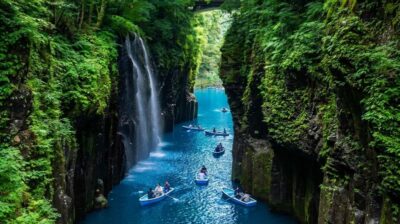
Kyushu: Mount Aso, Kusasenri & Takachiho Gorge Day Tour (Optional Takachiho Boat Ride Experience)
Read our review →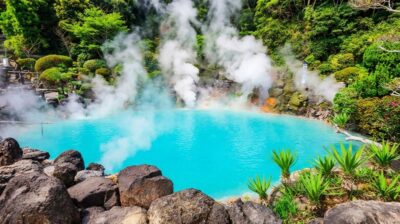
Kyushu One-Day Tour: Yufuin no Mori Train & Yufuin Town & Nyoirin-ji Temple & Dazaifu & Hell Hot Springs (Departing from Fukuoka)
Read our review →
Browse the lists this tour appears in