
Reviewed · WALKING TOURS
Kamakura Walking Tour – The City of Shogun
Kamakura packs centuries into a coastal town. This 3.5-hour walking tour gives you a clear route through the former shogun capital, linking Tsurugaoka Hachimangu Shrine, Komachi Street, the Great Buddha, and Hasedera Temple. Guides such as Miyu, Midori, and Maki add history, local customs, photo stops, and practical ideas for spending the rest of your day.
I like the small group limit of 10 people, which should make it easier to hear explanations and ask questions. I also like the useful finish at Hase Station, near the Great Buddha and Hasedera, rather than returning you to the starting point. The main thing to consider is cost beyond the $35 tour price: transportation and admissions are not included, with the total listed at 1,200 yen.
This is a strong choice if you want Kamakura explained rather than simply photographed. It is less suitable if you prefer a slow, unstructured day at each temple, since the visit covers several major sights in a fixed half-day route.
In This Review
- Key Points to Know Before You Book
- Starting at Tsurugaoka Hachimangu, Kamakura’s Main Shrine
- Komachi Street Adds Food and Local Color
- Seeing the Kamakura Great Buddha Up Close
- Hasedera Brings Gardens, Views, and a Longer Temple Visit
- The Route Works Best as a Morning Introduction
- What the $35 Price Really Buys You
- Guides Make the Difference
- Practical Details That Matter
- Who Should Book the Kamakura Walking Tour?
- FAQ
- Where does the Kamakura Walking Tour start?
- What time does the tour begin?
- How long does the tour last?
- Where does the tour end?
- What sights are included?
- Are admission fees included?
- What is included in the $35 price?
- How many people can join the tour?
- Can I cancel for a full refund?
Key Points to Know Before You Book
- Three and a half hours from Kamakura Station area to Hase Station: The route begins at the Kamakura City Tourist Information Center at 10:00 a.m. and ends at Hase Station.
- Four very different stops: You move from Shinto worship at Tsurugaoka Hachimangu to food and shopping on Komachi Street, then to Buddhist temples and the Great Buddha.
- The Great Buddha and Hasedera require extra payment: The first two stops are free, but admission and transportation are not part of the tour price.
- Small groups make the guiding more useful: The maximum group size is 10, and the guides are praised for clear explanations, friendly pacing, and help with photographs.
- An Enoden train ride may be part of the experience: One detailed account specifically mentions riding the Enoden train, though the supplied schedule does not list a separate train stop.
- The tour needs good weather: If poor weather cancels the experience, you can receive a different date or a full refund.
Starting at Tsurugaoka Hachimangu, Kamakura’s Main Shrine
Meet at the Kamakura City Tourist Information Center, at 1-chōme-1-1 Komachi, at 10:00 a.m. This is a sensible starting point because Tsurugaoka Hachimangu is one of the city’s central sights and the shrine gives you the historical frame for everything that follows.
You receive about 30 minutes at Tsurugaoka Hachimangu, a major Shinto shrine founded in the 12th century by Minamoto no Yoritomo. The shrine is dedicated to Hachiman, the Shinto god, and its connection to Kamakura’s warrior government helps explain why this town became such an important political center.
A guide can make the visit far more meaningful than a quick walk through the grounds. You learn how Shinto shrines differ from Buddhist temples, how traditional customs continue in present-day Japan, and why people still come to pray, make offerings, and take part in rituals.
The admission cost here is free. That matters because it lets the tour begin with one of Kamakura’s most important sites without immediately adding to your expenses.
Thirty minutes is enough for an introduction and a look at the main areas, but it is not a long temple visit. If you enjoy lingering over architecture, taking many photographs, or studying every detail, you may want to return later on your own. The tour’s job is to give you context and keep the day moving.
More Walking Tours in Kamakura:
- Kamakura Historical Walking Tour with the Great Buddha
★ 5.0 · 129 reviews - Buddha, Bamboo & Zen – Bespoke Kamakura Private Walking Tours
★ 5.0 · 25 reviews - Kyoto Geisha Walking Tour: Gion District & Hidden Gems
★ 4.7 · 3,273 reviews
Komachi Street Adds Food and Local Color
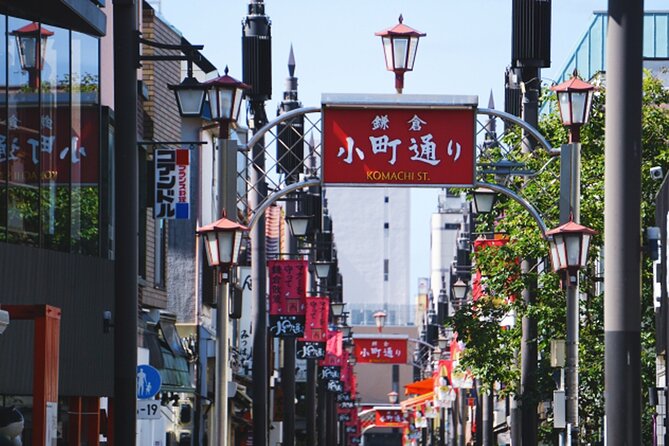
From the shrine, the route continues to Komachi Street for roughly 20 minutes. This pedestrian street is one of Kamakura’s best-known places for browsing, snacks, and local food. It is named after the poet Ono no Komachi and runs through the heart of the town.
The short stop gives the tour a welcome change of pace. After historical explanations at the shrine, you get a look at how Kamakura works as a present-day destination, with shops and food stops mixed into the old town setting.
The tour description promises local cuisine, traditional dishes, and lesser-known food finds. The exact food included is not specified, so you should not book this expecting a full tasting meal. Think of this as a guided introduction to the street, with suggestions that may help you choose lunch or a snack after the formal tour ends.
This is also where guide advice can be especially useful. Miyu is praised for offering ideas for places to visit later in the afternoon, while other guides are described as showing fun spots along the way. That kind of local orientation is valuable in Kamakura, where it is easy to spend too much time in one shopping area and miss the temples farther down the route.
Admission is free, but your food purchases are not included. Twenty minutes will pass quickly, so save serious shopping and eating for after the tour unless your guide indicates otherwise.
Seeing the Kamakura Great Buddha Up Close
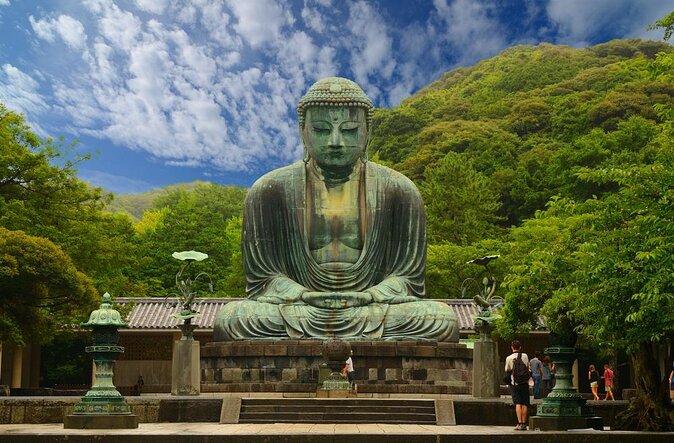
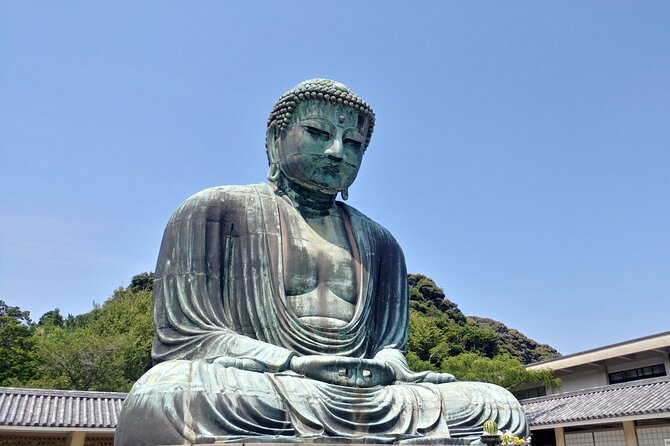
The third stop is Kotoku-in, home of the Kamakura Great Buddha. You have about 30 minutes here, and admission is not included.
The bronze statue is approximately 13.35 meters, or 44 feet, tall. Its size is impressive, but the real value of a guide is the explanation around it: why the statue matters, how Buddhist temples differ from Shinto shrines, and how religious customs remain part of daily Japanese life.
Several guides are praised for making these distinctions easy to understand. Maki, in particular, is described as explaining Buddhist temples and Shinto shrines in a clear way, including how people in Japan carry older customs into modern life. Miyu is also praised for helping visitors understand Japanese culture and history. This is the sort of explanation that can improve every temple visit you make afterward.
The Great Buddha is one of Kamakura’s most recognizable sights, so the stop can feel busy and photographic. The 30-minute schedule gives you time to see the statue and listen to the guide, but not necessarily to explore every part of the grounds at leisure. If you want a quiet, meditative visit, consider returning outside the tour.
The separate admission fee is part of the listed 1,200 yen total for transportation and admissions. Because the exact price breakdown is not provided, carry enough yen for the required costs and any food you want along the way.
Hasedera Brings Gardens, Views, and a Longer Temple Visit
The final major stop is Hasedera, also called Hase Kannon Temple. The tour allows about 40 minutes here, the longest stop on the schedule.
Hasedera is known for its calm setting, gardens, a tall wooden statue of the Goddess of Mercy, and views toward the coast. The combination makes it a useful final stop because it brings together religious art, natural scenery, and Kamakura’s coastal character.
The coastal views are one of the tour’s strongest features. Several comments praise the guides for showing good viewing spots and taking excellent photographs. Midori is singled out for helping with pictures, while Maki is praised for making the experience relaxed and personal. If you want a record of the day without constantly asking strangers to take photographs, this kind of guide support can be a real benefit.
Forty minutes gives you more breathing room than the earlier stops. You can listen to the explanation, take in the gardens, and enjoy the views without feeling that you are only stepping off a route long enough to take one picture.
Still, Hasedera is not a quick roadside attraction. If you love gardens, statues, or coastal views, you may want extra time here. Since the tour ends at Hase Station, you can continue independently after the official visit. The station location also makes it easy to treat the tour as a morning orientation rather than your entire Kamakura day.
A few more options to weigh up in Kamakura
- Tokyo: Kamakura & Enoshima Day Trip including Temple Tickets
★ 4.5 · 1,375 reviews - From Tokyo: Kamakura & Enoshima 1-Day Bus Tour
★ 4.5 · 189 reviews - Kamakura Private Tour: Temples, Nature, and the Great Buddha
★ 5.0 · 121 reviews - Kamakura 4hr Private Trip with Government-Licensed Guide
★ 5.0 · 58 reviews
The Route Works Best as a Morning Introduction
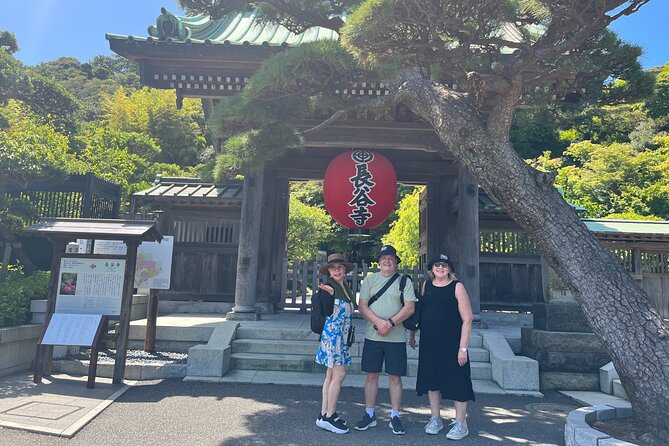
The tour begins at 10:00 a.m. and lasts about 3 hours and 30 minutes. Although the scheduled stop times add up to about two hours, the remaining time accounts for walking and transportation between the sights.
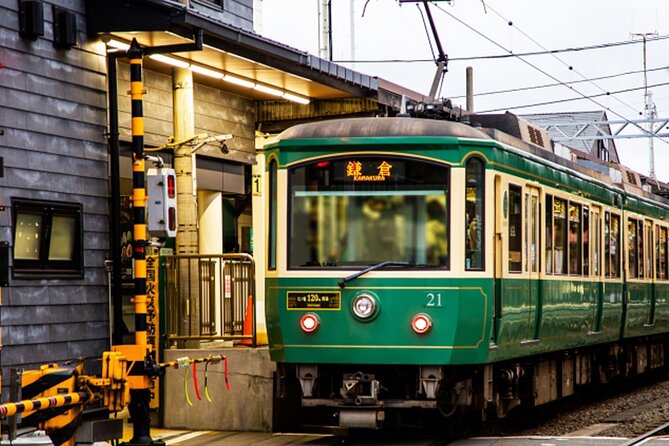
One account specifically mentions riding the Enoden train. The supplied schedule does not give a separate transportation time or confirm every transit detail, so you should treat the train ride as possible rather than guaranteed. Transportation is not included in the tour price.
Ending at Hase Station is practical. You are already near Hasedera and the Great Buddha area, and you can keep exploring instead of retracing the route to the original meeting point. You might spend the afternoon at sights the group did not have time to cover, return to Komachi Street for lunch, or revisit a favorite temple at a slower pace.
This arrangement suits first-time visitors who want a solid orientation. The guides can help you understand what you are seeing, then point you toward more places for the rest of the day. It also works well for families, since Maki is praised for keeping children engaged and making the tour friendly and easy to follow.
What the $35 Price Really Buys You
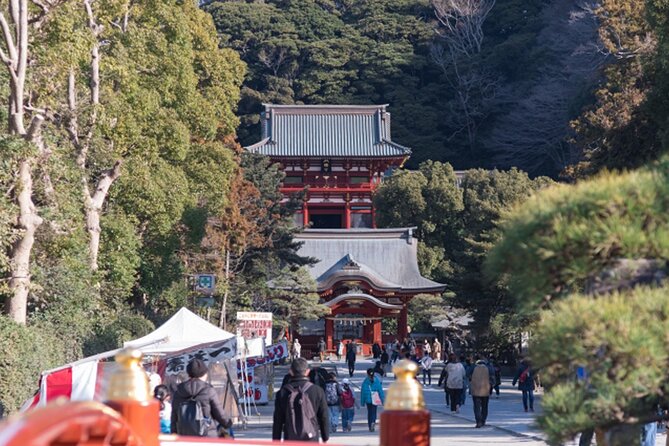
At $35 per person, the tour is priced as a guided introduction rather than an all-inclusive day trip. The fee covers the guide. You still pay for transportation and admissions, listed together as 1,200 yen, plus anything you eat or buy.
That can be good value if you would otherwise wander between Kamakura’s major sights without understanding their place in Japanese history and religion. A guide helps you connect a Shinto shrine, Buddhist temples, warrior-era politics, religious art, and modern local life into one readable story.
The small-group format strengthens the value. With no more than 10 people, you have a better chance to ask about customs, get help with photographs, and hear the guide without a large crowd around you. The praise for Miyu, Midori, and Maki is remarkably consistent: visitors value their warmth, clear explanations, energy, and ability to make the day feel relaxed.
The price is less attractive if you already know Kamakura well or want to spend long stretches inside one temple. You also need to budget for the extra 1,200 yen and perhaps food along Komachi Street. The tour is affordable, but it is not a zero-cost walking route.
Guides Make the Difference
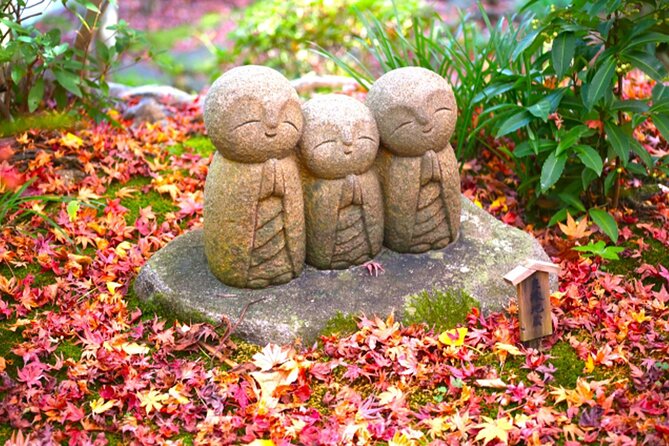
The most highly praised part of this experience is the guiding. Miyu is described as engaging, informed, and generous with suggestions for the afternoon. Midori receives praise for explaining Kamakura’s history, showing interesting spots, and taking photographs. Maki is repeatedly described as energetic, kind, personal, and easy to understand.
Those details matter because Kamakura’s major sights can blur together when you visit them without context. One shrine has a gate, another temple has a statue, and the Great Buddha looks impressive, but a good explanation tells you why each place is different.
The strongest guide style here appears to be conversational rather than academic. You get history, but also practical help, cultural explanation, photo assistance, and ideas for continuing your day. Families may appreciate the friendly approach, while first-time visitors will benefit from a clear introduction to Shinto and Buddhism.
Guide quality can vary from one departure to another, of course. The repeated praise for several named guides is encouraging, but the exact guide for your date is not stated.
Practical Details That Matter
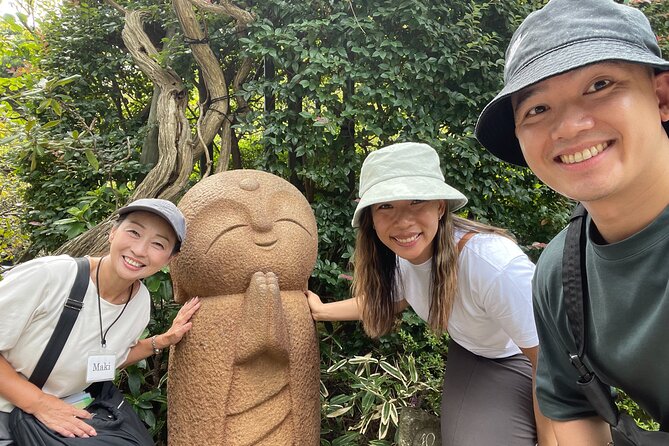
Confirmation arrives when you book, and mobile tickets are supported. The meeting point is near public transportation, and the tour ends at Hase Station rather than back at the starting point.
Service animals are allowed, and most people can participate. The supplied information does not provide a detailed accessibility assessment, so if you need specific help with walking surfaces, stairs, or train access, ask the provider before booking.
Wear comfortable shoes. This is a walking tour with several temples, a shrine, street movement, and transportation between areas. You should also allow extra time for photos and food after the formal schedule ends.
The experience requires good weather. If weather causes cancellation, you receive the choice of another date or a full refund. You can cancel for a full refund up to 24 hours before the start time. Cancellations or changes made less than 24 hours ahead are not refunded or accepted.
Who Should Book the Kamakura Walking Tour?
I would choose this tour if you want to see Kamakura’s main sights in one morning and understand the difference between its religious traditions. It is especially useful for first-time visitors, families, and anyone who wants help planning the rest of the day.
You should also consider it if photography matters to you. Guide assistance with pictures is praised, and the route includes shrine architecture, the Great Buddha, temple gardens, and coastal views.
I would skip it if your ideal Kamakura day means spending an hour or more at every temple, eating slowly along Komachi Street, or making your own route without a schedule. The tour covers a lot, so its strength is range and explanation, not long private visits.
At $35, plus 1,200 yen for listed transportation and admissions, it offers fair value for a compact, guided introduction. Book it early in your Kamakura planning, then use the finish at Hase Station as the start of a slower afternoon on your own.
FAQ
Where does the Kamakura Walking Tour start?
The tour starts at the Kamakura City Tourist Information Center, 1-chōme-1-1 Komachi, Kamakura, Kanagawa 248-0006, Japan.
What time does the tour begin?
The scheduled start time is 10:00 a.m.
How long does the tour last?
The tour lasts approximately 3 hours and 30 minutes.
Where does the tour end?
The tour ends at Hase Station, 2 Chome-14 Hase, Kamakura, Kanagawa 248-0016, Japan.
What sights are included?
The route includes Tsurugaoka Hachimangu Shrine, Komachi Street, Kotoku-in and the Kamakura Great Buddha, and Hasedera Temple.
Are admission fees included?
No. Transportation and admission fees are not included. The listed total for those costs is 1,200 yen.
What is included in the $35 price?
The price includes the tour guide fee.
How many people can join the tour?
The maximum group size is 10 travelers.
Can I cancel for a full refund?
Yes. You can cancel at least 24 hours before the experience start time for a full refund. If poor weather causes cancellation, you will be offered another date or a full refund.
Just added in Kamakura
- When Emperors Reigned and Shoguns Ruled★ 5.0 · 43 reviews
- First time in Kamakura? Enjoy a Tour of All Must-sees!★ 5.0 · 15 reviews
- Kamakura 4hr Private Trip with Government-Licensed Guide★ 5.0 · 58 reviews
- Your Own HANKO Name Seal Activity in Kamakura.★ 5.0 · 24 reviews
- Kamakura Bamboo Forest and Great Buddha Private Tour★ 5.0 · 12 reviews
- Exciting Kamakura – One Day Tour from Tokyo★ 5.0 · 40 reviews
- Kamakura Tours Half Day or Full Day Tours with a local guide.★ 5.0 · 12 reviews
- Buddha, Bamboo & Zen – Bespoke Kamakura Private Walking Tours★ 5.0 · 25 reviews
Walking Tours, compared.
Kyoto Geisha Walking Tour: Gion District & Hidden Gems
Read our review →
Tokyo Tsukiji Fish Market Food and Culture Walking Tour
Read our review →
Gion Magical Night Walking Tour with Geisha Trivia
Read our review →
Imperial Palace and Shogun Historical Walking Tour
Read our review →
Gion Geisha District Walking Tour – Stories of Geisha
Read our review →

Shinjuku Local Bar and Izakaya Guided Walking Tour
Read our review →
Browse the lists this tour appears in