
Reviewed · TEMPLES AND SHRINES
Kamakura Private Tour: Temples, Nature, and the Great Buddha
Kamakura rewards steady feet. I like the private guide approach, which turns a string of temples into a connected story about Zen, Shinto, Buddhism, and the old shogunate town. I also like the mix of quiet forest paths, ancient shrines, the Great Buddha, and ocean views, all in one half-day outing.
The main caution is simple: this is a 5-kilometer walk with a mountain pass, not a gentle stroll. The price is reasonable for a private experience, but food, local transport, and hotel pickup cost extra. Hot, humid, or rainy weather can also change the route.
In This Review
- Key points at a glance
- Why this Kamakura walk is different
- Beginning at Jochiji Temple
- Crossing the Kamakura hiking trails
- Entering Zeniarai Benten through the hillside
- The fox legend at Sasuke Inari Shrine
- Meeting Kamakura’s Great Buddha
- Hasedera’s gardens and ocean outlook
- Ending at Yuigahama Beach
- How much the private format is worth
- What the guides add
- Weather, pace, and practical comfort
- Who should book this half-day tour?
- FAQ
- How long does the Kamakura private tour last?
- Where does the tour begin?
- Where does the tour end?
- Is this a private tour?
- What admissions are included?
- Is hotel pickup included?
- How much walking is involved?
- Are food and drinks included?
- What happens if bad weather cancels the tour?
- Should you book it?
Key points at a glance
- Start in quiet Kita-Kamakura: The tour begins at Kita-Kamakura Station, close to Jochiji Temple and the wooded northern hills.
- A real mountain walk: The route uses Kamakura’s hiking trails, with uneven ground and uphill sections.
- Three major paid sights included: Your fee covers Jochiji Temple, Kotoku-in and the Great Buddha, plus Hasedera Temple.
- A thoughtful private format: Your guide can adjust the pace, explain customs, and adapt the plan to your group.
- Finish beside the sea: The walk ends near Yuigahama Beach and Hase Station, with the guide usually helping you reach Kamakura Station.
- Best for active sightseers: Good shoes and moderate fitness matter more here than fancy sightseeing clothes.
Why this Kamakura walk is different
Kamakura is an easy day trip from Tokyo, but its sights are spread across a compact yet hilly area. You can visit the Great Buddha on your own, of course. The harder part is understanding how the temples, shrines, wooded passes, and coastal town fit together.
This private tour solves that problem with a guide and a route that moves from northern Kamakura toward Hase. You begin among quiet Zen temple grounds, cross the hills on foot, visit two unusual shrines, then reach the most famous Buddhist monuments.
I especially like the contrast. Jochiji feels hushed and shaded. Zeniarai Benten has a strange, memorable cave entrance. The Great Buddha is grand and open to the sky. Hasedera adds gardens and ocean views, and Yuigahama gives you a place to breathe after the hills.
The private format also matters. You are not tied to the pace of a large group. Guides such as Yu, Yumi, Teiko, Yoko, Noriko, and Naho have been praised for answering questions, helping with trains, taking photos, and adjusting the day for children, older family members, heat, or rain.
The tour requires at least two people per booking. At $98.44 per person, the minimum booking comes to $196.88 before any optional extras. That is fair if you value personal explanation and route planning. A self-guided day will cost less, especially if you already understand Japanese temple etiquette and can read the trail directions.
More Private Tours in Kamakura:
- Kamakura 4hr Private Trip with Government-Licensed Guide
★ 5.0 · 58 reviews - Buddha, Bamboo & Zen – Bespoke Kamakura Private Walking Tours
★ 5.0 · 25 reviews - Kamakura Bamboo Forest and Great Buddha Private Tour
★ 5.0 · 12 reviews
Beginning at Jochiji Temple
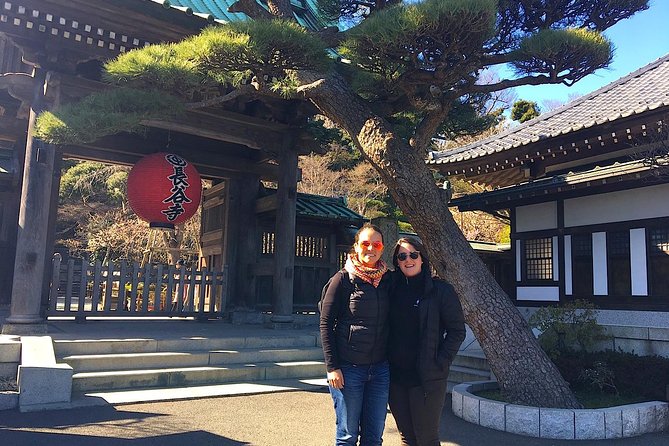
Meet your guide at Kita-Kamakura Station. This station is near public transportation and puts you in a better starting place than beginning amid the busier streets around the Great Buddha.
Jochiji Temple is the first stop, with about 25 minutes inside. It was built in 1281 by Hojo Tokiyori to honor a son who died young. The temple is associated with Zen Buddhism and sits among trees, giving you an immediate sense of Kamakura’s quieter side.
This is a good opening stop because it is calm and contained. Your guide can explain the temple’s religious setting and point out details you might otherwise pass without noticing. The admission fee is included, so you do not need to handle a separate payment here.
Twenty-five minutes is enough for a focused visit, but not a long, lingering one. If you want extensive garden photography or a slow meditation break, you may wish the schedule were looser. The private format helps, but the tour still has several major stops to cover.
Crossing the Kamakura hiking trails
The outdoor section lasts about 40 minutes and is the part that needs the most honest preparation. You will walk through the hills and across a mountain pass, with at least 5 kilometers of total walking during the outing.
The reward is access to wooded paths and smaller religious sites that are harder to connect by public transport. The trail gives you a break from city streets and a better feel for Kamakura’s natural setting.
This is not a paved park walk. The supplied guidance asks for shoes that are easy to walk in, and that advice should be taken seriously. One family described the mountain pass as strenuous but worthwhile. Another noted that the route felt more like a mountain hike than an ordinary town walk.
I would avoid scheduling this tour after a long flight if your legs are tired. You should also think carefully about summer weather. In temperatures around 95°F, or 35°C, the pace may slow and more rest stops may be needed. Guides have also changed sections of the route in rain, using buses or trains and skipping slippery mountain roads when necessary.
Entering Zeniarai Benten through the hillside
After the trail, you reach Zeniarai Benten Ugafuku Shrine. The approach is one of the more unusual moments of the day: a torii gate frames a hole in the hillside, and you pass through it to reach the shrine.
The stop lasts about 25 minutes and has no separate admission charge. The shrine is associated with a well-known money-washing practice, making it different from the more formal temple visits earlier and later in the tour.
This is where a guide adds real value. Religious customs can be easy to copy without understanding, especially when you are watching other people. A good English-speaking guide can explain what you are seeing and how the place fits into Japanese religious life.
The enclosed approach may feel tight, and the mountain route leading here can be tiring. Still, this stop rewards curiosity. It is distinctive, easy to remember, and not simply another large temple gate.
More Temples and Shrines in Kamakura:
- Tokyo: Kamakura & Enoshima Day Trip including Temple Tickets
★ 4.5 · 1,375 reviews - [Kyoto & Nara Day Tour] Sagano Scenic Railway & Nara Park & Fushimi Inari Taisha Thousand Torii Gates & Togetsukyo Bridge & Bamboo Grove & Kimono Forest (Departing from Osaka)
★ 4.9 · 10,942 reviews - Mount Fuji & Hakone – Lake Ashi Torii Gate, Hakone Shrine, Hakone Pirate Ship, Hakone Ropeway, Owakudani, Lake Yamanaka & Oshino Hakkai Day Trip: Sea, Land, and Air Panoramic Tour from Tokyo
★ 4.8 · 7,989 reviews - Kyushu One-Day Tour: Yufuin no Mori Train & Yufuin Town & Nyoirin-ji Temple & Dazaifu & Hell Hot Springs (Departing from Fukuoka)
★ 4.9 · 4,474 reviews
The fox legend at Sasuke Inari Shrine

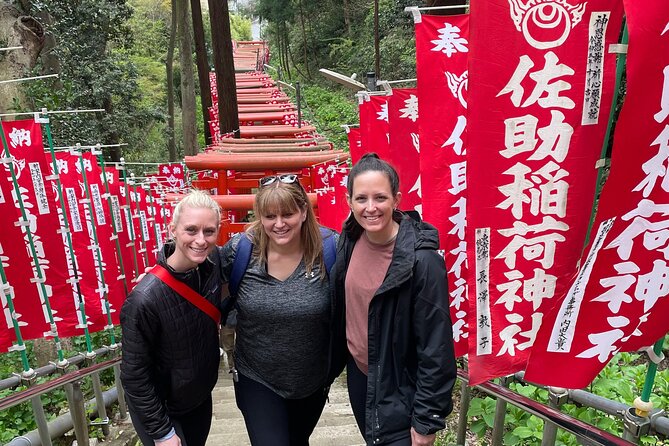
Sasuke Inari Shrine takes about 20 minutes. Its story reaches back to Minamoto Yoritomo, the first shogun of Kamakura. According to legend, a white fox associated with Inari appeared to him in a dream and advised him how to win a battle.
The story gives the shrine a different mood from Jochiji’s Zen calm. Inari shrines are linked with fox imagery, and the legend connects the religious site to the political beginnings of Kamakura.
This stop is free, but it comes as part of the walking route, not as a convenient standalone attraction. If you are already feeling the hills, you may appreciate the short visit. If you want to spend more time at each shrine, the fixed half-day length can feel brisk.
The best guides do more than recite dates. Naho, for example, was praised for explaining temple etiquette and answering questions at each stop. That kind of interpretation helps you understand why a shrine matters, not just remember its name.
Meeting Kamakura’s Great Buddha
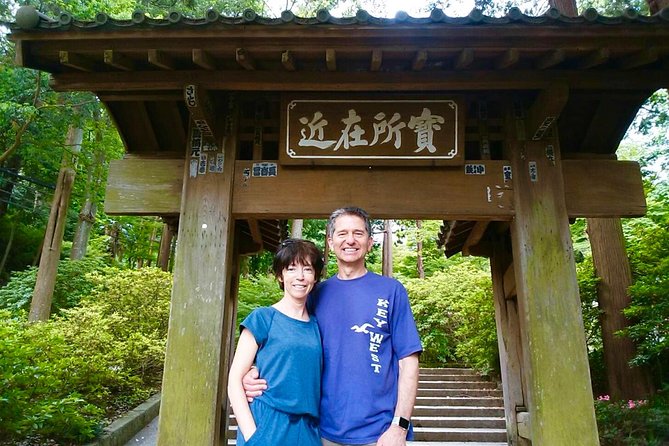
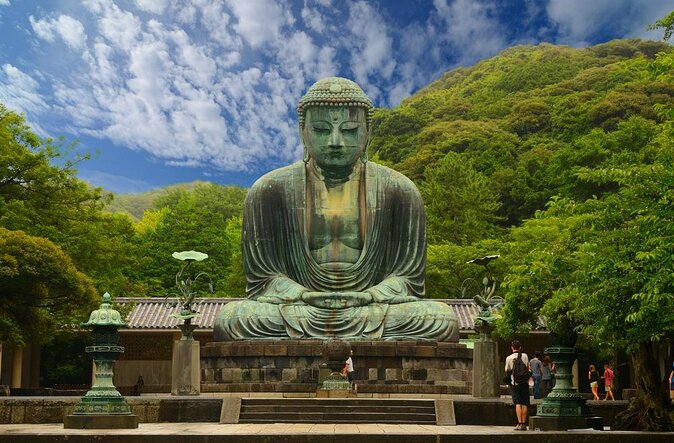
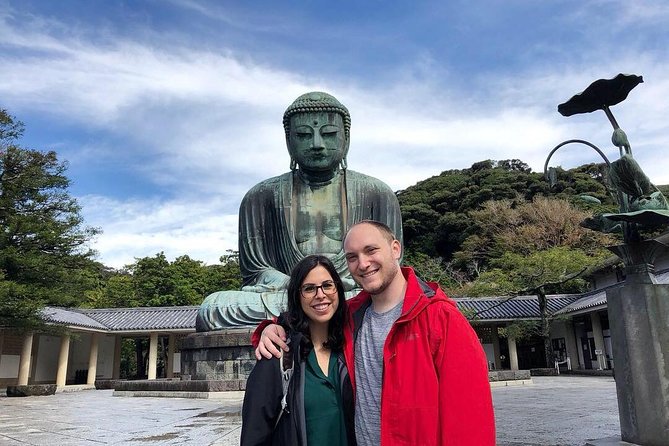
Kotoku-in is the tour’s big visual moment. The bronze Great Buddha measures 13.35 meters and weighs about 121 tons. The statue in its present bronze form dates to 1252, and admission is included.
Allow about 20 minutes. That is enough to see the statue, take photographs, and hear the main story. The experience is powerful because the statue is outdoors rather than enclosed in a grand hall. You can appreciate its scale from several angles.
You can also enter the inside of the statue for an additional experience at the site, according to the tour information and past feedback. If that option is open during your visit, ask your guide about it before moving on.
The Great Buddha is the most popular stop, so it may feel less quiet than the mountain shrines. That contrast is part of the point. You move from lesser-known paths into Kamakura’s most famous landmark, then continue to Hasedera.
Do not expect 20 minutes to cover every detail of Kotoku-in. If the statue is your main reason for coming to Kamakura, you may want separate time before or after the tour.
Hasedera’s gardens and ocean outlook
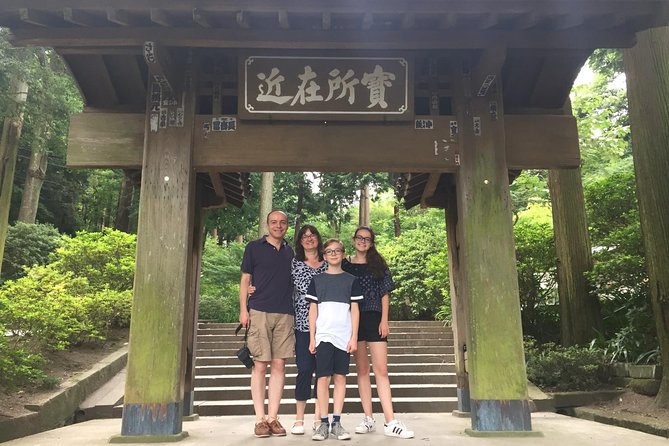
Hasedera is allotted about 30 minutes and includes admission. The temple rises partway up Mount Kamakura, which gives it an excellent view south toward the ocean and Yuigahama Beach.
The setting brings together the main themes of the day: religious buildings, gardens, a hillside route, and the sea. In June and July, the grounds can be especially attractive when hydrangeas are in bloom. The temple also has peaceful garden areas that offer a gentler pause after the hiking section.
There are still stairs and uphill movement here. If anyone in your group has a knee problem, poor balance, or limited stamina, tell the guide early. A previous family needed a taxi after an injured knee became painful, and another group with older relatives received a modified plan that reduced the walking.
That is one of the strongest reasons to choose a private tour. The guide cannot remove every step, but can help you make sensible decisions before a small problem becomes a large one.
Ending at Yuigahama Beach
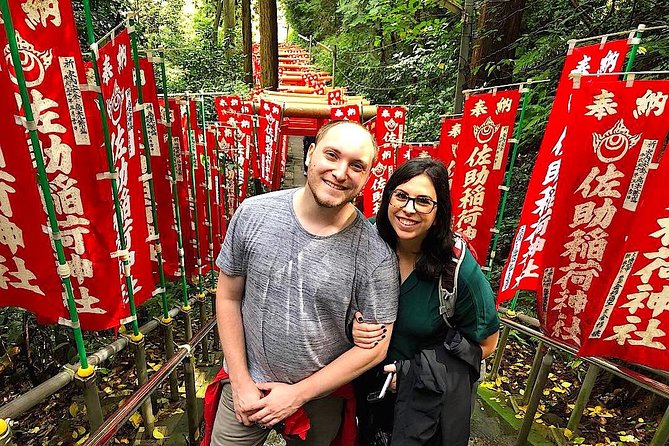
The final stop is Yuigahama Beach, with about 15 minutes to relax. The beach faces south, so you look out over the water toward the sun, depending on the time and weather.
In summer, an open-air market called Umi-no-ie may be operating. The tour does not include food or drinks, so any snack or meal is your own expense.
Fifteen minutes is a short beach visit. Think of it as a pleasant finish rather than beach time. You can enjoy the view, cool down, and then continue to Hase Station. The guide usually accompanies the group toward Kamakura Station as well, which is useful if you are unfamiliar with the local rail connections.
Some guides have also helped arrange lunch or suggested reasonably priced restaurants. That is not included in the tour, and you should not assume a meal is part of the official schedule. Still, a private guide may be able to recommend a place that suits your group.
How much the private format is worth
The $98.44 per-person price includes an English-speaking guide, taxes and fees, photos of participants, and admission to Jochiji, Kotoku-in, and Hasedera. It does not include food, drinks, taxis, buses, trains, or hotel pickup.
That makes the value strongest for a small group that wants interpretation and help with logistics. If four people book together, the per-person price remains the same, but the group can share a guide without paying for a large organized excursion. Group discounts may also be available.
The price is less attractive if you only want to see the Great Buddha and Hasedera. You can visit those sights without a private guide. You are paying here for the route through the hills, the explanations, and the ability to adjust the day around your interests and energy.
Hotel pickup is available for an extra 8,000 yen per person. I would skip that add-on unless your hotel location makes the start at Kita-Kamakura genuinely difficult. The station meeting point is clear, and the tour is already designed around public transportation.
The tour can be extended for 1,000 yen per person per half hour, paid in cash. That could help if you want more time for lunch or a slower visit, but ask about the extension before the day gets away from you.
What the guides add
The strongest praise for this experience centers on the guides. Yu has been especially appreciated for personal attention, family-friendly explanations, restaurant help, and caring support when a participant fell. Yumi has been praised for adapting to rain and for making the history accessible to children.
Teiko has been singled out for friendly explanations of shrines and temples. Noriko has been praised for shaping a day around personal interests and adding local character. Yoko has helped people with train directions, taken photos, and found quieter lunch places. Naho has received praise for clear English, temple etiquette, and patient answers.
Guide assignments vary, so you cannot count on a particular person unless the operator confirms it. Still, the pattern is clear: this tour works best when you ask questions and tell your guide what matters to you.
If you have children, older relatives, a hot-weather concern, or a specific interest in Buddhism or Shinto, say so before you start. The private setting gives the guide useful information to work with.
Weather, pace, and practical comfort
The tour requires moderate physical fitness. Wear walking shoes with good grip, bring water, and expect hills, steps, and uneven trail surfaces. The supplied information specifically warns that the route includes a mountain pass and at least 5 kilometers of walking.
Weather can affect the experience in a real way. In rain, guides have used buses and trains and changed the walking plan. In heat, the group may need longer breaks and may not reach every possible site. The operator requires good weather and offers another date or a full refund if poor conditions cancel the tour.
Free cancellation is available until 24 hours before the start time. Changes or cancellations made later are not accepted for a refund.
The tour is private, so only your group participates. That makes it easier to slow down, but it does not turn a hike into an accessible route. If someone in your party has mobility limitations, ask about an alternative plan before booking rather than hoping the trail will be manageable.
Who should book this half-day tour?
I would choose this for someone visiting Tokyo who wants more than a quick photograph of the Great Buddha. It suits couples, families, and small groups that like walking, local stories, and a flexible day.
It is also a good choice for first-time visitors to Kamakura who do not want to puzzle over unsigned mountain paths or temple customs. The guide can connect the stops and help with the trip back to the station.
I would hesitate if you dislike hills, need a very slow pace, or want a long beach visit. I would also consider a shorter, vehicle-based plan for anyone with a knee injury or limited stamina.
FAQ
How long does the Kamakura private tour last?
The tour lasts approximately 5 hours.
Where does the tour begin?
The meeting point is Kita-Kamakura Station in Yamanouchi, Kamakura.
Where does the tour end?
The planned end point is Hase Station. The guide usually accompanies the group toward Kamakura Station as well.
Is this a private tour?
Yes. Only your group participates in the activity.
What admissions are included?
Admission to Jochiji Temple, Kotoku-in and the Great Buddha, and Hasedera Temple is included.
Is hotel pickup included?
No. Hotel pickup and drop-off are not included. Hotel pickup is available for an extra 8,000 yen per person.
How much walking is involved?
You will walk at least 5 kilometers, including a mountain pass. The tour requires moderate physical fitness.
Are food and drinks included?
No. Food and drinks are not included. Local transport, including taxis, trains, buses, or private vehicles, is also not included.
What happens if bad weather cancels the tour?
If poor weather causes cancellation, you will be offered a different date or a full refund. You can also cancel up to 24 hours before the start time for a full refund.
Should you book it?
Book this tour if you want Kamakura’s temples and shrines tied together by a real walk through the hills. The included admissions, private guide, Great Buddha, Hasedera gardens, and seaside finish make the price reasonable for a small group that values personal help.
Skip it if you mainly want easy sightseeing with little exertion. For everyone else, bring good shoes, allow for weather changes, and tell your guide how fast you want to go. That is when this Kamakura outing is at its best: part temple visit, part country walk, and part lesson in how Japan’s religious traditions still shape everyday places.
Just added in Kamakura
- When Emperors Reigned and Shoguns Ruled★ 5.0 · 43 reviews
- First time in Kamakura? Enjoy a Tour of All Must-sees!★ 5.0 · 15 reviews
- Your Own HANKO Name Seal Activity in Kamakura.★ 5.0 · 24 reviews
- Kamakura Walking Tour – The City of Shogun★ 5.0 · 100 reviews
- Kamakura 4hr Private Trip with Government-Licensed Guide★ 5.0 · 58 reviews
- Kamakura Bamboo Forest and Great Buddha Private Tour★ 5.0 · 12 reviews
- Exciting Kamakura – One Day Tour from Tokyo★ 5.0 · 40 reviews
- Kamakura Tours Half Day or Full Day Tours with a local guide.★ 5.0 · 12 reviews
Temples and Shrines, compared.
![[Kyoto & Nara Day Tour] Sagano Scenic Railway & Nara Park & Fushimi Inari Taisha Thousand Torii Gates & Togetsukyo Bridge & Bamboo Grove & Kimono Forest (Departing from Osaka)](https://media.japanvisits.com/wp-content/uploads/kyoto-nara-day-tour-sagano-scenic-railway-nara-park-fushimi-inari-taisha-thousand-torii-gates-togetsukyo-bridge-bamboo-grove-kimono-forest-departing-from-osaka-k110001-400x257.jpg)
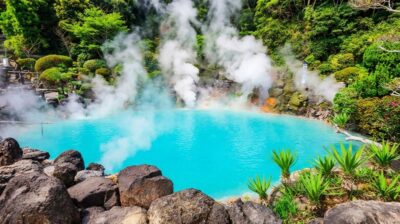
Kyushu One-Day Tour: Yufuin no Mori Train & Yufuin Town & Nyoirin-ji Temple & Dazaifu & Hell Hot Springs (Departing from Fukuoka)
Read our review →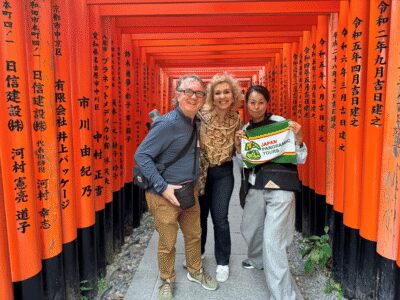
Fushimi Inari, Kinkakuji, Bamboo Grove 1 Day Bus Tour
Read our review →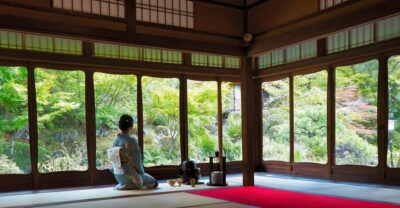
Tea Ceremony in a Traditional Tea House in Kiyomizu
Read our review →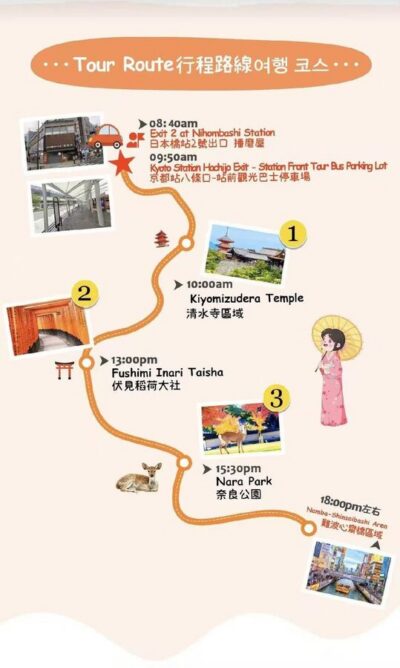
Kyoto Nara Day Trip │ Kiyomizu-dera Temple + Fushimi Inari-taisha Shrine + Nara Park (Departing from Osaka/Kyoto)
Read our review →
Browse the lists this tour appears in