
Reviewed · MULTI-DAY TOURS THAT VISIT SHIRAKAWA-GO
12 Day Best of Japan the Golden Route by Tourist Journey – Tokyo to Osaka Tour – Reviews & Prices
Japan’s Golden Route takes you from Tokyo’s temple lanes to Mount Fuji, Kyoto’s red gates, and Hiroshima’s Peace Memorial Park, then finishes in Osaka. I like the mix of major sights and quieter stops, especially the mountain villages of Ainokura and Shirakawa-go. I also like that hotels and long-distance train tickets are included, so you do not have to plan every leg yourself.
The trade-off is that this is only partly guided, and the practical details matter. You’ll join selected tours, but you must get between your hotel and meeting points on your own, and reports of missed excursions and unclear updates make it wise to verify each day’s arrangements before setting out.
In This Review
- Key points to know before booking
- Tokyo starts with temples, gardens, and a very busy crossing
- Kanazawa and Shirakawa-go bring a different Japan
- Kyoto shifts from Gion lanes to famous shrines
- Osaka and Hiroshima make for a strong final stretch
- What the price includes, and where the value lies
- The main concern is organization, not the route
- Who should book this Japan route?
- FAQ
- Is this a fully guided tour?
- What cities and places does the tour visit?
- Which train journeys are included?
- Are meals included?
- Can the Tsukiji food tour accommodate vegetarian or vegan diets?
- Are airport transfers included?
- Is travel insurance included, and are hotel breakfasts included?
Key points to know before booking
- A broad first trip: Tokyo, Mount Fuji, Kanazawa, Kyoto, Nara, Osaka, Hiroshima, and Miyajima all feature in 12 days.
- A useful change of pace: After Tokyo’s crowded districts, you get mountain scenery and traditional villages in Gokayama and Shirakawa-go.
- Rail travel is part of the appeal: Shinkansen tickets are included for Tokyo to Kanazawa and Osaka to Hiroshima, with other intercity train journeys listed as included.
- Hotels come in several price tiers: Choose from listed 3-, 4-, and 5-star options, though the lowest advertised price is based on the cheapest room.
- Self-navigation is real: Hotel-to-station and hotel-to-meeting-point transfers are not included.
- Check plans closely: The operator is rated 4.1 out of 5 across 64 reviews, but the two available tour ratings average 1.5 out of 5 and describe serious organization problems.
Tokyo starts with temples, gardens, and a very busy crossing
Your first day is for arrival and settling in. An airport transfer can be arranged, but do not assume that it means someone meets you at the arrivals hall. One answer about the transfer describes taking the Skyliner and subway independently, with a voucher and travel instructions to follow. Confirm the exact arrangement, station, and meeting details before you fly.
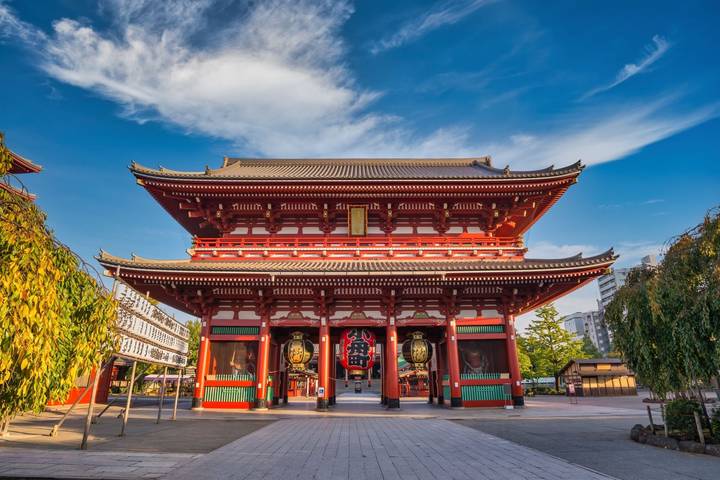
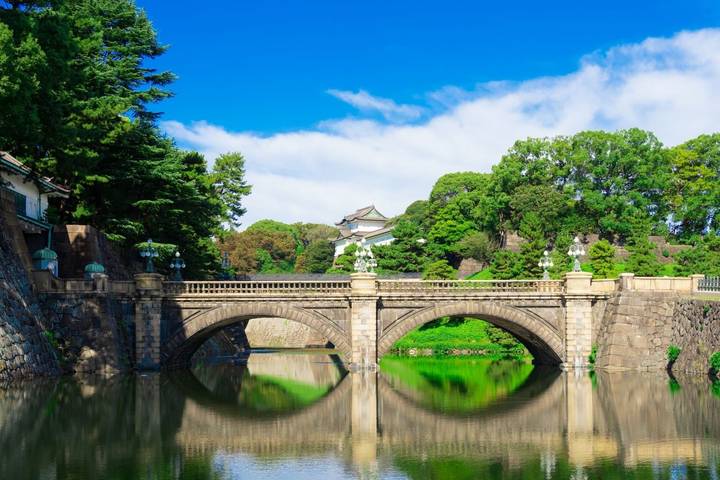
The first full day packs together several sides of Tokyo. You start near Tokyo Station and walk around the Imperial Palace Gardens, including a view of Nijubashi Bridge, then head to Asakusa for Nakamise-dori and Senso-ji. The shopping street is a lively approach to one of the city’s best-known temples, but it can be crowded, so give yourself room to pause rather than treating it as a quick photo stop.
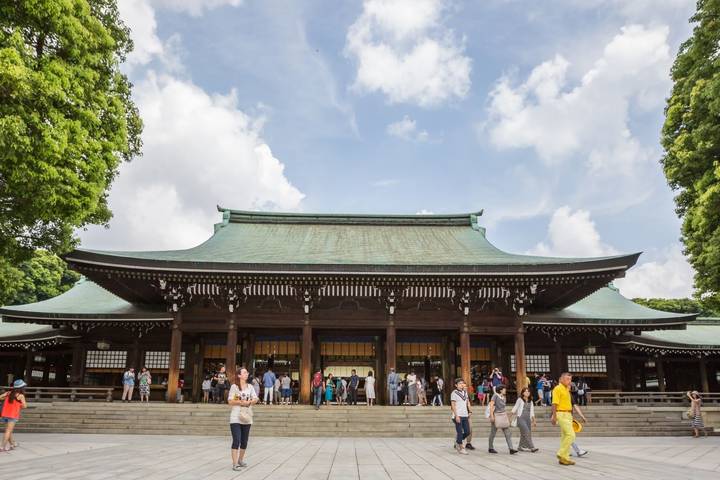
After lunch on your own, the plan shifts to Meiji Jingu Shrine, then Harajuku and Shibuya Crossing. That contrast is useful for a first visit: formal shrine grounds, youthful street fashion, and a famous urban intersection in one day. It is a full walking schedule, so comfortable shoes and a charged phone will help.
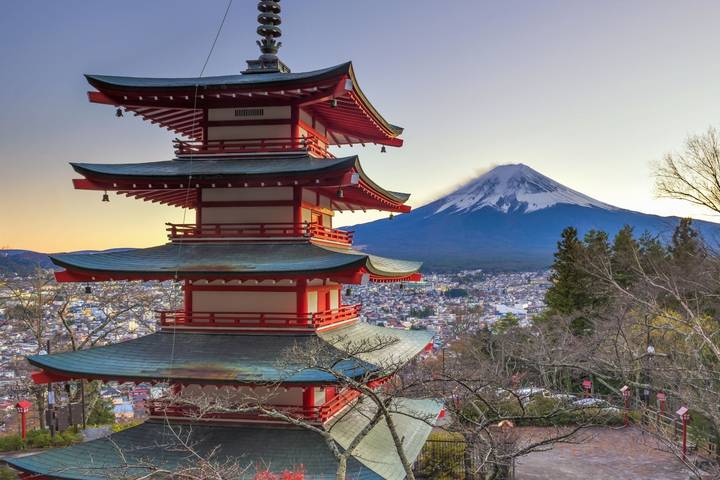
Day 3 heads to Lake Kawaguchi and Mount Fuji. Oishi Park offers views across the lake, while Arakura-Fuji Sengen Shrine is known for its striking outlook toward the mountain. The trip also includes Mount Fuji’s 5th Station and the spring-fed ponds at Oshino Hakkai, where you can taste the water. Fuji visibility depends on weather, and traffic or seasonal conditions can change or delay the day’s stops.
Day 4 is free, a welcome pause after two organized excursions. You can use it for museums, parks, or anything you missed, but it also means you are arranging the day yourself. Day 5 returns to a guided outing, with a purification ritual at Tsukiji Hongwan-ji, tastings at Tsukiji Outer Market, and a stop at Namiyoke Shrine. The food portion includes four or five tastings, with seafood and savory meat among the examples. Vegetarian and vegan diets cannot be accommodated on this outing, and other dietary requests are not guaranteed.
A few more options to weigh up in Tokyo
- Tokyo Disney Resort – Tokyo Disneyland & Tokyo DisneySea Park Tickets
★ 4.8 · 99,488 reviews - SHIBUYA SKY Ticket
★ 4.7 · 46,509 reviews - JR Whole Japan Rail Pass
★ 4.8 · 29,150 reviews
Kanazawa and Shirakawa-go bring a different Japan
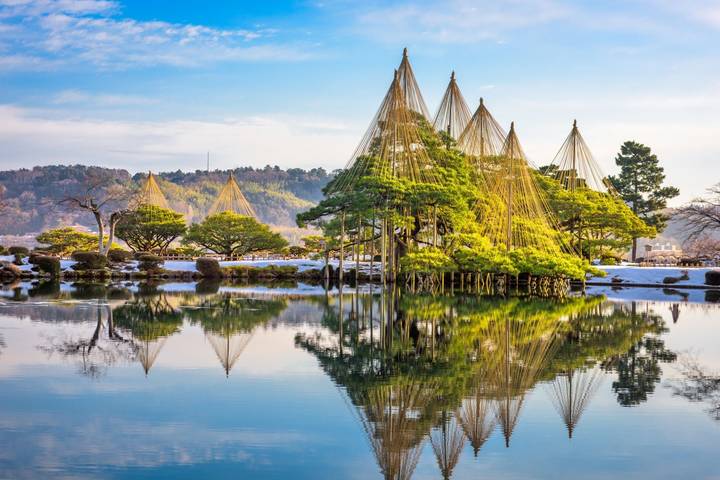
On Day 6, you take the Shinkansen from Tokyo to Kanazawa and have the rest of the day to explore independently. Kenrokuen Garden is the suggested stop, a good choice if you want a measured walk among landscaped grounds and seasonal features. The visit is optional, so account for entrance fees and local transport yourself.
The following day is a guided mountain-country excursion. Inami’s wood carvings and Zuisenji Temple introduce a local craft tradition before the route continues into Gokayama and Ainokura. You then reach Shirakawa-go, a UNESCO-listed village known for steep, thatched roofs. There is time to explore and eat lunch on your own, but lunch is not included.
These villages offer a welcome contrast to Japan’s major cities. They are not simply another temple-and-shopping stop: the architecture and setting make the mountain communities the day’s focus. The cost of that variety is time on the road, and your freedom to linger is limited by the group schedule.
Kyoto shifts from Gion lanes to famous shrines
Day 8 takes you from Kanazawa to Kyoto by express train, followed by an evening walk. Pontocho Alley, Gion, Yasaka Shrine, and Hanamikoji Street give you an introduction to the city’s traditional districts. The Statue of Izumo-no-Okuni adds a small piece of performing-arts context, while Gion’s tea houses and narrow streets reward a slower pace than a checklist approach.
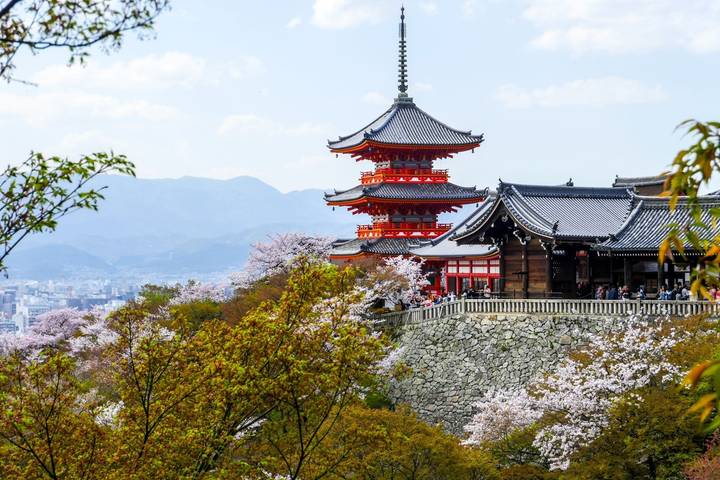
The next day is dense. You visit Kinkaku-ji, the Golden Pavilion, walk through Arashiyama Bamboo Forest, and go to Fushimi Inari Taisha, where rows of red torii gates climb the hillside. Lunch is on your own. Each place has a distinct appeal, but the schedule asks you to cover a lot of ground, and crowds can limit how long you want to linger.
Then you travel to Nara for Todai-ji Temple and its Great Buddha, followed by free time in Nara Park with the Sika deer. The deer are a memorable part of the visit, but they are wild animals, not a petting zoo; keep your food and belongings secure. The day ends with a guided train journey to Osaka.
Entrance fees for Kyoto and Nara, listed at about 1,300 yen per person, are not included. That is modest compared with the overall trip cost, but it is still worth keeping cash or a payment card ready. Local transport and other unlisted costs may also add up.
Osaka and Hiroshima make for a strong final stretch
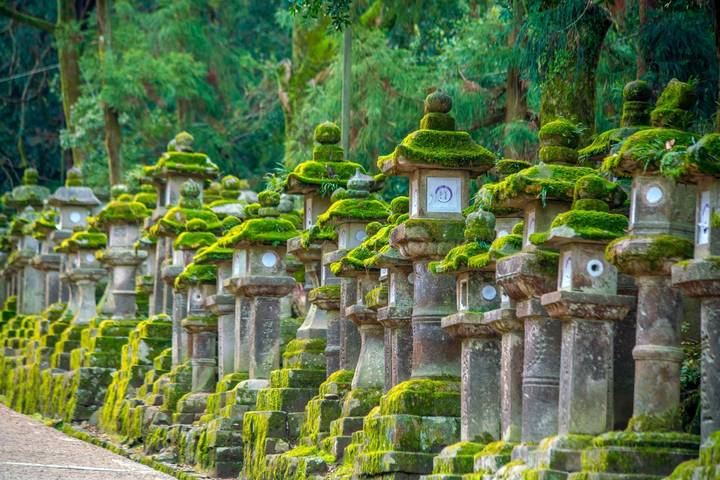
Day 10 starts at Osaka Castle, a dramatic landmark linked to the city’s 16th-century past. You have free time for lunch and independent exploring before an evening in Dotonbori, with its canal, neon signs, Glico Man figure, and Hozenji Temple. This mix works well: a major historical site by day and a lively food-and-shopping district after dark.
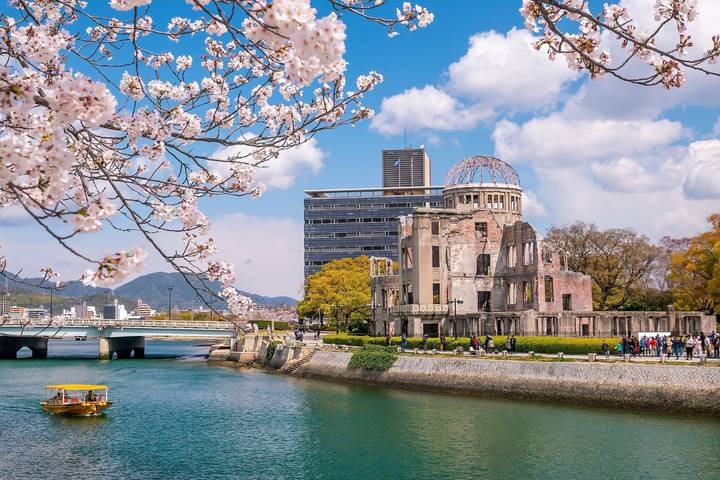
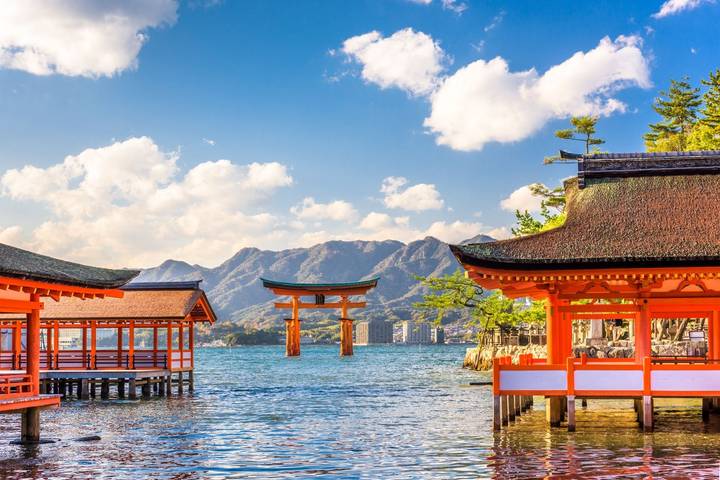
Day 11 is an ambitious excursion from Osaka to Hiroshima and Miyajima. The stated plan uses the Shinkansen to Hiroshima, a ferry to Miyajima, and trains back after visiting Itsukushima Shrine and Hiroshima Peace Memorial Park, including the A-Bomb Dome. Miyajima gives the day a different mood from the city memorials, while the Peace Park asks for a quieter, more reflective visit.
Allow for a long day. There is a concerning mismatch between the stated rail-and-ferry plan and one account of an eight-hour drive followed by a rushed visit. Before this excursion, confirm the transport mode, departure time, return plan, and how much time is planned at each site. The tour ends in Osaka on Day 12; optional transfers to Kansai Airport or Tokyo city center are available, but you should confirm which one suits your onward plans.
A completely different kind of day out:
- Mt Fuji and Hakone 1-Day Bus Tour Return by Bullet Train
★ 5.0 · 26,383 reviews - TOKYO SKYTREE® Ticket
★ 4.7 · 25,136 reviews - teamLab Borderless Tickets: MORI Building DIGITAL ART MUSEUM
★ 4.7 · 24,126 reviews - teamLab Planets TOKYO Ticket
★ 4.7 · 21,663 reviews
What the price includes, and where the value lies
The tour starts at $2,508 for the cheapest room option. Accommodation is included, with listed choices ranging from 3-star hotels to selected 4- and 5-star properties in Tokyo, and mostly 3- or 4-star options elsewhere. Your exact hotel depends on the option you choose, so compare the room tier and property before booking rather than assuming every hotel shown is part of the lowest price.
The included long-distance trains are a real convenience on a route that covers much of Honshu. So are selected guided walks and excursions, particularly the Tokyo highlights, Fuji day, Tsukiji food visit, mountain villages, and Kyoto and Nara stops. Those pieces reduce the amount of research and ticket planning you would otherwise have to do.
But the price does not cover flights, travel insurance, gratuities, optional airport transfers, Kyoto and Nara entrance fees, or transfers between hotels and stations or meeting points. Meals are mostly on your own, apart from the Tsukiji tastings. Information about hotel breakfast is inconsistent: one answer says hotels provide continental breakfast, while another says breakfast can be added. Ask the operator to confirm whether it is included in your specific booking.
The arrangement is partly guided, not a fully escorted tour in which one guide manages every detail from hotel door to hotel door. The plan describes local specialists on different days, while a customer-service answer says there is a guide across the cities. That difference matters. Ask which days include a guide, where each tour begins, how you get there, and who to contact if plans change.
The main concern is organization, not the route
The operator’s profile rating is 4.1 out of 5 across 64 reviews, but the two ratings available for this specific tour average 1.5 out of 5. Both accounts describe missed or unconfirmed excursions, delayed itinerary updates, and confusion about meeting points. One also says the hotels were a long way from daily meeting locations, while another felt too much time went into finding places rather than seeing them.
That is a small sample, so it cannot predict every departure. Still, the complaints concern basics that matter on a tightly scheduled tour. The listed group size ranges from 1 to 50, which means the phrase small group should not be taken as a promise of a small party every day. The operator’s response rate is 100 percent and its stated response time is within one day, but an answer after you need to leave is not much help.
I would ask for a day-by-day schedule with meeting addresses and times, hotel names, included transport details, and a contact method for urgent changes. Save those details offline. Also confirm the Fuji weather alternatives and the Hiroshima excursion’s transport plan before departure.
Who should book this Japan route?
This package makes the most sense if you are visiting Japan for the first time, want the classic city-and-culture route, and value having hotels and major rail legs arranged. You need to be comfortable navigating stations and reaching meeting points independently, and flexible enough to manage changes without a guide beside you at every turn.
If you want a small, fully guided group with dependable door-to-door coordination, I would be cautious until the operator answers your practical questions in writing. If you are comfortable with partial guidance and the price fits your hotel choice, the route gives you an unusually broad sample of Japan in 12 days, from Tokyo’s temples to Hiroshima’s memorials and the mountain villages in between.
FAQ
Is this a fully guided tour?
No. It is described as partially guided, with selected guided excursions and independent time. The tour information says guides lead the experiences, but you are responsible for getting between hotels, stations, and meeting points.
What cities and places does the tour visit?
The route starts in Tokyo and ends in Osaka. Stops include Mount Fuji and Lake Kawaguchi, Kanazawa, Inami, Ainokura, Shirakawa-go, Kyoto, Nara, Hiroshima, and Miyajima.
Which train journeys are included?
The listed included rail journeys include the Shinkansen from Tokyo to Kanazawa and the Shinkansen between Osaka and Hiroshima. The Kanazawa to Kyoto and Kyoto to Osaka journeys are also listed as included train transport.
Are meals included?
Most meals are not included. The Tsukiji visit includes four or five traditional food tastings, with seafood and savory meat among the examples. Lunch on the Shirakawa-go and Kyoto and Nara days is at your own expense.
Can the Tsukiji food tour accommodate vegetarian or vegan diets?
No. The tour information says it cannot accommodate vegetarian or vegan restrictions. Other requests, such as gluten-free or pescatarian, may be considered but are not guaranteed.
Are airport transfers included?
Airport transfers are optional extras, not part of the base price. Confirm the exact arrangement: an answer about a shared Narita transfer says you take the Skyliner and subway yourself, rather than being met at the airport.
Is travel insurance included, and are hotel breakfasts included?
Travel insurance is not included, and the tour information recommends buying it. Breakfast details are unclear: one answer says the hotels provide continental breakfast, while another says breakfast can be added. Confirm breakfast inclusion with the operator for your selected hotel.
Just added in Tokyo
- Fish Market & Tokyo Skyline Private Walking Tour★ 5.0 · 14 reviews
- Mt. Fuji & Hakone Cherry Blossom private One Day Tour★ 4.5 · 35 reviews
- 25-Min Downtown Helicopter Tour : Tokyo Skytree and Tokyo Tower★ 5.0 · 19 reviews
- Private Tour with a Local Guide – Learn about daily life in Japan★ 5.0 · 22 reviews
- Tokyo: 3-Hour Bike/E-Bike Tour of the City’s Highlights★ 5.0 · 209 reviews
- Official Japan Go-Kart Through Tokyo Bay / Ginza (IDP Required)★ 4.5 · 71 reviews
- 30-Min Tokyo Central Private Heli Tour– Asakusa, Skytree, Shibuya★ 5.0 · 13 reviews
- Tokyo 2-Hour Genuine Samurai Experience: Kendo in Japan★ 5.0 · 112 reviews
Multi-Day Tours That Visit Shirakawa-go, compared.

Visions of Japan with Hiroshima & Osaka 15-Day Tour by Globus
Read our review →
14 Days Japan Panoramic (Private 3 Star Hotels) by Stunning Tours
Read our review →
15 Days Discover Japan with Hiroshima by Tomato Travel
Read our review →
Ancient & Modern Japan 14-Day Tour by Exodus Adventure Travels
Read our review →
A Classic 11 Day Japan Holiday by Wonderful Holidays UK
Read our review →
Classic Japan (from Tokyo to Osaka) 11-Day Tour by Intrepid Travel
Read our review →
Magical and Dreamy Japan 14-Day Tour by Europamundo
Read our review →
Highlights of Japan 13-Day Tour by Travel Chasers
Read our review →Browse the lists this tour appears in