
Reviewed · WALKING TOURS
Akihabara Anime & Game Adventure Walking Tour (Group or Private)
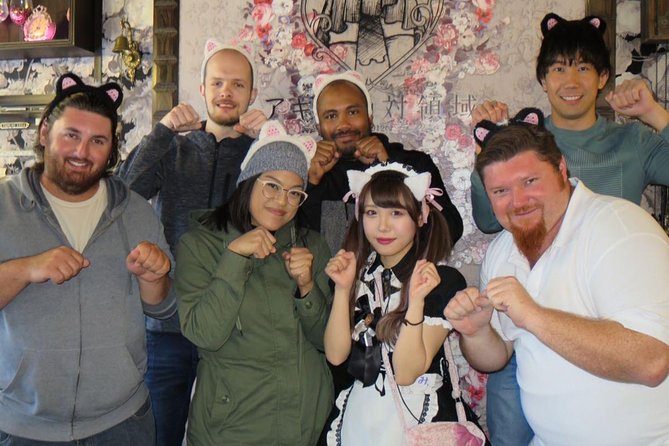
Akihabara rewards curious eyes. This three-hour walk gives you a friendly introduction to Tokyo’s anime, gaming, arcade, and maid cafe culture without asking you to decode the neighborhood alone. I like the small maximum of seven people, which keeps the walk personal, and I like that maid cafe admission plus one drink are included. The main caution is simple: the tour is best for newcomers and fans, not for anyone expecting a detailed study of anime history or a full shopping expedition.
The tour costs about $90.86 per person, with group discounts available, and runs from the Electric Town side of JR Akihabara Station. Guides such as Ryo, Seina, Taka, Ai, Yuki, Kenji, and Naoki have received warm praise for tailoring the walk to individual interests. Still, a few people found the explanations thin and felt they could have explored the district more efficiently on their own.
In This Review
- Key points to know before booking
- Starting beside JR Akihabara Station
- Super Potato and the appeal of old games
- Akiba Culture Zone and the shop maze
- Akihabara Gachapon Hall and fifteen minutes of small surprises
- The maid cafe: the tour’s central experience
- Taito Station and the arcade side of Akihabara
- Purikura, vending machines, and the final street walk
- What the $90.86 price really buys
- Group or private tour, and who should choose it
- The guide factor and how to protect your time
- Cancellation and booking details
- FAQ
- Where does the Akihabara tour start?
- Where does the tour finish?
- How long does the experience last?
- How large is the group?
- Is maid cafe admission included?
- Are food and extra drinks included?
- Is the maid cafe always the same?
- Can I cancel for a full refund?
- Should you book the Akihabara Anime and Game Adventure?
Key points to know before booking
- Super Potato offers a fast hit of retro gaming: Expect old Japanese consoles, cartridges, and arcade nostalgia in a compact shop.
- The maid cafe is the main included experience: Your entry and one drink are covered, while food, extra drinks, and a live performance cost more.
- A group of up to seven keeps the walk manageable: That matters in crowded stores and helps when you want to ask about a specific series or game.
- The route mixes shopping with playful stops: Akiba Culture Zone, gachapon machines, Taito Station, Purikura, and local streets fill out the three hours.
- The guide makes the biggest difference: Strong guides have helped with translation, shop choices, train directions, and family needs, but the quality can vary.
- Wear light clothing in summer: Tokyo heat and humidity can make the outdoor portions tiring, so bring water and a hat.
Starting beside JR Akihabara Station
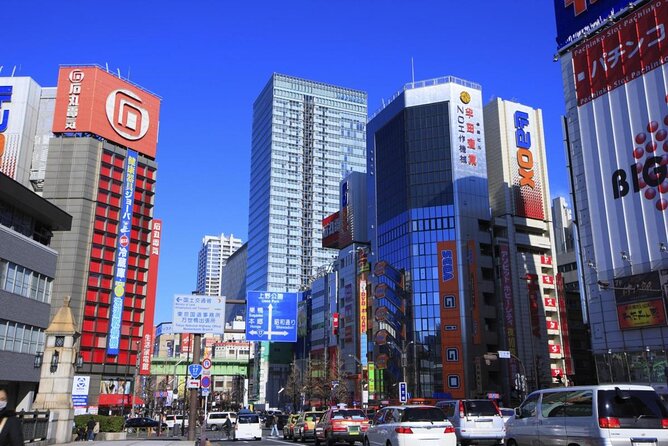
The meeting point is in front of the ticket office outside the Electric Town Gate of JR Akihabara Station. This is a sensible place to begin because the station drops you directly into the district’s most famous side, with bright signs, anime advertising, electronics stores, and streams of shoppers.
The practical detail matters. Akihabara Station has several exits, and the wrong side can put you farther away than expected. Follow signs for Electric Town and look for the travel service center at 1 Chome-17 Sotokanda. The tour ends back at the same meeting point, which makes it easier to continue shopping, return to your hotel, or catch a train.
The operator uses a small paper sign, so do not expect a large stand or a guide in a bright uniform. Arrive early, confirm the exact meeting spot, and keep your phone charged. One unhappy account involved confusion over which side of the station to use. That kind of problem is avoidable if you check the location carefully before leaving your hotel.
More Walking Tours in Tokyo
- Tokyo Tsukiji Fish Market Food and Culture Walking Tour
★ 5.0 · 3,184 reviews - Tokyo: Imperial Palace and Shogun Historical Walking Tour
★ 5.0 · 2,251 reviews - Tokyo: Shinjuku Local Bar and Izakaya Guided Walking Tour
★ 4.9 · 1,794 reviews
Super Potato and the appeal of old games
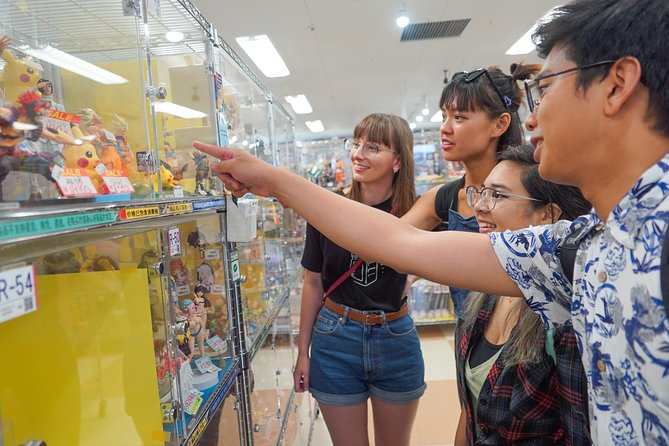
Super Potato is the first major stop, with about 30 minutes set aside for a look around. The store is a treat for anyone who remembers the rise of Nintendo, Sega, and other Japanese game systems. You might find old cartridges, consoles, game merchandise, and arcade machines packed into narrow floors.
This is not a large museum with long explanations. It is a working shop, and the fun comes from seeing the hardware and games up close. If you grew up with retro systems, you may spend the whole visit pointing at familiar titles. If you are new to Japanese games, the guide can explain what you are looking at and suggest which floors or items deserve your attention.
The short time limit is both good and bad. It prevents one enthusiast from using the whole tour in a single store, but it also means you will not have time to inspect every shelf. I suggest making a quick note of anything you want to revisit after the tour.
Several guides have made this stop especially useful by taking visitors to less obvious game shops and older arcades later in the route. Others have simply pointed the group toward stores without offering much background. If the retro section matters to you, say so at the beginning.
Akiba Culture Zone and the shop maze
The next 30 minutes focus on Akiba Culture Zone, where anime merchandise, idol goods, figures, and maid cafe culture come together. The building gives you a concentrated look at the commercial side of Akihabara. Expect shelves and displays rather than a calm, museum-like setting.
This is where a guide can save you time. Akihabara has many shops, and the same building can contain several floors with different types of merchandise. A good guide can help you decide which stores fit your interests, explain unfamiliar characters, and point out places you might not notice while simply walking the main streets.
The drawback is that the route may feel more like browsing than sightseeing. If you want a clear explanation of how anime and manga developed in Japan, this stop may not provide enough context by itself. Some people felt they saw figures and souvenirs but learned little about the wider culture.
I would approach it as a guided orientation. Use the visit to identify stores worth returning to later. Families can also benefit because a guide may help narrow the choices when the shelves begin to blur together.
Akihabara Gachapon Hall and fifteen minutes of small surprises
Gachapon machines are capsule toy vending machines, and Akihabara Gachapon Hall is given about 15 minutes. The selection changes, so you might find character toys, odd household items, collectibles, or current releases. The appeal is partly the surprise and partly the sheer number of machines lined up together.
This stop works well for mixed groups. You do not need to know anime or games to enjoy choosing a capsule. Children can take part, and adults often find the stranger prizes more amusing than the expected character figures.
Fifteen minutes is enough for a quick look and perhaps one purchase, but not enough for a careful search. The cost of capsules is not included in the tour price, so bring some yen if you want to play. The experience is casual, not a major attraction, but it breaks up the store visits and gives you something hands-on to do.
A completely different kind of day out:
- Tokyo Disney Resort – Tokyo Disneyland & Tokyo DisneySea Park Tickets
★ 4.8 · 99,488 reviews - SHIBUYA SKY Ticket
★ 4.7 · 46,509 reviews - JR Whole Japan Rail Pass
★ 4.8 · 29,150 reviews - Mt Fuji and Hakone 1-Day Bus Tour Return by Bullet Train
★ 5.0 · 26,383 reviews
The maid cafe: the tour’s central experience
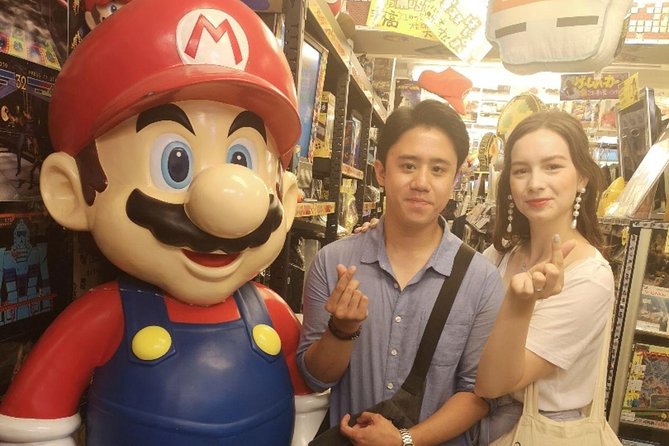
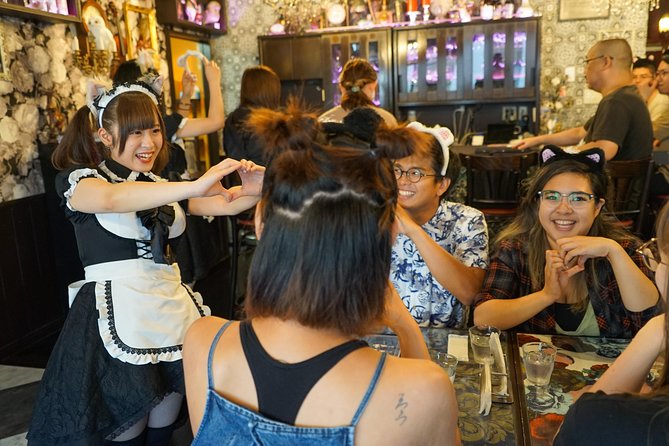
The maid cafe takes about one hour and is the part most likely to shape your opinion of the tour. Entry and one drink are included. Additional food and drinks cost extra, and a maid live performance is listed at ¥1,430 per person.
You can expect a theatrical cafe setting where maids greet customers, use playful service rituals, and create a distinctly Akihabara experience. The guide helps explain what is happening, which is useful if you are unfamiliar with the customs or unsure how to respond. For many first-time visitors, that translation and social help is worth paying for.
The cafe may change depending on the situation. That means the exact atmosphere, menu, and style of service are not fixed. One person may find the experience charming and funny, while another may find it awkward or underwhelming. That split is not surprising. Maid cafes are built around a style of entertainment that can feel sweet, silly, or simply strange depending on your taste.
Food and allergy planning deserve care. The operator cannot promise allergy-free meals or meet every dietary restriction because the food comes from kitchens outside its control. Substitutions may not always be possible. If you have a serious allergy or strict diet, contact the operator before booking and be prepared to skip food or choose only what you can safely consume.
The included drink helps the value, but remember that you are not getting an unlimited cafe visit. If you want a meal, more drinks, or the live show, your final cost will rise. I would treat the cafe as a cultural demonstration and a fun first look, not as a fine dining stop.
Taito Station and the arcade side of Akihabara
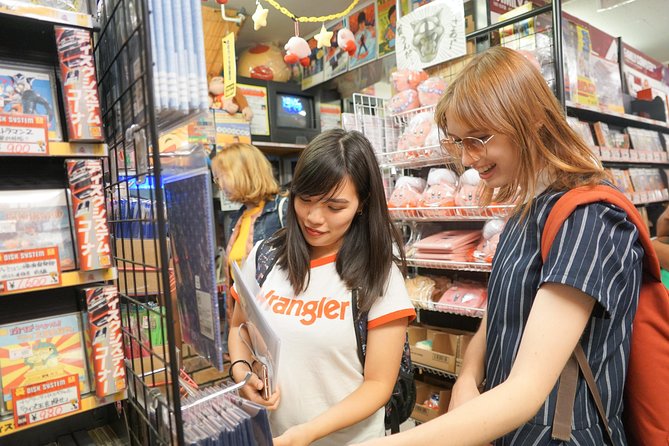
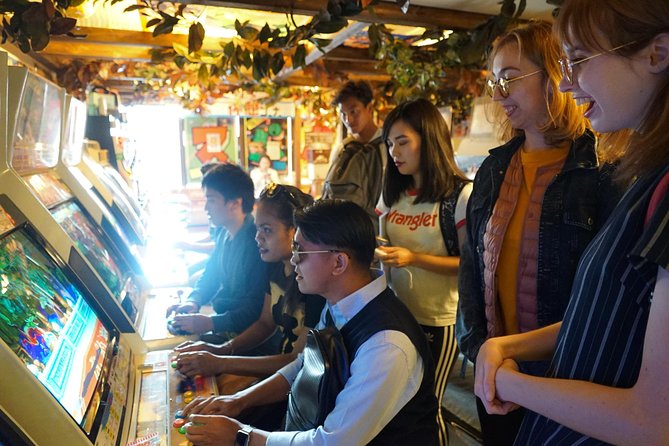
Taito Station receives roughly 25 minutes. The large Space Invaders sign makes it easy to identify, and the building is only about a three-minute walk from Akihabara Station.
This is the chance to see the arcade side of the district. Depending on the group and guide, you may look at old machines, play games, or learn about the local arcade scene. Some people especially enjoyed the vintage machines and the chance to play. One account singled out an older Marvel vs. Capcom machine as the best part of the gaming portion, while another found the gaming time too mild.
That difference tells you how to set expectations. This is not a private arcade session with guaranteed access to particular machines. It is a short visit in a busy commercial arcade. Machine availability, noise, crowds, and your group’s interests will affect the experience.
If you love arcade games, tell the guide early. Taka, for example, was praised for taking a group to the HEY arcade and helping with translation. A flexible guide may adjust the emphasis, while a fixed route may offer only a quick look.
Purikura, vending machines, and the final street walk

The route finishes with about 15 minutes around Akihabara, where you may see cosplay-related sights or unusual vending machines. The included Japanese photo booth experience, known as Purikura, adds a playful local activity that is different from simply shopping.
Purikura photo booths are designed to create decorated, edited photos with effects and stickers. The experience is quick, social, and easy to enjoy even if you are not an anime fan. You may also have the option of taking a Polaroid photo with a maid, but that costs extra.
This last section is short, so do not expect a large amount of free time for wandering. It works better as a final taste of Akihabara’s oddball, youth-oriented side. If your priority is buying a particular figure, finding used manga, or comparing electronics, save time after the tour for that work.
What the $90.86 price really buys
At around $90.86 per person, this is not a cheap neighborhood walk. The price covers a certified MagicalTrip guide, maid cafe entry, one drink, and the Purikura experience. It does not cover your shopping, extra cafe orders, capsule toys, additional drinks, food, or the ¥1,430 maid performance.
The value depends on what you would do without help. If you are arriving in Akihabara for the first time and feel overwhelmed by the signs, crowded floors, and endless store choices, a guide can help you get oriented fast. You also gain a built-in maid cafe visit, which may be difficult to arrange confidently on your own.
If you already know Akihabara, speak Japanese comfortably, or mainly want several hours of independent shopping, the price is harder to justify. You can walk the main streets, enter Super Potato, visit arcades, and try capsule machines without a tour fee. The tour earns its keep only when the guide adds useful explanations, translations, personal suggestions, or access to places you would likely miss.
The strongest feedback centers on guides who tailor the route. Naoki worked patiently with a family that included an autistic child. Yuki adjusted the walk around personal interests. Ryo helped locate specific anime shops. Taka assisted with reservations and translation. Ai was praised for anime trivia, while Seina brought high energy and made the group feel comfortable.
That human element is the real product. The stores themselves are open to everyone.
Group or private tour, and who should choose it
The shared tour has a maximum of seven people, which is small enough for questions and discussion. A private option may suit you better if you have a narrow focus, such as retro consoles, anime figures, arcades, or family-friendly pacing. The supplied information confirms private and group formats, but it does not state the private-tour price, so check that before booking.
I would choose the group format if you want a social introduction and do not need a tightly controlled schedule. It is also a reasonable choice for a family that wants help navigating the area without planning every stop.
I would choose private if your time is limited, your interests are specific, or you need the route adapted around mobility needs. Most people can participate, and the tour is near public transportation, but the route includes walking, stairs, crowded stores, and changing shop conditions. Tell the operator about accessibility needs well before the start time. Do not assume a last-minute request can be handled during a shared departure.
Summer is another practical concern. Tokyo can be extremely hot and humid. Bring water, wear a hat, and choose comfortable shoes. The indoor stores offer breaks from the sun, but you still move between several buildings.
The guide factor and how to protect your time
The experience can feel like a smart shortcut or an expensive escort between shops. The guide determines which version you get.
Before the walk begins, tell the guide two or three clear priorities. You might say retro games, specific anime figures, arcades, or a family-friendly pace. This gives the guide something concrete to work with and helps prevent the route from becoming a generic sequence of store entrances.
I also recommend asking how much explanation you can expect at each stop. Some guides give useful background about the area and how it changed over time. Others may focus more on pointing out merchandise and keeping the group moving. If you want cultural context, say so directly.
Photos deserve a clear boundary. If a guide wants to photograph the group, ask what the photos are for and give permission only if you are comfortable. Do not allow photos of children without a parent’s approval. A professional guide should respect that without argument.
The tour has a 96 percent recommendation rate and a 4.8 rating from 404 reviews, so the overall record is strong. Yet the low scores point to real risks: thin commentary, a disappointing cafe, poor meeting-point communication, and occasional concerns about guide conduct. Those complaints are not reasons to reject the tour outright, but they are reasons to arrive prepared and speak up early.
Cancellation and booking details
You can cancel up to 24 hours before the local start time for a full refund. Changes made within 24 hours are not accepted, and late cancellations are not refunded.
The activity requires good weather. If poor weather forces cancellation, you receive the choice of another date or a full refund. Confirmation is provided at booking, and mobile tickets are supported.
The cafe visited can change, so do not book this expecting one specific maid cafe. Additional food, drinks, and the live performance are optional purchases. Group discounts may be available, which can improve the value for families or friends booking together.
FAQ
Where does the Akihabara tour start?
It starts in front of the ticket office outside the Electric Town Gate of JR Akihabara Station, at the Travel Service Center at 1 Chome-17 Sotokanda, Chiyoda City, Tokyo 101-0021.
Where does the tour finish?
The tour ends back at the meeting point near JR Akihabara Station.
How long does the experience last?
The advertised duration is approximately three hours.
How large is the group?
The tour has a maximum of seven participants.
Is maid cafe admission included?
Yes. Entry to a maid cafe and one drink are included in the tour price.
Are food and extra drinks included?
No. Additional food and drinks are available for purchase. A maid live performance costs ¥1,430 per person.
Is the maid cafe always the same?
No. The cafe may vary depending on the situation.
Can I cancel for a full refund?
Yes, if you cancel at least 24 hours before the experience start time. Poor weather cancellations offer a different date or a full refund.
Should you book the Akihabara Anime and Game Adventure?
Book it if this is your first time in Akihabara, you want a maid cafe explained in plain terms, or you need help narrowing a huge number of shops and arcades. The small group, included cafe drink, Purikura stop, and chance to ask a guide questions make it a useful orientation.
Skip it if you already know the district, want serious shopping time, or expect a detailed lecture on anime and manga history. You should also think twice if you dislike theatrical cafe service or need strict food and mobility arrangements that have not been confirmed in advance.
For most first-time anime and gaming fans, I see this as a lively introduction rather than the final word on Akihabara. Use the three hours to learn the area, mark places to revisit, and let the guide point you toward the parts that fit your interests. Then keep the rest of your day free for independent wandering, because Akihabara is best enjoyed once you know where to look.
Just added in Tokyo
- A One-of-a-Kind Sushi Experience in a Special Place of Japan★ 5.0 · 15 reviews
- Tokyo Cute Bento Cooking Class – Make a Kawaii Character Lunchbox★ 5.0 · 126 reviews
- Japanese Home Cooking Class & Walk in Todoroki Temple Tokyo★ 5.0 · 88 reviews
- Japan Tokyo Tower Observatory Deck E-Ticket★ 4.0 · 34 reviews
- Catch a Baseball Game in Tokyo with a Local – Tickets Included★ 5.0 · 24 reviews
- JDM Experience with Fast&Furious RX-7 (English speaking Driver)★ 5.0 · 57 reviews
- Tokyo Private Day Tour by Car with English speaking Driver Guide★ 4.0 · 29 reviews
- Japan Classic 10 Day – One Life Adventures★ 5.0 · 129 reviews
Walking Tours, compared.
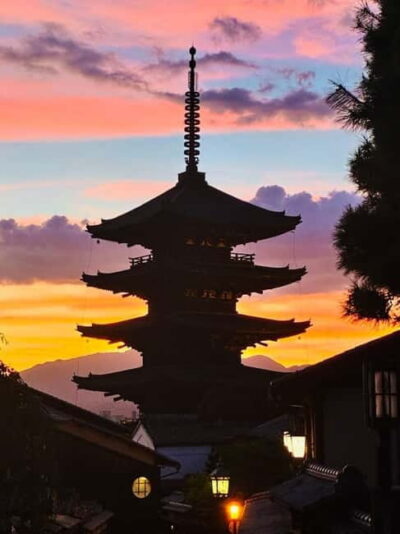
Kyoto Geisha Walking Tour: Gion District & Hidden Gems
Read our review →
Tokyo Tsukiji Fish Market Food and Culture Walking Tour
Read our review →
Gion Magical Night Walking Tour with Geisha Trivia
Read our review →
Imperial Palace and Shogun Historical Walking Tour
Read our review →
Gion Geisha District Walking Tour – Stories of Geisha
Read our review →

Shinjuku Local Bar and Izakaya Guided Walking Tour
Read our review →
Browse the lists this tour appears in