
Reviewed · MARKETS AND FOOD HALLS
Calligraphy Experience at Tokyo Ginza and Tsukiji Area
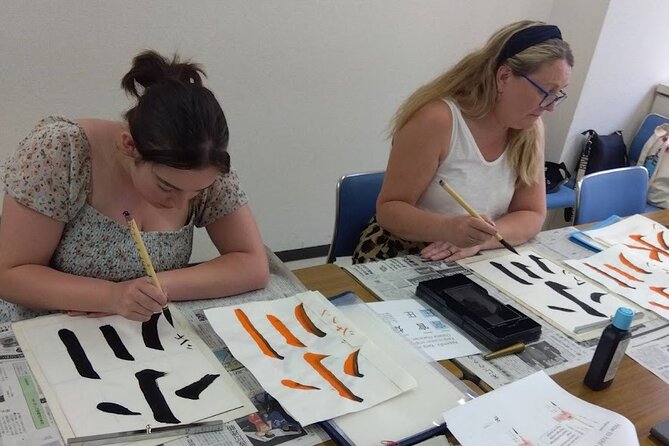
Slow down in central Tokyo. This private calligraphy class gives you a hands-on way to learn Japanese writing, not just look at it in a museum. You begin with simple brush patterns, work toward more difficult characters, then choose a favorite Japanese word for a finished piece you can take home. I especially like the one-group-only format, which gives you room to ask questions without competing with strangers. I also like the personal souvenir, since your final work carries more meaning than a shop-bought trinket.
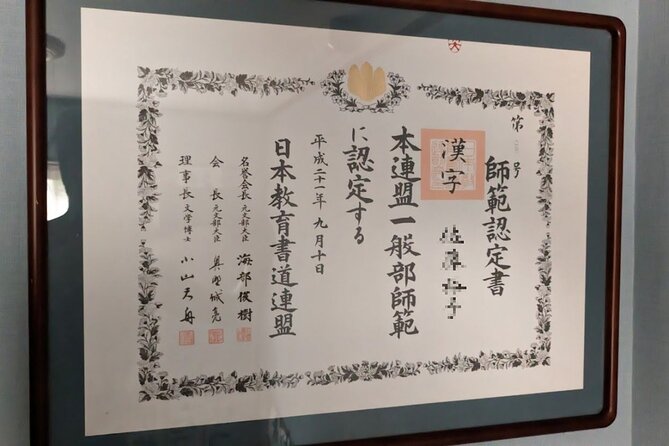
The class lasts about 90 minutes and costs $51.24 per person. That is fair value for a private lesson with calligraphy tools supplied and an instructor authorized by the Japan Educational Calligraphy Federation. The main consideration is time: 90 minutes goes quickly, and the experience focuses on an introduction rather than a full course in Japanese writing.
In This Review
- Key points to know before booking
- Starting in Tsukiji, near Ginza and the fish-market district
- Step one: learning the brush through simple patterns
- Step two: trying more difficult Japanese characters
- Step three: choosing a word for your finished piece
- Why a private class changes the experience
- The cultural value beyond the finished paper
- Is $51.24 a fair price?
- How to fit it into a Tokyo day
- Who will enjoy this class most?
- Practical booking advice and cancellation terms
- Should you book the Tokyo calligraphy class?
- FAQ
- Where does the calligraphy class begin?
- Where does the activity end?
- How long does the calligraphy experience last?
- Is the class private?
- What calligraphy supplies are included?
- Do I need to arrange transportation?
- Is the class suitable for most participants?
- Can I cancel for a full refund?
Key points to know before booking
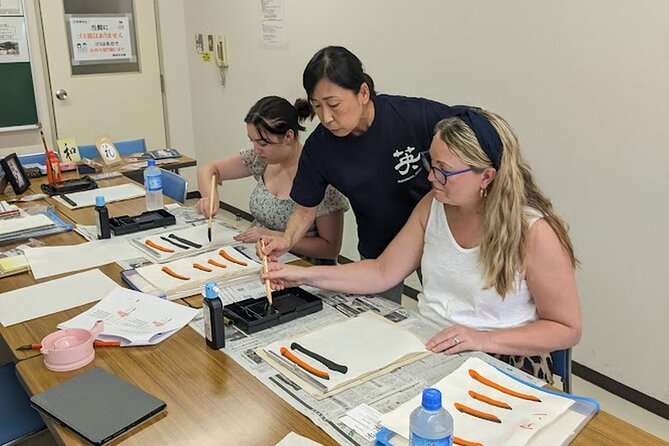
- Private lesson for your group only: You can ask questions freely and receive direct help with each brush movement.
- A real take-home project: You build from basic patterns to a favorite Japanese word and keep the finished work.
- Professional instruction: Yuko-sensei is described as a professional calligraphy writer, with Kenji-san often helping as an assistant and translator.
- Easy pairing with central Tokyo plans: The meeting point is in Tsukiji, close to public transportation, Ginza shopping, and Tsukiji food street.
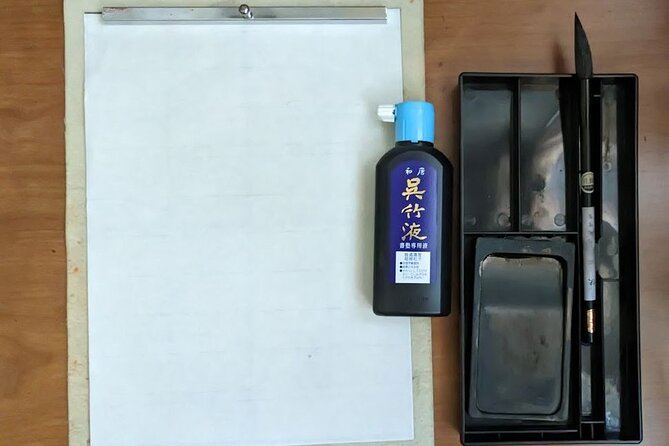
- Supplies are included: Brushes, ink, paper, and a paper stone are prepared for you.
- Strong satisfaction record: The activity has a five-star rating from 17 ratings, with 100 percent recommending it.
Starting in Tsukiji, near Ginza and the fish-market district
The class begins at 3-chōme-15-1 Tsukiji, Chuo City, Tokyo 104-0045. The meeting point is near public transportation, which makes it practical to fit into a day in central Tokyo. You will need to reach the starting point independently because private transportation is not included.
The location is useful for planning, even though the calligraphy itself is the main event. You can shop in Ginza before or after class, then continue toward Tsukiji food street for dinner. This makes the lesson easy to pair with other plans rather than requiring a special trip across the city.
I suggest allowing extra time to find the exact meeting point. The information gives a street address, but it does not provide a detailed station exit or a named studio landmark. Arriving early is sensible, especially if this is your first visit to Tsukiji.
The activity ends back at the meeting point. That is convenient if you want to return to Ginza, continue your evening around Tsukiji, or use nearby public transportation for the next part of your day.
More Markets and Food Halls in Tokyo
- Tokyo Tsukiji Fish Market Food and Culture Walking Tour
★ 5.0 · 3,184 reviews - Tokyo: Tsukiji Fish Market Food and Walking tour
★ 5.0 · 1,724 reviews - Senkyaku Banrai Toyosu Manyo Club Onsen Experience in Tokyo
★ 4.7 · 1,690 reviews
Step one: learning the brush through simple patterns
The lesson starts with basic pattern writing. This is an important choice for beginners because Japanese calligraphy is not simply ordinary handwriting made with a brush. The pressure, angle, speed, and stopping point all affect the shape of a stroke.
You begin with practice rather than being asked to produce a perfect character at once. That gives you time to get used to the brush, ink, and paper. The tools are supplied, including a brush, ink, paper, and paper stone, so you do not need to arrive with specialist equipment.
The basic exercises also help you understand why calligraphy takes patience. A stroke may look simple on the page, but controlling the brush can feel surprisingly demanding. The lesson is designed to show you that process without expecting prior skill.
The private format matters here. If your brush slips or a stroke feels awkward, you can ask for another demonstration. Yuko-sensei and Kenji-san are repeatedly praised for patient, step-by-step instruction, which should make this opening section comfortable for complete beginners.
Step two: trying more difficult Japanese characters
Once you have practiced the basic patterns, the class moves to a more difficult character. This gives the lesson a clear sense of progress. You are not only copying easy marks, but also testing what you have learned.
This section can be especially useful if you are curious about the different Japanese writing systems. The teaching includes an introduction to kanji, hiragana, and katakana, along with the cultural importance of calligraphy. You will not become fluent in Japanese in 90 minutes, but you can gain a clearer idea of how the writing systems differ and why the brushwork matters.
The class also offers a chance to ask about the meaning of the characters you are practicing. That personal exchange is one of the strongest reasons to choose this activity over a casual craft table. Your questions can follow your interests, and the tutor can explain the cultural side of the art as well as the technique.
Some of the strongest praise goes to the warmth and patience of the teaching team. Yuko-sensei is described as a master teacher with years of experience, while Kenji-san is praised as a kind, funny facilitator and translator. One family also highlighted Yuki-sensei and Kenji-san, so the exact teaching team may vary by booking.
Step three: choosing a word for your finished piece
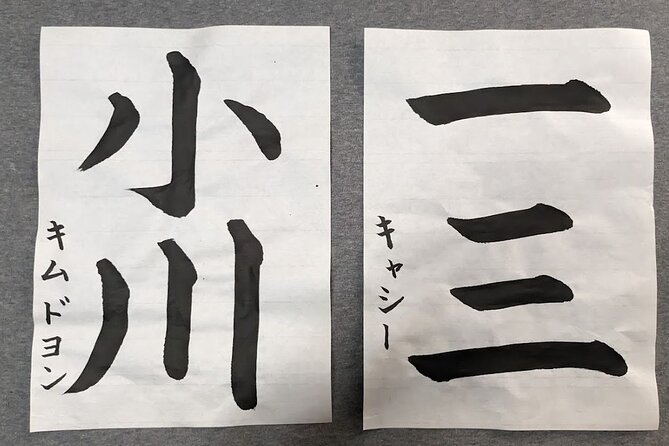
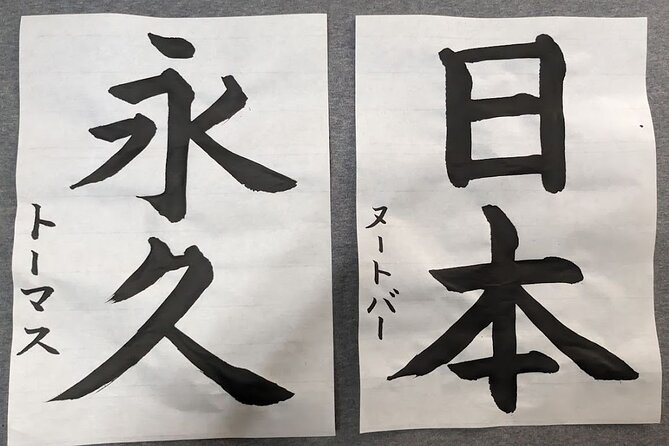
The final stage is the most personal. You choose a favorite Japanese word or words, then use what you have learned to create a finished product for display at home.
This is where the class becomes more than a lesson. You are making a souvenir tied to your own interests and time in Japan. The result may not look like professional calligraphy, and it is not meant to. Its value comes from knowing that you practiced the strokes, selected the word, and completed the piece yourself.
If you already have a word in mind, you can think about it before the class. The supplied details do not promise a fixed list of available words, so it is sensible to ask the instructor about your choice during the session. The private setting should make that conversation easy.
The finished work is yours to take home. Photos may also be taken and shared, based on one participant’s experience, giving you another way to remember the lesson. Since photography is not listed as an official inclusion, treat it as a possible extra rather than a guaranteed feature.
A completely different kind of day out:
- Tokyo Disney Resort – Tokyo Disneyland & Tokyo DisneySea Park Tickets
★ 4.8 · 99,488 reviews - SHIBUYA SKY Ticket
★ 4.7 · 46,509 reviews - JR Whole Japan Rail Pass
★ 4.8 · 29,150 reviews - Mt Fuji and Hakone 1-Day Bus Tour Return by Bullet Train
★ 5.0 · 26,383 reviews
Why a private class changes the experience
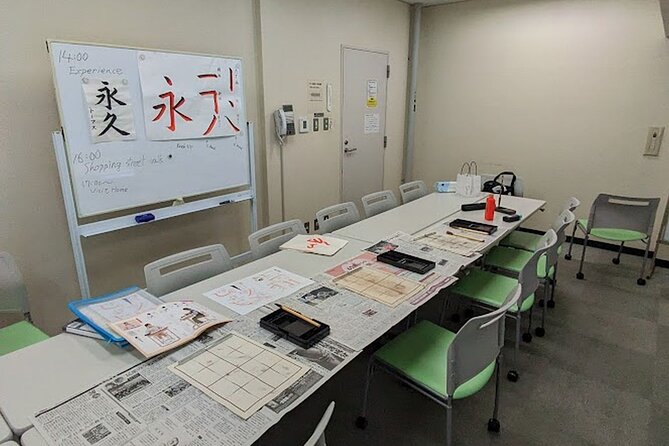
A private class is the central advantage here. Only your group participates, so you do not have to match the pace of a larger class. That is useful for families, couples, friends, and solo visitors who want direct attention.
You can also ask more specific questions. If you want to understand the meaning of a character, compare writing systems, or repeat a stroke, the lesson can respond to you rather than following a rigid group rhythm.
Families appear particularly well suited to this format. A family of four enjoyed the session together, and another participant attended with a niece. Calligraphy gives different ages a shared task without requiring athletic ability or advanced Japanese.
The class also works for people who feel nervous about making art. The teaching is described as supportive and patient, with each stroke shown step by step. You should still expect a little frustration. Brush control takes practice, and the 90-minute session cannot correct every mistake. That is part of the charm, but perfection-minded visitors may need to relax their standards.
The cultural value beyond the finished paper
Calligraphy offers a quieter look at Japanese culture than many headline attractions. You are not simply collecting information. You are learning through repeated movement, attention, and correction.
The lesson includes discussion of the importance of calligraphy in Japanese culture. That context helps explain why the writing is treated as an art form rather than just a practical method of communication.
You will also encounter the balance between meaning and appearance. A character must be recognizable, but the shape and energy of the brushwork matter too. Even a beginner can see how small changes in pressure alter the final result.
This is a good choice if you want an activity that engages your hands and mind. It also offers a break from crowded shopping streets and busy sightseeing schedules. The class is near some of Tokyo’s busiest districts, but the activity itself is centered on concentration and personal instruction.
Is $51.24 a fair price?
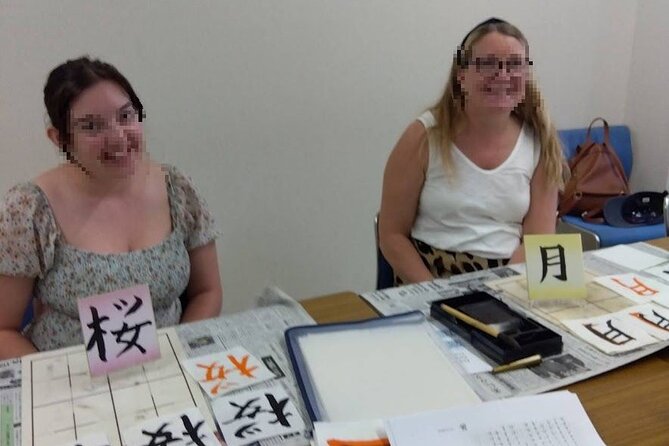
At $51.24 per person, the price is reasonable for a private 90-minute class in central Tokyo. The cost includes the working materials, so you are not paying extra for the basic tools needed during the lesson.
The value improves if you care about the personal attention and take-home artwork. A cheaper large-group workshop might provide a similar introduction, but it may not offer the same freedom to ask questions or receive individual corrections.
The price is less attractive if you are looking only for a quick souvenir or a short demonstration. This is a participatory class, and its value depends on your willingness to practice. You are paying for instruction, cultural explanation, materials, and time with a professional calligraphy teacher.
For a family, the private setup can also make the price easier to justify. Your group shares one appointment and creates individual work, while parents can help children stay engaged. The activity has a perfect five-star rating from 17 ratings and 100 percent recommendation, which supports the impression that the lesson delivers what it promises, though a small rating pool is not a guarantee of a perfect match for everyone.
How to fit it into a Tokyo day
The class works well as part of a Ginza and Tsukiji itinerary. You could shop around Ginza before the lesson, attend the class in Tsukiji, and then eat along Tsukiji food street afterward.
That plan gives the day a useful rhythm. Ginza supplies polished department stores and shopping, the class provides a slower cultural activity, and Tsukiji offers food at the end. The exact order depends on your booking time, which is not specified here.
Avoid planning the class as a rushed stop between distant Tokyo attractions. You need time to reach Tsukiji, complete the 90-minute session, and return to the meeting point at the end. Since the experience does not include transportation, you are responsible for connecting each part of the day.
The activity is booked an average of 34 days in advance, so reserve early if your dates are fixed. That lead time may matter most for families or small groups who need one private appointment.
Who will enjoy this class most?
I would recommend it most strongly to:
- First-time visitors who want a cultural activity with direct instruction
- Couples or families looking for a shared project
- People who enjoy crafts, lettering, or handmade souvenirs
- Visitors curious about kanji, hiragana, and katakana
- Anyone who prefers a private lesson to a large workshop
- People with an evening planned around Ginza or Tsukiji
It may be less suitable if you want a fast, informal activity with no practice time. It is also not the right choice if you expect to master Japanese calligraphy in one session. The lesson gives you a well-guided beginning, not an advanced qualification.
Most participants can take part, according to the activity information. Personal travel insurance is not included, although the experience is described as basically low risk. You should still use normal care with ink and equipment.
Practical booking advice and cancellation terms
You receive confirmation when booking, and the activity accepts mobile tickets. The meeting point is near public transportation, but private transportation is not part of the price.
Free cancellation is available if you cancel at least 24 hours before the local start time. Cancellations made less than 24 hours in advance are not refunded, and changes inside that period are not accepted.
Bring an open mind and, if possible, a word you would like to write. You do not need to bring brushes or ink. The tools are prepared for you.
Should you book the Tokyo calligraphy class?
Book this class if you want a personal, calm cultural activity that leaves you with something made by your own hand. The private format, patient teaching, cultural explanation, and central Tsukiji location make it a smart addition to a Ginza day.
I would be cautious only if your schedule is packed or your main goal is advanced calligraphy. For everyone else, $51.24 buys more than 90 minutes of brush practice. You get a guided introduction, a chance to ask real questions, and a custom reminder of Japan that will not look like anything you could have picked up at the airport.
FAQ
Where does the calligraphy class begin?
The class begins at 3-chōme-15-1 Tsukiji, Chuo City, Tokyo 104-0045, Japan.
Where does the activity end?
The activity ends back at the meeting point in Tsukiji.
How long does the calligraphy experience last?
The experience lasts approximately 1 hour and 30 minutes.
Is the class private?
Yes. Only your group participates, and no other group joins the activity.
What calligraphy supplies are included?
Brushes, ink, paper, and a paper stone are prepared for the class.
Do I need to arrange transportation?
Yes. Private transportation is not included, so you must make your own way to and from the meeting point.
Is the class suitable for most participants?
The activity information says most travelers can participate. It is described as basically low risk, but personal travel insurance is not included.
Can I cancel for a full refund?
Yes, if you cancel at least 24 hours before the experience start time. Cancellations or changes made less than 24 hours before the local start time are not accepted for a refund.
Just added in Tokyo
- A One-of-a-Kind Sushi Experience in a Special Place of Japan★ 5.0 · 15 reviews
- Tokyo Cute Bento Cooking Class – Make a Kawaii Character Lunchbox★ 5.0 · 126 reviews
- Japanese Home Cooking Class & Walk in Todoroki Temple Tokyo★ 5.0 · 88 reviews
- Japan Tokyo Tower Observatory Deck E-Ticket★ 4.0 · 34 reviews
- Catch a Baseball Game in Tokyo with a Local – Tickets Included★ 5.0 · 24 reviews
- JDM Experience with Fast&Furious RX-7 (English speaking Driver)★ 5.0 · 57 reviews
- Tokyo Private Day Tour by Car with English speaking Driver Guide★ 4.0 · 29 reviews
- Japan Classic 10 Day – One Life Adventures★ 5.0 · 129 reviews
Markets and Food Halls, compared.
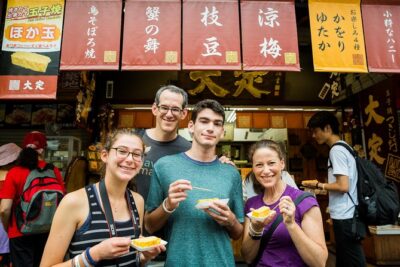
Tokyo Tsukiji Fish Market Food and Culture Walking Tour
Read our review →

Senkyaku Banrai Toyosu Manyo Club Onsen Experience in Tokyo
Read our review →
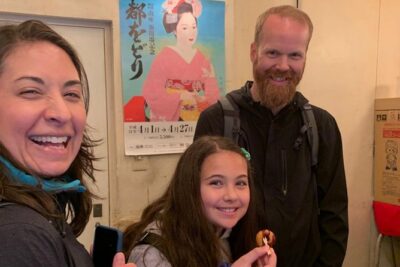
Nishiki Market Brunch Walking Tour (7 Tastings + Brunch)
Read our review →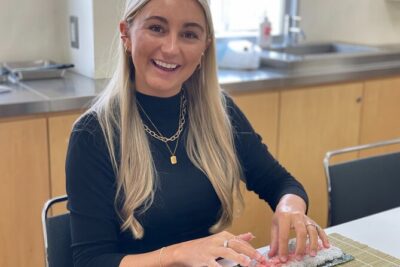
Tokyo Sushi Making Class in Tsukiji with Professional Chef
Read our review →
Tsukiji Fish Market Guided Tour and Sushi Making with Pro Chef
Read our review →Browse the lists this tour appears in