
Reviewed · TEMPLES AND SHRINES
Day Trip to Kamakura & Enoshima: Shrines, Seaside, Temples & Tea
Kamakura brings old Japan to the seaside. This 11-hour outing pairs a bamboo temple, matcha, the Great Buddha, and Enoshima’s ocean views, with a guide managing the trains and local connections. I like the smart mix of culture and coast, and I like that the pass and major admissions are already covered.
The included tea and Japanese sweet add a quiet pause to a busy day, while the Enoshima Kamakura Free Pass keeps local transport simple. The tradeoff is clear: this is a full, walking-heavy day, and the early start plus fixed route leaves little room to wander on your own.
In This Review
- Key points to know before you book
- Why this makes a useful Tokyo day trip
- The morning train from Shinjuku to Kamakura
- A bamboo temple, matcha, and a slower Kamakura moment
- Meeting the Great Buddha at Kotoku-in
- From Hase to Enoshima along the sea
- Sea Candle Observatory and the final views
- What the $167.36 price really covers
- The walking, timing, and effort you should expect
- Who will get the most from this experience
- Should you book the Kamakura and Enoshima day trip?
- FAQ
- How long is the day trip?
- Where does the tour meet?
- Is transportation included?
- Is admission to the Great Buddha included?
- Are the tea experience and Enoshima observatory included?
- How far in advance can I cancel?
Key points to know before you book
- The day starts with an 8:27 train from Shinjuku, so arrive at the South Exit meeting point by 8:00.
- A bamboo temple and matcha stop give the Kamakura portion a calm, memorable center.
- The Great Buddha admission includes entry inside the statue, not only a view from outside.
- The local transport pass is included, covering the rail travel used during the tour.
- Enoshima’s Sea Candle Observatory provides the day’s big coastal view, reached by island escalators.
- The group can have up to 20 people, though the guide-led format may feel more personal when numbers are small.
Why this makes a useful Tokyo day trip
Tokyo is full of grand sights, but it can take effort to get beyond the city center. Kamakura and Enoshima offer a change of pace without requiring an overnight stay, and this tour takes care of the route between them.
You begin at Shinjuku Station’s South Exit, near the Green Window at 3-chōme-38-1 Shinjuku. The meeting time is 8:00 am, with the train to Fujisawa scheduled for 8:27 and arrival at 9:28. That gives you a clear starting point, but not much room for being late. Shinjuku Station is large, so I would allow extra time to find the correct exit.
The tour ends back at the same meeting point. Transport before the meeting and after the tour is not included, so you need to budget for your own journey to and from Shinjuku. During the tour itself, the Enoshima Kamakura Free Pass covers the planned local transport, which is a real help on a day involving several rail connections.
A guide also matters here. Kamakura and Enoshima are easy to visit independently, but a first-time visitor must still work out which train to take, where to change, and how to connect the stations with the sights. Your guide handles that practical work while explaining the places along the way.
More Day Trips in Tokyo
- Mt Fuji Top 5 Spots Day Tour: Arakurayama Park,Oshino Hakkai
★ 4.7 · 2,066 reviews - Tokyo: Mt. Fuji, Kamakura, Big Buddha, & Lake Ashi Day Trip
★ 4.5 · 867 reviews - Mt. Fuji & Hakone Private Day Tour with English-Speaking Driver
★ 4.5 · 824 reviews
The morning train from Shinjuku to Kamakura
The first stretch is not a sightseeing stop, but it sets the rhythm for the day. You board the 8:27 train from Shinjuku to Fujisawa, arriving at 9:28. From there, the route continues toward Kamakura, with the included pass handling the local transport used on the tour.
This arrangement is useful if you would rather focus on the scenery and conversation than keep checking a rail map. It also means the tour has a firm timetable. You are not choosing trains as you go, so the day should feel orderly, but you should be comfortable following a schedule.
The route then reaches Kamakura Station. From there, you walk for about 30 minutes to the first temple and bamboo forest. That walk is part of the experience, but it is also an early warning about the pace. Comfortable shoes are essential, especially since the day continues through Hase and Enoshima.
A bamboo temple, matcha, and a slower Kamakura moment
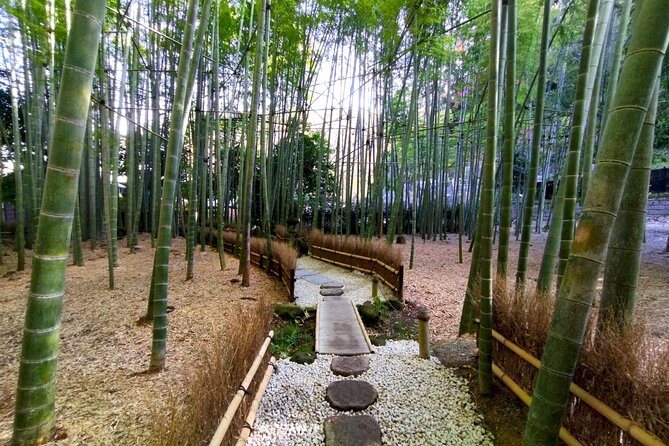
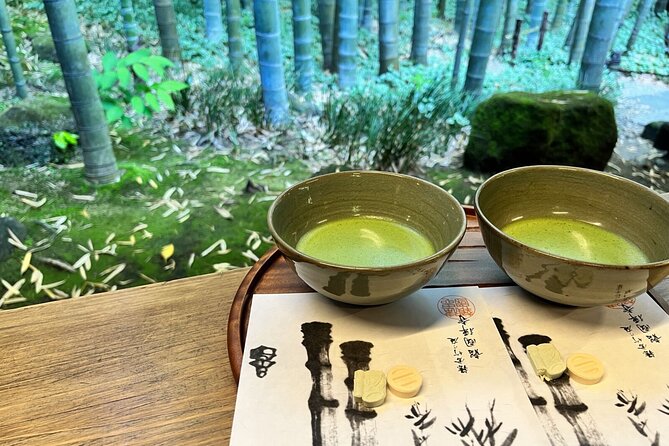
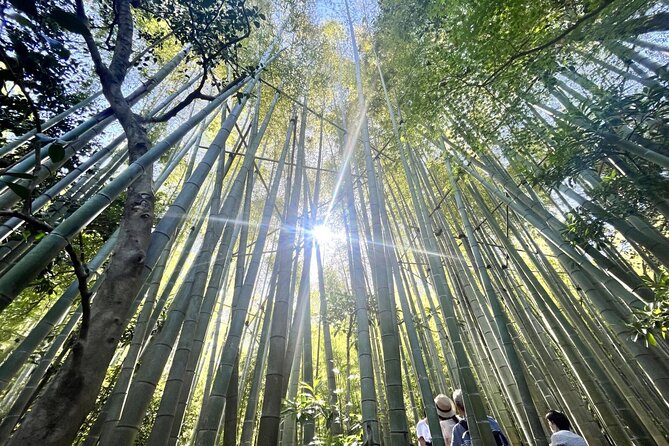
The first major visit combines a temple complex with a bamboo forest and a tea-house experience. The tour includes admission to the bamboo temple, a serving of matcha, and a Japanese sweet. This is one of the most appealing parts of the day because it gives you more than a quick photograph outside a famous building.
The bamboo setting offers a quieter counterpoint to the rail travel and busy sightseeing schedule. You receive a guided introduction to the temple complex, then have time for the tea experience. Matcha can be an acquired taste, but paired with a Japanese sweet, it becomes a pleasant way to experience a small part of traditional Japanese hospitality.
A koi-feeding fee is also included. It is a small detail, but it gives the stop another simple activity and helps make the temple visit feel less like a fast march from one photo point to the next.
The Kamakura portion lasts about four hours in total, including the walk, temple visit, tea, and movement to the next stop. That is a generous share of the day, though the itinerary still covers a lot. If you want long periods for sketching, shopping, or sitting quietly in the bamboo, this guided schedule may feel brisk.
The tour’s guides are a major part of its appeal. Jeff is described as upbeat, friendly, and able to make the journey fun as well as informative. Jade is praised for her easygoing and patient manner, a useful quality when guiding people through a long day. Naoto has also been especially good with young children, explaining the sites while keeping the group comfortable. Beth and Jeff are noted for being well prepared and attentive to the group.
Those details suggest a team that adds personality rather than simply pointing out buildings. That matters in Kamakura, where the meaning of a place can be easy to miss if you only see it as a backdrop.
Meeting the Great Buddha at Kotoku-in
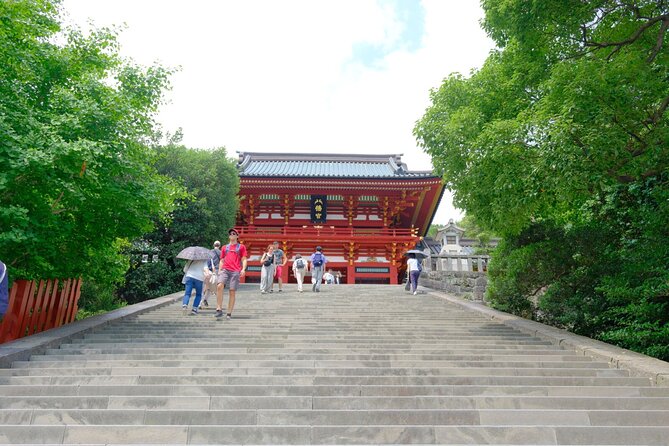
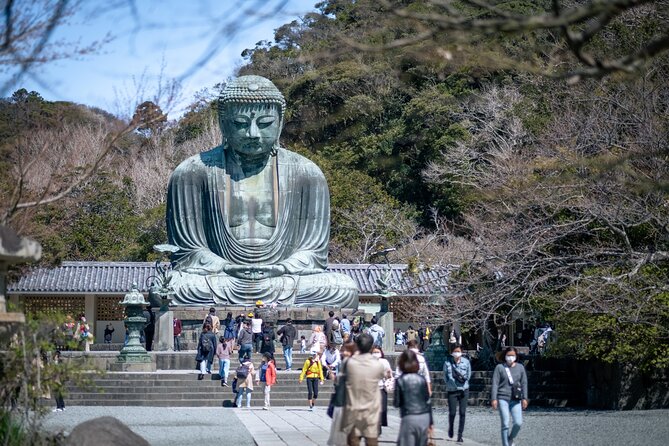
After the Kamakura temple visit, you continue to Hase Station. The Great Buddha at Kotoku-in is about a seven-minute walk from the station, making this one of the easiest major sights to reach on the route.
The stop lasts around 40 minutes, with about 30 minutes devoted to the Great Buddha itself. Admission is included, and the ticket also covers entry inside the statue. That second detail adds value because you are not limited to viewing the figure from the temple grounds.
The Great Buddha is one of Kamakura’s essential sights, and the tour gives you enough time to see it properly without allowing the stop to swallow the whole afternoon. You can appreciate the scale, look around the temple grounds, and enter the statue before moving on.
Still, 30 minutes is not a leisurely visit. If you want extended time for photographs or a detailed look at every part of the grounds, you may want more freedom than this schedule permits. The benefit is that you avoid spending too long at one landmark when Enoshima is still ahead.
The combination of the bamboo temple and the Great Buddha works well. One stop is quiet and shaded, the other is open and monumental. Together, they show two very different sides of Kamakura.
More Temples and Shrines in Tokyo
- Tokyo: Meiji Shrine, Asakusa, Skytree Bus Tour and Cruise
★ 4.7 · 1,986 reviews - Tokyo: Asakusa Walking Tour with Sensoji Temple Visit
★ 4.8 · 1,583 reviews - Nikko: Kegon Falls, Lake Chuzenji & Toshogu Temple
★ 4.6 · 1,577 reviews - Tokyo: Nikko Toshogu Shrine and Kegon Waterfall Tour
★ 4.5 · 1,266 reviews
From Hase to Enoshima along the sea
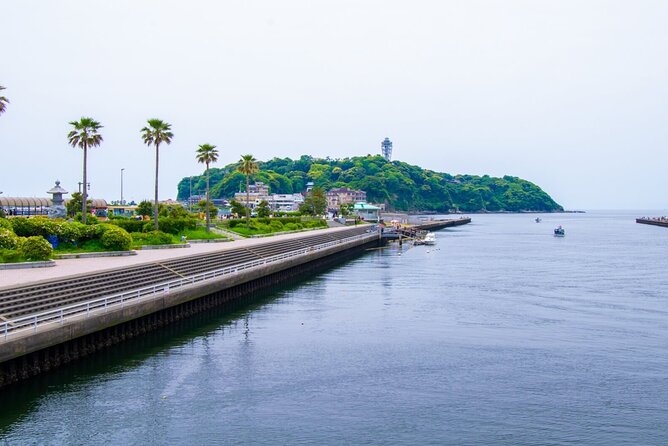
The next stage takes you toward Enoshima Station and then on foot toward the island. The route includes a scenic walk beside the sea before you reach Enoshima itself. This change of setting is important. The day begins with temples and history, then gradually opens toward water, sky, and coastal views.
The walk is a pleasant part of the plan, but it adds to the total amount of time on your feet. You are not being driven from one entrance to another. The point is to connect the area on foot and by local rail, so wear shoes you can manage for a full day.
Enoshima is reached by crossing toward the island, followed by a climb using the island escalators. Those escalators are included, as is admission to the observatory. This makes the island section easier than it might be if you had to pay separately at each stage.
The Enoshima portion listed in the schedule lasts about one hour and ten minutes. That is enough for the planned route and the Sea Candle Observatory, but it is not a full island exploration. You should think of this as a highlight visit rather than a slow afternoon spent discovering every lane and shrine.
Sea Candle Observatory and the final views
The Sea Candle is the payoff at Enoshima. The tour takes you up the island using escalators and includes entry to the observatory, so you can look out over the surrounding coast from above.
After a day of temples and rail travel, the open view gives the schedule a strong finish. You get a visual change from Kamakura’s historic sites and a chance to see why Enoshima works so well as a companion to Kamakura.
The available time is the main limitation. One hour and ten minutes for the island section must cover arrival, the escalators, the observatory, and the return movement. You should not expect to browse every shop, stop for a long meal, and explore the island at an unhurried pace.
Food is not included, either. Additional meals and drinks are your responsibility, so plan on buying food along the way when the schedule allows. The tour information does not promise a dedicated lunch break, and with a route this full, you should be ready for meals to fit around the sightseeing rather than the other way around.
What the $167.36 price really covers
At $167.36 per person, this is not the cheapest way to reach Kamakura and Enoshima. You could arrange the rail travel yourself and pay for sights as you go. The value comes from combining transport, admissions, commentary, and route planning into one day.
Included are the Enoshima Kamakura Free Pass, the bamboo temple admission, matcha and a Japanese sweet, the koi-feeding fee, Great Buddha admission, entry inside the Great Buddha, Enoshima’s escalators, Sea Candle Observatory admission, and an English-speaking local guide.
Those separate costs would otherwise require several decisions during the day. The pass is particularly useful because the tour moves through Kamakura, Hase, and Enoshima rather than staying in one central area. You are paying for convenience as much as for tickets.
I think the price makes the most sense for a first visit to Japan, for anyone uneasy about regional rail connections, or for families who want the route managed. It is less compelling if you already know the area, enjoy building your own rail itinerary, or want to spend hours at one site.
The group size can reach 20 people. That is small enough for a proper guided experience, but not the same as a private tour. The strongest guide feedback focuses on personal attention, patience, and the ability to adjust when the group is small. Your experience will depend partly on the final group size.
The walking, timing, and effort you should expect
This is an 11-hour day, and the travel time is already included in that estimate. You leave Tokyo in the morning and return to the Shinjuku meeting point after visiting several separate areas.
The itinerary includes a 30-minute walk from Kamakura Station to the first temple, a short walk from Hase Station to the Great Buddha, a sea walk toward Enoshima, and movement around the island. You will also spend much of the day standing at sights and stations.
The practical advice is simple:
- Wear well-broken-in walking shoes.
- Arrive at the 8:00 am meeting point early.
- Bring money for food and drinks.
- Expect a fixed schedule rather than open-ended free time.
- Keep your energy for the final Enoshima section.
Most people can take part, and the tour is near public transportation. The information provided does not describe special access arrangements, so anyone with particular mobility needs should confirm details before booking.
Who will get the most from this experience
I would recommend this day trip to someone who wants the major Kamakura and Enoshima sights without spending time planning a complicated route. It is also a good fit if you value explanations from a local guide and prefer a day with a clear structure.
Families may appreciate the included transport and the guide support. Naoto’s ability to work well with young children is a positive sign, and the koi-feeding stop gives children a simple activity between temple visits. Still, the length and walking make this a better choice for families whose children can handle a long day.
First-time visitors to Japan may find the cultural background especially useful. The guides have been praised for bringing Kamakura’s past and Japanese customs into the day rather than giving only short facts at each stop.
You may want a different plan if your priority is shopping, dining, photography, or quiet time. The tour covers several highlights, but it does not leave many open blocks for personal choices.
Should you book the Kamakura and Enoshima day trip?
Book it if you want a well-organized first look at two coastal destinations, with the trains, local pass, admissions, and guide commentary arranged for you. The bamboo temple and tea stop, entry inside the Great Buddha, and Sea Candle Observatory give the day more substance than a simple transport-only outing.
Skip it if you dislike early starts, walking, or fixed timetables. You will pay more than you would for a do-it-yourself day, and Enoshima receives only a short visit.
For the right person, the convenience is worth the premium. I would choose this tour early in a Japan trip, especially if I wanted cultural context and a reliable introduction to Kamakura before returning to explore the area independently. Free cancellation is available up to 24 hours before the start time, which gives you some useful flexibility.
FAQ
How long is the day trip?
The experience lasts approximately 11 hours, including travel time. It starts at 8:00 am and ends back at the Shinjuku meeting point.
Where does the tour meet?
The meeting point is the Green Window outside Shinjuku Station’s South Exit, at 3-chōme-38-1 Shinjuku, Shinjuku City, Tokyo 160-0022.
Is transportation included?
The Enoshima Kamakura Free Pass is included and covers the planned local transportation during the tour. Trains and transport before the meeting point and after the tour are not included.
Is admission to the Great Buddha included?
Yes. The tour includes admission to the Great Buddha temple and entrance inside the Great Buddha.
Are the tea experience and Enoshima observatory included?
Yes. The bamboo temple admission, matcha, Japanese sweet, koi-feeding fee, Enoshima escalators, and Sea Candle Observatory admission are included.
How far in advance can I cancel?
You can cancel up to 24 hours before the experience start time for a full refund. Cancellations or changes made less than 24 hours in advance are not accepted for a refund.
Just added in Tokyo
- Mt. Fuji & Hakone: Fuji Sengen Shrine, Cruise, and Ramen-Making★ 5.0 · 124 reviews
- Daruma Workshop by Making your Own Japanese Souvenir in Shinjuku★ 5.0 · 25 reviews
- DAIKOKU excursion by car DRIFT automobile encounter★ 4.5 · 19 reviews
- Daikoku Car meet: Tokyo Drift Car Club membership★ 4.5 · 21 reviews
- Real Tokyo Runner Club : Daikoku Car Meet Night Tour with JDM Car★ 5.0 · 25 reviews
- Tokyo Toilet Tour★ 5.0 · 18 reviews
- Tokyo Private Tour with Customized Itinerary★ 5.0 · 24 reviews
- Cosplay Experience with Professional Makeup and Photo Shoot!★ 5.0 · 19 reviews
Temples and Shrines, compared.
![[Kyoto & Nara Day Tour] Sagano Scenic Railway & Nara Park & Fushimi Inari Taisha Thousand Torii Gates & Togetsukyo Bridge & Bamboo Grove & Kimono Forest (Departing from Osaka)](https://media.japanvisits.com/wp-content/uploads/kyoto-nara-day-tour-sagano-scenic-railway-nara-park-fushimi-inari-taisha-thousand-torii-gates-togetsukyo-bridge-bamboo-grove-kimono-forest-departing-from-osaka-k110001-400x257.jpg)
Kyushu One-Day Tour: Yufuin no Mori Train & Yufuin Town & Nyoirin-ji Temple & Dazaifu & Hell Hot Springs (Departing from Fukuoka)
Read our review →
Fushimi Inari, Kinkakuji, Bamboo Grove 1 Day Bus Tour
Read our review →
Tea Ceremony in a Traditional Tea House in Kiyomizu
Read our review →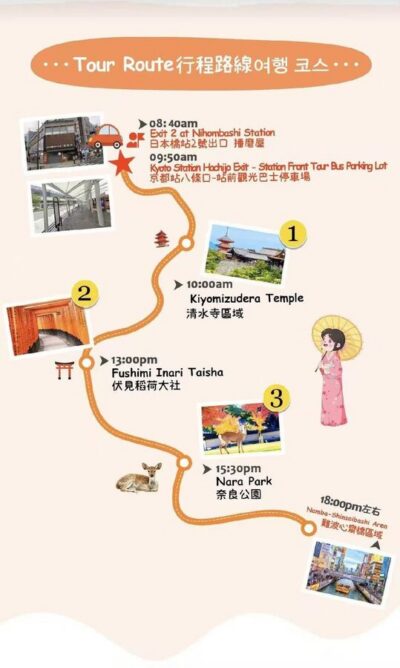
Kyoto Nara Day Trip │ Kiyomizu-dera Temple + Fushimi Inari-taisha Shrine + Nara Park (Departing from Osaka/Kyoto)
Read our review →
Browse the lists this tour appears in