Reviewed · OSAKA TOURS
Discover Real Osaka: A Cultural Walk with Food & Drink
Osaka reveals itself one alley at a time. This four-hour walk links youth culture, neon streets, old temples, market food, anime shops, and retro neighborhoods, giving you a broad first look at the city without burying you in formal sightseeing. I especially like the small maximum of nine people and the mix of takoyaki, okonomiyaki, mochi, and sake. The main consideration is pace: you cover a lot of ground, and transport between areas is not included.
The tour also has a useful personal touch. Guide Mico Yamamoto is praised for making time in both Kyoto and Osaka feel special, and this experience includes lifetime access to personal map links and travel tips. That is valuable if you want more than a four-hour walk. Just know that Osaka Castle, the ukiyo-e museum, Abeno Harukas, and the Osaka Museum of Housing and Living are reserved for private tours.
In This Review
- What makes this walk different
- Starting in Namba and entering America Mura
- Dotonbori, Shinsaibashi, and Osaka’s public face
- Hozenji Yokocho and the quiet side of Namba
- Kuromon Market with Osaka comfort food
- Optional DenDen Town and Tower Knives
- Shinsekai and Tsutenkaku’s old Osaka atmosphere
- Nishinari and the question of real Osaka
- What private tours add
- Group size, pace, and transport
- Who will get the most from this Osaka walk
- Practical details before you book
- Should you book Discover Real Osaka?
- FAQ
- How long does the cultural walk last?
- Where does the tour begin?
- Where does the tour finish?
- Is food included?
- Are transportation costs included?
- How large is the group?
- Are Osaka Castle and the museums part of the group tour?
What makes this walk different
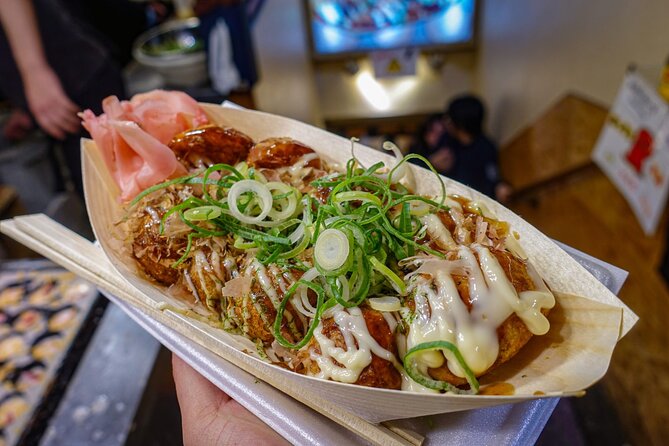
- Takoyaki and okonomiyaki are built into the route, so Osaka’s famous food is part of the experience rather than a rushed suggestion at the end.
- The route moves from America Mura to Nishinari, showing Osaka’s youth culture, shopping districts, temples, markets, retro streets, and rougher edges.
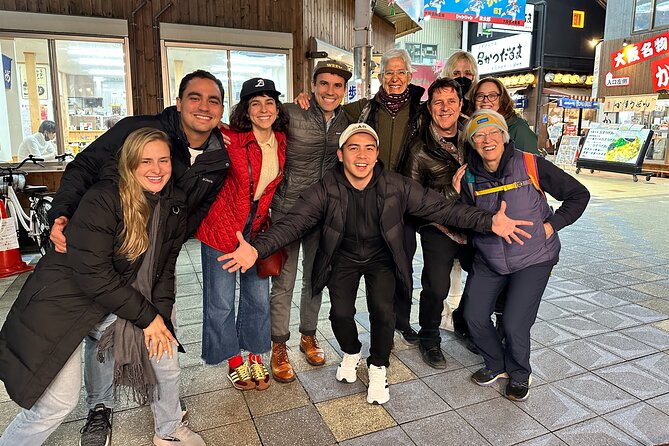
- A small group of up to nine people makes conversation with the guide easier than on a large coach tour.
- Hozenji Yokocho and Shinsekai provide a useful contrast, pairing a quiet lantern-lit temple lane with old-school neon and street food.
- Private tours can add major sights, including Osaka Castle, Abeno Harukas, an ukiyo-e collection, and an Edo-period streets museum.
- The finish near Dobutsuen-Mae Station puts you close to Shinsekai and the Midosuji Line for onward travel.
Starting in Namba and entering America Mura
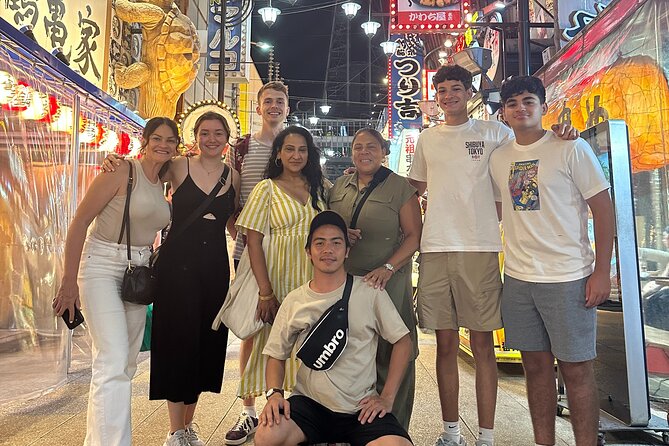
The meeting point is outside Swissotel Nankai Osaka, at 5-1-60 Namba, Chuo Ward. The start time is 10:00 a.m., which is sensible for a food and walking tour. You begin in one of Osaka’s easiest areas for transport, then move toward America Mura, also called Amemura.
America Mura is the city’s youthful, creative side. Expect street art, urban fashion, music references, and small shops rather than grand monuments. The scheduled visit is about 20 minutes, so think of it as a sharp introduction and a chance to get your bearings, not a full neighborhood exploration.
I like this opening because it avoids beginning with only Osaka’s famous signs and historic buildings. You see a part of the city shaped by fashion and street culture. The tradeoff is that 20 minutes can feel brief if you want time to browse or take photographs.
A few more options to weigh up in Namba
- Osaka Bar Hopping Night Walking Tour in Namba (3 bars, 6 tastes)
★ 5.0 · 958 reviews - Osaka 4hr Private Tour with Government-Licensed Guide
★ 5.0 · 359 reviews - Osaka Sushi Making Class – Hands-On Nigiri & Rolls (Same-Day OK)
★ 5.0 · 352 reviews
Dotonbori, Shinsaibashi, and Osaka’s public face
From America Mura, the route heads toward Dotonbori. This is the Osaka most people recognize from photographs: bright signs, food stalls, canal-side streets, and the famous Glico Running Man. The scheduled stop lasts about 20 minutes.
That short time works well for photos and a first look at the food scene. It is less suited to a slow meal or extended shopping. Dotonbori can be crowded, and the guide’s value here is helping you make sense of the visual overload instead of wandering without a plan.
Shinsaibashi follows, also for around 20 minutes. The covered shopping area and surrounding streets are tied closely to Osaka’s nightlife and retail culture. The guide promises a less obvious spot in plain sight, along with local stories about the area. That personal commentary is important because Shinsaibashi can otherwise feel like a standard shopping district found in many large Japanese cities.
You should see these first stops as context. They show Osaka’s public, energetic face before the walk turns toward smaller lanes, food, temples, and neighborhoods with more local character.
Hozenji Yokocho and the quiet side of Namba
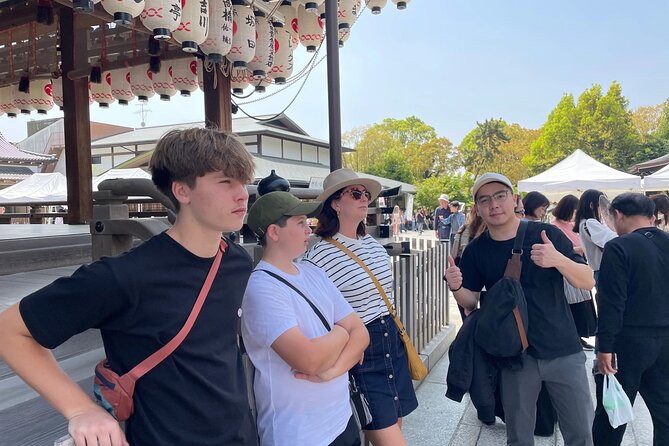
Hozenji Yokocho changes the mood. The lantern-lit lane is compact and atmospheric, with traditional-looking restaurants and the moss-covered Fudo Myoo statue at Hozenji Temple. The scheduled visit is 30 minutes.
This is one of the most worthwhile stops for first-time visitors because it offers a clear contrast with Dotonbori. You go from giant signs and packed streets to a narrow lane where the focus is on ritual, memory, and small-scale architecture. The guide also frames the visit as a chance to discuss Japanese spiritual traditions in a direct, accessible way.
Do not expect a large temple complex. Hozenji is small, and the appeal comes from the setting and the act of pausing. Thirty minutes is enough for an explanation, photographs, and a brief look around.
The route’s cultural range is one of its strengths. You are not only being shown famous places. You are being shown how Osaka can shift mood within a few minutes on foot.
Kuromon Market with Osaka comfort food
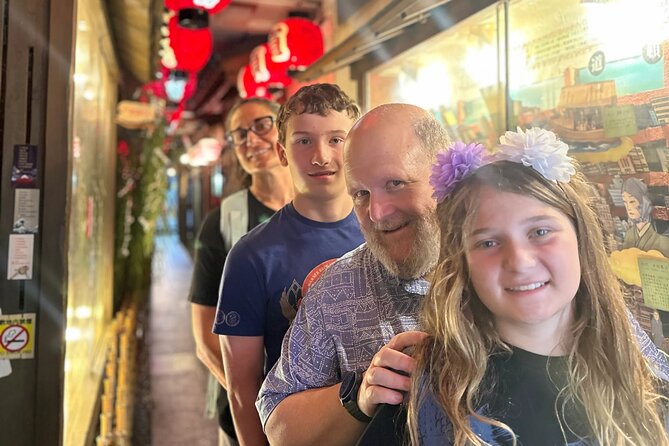
The longest scheduled stop is Kuromon Market, with about an hour set aside. Known as Osaka’s Kitchen, the market has served the city for more than two centuries. It is a place to see seafood, produce, snacks, and prepared foods displayed for immediate eating.
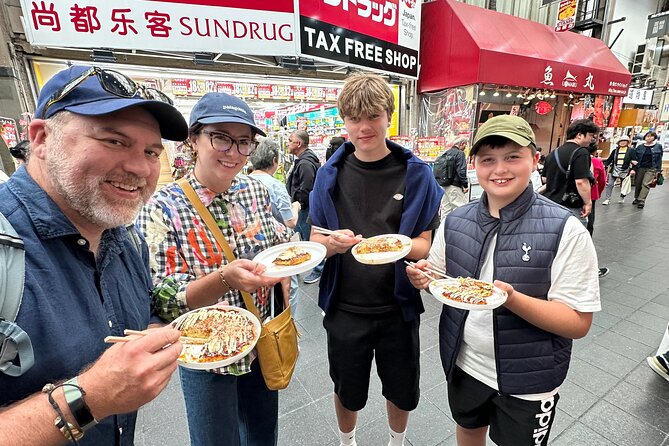
The tour includes takoyaki and okonomiyaki. Takoyaki are the hot octopus-filled balls associated with Osaka street food. Okonomiyaki is a savory pancake cooked with a range of ingredients. The experience takes you to the guide’s preferred okonomiyaki place, which adds a personal layer that a generic market stroll cannot provide.
This food stop is a strong reason to book. You do not need to spend the first day in Osaka guessing which dish to try or how to approach a busy food area. The guide can explain what you are eating and place it within Osaka’s everyday food culture.
The cost is $78.38 per person. For four hours, that is not a bargain walking tour, but the price becomes more reasonable when you count the included takoyaki, okonomiyaki, one alcoholic drink such as sake, and one nonalcoholic drink. The description also refers to mochi and an optional sake tasting, so I would confirm exactly how the drink choices and food tastings are handled before arrival.
The market can be crowded, and food stalls may involve standing rather than a long, quiet meal. If you prefer a formal restaurant lunch, this may feel casual. If you want a practical introduction to Osaka’s food habits, it is one of the tour’s best parts.
A completely different kind of day out:
- Osaka 6hr Private Walking Tour with Government Licensed Guide
★ 5.0 · 174 reviews - From Osaka or Kyoto: Kyoto and Nara 1-Day Bus Tour
★ 3.5 · 141 reviews - From Osaka/Kyoto: Kyoto & Nara Day Trip with Optional Lunch
★ 4.5 · 79 reviews - Airport Transfer from Osaka city to Kansai airport
★ 4.5 · 73 reviews
Optional DenDen Town and Tower Knives
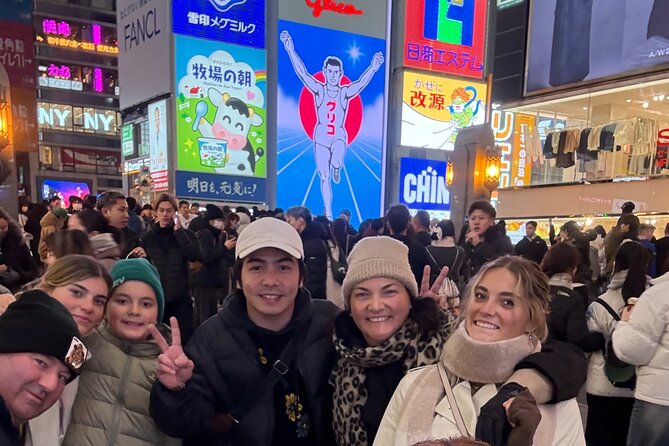
The route may continue toward DenDen Town, Osaka’s district for anime, gaming, electronics, and unusual gadgets. It is a useful addition for anyone interested in Japanese pop culture. It also helps show that Osaka’s identity is not limited to temples, markets, and old lanes.
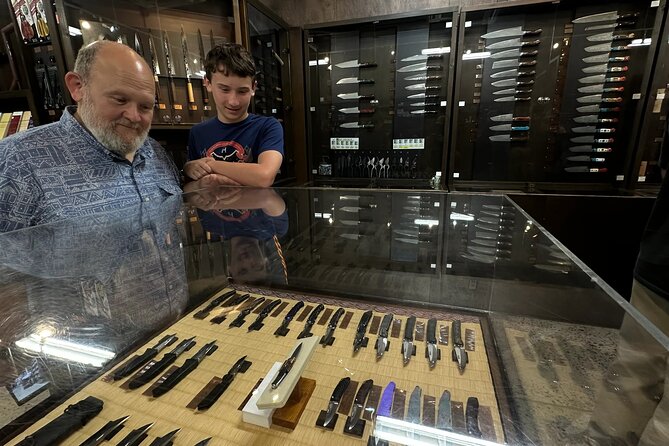
Tower Knives is another possible stop. This small shop near Tsutenkaku Tower specializes in Japanese kitchen knives. You may see a demonstration and speak with staff about the knives. This is a particularly practical stop if you are considering a serious kitchen purchase.
These stops are not given the same numbered timing as the main itinerary, so treat them as flexible rather than guaranteed fixed-length visits. The guide may need to adjust the order or time depending on the group, interests, and route.
Shinsekai and Tsutenkaku’s old Osaka atmosphere
Shinsekai is scheduled for about 30 minutes. The district has a retro feel, neon signs, old-style eateries, and Tsutenkaku Tower as its landmark. It presents a different kind of Osaka from the polished shopping streets around Namba.
I like Shinsekai as a later stop because it gives the day a strong visual change. The district feels theatrical and nostalgic, but the guide can also explain how it fits into the city today. You may see signs of age and uneven development, which is part of the point. This is not a carefully polished historic quarter.
If you want to visit Tsutenkaku’s observation facilities, the listed stop does not promise admission or extra time for that. The tour is primarily a street walk, so keep your expectations focused on the neighborhood.
Tower Knives can fit naturally near this part of the route, but the exact order is not guaranteed. Ask at the beginning if the shop matters to you.
Nishinari and the question of real Osaka
The standard finish is near Dobutsuen-Mae Station, close to Shinsekai. Nishinari and the Dobutsuen-Mae area are presented as an optional final look at a rougher, more unfiltered part of Osaka. The itinerary notes that this portion happens if the group insists.
That wording matters. Nishinari is not a comfortable sightseeing district for everyone, and the tour does not present it as a conventional attraction. It is intended to show another side of the city, one that is less polished and more socially complicated. I would choose this extension only if you are genuinely interested in urban life beyond postcard Osaka and are comfortable following the guide’s advice.
The scheduled time is about 30 minutes. This is not the place for careless photography or jokes about poverty. Listen to the guide, stay with the group, and treat the neighborhood as a real community rather than a stage set.
The finish is practical. Dobutsuen-Mae Station is on the Midosuji Line, the red line, with connections toward Namba, Umeda, and other parts of Osaka. Your guide can help you find your way after the tour.
What private tours add
The group tour is built around the southern and central Osaka route. A private tour opens the door to a much longer list of sights.
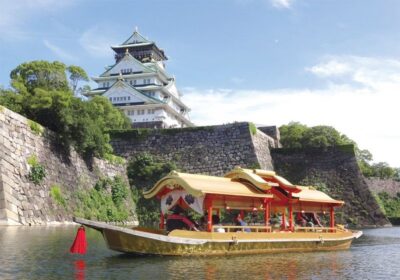
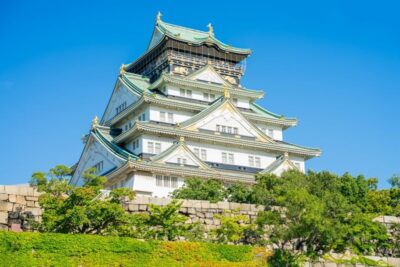
Osaka Castle is available only on private tours. The castle connects with Toyotomi Hideyoshi, who nearly unified Japan, and the present structure rises above large stone walls. The listed visit is about 30 minutes, so confirm whether that means an exterior visit or time inside the castle as well.
Private tours can also include a small museum with original Edo-period ukiyo-e prints, including an authentic image of The Great Wave off Kanagawa. This is a good choice for travelers who prefer art and cultural objects to shopping streets.
Abeno Harukas, Japan’s tallest skyscraper at 300 meters, offers an observation deck with wide views across Osaka. Clear weather matters, so this addition is most useful when the sky cooperates.
The Osaka Museum of Housing and Living recreates streets and homes from the Edo period at life size. It is a more hands-on way to understand how people lived, worked, dressed, and shopped in earlier Osaka.
Private tours also allow flexible durations of four, five, or six hours. That flexibility is useful because the standard route already contains more possible stops than four hours can comfortably accommodate. If you want Osaka Castle, a museum, and a food market without rushing, private time is the better format.
Group size, pace, and transport
The maximum group size is nine. That is small enough for a guide to adjust explanations and answer questions, though the experience will still feel social rather than completely personal. Group discounts are offered, and private options are available.
Hotel pickup is not included for group tours. You meet at Swissotel Nankai Osaka, so plan to arrive early, especially if Namba is unfamiliar. Pickup is offered as a feature, but the detailed terms specify that group tours meet at the set point, so confirm pickup before assuming it applies to you.
This is a walking tour, and transport costs are not included. Trains or taxis can be arranged upon request, but you pay those fares yourself. That detail affects the true cost if the group chooses to cover a lot of ground by train or taxi.
The route has a generous list of places, while the main stop times add up to roughly three and a half hours before any walking, food service, or optional additions. That suggests a flexible day rather than a minute-by-minute schedule. Tell the guide early if you care most about food, markets, pop culture, temples, or neighborhood history.
Who will get the most from this Osaka walk
I would recommend this tour to a first-time visitor who wants orientation and local interpretation in one morning or afternoon. It is especially useful if you want food guidance but do not want to plan every stop yourself.
It also suits people who enjoy contrasts. In four hours, you may see youth fashion, famous nightlife streets, a temple lane, a long-running market, anime shops, Japanese knives, retro Shinsekai, and an optional look at Nishinari.
The tour may be less suitable if you want long visits at major attractions. Dotonbori, Shinsaibashi, and America Mura receive short stops, and the most important museums and Osaka Castle are private-tour additions. You should also think twice if you dislike walking, crowds, flexible timing, or casual market food.
The lifetime access to personal Google Map links is a useful bonus. It can help you continue exploring Osaka, Kyoto, Tokyo, and other parts of Japan after the tour rather than treating the experience as a one-time outing.
Practical details before you book
The price is $78.38 per person, with free cancellation up to 24 hours before the start time. Confirmation arrives when you book, and the activity is near public transportation. Service animals are allowed, and most people can participate.
The standard start is 10:00 a.m. at Swissotel Nankai Osaka. The group route ends near Dobutsuen-Mae Station. You should wear comfortable shoes, keep room for food, and bring a phone for the map links and meeting details.
A group tour is the better value if you want a social introduction at a fixed price. A private tour costs more, but it gives you control over the pace and access to Osaka Castle, the museums, Abeno Harukas, and other additions.
Should you book Discover Real Osaka?
Book it if you want a food-centered introduction with strong neighborhood variety, especially on your first Osaka visit. The combination of included local dishes, a small group, personal stories, and a practical finish near the Midosuji Line gives the tour real usefulness.
Choose the private option if your priorities include Osaka Castle, art, panoramic views, or the Edo-period museum. Skip it if you want a single major attraction explored in depth or a low-cost, self-guided food walk.
With a 5.0 rating from 13 reviews and 100 percent recommendation, the praise is unusually strong, particularly for Mico Yamamoto’s work across Kyoto and Osaka. The best way to make the booking worthwhile is to tell the guide what you care about before the walk begins. Osaka has too many good distractions for a one-size-fits-all route.
FAQ
How long does the cultural walk last?
The standard experience lasts about four hours. Five-hour and six-hour options are available, especially for private tours.
Where does the tour begin?
The meeting point is Swissotel Nankai Osaka, 5-1-60 Namba, Chuo Ward, Osaka. The scheduled start time is 10:00 a.m.
Where does the tour finish?
The group route finishes near Dobutsuen-Mae Station on the Midosuji Line, close to Shinsekai.
Is food included?
Yes. Takoyaki and okonomiyaki are included. The experience also includes one alcoholic drink, such as sake, and one nonalcoholic drink, with the choice left to you.
Are transportation costs included?
No. This is primarily a walking tour, and any train or taxi fares are paid separately. Train or taxi rides can be arranged upon request.
How large is the group?
The group has a maximum of nine people. Private tours are also available.
Are Osaka Castle and the museums part of the group tour?
No. Osaka Castle, the ukiyo-e museum, Abeno Harukas, and the Osaka Museum of Housing and Living are listed for private tours only.
Just added in Namba
- Private Airport transfer Kansai Intl. Airport(KIX) to OSAKA CITY★ 4.5 · 12 reviews
- Osaka: Namba Local Food Walking Tour (Taste 15 Dishes)★ 5.0 · 20 reviews
- From Osaka/Kyoto: Kyoto & Nara Day Trip with Optional Lunch★ 4.5 · 79 reviews
- From Osaka or Kyoto: Kyoto and Nara 1-Day Bus Tour★ 3.5 · 141 reviews
- Osaka Delights: Traditional Japanese Food Tour★ 4.5 · 33 reviews
- Osaka Private Tour with a Local Guide (Must See Places in 1 Day)★ 5.0 · 57 reviews
- Airport Transfer from Osaka city to Kansai airport★ 4.5 · 73 reviews
- Badminton in Osaka & Kyoto with Locals!★ 5.0 · 15 reviews
Osaka Tours, compared.



Umeda Sky Building & Kuchu Teien Observatory Ticket in Osaka
Read our review →