Reviewed · MORNING
Osaka Early Morning Tour with English-Speaking Guide Dotonbori
Osaka rewards an early start. This four-hour tour links Osaka Castle, Shinsekai, Kuromon Market, Nipponbashi, Hozen-ji Temple, and Dotonbori with an English-speaking guide, giving you a useful first look at a city that can feel scattered at first. I especially like the small maximum of eight people and the mix of castle grounds, food streets, local shopping, and pop culture.
I also like that the tour ends at the Glico Sign, right in the middle of Dotonbori, rather than sending you back to the starting point. Guides such as Shizuka, Yusuke, Satsuki, Hikaru, and Ryoichi have been praised for clear explanations, local stories, and flexible pacing. The main consideration is that public transportation costs an extra ¥430, entrance tickets are not included, and you visit Osaka Castle from the grounds rather than automatically going inside.
In This Review
- Key points to know before booking
- Why this four-hour route works well
- Osaka Castle: history before the city wakes up
- Shinsekai: an older side of Osaka
- Kuromon Market: Osaka’s food stop
- Nipponbashi Denden Town: electronics, anime, and games
- Doguyasuji: Osaka’s kitchenware street
- Hozen-ji Temple: a quiet pause in the center
- Dotonbori and the Glico Sign: a strong finish
- Walking, trains, and the pace of the morning
- What is included, and what is not
- Who should book this Osaka tour?
- Should you book it?
- FAQ
- How long does the Osaka Early Morning Tour last?
- Where does the tour begin?
- Where does the tour end?
- Is Osaka Castle admission included?
- Are transportation fares included?
- What food and drink are included?
Key points to know before booking
- Eight-person limit: A small group makes it easier to ask questions, hear the guide, and adjust the pace.
- A broad Osaka sampler: You move from a castle and temple to markets, anime shops, kitchenware stores, and neon-lit Dotonbori.
- Food is part of the tour: One Osaka street-food item and one drink are included, but this is not presented as a full meal.
- Osaka Castle entry is extra: The tour spends about an hour around the castle area, and admission to attractions is not included.
- Walking plus trains: You cover several neighborhoods by foot and use public transport between areas.
- Best for a first morning: The route gives you ideas for where to return later, especially for food and shopping.
Why this four-hour route works well
Osaka is not a city you understand from one postcard view. Its appeal comes from the contrast between grand historical sites, narrow food lanes, specialist shopping streets, and districts shaped by modern entertainment.
This tour gives you that contrast in a compact morning. You begin at Osaka Castle Park at 9:30 a.m. and finish near Dotonbori’s famous Glico Sign after roughly four hours. That timing is useful if you have only one day in Osaka, or if you want a guided orientation before setting off on your own.
I like the route because it does not spend the entire morning on one major attraction. Instead, you get a series of short introductions. The trade-off is that none of the stops receives a long, museum-style visit. You are sampling Osaka, not exhausting it.
The tour is listed at $60.78 per person. That price makes the most sense if you value an English-speaking guide, local food advice, help with the train route, and a group capped at eight. If you only want to walk past the main sights and take photographs, you could spend less by exploring independently. The guide’s value comes from connecting the places and explaining what you would likely miss on your own.
Several guides receive special praise for their approach. Shizuka is described as friendly and attentive, including adjusting the pace for a participant with a knee injury. Yusuke has been praised for clear communication, flexibility, and finding good photo spots. Ryoichi added personal stories as an Osaka native, while Satsuki and Hikaru were appreciated for making the city feel approachable. Your guide will vary, but the pattern is clear: the human element is central to this experience.
A few more options to weigh up in Osaka
- Osaka Go Karting Tour with Funny Costume
★ 5.0 · 2,658 reviews - Osaka Castle: Museum and Tower Entry Ticket
★ 4.5 · 2,380 reviews - Osaka: Shinsekai Food Tour with 13-15 Dishes at 5 Eateries
★ 4.8 · 2,204 reviews
Osaka Castle: history before the city wakes up
The tour begins at Starbucks Coffee in Osaka Castle Park, at JO-TERRACE OSAKA. From there, you spend about an hour around Osaka Castle.
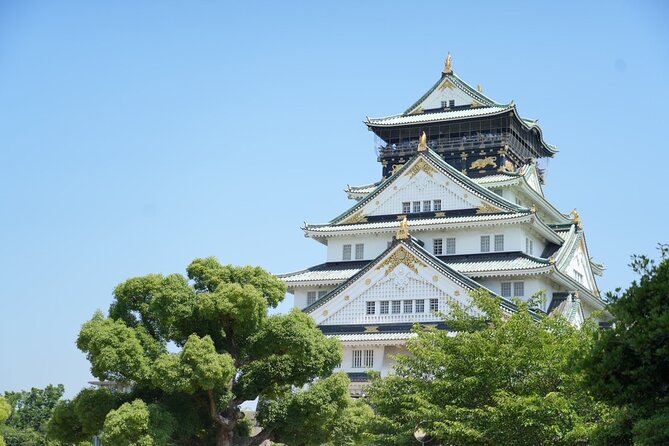
Osaka Castle is one of the city’s best-known symbols. It was built in the late 16th century and played an important part in Japan’s unification. The castle area gives your guide plenty to explain, from the fortress’s role in national history to the architecture and park setting around it.
The most important detail is easy to miss: the standard plan does not promise entry into the castle tower. Admission tickets are not included, and one person specifically noted that the line to go inside was very long. You should think of this part as a guided walk around the castle grounds, with historical context and views of the exterior.
That arrangement can actually work well on a short tour. You get time to see the stone walls, gardens, and major viewpoints without spending the entire morning in a queue. If going inside matters to you, ask the guide about the practical options and be prepared to pay the admission fee separately.
The castle stop is also where the guide’s style matters most. A dry explanation of dates would make the first hour drag. Guides such as Hikaru, Shizuka, Susan, and Satsuki have been praised for making the history understandable, humorous, and connected to what you are seeing.
One useful tip from the experience is to allow time for seasonal sights around the grounds. A guide helped one group find a less obvious cherry blossom spot. That kind of local direction can make the walk more personal than simply following the main path.
Shinsekai: an older side of Osaka
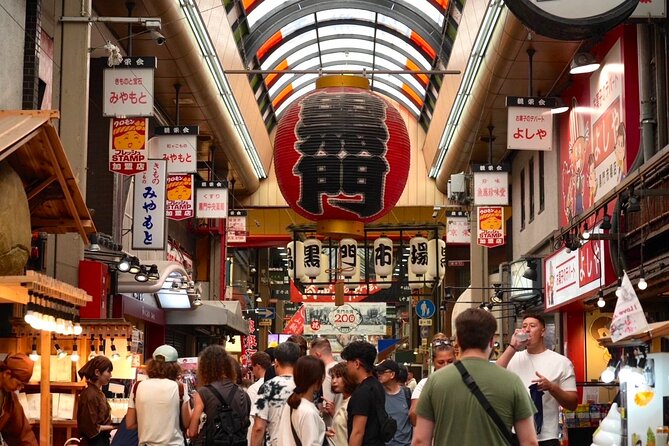
After the castle area, the route moves to Shinsekai for about 30 minutes. This district is known for its nostalgic feel, old-style streets, restaurants, and a mix of long-established Osaka character with newer shops.
Shinsekai gives the tour a change of mood. Osaka Castle presents the city through a formal historical lens. Shinsekai shows a more everyday side, where food, entertainment, and neighborhood life take center stage.
Thirty minutes is enough for a guided look and some photographs, but not enough for a full meal crawl or a detailed exploration of every street. I would treat this stop as a preview. If you like the area, you can return after the tour and spend more time looking at the restaurants and shops.
The route is especially useful here because the guide can point out how the district fits into Osaka’s wider character. The tour is not only about collecting famous sights. It gives you a quick sense of how different parts of the city feel and what you may want to explore later.
Kuromon Market: Osaka’s food stop
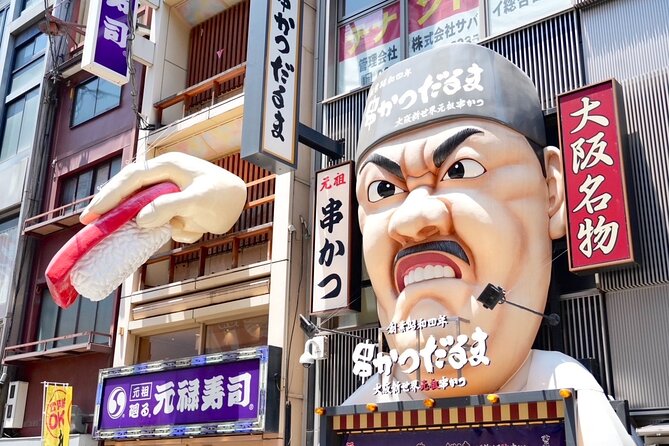
Kuromon Market is often called Osaka’s Kitchen, and the tour spends about 30 minutes here. The market is known for seafood, produce, and ready-to-eat food, making it one of the most practical places to learn how Osaka approaches eating.
One street-food item and one alcoholic or non-alcoholic drink are included. That is a welcome feature, especially if you are unsure what to order or how to choose from the many stalls. The guide can help you make a sensible pick rather than leaving you to guess from signs and displays.
Be clear about the meal arrangement. The listed inclusions promise one street-food item and one drink, not an unlimited tasting session. Some tour accounts describe a lunch-style stop where the guide helped with menu choices, but you should not book this expecting a large, multi-course meal covered by the price.
The half-hour timing keeps the tour moving, but it also limits how much you can eat. If you are serious about Osaka’s food scene, note down places you want to revisit. A major strength of starting the tour early is that you receive food recommendations while you still have the rest of the day to follow them.
This is also a good point to ask about local dishes, ingredients, and eating customs. The best guides do more than hand you a snack. They explain what you are trying and suggest other places to eat later.
A completely different kind of day out:
- Osaka Food Tour: 13 Dishes at 5 Local Eateries
★ 5.0 · 2,149 reviews - Hungry Osaka Street Food Tour:15 Tastings & 3 Drinks with a Local
★ 5.0 · 1,727 reviews - Osaka: Tea Ceremony Experience
★ 4.9 · 1,426 reviews - Osaka Kickstart: Hotspots & Hidden Gems Tour
★ 5.0 · 1,306 reviews
Nipponbashi Denden Town: electronics, anime, and games
The next stop is Nipponbashi Denden Town, with about 20 minutes to look around. This is Osaka’s main district for electronics, anime, gaming, and related pop culture.
The short visit will suit you if you want an introduction and a few photographs. It will not be enough for serious shopping. Stores can require time, especially if you are comparing electronics, browsing collectibles, or searching for a particular game.
That short limit is not necessarily a flaw. The tour is trying to show you several sides of Osaka, and Denden Town adds a modern, playful layer after the market. It also helps you understand why the city appeals to people with very different interests. You can care about castle walls and cooking tools, then spend a few minutes looking at games and anime shops.
If you spot something you like, remember the location and return independently after the tour. The guide can help you understand where the district fits into the route, but you should not expect a full shopping trip in 20 minutes.
Doguyasuji: Osaka’s kitchenware street
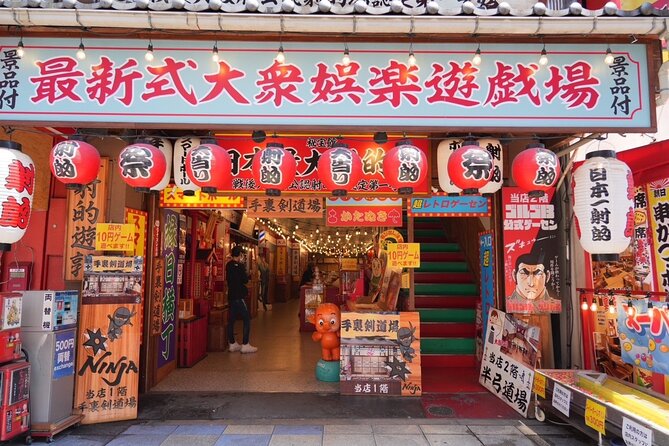
Sennichimae Doguyasuji Shopping Street receives about 15 minutes. This specialist shopping street focuses on kitchenware, chef’s tools, restaurant supplies, and unusual cooking gadgets.
For anyone who enjoys cooking, this may be one of the most useful stops. You might find tools that are difficult to recognize at first, and a guide can explain what they are used for. Even if you are not shopping, the street gives you a look at Osaka’s food culture from the business side, not just the eating side.
Fifteen minutes is brief, so think of this as a scouting visit. You may want to return later if you find knives, dishes, molds, utensils, or restaurant-style equipment that interests you. The tour’s broad route works well here because it shows how food shapes Osaka beyond the plate.
Hozen-ji Temple: a quiet pause in the center
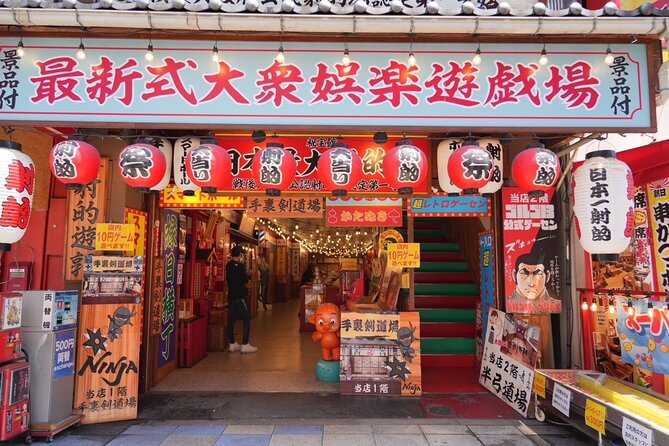
Hozen-ji Temple is a small, peaceful stop amid the city’s busy commercial districts. You spend about 15 minutes here, seeing the moss-covered statue of Fudo Myo-o and the traditional stone lanes around the temple.
The stop works as a pause in the itinerary. After markets, shopping streets, and train rides, Hozen-ji offers a quieter setting and a chance to hear about local religious customs. The temple is not a large complex, so 15 minutes is a reasonable amount of time for a respectful visit.
You will want to follow the guide’s instructions about behavior and photography. The appeal is in the contrast between the small sanctuary and the surrounding city. It is easy to walk past without noticing, which is exactly why having a guide can help.
Dotonbori and the Glico Sign: a strong finish
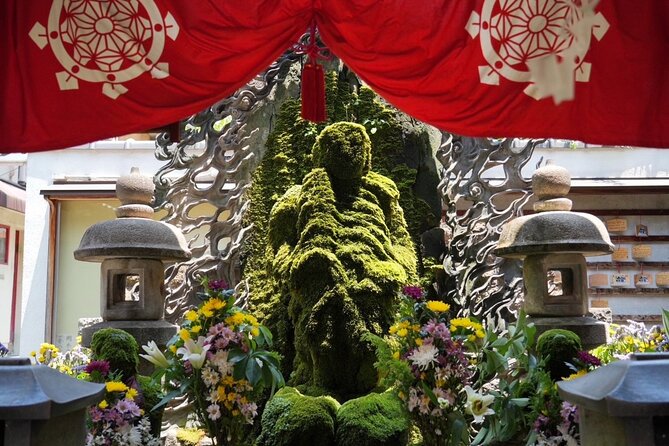
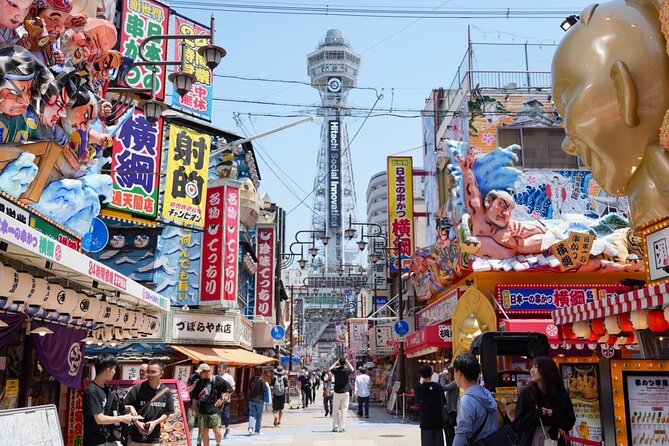
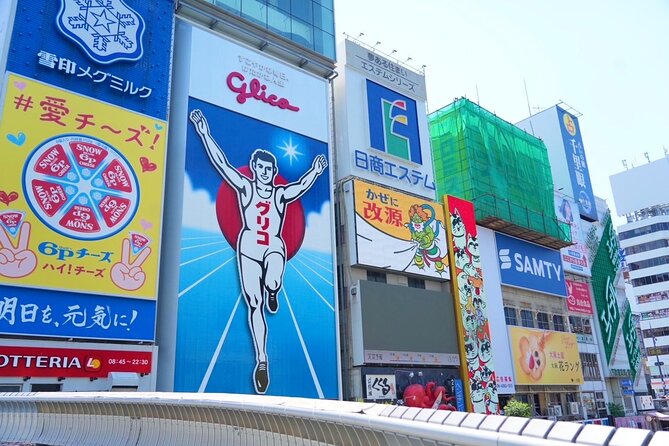
The tour finishes in Dotonbori, with about 30 minutes around Dotonbori Tsuribori and Ebisu Bridge. The Glico running man sign is the obvious landmark, but the canal, signs, restaurants, and dense pedestrian streets create the full scene.
Ending here is one of the tour’s practical strengths. You finish in a part of Osaka that is easy to continue exploring on your own. You can stay for food, shopping, photographs, or an evening return. The guide will assist you toward Namba Station if needed.
Thirty minutes gives you time to orient yourself, see the famous sign, and learn where the main streets lead. It is not enough for a complete Dotonbori visit, which is fine because this district is better explored at your own pace afterward.
The end point also makes the tour convenient for a one-day visit. You are not required to return across the city to collect luggage or find the starting point. You can simply continue into Namba and nearby areas.
Walking, trains, and the pace of the morning
This is a walking tour, but not a walking-only tour. The route uses public transportation between districts, and the fare is listed as ¥430 per person. You should budget for that separately.
You will want comfortable shoes. The exact distance is not provided, but the tour connects seven stops spread across different parts of Osaka, with walking inside the castle grounds, markets, shopping streets, temple lanes, and Dotonbori. One participant with a knee injury received extra consideration, but you should still judge the route against your own mobility.
The pace appears designed to be manageable rather than frantic. A guide allowed one group time to take in the sights without rushing, and another described the walking as easy and well paced. Still, this is a compact itinerary. If you stop at every shop or take long food breaks, the group may need to move on.
The eight-person limit matters here. A large group would make train transfers, narrow streets, and food stops harder. With fewer people, you have a better chance of hearing the explanations and asking for help.
What is included, and what is not
Your booking includes an English-speaking guide, one Osaka street-food item, and one drink. That makes the food portion useful, but modest.
You pay separately for the ¥430 public transportation fare and any attraction admission. Osaka Castle entry is the main possible extra if you want to go inside. Since the tour does not automatically include the castle tower, check your expectations before booking.
The tour offers a mobile ticket and group discounts. Confirmation is provided at booking, and the experience allows service animals. It is near public transportation, and most people can participate, subject to the walking and train connections.
The cancellation terms are straightforward: you can receive a full refund if you cancel at least 24 hours before the local start time. Changes or cancellations inside that window are not accepted for a refund.
Who should book this Osaka tour?
I would recommend it most strongly if you have limited time, want a first-day orientation, or prefer a guide to handle the route between separate districts. It also suits you if you want history, food, shopping, and modern Osaka in one morning rather than a single-theme visit.
It is a good fit for families and couples who want help with photographs, food choices, and navigation. The small group can also make it easier to ask questions about Japanese culture and daily life.
You may want another type of experience if your priority is spending several hours inside Osaka Castle, shopping extensively in Denden Town, or eating your way through Kuromon Market. This tour gives you a taste of each place, then leaves you to return on your own.
Should you book it?
Book this tour if you want a friendly, efficient introduction to Osaka and value the guide more than a long visit at any single sight. The strongest features are the small group, the varied route, the local food stop, and the finish at Dotonbori.
Before paying, remember three things: bring money for ¥430 of transport, expect attraction tickets to cost extra, and do not assume Osaka Castle tower entry is included. If those limits suit your plans, $60.78 is a fair price for four hours of guided orientation, especially when you have only one day to get your bearings.
FAQ
How long does the Osaka Early Morning Tour last?
The tour lasts approximately four hours. It begins at 9:30 a.m. and ends in Dotonbori near the Glico Sign.
Where does the tour begin?
The meeting point is Starbucks Coffee at JO-TERRACE OSAKA in Osaka Castle Park, Osaka, Chuo Ward, 540-0002.
Where does the tour end?
The tour ends in Dotonbori in front of the famous Glico Sign. The guide can assist you with directions to Namba Station if needed.
Is Osaka Castle admission included?
No. The tour includes time around Osaka Castle, but entrance tickets to attractions are not included.
Are transportation fares included?
No. Public transportation costs ¥430 per person and is paid separately.
What food and drink are included?
The tour includes one Osaka street-food item and one drink. The drink may be alcoholic or non-alcoholic.
Just added in Osaka
- 1.5〜2 Hours Traditional Kintsugi Work Shop in Namba Osaka★ 5.0 · 75 reviews
- The Dark Side of Osaka Walking Tour★ 5.0 · 49 reviews
- Three Types of Ramen Cooking Class in Osaka★ 5.0 · 119 reviews
- Samurai Show, Tea Ceremony, Japanese Traditional Activities★ 5.0 · 56 reviews
- Traditional Japanese Music show & Experience Tour in Osaka★ 5.0 · 25 reviews
- Traditional Home cooking Experience in Osaka, Japan★ 5.0 · 14 reviews
- Sushi and Japnese foods cooking class in Osaka★ 5.0 · 51 reviews
- Osaka Street Food Festival :Takoyaki&Okonomiyaki for Families★ 5.0 · 13 reviews
Morning, compared.
Kyoto Early Morning Tour with English-Speaking Guide
Read our review →Early Morning Tour with English-Speaking Guide
Read our review →
World Heritage Shirakawa-go Morning Guided Tour
Read our review →
Nara Early Morning Tour (Kyoto or Osaka Departure Available)
Read our review →
Hiroshima in a Nutshell: Morning Bike Adventure
Read our review →