
Reviewed · WALKING TOURS
Graffiti in Tokyo Walking Tour: Shibuya and Harajuku
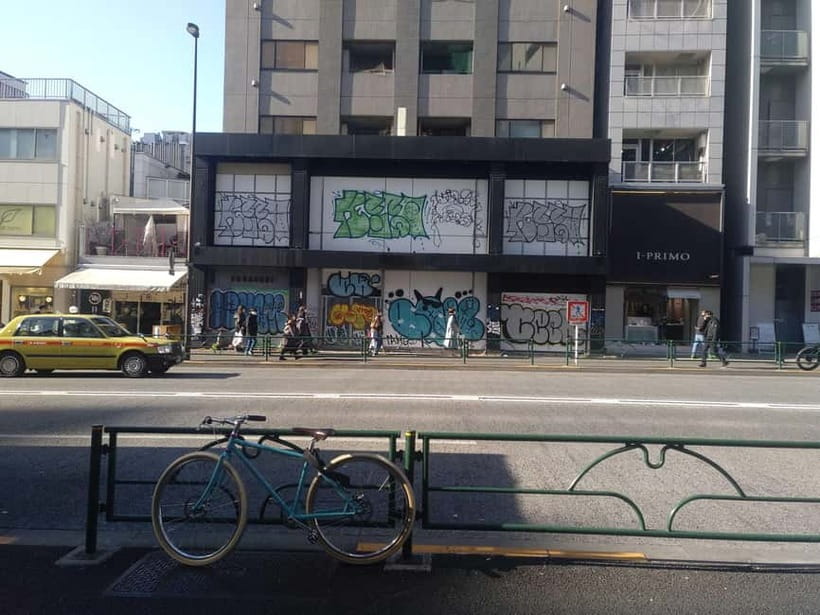
Tokyo hides its best art in plain sight. This two-hour walk through Shibuya and Harajuku follows tags, stickers, murals, and lesser-known street pieces that are easy to miss without a trained eye. I like the focus on local graffiti culture and the way guide Elena Calderon connects the work to Japanese urban life. I also like that the walk includes art galleries, studios, exhibitions, and local hangouts rather than treating graffiti as decoration alone.
The main consideration is that this is a walking tour about street art, not a standard sightseeing route. Some pieces may be small, concealed, weathered, or illegal, and the tour may not suit anyone who needs an accessible route. The supplied directions name Manhattan Records Shop as the meeting point but also refer to Kifune Building as the start and finish, so I would confirm the exact map pin before setting out.
In This Review
- Key things to know before you go
- Why this two-hour walk feels different
- Meeting near Manhattan Records in Shibuya
- Reading Shibuya beyond the famous crossing
- What Elena adds to the walls
- The short Harajuku visit
- Galleries, studios, and useful follow-up ideas
- Is $38 a fair price?
- Who should book this walk?
- Practical advice for the two hours
- Should you book Graffiti in Tokyo?
- FAQ
- Where does the graffiti tour meet?
- How long does the tour last?
- What neighborhoods does the tour visit?
- What languages are available?
- What is included in the price?
- Are meals and drinks included?
- Are gallery and museum entrances included?
- What should I bring?
- Can I cancel the booking?
Key things to know before you go
- Elena’s specialist background: Your guide is Elena Calderon of Totemo, a graffiti researcher for more than 10 years and an art curator.
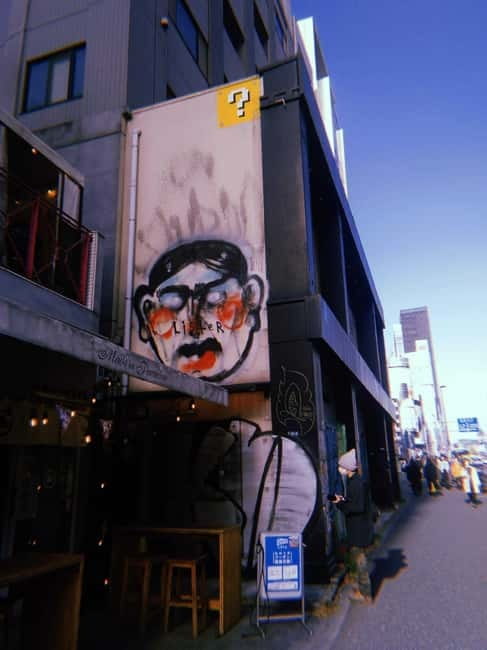
- A different side of Shibuya: The route moves away from the famous crossings and into back streets where tags, stickers, and murals are easier to spot.
- Harajuku adds a creative finish: The short Harajuku visit broadens the walk beyond graffiti and brings Tokyo’s fashion and art districts into the picture.
- English and Spanish guiding: The tour is offered in both languages, subject to the selected departure.
- Good value for art fans: At $38 per person, the price includes a specialist guide, access to lesser-known places, gallery tips, and discounts at certain galleries and restaurants.
- Bring practical gear: Wear comfortable shoes and carry water, a camera, and some cash.
Why this two-hour walk feels different
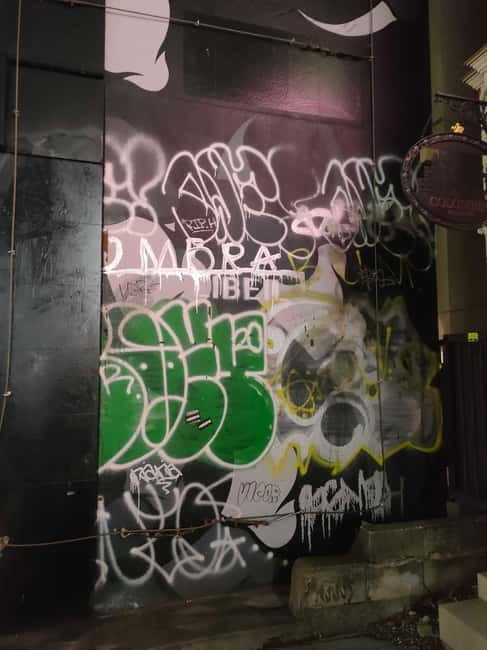
Shibuya and Harajuku are hardly unknown parts of Tokyo. Most visitors arrive with a familiar checklist: the crossing, department stores, fashion streets, music shops, and bright signs. This walk changes your attention. Instead of looking only at large landmarks, you start scanning shutters, alley walls, utility boxes, stickers, and narrow side streets.
That shift is the real point of the experience. Graffiti in Tokyo can be difficult to find because public painting is often restricted, and many pieces are temporary. A tag may be painted over. A sticker may disappear. A mural may sit behind a building or down a lane you would never choose on your own.
Elena’s role is more than leading you from one wall to another. She explains the difference between tags, throw-ups, stickers, and larger pieces, then adds the stories and artistic context that make each mark easier to read. The strongest praise for this tour centers on her enthusiasm, clear explanations, and ability to point out work that an untrained eye would pass without noticing.
I would choose this walk if you enjoy street photography, contemporary art, fashion, music, or the less polished side of cities. You do not need to be a graffiti expert. In fact, the experience may be most useful if you like the look of graffiti but know little about its artists or methods.
More Walking Tours in Tokyo
- Tokyo Tsukiji Fish Market Food and Culture Walking Tour
★ 5.0 · 3,184 reviews - Tokyo: Imperial Palace and Shogun Historical Walking Tour
★ 5.0 · 2,251 reviews - Tokyo: Shinjuku Local Bar and Izakaya Guided Walking Tour
★ 4.9 · 1,794 reviews
Meeting near Manhattan Records in Shibuya
The stated meeting point is Manhattan Records Shop in Shibuya, a fitting place for a tour concerned with urban creativity. The shop connects the walk to Tokyo’s music culture before you even start, though the information also names Kifune Building as the starting and ending location.
Because those details do not match perfectly, check the confirmation message and map location carefully. I would arrive early, especially if you are coming through Shibuya Station. The area has many large buildings, busy streets, and several possible routes from the station.
The tour lasts two hours, so punctuality matters. A late arrival could mean missing the first explanations or trying to catch up through crowded streets. Wear shoes that can handle steady walking, and bring water. Tokyo weather can change quickly, and the tour runs outdoors.
A camera is useful, but remember that some art may be on private property or in sensitive locations. Ask before stepping into a doorway or blocking a business entrance. The rules are simple: no smoking, alcohol, drugs, or littering, and respect local laws.
Reading Shibuya beyond the famous crossing
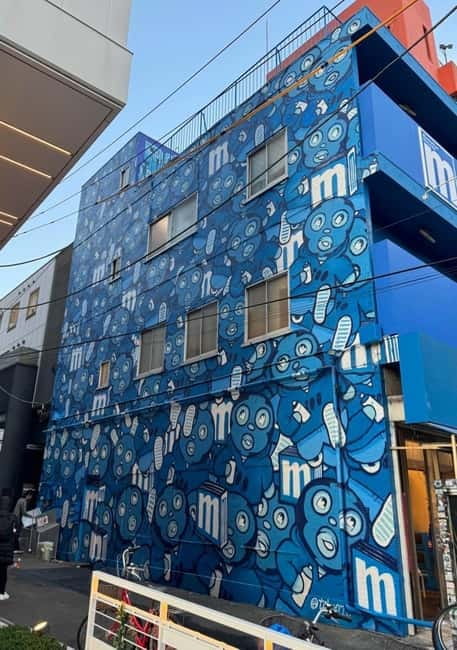
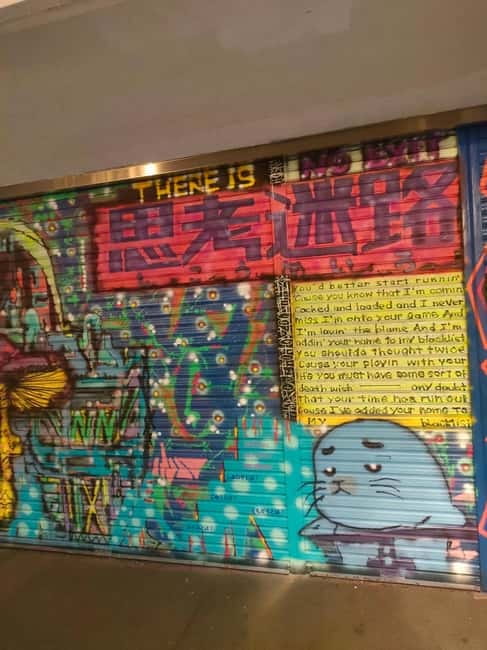
The Shibuya portion is the main event. Rather than spending the whole time at the district’s famous commercial center, the route takes you toward less obvious corners. You may see large painted walls, quick tags, stickers, and pieces by local or international artists.
That range matters. A giant mural is easy to appreciate, but a tiny sticker or hurried tag can tell you just as much about how artists use the city. Elena helps place those marks within the wider graffiti scene, so you learn to notice scale, location, repetition, and style.
One useful feature is the contrast between legal walls and secret street spots. Legal walls show how a city can make room for public art under controlled conditions. Unapproved work reveals a different set of choices, risks, and relationships with the street. The tour does not present illegal graffiti as a tourist stunt. Instead, it asks you to understand the art while respecting the law and the people who own or use the spaces.
You might also be introduced to local artists, crews, and international names connected to Tokyo. The exact art changes over time, which is part of the nature of this subject. Unlike a statue or temple, street art can be painted over before your next visit.
Several people who took the walk found pieces they would never have noticed alone, especially stickers and tags placed in clever or easily overlooked spots. That is a strong reason to book a guide rather than simply search for a list of murals online.
What Elena adds to the walls
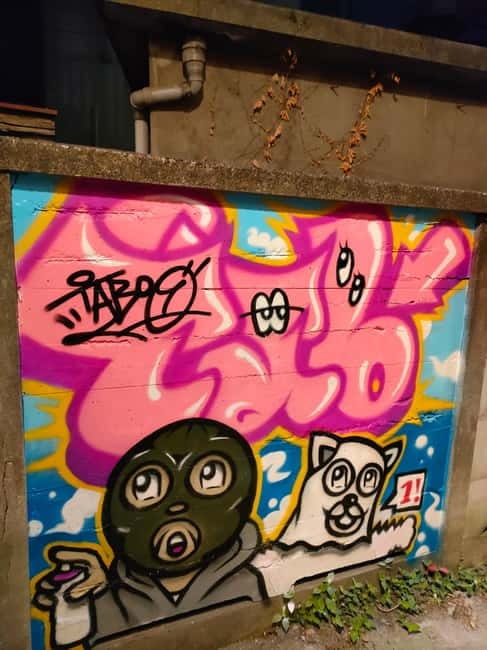
A street art walk depends heavily on the guide. Here, Elena Calderon is the central reason the experience works. She is described as a graffiti researcher with more than a decade of experience and an art curator, and her background shows in the range of information she brings to the walk.
The useful part is not simply naming artists. Elena explains how graffiti fits into Japanese culture, how the local scene relates to international artists, and why certain pieces matter. She also helps you understand the art forms around the main murals, including tags and stickers that can look random until someone explains how to see them.
Her style appears to be relaxed and flexible. One participant said she adapted easily to personal interests, including helping locate murals to photograph after the walk. Another described her as easy to communicate with and passionate without making the experience feel stiff.
The language options are English and Spanish. If you book in English, it is worth asking questions as you go. This is not a silent photo walk. You get more value when you ask about artists, locations, legal walls, galleries, and the difference between a quick mark and a planned piece.
The only caution is that a specialist art walk may be more detailed than some family members expect. Young people who enjoy drawing, music, fashion, or city culture may find it engaging. Anyone wanting only famous sights may prefer a conventional Shibuya tour.
A completely different kind of day out:
- Tokyo Disney Resort – Tokyo Disneyland & Tokyo DisneySea Park Tickets
★ 4.8 · 99,488 reviews - SHIBUYA SKY Ticket
★ 4.7 · 46,509 reviews - JR Whole Japan Rail Pass
★ 4.8 · 29,150 reviews - Mt Fuji and Hakone 1-Day Bus Tour Return by Bullet Train
★ 5.0 · 26,383 reviews
The short Harajuku visit
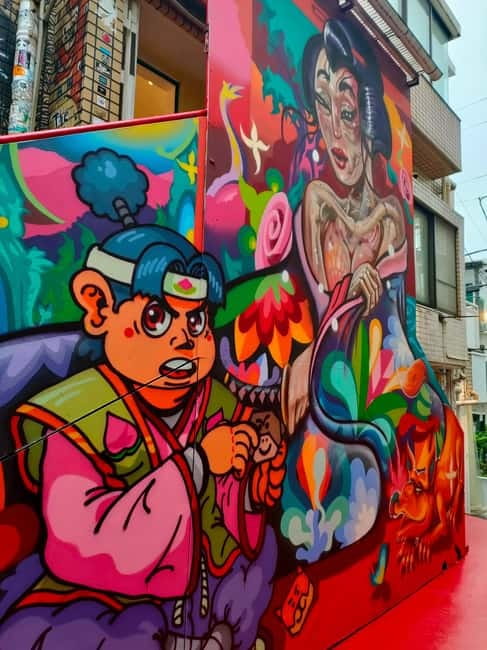
The Harajuku portion is listed as a 10-minute visit, so you should not expect a second full walking tour there. Its role is to connect the graffiti route with one of Tokyo’s most creative districts, known for fashion, youth culture, shops, and changing street style.
That short stop can be useful because it shows how public creativity shifts from one neighborhood to the next. Shibuya brings the energy of music, commerce, and major streets. Harajuku adds a more experimental, fashion-focused feel. Together, the districts make a stronger pair than either one would alone.
Keep your expectations realistic. Ten minutes is enough for a brief visit or orientation, not an extended exploration of Harajuku’s side streets. If you want more time there, plan to return after the tour. The route finishes back at Kifune Building according to the provided route details, while the meeting information points to Manhattan Records Shop, so confirm the exact end point as well.
Galleries, studios, and useful follow-up ideas
This walk is not limited to outdoor walls. It can also introduce you to art galleries, studios, exhibitions, and places connected with Tokyo’s creative culture. Most gallery or museum entrances are free, but admission is not included where a charge applies.
That gallery connection adds value. Street art can be temporary and hard to research afterward, while a gallery gives you a chance to see how artists work in a more formal setting. If a particular artist catches your interest, Elena may be able to point you toward related spaces or exhibitions.
The tour also includes discounts at art galleries and restaurants along the route. The details of those discounts are not specified, so I would ask Elena or the provider what is included and how long the offers remain valid.
If photography is your goal, bring a camera or a phone with enough storage. One useful tip is to photograph the whole setting as well as the artwork. A painted wall means something different when you can see the lane, shopfront, fence, or surrounding buildings. Ask before taking close photographs of people or private spaces.
Is $38 a fair price?
At $38 per person, this is not the cheapest way to walk around Shibuya. You can explore the neighborhoods for free, and many galleries and museums cost nothing. The price makes sense only if you want interpretation and access to places you are unlikely to find on your own.
For that money, you get two hours with a specialist guide, an explanation of Tokyo’s graffiti culture, pointers to concealed pieces, information about galleries and artists, and possible discounts at selected businesses. For an art fan, photographer, or repeat Tokyo visitor, that is a reasonable package.
The value is less obvious if you are only mildly interested in graffiti. A large part of the experience is learning how to look. If you would rather spend two hours shopping, visiting major landmarks, or sitting in a café, the cost may not feel worthwhile.
The tour’s perfect 5 rating from 41 reviews supports the idea that it delivers well for the right audience. The repeated praise is not simply for the amount of art shown. It is for Elena’s ability to explain what you are seeing and guide you into corners you would otherwise miss.
Who should book this walk?
I would recommend it to:
- Street art and graffiti fans
- Photographers who want less obvious subjects
- Visitors interested in Tokyo’s music, fashion, and art connections
- Repeat visitors looking for a fresh angle on Shibuya
- Families with older children who enjoy visual art and city exploration
- Anyone who likes a guide with a clear personal specialty
I would think twice if you have limited walking ability, dislike outdoor tours in uncertain weather, or want a broad introduction to Tokyo’s major sights. The tour is specifically about graffiti and urban art, and it is not suitable for people with mobility impairments, babies under one year, or people over 95.
You should also be comfortable with the subject’s legal and social edge. Some work may be unauthorized. Respecting local laws is part of enjoying the scene responsibly. Do not touch, remove, copy, or add to artwork.
Practical advice for the two hours
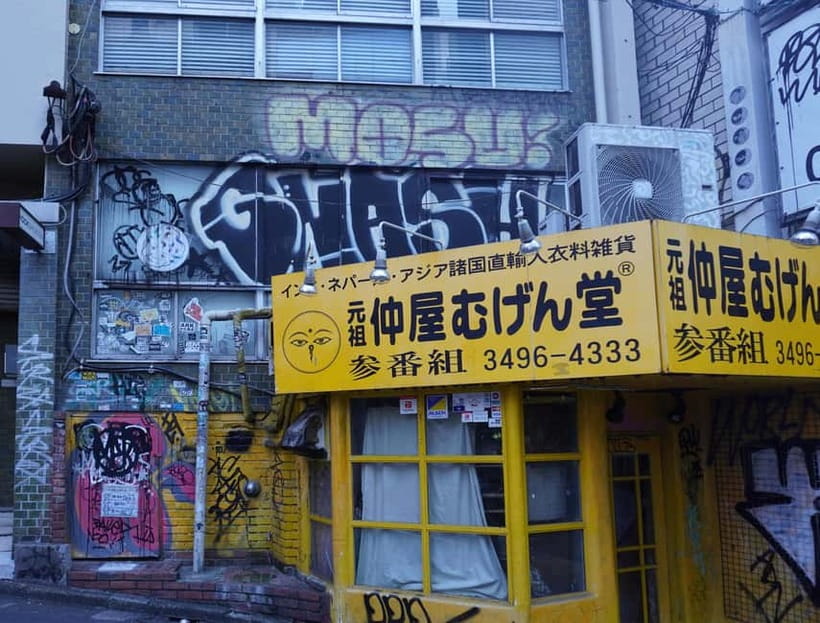
Wear comfortable shoes. Shibuya and Harajuku are easy to reach by public transport, but transportation to the meeting point is not included. Carry water, cash, and a camera, and dress for the weather.
The tour is offered with a live guide in English or Spanish. Departure times vary, so check availability before booking. The group size is not provided, so do not assume this is a private walk.
Free cancellation is available up to 24 hours before the start time, and you can reserve now and pay later. Those options are useful if your Tokyo schedule is still moving around, but they do not remove the need to verify the meeting point.
Should you book Graffiti in Tokyo?
Book it if you want to see Shibuya and Harajuku through art rather than landmarks. Elena’s specialist background, the focus on concealed pieces, and the link to galleries make this more than a simple search for painted walls.
I would especially choose it early in a Tokyo stay. You will gain a new way to read the city for the rest of your visit, and you may return to photograph pieces or explore galleries afterward. At $38, it is a fair buy for anyone genuinely interested in graffiti, street photography, or contemporary urban culture.
Skip it if you want a general sightseeing walk or need an accessible route. For the right audience, though, this is a smart way to find the Tokyo that sits just outside the guidebook frame.
FAQ
Where does the graffiti tour meet?
The meeting point is Manhattan Records Shop in Shibuya. The route information also names Kifune Building as the starting and ending location, so confirm the exact map pin in your booking details.
How long does the tour last?
The guided tour lasts two hours. The Harajuku visit is listed as 10 minutes within the route.
What neighborhoods does the tour visit?
The experience covers Shibuya and Harajuku in Tokyo.
What languages are available?
The live tour guide is available in English and Spanish.
What is included in the price?
The experience includes an expert guide, access to lesser-known graffiti locations, information about Tokyo’s graffiti scene and art galleries, and discounts at selected galleries and restaurants on the tour.
Are meals and drinks included?
No. Meals and drinks are not included.
Are gallery and museum entrances included?
Entrance fees are not included. Most galleries and museums on the route are free, but some may charge admission.
What should I bring?
Bring comfortable walking shoes, water, a camera, and cash. Be ready for changing weather conditions.
Can I cancel the booking?
You can cancel up to 24 hours in advance for a full refund. The reserve now and pay later option lets you hold a place without paying immediately.
Just added in Tokyo
- Tokyo Cute Bento Cooking Class – Make a Kawaii Character Lunchbox★ 5.0 · 126 reviews
- Japanese Home Cooking Class & Walk in Todoroki Temple Tokyo★ 5.0 · 88 reviews
- A One-of-a-Kind Sushi Experience in a Special Place of Japan★ 5.0 · 15 reviews
- Japan Tokyo Tower Observatory Deck E-Ticket★ 4.0 · 34 reviews
- Catch a Baseball Game in Tokyo with a Local – Tickets Included★ 5.0 · 24 reviews
- JDM Experience with Fast&Furious RX-7 (English speaking Driver)★ 5.0 · 57 reviews
- Tokyo Private Day Tour by Car with English speaking Driver Guide★ 4.0 · 29 reviews
- Japan Classic 10 Day – One Life Adventures★ 5.0 · 129 reviews
Walking Tours, compared.
Kyoto Geisha Walking Tour: Gion District & Hidden Gems
Read our review →
Tokyo Tsukiji Fish Market Food and Culture Walking Tour
Read our review →
Gion Magical Night Walking Tour with Geisha Trivia
Read our review →
Imperial Palace and Shogun Historical Walking Tour
Read our review →
Gion Geisha District Walking Tour – Stories of Geisha
Read our review →
Shinjuku Local Bar and Izakaya Guided Walking Tour
Read our review →
Browse the lists this tour appears in