
Reviewed · COOKING CLASSES
Japanese home cooking class in Osaka Umeda
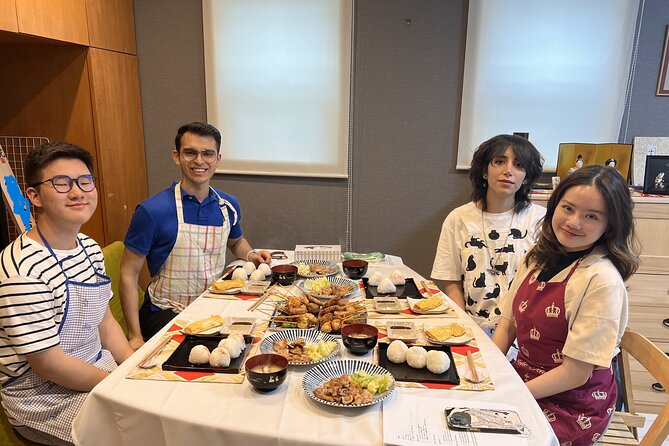
A meal here begins before the table. This private Osaka cooking class takes you into a local home, where Hisako and Naoko guide you through practical Japanese dishes at your own pace. I like the personal setting, and I like that the recipes are simple enough to make again after you return home.
The class also gives you useful supermarket advice, including which Japanese ingredients to look for and how they fit into everyday cooking. The main consideration is the short two-hour schedule. You will learn and eat a full lunch, but this is not a long culinary course with time for many dishes.
In This Review
- Key things to know before booking
- Why a home kitchen changes the experience
- Meeting Hisako and Naoko at 10 a.m.
- Choosing your Osaka dishes
- Learning Japanese supermarket basics
- Cooking techniques, from udon to tempura
- Tea, lunch, and the best part of the class
- Is $59.12 a fair price?
- Who will enjoy this most?
- Practical advice for a smoother visit
- Should you book this Osaka cooking class?
- FAQ
- Where does the Japanese cooking class begin?
- What time does the class start?
- How long does the experience last?
- Is the class private?
- What food can I learn to make?
- Is lunch included?
- Is transportation included?
- Can I cancel for a refund?
Key things to know before booking
- You cook in a real Osaka home: The setting offers a more personal look at everyday Japanese food than a restaurant meal.
- Hisako and Naoko teach at your pace: This is a private class, so you can ask questions and receive direct help.
- You choose from local dishes: Options mentioned include bento, takoyaki, udon, onigiri, tempura, and beef stew.
- Recipes are made for home cooks: You receive printed recipes and instructions, making the dishes easier to repeat at home.
- Lunch is included: You eat the meal you prepare, with water and Japanese tea served alongside it.
- The meeting point is in Fukushima Ward: The activity begins at 10:00 a.m. at 1-chōme-4-1 Tamagawa and ends there.
Why a home kitchen changes the experience
Restaurant food shows you the finished product. A home cooking class shows you how Japanese food works before it reaches the plate.
That difference matters. Japanese restaurant dishes can look complicated, polished, or difficult to repeat. Here, the emphasis is on recipes and methods that you can use in your own kitchen. You are not simply watching a chef perform. You are preparing the meal yourself, then sitting down to eat it for lunch.
I especially like the chance to ask about ordinary Japanese life while cooking. The class is designed as a private activity, so your group can move at a comfortable pace rather than keeping up with a large room full of students. If you need a step repeated, want to ask about an ingredient, or are unsure about a cooking method, you can deal with it immediately.
The home setting also gives the meal a warmer, more personal feel. This is not a formal restaurant demonstration. You are working in a kitchen and dining room in Osaka, guided by local hosts who can connect the food with daily habits and customs.
Still, you should keep your expectations sensible. The available details do not promise a full tour of the home, a market visit, or a long cultural lecture. The value is in cooking, eating, asking questions, and learning how to recreate the dishes.
More Cooking Classes in Osaka
- Sushi Making Osaka Roll and Authentic Japanese Sushi Class
★ 5.0 · 1,220 reviews - Matcha Making Class in Osaka with Authentic Japanese Sweets Set
★ 5.0 · 509 reviews - Osaka Sushi Making Experience
★ 5.0 · 400 reviews
Meeting Hisako and Naoko at 10 a.m.
The class starts at 10:00 a.m. at 1-chōme-4-1 Tamagawa in Osaka’s Fukushima Ward. The activity is near public transportation, but private transportation is not included, so you need to make your own way there.
The location matters because this is not a cooking studio presented as a tourist attraction. You are visiting a real home or home-style setting, described in some class details as being in the SGS building. Since the information gives both the home setting and the SGS building reference, check the exact meeting instructions you receive after booking and allow time to find the entrance.
Hisako and Naoko are central to the experience. Their teaching style comes across as patient and encouraging, with clear steps that help even if you are not confident in the kitchen. One especially useful detail is that they provide printed recipes and instructions to take home.
That small paper packet can be more useful than a souvenir. After several weeks of Japanese food, it is easy to remember the taste but forget the method. Written recipes give you a better chance of making the meal again, especially when you are back in a kitchen with different ingredients and equipment.
The private format also suits mixed groups. One person might enjoy cooking, while another wants to ask cultural questions or simply needs more help with basic techniques. You do not have to worry about slowing down a larger class.
Choosing your Osaka dishes
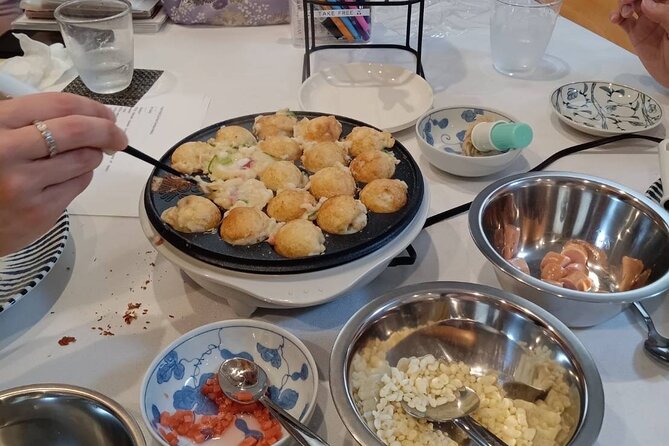
The menu includes local specialties and everyday dishes, with examples such as bento and takoyaki. Other dishes connected with the class include udon, onigiri, tempura, and beef stew.
This range gives you a useful choice. Takoyaki is strongly associated with Osaka and makes sense if you want to connect your meal with the city. Bento teaches you about arranging several small foods in one meal. Udon and onigiri are practical choices for home cooks, while tempura introduces a technique that many people find intimidating at first.
The choice of menu appears to depend on the available options for your session, so confirm what you can make when you book or communicate with the hosts. The class description does not promise that every dish will be prepared in one two-hour lesson.
I like the focus on accessible recipes. You may not leave with the skills of a professional Japanese chef, but you can leave with dishes that feel possible in an ordinary home kitchen. That is a better match for most people who want to continue cooking after a vacation.
Beef stew is another interesting option. It is not the first dish many people associate with Osaka, which makes it useful for understanding that Japanese home cooking is broader than sushi, ramen, and tempura. A home meal can include familiar comfort food as well as famous regional specialties.
Learning Japanese supermarket basics
The supermarket advice may be the most practical part of the class for anyone planning to cook Japanese food at home.
Japanese supermarkets can be confusing at first. Packaging, labels, unfamiliar cuts, and different ingredient names can make a simple recipe feel like a puzzle. The class helps you sort out which products are useful and what to buy when you want to repeat the food later.
You can ask about ingredients in the context of a recipe, rather than trying to memorize a long shopping list. That is a better way to learn. When you know what an ingredient does in a dish, you are more likely to recognize a substitute or find the same product at home.
The guidance is also useful during the rest of your Osaka stay. After the class, you may look at supermarket shelves with more confidence instead of treating every package as a mystery. The experience does not include private transportation or a stated supermarket visit, so think of this as shopping advice during the cooking session, not a guided shopping tour.
A completely different kind of day out:
- Osaka Go Karting Tour with Funny Costume
★ 5.0 · 2,658 reviews - Osaka Castle: Museum and Tower Entry Ticket
★ 4.5 · 2,380 reviews - Osaka: Shinsekai Food Tour with 13-15 Dishes at 5 Eateries
★ 4.8 · 2,204 reviews - Osaka Food Tour: 13 Dishes at 5 Local Eateries
★ 5.0 · 2,149 reviews
Cooking techniques, from udon to tempura
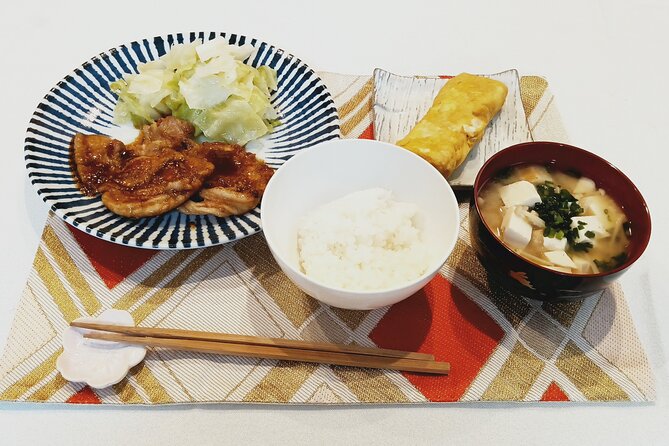
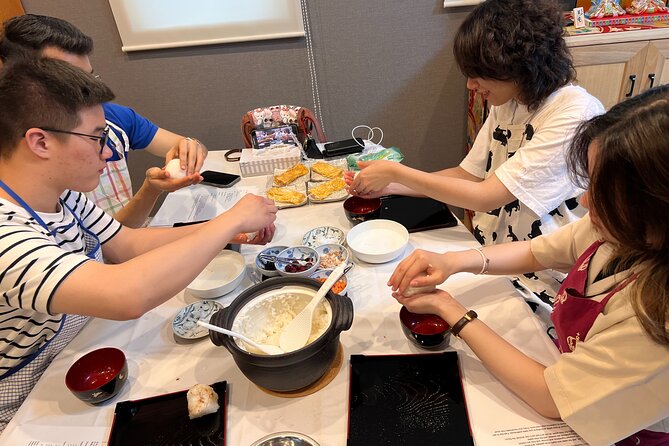
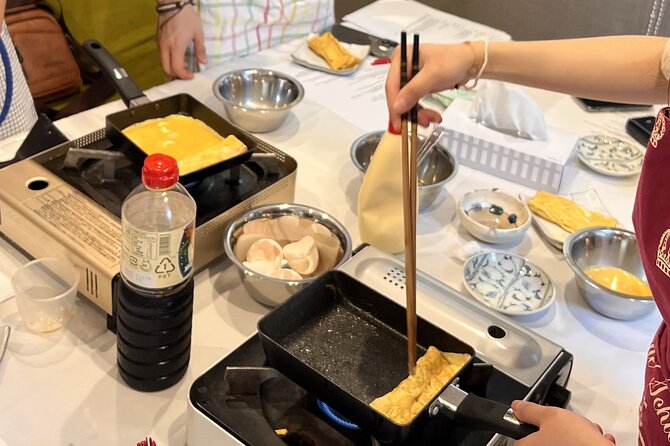
The class is hands-on. You prepare the food rather than simply watching demonstrations, and the hosts demonstrate each stage before helping you complete it.
Tempura is a good example of why direct guidance helps. One participant described never having fried anything before, yet feeling confident enough to try making tempura at home afterward. That points to the practical level of the teaching: the goal is to break a dish into manageable steps.
Udon and onigiri also work well in a short class because they show different sides of Japanese cooking. Udon can introduce the preparation of a filling noodle meal, while onigiri offers a simple way to shape rice into a portable snack or lunch item.
Bento adds a visual element. The finished box can look more elaborate than the individual components really are. With help from the hosts, you can learn how several modest foods are arranged into a meal that feels special.
Takoyaki is the most Osaka-specific choice in the group. It is fun, local, and social, though the class details do not explain exactly how many dishes you prepare or how the menu is selected. If takoyaki is your priority, ask about its availability before you arrive.
Tea, lunch, and the best part of the class
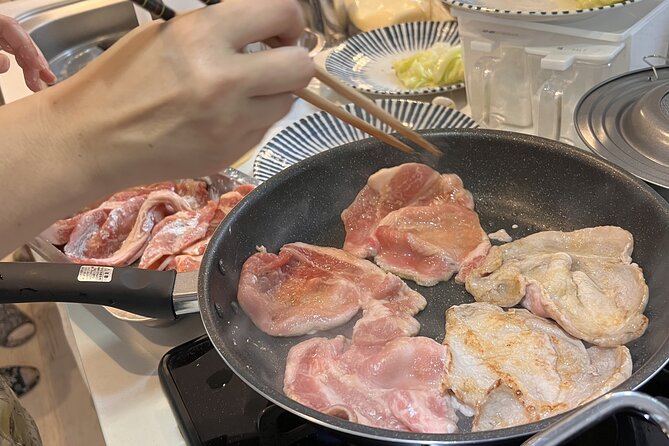
After the cooking, you eat what you have prepared for lunch. Water and Japanese tea are served with the meal.
That simple ending gives the lesson a clear purpose. You are not rushing away after preparing food. You get to taste the results, discuss what you made, and ask follow-up questions while the experience is still fresh.
Tea also helps connect the cooking with Japanese hospitality, though you should not assume that a formal tea ceremony is part of every session. One family did receive a tea ceremony as part of its experience, along with traditional kimono use for its daughters, but those details are not listed as standard inclusions. Treat them as possible extras or special arrangements, not guaranteed features.
The meal is included in the price, which improves the value. You are paying for instruction and a complete lunch, not just a short demonstration. The food is also the product of your own work, so the meal carries more meaning than a plate ordered from a menu.
The setting may be especially enjoyable for couples and families. A couple can prepare dishes together without being separated into large class groups. Families can ask for help at different levels, although the available information does not specify a minimum age or special child program.
Is $59.12 a fair price?
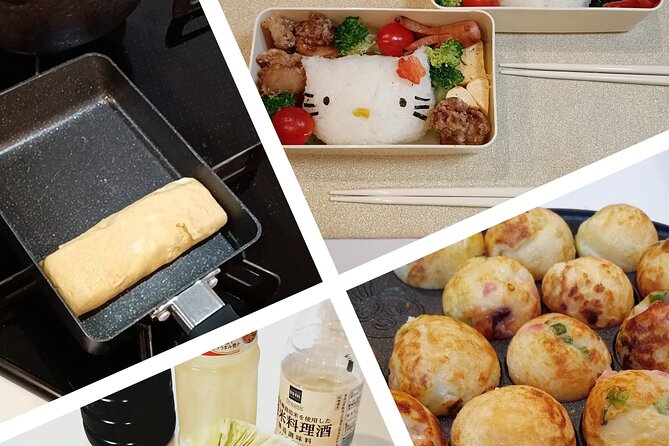
At $59.12 per person, this class sits in a reasonable range for a private two-hour activity that includes lunch and personal instruction.
The real question is what you want from the experience. If you only want to eat Japanese food, you can spend less at a casual restaurant. If you want a formal, advanced cooking course with many recipes and professional equipment, this may feel too short.
I think the price makes more sense if you value the private format. You receive direct guidance, a local home setting, supermarket advice, a meal, and recipes to take away. Those printed instructions may continue to provide value long after the class ends.
The class is also booked about 16 days ahead on average, which suggests that you should not leave it until the last moment if your Osaka dates are fixed. A private activity with a small number of available sessions can be harder to fit into a short visit.
Free cancellation is available when you cancel at least 24 hours before the 10:00 a.m. start time. Cancellations or changes made inside that window are not refunded or accepted, so keep your plans firm once the deadline passes.
Who will enjoy this most?
I would choose this class if you want a personal introduction to Japanese food rather than another sightseeing stop.
It suits you especially well if:
- You enjoy cooking and want recipes you can repeat at home.
- You prefer a private lesson over a large group.
- You want to ask questions about Japanese customs while doing something practical.
- You are curious about supermarket ingredients and everyday meals.
- You are traveling as a couple or family and want an activity you can share.
- You like Osaka specialties such as takoyaki and bento.
It may be less suitable if you need a long class, a full market tour, or a guaranteed tea ceremony and kimono experience. The class lasts about two hours, and the published information does not promise a fixed menu or those cultural additions for every booking.
You should also be comfortable entering a home-style setting rather than expecting a large commercial cooking school. That personal atmosphere is the main appeal, but it may not suit someone who prefers a formal studio with a set schedule and standardized equipment.
Practical advice for a smoother visit
Keep the morning free around the 10:00 a.m. start. The lesson itself lasts about two hours, but you will enjoy it more if you are not watching the clock.
Use the private format fully. Ask about ingredient names, supermarket shopping, cooking methods, and how to adapt the recipes at home. The hosts are there to give personal feedback, so do not wait until the end to ask for help.
If you have a strong preference for bento, takoyaki, udon, tempura, onigiri, or beef stew, ask which choices are available before the class. The menu includes local specialties, but the information does not say that every option is offered at every session.
Bring your mobile ticket and follow the meeting instructions carefully. The activity starts and ends at the same meeting point, and private transportation is not included.
Most of all, arrive ready to participate. The class is not built around sitting back and taking photographs. You will get more from it if you mix, shape, fry, arrange, taste, and ask questions.
Should you book this Osaka cooking class?
I would book it if you want food that connects you with everyday Osaka, not just the city’s famous restaurant scene.
The strongest reasons are the private home setting, the patient teaching from Hisako and Naoko, the printed recipes, and the chance to prepare a meal you can realistically make again. The class also receives a full five-star rating from 24 reviews, with 100 percent recommending it, and the praise centers on the warm hosts, clear instruction, personal atmosphere, and useful recipes.
The main limits are the two-hour length and the lack of a guaranteed menu or added cultural activities. If you accept those limits, this is a practical and friendly way to spend a morning in Osaka. You leave with lunch in your stomach, new dishes in your notebook, and a better idea of how Japanese food works at home.
FAQ
Where does the Japanese cooking class begin?
It begins at 1-chōme-4-1 Tamagawa, Fukushima Ward, Osaka, 553-0004, Japan.
What time does the class start?
The start time is 10:00 a.m.
How long does the experience last?
The class lasts approximately two hours.
Is the class private?
Yes. Only your group participates in the activity.
What food can I learn to make?
The available dishes include local specialties such as bento and takoyaki. Other dishes connected with the class include udon, onigiri, tempura, and beef stew. Ask which menu choices are available for your session.
Is lunch included?
Yes. Lunch is included, and you eat the food prepared during the class. Water and Japanese tea are also served with the meal.
Is transportation included?
No. Private transportation is not included. The meeting point is near public transportation.
Can I cancel for a refund?
Yes. You can cancel at least 24 hours before the experience start time for a full refund. Cancellations or changes made less than 24 hours before the start time are not accepted or refunded.
Just added in Osaka
- Osaka: 2-Hour Nightlife District Walking & Local Food Culture★ 5.0 · 199 reviews
- Osaka Japanese Cooking And Matcha Class near Osaka Castle★ 5.0 · 22 reviews
- Osaka Dotonbori Daytime Food Tour★ 5.0 · 24 reviews
- Osaka Dotonbori Wonder Cruise★ 4.0 · 28 reviews
- Osaka Food Walking Tour with Market Visit★ 4.5 · 14 reviews
- Cooking Ramen&Gyoza/KatsuCurry/Bento/Okonomiyaki+Store Tour@Osaka★ 5.0 · 138 reviews
- Osaka Private Pop Culture Tour: Historic Tenma to Dotonbori★ 4.5 · 13 reviews
- Osaka Cooking Class and Sake Tasting with Local Supermarket Visit★ 5.0 · 79 reviews
Cooking Classes, compared.
Sushi Making Tokyo Roll and Authentic Japanese Sushi Class
Read our review →
Roll and Authentic Sushi Making Class in Asakusa
Read our review →
Ramen Cooking Class at Ramen Factory in Kyoto
Read our review →
Sushi Making Class in a Happi Coat near a Famous Spot
Read our review →
Sushi Making Osaka Roll and Authentic Japanese Sushi Class
Read our review →
Tokyo Sushi Making Class in Tsukiji with Professional Chef
Read our review →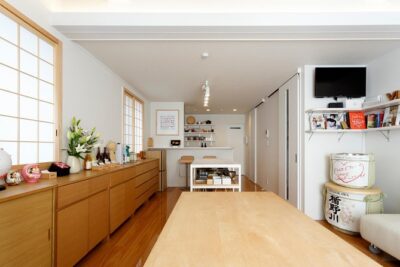
Ramen & Gyoza Cooking Class in Tokyo with Local Supermarket Visit
Read our review →Browse the lists this tour appears in