
Reviewed · COOKING CLASSES
Osaka Sushi Making Experience
Sushi is better when you make it yourself. This 90-minute class in central Dōtonbori gives you a hands-on introduction to nigiri and gunkan sushi, with enough food to make a meal and enough instruction to try again at home. I like the convenient Namba location, and I like the friendly, patient teaching from instructors such as Mika, Kosei, Yui, Mako, Shiori, Toshiki, and Hana.
The price is reasonable at $29.85 per person, especially since you prepare 12 pieces and all class fees are included. The main caution is that the setting can feel tourist-oriented, and one person found the class a little rushed. Also, the meeting point can be hard to locate the first time, so allow extra time.
In This Review
- Key points to know before you book
- A practical sushi lesson in the heart of Dōtonbori
- What happens during the 90-minute class
- Making the sushi is more fun than watching it
- A closer look at nigiri, gunkan, and the finished plate
- The instructors set the tone
- Food, drinks, and dietary requests
- Is $29.85 good value?
- Best times to schedule your visit
- Who will enjoy this most?
- Useful booking and arrival advice
- Should you book the Osaka Sushi Making Experience?
- FAQ
- Where does the Osaka Sushi Making Experience take place?
- How long does the sushi class last?
- How many pieces of sushi will I make?
- Which types of sushi are included?
- Is the class taught in English?
- Are vegetarian, vegan, and halal menus available?
- Are drinks included in the ticket price?
- Where does the activity finish?
- What is the cancellation policy?
Key points to know before you book
- Make 12 pieces of sushi: You prepare two main styles, nigiri and gunkan sushi, with some sessions also producing three different types.
- Central Dōtonbori setting: The class meets at Sushi Making Experience Namba, near public transportation and Osaka’s famous entertainment district.
- Friendly multilingual instruction: Guidance is available in English, Chinese, and Korean.
- Dietary requests are accepted: Vegetarian, vegan, and halal sushi can be arranged in advance.
- Small maximum group: The class is limited to 16 people, though your actual session may be smaller.
- Flexible afternoon and evening times: You can schedule the class around sightseeing and eat your sushi when you are ready for a meal.
A practical sushi lesson in the heart of Dōtonbori
The appeal here is simple: you do not just sit down and eat sushi. You handle the rice, shape the pieces, add the toppings, and learn why different sushi styles look and feel different.
The meeting point is at Sushi Making Experience Namba1A, located at 2-6-11 Nishishinsaibashi in Osaka’s Chūō Ward. It is in the Dōtonbori and Namba area, a useful base if you are already visiting the canal, shopping streets, or nearby restaurants. The central position makes this easy to pair with an afternoon of sightseeing or a night out.
One practical warning deserves attention. The address can be difficult to find, even though the class is near public transportation. I would not arrive at the last minute. Put the address into your map before setting out, and leave enough time to check the building and entrance.
The activity ends where it begins. That matters in Osaka, where a short class can fit neatly between other plans without leaving you on the far side of town.
More Cooking Classes in Osaka
- Sushi Making Osaka Roll and Authentic Japanese Sushi Class
★ 5.0 · 1,220 reviews - Matcha Making Class in Osaka with Authentic Japanese Sweets Set
★ 5.0 · 509 reviews - Osaka: Ramen and Gyoza Cooking Class in Dotonbori
★ 5.0 · 378 reviews
What happens during the 90-minute class
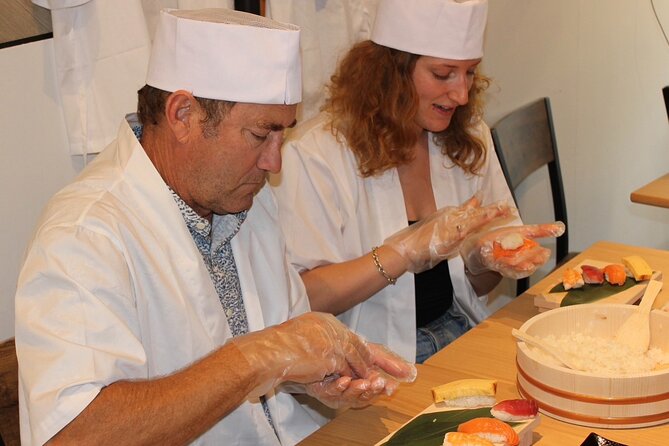
The experience lasts about an hour and a half. That is long enough for hands-on practice without turning into a full cooking seminar.
You begin with an introduction to sushi and the ingredients needed to make it at home. The instructors explain the different forms you will prepare, then demonstrate the basic movements before you try them yourself. The class focuses on nigiri and gunkan sushi, two styles that teach different skills.
Nigiri is the familiar hand-formed sushi made with rice and a topping. The challenge is getting the rice to hold together without crushing it. Gunkan sushi has a different shape, with rice wrapped in seaweed and a topping placed on top. It gives you another lesson in shaping and proportion.
The teaching is designed for beginners. You do not need previous kitchen experience or a special talent for making neat food. Several instructors are praised for being patient and clear, including Mika and Kosei, Yui and Mako, and Shiori, Toshiki, and Hana.
A particularly useful detail from the instruction is the rice measurement. One session taught a ratio of about 10 grams of rice per piece. That may sound fussy, but it gives you a simple target when you try making sushi at home. The class also covers how to shape and roll the sushi, rather than leaving you to copy a finished example.
The instructors use English, Chinese, and Korean. English guidance is described as clear and easy to follow, and the class also leaves room for conversation about Osaka, Japanese writing, and local culture.
Making the sushi is more fun than watching it
The best part of this experience is the work itself. Your pieces will probably not look exactly like the instructor’s, at least not on the first try. That is part of the fun.
You get personal help as you shape the rice and assemble the sushi. The instructors appear to keep the mood light, and many participants enjoy the combination of short explanations, demonstrations, and immediate practice.
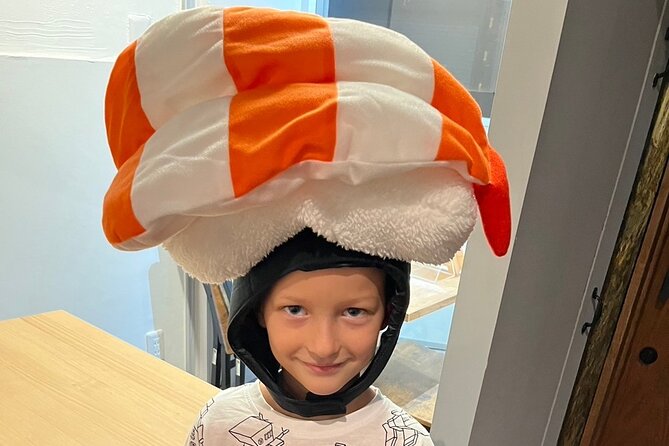
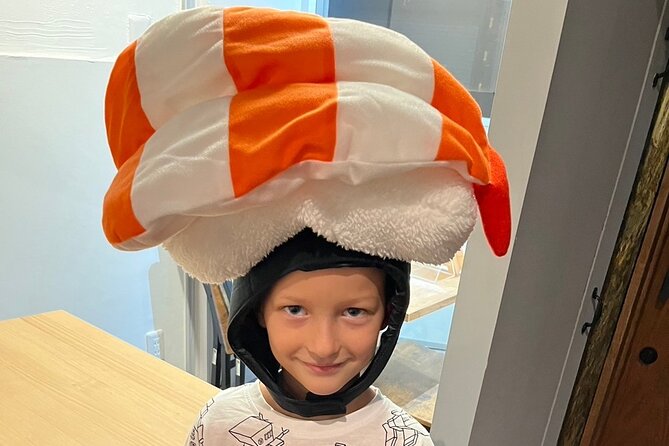
The class can feel especially enjoyable for couples, families, or solo visitors. A family of five found that even the children enjoyed the activity. A solo participant also described receiving direct help from two instructors throughout the session.
The sushi is served in a quantity that makes the class feel worthwhile. You prepare 12 pieces, which can work as a light meal or a substantial snack depending on your appetite. The included food is one reason the $29.85 price compares well with simply paying for a meal in Dōtonbori.
Do not expect a professional chef certification course. This is an accessible introduction, not a technical apprenticeship. The focus is on basic skills, Japanese food culture, and having a good time while making something you can eat immediately.
A closer look at nigiri, gunkan, and the finished plate
Nigiri and gunkan sushi are not just two random menu items. They show you that sushi has several forms, each with its own method.
With nigiri, the rice must be shaped firmly enough to stay together but gently enough to keep its texture. You learn how much rice to use, how to form it, and how to place the topping. The process is more delicate than it looks when a sushi chef does it quickly.
Gunkan sushi has a different structure. The seaweed creates a small wall around the rice, allowing a topping to sit above it. It is a useful style for beginners because the seaweed helps define the shape.
The class may include three types of sushi in some sessions, although the advertised core activity is 12 pieces across nigiri and gunkan styles. The exact selection can therefore vary slightly.
At the end, you eat what you made. That simple finish gives the class a satisfying rhythm: learn, practice, assemble, then sit down with your own plate. You may also receive a certificate with your name written in Kanji, along with a photograph. These small touches are not essential to the food lesson, but they make the experience feel more personal.
More Cooking Classes in Japan:
- Sushi Making Tokyo Roll and Authentic Japanese Sushi Class
★ 5.0 · 3,971 reviews - Tokyo: Roll and Authentic Sushi Making Class in Asakusa
★ 4.9 · 1,957 reviews - Ramen Cooking Class at Ramen Factory in Kyoto
★ 5.0 · 1,937 reviews - Tokyo Shinjuku Chopsticks Making Class
★ 5.0 · 1,763 reviews
The instructors set the tone
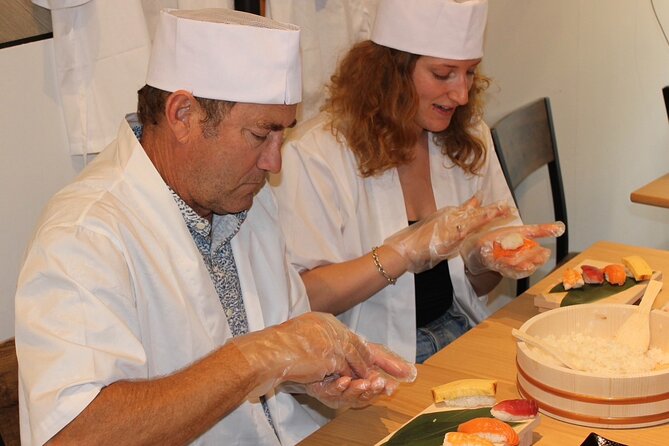
The hosts are one of the strongest parts of the class. Their style is young, relaxed, and friendly rather than formal. That works well for visitors who want to ask questions without feeling they are interrupting a strict lesson.
Specific instructors praised for their warmth and teaching include Mika, Kosei, Yui, Mako, Shiori, Toshiki, and Hana. The staff also explain some Japanese traditions and answer questions about Osaka and Japanese writing.
If your session is quiet, you may receive a great deal of personal attention. One pair had the class to themselves and treated it almost like a private lesson. Of course, you should not count on that every time, since the maximum group size is 16 people.
The tone is not perfect for everyone. One person found the class too commercial and felt the hosts were overacting while trying to move quickly. That is worth keeping in mind if you prefer a quiet, serious cooking school.
For most beginners, though, the lively approach is an advantage. Sushi can feel intimidating, and a relaxed teacher helps you get past the fear of making an ugly piece.
Food, drinks, and dietary requests
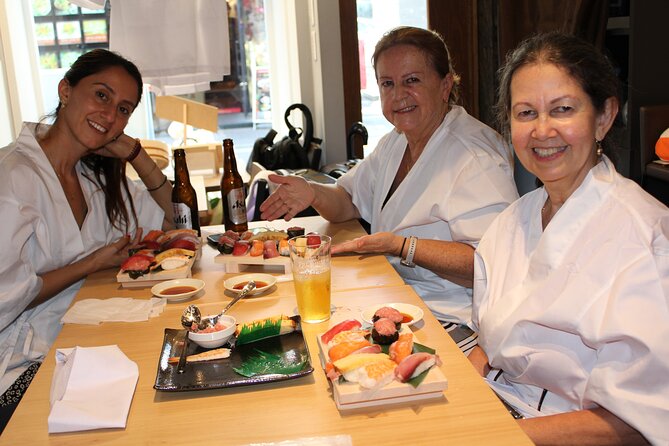
The class includes 12 pieces of sushi and all fees and taxes. The sushi is described as fresh and tasty, and the portion is generally enough to serve as a meal for many people.
Japanese sake and beer are listed among the experience features, but alcoholic beverages are also listed as not included. Read that as a warning that alcohol may be available during the experience but is not covered by the ticket price.
Vegetarian, vegan, and halal sushi are available by request. You should make the request when booking rather than waiting until you arrive. The options are helpful, but one vegan participant felt the vegetable selection was less generous than the seafood and shrimp offered to other diners.
That is an important point for anyone booking a plant-based menu. You can take part, but the food may not offer the same range as the standard menu. If your diet is strict, confirm the available ingredients in advance.
The activity also provides snacks, listed as 12 pieces of sushi. It is not presented as a broad Japanese cooking course, so you should book it for sushi rather than expecting side dishes, several courses, or a full meal with many regional specialties.
Is $29.85 good value?
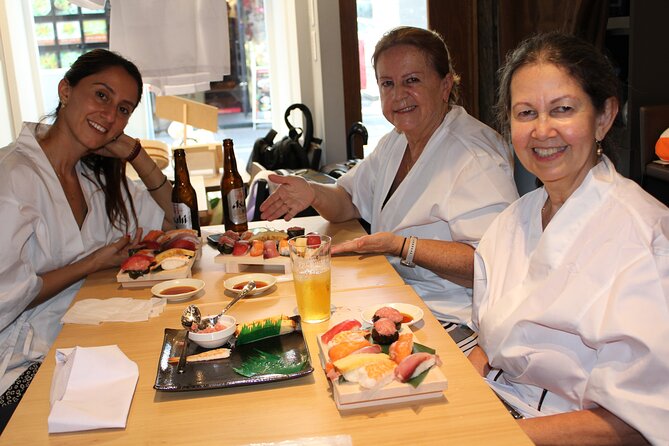
At $29.85, the class offers a fair deal for a central Osaka experience. You receive about 90 minutes of instruction, hands-on preparation, 12 pieces of sushi, and the chance to learn techniques you can repeat at home.
The location adds value. Dōtonbori is one of Osaka’s best-known areas, and you do not need to spend extra time traveling to a distant cooking studio. Afternoon and evening classes also make it easier to fit the activity around sightseeing.
The value is strongest if you want to participate rather than simply eat. If you only want the cheapest sushi meal, a restaurant may be a better choice. If you want an activity, a few useful skills, and a meal in the same booking, the price makes sense.
The class also works well during a longer Osaka visit because it breaks up the usual pattern of temples, shopping, and restaurant stops. You leave with a practical memory, not just another photograph of food.
Best times to schedule your visit
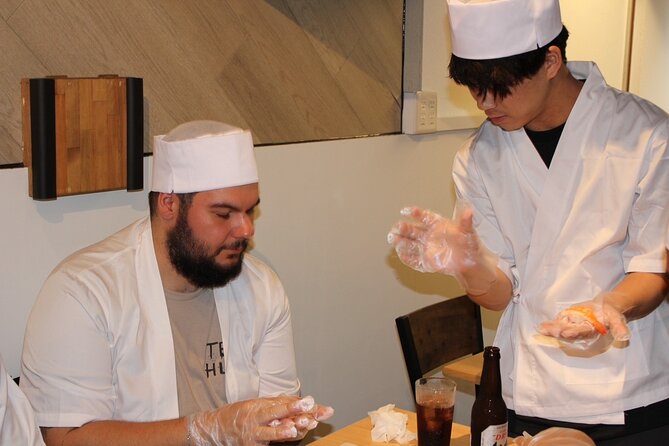
Afternoon and evening options are available. Pick the time based on how you plan to use Dōtonbori.
An afternoon session works well if you want to make sushi before an evening stroll through Namba. It can serve as a late lunch, especially if you are hungry after sightseeing.
An evening session is a natural fit for anyone who wants dinner with an activity attached. You can finish the class and remain in the Dōtonbori area, where plenty of other evening plans are nearby.
The activity lasts approximately 90 minutes, so it is not an all-day commitment. Still, do not schedule something immediately afterward if you want time for photographs, conversation, or finding your way back through the area.
Who will enjoy this most?
I would recommend this class to:
- First-time visitors who want a simple introduction to sushi
- Couples looking for a shared activity
- Families with children who enjoy making their own food
- Solo visitors who like social, guided experiences
- Anyone who wants to learn basic sushi techniques at home
- Vegetarians, vegans, and halal diners who arrange their menu ahead of time
- People staying near Namba, Shinsaibashi, or Dōtonbori
It is less suitable if you want a quiet, traditional restaurant meal or an advanced culinary lesson. The class has a cheerful, tourist-friendly style, and the pace may feel quick to someone seeking a detailed study of sushi craftsmanship.
You should also be comfortable with a class that mixes food instruction with photographs, certificates, and casual conversation. Those extras are part of its character.
Useful booking and arrival advice
Your booking confirmation is provided at the time of reservation, and the activity uses a mobile ticket. You can cancel for a full refund if you do so at least 24 hours before the start time. Cancellations or changes made within 24 hours are not accepted for a refund.
The maximum group size is 16 people. Service animals are allowed, and the meeting point is near public transportation.
For the smoothest start, plan your route before leaving and arrive early. The location is central but not necessarily obvious. If you have dietary needs, request vegetarian, vegan, or halal sushi before the class.
The class is suitable for people who need English, Chinese, or Korean guidance. That makes it easier to follow the shaping demonstrations and ask questions as you work.
Should you book the Osaka Sushi Making Experience?
Book it if you want an easy, social introduction to sushi with food included. The strongest reasons are the central Dōtonbori location, the hands-on format, the 12-piece portion, and the warm instruction from a team that works well with beginners.
I would especially choose it for a family, couple, or solo visitor who wants something more active than a restaurant meal. The certificate, Kanji name, and photograph are pleasant extras, while the real prize is learning how to measure, shape, and assemble sushi you can try again at home.
Skip it if you want a formal chef-led course, a highly traditional setting, or a large and varied plant-based menu. For most visitors, though, this is a good-value Osaka activity with a tasty finish and just enough practical instruction to make your next homemade sushi attempt less mysterious.
FAQ
Where does the Osaka Sushi Making Experience take place?
The class meets at Sushi Making Experience Namba1A, 2-6-11 Nishishinsaibashi, Chūō Ward, Osaka, Japan, postal code 542-0086.
How long does the sushi class last?
The experience lasts approximately 1 hour and 30 minutes.
How many pieces of sushi will I make?
You will make 12 pieces of sushi during the class.
Which types of sushi are included?
The main types are nigiri sushi and gunkan sushi. Some sessions may include three different types.
Is the class taught in English?
Yes. Guidance is available in English, Chinese, and Korean.
Are vegetarian, vegan, and halal menus available?
Yes. Vegetarian, vegan, and halal sushi are available by request.
Are drinks included in the ticket price?
Alcoholic beverages are not included. Japanese sake and beer are listed as features of the experience, but you should expect alcohol to cost extra.
Where does the activity finish?
The activity ends back at the meeting point.
What is the cancellation policy?
You can cancel at least 24 hours before the start time for a full refund. Cancellations or changes made less than 24 hours before the start time are not accepted.
Just added in Japan
- A One-of-a-Kind Sushi Experience in a Special Place of Japan★ 5.0 · 15 reviews
- Tokyo Cute Bento Cooking Class – Make a Kawaii Character Lunchbox★ 5.0 · 126 reviews
- Japanese Home Cooking Class & Walk in Todoroki Temple Tokyo★ 5.0 · 88 reviews
- Japan Tokyo Tower Observatory Deck E-Ticket★ 4.0 · 34 reviews
- Catch a Baseball Game in Tokyo with a Local – Tickets Included★ 5.0 · 24 reviews
- JDM Experience with Fast&Furious RX-7 (English speaking Driver)★ 5.0 · 57 reviews
- Tokyo Private Day Tour by Car with English speaking Driver Guide★ 4.0 · 29 reviews
- Japan Classic 10 Day – One Life Adventures★ 5.0 · 129 reviews
Cooking Classes, compared.
Sushi Making Tokyo Roll and Authentic Japanese Sushi Class
Read our review →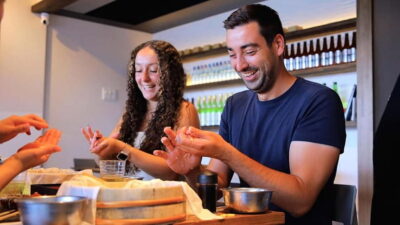
Roll and Authentic Sushi Making Class in Asakusa
Read our review →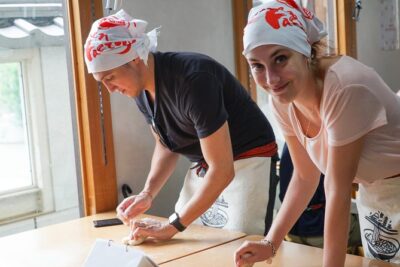
Ramen Cooking Class at Ramen Factory in Kyoto
Read our review →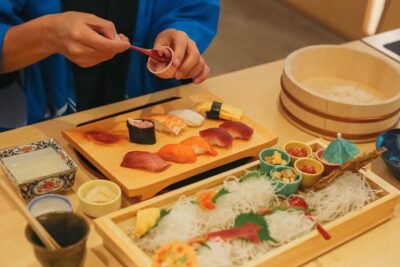
Sushi Making Class in a Happi Coat near a Famous Spot
Read our review →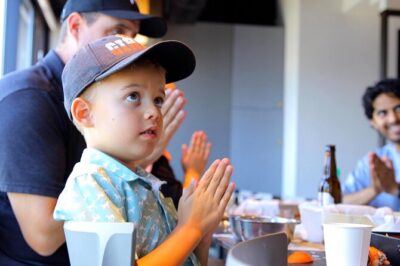
Sushi Making Osaka Roll and Authentic Japanese Sushi Class
Read our review →
Tokyo Sushi Making Class in Tsukiji with Professional Chef
Read our review →
Ramen & Gyoza Cooking Class in Tokyo with Local Supermarket Visit
Read our review →Browse the lists this tour appears in