Reviewed · GUIDED
Japanese Wine Omakase in Shibuya – Guided Tasting, Not Sake
Japanese wine deserves a place on your Tokyo itinerary. I like the chance to taste five Japanese wines that are difficult to find outside Japan, and I like the intimate 12-person format, which gives the English-speaking host room to explain native grapes and local wine regions. The small plates also make this more than a flight of drinks.
The main drawback is the price: $97.98 per person is a serious outlay for 75 minutes of tasting. You also need to be at least 20, and the session may feel short if you want a long, relaxed evening rather than a focused introduction.
In This Review
- Key points to know before you book
- Why Japanese wine is worth your evening
- Arriving near Meiji Jingu in Yoyogi
- The 75-minute tasting: what the session covers
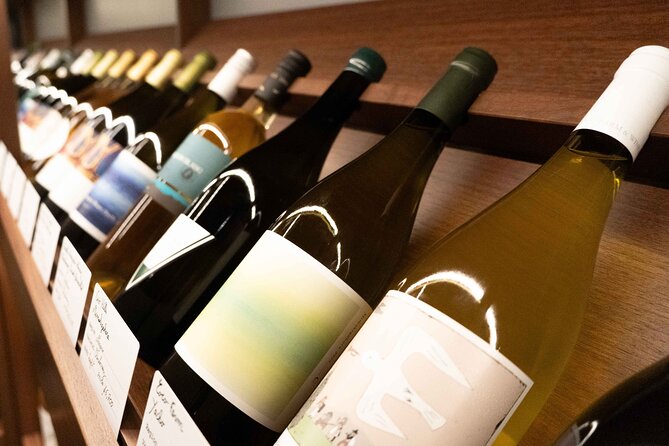
- Native grapes and bottles you may not find abroad
- Small plates that make the tasting more useful
- The room, group size, and social feel
- Staying after the tasting for more Japanese wine
- Taking bottles home from Tokyo
- Is $97.98 a fair price?
- Who should book this experience?
- Booking, cancellation, and weather notes
- Should you book Japanese Wine Omakase in Shibuya?
- FAQ
- How long does the Japanese wine tasting last?
- How many wines are included?
- Is this a sake tasting?
- Is the tasting conducted in English?
- Where does the experience start?
- Where does the experience end?
- How large is the group?
- Is there a minimum age?
- Can I stay after the tasting?
- Can I buy Japanese wine to take home?
- What happens if I need to cancel?
- Can the experience be cancelled by the provider?
Key points to know before you book
- Five Japanese wines in one sitting: The tasting focuses on local bottles and native grapes rather than familiar international labels.
- Near Meiji Jingu: The meeting point is in Yoyogi, close to one of Tokyo’s best-known shrines and near public transportation.
- English guidance: A wine expert explains the bottles, grapes, and Japanese wine culture throughout the session.
- Small plates are included: Food is chosen to work with the wines, giving you a better sense of how each bottle fits with Japanese flavors.
- Only 12 places per session: The small group keeps the experience personal, but it also makes advance booking wise.
- Optional time after the tasting: You can stay for more glasses, browse the Japanese wine selection, and arrange hotel or airport delivery for bottles.
Why Japanese wine is worth your evening
Most first-time visitors to Japan build their drinking plans around sake, beer, whisky, or shochu. Those drinks deserve their place, but Japan also has a growing wine industry with its own grapes, growing conditions, and local style.
That is the appeal here. You are not simply tasting international wine poured in Tokyo. The session is built around bottles made in Japan and grapes that may be new to you. It gives you a useful point of comparison with the sake and beer you are likely to encounter elsewhere on your trip.
I would especially recommend this to anyone who enjoys wine but knows little about Japanese production. You do not need a specialist vocabulary or a strong background in wine. The host explains what makes the bottles different, which gives the tasting a clear purpose instead of making it feel like five unrelated samples.
The experience is also useful for people who usually avoid formal wine events. One participant who normally does not drink alcohol found the session worthwhile because it felt like learning about Japanese culture, not simply drinking for its own sake. That is an important distinction. The tone appears to be friendly and relaxed rather than stiff or overly academic.
A few more options to weigh up in Tokyo
- Tokyo Disney Resort – Tokyo Disneyland & Tokyo DisneySea Park Tickets
★ 4.8 · 99,488 reviews - SHIBUYA SKY Ticket
★ 4.7 · 46,509 reviews - JR Whole Japan Rail Pass
★ 4.8 · 29,150 reviews
Arriving near Meiji Jingu in Yoyogi
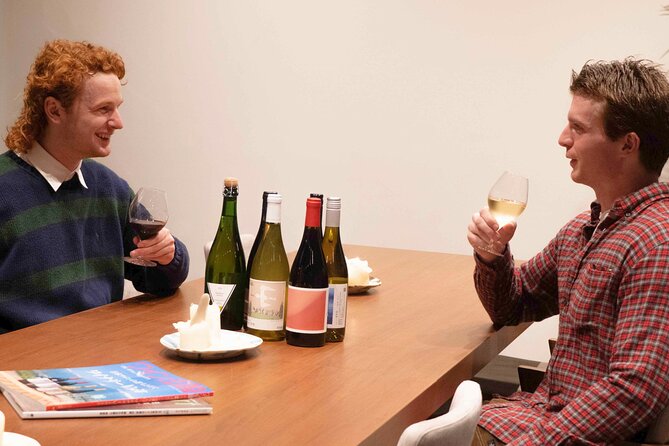
The official meeting point is the Sangū Building at 3-chōme-38-12 Yoyogi, Shibuya, Tokyo 151-0053. The location is close to Meiji Jingu and near public transportation, making it easy to pair with a visit to the shrine or the surrounding Shibuya and Shinjuku areas.
This part of the city can be a good break from Tokyo’s louder commercial streets. The setting has been praised for its quieter feel, stylish staff, and attractive window art. Those details matter because a wine tasting depends on the room as much as the bottles. You want somewhere you can hear the host and focus on the glass in front of you.
Allow enough time to find the building. The meeting point is given as a building address rather than a famous attraction entrance, so arriving early is sensible. Your mobile ticket should be available at booking, and confirmation is provided at the time of reservation.
The experience returns to the same meeting point. That makes planning easier, particularly if you have dinner or another activity later in the evening.
The 75-minute tasting: what the session covers
The wine portion is described as a 75-minute English-guided tasting, while the overall activity is listed as approximately 90 minutes. Think of this as a compact, structured session rather than an open-ended wine bar visit.
You will taste five Japanese wines, with each bottle selected to show something about the country’s wine production. The exact labels can vary, so you should not book expecting a particular grape or winery. The useful promise is the range: local bottles, native grapes, and flavors shaped by Japanese growing conditions.
The host explains the wines as you go. That guidance is one of the strongest reasons to pay for this experience instead of ordering a random Japanese bottle at a bar. English-speaking staff can explain unfamiliar names, styles, and regional differences without leaving you to guess what is in your glass.
Alex is one staff member specifically praised for friendly service, clear English, and helpful suggestions. If Alex is leading your session, you can expect practical advice rather than a lecture filled with technical terms. Staff have also been praised for knowing the wines well and helping people choose additional glasses afterward.
The tasting has a clear educational side, but you are not expected to study. You can ask questions, compare the wines, and decide what you actually like. That makes the session suitable for both dedicated wine drinkers and curious beginners.
Native grapes and bottles you may not find abroad
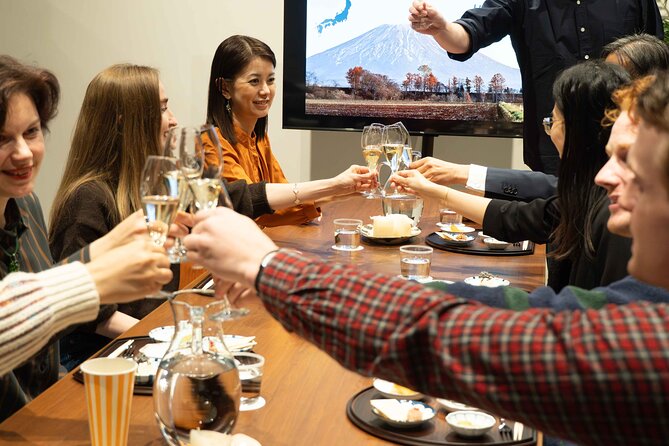
The most interesting feature is the focus on Japanese grapes and local production. Japanese wine is still less familiar internationally than French, Italian, Australian, or American wine, so many of the bottles here may not be easy to find at home.
That scarcity adds value, but it also changes how you should approach the tasting. Do not expect every wine to resemble a style you already know. Some may feel familiar, while others may have flavors or textures that are harder to place at first.
One particular highlight mentioned by name is Japanese ice wine. It was described as fantastic, and it seems to be a popular choice for an extra glass. If you enjoy sweeter wines, ask whether it is available during your visit. It may not be part of the standard five-wine flight, so do not assume it is included.
The aim is not to prove that Japanese wine is better than wine from other countries. The value is in seeing what Japan is producing and learning why these bottles matter locally. You may leave with a new favorite, or simply with a better understanding of what to look for in Japanese wine shops and restaurants.
A completely different kind of day out:
- Mt Fuji and Hakone 1-Day Bus Tour Return by Bullet Train
★ 5.0 · 26,383 reviews - TOKYO SKYTREE® Ticket
★ 4.7 · 25,136 reviews - teamLab Borderless Tickets: MORI Building DIGITAL ART MUSEUM
★ 4.7 · 24,126 reviews - teamLab Planets TOKYO Ticket
★ 4.7 · 21,663 reviews
Small plates that make the tasting more useful
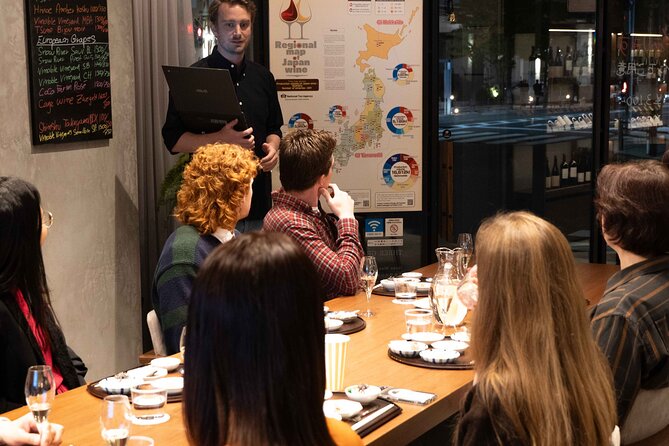
The five wines are paired with refined small plates. The food is there to support the tasting, not to replace a full meal, so I would not book this expecting dinner.
Small food pairings can make a major difference when you are trying unfamiliar wine. A wine that seems sharp or light on its own can work better with food, while a sweet or fuller bottle may become easier to understand beside a savory bite. The pairings give you a practical way to judge each wine instead of relying only on the host’s description.
This is also where the experience connects wine with Japanese dining culture. You get to consider how local wine works with Japanese flavors, rather than treating it as a foreign product separated from the country’s food traditions.
Still, plan a proper meal before or after if you are hungry. The tasting is short, and the food is described as small plates. I see it as thoughtful accompaniment, not a substitute for lunch or dinner.
The room, group size, and social feel
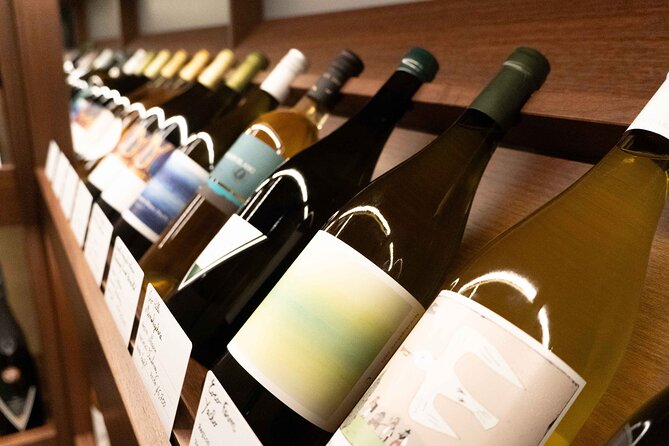
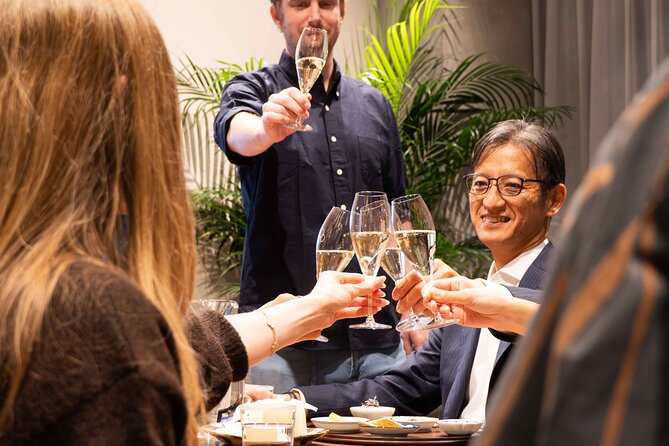
The maximum group size is 12 people. That is small enough for direct contact with the host, but large enough to create a social atmosphere if you are traveling alone or as a couple.
The room has been praised for its classy atmosphere, friendly staff, and attractive design. The quieter setting is another advantage. You may find it easier to concentrate here than in a loud izakaya or crowded department-store food hall.
The small group does come with one practical catch: space is limited. The experience is booked, on average, 49 days in advance, which suggests that waiting until the last moment can be risky. Some people have been able to arrive spontaneously and find a place, but I would treat that as luck rather than a dependable plan.
The age limit is 20 and older. This is an alcohol-focused activity, so it is not suited to families with younger children. Most people can participate, but the available information does not provide detailed accessibility specifications. If you need a particular physical arrangement, contact the provider before booking.
Staying after the tasting for more Japanese wine
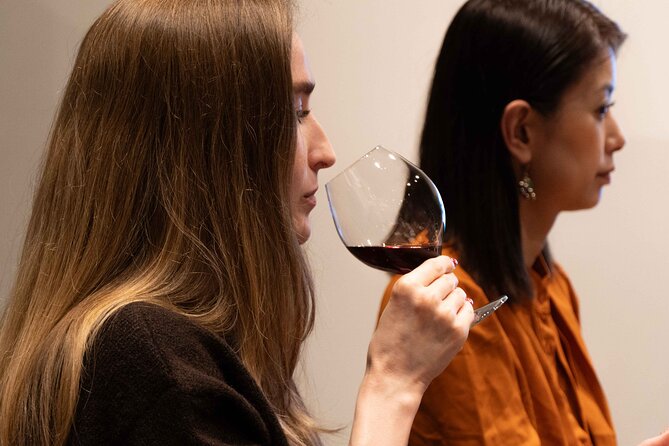
The formal tasting ends back at the meeting point, but you can stay for optional bar time. This is a useful feature if you discover a style you want to explore further.
You can order additional glasses and browse one of Tokyo’s wine bars devoted to Japanese bottles. The experience does not force you to continue, so you can leave after the main session if you have dinner reservations or an evening plan.
I like this flexible ending. A fixed tasting can leave you with questions and no chance to act on them. Here, you can ask for another pour, discuss a bottle with the staff, or simply enjoy the room at a slower pace.
The extra drinks cost more, and the $97.98 price does not appear to include unlimited bar time. Budget for that separately. The helpful part is the advice: staff can point you toward bottles that match what you enjoyed in the flight. Good suggestions can save you from buying an expensive bottle simply because its label looks interesting.
Taking bottles home from Tokyo
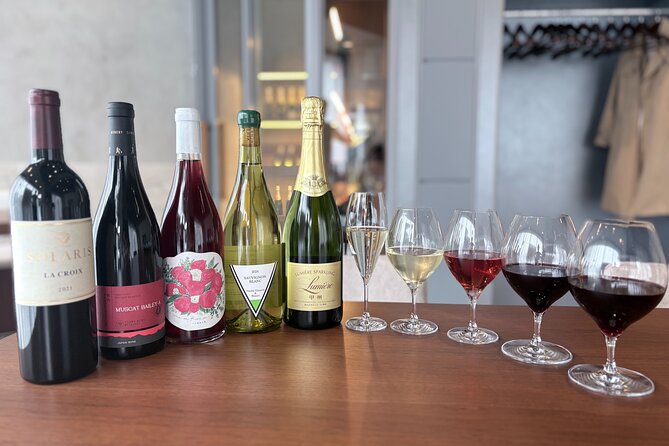
You can choose bottles to take home, with hotel or airport delivery available. This solves one of the awkward problems of buying wine during a trip: carrying bottles through several hotels, train rides, and airport transfers.
Delivery details, costs, and timing are not provided, so ask the staff for the current terms before purchasing. Do not assume every bottle can be shipped everywhere or that delivery is included in the tasting fee.
The option is still valuable. If a wine is unavailable in your home country, buying it in Japan may be your best chance to remember the experience with more than a photograph. I would wait until the end of the tasting, when you have tried several styles and can make a more informed choice.
Is $97.98 a fair price?
At nearly $100 per person, this is not a bargain bar crawl. The price makes sense only if you value the instruction, the five-wine selection, the food pairings, and the chance to taste bottles that may be difficult to find elsewhere.
For a casual drinker looking for the cheapest way to sample Japanese wine, the cost may feel high. You could potentially order a glass or bottle at a wine bar for less, though you would not receive the same organized explanation or range.
For a serious wine fan, the calculation is better. Five wines, an English-speaking wine expert, small plates, and access to a Japanese-focused cellar give you a focused introduction in a short time. You are paying for selection and context, not just liquid in five glasses.
The price also includes a kind of trip value. Japan is the only place where you can easily compare these local wines, ask questions in person, and buy bottles for delivery. If that sounds more interesting to you than another familiar cocktail or sake tasting, the fee is easier to justify.
Who should book this experience?
I would put this high on the list for:
- Wine drinkers who want something beyond sake, beer, and whisky
- Visitors interested in Japanese grapes and regional food culture
- Couples or solo visitors who prefer a small, social activity
- People who want an English-guided introduction without committing to a full-day tour
- Anyone staying near Shibuya, Shinjuku, Yoyogi, or Meiji Jingu
- Curious beginners who want help understanding unfamiliar wines
It is less suitable if you dislike alcohol, need a full meal, want a large sightseeing tour, or prefer to spend an evening ordering only familiar international labels.
The 75-minute tasting also fits neatly into a busy Tokyo schedule. You can visit Meiji Jingu nearby, attend the tasting, and then continue to dinner or nightlife. Just remember that the compact format means the session will not cover every Japanese wine region or production method in detail.
Booking, cancellation, and weather notes
Free cancellation is available if you cancel at least 24 hours before the start time. Cancelling within 24 hours means no refund, and changes inside that period are not accepted.
The activity may be cancelled because of poor weather or because the minimum number of participants is not reached. In either case, you will be offered another date or experience, or a full refund.
Because sessions are limited to 12 people and advance demand appears strong, I would reserve early if you have a fixed Tokyo itinerary. Keep your mobile ticket ready and arrive at the Sangū Building with time to spare.
Should you book Japanese Wine Omakase in Shibuya?
Book it if you want a focused introduction to Japan’s wine culture and are happy to pay for expert guidance, five unusual bottles, and small food pairings. The friendly English service, intimate setting, optional extra glasses, and bottle delivery make it more useful than a standard tasting flight.
Skip it if $97.98 feels too steep for a short alcohol activity or if you are mainly looking for dinner. For the right audience, though, this is a smart way to add something distinctive to a Tokyo visit. It replaces the usual sake stop with a look at a less familiar side of Japanese drinking culture.
FAQ
How long does the Japanese wine tasting last?
The tasting is described as 75 minutes, while the full activity is approximately 1 hour and 30 minutes.
How many wines are included?
You will taste five Japanese wines during the guided session.
Is this a sake tasting?
No. This experience focuses on Japanese wine, including local bottles and native Japanese grapes.
Is the tasting conducted in English?
Yes. The session is English-guided, and the staff speak English.
Where does the experience start?
It starts at the Sangū Building, 3-chōme-38-12 Yoyogi, Shibuya, Tokyo 151-0053, Japan.
Where does the experience end?
The activity ends back at the meeting point.
How large is the group?
The maximum group size is 12 people.
Is there a minimum age?
Yes. Participants must be at least 20 years old.
Can I stay after the tasting?
Yes. Optional bar time is available after the session, allowing you to order more wine if you wish.
Can I buy Japanese wine to take home?
Yes. You can select bottles, and hotel or airport delivery is available. Ask the staff about current delivery terms and costs.
What happens if I need to cancel?
You can receive a full refund if you cancel at least 24 hours before the start time. Cancellations within 24 hours are not refunded.
Can the experience be cancelled by the provider?
Yes. Poor weather or failure to reach the minimum number of participants can lead to cancellation. You will then be offered another date or experience, or a full refund.
Just added in Tokyo
- Exclusive Ramen Kitchen Experience★ 5.0 · 13 reviews
- Experience Award-Winning Spa Treatments in Downtown Tokyo★ 5.0 · 21 reviews
- Tokyo – Grand Sumo Tournament★ 4.5 · 76 reviews
- Enjoy plus size Kimono★ 4.5 · 14 reviews
- Tokyo’s Authentic and Finest Taiko Drumming Workshop★ 5.0 · 22 reviews
- Tokyo: Exclusive Geisha Dinner Experience★ 5.0 · 14 reviews
- Hands-on Japanese Cooking in a Shinjuku Home Kitchen with Satoru★ 5.0 · 19 reviews
- Calligraphy on T-shirt or lantern near Skytree Tokyo★ 5.0 · 43 reviews
Guided, compared.
Tokyo 6hr Private Tour with Government-Licensed Guide
Read our review →
Shiraito Falls & Forest Cafe & Handmade Flower Salt Pudding & Grilled Seafood & Totoro Forest & Sakurai Futamigaura & Angel’s Wings & Coconut Tree Swing Day Tour (Departing from Hakata Station, with Mandarin, English, and Cantonese speaking guide)
Read our review →
Shinjuku Local Bar and Izakaya Guided Walking Tour
Read our review →
Private City Highlights Tour with Local Guide
Read our review →
Kyoto Early Morning Tour with English-Speaking Guide
Read our review →