
Reviewed · TEMPLES AND SHRINES
Kamakura Temples Private Guided Tour from Tokyo
Kamakura packs centuries into one day. This private trip makes the city easy to reach from Tokyo, and I like the expert English-speaking guide plus the chance to see three major religious sites without planning train connections yourself. I also like the small-group format, which gives you room to ask questions and adjust the pace. The main catch is price: at $145 per person, you still pay for trains, temple admission, lunch, and drinks.
The day blends Buddhist temples, a famous bronze statue, and Kamakura’s most important Shinto shrine. Guides such as Mizuma-san, Steve, and Take have earned praise for strong organization and clear explanations, although one guest felt the historical commentary was too light for the cost. You should book this as a guided convenience, not as an all-inclusive bargain.
In This Review
- Key points to know before booking
- Why Kamakura makes a good day from Tokyo
- Hase-dera and the eleven-faced Kannon
- The Great Buddha at Kotokuin Temple
- Lunch and Komachi Street
- Tsurugaoka Hachimangu Shrine and Kamakura’s warrior past
- What the private guide adds
- Cost, extra fees, and overall value
- Timing, crowds, and walking
- Who should book this Kamakura day trip?
- Should you book the Kamakura Temples Private Guided Tour?
- FAQ
- How long does the Kamakura tour last?
- How do you travel from Tokyo to Kamakura?
- Is hotel pickup included?
- What language does the guide speak?
- Which temples and shrines are included?
- How much walking is involved?
- Are entrance fees included in the price?
- Is lunch included?
- Can I cancel the tour for a refund?
Key points to know before booking
- Three major sights in one day: You visit Hase-dera, Kotokuin Temple, and Tsurugaoka Hachimangu Shrine, with time for lunch and shopping on Komachi Street.
- Train travel is part of the experience: The journey from Tokyo takes about 70 minutes each way, and transportation costs are paid separately.
- The walking is manageable but real: Expect about 3 to 4 kilometers on foot, along with station transfers and temple paths.
- The private format has value: Your guide can explain the sites directly to your group and help you handle Kamakura’s crowds.
- The extra costs add up: Hase-dera is 400 yen, the Great Buddha is 300 yen, and lunch, drinks, and train fares are not included.
- Crowds can affect the day: One guide, Take, was praised for moving a group through busy areas, but popular Kamakura sights can still feel packed.
Why Kamakura makes a good day from Tokyo
Kamakura gives you a sharp change of pace from Tokyo. The city was once a major political center, and its temples and shrines tell different parts of that story. In one day, you move from Buddhist devotion at Hase-dera to the monumental Great Buddha, then to a Shinto shrine tied to the warrior government that shaped medieval Japan.
The train ride takes about 70 minutes. That is long enough to make the outing feel like a proper excursion, but short enough to avoid the fatigue of a distant day trip. Pickup and drop-off are arranged on foot, so your guide meets you at your hotel or at an agreed location in Tokyo, then walks with you to the train.
The tour offers pickup options around Tokyo Station, Tokyo, Shinjuku City, and Shinjuku Station. Your exact meeting point matters, so provide your hotel details when booking if you want hotel pickup. Since the guide and your group use public transportation, you are not being driven from sight to sight.
That train-based setup is practical, but it also explains part of the walking. You will walk to stations, between nearby sights, through temple grounds, and along the shopping street. Bring comfortable shoes, not your stiffest pair of holiday shoes.
More Temples and Shrines in Tokyo
- Tokyo: Meiji Shrine, Asakusa, Skytree Bus Tour and Cruise
★ 4.7 · 1,986 reviews - Tokyo: Asakusa Walking Tour with Sensoji Temple Visit
★ 4.8 · 1,583 reviews - Nikko: Kegon Falls, Lake Chuzenji & Toshogu Temple
★ 4.6 · 1,577 reviews
Hase-dera and the eleven-faced Kannon
The first major stop is Hase-dera, also called the Temple of Flowers. You have about 30 minutes here, which is enough to see the main areas with a guide, but not enough for a slow, private exploration of every corner.
The temple’s central religious image is Hase Kannon, a Buddhist statue of Kannon, the Goddess of Mercy. The eleven-faced figure represents different phases in the search for enlightenment. That detail gives your guide a useful way to explain Buddhist ideas without turning the visit into a dry lecture.
I like this stop because it combines art, belief, and setting. You are not simply looking at an old building. You are learning why the statue has multiple faces and what that symbolism means within Buddhist practice.
Outside the main hall, the gardens add a quieter side to the visit. You can also see Jizo-do Hall, with its many small Jizo Bodhisattva statues. Jizo is associated with protecting children and helping beings on difficult paths, and the repeated small figures create one of the more memorable visual moments of the day.
The short visit is the one limitation here. If you enjoy gardens, religious art, or taking careful photographs, 30 minutes may pass quickly. Your guide can point out the important features, but you may need to choose between listening, photographing, and simply looking.
The Great Buddha at Kotokuin Temple
A ten-minute walk takes you from Hase-dera to Kotokuin Temple. This is one of the tour’s easiest transitions, since you do not need another train or a complicated route through town.
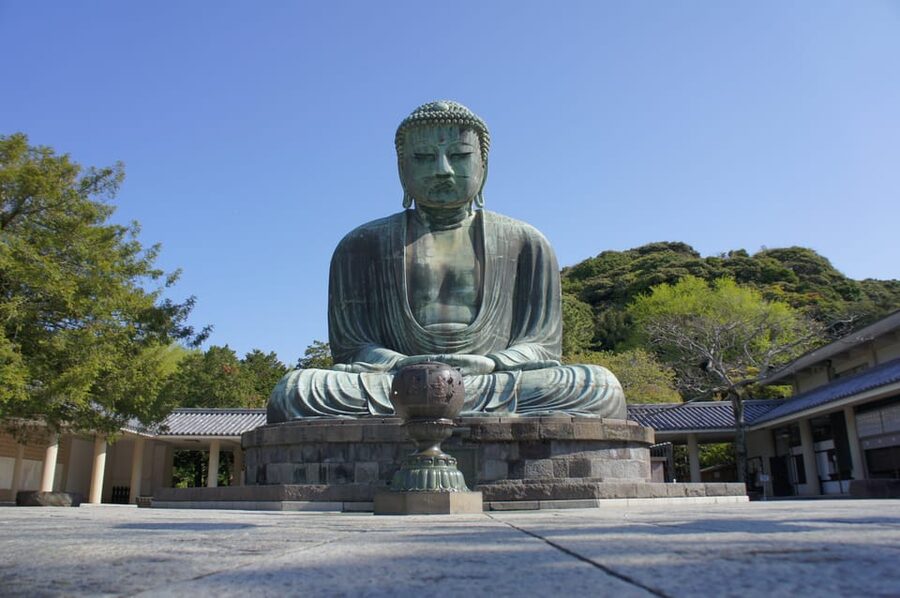
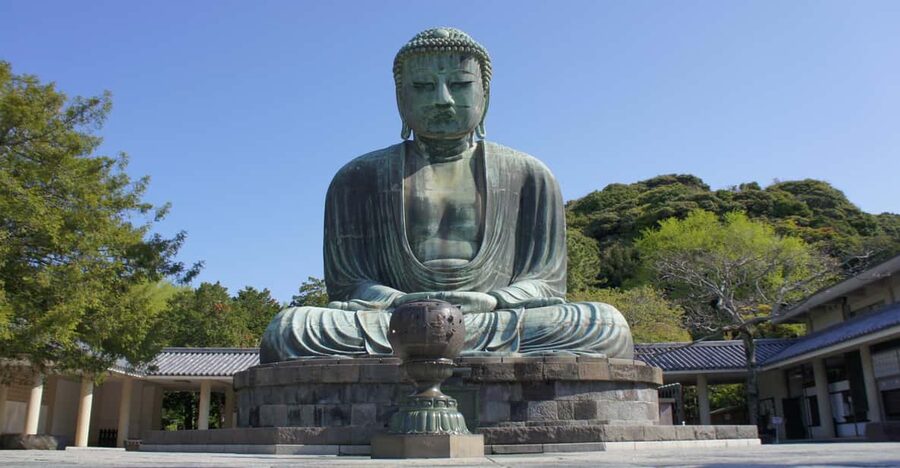
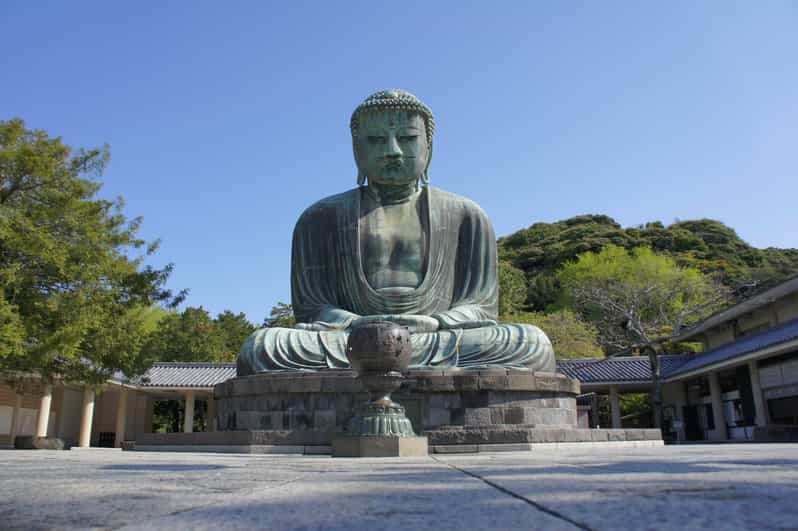
The main attraction is Kamakura’s Great Buddha, a bronze statue about 13 meters high. Its scale is impressive even in photographs, but seeing the figure in person helps you understand why it has become one of Kamakura’s best-known sights.
The statue dates to 1292, giving your guide a clear point from which to explain its place in Kamakura’s religious and political past. The tour allows about 30 minutes for guided sightseeing and photographs. That is enough for an introduction and a good look, though not a long museum-style visit.
Admission to Kotokuin is 300 yen per person. The ticket is separate from the tour price, as is the 300 yen charge if you want to enter the statue itself. The provided information identifies the Great Buddha entrance as 300 yen, so confirm with your guide whether this refers to the temple admission or any additional interior access when you arrive.
The Great Buddha is a strong choice for a first visit because it gives you an immediate visual anchor. You do not need specialist knowledge to appreciate it. Still, if you want a long explanation of sculpture techniques or a detailed account of every stage of construction, the quality of the guide makes a difference. Take was praised for using maps and pictures to explain Kamakura’s past, while another guest felt the commentary at the sites was not detailed enough.
Lunch and Komachi Street
After the first two temples, the tour heads by train toward Tsurugaoka Hachimangu Shrine and Komachi Street. The day includes about 1.5 hours for lunch, guided time, free time, and shopping.
Lunch is not included, and you pay for your guide’s meal as well as your own. That arrangement is worth knowing before you book. It keeps the food choice flexible, but it also means the final bill will be higher than the advertised tour price.
Komachi Street gives you a chance to eat and browse rather than stay inside a fixed restaurant schedule. The tour description promises lunch at one of Kamakura’s fine Japanese restaurants, but it does not name a specific restaurant or set menu. Ask your guide what is available that day and what fits your budget.
I see this stop as useful breathing room. Temples and shrines ask you to pay attention, and a meal gives you time to rest your feet before the final major sight. The shopping time also lets you see a more everyday side of Kamakura, though the area can be busy and commercial compared with the temple grounds.
One guest specifically enjoyed a nice lunch and green tea. That small detail matters because food and tea can become part of the day’s cultural experience, not just a quick refueling stop. Still, you should not assume that lunch or tea is covered by the $145 price.
A completely different kind of day out:
- Tokyo Disney Resort – Tokyo Disneyland & Tokyo DisneySea Park Tickets
★ 4.8 · 99,488 reviews - SHIBUYA SKY Ticket
★ 4.7 · 46,509 reviews - JR Whole Japan Rail Pass
★ 4.8 · 29,150 reviews - Mt Fuji and Hakone 1-Day Bus Tour Return by Bullet Train
★ 5.0 · 26,383 reviews
Tsurugaoka Hachimangu Shrine and Kamakura’s warrior past
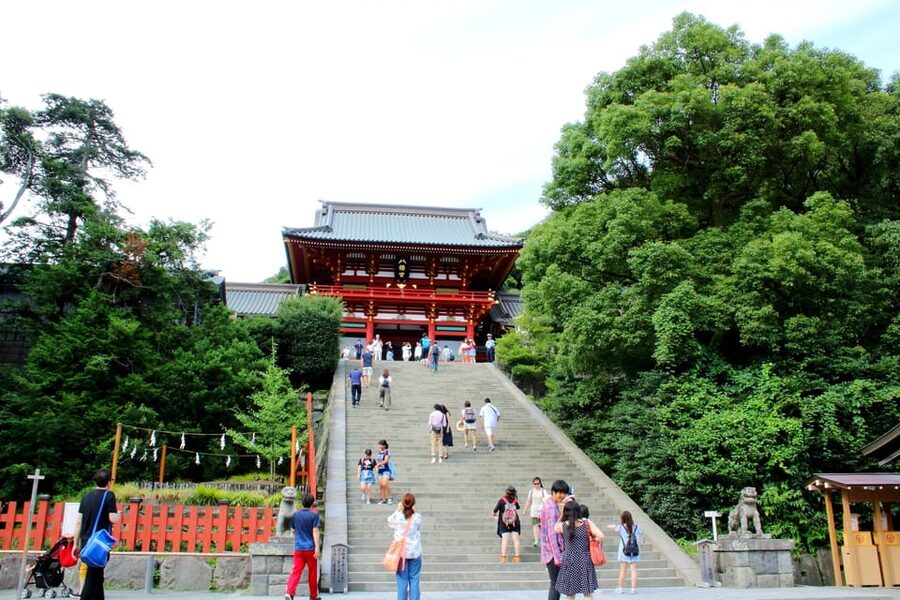
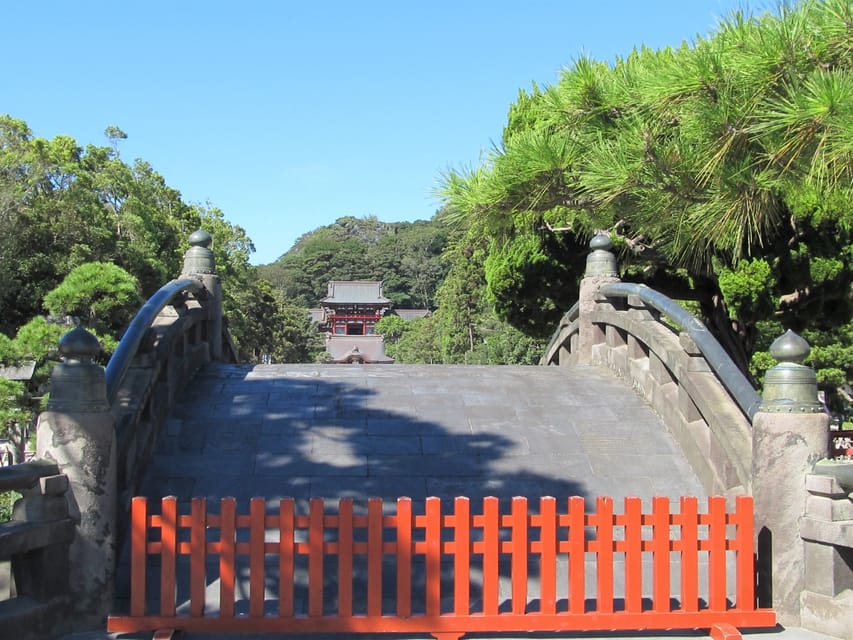
Tsurugaoka Hachimangu is the city’s most important Shinto shrine. It was founded in 1063 and dedicated to Emperor Ojin, who is also known as the God of War.
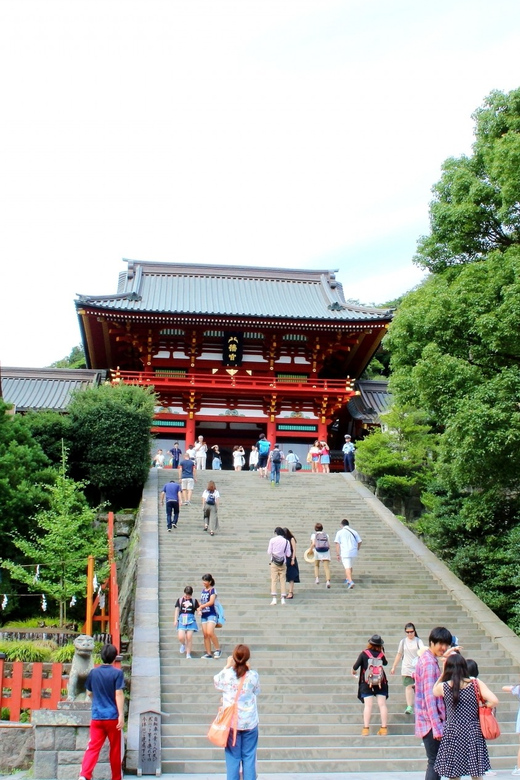
The shrine sits at the geographical center of Kamakura. After seeing Buddhist sites, this stop gives you a useful contrast. Hase-dera and Kotokuin focus on Buddhist images and temple practice, while Tsurugaoka Hachimangu introduces Shinto worship and the political role of a major shrine.
You have about 30 minutes for guided sightseeing. Your guide can help you understand the shrine’s history, layout, and connection to Kamakura’s warrior culture. The setting is described as tranquil, but the experience depends on the day. Crowds, ceremonies, and the number of other visitors can change how quiet the complex feels.
I especially like the order of the day. Seeing the Buddhist sites first, then ending at the central Shinto shrine, gives the outing a natural arc. You get a sample of Kamakura’s religious variety rather than visiting three places that feel alike.
The drawback is again the limited time. Thirty minutes lets you see the principal areas, but you may want longer if you care about shrine architecture, rituals, or photography. A private guide can answer questions, but you should tell the guide early if one stop matters most to you.
What the private guide adds
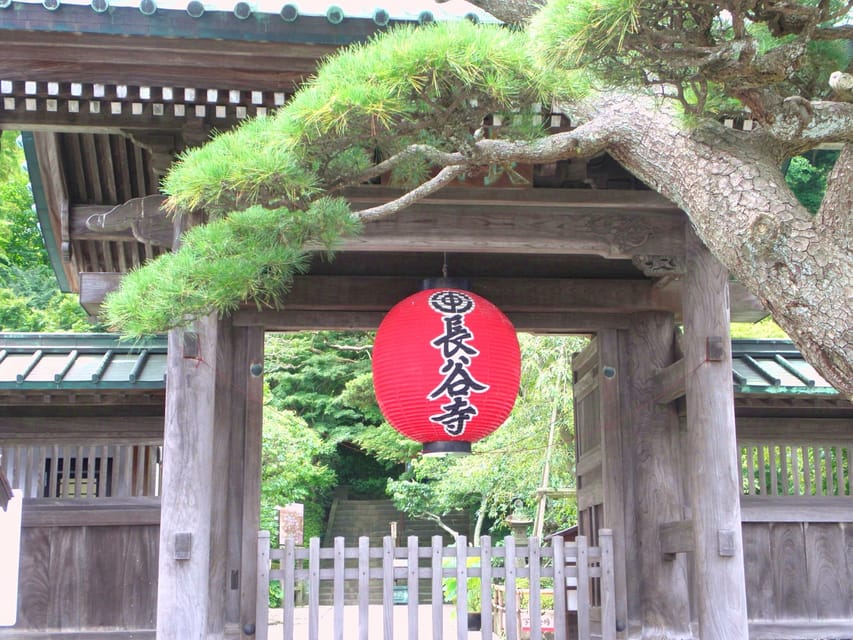
The guide is the main reason to choose this tour instead of arranging Kamakura independently. A national government licensed guide interpreter accompanies your group in English, explains the sites, helps with train travel, and keeps the day moving.
The strongest guide feedback centers on history and organization. Mizuma-san was praised for explaining Japanese history and culture to a family. Steve was praised for organizing the day well, and Take used maps and pictures to make Kamakura’s past easier to follow.
That kind of help has practical value. Kamakura’s sights are spread across different train stops, and a first-time visitor may spend time checking directions, fares, and station exits. With a private guide, you can focus on the temples rather than the next connection.
The private format also gives you a chance to ask direct questions. If you want to know why Kannon has eleven faces, how the Great Buddha fits into Kamakura’s story, or why Tsurugaoka Hachimangu matters, you can ask as you go.
But do not assume every guide will offer the same level of detail. One guest described the guide as kind and accommodating but felt the explanations were too limited and the price too high. That is an important warning. You are paying for a licensed guide and personal assistance, but the educational value depends partly on the individual guide and your own questions.
Cost, extra fees, and overall value
The advertised price is $145 per person. It covers the private English-speaking guide and hotel pickup and drop-off on foot. It does not cover the public transportation used by you and the guide, admission fees, lunch, or drinks.
Known site fees are modest:
- Hase-dera: 400 yen per person
- Kotokuin Temple: 300 yen per person
- Transportation: approximately 2,000 yen per person according to the tour information
- One-way train tickets: approximately 1,200 yen, also noted in the tour information
- Lunch and drinks: paid separately by you and the guide
The transportation figures are presented in two slightly different ways, so ask your guide for the exact fare total on the day. Either way, plan for extra yen beyond the booking price.
This tour makes the most sense for a first-time visitor who values convenience, interpretation, and a private setting. It is less attractive if you are comfortable navigating trains, reading about temples in advance, and choosing your own lunch. You can visit Kamakura independently for much less, but you will trade away the guide’s time and help.
A private tour can also be good value for a family or small group. The cost is charged per person, so the benefit improves when everyone in your party wants the same sights and can ask questions together. For a solo visitor, the price is harder to justify unless the guide’s expertise is a high priority.
Timing, crowds, and walking
The full day lasts eight hours, with return to Tokyo around 4 or 5 pm. The listed schedule allows roughly 70 minutes by train from Tokyo, 30 minutes at Hase-dera, a ten-minute walk to Kotokuin, 30 minutes at the Great Buddha, a short train ride, 30 minutes at Tsurugaoka Hachimangu, 1.5 hours around lunch and Komachi Street, then about an hour back to Tokyo.
This is a full but sensible day. The stops are not spread across distant parts of the region, and the guide handles the basic route. Still, 3 to 4 kilometers of walking is enough to notice if you have sore feet or mobility concerns.
Crowds are a real factor at Kamakura’s famous sights. Take received praise for guiding a group through crowded areas and reaching the main points of interest. That is a useful sign for busy dates, though no guide can make popular temples empty.
Start with realistic expectations. This is a highlights tour, not a slow spiritual retreat. You will see the most important places, hear their basic stories, eat lunch, and return to Tokyo in one day.
Who should book this Kamakura day trip?
I would recommend it to first-time visitors who want a clear introduction to Kamakura without handling every train detail. It also suits families, couples, and small private groups who prefer to ask questions as they go.
The tour is a good match if you care about Japanese history, Buddhist and Shinto traditions, and major monuments. The combination of Hase Kannon, the Great Buddha, and Tsurugaoka Hachimangu gives you a broad first look at the city.
I would be more cautious if your main goal is low cost or extended time at each site. The tour price is substantial once you add transport, admissions, and lunch. Independent visitors who are comfortable with public transportation can save money and set a slower schedule.
The free cancellation policy allows cancellation up to 24 hours in advance for a full refund, and reserve-now, pay-later booking keeps your plans flexible. Those policies reduce booking risk, but they do not change the basic value question.
Should you book the Kamakura Temples Private Guided Tour?
Book it if you want a private, organized introduction to Kamakura and value having an English-speaking licensed guide beside you. The strongest parts are the efficient route, the mix of Buddhist and Shinto sites, and guide support on a potentially crowded day.
Skip it if $145 per person feels high before extra expenses, or if you prefer to explore slowly and independently. If you do book, wear comfortable shoes, budget for transport and meals, and tell your guide which site or subject matters most to you. That will help turn a fast highlights tour into a more personal day.
FAQ
How long does the Kamakura tour last?
The tour lasts eight hours. The group generally returns to Tokyo around 4 or 5 pm.
How do you travel from Tokyo to Kamakura?
You travel by train. The journey takes about 70 minutes each way, and public transportation costs are not included.
Is hotel pickup included?
Hotel pickup and drop-off are included on foot. Pickup is available from selected locations around Tokyo Station, Tokyo, Shinjuku City, and Shinjuku Station. You should provide your hotel details when booking.
What language does the guide speak?
The live tour guide speaks English. The guide is a national government licensed guide interpreter.
Which temples and shrines are included?
The tour visits Hase-dera, Kotokuin Temple with the Great Buddha, and Tsurugaoka Hachimangu Shrine. It also includes time around Komachi Street.
How much walking is involved?
The tour includes about 3 to 4 kilometers of walking. Comfortable shoes are recommended.
Are entrance fees included in the price?
No. Hase-dera costs 400 yen per person, and Kotokuin Temple costs 300 yen per person. These fees are paid separately on the tour day.
Is lunch included?
No. Lunch and drinks are not included. You pay for your own meal and the guide’s meal.
Can I cancel the tour for a refund?
You can cancel up to 24 hours in advance for a full refund. The tour also offers reserve-now, pay-later booking.
Just added in Tokyo
- Tokyo Cute Bento Cooking Class – Make a Kawaii Character Lunchbox★ 5.0 · 126 reviews
- Japanese Home Cooking Class & Walk in Todoroki Temple Tokyo★ 5.0 · 88 reviews
- A One-of-a-Kind Sushi Experience in a Special Place of Japan★ 5.0 · 15 reviews
- Japan Tokyo Tower Observatory Deck E-Ticket★ 4.0 · 34 reviews
- Catch a Baseball Game in Tokyo with a Local – Tickets Included★ 5.0 · 24 reviews
- JDM Experience with Fast&Furious RX-7 (English speaking Driver)★ 5.0 · 57 reviews
- Tokyo Private Day Tour by Car with English speaking Driver Guide★ 4.0 · 29 reviews
- Japan Classic 10 Day – One Life Adventures★ 5.0 · 129 reviews
Temples and Shrines, compared.
![[Kyoto & Nara Day Tour] Sagano Scenic Railway & Nara Park & Fushimi Inari Taisha Thousand Torii Gates & Togetsukyo Bridge & Bamboo Grove & Kimono Forest (Departing from Osaka)](https://media.japanvisits.com/wp-content/uploads/kyoto-nara-day-tour-sagano-scenic-railway-nara-park-fushimi-inari-taisha-thousand-torii-gates-togetsukyo-bridge-bamboo-grove-kimono-forest-departing-from-osaka-k110001-400x257.jpg)
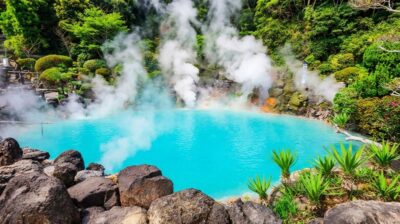
Kyushu One-Day Tour: Yufuin no Mori Train & Yufuin Town & Nyoirin-ji Temple & Dazaifu & Hell Hot Springs (Departing from Fukuoka)
Read our review →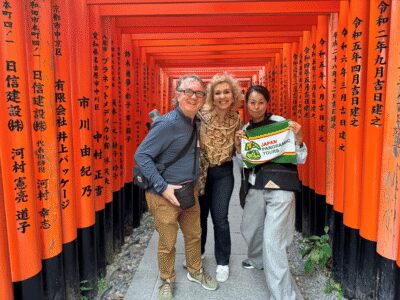
Fushimi Inari, Kinkakuji, Bamboo Grove 1 Day Bus Tour
Read our review →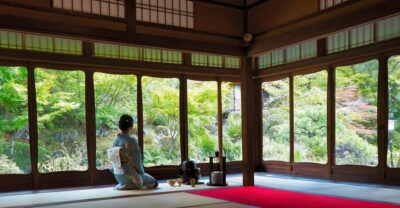
Tea Ceremony in a Traditional Tea House in Kiyomizu
Read our review →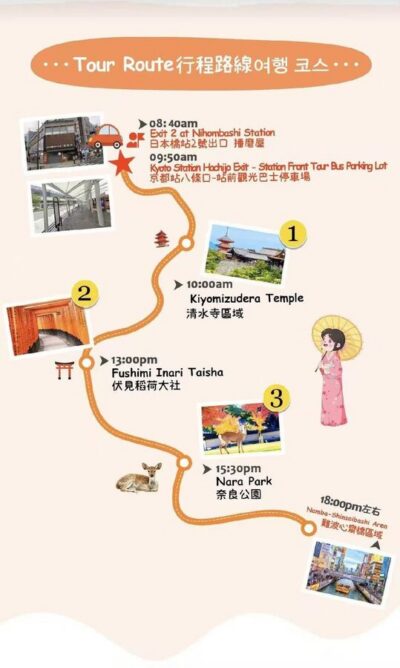
Kyoto Nara Day Trip │ Kiyomizu-dera Temple + Fushimi Inari-taisha Shrine + Nara Park (Departing from Osaka/Kyoto)
Read our review →
Browse the lists this tour appears in