
Reviewed · DAY TRIPS
Kyoto and Nara Day Trip from Kyoto
Five famous sights, one very full day. This Kyoto and Nara day trip gives you a practical first look at two of Japan’s historic cities without making you arrange trains, buses, admissions, and directions. I like the strong mix of grand buildings and outdoor time, especially Nijo Castle and Kinkaku-ji in Kyoto, followed by Todai-ji and the deer of Nara.
I also like the English-speaking guides, who have earned especially warm praise for their humor, clear explanations, and care with the group. The main drawback is the pace: with ten to eleven hours covering five major stops, you will see a lot, but you will not have much time to linger.
In This Review
- Key points to know before booking
- Why this Kyoto and Nara tour works well
- Starting near Kyoto Station at 8:20 a.m.
- Nijo Castle and the world of the Tokugawa shoguns
- Kinkaku-ji and Kyoto’s famous Golden Pavilion
- Kyoto Imperial Palace and its ceremonial setting
- Lunch choices and the transfer to Nara
- Todai-ji and Nara’s Great Buddha
- Kasuga Grand Shrine and its thousands of lanterns
- How tiring is the full ten-hour schedule?
- Where the tour delivers the most value
- Who should book this day trip?
- Final verdict: book it for coverage, not lingering
- FAQ
- How long does the Kyoto and Nara day trip last?
- Where does the tour begin?
- Where does the tour end?
- What time does the tour start?
- Is transportation included?
- Is lunch included?
- Can the tour provide special dietary meals?
- What happens if Kyoto Imperial Palace is closed?
- What happens if Nijo Castle or Kasuga Shrine cannot be visited?
Key points to know before booking
- Five major stops in one day: Visit Nijo Castle, Kinkaku-ji, Kyoto Imperial Palace, Kasuga Grand Shrine, and Todai-ji.
- The Great Buddha is the Nara centerpiece: Todai-ji’s huge wooden hall and bronze Buddha are among the day’s most memorable sights.
- Air-conditioned transport saves time: The bus removes the need to work out Kyoto and Nara connections on your own.
- Lunch is optional: Choose Western-style lunch, Indian thali lunch, or no lunch when booking.
- Expect a brisk walking day: Temple grounds, castle interiors, shrine paths, and Nara Park require time on your feet.
- The tour ends at Kyoto Station: The Kyoto start and end option finishes around 6:30 p.m., with no hotel drop-off.
Why this Kyoto and Nara tour works well
Kyoto and Nara are close enough to combine, but each has enough famous sights to fill a day by itself. On your own, you would need to plan several rail or bus trips, reserve time for admissions, and keep a close eye on the clock. This tour handles the transport and basic entry costs, allowing you to focus on the places themselves.
The route also gives you a useful contrast. Kyoto brings imperial power, shogun-era history, polished gardens, and gold-covered architecture. Nara feels more open and spacious, with ancient religious buildings, lanterns, deer, and one enormous Buddha statue. You get a broad introduction rather than a slow, specialist visit.
That tradeoff matters. Each stop has a fixed visit period, and the full route takes about ten to eleven hours. I would choose this trip if you are visiting Kyoto for the first time, have only one free day, or want a guided overview before returning to selected places later.
The tour costs about $194.85 per person. That is not a bargain-priced bus outing, but the value is reasonable if you use the included admissions, licensed English guide, and transport between Kyoto and Nara. The lunch upgrade adds convenience, but the no-lunch option may suit you better if you prefer choosing your own meal.
More Day Trips in Kyoto
- [Kyoto & Nara Day Tour] Sagano Scenic Railway & Nara Park & Fushimi Inari Taisha Thousand Torii Gates & Togetsukyo Bridge & Bamboo Grove & Kimono Forest (Departing from Osaka)
★ 4.9 · 10,942 reviews - Kyoto Nara Day Trip │ Kiyomizu-dera Temple + Fushimi Inari-taisha Shrine + Nara Park (Departing from Osaka/Kyoto)
★ 4.7 · 3,408 reviews - Day Trip to Amanohashidate & Ine no Funaya & Miyama Thatched Village in the Sea of Kyoto (Departure from Osaka or Kyoto)
★ 5.0 · 1,212 reviews
Starting near Kyoto Station at 8:20 a.m.
You meet at the JTB Sunrise Tours Desk in the basement of AVANTI, near Kyoto Station. The listed start time is 8:20 a.m., so allow time to find the meeting point inside the station area. One practical point is worth stressing: the initial meeting location can be confusing if you do not know Kyoto Station well.
The day begins early because the schedule has a lot of ground to cover. The group can include up to 40 people, and seats may not be assigned. Staying alert for the guide’s instructions is important, especially at crowded stops and during bus boarding.
The coach is air-conditioned, a welcome feature during warm weather and after a morning of walking. The bus also makes the long transfer toward Nara easier than changing trains and local buses with a group. Road congestion can change the order of the stops and arrival times, so treat the schedule as a framework rather than a guarantee.
Nijo Castle and the world of the Tokugawa shoguns
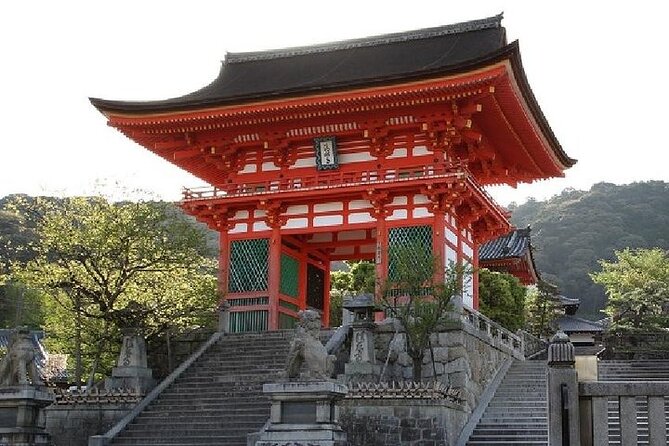
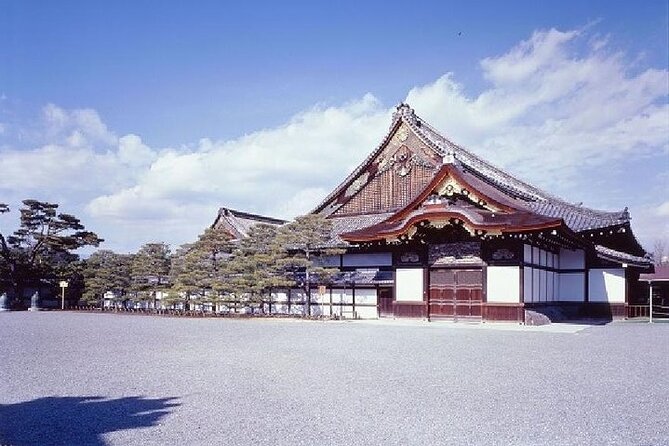
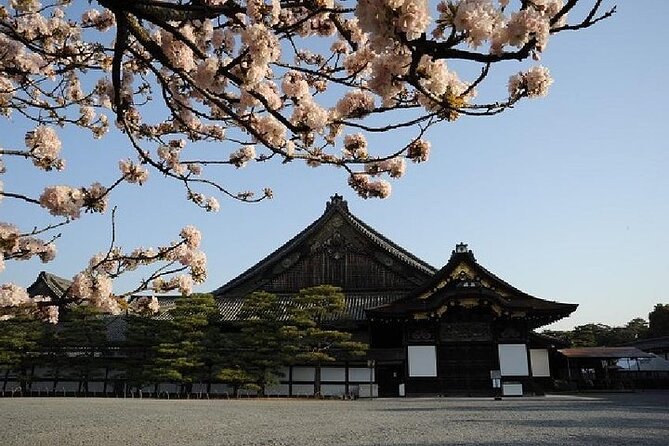
Your first major stop is Nijo Castle, a World Heritage site with direct links to the Tokugawa shoguns. Construction began in 1603, and the castle served both as lodging for the shogun and as a protective presence beside the Kyoto Imperial Palace. The listed visit lasts about 50 minutes, with admission included.
This is not simply a fortress to admire from outside. The interior details are the point. Elaborate carvings and refined rooms contrast with the more solemn outer walls, giving you a clear sense of how military authority and court culture met in Kyoto.
You should expect to remove your shoes when entering the castle. Wear socks you are comfortable walking in, and choose footwear that is easy to take off and put back on. The visit may feel short if you want to study every detail, but the guide helps explain why the building matters.
Nijo Castle closes on certain Tuesdays in January, July, August, and December, as well as from December 26 through January 3. If it is closed, the tour visits Ryoan-ji Temple instead. The replacement is not a reason to expect a refund, so check the seasonal conditions before you book if Nijo Castle is a priority.
Kinkaku-ji and Kyoto’s famous Golden Pavilion
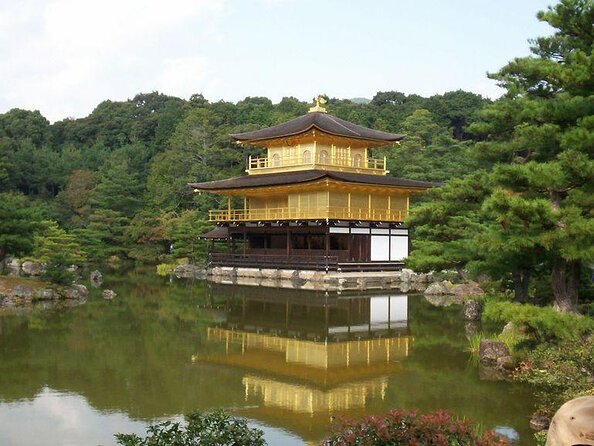
The next stop is Kinkaku-ji, visited for about 45 minutes with admission included. The three-story wooden pavilion is covered in thin layers of gold leaf and sits beside a pond, creating the classic Kyoto photograph.
The setting is carefully arranged, and the view is strongest when the pavilion reflects in the water. You follow the designated route around the grounds rather than wandering freely through every garden area. This keeps the visit moving, but it also means you will want to use your time wisely for photos and a close look at the architecture.
Kinkaku-ji is one of Kyoto’s most popular religious sites, so crowds can affect the experience. The tour’s early start helps, but the stop can still feel busy. I would focus on the pavilion, the pond, and the garden details rather than trying to see every corner.
This is one of the tour’s best photo stops, but it is also the place where the limits of a short visit are most obvious. If gardens are your main interest, you may want to return later on your own for more time.
A completely different kind of day out:
- PERFECT KYOTO 1-Day Bus Tour
★ 5.0 · 13,518 reviews - Kyoto: Fushimi Inari, Kinkakuji, Bamboo Grove 1 Day Bus Tour
★ 4.8 · 4,316 reviews - Kyoto: Tea Ceremony in a Traditional Tea House in Kiyomizu
★ 4.9 · 3,519 reviews - Kyoto: Gion Make Your Own Chopsticks with Engraving Option
★ 5.0 · 3,465 reviews
Kyoto Imperial Palace and its ceremonial setting
The tour then visits Kyoto Imperial Palace for about 40 minutes, with no separate admission fee listed. The palace served as the Emperor’s residence until roughly 150 years ago. You see the grounds and the Shishin-den, an important building for state ceremonies.
This stop adds political and ceremonial context to the morning. Nijo Castle shows the authority of the shoguns, while the Imperial Palace brings you closer to the older court tradition. Together, the two sites help explain why Kyoto remained central to Japanese government and culture even after military rulers gained power.
The palace grounds are broad, so the visit includes walking. You will not have time for a detailed inspection of every building, but the guide’s explanations make the short stop more useful. This is a place where historical context matters as much as the architecture.
The Imperial Palace closes to visitors on Mondays, the following day when Monday is a holiday, and on dates affected by Imperial Household Agency events. On those days, the tour visits Kitano Tenmangu Shrine instead. If the closure falls on the 25th, the alternative is Nishi Hongan-ji Temple. The replacement site can be worthwhile, but the tour does not offer a refund for the change.
Lunch choices and the transfer to Nara
If you choose the lunch option, the meal is included before the group heads south to Nara. You can select a Western-style set menu or an Indian thali set menu suitable for vegetarians. The Indian meal includes several curries, vegetable pakora, yogurt, naan or roti, rice, salad, and a non-alcoholic drink.
You must select your meal type at the time of booking. The dining areas are separate, and you cannot switch between the Western and Indian options on the day. Vegetarian requests for the Western meal must be provided in advance. Halal, gluten-free, and other special meal requests are not available.
If you choose no lunch, you receive free time to eat on your own in the Kyoto Station area, according to the tour arrangements. That option may be best for you if you have dietary restrictions or prefer to choose your own restaurant. Be aware that a food request noted in a reservation may affect how the included meal is prepared, and same-day changes are not accepted.
The ride to Nara gives you a chance to rest after Kyoto’s morning stops. Guides such as KC, Momo, Yuki, Miyuki, Yoshito, Tammy, Etsuko, and Keicy have been praised for clear English, historical explanations, humor, and keeping the group on schedule. The specific guide varies, but the strongest part of the experience is clearly the human commentary rather than the bus ride itself.
Todai-ji and Nara’s Great Buddha
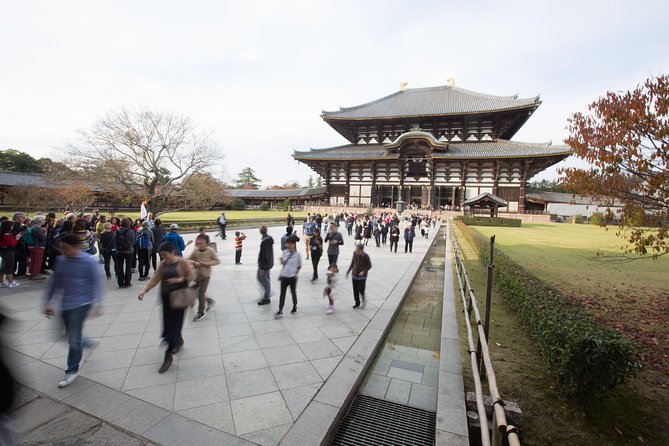
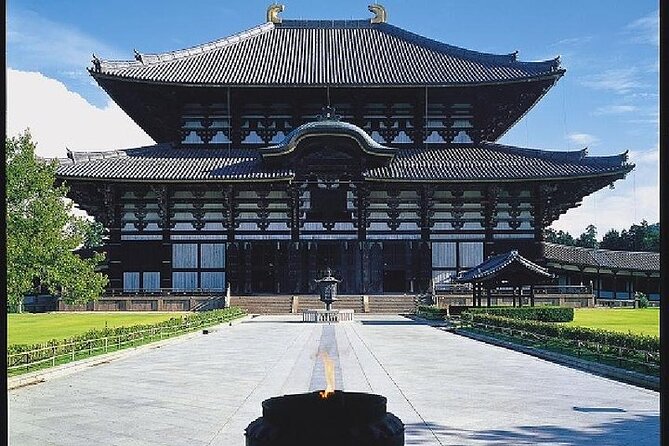
Todai-ji is scheduled for about 1 hour and 10 minutes, with admission included. This is the major Nara stop, and it deserves the time given to it. The temple complex is linked to the Nara Period and contains the Great Buddha, one of the world’s largest bronze Buddha statues.
The Great Buddha Hall is itself a major sight. It is a huge wooden structure, and the scale becomes clear as you approach the entrance and look across the interior. The bronze Buddha gives the visit its emotional weight, while the building explains why Todai-ji is such an important symbol of Nara.
You will have time to see the main hall and part of the complex, but not to explore every religious building in detail. The walking can feel tiring late in the day, especially after the Kyoto stops. Still, this is the one place I would not want to miss. The size, age, and religious importance are difficult to grasp from photographs.
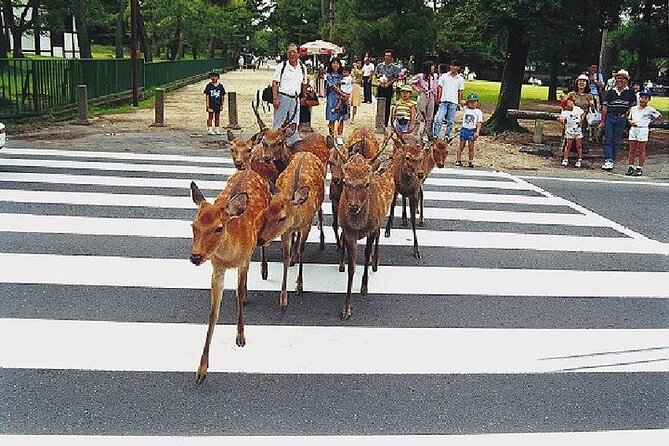
The tour then continues into Nara Park, where the famous free-roaming deer live. The deer are connected with Kasuga Shrine, where they are regarded as messengers. They can be friendly, but guides warn that some may become pushy, particularly when food is involved. Keep your attention on your belongings and follow the guide’s instructions.
Kasuga Grand Shrine and its thousands of lanterns
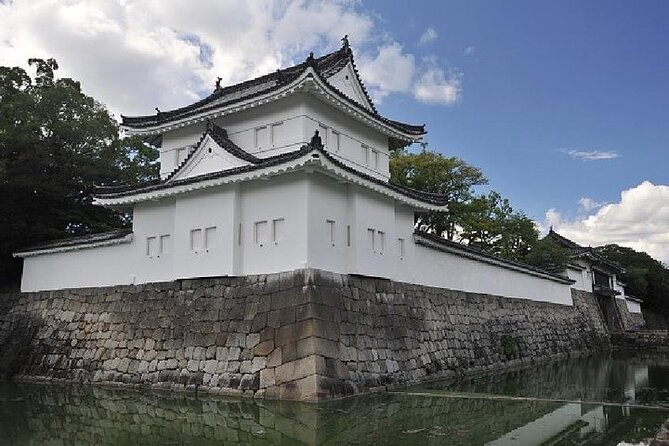
Kasuga Grand Shrine receives about an hour. This Nara Period shrine is another World Heritage site, known for the more than 3,000 lanterns lining its grounds and interior areas.
The shrine offers a different mood from Todai-ji. Todai-ji impresses through sheer scale, while Kasuga draws you into a more intimate world of pathways, religious symbols, and lanterns. The connection between the shrine and Nara’s deer also gives the visit a distinctive local character.
From January 2025, the special visit area at the Main Sanctuary is scheduled to be included. Operational issues or events may prevent access, in which case the tour visits the Kasuga Taisha Museum or Todaiji Museum instead. Again, you should view the alternate site as a possible change in the day rather than a guaranteed refund situation.
Kasuga and Nara Park are also where the schedule may feel most demanding. You may want more time to walk among the deer, take photographs, and explore beyond the main route. A short visit gives you the essential experience, but independent visitors with extra time can make Nara a full day of its own.
How tiring is the full ten-hour schedule?
This is an active sightseeing day, even though the bus handles the transfers. You walk through a castle, gardens, palace grounds, temple complexes, shrine paths, and Nara Park. Several people have found the pace fast, and one of the clearest practical criticisms is the limited free time in Nara.
You should be comfortable walking for much of the day and keeping to agreed meeting times. The group cannot wait indefinitely for late arrivals, and the schedule works only when everyone returns to the bus promptly. Comfortable shoes matter more here than fashionable ones.
The bus gives your legs a break, but it does not turn the tour into a relaxed outing. If you want long periods for quiet photography, garden study, shopping, or independent meals, book separate Kyoto and Nara visits instead. If your goal is to see the greatest number of headline sights in one day, the brisk pace is a fair exchange.
Where the tour delivers the most value
The best value comes from combining admission fees and long-distance transport with a guide who can connect the sites. Nijo Castle, Kinkaku-ji, Todai-ji, and Kasuga Shrine all charge or require managed entry in ways that can add up. The included transportation also saves you the trouble of planning the Kyoto to Nara transfer.
The tour is especially useful for a first visit. You get a clear introduction to shogun power, imperial ceremony, Buddhist architecture, Shinto traditions, and Nara’s deer culture in one day. You can then decide which places deserve a slower return visit.
The less valuable choice is the lunch upgrade if you have firm dietary needs. The tour cannot provide halal, gluten-free, or other special meals, and lunch choices cannot be changed once the day begins. The no-lunch option gives you more control, provided you are comfortable arranging your own food.
Who should book this day trip?
I would recommend it for first-time visitors, English-speaking families, couples, and anyone with limited time in Kyoto. It also suits you if organizing several major sights feels like work rather than part of the holiday.
The guides receive strong praise for their humor and care. KC, Momo, Yuki, Miyuki, Yoshito, Tammy, Etsuko, and Keicy are among the guides singled out for making the day informative and enjoyable. A good guide matters here because short visits can otherwise feel like a procession of impressive buildings with no connection between them.
I would be cautious if you dislike groups, have limited walking ability, or prefer a slow pace. The maximum group size is 40, seats may not be assigned, and congestion can alter the timing. Service animals are allowed, and most people can take part, but the long day still calls for reasonable stamina.
Final verdict: book it for coverage, not lingering
Book this tour if you want to cover Kyoto’s essential historic sights and Nara’s Great Buddha and deer in a single organized day. The route is well chosen, the air-conditioned bus removes much of the transport hassle, and the guides add real value through history, humor, and practical direction.
Skip it if you want to spend hours in one garden, shrine, or museum. For everyone else, especially first-time visitors, this is an efficient and worthwhile introduction. Go in expecting a packed schedule, wear good shoes, arrive early at the AVANTI meeting point, and keep your Nara time focused on Todai-ji, Kasuga Shrine, and the deer.
FAQ
How long does the Kyoto and Nara day trip last?
The experience lasts approximately 10 to 11 hours. With the Kyoto start and end option, it finishes at Kyoto Station around 6:30 p.m.
Where does the tour begin?
You meet at the JTB Sunrise Tours Desk in the basement of AVANTI, near Kyoto Station in Kyoto’s Minami Ward.
Where does the tour end?
The Kyoto start and end option finishes at Kyoto Station. Hotel drop-off is not provided, so you make your own way back to your accommodation.
What time does the tour start?
The listed start time is 8:20 a.m.
Is transportation included?
Yes. Transportation between the sites is included in an air-conditioned vehicle, along with the listed admission fees.
Is lunch included?
Lunch is included only if you select a lunch option when booking. You can choose a Western-style set menu, an Indian thali lunch, or no lunch.
Can the tour provide special dietary meals?
The Indian thali is suitable for vegetarians, and vegetarian requests for the Western meal must be made during reservation. Halal, gluten-free, and other meal requests are not available.
What happens if Kyoto Imperial Palace is closed?
The tour visits Kitano Tenmangu Shrine instead on most closure dates. If the closure falls on the 25th, the alternative is Nishi Hongan-ji Temple.
What happens if Nijo Castle or Kasuga Shrine cannot be visited?
If Nijo Castle is closed, the tour visits Ryoan-ji Temple. If the special visit area at Kasuga Shrine is unavailable, the tour visits the Kasuga Taisha Museum or Todaiji Museum. No refund is issued for these alternative destinations.
Just added in Kyoto
- The “Golden Route” and Ancient Japan by DIAMIR Erlebnisreisen – 14-Day Tour★ 2.0 · 2 reviews
- Japan: Castles & Cuisine by G Adventures – 6-Day Kyoto to Osaka Tour★ 4.5 · 4 reviews
- Cycle Japan by Explore! – 13-Day Kyoto to Tokyo Tour★ 4.7 · 12 reviews
- Cycle Japan by Intrepid Travel – 11-Day Kyoto to Tokyo Tour★ 4.8 · 2 reviews
- Classic Japan by Intrepid Travel – 11-Day Kyoto to Tokyo Tour★ 4.4 · 14 reviews
- Ancient & Modern Japan 14-Day Tour by Exodus Adventure Travels★ 4.4 · 40 reviews
- 5 Day Cultural Adventure of Kyoto, Nara & Osaka by Tourist Journey★ 2.5 · 2 reviews
- 12 Days Kinosaki Onsen Escape: A Journey Through Japan’s Timeless Towns by UME Travel★ 4.8 · 5 reviews
Day Trips, compared.
![[Kyoto & Nara Day Tour] Sagano Scenic Railway & Nara Park & Fushimi Inari Taisha Thousand Torii Gates & Togetsukyo Bridge & Bamboo Grove & Kimono Forest (Departing from Osaka)](https://media.japanvisits.com/wp-content/uploads/kyoto-nara-day-tour-sagano-scenic-railway-nara-park-fushimi-inari-taisha-thousand-torii-gates-togetsukyo-bridge-bamboo-grove-kimono-forest-departing-from-osaka-k110001-400x257.jpg)
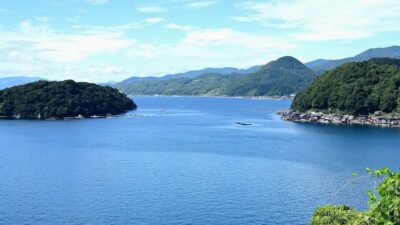
Kyoto Amanohashidate & Ine Funaya & Ine Bay Scenic Day Trip (Departing from Osaka or Kyoto)
Read our review →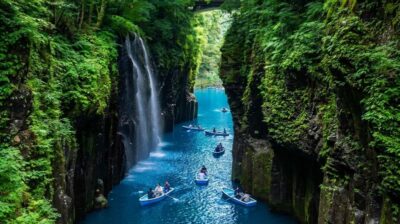
Kyushu: Mount Aso, Kusasenri & Takachiho Gorge Day Tour (Optional Takachiho Boat Ride Experience)
Read our review →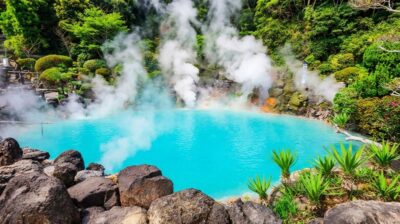
Kyushu One-Day Tour: Yufuin no Mori Train & Yufuin Town & Nyoirin-ji Temple & Dazaifu & Hell Hot Springs (Departing from Fukuoka)
Read our review →
Browse the lists this tour appears in