
Reviewed · TEMPLES AND SHRINES
Mt. Fuji Heritage Tour: Traditional Villages, Lakes & Shrine
Fuji rewards patience and good weather. This full-day coach tour makes a strong case for leaving Tokyo, combining traditional village scenery with Lake Kawaguchi, a famous pagoda, and clear spring ponds. I especially like the range of stops and the low $50 price, though the day is long and traffic can make the return to Tokyo late.
The best moments come when Mt. Fuji appears behind the thatched houses at Saiko Iyashi no Sato Nenba or above Chureito Pagoda. I also like the careful pacing reported by guides such as Sia, Kazi, Wanting, and Rachel, who kept groups on schedule and helped with meeting points, photo spots, and practical details. The trade-off is simple: this is a shared sightseeing circuit, not a slow private visit.
In This Review
- Key points to know before booking
- What this $50 Mt. Fuji day trip really offers
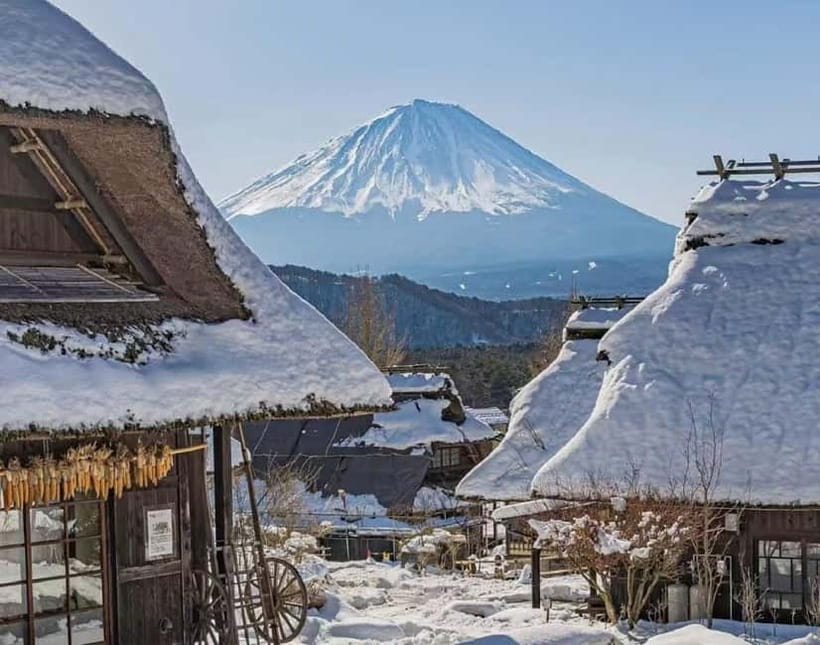
- Saiko Iyashi no Sato Nenba and its thatched roofs
- Lake Kawaguchi, Oishi Park, and the seasonal route change
- Arakurayama Sengen Park, shrine, and Chureito Pagoda
- Lunch, snacks, and the gap in the schedule
- Oshino Hakkai and eight clear spring ponds
- The coach ride, timing, and guide quality
- Weather, crowds, and the realistic Fuji factor
- Who should book this tour?
- Final verdict: a good Fuji sampler for $50
- FAQ
- How long does the Mt. Fuji Heritage Tour last?
- What is the tour price?
- Is lunch included?
- Which languages are available?
- Does the tour visit Oishi Park and the Maple Corridor on the same day?
- Is Mt. Fuji guaranteed to be visible?
- What should I bring?
- Is the tour suitable for wheelchair users?
Key points to know before booking

- Five very different Fuji viewpoints: You see a thatched village, flower and foliage park, shrine and pagoda, and spring-fed ponds in one day.
- A strong $50 value: Transport, driver, guide, parking, and admission to Saiko Iyashi no Sato Nenba are included.
- Weather controls the star of the show: Clouds can hide Mt. Fuji, even when every other part of the day runs well.
- Autumn changes the route: From October 26 to November 20, the tour visits the Maple Corridor instead of Oishi Park.
- Bring food or cash: Lunch is not included, and some places may not accept credit cards.
- Expect stairs and walking: Arakurayama Sengen Park and Chureito Pagoda require an uphill climb, and the tour is not suitable for wheelchair users.
What this $50 Mt. Fuji day trip really offers
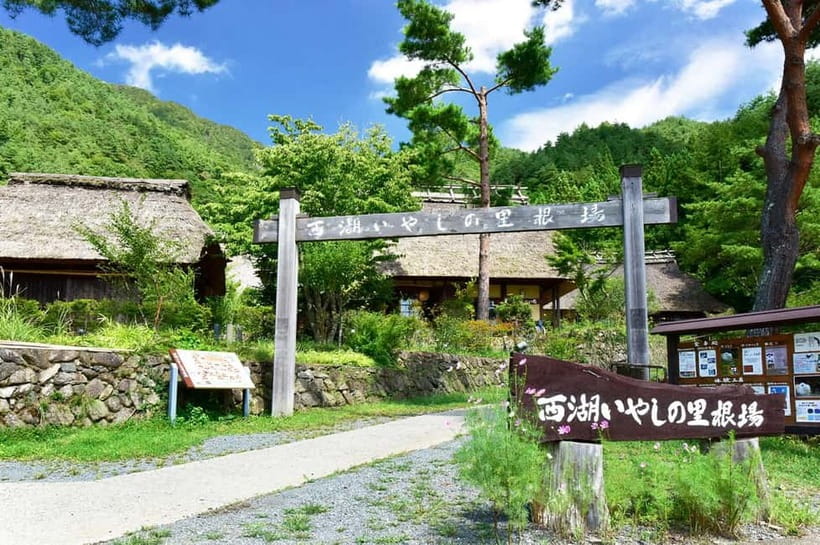
At $50 per person, this tour is priced for convenience rather than luxury. You receive a driver, a live guide, parking, transport from Tokyo, and admission to the traditional village. That is a useful package for you if arranging separate trains, buses, and local connections feels like too much work.
The catch is the 10-hour schedule. About five hours are spent traveling to and from the Fuji area, with roughly five hours divided among the stops. That sounds tiring because it is, but the long coach ride also lets you cover places that are awkward to connect in one day by public transport.
Guides speak English, Japanese, and Traditional Chinese. The strongest guide comments praise clear instructions, warm manners, and good time control. Sia received repeated praise for explaining stops before arrival, helping people find bathrooms and the bus, teaching a few Japanese words, and keeping a large multigenerational group together. Kazi was praised for staying organized and offering useful pointers, while Wanting and Rachel were described as helpful and attentive.
The guide matters here. At some stops, you have only 15 to 40 minutes, so knowing where to go first saves time. The best guides also help prevent the classic day-trip mistake: wandering off for one more photo and watching the bus leave without you.
More Temples and Shrines in Tokyo
- Tokyo: Meiji Shrine, Asakusa, Skytree Bus Tour and Cruise
★ 4.7 · 1,986 reviews - Tokyo: Asakusa Walking Tour with Sensoji Temple Visit
★ 4.8 · 1,583 reviews - Nikko: Kegon Falls, Lake Chuzenji & Toshogu Temple
★ 4.6 · 1,577 reviews
Saiko Iyashi no Sato Nenba and its thatched roofs
The first main stop is Saiko Iyashi no Sato Nenba, reached after about two and a half hours by coach. You have around one hour here, including a guided visit and time for photos.
This reconstructed traditional village is built around thatched-roof houses, with Mt. Fuji providing the ideal background when the air is clear. It is one of the most distinctive stops because the view is not just mountain and sky. The roofs, village setting, and Fuji create a distinctly Japanese image that feels more rooted than a quick roadside lookout.
You can take photographs from several angles and browse the village atmosphere at an easy pace. Japanese street snacks are available near the entrance, which is useful if you did not eat before departure. Souvenir shops at the attractions are independent of the tour, so you should treat purchases as optional personal expenses.
For a playful photo, you can rent a ninja costume at an extra cost. That will not appeal to everyone, but families and anyone who enjoys a silly picture may find it worthwhile. One especially nice detail from the tour feedback was a purchase of artwork from an artist in the village, a more personal souvenir than another mass-produced keychain.
Clouds can soften or erase the Fuji view here. Even so, the village remains worth seeing for its architecture and setting. If the mountain is hidden, focus on the roofs, pathways, crafts, and local snacks instead of judging the whole day by one missing peak.
Lake Kawaguchi, Oishi Park, and the seasonal route change
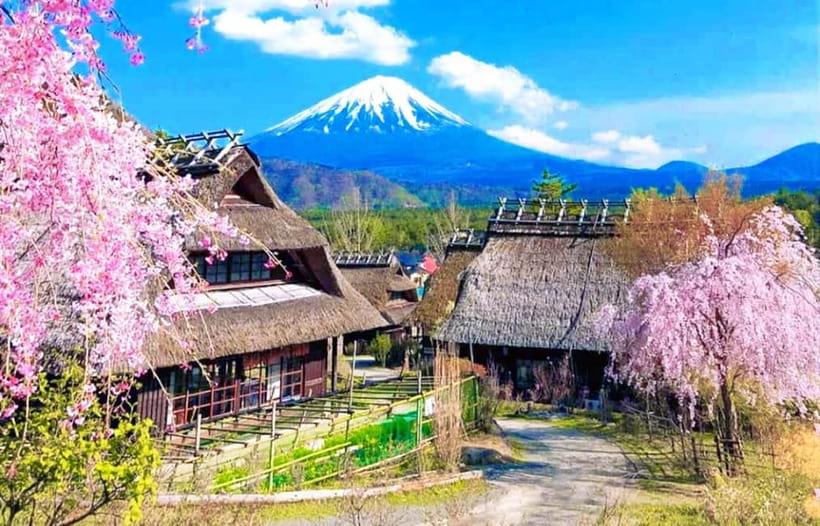
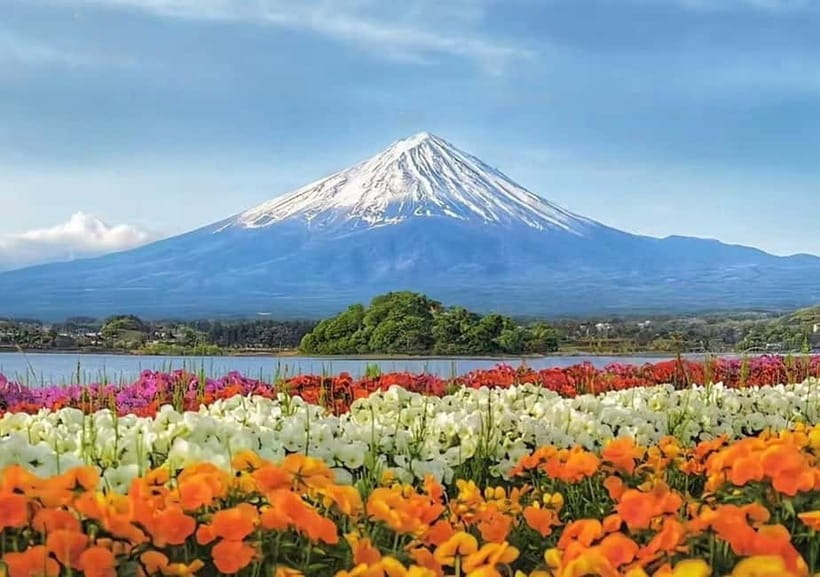
The coach then takes about 25 minutes toward Lake Kawaguchi. The lake itself is a scenic setting rather than a separate long stop, and the planned visit continues at Oishi Park.
Oishi Park receives about 40 minutes for photographs and sightseeing. In summer, lavender gives the park color and fragrance. In autumn, red broom grass changes the view again. The park works well because it combines open lake views with plants that mark the season, giving you something to see even if Fuji is shy behind clouds.
The timing matters. From October 26 through November 20, peak fall foliage brings a route change: the tour visits the Lake Kawaguchi Maple Corridor instead of Oishi Park. During that period, you should not expect both sites. The Maple Corridor receives about 40 minutes and is prized for its fiery autumn leaves, with Fuji sometimes appearing beyond the branches.
This seasonal swap is sensible, but it is easy to miss when planning your expectations. If you book during peak autumn, think of the Maple Corridor as your foliage stop. If lavender is your priority, choose summer rather than fall.
Forty minutes is enough for photographs and a short walk, but not for a relaxed lakeside exploration. I would keep your pace steady, take the main photos first, and browse only after you know where the bus returns.
Arakurayama Sengen Park, shrine, and Chureito Pagoda
The tour next drives about 15 minutes to Arakurayama Sengen Park. This is the most famous photo stop of the day, and possibly the one that sells the tour by itself.
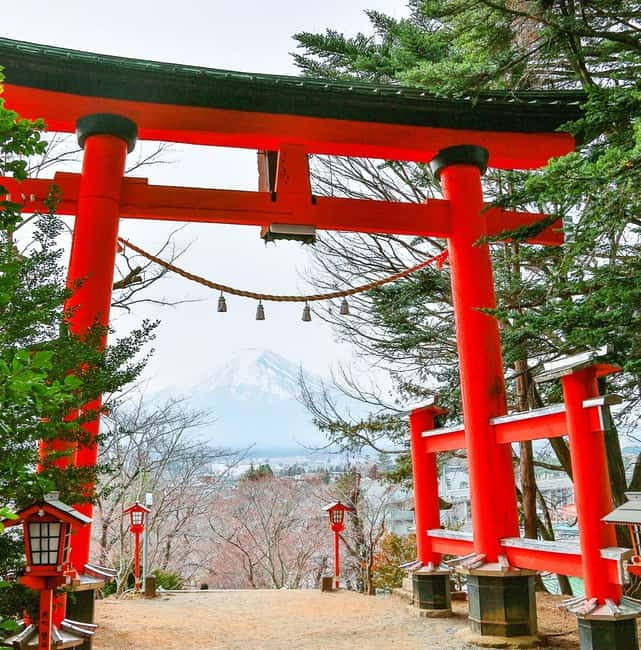
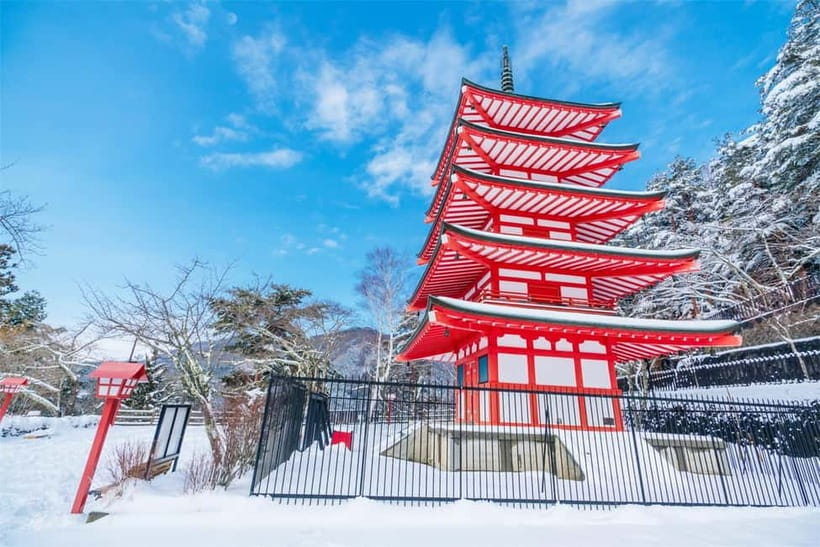
The classic view shows Chureito Pagoda with Mt. Fuji behind it. To reach the viewpoint, you climb steps through the park. The uphill walk is manageable for many people, but it is still a real climb after a morning of sightseeing. Wear comfortable shoes and do not underestimate the descent, especially if you are traveling with young children or anyone who needs frequent rests.
You have about 40 minutes at Arakurayama Sengen Park, followed by shorter visits of around 15 minutes each at Arakura Fuji Sengen Shrine and Chureito Pagoda. In practice, these locations are closely linked, so your guide helps you understand where to go and how to use the limited time.
The shrine adds cultural depth to what could otherwise be a quick photo mission. Take a moment to notice the setting and worship space before rushing to the upper viewpoint. Several guides have been praised for explaining shrine customs and giving clear instructions, which is helpful if this is your first visit to a Japanese shrine.
The view depends heavily on weather. A clouded Fuji can turn the iconic composition into a pagoda-and-sky photograph. That is still attractive, but it is not the picture promised by a clear day. One useful practical tip concerns goshuin, the shrine seal book entry. If you want one at the pagoda area, hand over your book before climbing the steps because the wait can take around 20 minutes.
A completely different kind of day out:
- Tokyo Disney Resort – Tokyo Disneyland & Tokyo DisneySea Park Tickets
★ 4.8 · 99,488 reviews - SHIBUYA SKY Ticket
★ 4.7 · 46,509 reviews - JR Whole Japan Rail Pass
★ 4.8 · 29,150 reviews - Mt Fuji and Hakone 1-Day Bus Tour Return by Bullet Train
★ 5.0 · 26,383 reviews
Lunch, snacks, and the gap in the schedule
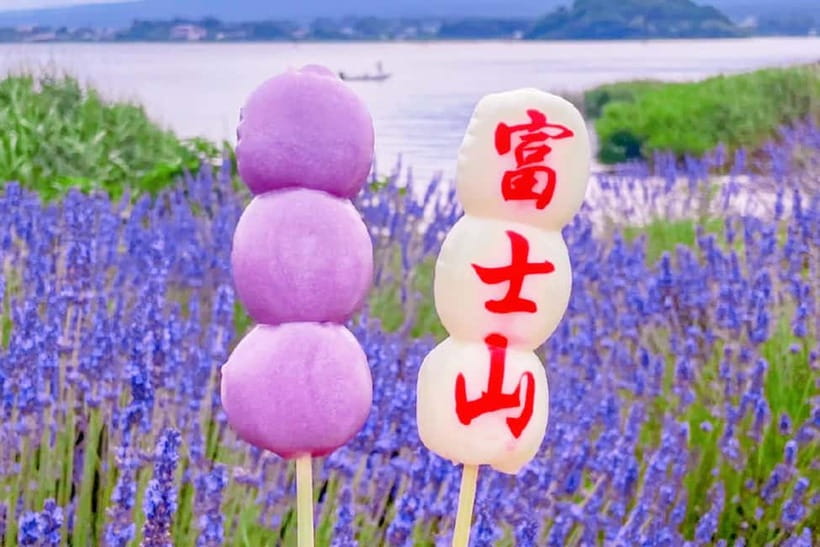
Lunch is not included, although the itinerary allows a 40-minute break at a local restaurant. You may bring food, buy something at one of the attractions, or follow the restaurant suggestion from your guide.
This arrangement gives you some choice, but it also means you should not arrive hungry and assume a full meal is guaranteed. Bring cash and, ideally, a small meal or substantial snack. Food options vary by stop, and one person found the suggested restaurant acceptable but less appealing than other vendors seen along the route.
The village entrance is a good place for Japanese street snacks. Oshino Hakkai also has local foods, including freshly made rice crackers and wasabi ice cream. These small purchases are part of the fun, but they are not included in the $50 price.
Cash is important because credit cards may not work at certain locations. Keep some yen easy to reach for food, snacks, small souvenirs, or shrine-related purchases.
Oshino Hakkai and eight clear spring ponds
The final major stop is Oshino Hakkai, reached after roughly 25 minutes from the lunch break. You have about 70 minutes here, making it the longest sightseeing stop of the day.
Oshino Hakkai is known for eight clear spring ponds fed by melted snow from Mt. Fuji. The water, reflections, and quiet setting create a calmer finish after the photo crowds and uphill steps at Arakurayama.
This stop has a different feel from Lake Kawaguchi. You are not looking only for one grand mountain composition. Instead, you can move between ponds, study the water, photograph reflections, and sample local food nearby. Rice crackers and wasabi ice cream are two treats worth considering if you want a taste of something tied to the area.
Seventy minutes gives you room to wander, but stay alert to the meeting time. The return coach journey takes about two and a half hours, and weekend or holiday traffic in Japan can delay the arrival back in Tokyo. Do not schedule an important evening activity immediately after the tour.
Oshino Hakkai works year-round, although the mood changes with weather and light. If Fuji has disappeared by this point, the ponds and village setting still give you a worthwhile final stop.
The coach ride, timing, and guide quality
The coach is the practical heart of this tour. You cover a wide area without changing trains or figuring out local bus connections. Several people praised the drivers for smooth, safe handling, and one driver even walked passengers to the bus station when they separated from the group near the final stop.
The downside is time in transit. The outbound and return rides are each about two and a half hours, before accounting for traffic. A quiet bus can feel restful, and one family appreciated the calm atmosphere, but a crowded shared coach may feel less comfortable after a full day on your feet.
The guide usually gives explanations in multiple languages. That is useful, though the amount of commentary may vary. Some people wanted more information during the drive, while others appreciated the quiet. If cultural explanation is your main reason for booking, tell the guide you would like more detail when there is time.
The organization appears to be a major strength. Guides have been praised for sending clear meeting information, checking that nobody was left behind, keeping large families together, and handling delays. The night before departure, you receive the guide’s contact number and the vehicle’s license plate number. Arrive 15 minutes early because late arrivals and no-shows are not refunded.
There are two designated pickup and drop-off arrangements, with the exact meeting point depending on the option booked. Tokyo MODE Gakuen at 1-chome-5-1 Marunouchi is listed as a starting and ending location, so check your booking details carefully rather than relying on a general map pin.
Weather, crowds, and the realistic Fuji factor
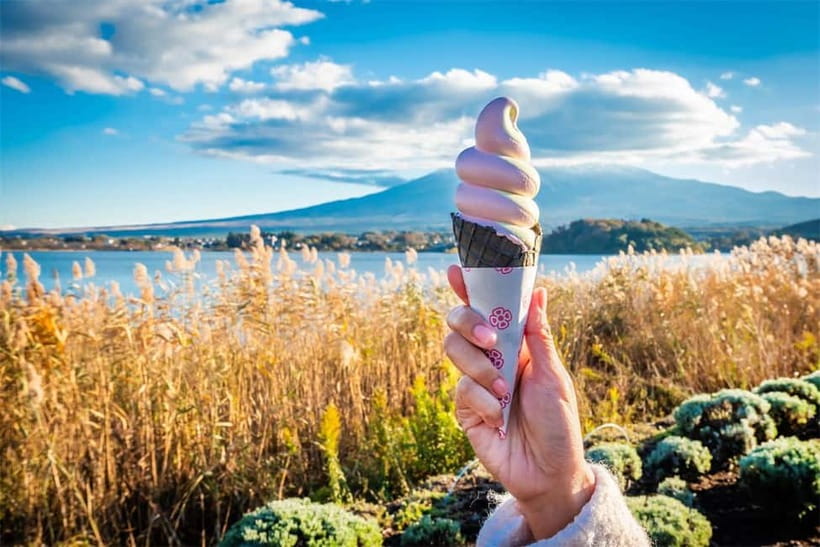
Mt. Fuji is the central subject, but it does not take requests. Weather can block the summit, even when the tour operates perfectly. Clear mornings may turn cloudy later, so take your best photographs as soon as Fuji appears.
Several people enjoyed the day despite rain or heavy cloud. That is a useful lesson. The village, lake parks, shrine, pagoda, and ponds are worthwhile places in their own right, but the tour becomes much more memorable when Fuji is visible behind them.
Peak autumn foliage from October 26 to November 20 may bring heavier traffic and crowds. Weekend and holiday congestion can shorten, change, or cancel attraction visits, and it can push the return time later. Build flexibility into your evening.
Who should book this tour?
I would choose this tour if you want the main Mt. Fuji photo locations in one organized day from Tokyo. It suits first-time visitors, families who prefer a guide, and anyone who values transport over independent route planning.
It also works well for multigenerational groups. Positive feedback highlights guides patiently managing children, older family members, and groups of 11 people. Large luggage may be accepted, but you should confirm this before departure rather than assume the coach has unlimited space.
You should think twice if you dislike long bus rides, fixed departure times, or short visits. This is not a quiet rural retreat, and it does not offer much freedom to linger. It is also not suitable for wheelchair users because of the steps and walking at Arakurayama Sengen Park.
Final verdict: a good Fuji sampler for $50
I would book this tour for the combination of Saiko Iyashi no Sato Nenba and Chureito Pagoda. Those stops give you two very different versions of the Fuji region: one traditional and village-based, the other instantly recognizable from photographs.
The $50 price is strong for a 10-hour trip with transport, guide, driver, parking, and village admission included. Just bring water, comfortable shoes, cash, and lunch, and keep your evening open in case of traffic. If you can accept the weather gamble and a brisk schedule, this is an efficient, well-supported introduction to the sights around Mt. Fuji.
FAQ
How long does the Mt. Fuji Heritage Tour last?
The tour lasts 10 hours, including transport between Tokyo and the Mt. Fuji area.
What is the tour price?
The listed price is $50 per person.
Is lunch included?
No. You can bring food, buy lunch at the attractions, or use a restaurant suggested by the guide.
Which languages are available?
Live guiding is available in English, Japanese, and Traditional Chinese.
Does the tour visit Oishi Park and the Maple Corridor on the same day?
Not during peak autumn foliage. From October 26 to November 20, the tour visits the Maple Corridor instead of Oishi Park.
Is Mt. Fuji guaranteed to be visible?
No. Weather conditions may prevent a clear view of Mt. Fuji, so check the forecast before booking.
What should I bring?
Bring comfortable shoes, water, and cash. Credit cards may not be accepted at some locations.
Is the tour suitable for wheelchair users?
No. The tour is not suitable for wheelchair users. The climb at Arakurayama Sengen Park also makes comfortable footwear especially important.
Just added in Tokyo
- A One-of-a-Kind Sushi Experience in a Special Place of Japan★ 5.0 · 15 reviews
- Tokyo Cute Bento Cooking Class – Make a Kawaii Character Lunchbox★ 5.0 · 126 reviews
- Japanese Home Cooking Class & Walk in Todoroki Temple Tokyo★ 5.0 · 88 reviews
- Japan Tokyo Tower Observatory Deck E-Ticket★ 4.0 · 34 reviews
- Catch a Baseball Game in Tokyo with a Local – Tickets Included★ 5.0 · 24 reviews
- JDM Experience with Fast&Furious RX-7 (English speaking Driver)★ 5.0 · 57 reviews
- Tokyo Private Day Tour by Car with English speaking Driver Guide★ 4.0 · 29 reviews
- Japan Classic 10 Day – One Life Adventures★ 5.0 · 129 reviews
Temples and Shrines, compared.
![[Kyoto & Nara Day Tour] Sagano Scenic Railway & Nara Park & Fushimi Inari Taisha Thousand Torii Gates & Togetsukyo Bridge & Bamboo Grove & Kimono Forest (Departing from Osaka)](https://media.japanvisits.com/wp-content/uploads/kyoto-nara-day-tour-sagano-scenic-railway-nara-park-fushimi-inari-taisha-thousand-torii-gates-togetsukyo-bridge-bamboo-grove-kimono-forest-departing-from-osaka-k110001-400x257.jpg)
Kyushu One-Day Tour: Yufuin no Mori Train & Yufuin Town & Nyoirin-ji Temple & Dazaifu & Hell Hot Springs (Departing from Fukuoka)
Read our review →
Fushimi Inari, Kinkakuji, Bamboo Grove 1 Day Bus Tour
Read our review →
Tea Ceremony in a Traditional Tea House in Kiyomizu
Read our review →
Kyoto Nara Day Trip │ Kiyomizu-dera Temple + Fushimi Inari-taisha Shrine + Nara Park (Departing from Osaka/Kyoto)
Read our review →
Browse the lists this tour appears in